
Wyoming
Wyoming Slip and Fall Laws: Proving Premises Liability
Independently fact-checked against primary sources (last audited August 17, 2026). · Reviewed by the RecordingLaw editorial team. · Law checked current as of August 17, 2026. How we verify our legal content
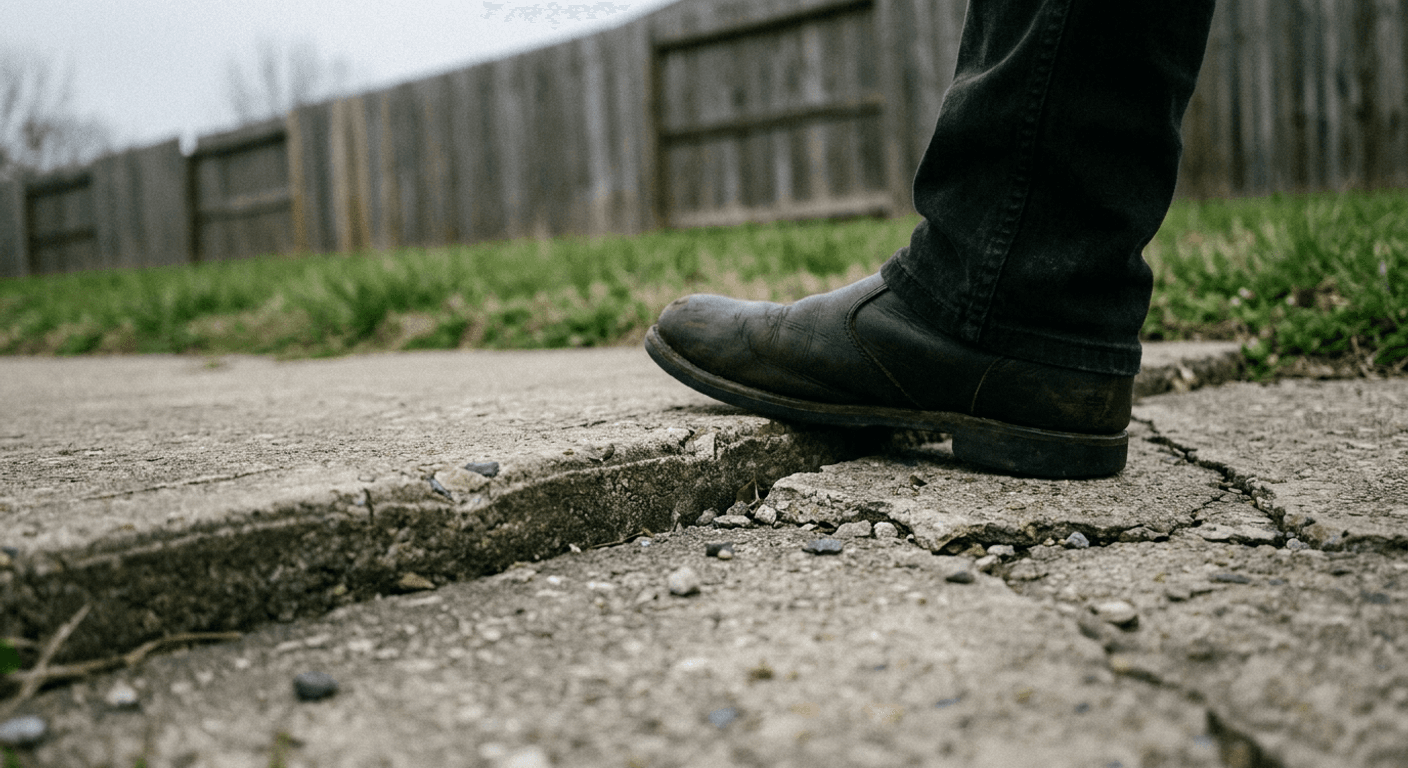
To win a slip-and-fall claim in Wyoming, you must prove the property owner was negligent, had actual or constructive notice of the hazard, and that the hazard caused your injury. Wyoming uses modified comparative fault under Wyo. Stat. Ann. section 1-1-109, which bars recovery if you are 51% or more at fault.
Proving a slip and fall claim in Wyoming
Wyoming premises liability law requires a property owner to exercise reasonable care to keep the property in a reasonably safe condition for those who enter it. When a hazardous condition causes a fall and injury, the injured person must establish four elements: the owner owed a duty of care, the owner breached that duty by failing to fix or warn of the hazard, the breach caused the fall, and the fall produced actual damages.
The most frequently disputed element is notice. You must show the owner had actual notice of the hazardous condition, meaning someone told the owner about it or the owner personally observed it, or constructive notice, meaning the condition had existed long enough that a reasonable inspection would have discovered it. Wyoming courts focus on how long the hazard had been present before the fall and whether the owner's inspection and maintenance practices were adequate.
Evidence supporting a notice argument includes prior complaint records, maintenance logs, surveillance footage showing how long the condition persisted, and testimony from employees or other visitors who saw the hazard before your fall. Photographs and a written record of conditions taken immediately after an incident are critical to building this case.
The open-and-obvious doctrine in Wyoming
Whether an open-and-obvious hazard sinks a premises liability claim in Wyoming depends on what kind of hazard it was. For natural conditions, the rule can end the case at the duty stage. In Valance v. VI-Doug, Inc., 2002 WY 113, 50 P.3d 697, the Wyoming Supreme Court stated that "the application of the natural accumulation rule and the open-and-obvious-danger exception determines whether the defendant has a duty," and it held that the exception reaches naturally occurring wind, so a restaurant owed no duty to protect a patron from the wind at its entrance. (The court let a separate claim proceed over the wording of a sign the restaurant had posted on that door, which was a condition the restaurant itself created.)
For hazards the owner created, obviousness is treated as a comparative-fault question instead. In Pinnacle Bank v. Villa, 2004 WY 150, 100 P.3d 1287, a Worland city ordinance imposed an affirmative duty to keep sidewalks clear, and the court agreed with both parties and the district court that the open-and-obvious-danger rule's only role in that case was to assess the pedestrian's comparative fault rather than to set the duty of care.

This approach was previewed in O'Donnell v. City of Casper, 696 P.2d 1278 (Wyo. 1985), which rejected using the obvious-danger rule to defeat duty for man-made hazards, holding that the obviousness of the condition goes to the plaintiff's comparative negligence rather than to the threshold question of whether any duty was owed.
Under this framework, if a man-made hazard was clearly visible, the jury may assign you a share of comparative fault for failing to notice or avoid it, and the landowner does not automatically escape liability by arguing the danger was obvious. Because Wyoming uses modified comparative fault with a 51% bar, a jury that finds you more than half responsible will eliminate your recovery, so the comparative-fault evaluation remains important. Where the condition was a natural one, the analysis is different: obviousness can defeat duty and end the claim before comparative fault is ever reached.
Ice, snow, and natural accumulation in Wyoming
Wyoming follows the natural-accumulation rule, and this is a significant limitation for ice-and-snow claims. The leading case is Paulson v. Andicoechea, 926 P.2d 955 (Wyo. 1996), in which the Wyoming Supreme Court held that a landowner/occupier owes no duty to remove naturally accumulated ice and snow from a parking lot. Under this rule, a fall caused by snow or ice that accumulated through weather conditions alone, without any action by the property owner, generally will not support a premises liability claim.
To recover after a fall on ice or snow in Wyoming, you must show an unnatural accumulation. This requires proving the defendant created or aggravated the hazardous condition, knew or should have known about it, and that it was substantially more dangerous than the natural accumulation in its original state. Examples of unnatural accumulations include drainage from a building that refreezes on a walkway, or melt water from a heated entryway that pools and freezes on a path the owner controls.
There is an important exception: a local snow-and-ice-removal ordinance can impose an affirmative duty that overrides the common-law no-duty rule. In Pinnacle Bank v. Villa, the Wyoming Supreme Court held that a Worland city ordinance requiring abutting property owners to clear sidewalks established a duty that controlled over the general natural-accumulation default. If you fell on a public sidewalk abutting private property, check whether the relevant municipality has such an ordinance, because its existence can transform a losing claim into a viable one.
How fault is shared: Wyoming's negligence rule
Wyoming uses modified comparative fault, codified at Wyo. Stat. Ann. section 1-1-109. Under this rule, your recovery depends on how the trier of fact divides fault between you and the defendant or defendants.

If your share of fault is 50% or less, you recover damages reduced by your percentage of fault. For example, if your total damages are $80,000 and the jury finds you 20% at fault, you receive $64,000. If you are found exactly 50% at fault, you still recover half your damages.
If your share of fault reaches 51% or more, you recover nothing. This is the critical threshold. Defense attorneys routinely argue that the plaintiff was wearing improper footwear, was distracted, or ignored visible warnings to push the plaintiff's fault share above 50%. An additional feature of Wyoming's rule is that liability among defendants is several only, meaning each defendant pays only its proportionate share of the total fault and is not responsible for another defendant's portion.
Wyoming does not use pure contributory negligence, so any fault on your part does not automatically end the claim. The 51% bar is the line that matters.
Deadlines: statute of limitations and government claims
The standard deadline for filing a personal-injury lawsuit in Wyoming is four years from the date of the fall, under Wyo. Stat. section 1-3-105(a)(iv)(C). The discovery rule may apply in cases where the injury was not immediately apparent, but the typical starting point is the date of the incident. Missing this deadline will result in dismissal regardless of the merits of your case.
If you were injured on property owned or operated by a Wyoming state or local government entity, begin with a question that comes before any deadline: whether the entity can be sued at all. Under Wyo. Stat. section 1-39-104(a), a governmental entity and its public employees acting within the scope of their duties "are granted immunity from liability for any tort except as provided by W.S. 1-39-105 through 1-39-112 and 1-39-122 through 1-39-124." That list of exceptions is exclusive. For a fall, the waiver that ordinarily matters is Wyo. Stat. section 1-39-106, which makes a governmental entity liable for bodily injury "caused by the negligence of public employees while acting within the scope of their duties in the operation or maintenance of any building, recreation area or public park."
That distinction decides many Wyoming cases before any paperwork does. A fall inside a public library, a county courthouse, a municipal recreation center, or a public park may come within section 1-39-106. A fall on a city street, or on a public sidewalk or parking area that is not part of a building, recreation area or park, may not fit any listed waiver, in which case the entity keeps its immunity and no notice of claim, however timely and however perfectly drafted, will revive the case. Identify the waiver that covers your fall before you invest in the claims process. If the fall was on government property, ask a Wyoming premises liability lawyer in a free consultation which waiver, if any, covers it before the sworn notice is filed (attorney advertising).
Where a waiver does apply, you then face a strict procedural requirement before you can file suit. Under the Wyoming Governmental Claims Act, Wyo. Stat. section 1-39-113, you must present a written, itemized notice of claim to the governmental entity within two years (730 days) of the date of the incident. This two-year presentment deadline is jurisdictional, meaning the court lacks authority to hear the case if you miss it. Even a timely, successful claim against a Wyoming governmental entity is subject to a separate cap: Wyo. Stat. section 1-39-118 limits the entity's total liability to $250,000 per person and $500,000 per occurrence, and bars punitive damages and pre-judgment interest against the entity.
The notice of claim must also comply with Article 16, Section 7 of the Wyoming Constitution: it must be signed by the claimant under oath, certifying under penalty of false swearing that the claim is true and accurate. Wyoming courts strictly enforce this certification requirement. After you file the notice of claim, you must bring suit within one year under Wyo. Stat. section 1-39-114.
For more on personal-injury filing deadlines in Wyoming, see the Wyoming statute of limitations page.
What a Wyoming slip and fall claim is worth
The value of a Wyoming slip-and-fall claim depends on your actual losses and on how the jury apportions fault. Economic damages include medical expenses (past and future), lost wages, reduced earning capacity, and the cost of ongoing treatment or rehabilitation. These are calculated from medical bills, pay stubs, and expert testimony regarding future care needs.

Non-economic damages cover pain and suffering, loss of enjoyment of life, and emotional distress. Wyoming does not impose a general statutory cap on non-economic damages in a claim against a private property owner, so juries have wide discretion in awarding these amounts. Claims against a Wyoming state, county, or municipal government are different in two ways. First, many are barred outright: Wyo. Stat. section 1-39-104(a) grants the entity immunity from tort liability unless a listed waiver applies, and for a fall that usually means section 1-39-106 (operation or maintenance of a building, recreation area or public park). Second, where a claim does survive, the Wyoming Governmental Claims Act caps a governmental entity's TOTAL liability at $250,000 per person and $500,000 per occurrence under Wyo. Stat. section 1-39-118, and bars punitive damages and pre-judgment interest against the entity entirely.
Because Wyoming uses modified comparative fault, your net recovery is reduced by your percentage of fault. A $150,000 award to someone found 25% at fault nets $112,500. If the jury assigns you 51% or more of the fault, the award is zero. The natural-accumulation rule also limits ice-and-snow claims significantly: unless you can show an unnatural condition the owner created or aggravated, or a local ordinance that imposed a duty to clear, those claims are unlikely to produce a recovery.
Use the Wyoming slip and fall settlement calculator to estimate how comparative fault and damages interact in your situation.
This article is general legal information, not legal advice. Premises liability law varies by state and changes, and case values depend on the specific facts. For advice about a specific fall, consult a licensed attorney in Wyoming.
Related: Slip and Fall Laws by State Hub | Wyoming Slip and Fall Settlement Calculator
More Wyoming Laws
Frequently Asked Questions
How do I prove a slip and fall in Wyoming?
You must show the property owner owed a duty of reasonable care, breached it by failing to fix or warn of the hazard, had actual or constructive notice of the condition before your fall, and that the breach caused your injury and damages. Notice is typically the hardest element to prove: gather evidence of how long the condition existed and whether the owner knew or should have known about it.
Is Wyoming an open-and-obvious state?
It depends on the hazard. For man-made hazards, Wyoming treats the obvious nature of a danger as a comparative-fault question rather than a bar, so a jury may assign you some fault without the owner being automatically off the hook. For natural conditions such as ice, snow or wind, the rule is stronger: under Valance v. VI-Doug, Inc. (2002 WY 113), the open-and-obvious-danger exception determines whether the owner owed a duty at all, and it can defeat the claim outright. Pinnacle Bank v. Villa (2004 WY 150) limited obviousness to comparative fault, but that was a case in which a city ordinance had already imposed an affirmative duty to clear the sidewalk.
Can I sue for falling on ice or snow in Wyoming?
Generally no, unless you can show an unnatural accumulation. Wyoming follows the natural-accumulation rule (Paulson v. Andicoechea, 1996): property owners are not liable for falls on naturally accumulated ice or snow. To win, you must prove the defendant created or aggravated the hazardous condition and that it was substantially more dangerous than the natural state. One important exception: if a local ordinance required the owner to clear the area, that can create an affirmative duty that overrides the no-duty default.
How long do I have to file a slip and fall lawsuit in Wyoming?
Four years from the date of the fall under Wyo. Stat. section 1-3-105. If you were hurt on government property, first check whether the entity is immune at all: Wyo. Stat. section 1-39-104(a) grants immunity from tort liability except in the situations it lists, and for a fall the usual waiver is section 1-39-106, covering the operation or maintenance of any building, recreation area or public park. Where a waiver applies, you must present a written, oath-certified notice of claim to the government entity within two years (730 days) under the Wyoming Governmental Claims Act (Wyo. Stat. section 1-39-113). This presentment deadline is jurisdictional. After filing the notice of claim, you have one more year to bring suit. Both deadlines must be met.
Can I recover if I was partly at fault for my fall in Wyoming?
Yes, as long as your fault is 50% or less. Wyoming's modified comparative fault rule (Wyo. Stat. section 1-1-109) reduces your damages by your percentage of fault. If you are 30% at fault, you recover 70% of your damages. However, if the jury finds you 51% or more at fault, you recover nothing at all. Each defendant is liable only for its own proportionate share of fault.
How much is a Wyoming slip and fall claim worth?
It depends on your injuries, medical expenses, lost wages, and the jury's fault allocation. Wyoming has no statutory cap on non-economic damages against a private property owner, so pain-and-suffering awards vary widely. If your claim is against a Wyoming government entity, total liability is capped at $250,000 per person and $500,000 per occurrence under Wyo. Stat. section 1-39-118, with no punitive damages or pre-judgment interest allowed. Your recovery is reduced by your percentage of fault under Wyoming's modified comparative fault rule, and ice-and-snow claims face the additional hurdle of the natural-accumulation rule. Use the Wyoming slip and fall settlement calculator to model different scenarios.
Updates
Corrected the Wyoming government-property section to state the Governmental Claims Act immunity default and the building, recreation area and public park waiver, and qualified the open-and-obvious discussion to reflect that Wyoming treats the rule as a no-duty bar for natural conditions such as ice, snow and wind.
Corrected the Wyoming page to disclose the Governmental Claims Act's total-liability cap ($250,000 per person / $500,000 per occurrence, no punitive damages) on claims against a Wyoming government entity, and fixed all 5 citations (2 cases, 3 statutes) that had linked to one generic statute-compilation PDF instead of the actual sources.
Independently fact-checked against the cited primary sources; governing law re-checked for recent changes
Governing law re-checked for recent changes
Reviewed and approved by an editor
The Law Behind This Article
This article rests on the statutory provisions below, held in our own legal record and retrieved from the official source. Tap a section to read the operative text.
Wyoming Statutes, Title 1 - Code of Civil Procedure - Chapter 1: General Provisions as to Civil Actions
§ 1-1-109Comparative fault.In forcecited in 7 of our articles
(a) As used in this section: (i) "Actor" means a person or other entity, including the claimant, whose fault is determined to be a proximate cause of the death, injury or damage, whether or not the actor is a party to the litigation; (ii) "Claimant" means a natural person, including the personal representative of a deceased person, or any legal entity, including corporations, limited liability companies, partnerships or unincorporated associations, and includes a third party plaintiff and a counterclaiming defendant; (iii) "Defendant" means a party to the litigation against whom a claim for damages is asserted, and includes third party defendants.
Official text (excerpt) · last checked 2026-09-15 · Read the full text in our law library · Verify at wyoleg.gov
Cited in 77 court opinions in our collectionLatest citing opinion in our collection: 2026
Opinions citing this section in our collection:
- Schneider National, Inc. v. Holland Hitch Co. (Wyoming Supreme Court 1992, 843 P.2d 561)“…hip between comparative negligence tort reform legislation, Wyo.Stat. § 1-1-109 (1988), and indemnity, an area of commo…”
- Haderlie v. Sondgeroth (Wyoming Supreme Court 1993, 866 P.2d 703)“…gislature abolished joint and several liability by amending W.S. 1-1-109 to provide that a party at fault be req…”
- Phillips v. Duro-Last Roofing, Inc. (Wyoming Supreme Court 1991, 806 P.2d 834)“…District Court for the District of Wyoming, asking whether W.S. 1-1-109 (1988), a comparative negligence attri…”
Identified automatically from the court opinions citing this section — not a ranking of which case controls.
Also relied on in: Wyoming Dog Bite Laws: Liability and Victim Rights, Medical Malpractice Laws in Wyoming (2026): Deadlines & Caps, Wyoming Car Accident Laws: Fault, Insurance, and Your Claim
Wyoming Statutes, Title 1 - Code of Civil Procedure - Chapter 39: Governmental Claims
§ 1-39-113Claims procedure.In forcecited in 2 of our articles
(a) No action shall be brought under this act against a governmental entity unless the claim upon which the action is based is presented to the entity as an itemized statement in writing within two (2) years of the date of the alleged act, error or omission, except that a cause of action may be instituted not more than two (2) years after discovery of the alleged act, error or omission, if the claimant can establish that the alleged act, error or omission was: (i) Not reasonably discoverable within a two (2) year period; or (ii) The claimant failed to discover the alleged act, error or omission within the two (2) year period despite the exercise of due diligence. (b) The claim shall state: (i) The time, place and circumstances of the alleged loss or injury including the name of the public employee involved, if known; (ii) The name, address and residence of the claimant and his representative or attorney, if any; and (iii) The amount of compensation or other relief demanded. (c) All claims against the state shall be presented to the general services division of the department of administration and information.
Official text (excerpt) · last checked 2026-07-30 · Read the full text in our law library · Verify at wyoleg.gov
Cited in 90 court opinions in our collectionLatest citing opinion in our collection: 2025
Opinions citing this section in our collection:
- Brown v. City of Casper (Wyoming Supreme Court 2011, 248 P.3d 1136)“…e deemed admitted. [7] In 2010, the legislature amended Wyo. Stat. Ann. § 1-39-113 (LexisNexis 2009) by adding subsection…”
- Beaulieu v. Florquist (Wyoming Supreme Court 2004, 86 P.3d 863)“…ssity of alleging such filing and the date of filing under Wyo. Stat. Ann. § 1-39-113 (LexisNexis 2003), or similar statute,…”
- Anita Harmon, as an Individual and as Personal Representative of the Estate of Euella Potter (Wyoming Supreme Court 2014, 331 P.3d 1174)“…dispositive: 1. Did the claim meet the requirements of Wyo. Stat. Ann. § 1-39-113(e) and Article 16, § 7 of the Wyoming C…”
Identified automatically from the court opinions citing this section — not a ranking of which case controls.
Also relied on in: Wyoming Statute of Limitations: Filing Deadlines by Case Type
§ 1-39-118Maximum liability; insurance authorized.In force
(a) Except as provided in subsection (b) of this section, in any action under this act, the liability of the governmental entity, including a public employee while acting within the scope of his duties, shall not exceed: (i) The sum of two hundred fifty thousand dollars ($250,000.00) to any claimant for any number of claims arising out of a single transaction or occurrence; or (ii) The sum of five hundred thousand dollars ($500,000.00) for all claims of all claimants arising out of a single transaction or occurrence. (b) A governmental entity is authorized to purchase liability insurance coverage covering any acts or risks including all or any portion of the risks provided under this act.
Official text (excerpt) · last checked 2026-07-30 · Read the full text in our law library · Verify at wyoleg.gov
Cited in 23 court opinions in our collectionLatest citing opinion in our collection: 2026
Opinions citing this section in our collection:
- Bell v. Schell (Wyoming Supreme Court 2004, 101 P.3d 465)“…t will be helpful to review the factual and legal context. Wyo. Stat. Ann. § 1-39-118 (a) requires claims to be presented to…”
- City of Laramie v. Facer (Wyoming Supreme Court 1991, 814 P.2d 268)“…yo. 1988); Hurst v. State, 698 P.2d 1130 (Wyo. 1985). W.S. 1-39-118(a) 2 establishes the maximum liability…”
- Weston County Hospital Joint Powers Board v. Westates Construction Co. (Wyoming Supreme Court 1992, 841 P.2d 841)“…we now reject usage of the installment payment provision of Wyo.Stat. § 1-39-118(c)(iv). Consequently, I dissent.…”
Identified automatically from the court opinions citing this section — not a ranking of which case controls.
§ 1-39-114Statute of limitations.In forcecited in 2 of our articles
Except as otherwise provided, actions against a governmental entity or a public employee acting within the scope of his duties for torts occurring after June 30, 1979 which are subject to this act shall be forever barred unless commenced within one (1) year after the date the claim is filed pursuant to W.S. 1-39-113. In the case of a minor seven (7) years of age or younger, actions against a governmental entity or public employee acting within the scope of his duties for torts occurring after June 30, 1979 which are subject to this act are forever barred unless commenced within two (2) years after occurrence or until his eighth birthday, whichever period is greater. In no case shall the statute of limitations provided in this section be longer than any other applicable statute of limitations. In the absence of applicable insurance coverage, if the claim was properly filed, the statute shall be tolled forty-five (45) days after a decision by the entity, if the decision was not made and mailed to the claimant within the statutory time limitation otherwise provided herein.
Official text (excerpt) · last checked 2026-07-30 · Read the full text in our law library · Verify at wyoleg.gov
Cited in 26 court opinions in our collectionLatest citing opinion in our collection: 2025
Opinions citing this section in our collection:
- Nulle v. Gillette-Campbell County Joint Powers Fire Board (Wyoming Supreme Court 1990, 797 P.2d 1171)“…jured on July 27, 1987, when she was seven years old. Under W.S. 1-39-114 (Cum.Supp. 1987), she had to file an ac…”
- Wooster v. Carbon County School District No. 1 (Wyoming Supreme Court 2005, 109 P.3d 893)“…claim was filed too late to meet the time requirements of Wyo. Stat. Ann. § 1-39-114 . [2] The district court, noting that…”
- Beaulieu v. Florquist (Wyoming Supreme Court 2001, 20 P.3d 521)“…ure to start the statute of limitations period provided by Wyo. Stat. Ann. § 1-39-114 (LEXIS 1999) for all parties and all i…”
Identified automatically from the court opinions citing this section — not a ranking of which case controls.
§ 1-39-105Liability; operation of motor vehicles, aircraft and watercraft.In force
A governmental entity is liable for damages resulting from bodily injury, wrongful death or property damage caused by the negligence of public employees while acting within the scope of their duties in the operation of any motor vehicle, aircraft or watercraft.
Official text (excerpt) · last checked 2026-07-30 · Read the full text in our law library · Verify at wyoleg.gov
Cited in 59 court opinions in our collectionLatest citing opinion in our collection: 2025
Opinions citing this section in our collection:
- White v. State (Wyoming Supreme Court 1989, 784 P.2d 1313)“…W.S. 1-39-120 provides: "(a) The liability imposed by W.S. 1-39-105 through 1-39-112 does not include liabi…”
- Oyler v. State (Wyoming Supreme Court 1980, 618 P.2d 1042)“…immunity from liability for any tort except as provided by W.S. 1-39-105 through 1-39-112. Any immunity in actio…”
- City of Laramie v. Facer (Wyoming Supreme Court 1991, 814 P.2d 268)“…S. 1-39-120, which provided: (a) The liability imposed by W.S. 1-39-105 through 1-39-112 does not include liabi…”
Identified automatically from the court opinions citing this section — not a ranking of which case controls.
Wyoming Statutes, Title 1 - Code of Civil Procedure - Chapter 3: Limitation of Actions
§ 1-3-105Actions other than recovery of real property.In forcecited in 13 of our articles
(a) Civil actions other than for the recovery of real property can only be brought within the following periods after the cause of action accrues: (i) Within ten (10) years, an action upon a specialty or any contract, agreement or promise in writing; (ii) Within eight (8) years, an action: (A) Upon a contract not in writing, either express or implied; or (B) Upon a liability created by statute other than a forfeiture or penalty. (iii) Within five (5) years after the debtor establishes residence in Wyoming, an action on a foreign claim, judgment or contract, express or implied, contracted or incurred and accrued before the debtor became a resident of Wyoming; (iv) Within four (4) years, an action for: (A) Trespass upon real property; (B) The recovery of personal property or for taking, detaining or injuring personal property; (C) An injury to the rights of the plaintiff, not arising on contract and not herein enumerated; and (D) For relief on the ground of fraud.
Official text (excerpt) · last checked 2026-09-14 · Read the full text in our law library · Verify at wyoleg.gov
Cited in 75 court opinions in our collectionLatest citing opinion in our collection: 2024
Opinions citing this section in our collection:
- Ultra Resources, Inc. v. Hartman (Wyoming Supreme Court 2010, 226 P.3d 889)“…year statute of limitations for breach of contract. See Wyo. Stat. Ann. § 1-3-105 (a)(i) (LexisNexis 2009). The defendant…”
- Union Pacific Resources Co. v. State (Wyoming Supreme Court 1992, 839 P.2d 356)“…Whether the eight-year statute of limitations contained in W.S. 1-3-105 operates to prevent counties from seeki…”
- Richardson Associates v. Lincoln-Devore, Inc. (Wyoming Supreme Court 1991, 806 P.2d 790)“…thrust of the statute of limitations defense is emplaced in W.S. 1-3-105 relating to civil actions on a contract…”
Identified automatically from the court opinions citing this section — not a ranking of which case controls.
Also relied on in: Wyoming Defamation Laws: Libel & Slander (2026), Wyoming Debt Collection Laws: Deposited Wages Stay Protected, and Old Debt May Never Fully Expire, Wyoming Hit and Run Laws: Penalties and What to Do
Search our full record of US law — 2.1 million sections, every state + federal →
Sources and References
- Pinnacle Bank v. Villa, 2004 WY 150, 100 P.3d 1287 (open-and-obvious is comparative-fault factor, not duty bar; local ordinance overrides natural-accumulation rule)(law.justia.com)
- Paulson v. Andicoechea, 926 P.2d 955 (Wyo. 1996) (natural accumulation rule — no duty for naturally accumulated ice/snow)(law.justia.com)
- Wyo. Stat. Ann. section 1-1-109 (Modified Comparative Fault, 51% bar, several-only liability)(law.justia.com)
- Wyo. Stat. section 1-3-105 (4-Year Personal Injury Statute of Limitations)(law.justia.com)
- Wyo. Stat. section 1-39-113 (Wyoming Governmental Claims Act, 2-Year Jurisdictional Notice of Claim)(law.justia.com)
- Wyo. Stat. section 1-39-118 — Governmental Claims Act maximum-liability cap ($250,000/person, $500,000/occurrence); no punitive damages or pre-judgment interest against a governmental entity(law.justia.com)
- Wyo. Stat. section 1-39-104 (Wyoming Governmental Claims Act: immunity from tort liability except as provided by W.S. 1-39-105 through 1-39-112 and 1-39-122 through 1-39-124)(wyoleg.gov)
- Valance v. VI-Doug, Inc., 2002 WY 113, 50 P.3d 697 (open-and-obvious-danger exception and natural accumulation rule determine whether a duty exists; exception applies to naturally occurring wind)(courtlistener.com)
Paid attorney referral. RecordingLaw may receive compensation when you use an attorney-help link. RecordingLaw is not a law firm. Submitting a request does not guarantee that an attorney will accept your case and does not create an attorney-client relationship.