
Wyoming
Is Jaywalking Illegal in Wyoming? Crossing Rules and Fines (2026)
Independently fact-checked against primary sources (last audited October 10, 2026). · 7 primary sources cited on this page. How we verify our legal content
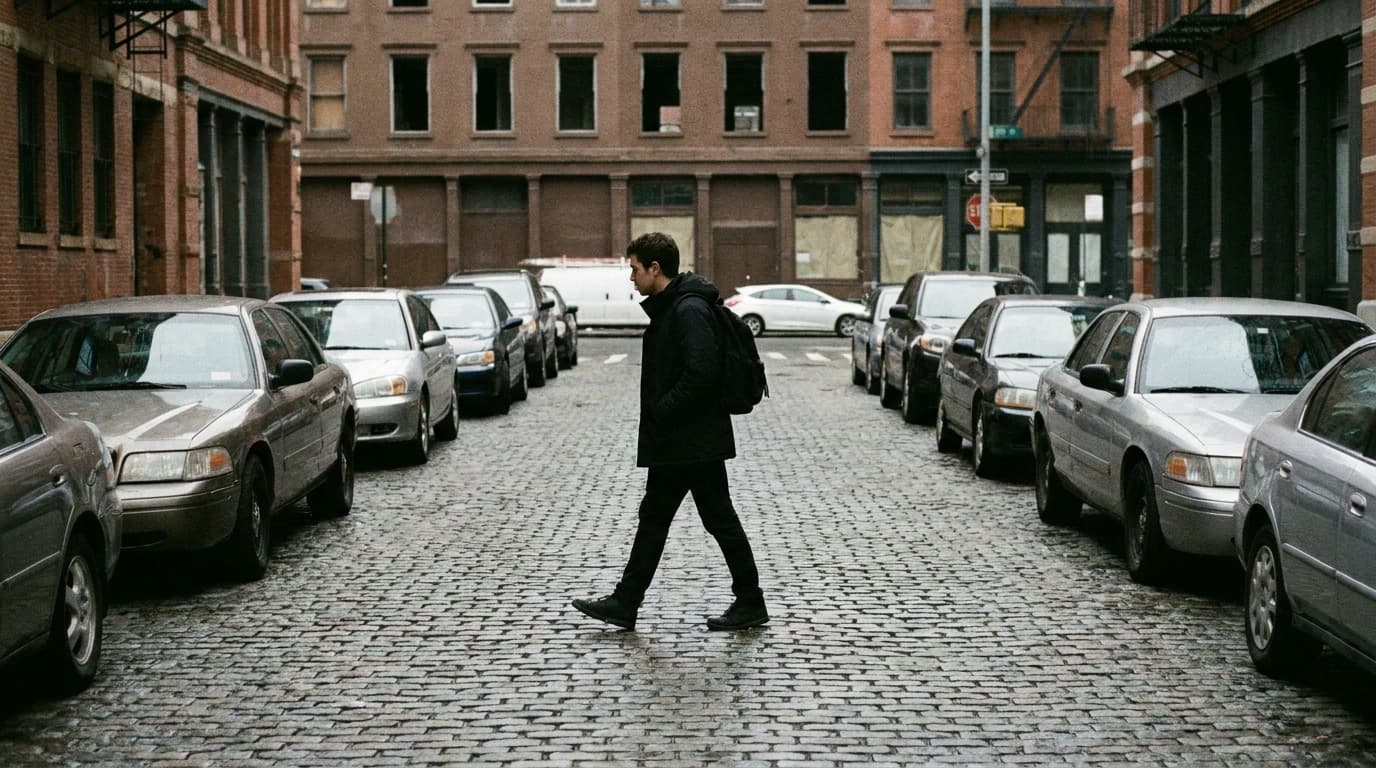
In Wyoming, the crossing rules people call jaywalking are in W.S. 31-5-603. A pedestrian crossing outside a marked crosswalk or an unmarked crosswalk at an intersection must yield the right-of-way to all vehicles, may not cross between adjacent signalized intersections except in a marked crosswalk, and may not cross an intersection diagonally unless official traffic-control devices authorize it. Breaking one of these rules is a misdemeanor under W.S. 31-5-1201(a), with a fine of up to $200 for a first conviction. The Wyoming Supreme Court's 2026 bail schedule lists a "Jaywalking" line at $100.00, court costs and fees included. Cities may also adopt their own traffic regulations by ordinance (W.S. 31-5-108). To compare other states, see our guide to jaywalking laws by state.
Information last verified on 2026-10-10. This article has not been reviewed by a licensed lawyer.
Jurisdiction scope: This article covers Wyoming state law: the pedestrian article of the traffic act (W.S. 31-5-601 to 31-5-613), the signal sections W.S. 31-5-403 and 31-5-404, the crosswalk definition in W.S. 31-5-102, local authority under W.S. 31-5-108, controlled-access restrictions under W.S. 31-5-213, the penalty in W.S. 31-5-1201, stops and arrests under W.S. 31-5-1204 and 7-2-102, and the Wyoming Supreme Court's 2026 Uniform Bail and Forfeiture Schedule. It does not cover the text of any city or county ordinance, driver license records, injury claims after a crash, or the law of other states.
Is jaywalking illegal in Wyoming?
It depends on where and how you cross. Wyoming's basic rule is a duty to yield: crossing away from a crosswalk is allowed, but vehicles go first. Two rules are flat bans that apply even when the road is empty: no crossing between two adjacent signalized intersections except in a marked crosswalk, and no diagonal crossing unless traffic-control devices allow it. A breach of any of them is a misdemeanor under the traffic act.
| Situation | Wyoming rule |
|---|---|
| Crossing outside a marked crosswalk or an unmarked crosswalk at an intersection | Allowed if the pedestrian yields the right-of-way to all vehicles (31-5-603(a)), subject to any city ordinance (31-5-108) |
| Crossing where a pedestrian tunnel or overhead crossing has been provided | The pedestrian must yield the right-of-way to all vehicles (31-5-603(b)) |
| Crossing between adjacent intersections with traffic-control signals in operation | Only in a marked crosswalk (31-5-603(c)) |
| Crossing an intersection diagonally | Barred unless authorized by official traffic-control devices, and then only as those devices direct (31-5-603(d)) |
| Suddenly leaving a curb or other place of safety into the path of a vehicle so close as to be an immediate hazard | Barred (31-5-602(c)) |
| Starting to cross on don't walk, steady or flashing | Barred (31-5-404) |
| Starting to cross on a steady yellow, or entering the roadway on a steady red alone, with no pedestrian signal directing otherwise | Barred (31-5-403) |
| Walking along a roadway where a usable sidewalk is provided | Unlawful (31-5-605(a)) |
| Being on a highway while under the influence of alcohol or a controlled substance to a degree that makes the pedestrian a hazard | Barred (31-5-612) |
| Using a controlled-access highway where official traffic-control devices post a restriction adopted under 31-5-213 | Barred once the devices are erected (31-5-213(b)) |
| Passing through, around, over or under a railroad crossing gate or barrier while it is closed or being opened or closed | Barred (31-5-613) |
| Being on a highway to solicit employment, business or contributions from a vehicle occupant | Barred (31-5-606(a)) |
| An authorized emergency vehicle approaching with the required audible and visual signals, or a police vehicle with an audible signal | The pedestrian must yield the right-of-way (31-5-610(a)) |
| Moving within a crosswalk | Use the right half whenever practicable (31-5-604) |
Crossing outside a crosswalk
W.S. 31-5-603 sets out four rules:

"(a) Every pedestrian crossing a roadway at any point other than within a marked crosswalk or within an unmarked crosswalk at an intersection shall yield the right-of-way to all vehicles upon the roadway. (b) Any pedestrian crossing a roadway at a point where a pedestrian tunnel or overhead pedestrian crossing has been provided shall yield the right-of-way to all vehicles upon the roadway. (c) Between adjacent intersections at which traffic-control signals are in operation pedestrians shall not cross at any place except in a marked crosswalk. (d) No pedestrian shall cross a roadway intersection diagonally unless authorized by official traffic-control devices. When authorized to cross diagonally, pedestrians shall cross only in accordance with the official traffic-control devices pertaining to the crossing movements."
Subsections (a) and (b) are yield rules. A pedestrian who crosses mid-block, waits for a gap and lets traffic pass complies with them. Subsection (c) is different: on a stretch of road between two adjacent intersections where signals are operating, yielding is not enough, and the crossing must be in a marked crosswalk. Subsection (d) bars diagonal crossing of an intersection unless devices allow it.
A broader yield rule backs these up. W.S. 31-5-605(c) provides: "Except as otherwise provided in this act, any pedestrian upon a roadway shall yield the right-of-way to all vehicles upon the roadway." And one rule applies everywhere, including in crosswalks: "No pedestrian shall suddenly leave a curb or other place of safety and walk or run into the path of a vehicle which is so close as to constitute an immediate hazard" (W.S. 31-5-602(c)).
Neither the 2025 General Session laws nor the 2026 Budget Session laws amend W.S. 31-5-601 to 31-5-613, 31-5-403, 31-5-404, 31-5-108 or 31-5-1201.
What counts as a crosswalk in Wyoming
The yield rule turns on whether you are in a crosswalk, marked or unmarked. W.S. 31-5-102(a)(viii) defines the term, for the traffic act:
"'Crosswalk' means: (A) That part of a roadway at an intersection included within the connections of the lateral lines of the sidewalks on opposite sides of the highway measured from the curbs or, in the absence of curbs, from the edges of the traversable roadway, and in the absence of a sidewalk on one (1) side of the roadway, that part of a roadway included within the extension of the lateral lines of the existing sidewalk at right angles to the centerline; (B) Any portion of a roadway at an intersection or elsewhere distinctly indicated for pedestrian crossing by lines or other markings on the surface."
Paragraph (A), the unmarked crosswalk, is drawn from the sidewalk lines at an intersection, and it also covers an intersection with a sidewalk on one side only. Paragraph (B) reaches painted crossings at intersections "or elsewhere," including mid-block.
Walk signals and traffic lights
W.S. 31-5-601 ties pedestrians to signals and signs: "A pedestrian shall obey the instructions of any official traffic-control device specifically applicable to him unless otherwise directed by a police officer," and "Pedestrians are subject to traffic-control signals at intersections as provided by W.S. 31-5-403 and 31-5-404."
Where walk and don't walk signals are installed, W.S. 31-5-404(a) controls:
"(i) Flashing or steady walk: Any pedestrian facing the signal may proceed across the roadway in the direction of the signal and every driver of a vehicle shall yield the right-of-way to him; (ii) Flashing or steady don't walk: No pedestrian shall start to cross the roadway in the direction of the signal, but any pedestrian who has partially completed his crossing on the walk signal shall proceed to a sidewalk or safety island while the don't walk signal is showing."
Where there is no pedestrian signal, the ordinary traffic light in W.S. 31-5-403 governs pedestrians:
- On green: "Unless otherwise directed by a pedestrian-control signal, as provided by W.S. 31-5-404, pedestrians facing any green signal, except when the sole green signal is a turn arrow, may proceed across the roadway within any marked or unmarked crosswalk."
- On steady yellow: pedestrians facing a steady circular yellow or yellow arrow "are thereby advised that there is insufficient time to cross the roadway before a red indication is shown and no pedestrian shall then start to cross the roadway."
- On steady red: "Unless otherwise directed by a pedestrian-control signal as provided by W.S. 31-5-404, pedestrians facing a steady circular red or red arrow signal alone shall not enter the roadway."
Walking along the road
W.S. 31-5-605 covers walking along a road, not just crossing it:
"(a) Where a sidewalk is provided and its use is practicable it is unlawful for any pedestrian to walk along and upon an adjacent roadway. (b) Where sidewalks are not provided any pedestrian walking along and upon a highway shall, when practicable, walk only on the left side of the roadway or its shoulder facing traffic which may approach from the opposite direction as far as practicable from the edge of the roadway."
Controlled-access highways can be closed to pedestrians by posted restriction. Under W.S. 31-5-213(a), the department "may by rule or regulation, and local authorities may by ordinance, with respect to any controlled-access highway under their respective jurisdictions prohibit or regulate the use of the highway by any class or kind of traffic which is found to be incompatible with the normal and safe movement of traffic." Once official traffic-control devices are erected on that highway, "no person shall disobey the restrictions stated on the devices" (W.S. 31-5-213(b)).
W.S. 31-5-612 adds: "A pedestrian who is under the influence of alcohol or any controlled substance to a degree which renders himself a hazard shall not walk or be upon a highway."
What drivers owe pedestrians
A pedestrian's duty to yield outside a crosswalk sits alongside separate duties on drivers in the same article:
- Unsignalized crosswalks. "When traffic-control signals are not in place or not in operation, the driver of a vehicle shall yield the right-of-way by slowing down or stopping if need be to yield, to any pedestrian within or entering a crosswalk at either edge of the roadway" (W.S. 31-5-602(a)). That duty does not apply under the conditions in W.S. 31-5-603(b), the tunnel or overhead crossing rule (W.S. 31-5-602(d)).
- School crosswalks. Where signals are not in place or not operating at a school crosswalk, the driver "shall yield the right-of-way to any pedestrian within or entering a school crosswalk at either edge of the roadway by slowing down or stopping" (W.S. 31-5-602(b)).
- No passing a stopped car. "Whenever any vehicle is stopped at a marked crosswalk or at any unmarked crosswalk at an intersection to permit a pedestrian to cross the roadway, the driver of any other vehicle approaching from the rear shall not overtake and pass the stopped vehicle" (W.S. 31-5-602(e)).
- Turning drivers. On a circular green, vehicles "including vehicles turning right or left, shall yield the right-of-way to other vehicles and to pedestrians lawfully within the intersection or an adjacent crosswalk" (W.S. 31-5-403(a)(i)(A)). A driver turning on a green arrow or on red must yield "to pedestrians lawfully within an adjacent crosswalk" (W.S. 31-5-403(a)(i)(B) and (iii)(C)).
- Blind pedestrians. "The driver of a vehicle shall yield the right-of-way to any blind pedestrian carrying a clearly visible white cane or accompanied by a guide dog" (W.S. 31-5-611).
- Sidewalks. "The driver of a vehicle crossing a sidewalk shall yield the right-of-way to any pedestrian and all other traffic on the sidewalk" (W.S. 31-5-609).
- Walk signals. On a walk signal, "every driver of a vehicle shall yield the right-of-way" to the pedestrian (W.S. 31-5-404(a)(i)).
- Due care. "Notwithstanding other provisions of this act or the provisions of any local ordinance, every driver of a vehicle shall exercise due care to avoid colliding with any pedestrian or any person propelling a human powered vehicle and shall give an audible signal when necessary and shall exercise proper precaution upon observing any child or any obviously confused, incapacitated or intoxicated person" (W.S. 31-5-607).
Jaywalking fine and penalty in Wyoming
Wyoming treats a pedestrian violation as a misdemeanor. W.S. 31-5-1201(a) provides: "It is a misdemeanor for any person to violate any of the provisions of this act or rules and regulations authorized under this act unless the violation is by this act or other law of this state declared to be a felony." The pedestrian article sets no fine of its own, so the general ladder in W.S. 31-5-1201(b) applies to a conviction "for which another penalty is not provided":
| Conviction | Maximum penalty under W.S. 31-5-1201(b) |
|---|---|
| First conviction | Fine of not more than $200 |
| Second conviction of the same offense within one year | Fine of not more than $300 |
| Third or subsequent conviction of the same offense within one year after the first | Fine of not more than $500, imprisonment for not more than six months, or both |
Those are ceilings. Separately, bail amounts come from the Wyoming Supreme Court's Uniform Bail and Forfeiture Schedules (Appendix I to Rule 3.1 of the Wyoming Rules of Criminal Procedure, revised July 1, 2026). The schedule states that, unless a specific amount appears, bail is "(including $20.00 court costs, a $40.00 court automation fee, and a $10.00 civil legal services fee): A = $85.00 B = $100.00 C = $150.00", with higher categories above that. The pedestrian lines include:
| Schedule line | Category | Bail amount |
|---|---|---|
| Jaywalking | B | $100.00 |
| Pedestrian right-of-way in crosswalks | B | $100.00 |
| Traffic control for pedestrian | B | $100.00 |
| Pedestrian-control signals | B | $100.00 |
| Pedestrian to use sidewalks or left side of highway | B | $100.00 |
| Pedestrian under influence of alcohol or controlled substance on highway | C | $150.00 |
| Traffic-control signals (the W.S. 31-5-403 signal legend, which binds a pedestrian facing an ordinary light) | C | $150.00 |
| Restricting use of controlled access (W.S. 31-5-213) | B | $100.00 |
"Jaywalking" is the schedule's own label for that line. The schedule also states that anything not listed on it is a "must appear." Even for a listed line, the schedule says a person issued a citation must appear in court unless the citing officer checks the box marked MAY FORFEIT BOND IN LIEU OF APPEARANCE on the citation; if that box is checked, the person may post bond at or before the court date and forfeit it instead of appearing. A bail amount is not the statutory penalty; on a conviction, the fine limits in W.S. 31-5-1201(b) apply. A person convicted of a violation penalized under that section also has "a police officer continuing education and training fee of five dollars ($5.00)" imposed in addition to the fine and any court fees (W.S. 31-5-1201(h)).
When a pedestrian is halted for one of these violations, the officer has discretion either to give a traffic citation or to take the person without unnecessary delay before the proper judge in listed cases, including "When the person does not furnish satisfactory evidence of identity or when the officer has reasonable and probable grounds to believe the person will disregard a promise to appear in court" (W.S. 31-5-1204(d)(i)). A person who refuses to accept the citation is taken before the court (W.S. 31-5-1204(c)(ii)). Separately, W.S. 7-2-102(b)(i) lets a peace officer arrest without a warrant when "Any criminal offense is being committed in the officer's presence by the person to be arrested," and a violation of the traffic act is a misdemeanor (W.S. 31-5-1201(a)).
City and town rules
The traffic act is statewide, but cities can add to it. W.S. 31-5-108 provides: "The provisions of this act shall be applicable and uniform throughout this state and in all political subdivisions and municipalities therein. Local authorities may, however, adopt by ordinance, traffic regulations for all streets within their city limits and highways under their corporate jurisdiction and shall have the express authority to enforce the traffic regulations so adopted, by action in their respective local municipal courts."
A city ordinance can therefore carry its own traffic rules and is enforced in municipal court, so check your city's code and posted signs before crossing mid-block downtown. Whatever a local ordinance says, the driver's due care duty in W.S. 31-5-607 applies "notwithstanding ... the provisions of any local ordinance."
If a pedestrian is hit by a car
Whether a pedestrian was crossing lawfully under W.S. 31-5-603 can come up after a collision, alongside the driver duties in W.S. 31-5-602 and 31-5-607. For how fault and insurance work after a crash, see Wyoming car accident laws. Electric scooter riders follow their own rules, covered in Wyoming e-scooter laws.
Related pages
- Jaywalking laws by state
- Wyoming car accident laws
- Wyoming e-scooter laws
- Colorado jaywalking laws
- Montana jaywalking laws
This article provides general legal information about Wyoming law, not legal advice. For advice about a specific situation, contact a lawyer licensed in Wyoming or the court named on your citation.
Last updated: 2026-10-10.
Frequently Asked Questions
Is jaywalking illegal in Wyoming?
Crossing outside a crosswalk is allowed under state law if you yield the right-of-way to all vehicles (W.S. 31-5-603(a)). Between adjacent signalized intersections you may cross only in a marked crosswalk, diagonal crossing is barred unless devices authorize it (W.S. 31-5-603(c) and (d)), and cities may adopt their own traffic regulations by ordinance (W.S. 31-5-108).
What is the jaywalking fine in Wyoming?
The 2026 Uniform Bail and Forfeiture Schedule lists Jaywalking at category B, $100.00 including court costs and fees. The statutory ceiling on conviction, where no other penalty is provided, is a fine of up to $200 for a first conviction, $300 for a second within a year, and $500 or six months, or both, for a third or later (W.S. 31-5-1201(b)).
Is jaywalking a crime in Wyoming?
W.S. 31-5-1201(a) makes it a misdemeanor to violate any provision of the traffic act unless the violation is declared a felony, and the pedestrian rules in W.S. 31-5-603 are part of that act.
Can I cross in the middle of the block in Wyoming?
Under state law, yes, if you yield the right-of-way to all vehicles (W.S. 31-5-603(a)), unless the block lies between adjacent intersections with operating traffic-control signals, where you must use a marked crosswalk (W.S. 31-5-603(c)). Check city ordinances and posted signs too (W.S. 31-5-108).
Can I cross on a don't walk signal in Wyoming?
No pedestrian may start to cross on a flashing or steady don't walk signal; a pedestrian who has partly crossed on walk shall proceed to a sidewalk or safety island (W.S. 31-5-404).
Which side of the road should I walk on in Wyoming?
Where a sidewalk is provided and practicable, walking along the adjacent roadway is unlawful. Without a sidewalk, walk only on the left side of the roadway or its shoulder facing oncoming traffic when practicable (W.S. 31-5-605).
Do drivers have to stop for pedestrians in Wyoming crosswalks?
Where traffic-control signals are not in place or not operating, a driver must yield to any pedestrian within or entering a crosswalk at either edge of the roadway, slowing down or stopping if need be (W.S. 31-5-602(a)). On a walk signal, every driver shall yield the right-of-way to the pedestrian (W.S. 31-5-404).
Updates
Independently fact-checked against the cited primary sources
The Law Behind This Article
This article rests on the statutory provisions below, held in our own legal record and retrieved from the official source. Tap a section to read the operative text.
Wyoming Statutes, Title 31 - Motor Vehicles - Chapter 5: Regulation of Traffic on Highways - Article 6: Pedestrians' Rights and Duties
§ 31-5-603Crossing at other than crosswalks.In force
(a) Every pedestrian crossing a roadway at any point other than within a marked crosswalk or within an unmarked crosswalk at an intersection shall yield the right-of-way to all vehicles upon the roadway. (b) Any pedestrian crossing a roadway at a point where a pedestrian tunnel or overhead pedestrian crossing has been provided shall yield the right-of-way to all vehicles upon the roadway. (c) Between adjacent intersections at which traffic-control signals are in operation pedestrians shall not cross at any place except in a marked crosswalk. (d) No pedestrian shall cross a roadway intersection diagonally unless authorized by official traffic-control devices. When authorized to cross diagonally, pedestrians shall cross only in accordance with the official traffic-control devices pertaining to the crossing movements.
Official text (excerpt) · last checked 2026-07-30 · Read the full text in our law library · Verify at wyoleg.gov
§ 31-5-602Right-of-way in crosswalks.In force
(a) When traffic-control signals are not in place or not in operation, the driver of a vehicle shall yield the right-of-way by slowing down or stopping if need be to yield, to any pedestrian within or entering a crosswalk at either edge of the roadway. (b) When traffic-control signals are not in place or not in operation at a school crosswalk, the driver of a vehicle shall yield the right-of-way to any pedestrian within or entering a school crosswalk at either edge of the roadway by slowing down or stopping. (c) No pedestrian shall suddenly leave a curb or other place of safety and walk or run into the path of a vehicle which is so close as to constitute an immediate hazard. (d) Subsection (a) of this section does not apply under the conditions stated in W.S. 31-5-603(b). (e) Whenever any vehicle is stopped at a marked crosswalk or at any unmarked crosswalk at an intersection to permit a pedestrian to cross the roadway, the driver of any other vehicle approaching from the rear shall not overtake and pass the stopped vehicle.
Official text (excerpt) · last checked 2026-07-30 · Read the full text in our law library · Verify at wyoleg.gov
Wyoming Statutes, Title 31 - Motor Vehicles - Chapter 5: Regulation of Traffic on Highways - Article 4: Traffic-control Devices
§ 31-5-403Signal legend generally.In force
(a) Whenever traffic is controlled by traffic-control signals exhibiting different colored lights, or colored lighted arrows, successively one (1) at a time or in combination, only the colors green, red and yellow shall be used, except for special pedestrian signals carrying a symbol or word legend, and the lights shall indicate and apply to drivers of vehicles and pedestrians as follows: (i) Green indication: (A) Vehicular traffic facing a circular green signal may proceed straight through or turn right or left unless a sign prohibits either turn. But vehicular traffic, including vehicles turning right or left, shall yield the right-of-way to other vehicles and to pedestrians lawfully within the intersection or an adjacent crosswalk at the time the signal is exhibited; (B) Vehicular traffic facing a green arrow signal, shown alone or in combination with another indication, may cautiously enter the intersection only to make the movement indicated by the arrow, or such other movement as is permitted by other indicators shown at the same time.
Official text (excerpt) · last checked 2026-07-30 · Read the full text in our law library · Verify at wyoleg.gov
Wyoming Statutes, Title 31 - Motor Vehicles - Chapter 5: Regulation of Traffic on Highways - Article 1: In General
§ 31-5-102Definitions.In forcecited in 3 of our articles
(a) Except as otherwise provided, as used in this act: (i) Repealed by Laws 2002, Ch. 68, § 2. (ii) "Authorized emergency vehicles" means: (A) Vehicles of fire departments, fire patrols, game and fish law enforcement personnel, livestock board law enforcement personnel, brand inspectors, law enforcement agencies, public and private ambulances, medical rescue units and extrication rescue units; (B) Privately-owned vehicles used by members of a fire department or emergency service organization while performing or traveling to perform assigned fire fighting or emergency service duties are authorized emergency vehicles if: (I) Authorized in writing by the appropriate governing body of the city, town or county in which the emergency services organization is located; (II) Equipped with at least one (1) flashing red, white or amber light visible from the front of the vehicle; and (III) Equipped with a marker on the front of the vehicle indicating the department or organization with which affiliated.
Official text (excerpt) · last checked 2026-07-30 · Read the full text in our law library · Verify at wyoleg.gov
Cited in 9 court opinions in our collectionLatest citing opinion in our collection: 2026
Opinions citing this section in our collection:
- Roberts v. Estate of Randall (Wyoming Supreme Court 2002, 51 P.3d 204)“…is act” is defined as ‘W.S. § 31-5-101 through 31-5-1507.” Wyo. Stat. Ann. § 31-5-102 (a)(lix) (LexisNexis 2001). [¶ 13] In…”
- Shaw v. State (Wyoming Supreme Court 2009, 201 P.3d 1108)“…dded) provides: (b) Any police officer as defined by W.S. 31-5-102(a)(xxxiii), issuing a citation for any…”
- McClean v. State (Wyoming Supreme Court 2003, 62 P.3d 595)“…ate statutes, Wyo. Stat. Ann. § 31 — 1— 101(a)(viii) and Wyo. Stat. Ann. § 31-5-102 (a)(xlix), respectively, as follows:…”
Identified automatically from the court opinions citing this section — not a ranking of which case controls.
Also relied on in: Wyoming E-Scooter Laws: Sidewalk, Helmet & Age Rules (2026), Is Lane Splitting Legal in Wyoming? Rules and Penalties (2026)
Search our full record of US law — 2.1 million sections, every state + federal →
Sources and References
- W.S. 31-5-601 to 31-5-613, Pedestrians' Rights and Duties (including 31-5-603, Crossing at other than crosswalks)(wyoleg.gov).gov
- W.S. 31-5-1201, Penalties for violations of the traffic act(wyoleg.gov).gov
- Wyoming Judicial Branch, 2026 Uniform Bail and Forfeiture Schedules (Appendix I, W.R.Cr.P. 3.1)(wyocourts.gov).gov
- W.S. 31-5-102 Definitions (crosswalk) and 31-5-108 Uniformity and local ordinances(wyoleg.gov).gov
- W.S. 31-5-403 and 31-5-404, Traffic-control signal legend and pedestrian-control signals(wyoleg.gov).gov
- W.S. Title 31, Motor Vehicles (including 31-5-213, Restrictions on use of controlled-access highways, and 31-5-1204, Authority to make arrest)(wyoleg.gov).gov
- W.S. Title 7, Criminal Procedure (including 7-2-102, Preconditions for arrests)(wyoleg.gov).gov