
Montana
Is Jaywalking Illegal in Montana? Crossing Rules and Fines (2026)
Independently fact-checked against primary sources (last audited October 10, 2026). · 22 primary sources cited on this page. How we verify our legal content
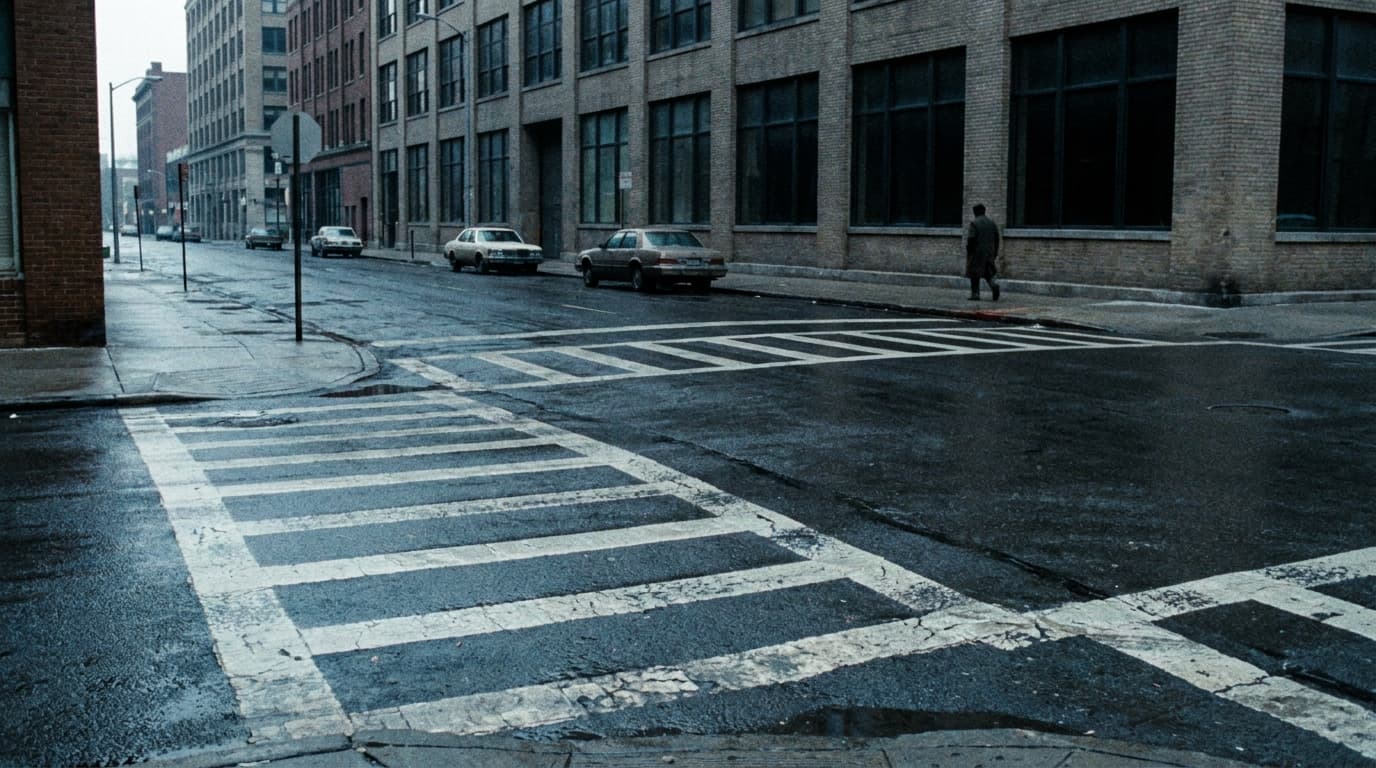
In Montana, what people call jaywalking is governed by MCA 61-8-503. A pedestrian who crosses anywhere other than a marked crosswalk or an unmarked crosswalk at an intersection must yield the right-of-way to all vehicles, and between two adjacent intersections with traffic control signals in operation a pedestrian may cross only in a marked crosswalk. Local governments may go further and bar crossing except in a crosswalk by ordinance (MCA 61-8-501(4)). Under the general penalty in MCA 61-8-711, a first conviction carries a fine of $10 to $100. To compare other states, see our guide to jaywalking laws by state.
Information last verified on 2026-10-10. This article has not been reviewed by a licensed lawyer.
Jurisdiction scope: This article covers Montana state law in the 2025 Montana Code Annotated: the pedestrian part of the traffic code (MCA 61-8-501 to 61-8-517), the signal sections (61-8-207 and 61-8-208), the crosswalk definition (61-8-102(6)), the penalty and court-charge sections (61-8-711, 61-8-723, 61-8-742 and 46-18-236), the local-authority section (61-12-101), the investigative-stop section (46-5-401) and the moving-violation definition in the habitual offender point schedule (61-11-203). It does not cover the text of any city or county ordinance, local court fine or bail schedules, other driver license consequences, injury claims after a crash, or the law of other states.
Is jaywalking illegal in Montana?
It depends on where and how you cross, and on your city. Montana's state rule for crossing outside a crosswalk is a duty to yield: crossing is allowed, but traffic goes first. The flat restriction in state law is crossing mid-block between two signalized intersections outside a marked crosswalk. On top of that, a local government can make crosswalk-only crossing the rule in its jurisdiction.
| Situation | Montana rule |
|---|---|
| Crossing outside a marked crosswalk or an unmarked crosswalk at an intersection | Allowed under state law if the pedestrian yields the right-of-way to all vehicles (61-8-503(1)); a local ordinance may bar it (61-8-501(4)) |
| Crossing where a pedestrian tunnel or overhead crossing has been provided | The pedestrian must yield the right-of-way to all vehicles (61-8-503(2)) |
| Crossing between adjacent intersections with traffic control signals in operation | Only in a marked crosswalk (61-8-503(3)) |
| Starting to cross on a flashing or steady DON'T WALK or upraised palm | Barred (61-8-208(2), (3)) |
| Entering the roadway facing a steady circular red or red arrow alone | Barred unless a pedestrian signal directs otherwise (61-8-207) |
| Walking along a roadway where a sidewalk is provided and practicable | Barred (61-8-506(1)) |
| Walking along a highway with no sidewalk | Only on the shoulder, as far as practicable from the edge of the roadway (61-8-506(2)) |
| Standing on a roadway to solicit a ride | Barred (61-8-507(1)) |
| Passing through, around, over or under a closed, opening or closing railroad crossing gate or barrier | Barred (61-8-517) |
| An authorized emergency vehicle or police vehicle immediately approaching while using the signals 61-8-515 requires | The pedestrian must yield the right-of-way (61-8-515(1)) |
Crossing outside a crosswalk
The basic rule is MCA 61-8-503:
"(1) Every pedestrian crossing a roadway at any point other than within a marked crosswalk or within an unmarked crosswalk at an intersection shall yield the right-of-way to all vehicles upon the roadway. (2) Any pedestrian crossing a roadway at a point where a pedestrian tunnel or overhead pedestrian crossing has been provided shall yield the right-of-way to all vehicles upon the roadway. (3) Between adjacent intersections at which traffic control signals are in operation pedestrians shall not cross at any place except in a marked crosswalk."
Subsection (1) is a duty to yield, not a ban. A pedestrian who crosses mid-block, waits for a gap, and lets vehicles pass first complies with it, subject to subsection (3) and any local ordinance. Subsection (3) applies only on a stretch of road between two adjacent intersections where traffic control signals are operating; there, yielding is not enough and the crossing must be in a marked crosswalk. The pedestrian part of the code, sections 61-8-501 to 61-8-517, contains no rule against crossing an intersection diagonally.
Subsection (1) treats an unmarked crosswalk at an intersection the same as a painted one. MCA 61-8-102(6) defines the term:
"'Crosswalk' means: (a) that part of a roadway at an intersection included within the connections of the lateral lines of the sidewalks on opposite sides of the highway measured from the curbs or, in the absence of curbs, from the edges of the traversable roadway; or (b) any portion of a roadway at an intersection or elsewhere distinctly indicated for pedestrians crossing by lines or other markings on the surface."
Part (a) ties the unmarked crosswalk to the lines of the sidewalks on opposite sides of the highway at an intersection; part (b) covers any marked crossing, at an intersection or mid-block. Once in a crosswalk, MCA 61-8-505 adds: "Pedestrians shall move, whenever practicable, upon the right half of crosswalks."
Local crosswalk-only ordinances
MCA 61-8-501(4) lets local governments replace the yield rule with a crosswalk-only rule:
"(4) Local authorities may by ordinance prohibit pedestrians from crossing a roadway within a local government's jurisdiction, except in a marked crosswalk or in an unmarked crosswalk at an intersection."
Where a city or county has adopted such an ordinance, crossing outside a crosswalk can be cited there even if the pedestrian yields. More generally, MCA 61-12-101(1)(n) lets local authorities enact as ordinances "any other law regulating traffic, pedestrians, vehicles, and operators of vehicles that are not in conflict with state law or federal regulations" and enforce them. Check your city or county code and posted signs before crossing mid-block.
Walk signals and traffic lights
MCA 61-8-501 makes pedestrians follow signals: "(1) A pedestrian shall obey the instructions of any traffic control device that is specifically applicable to the pedestrian unless otherwise directed by a police officer. (2) Pedestrians are subject to traffic control signals and pedestrian control signals at intersections as provided in 61-8-207 and 61-8-208. (3) At all other places, pedestrians are accorded the privileges and are subject to the restrictions provided in this part."
Where WALK and DON'T WALK signals are installed, MCA 61-8-208 controls:
"(1) A pedestrian facing a "Walk" signal or a walking person symbol may proceed across the roadway in the direction of the signal and the operators of all vehicles shall yield the right-of-way to the pedestrian. (2) A pedestrian may not start to cross the roadway in the direction of a signal exhibiting a flashing or steady "Don't Walk" signal or upraised palm symbol, but a pedestrian who has partially completed crossing on the "Walk" signal or walking person symbol shall proceed to a sidewalk or safety island while the "Don't Walk" signal or upraised palm symbol is showing."
Subsection (2) adds that "An operator of a vehicle shall yield the right-of-way to a pedestrian who has partially completed crossing and is proceeding to the sidewalk or safety island," and subsection (3) repeats that "A pedestrian may not start to cross a roadway in the direction of a steady "Don't Walk" signal or upraised palm symbol."
Where there is no pedestrian signal, the ordinary traffic light governs under MCA 61-8-207, each time "Unless otherwise directed by a pedestrian control signal as provided in 61-8-208":
- Facing a green signal, except when the only green signal is a turn arrow, a pedestrian "may proceed in the direction of the green signal across the roadway within any marked or unmarked crosswalk. A driver of a vehicle shall yield the right-of-way to the pedestrian."
- Facing a steady circular yellow or yellow arrow, a pedestrian "is advised that there is insufficient time to cross the roadway before a red indication is shown."
- A pedestrian "facing a steady circular red or red arrow signal alone may not enter the roadway."
Walking along the road
MCA 61-8-506 covers walking along a road, not just crossing it:
"(1) Where sidewalks are provided and their use is practicable, a pedestrian may not walk along and upon an adjacent roadway. (2) Where sidewalks are not provided, a pedestrian, other than an intoxicated pedestrian referred to in 61-8-508, who is walking along and upon a highway may walk only on the shoulder, as far as practicable from the edge of the roadway."
Section 61-8-506 directs pedestrians to the shoulder; it does not tell them to walk on the left side or to face traffic. A pedestrian under the influence is restricted further by MCA 61-8-508: "Except in an authorized crosswalk, a person who is under the influence of alcohol or any drug may walk or stand in the public right-of-way, as defined in 60-1-103, but not on a roadway or a shoulder as is otherwise permissible under 61-8-506(2)."
Standing in the road to flag down drivers is covered by MCA 61-8-507: "(1) A person may not stand on a roadway for the purpose of soliciting a ride. (2) A person may not stand on a highway for the purpose of soliciting employment, business, or contributions from the occupant of a vehicle unless the solicitation is authorized by the proper jurisdictional authority."
What drivers owe pedestrians
A pedestrian's duty to yield outside a crosswalk sits alongside duties the code places on drivers. MCA 61-8-502(1)(a) provides:
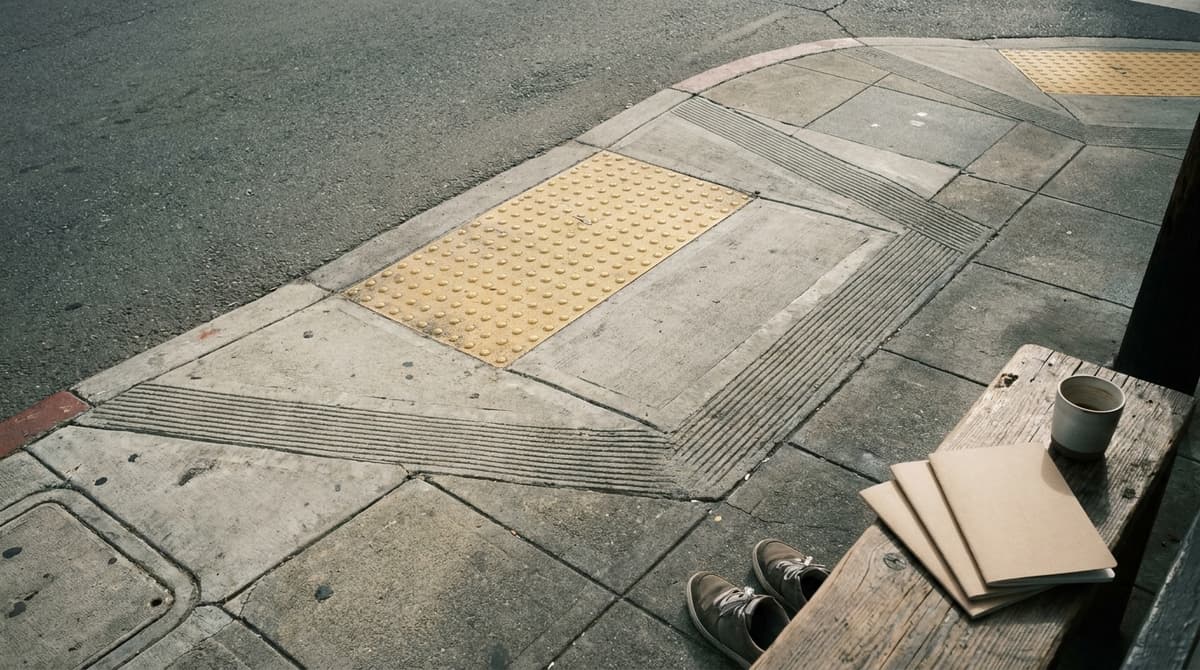
"(1) (a) Except as provided in subsection (1)(b), when traffic control signals are not in place or not in operation, the operator of a vehicle shall yield the right-of-way, slowing down or stopping if necessary, to a pedestrian crossing the roadway within a marked crosswalk or within an unmarked crosswalk at an intersection, but a pedestrian may not suddenly leave a curb or other place of safety and walk or run into the path of a vehicle that is so close that it is impossible for the operator to yield. This provision does not apply under the conditions provided in 61-8-503(2)."
The same subsection binds the pedestrian too: no darting from the curb into the path of a vehicle too close to yield. The other driver duties:
- A driver stopped at a marked crosswalk or an unmarked crosswalk at an intersection "may make a right-hand turn if the pedestrian is in the opposite half of the roadway and is not in danger" (61-8-502(1)(b)).
- "When a vehicle is stopped at a marked crosswalk or at an unmarked crosswalk at an intersection to permit a pedestrian to cross the roadway, the operator of any other vehicle approaching from the rear may not overtake and pass the stopped vehicle" (61-8-502(2)).
- "A person may not operate a vehicle through a column of school children crossing a roadway or past a school crossing guard while the crossing guard is directing the movement of children across a roadway and while the crossing guard is holding an official sign in the stop position" (61-8-502(3)).
- "On a way of the state open to the public, the operator of a vehicle shall yield the right-of-way to a blind pedestrian who is carrying a visible white cane or who is accompanied by a guide dog" (61-8-516).
- "When the operator of a vehicle is approaching a flashing pedestrian-actuated device at a crosswalk and a pedestrian is present, the operator shall yield the right-of-way, slowing down or stopping if necessary, and remain stopped until the pedestrian has crossed the roadway" (61-8-502(4)(a)). The remain-stopped duty is written for flashing pedestrian-actuated devices; the ordinary crosswalk rule is to yield, slowing down or stopping if necessary.
- A driver facing a green signal must yield to a pedestrian crossing on it (61-8-207), and drivers must yield to a pedestrian on WALK and to one finishing a crossing (61-8-208).
- "Notwithstanding 61-8-501 through 61-8-503, an operator of a vehicle shall exercise due care to avoid colliding with a pedestrian or with a person propelling a human-powered vehicle or using an assistive mobility device upon a roadway, shall give warning by sounding the horn when necessary, and shall exercise proper precaution upon observing a child or an obviously confused, incapacitated, or intoxicated person upon a roadway" (61-8-504).
- "The driver of a vehicle crossing a sidewalk shall yield the right-of-way to any pedestrian and all other traffic on the sidewalk" (61-8-509).
The 2025 endangerment of pedestrians offense
A 2025 act (Chapter 580, Laws of 2025) amended 61-8-502 and created MCA 61-8-742. Section 61-8-502(5) now provides: "A person convicted of violating this section is guilty of the offense of endangerment of pedestrians and is subject to the penalties prescribed in 61-8-742." The fines are:
| Endangerment of pedestrians (61-8-502 violation) | Fine | Source |
|---|---|---|
| First conviction | Not less than $25 or more than $100 | 61-8-742(1)(a) |
| Second conviction within 1 year after the first | Not less than $50 or more than $200 | 61-8-742(1)(b) |
| Third or later conviction within 1 year after the first | Not less than $100 or more than $500 | 61-8-742(1)(c) |
| Violation in a pedestrian crossing when a pedestrian-actuated device is activated, first | Not less than $75 or more than $149 | 61-8-742(2)(a) |
| Same, second or later | Not less than $150 or more than $250 | 61-8-742(2)(b) |
These are penalties for violating 61-8-502, the crosswalk right-of-way section; they are not the penalty for a pedestrian crossing outside a crosswalk under 61-8-503. Because 61-8-502(1)(a) also contains the pedestrian curb rule, a reader should not assume either way how a pedestrian charged under that sentence is penalized; the statute's text does not separate the two.
Jaywalking fine and penalty in Montana
Section 61-8-503 states no penalty of its own. The penalty comes from MCA 61-8-711:
"(1) It is a misdemeanor for a person to violate any of the provisions of this chapter unless the violation is declared to be a felony. (2) Each person convicted of a misdemeanor for a violation of any of the provisions of this chapter for which another penalty is not provided shall for a first conviction be punished by a fine of not less than $10 or more than $100. For a second conviction within 1 year after the first conviction, the person shall be punished by a fine of not less than $25 or more than $200. Upon a third or subsequent conviction within 1 year after the first conviction, the person shall be punished by a fine of not less than $50 or more than $500."
| Conviction | Fine | Source |
|---|---|---|
| First conviction | Not less than $10 or more than $100 | MCA 61-8-711(2) |
| Second conviction within 1 year after the first | Not less than $25 or more than $200 | MCA 61-8-711(2) |
| Third or later conviction within 1 year after the first | Not less than $50 or more than $500 | MCA 61-8-711(2) |
These are statutory ranges, not a typical ticket amount; the citation or the court handling it shows the amount due. On conviction the court may also assess court costs (61-8-711(5)), and a charge of $15 for each misdemeanor charge is imposed in addition to the fine on conviction or bail forfeiture (MCA 46-18-236(1)(a)), unless the court finds the person unable to pay (46-18-236(2)).
The fine is not a jail sentence, but nonpayment can lead to one. Under 61-8-711(3), failure to pay is a civil contempt of the court, and the court may enforce the fine or, if the person is unable to pay, order community service. Under 61-8-711(4), if property is not found to pay the fine and the court makes a written finding that community service is inappropriate, "the person shall be imprisoned in the county jail" for the number of days the fine is divisible by the incarceration credit in MCA 46-18-403.
An officer may stop a person observed in circumstances that create a particularized suspicion of an offense; for a Title 61 stop the officer must, as promptly as possible, inform the person of the reason, and may request the person's name and present address (MCA 46-5-401(1), (2)(a)). Montana's habitual traffic offender point schedule counts moving violations, defined as violations committed "while operating a motor vehicle or in actual physical control of a motor vehicle upon a highway" (MCA 61-11-203(1)(d)). A ticket under a local ordinance adopted under 61-8-501(4) carries the penalty that ordinance sets.
For young pedestrians, MCA 61-8-723 provides: "A person under 18 years of age who is convicted of an offense under this title may not be punished by incarceration, but shall be punished by: (1) a fine not to exceed the fine that could be imposed on the person if the person were an adult, provided that the person may not be imprisoned for failure to pay the fine."
If a pedestrian is hit by a car
Whether a pedestrian was crossing lawfully under 61-8-503 can come up after a collision, alongside the driver duties in 61-8-502 and 61-8-504. For how fault and insurance work after a crash, see Montana car accident laws. Electric scooter riders follow a separate set of rules, covered in Montana e-scooter laws.
Related pages
- Jaywalking laws by state
- Montana car accident laws
- Montana e-scooter laws
- Idaho jaywalking laws
- Wyoming jaywalking laws
This article provides general legal information about Montana law, not legal advice. For advice about a specific situation, contact a lawyer licensed in Montana.
Last updated: 2026-10-10.
Frequently Asked Questions
Is jaywalking illegal in Montana?
Crossing outside a crosswalk is allowed under state law if you yield the right-of-way to all vehicles (MCA 61-8-503(1)). Between adjacent intersections with traffic control signals in operation you may cross only in a marked crosswalk (61-8-503(3)), and a local government may by ordinance bar crossing except in a crosswalk (61-8-501(4)).
What is the fine for jaywalking in Montana?
The pedestrian rules in MCA 61-8-503 set no fine of their own, so the general penalty in MCA 61-8-711 applies: a fine of not less than $10 or more than $100 for a first conviction, $25 to $200 for a second within one year, and $50 to $500 for a third or later within one year. A local ordinance ticket carries the penalty that ordinance sets.
Can you go to jail for jaywalking in Montana?
The general penalty in MCA 61-8-711(2), which applies when no other penalty is provided, is a fine, not a jail term. Failure to pay is a civil contempt of the court; the court may enforce the fine or order community service, and if no property is found to pay it and the court finds in writing that community service is inappropriate, the person shall be imprisoned in the county jail for a number of days set by the incarceration credit in MCA 46-18-403 (61-8-711(3), (4)). A person under 18 convicted of a Title 61 offense may not be punished by incarceration (MCA 61-8-723).
Can I cross in the middle of the block in Montana?
Under state law, yes, if you yield the right-of-way to all vehicles (MCA 61-8-503(1)), unless the block lies between two adjacent intersections with traffic control signals in operation; there you may cross only in a marked crosswalk (61-8-503(3)). A city or county may also bar crossing except in a crosswalk by ordinance (61-8-501(4)).
Can I start crossing when the DON'T WALK signal is flashing in Montana?
No. Under MCA 61-8-208(2), a pedestrian may not start to cross in the direction of a flashing or steady DON'T WALK signal or upraised palm symbol. A pedestrian who partly crossed on WALK must proceed to a sidewalk or safety island, and drivers must yield to that pedestrian.
Which side of the road should I walk on in Montana?
Use the sidewalk where one is provided and its use is practicable (MCA 61-8-506(1)). Where there is no sidewalk, walk only on the shoulder, as far as practicable from the edge of the roadway (61-8-506(2)); the section does not direct pedestrians to a particular side.
Do drivers have to stop for pedestrians in Montana?
Where traffic control signals are not in place or not operating, a driver must yield to a pedestrian in a marked crosswalk or an unmarked crosswalk at an intersection, slowing down or stopping if necessary, and at a flashing pedestrian-actuated device with a pedestrian present must remain stopped until the pedestrian has crossed (MCA 61-8-502). A conviction is endangerment of pedestrians, with fines under MCA 61-8-742.
Updates
Independently fact-checked against the cited primary sources
The Law Behind This Article
This article rests on the statutory provisions below, held in our own legal record and retrieved from the official source. Tap a section to read the operative text.
Montana Code Annotated, Title 61
§ 61-8-503Crossing At Other Than CrosswalksIn force
61-8-503. Crossing at other than crosswalks. (1) Every pedestrian crossing a roadway at any point other than within a marked crosswalk or within an unmarked crosswalk at an intersection shall yield the right-of-way to all vehicles upon the roadway. (2) Any pedestrian crossing a roadway at a point where a pedestrian tunnel or overhead pedestrian crossing has been provided shall yield the right-of-way to all vehicles upon the roadway. (3) Between adjacent intersections at which traffic control signals are in operation pedestrians shall not cross at any place except in a marked crosswalk.
Official text (excerpt) · last checked 2026-07-29 · Read the full text in our law library · Verify at mca.legmt.gov
§ 61-8-502Pedestrians' Right-Of-Way In Crosswalk -- School Children -- Pedestrian-Actuated DevicesIn force
61-8-502. Pedestrians' right-of-way in crosswalk -- school children -- pedestrian-actuated devices. (1) (a) Except as provided in subsection (1)(b), when traffic control signals are not in place or not in operation, the operator of a vehicle shall yield the right-of-way, slowing down or stopping if necessary, to a pedestrian crossing the roadway within a marked crosswalk or within an unmarked crosswalk at an intersection, but a pedestrian may not suddenly leave a curb or other place of safety and walk or run into the path of a vehicle that is so close that it is impossible for the operator to yield. This provision does not apply under the conditions provided in 61-8-503(2). (b) When a vehicle is stopped at a marked crosswalk or at an unmarked crosswalk at an intersection, the operator of a vehicle may make a right-hand turn if the pedestrian is in the opposite half of the roadway and is not in danger. (2) When a vehicle is stopped at a marked crosswalk or at an unmarked crosswalk at an intersection to permit a pedestrian to cross the roadway, the operator of any other vehicle approaching from the rear may not overtake and pass the stopped vehicle.
Official text (excerpt) · last checked 2026-07-29 · Read the full text in our law library · Verify at mca.legmt.gov
§ 61-8-207Traffic Control Signal LegendIn force
61-8-207. Traffic control signal legend. Except for lane use control signals and special pedestrian control signals carrying a legend, whenever traffic is controlled by traffic control signals exhibiting different colored lights or colored lighted arrows successively one at a time or in combination, only the colors green, red, and yellow may be used. The lights indicate and apply to drivers of vehicles and pedestrians as follows: (1) (a) Vehicular traffic facing a circular green signal may proceed straight through or turn left or right unless a traffic control device at the place prohibits either turn. However, vehicular traffic, including vehicles turning right or left, must yield the right-of-way to other vehicles and to pedestrians lawfully within the intersection or an adjacent crosswalk at the time the signal is exhibited. (b) Vehicular traffic facing a green arrow signal shown alone or in combination with another indication may cautiously enter the intersection only to make either the movement indicated by the arrow or another movement that is permitted by another indication shown at the same time.
Official text (excerpt) · last checked 2026-07-29 · Read the full text in our law library · Verify at mca.legmt.gov
Search our full record of US law — 2.1 million sections, every state + federal →
Sources and References
- MCA 61-8-503, Crossing at other than crosswalks(mca.legmt.gov).gov
- MCA 61-8-501, Pedestrians subject to traffic control devices; local ordinances(mca.legmt.gov).gov
- MCA 61-8-711, Penalties for violation of chapter 8(mca.legmt.gov).gov
- MCA 61-8-208, Pedestrian control signals(mca.legmt.gov).gov
- MCA 61-8-207, Traffic control signal legend(mca.legmt.gov).gov
- MCA 61-8-723, Penalties for persons under 18(mca.legmt.gov).gov
- MCA 61-8-502, Pedestrians' right-of-way in crosswalk; pedestrian-actuated devices(mca.legmt.gov).gov
- MCA 61-8-742, Endangerment of pedestrians; penalties(mca.legmt.gov).gov
- MCA 61-8-506, Pedestrians on roadways(mca.legmt.gov).gov
- MCA 61-8-507, Pedestrians soliciting rides or business(mca.legmt.gov).gov
- MCA 61-8-102, Definitions (crosswalk)(mca.legmt.gov).gov
- MCA 61-8-505, Pedestrians to use right half of crosswalks(mca.legmt.gov).gov
- MCA 61-8-508, Intoxicated pedestrians(mca.legmt.gov).gov
- MCA 61-8-504, Drivers to exercise due care(mca.legmt.gov).gov
- MCA 61-8-509, Driver crossing a sidewalk to yield to pedestrians(mca.legmt.gov).gov
- MCA 61-8-515, Pedestrian to yield to authorized emergency vehicle(mca.legmt.gov).gov
- MCA 61-8-516, Operator of vehicle to yield to blind pedestrian(mca.legmt.gov).gov
- MCA 61-8-517, Pedestrians at railroad crossings(mca.legmt.gov).gov
- MCA 61-12-101, Powers of local authorities(mca.legmt.gov).gov
- MCA 46-18-236, Imposition of charge upon conviction or forfeiture(mca.legmt.gov).gov
- MCA 46-5-401, Investigative stop and frisk(mca.legmt.gov).gov
- MCA 61-11-203, Habitual traffic offender definitions and point schedule(mca.legmt.gov).gov