Wyoming
Wyoming Knife Laws (2026): Concealed Carry, Schools, Preemption
Independently fact-checked against primary sources (last audited September 18, 2026). · 12 primary sources cited on this page. How we verify our legal content
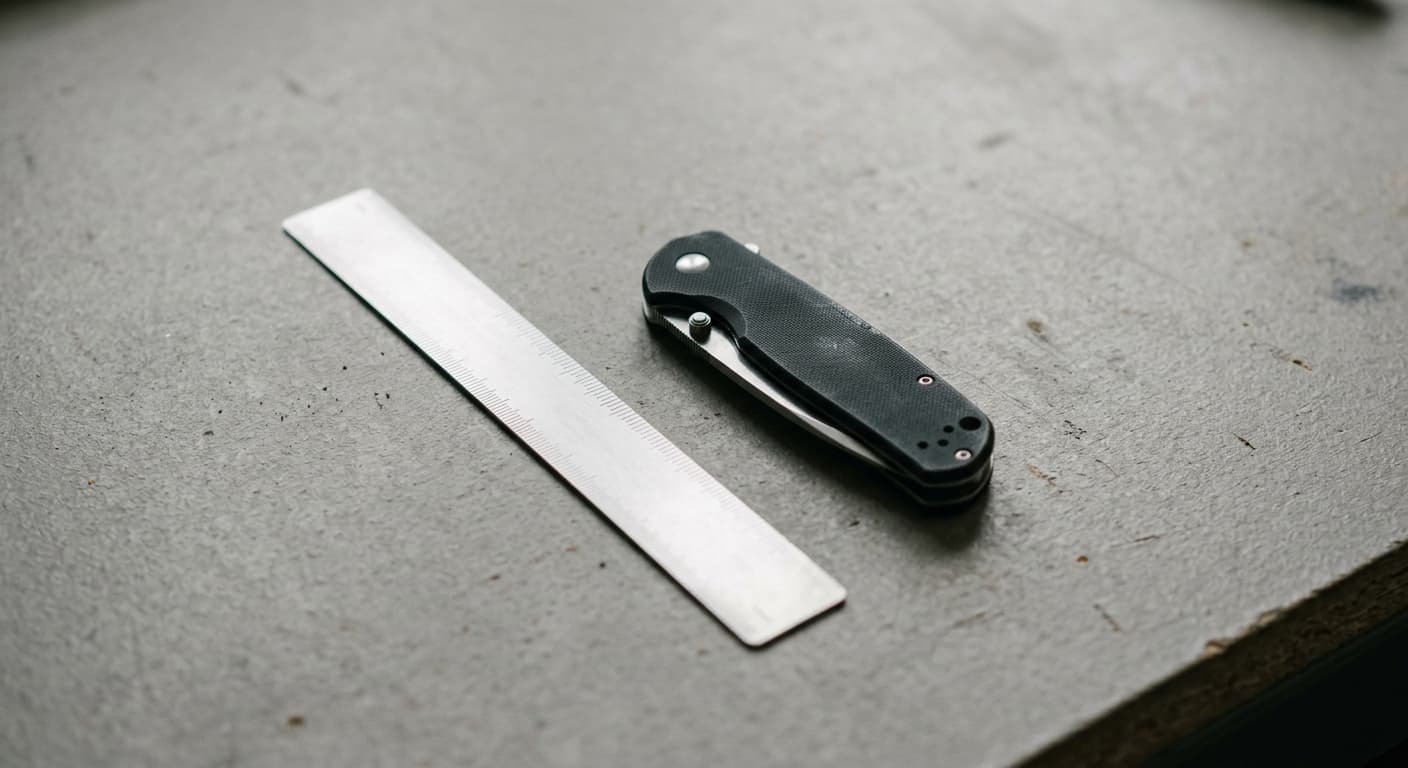
Wyoming has no statute naming a knife by type or setting a blade-length threshold. But Wyoming's core concealed-carry offense, Wyo. Stat. § 6-8-104(a), does not turn on the word "firearm." It bans carrying a concealed "deadly weapon," and Title 6's own definitions section defines "deadly weapon" functionally, as any device or instrument "which in the manner it is used or is intended to be used is reasonably capable of producing death or serious bodily injury." A knife carried or intended to be used that way can meet that test. The statute's own permit and permitless-carry exceptions are described elsewhere in the same chapter as authorizing a concealed "weapon," not only a firearm, so a Wyoming concealed-carry permit holder, or a resident who otherwise qualifies for permitless carry, likely carries that exemption over to a knife too, though no Wyoming court has confirmed this reading. A person without either has no exception, and Wyoming's one Supreme Court decision construing this statute is itself a concealed-knife prosecution. Statewide preemption exists, but it names "weapons" without defining the term, and a specific carve-out preserves a city or town's general police power over conduct that disturbs the public peace or safety.
Jurisdiction scope: This article addresses Wyoming state law only, primarily W.S. §§ 6-8-104, 6-8-105, 6-1-104, 6-5-209, 21-4-306, 6-8-401, and 15-1-103. It does not cover the mechanics of applying for a Wyoming concealed-carry permit in detail.
Can you own or carry a knife openly in Wyoming?
Yes. Wyoming law names no knife by type and sets no blade-length threshold, and nothing in Title 6, the Wyoming Criminal Code, restricts carrying a knife openly. Wyoming has no counterpart to the named-type knife statutes (switchblade, dirk, dagger, gravity knife) found in many other states.
Concealed carry: the "deadly weapon" test that reaches a knife used as one
Wyoming's concealed-carry statute is not limited to firearms on its face. W.S. § 6-8-104(a) provides: "A person who wears or carries a concealed deadly weapon is guilty of a misdemeanor punishable by a fine of not more than seven hundred fifty dollars ($750.00), imprisonment in the county jail for not more than six (6) months, or both for a first offense, or a felony punishable by a fine of not more than two thousand dollars ($2,000.00), imprisonment for not more than two (2) years, or both, for a second or subsequent offense," unless one of four exceptions applies.
The operative term is "deadly weapon," not "firearm." W.S. § 6-1-104(a) supplies Title 6's general definitions, and § 6-1-104(a)(xx) confirms "this act," for purposes of that definitions section, "means title 6 of the Wyoming statutes," so its definitions apply to § 6-8-104. Section 6-1-104(a)(iv) defines "deadly weapon" as a device "but is not limited to a firearm, explosive or incendiary material, motorized vehicle, an animal or other device, instrument, material or substance, which in the manner it is used or is intended to be used is reasonably capable of producing death or serious bodily injury." This is a functional, use-based test, not a categorical ban on an item. An ordinary knife carried and used for a lawful, non-threatening purpose does not fit this definition; a knife carried or intended to be used in a manner reasonably capable of producing death or serious bodily injury can.
The four listed exceptions in § 6-8-104(a) are not uniformly limited to a firearm carrier, on a careful reading of how the rest of the chapter describes them. Exception (i) exempts a peace officer. Exception (ii) exempts a person who "possesses a permit under this section," unconditioned on its face, with no reference to what the person is carrying at the time. Subsection (b) explains that the permit issued under this section is "a permit to carry a concealed firearm," but two related provisions describe what that permit actually authorizes more broadly than its own name suggests. § 6-8-104(t) opens: "No person authorized to carry a concealed weapon pursuant to paragraphs (a)(ii) through (iv) of this section shall carry a concealed firearm into" a list of restricted places. W.S. § 6-8-105(b) grants "persons lawfully carrying concealed weapons in Wyoming under W.S. 6-8-104(a)(ii) through (iv)" the right to "carry a concealed weapon" into government meetings, public airports, and public buildings. Both provisions describe the (a)(ii)-through-(iv) class as authorized to carry a concealed weapon generally, not merely a concealed firearm, which points toward reading exception (ii) itself as reaching a knife carried as a deadly weapon, not only the firearm the permit was formally issued for.
Exception (iii), for a person holding "a valid permit authorizing him to carry a concealed firearm" issued by another state, likewise describes only the out-of-state permit, not a limit on what is carried under Wyoming's own statute. Exception (iv), Wyoming's permitless-carry provision for residents, requires meeting several listed conditions "and possession of the firearm by the person is not otherwise unlawful," the one clause among these three exceptions that is unambiguously firearm-specific, though it reads as an eligibility condition (the person must also be someone who could lawfully possess a firearm) rather than a restriction on what object the exception covers. No Wyoming appellate decision has resolved whether a permit holder's or a permitless carrier's exception from § 6-8-104(a) extends to a knife specifically.
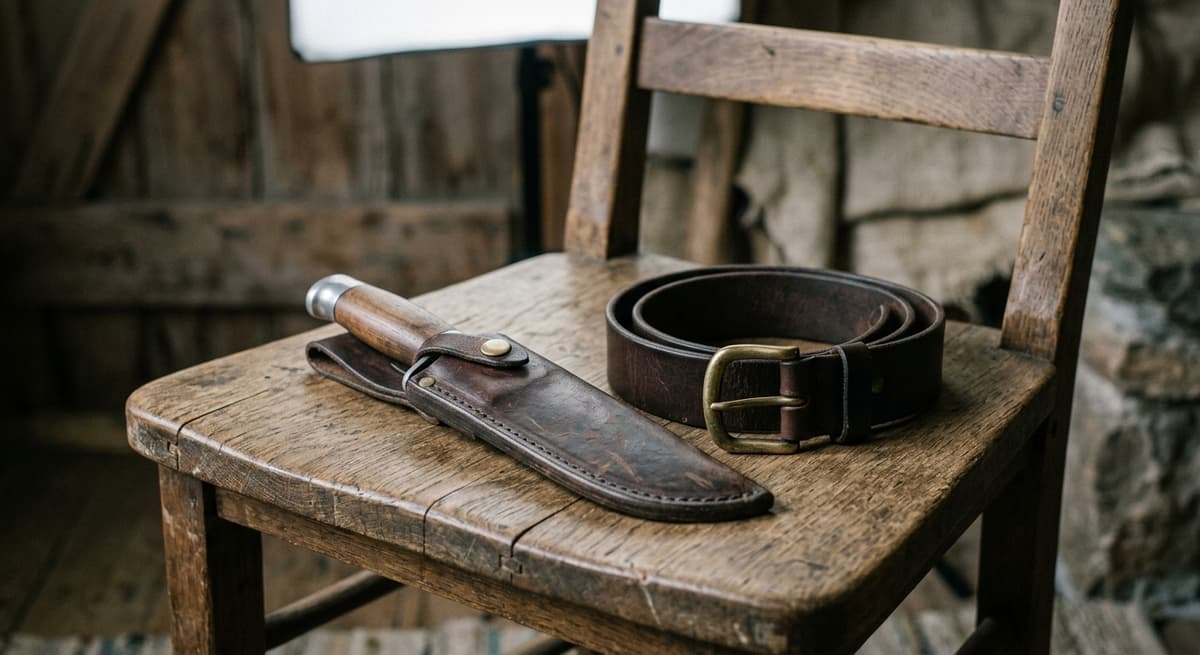
What is settled is that a person who holds no permit and does not otherwise qualify for permitless carry has no exception at all, and the base offense has been enforced against exactly that kind of case. In State v. McAdams, 714 P.2d 1236 (Wyo. 1986), the Wyoming Supreme Court's only decision construing § 6-8-104(a), a deputy stopped a woman for a vehicle-registration violation and found a knife in a sheath inside her jacket; she said she carried it for protection as a cocktail waitress, and the state charged her under § 6-8-104(a). The trial court dismissed the charge on state constitutional grounds, and the state brought the question up on a bill of exceptions rather than a conventional appeal. On that record, the Wyoming Supreme Court held "our concealed deadly weapons statute is not an undue restraint upon our constitutional right to bear arms." Under W.S. § 7-12-104(b), a decision on a bill of exceptions "shall not reverse nor in any manner affect the judgment of the court in the case in which the bill of exceptions was taken," so the dismissal against McAdams stood even though the statute itself was upheld for future cases, and the opinion never decides whether her knife met the "deadly weapon" definition. A sheathed knife carried for personal protection was, in other words, actually charged under this statute, and the constitutional challenge to the statute itself failed, even though the individual prosecution was not revived.
A separate offense, W.S. § 6-8-103, independently makes it a felony (up to 5 years, up to $1,000 fine) to "knowingly possess, manufacture, transport, repair or sell a deadly weapon with intent to unlawfully threaten the life or physical well-being of another or to commit assault or inflict bodily injury on another," which would also reach a knife carried with that specific intent, concealed or not.
Restricted places: jails, courtrooms, and schools
W.S. § 6-5-209 restricts taking a "deadly weapon," the same title-wide functional term, into specific facilities. Subsection (a) provides: "Except as authorized by a person in charge, a person commits a felony punishable by imprisonment for not more than ten (10) years, a fine of not more than ten thousand dollars ($10,000.00), or both, if that person takes or passes a deadly weapon into a jail, a state penal institution, the Wyoming boys' school, Wyoming girls' school, a correctional facility operated by a private entity pursuant to W.S. 7-22-102 or the state hospital." The "Wyoming boys' school" and "Wyoming girls' school" named here are the state's juvenile correctional facilities, not ordinary K-12 public schools. Subsection (b) separately makes it a misdemeanor, a felony on a second or subsequent offense within five years, to take a deadly weapon into a courtroom without the presiding judge's authorization.

For ordinary K-12 schools, the operative Wyoming statute is not a criminal offense but a mandatory school-discipline consequence. W.S. § 21-4-306(a)(v) lists as grounds for suspension or expulsion "possession, use, transfer, carrying or selling a deadly weapon as defined under W.S. 6-1-104(a)(iv) within any school bus... or within the boundaries of real property used by the district primarily for the education of students in grades kindergarten through twelve (12)." Subsection (c) requires the district superintendent to expel a student who violates this provision for one year, subject to case-by-case modification under subsection (d). Because this section expressly incorporates the § 6-1-104(a)(iv) definition of "deadly weapon" by name, the same functional test described above governs whether a knife triggers this mandatory expulsion.
A separate statute that had addressed weapons in a school-related context, W.S. § 21-3-132, was repealed by 2025 Wyoming Session Laws, chapter 61, § 3, and no substantive text remains at that citation in the current code.
The "gun free zones" framework: firearm-only restrictions, weapon-inclusive permissions
Wyoming's concealed-carry permit statute lists additional restricted places for permit holders, but the restriction and the companion permission are not scoped the same way. W.S. § 6-8-104(t) restricts where "a person authorized to carry a concealed weapon pursuant to paragraphs (a)(ii) through (iv)" may carry "a concealed firearm," listing law enforcement facilities, detention facilities, courtrooms, alcohol-serving establishments, any elementary or secondary school facility where the carrier is enrolled as a student (paragraph (ix)), any place where carrying firearms is prohibited by federal or state law (paragraph (xi)), and, until 2025, several other locations. § 6-8-104(y)(ii) defines "firearm," for purposes of this section only, as "any pistol, revolver or derringer, designed to be fired by the use of a single hand," a narrower, handgun-specific definition than the general Title 6 term. On its own terms, this restriction reaches only a firearm; it does not name or otherwise reach a knife.
Its companion statute is not written the same way. W.S. § 6-8-105, "the Wyoming Repeal Gun Free Zones Act," affirmatively grants a qualifying person the right to carry into specific places, and its grant subsections use "weapon," not "firearm." Subsection (b) grants "persons lawfully carrying concealed weapons in Wyoming under W.S. 6-8-104(a)(ii) through (iv)" the right to "carry a concealed weapon" into any governmental-entity meeting, legislative meeting, permitted area of a public airport, or public building not otherwise restricted. Subsection (c) is narrower: "Subject to W.S. 6-8-104(t)(ix) and subsection (f) of this section," it extends the same "carry a concealed weapon" language only to a person holding a § 6-8-104(a)(ii) permit specifically, not to the whole (a)(ii)-through-(iv) class that (b) covers, and it excludes an enrolled student under (t)(ix); subsection (f) separately lets each school district's board of trustees adopt rules governing employees and volunteers who carry on district property. The word "firearm" also appears in § 6-8-105 outside its savings clauses at subsections (d)(ii) and (d)(iii): the campus-housing storage provisions at (d)(vii) and the school-district carry rules at (f) are both written in terms of a "firearm." Read on its own text, § 6-8-105's subsection (b) extends to a concealed knife meeting the deadly-weapon test for anyone who qualifies under § 6-8-104(a)(ii) through (iv); subsection (c) extends the same reading only to an (a)(ii) permit holder who is not an enrolled student, into the athletic-event and school-facility places it lists. Several subsections of § 6-8-104(t), specifically (iv), (v), (vi), and (x), were repealed by 2025 Wyoming Session Laws, chapter 61, § 3, the same enactment that repealed § 21-3-132, consistent with § 6-8-105's broader 2025 expansion of where a qualifying carrier may go.
Statewide preemption, and the carve-out for a city's general police power
W.S. § 6-8-401(c) provides: "The sale, transfer, purchase, delivery, taxation, manufacture, ownership, transportation, storage, use and possession of firearms, weapons and ammunition shall be authorized, regulated and prohibited by the state, and regulation thereof is preempted by the legislature of the state of Wyoming. Except as authorized by W.S. 15-1-103(a)(xviii) and 23-1-302, no state agency, city, town, county, political subdivision or any other entity shall authorize, regulate or prohibit the sale, transfer, purchase, delivery, taxation, manufacture, ownership, transportation, storage, use, carrying or possession of firearms, weapons, accessories, components or ammunition except as specifically provided by this chapter." By listing "weapons" separately from "firearms," the statute's own text suggests it reaches more than firearms alone.
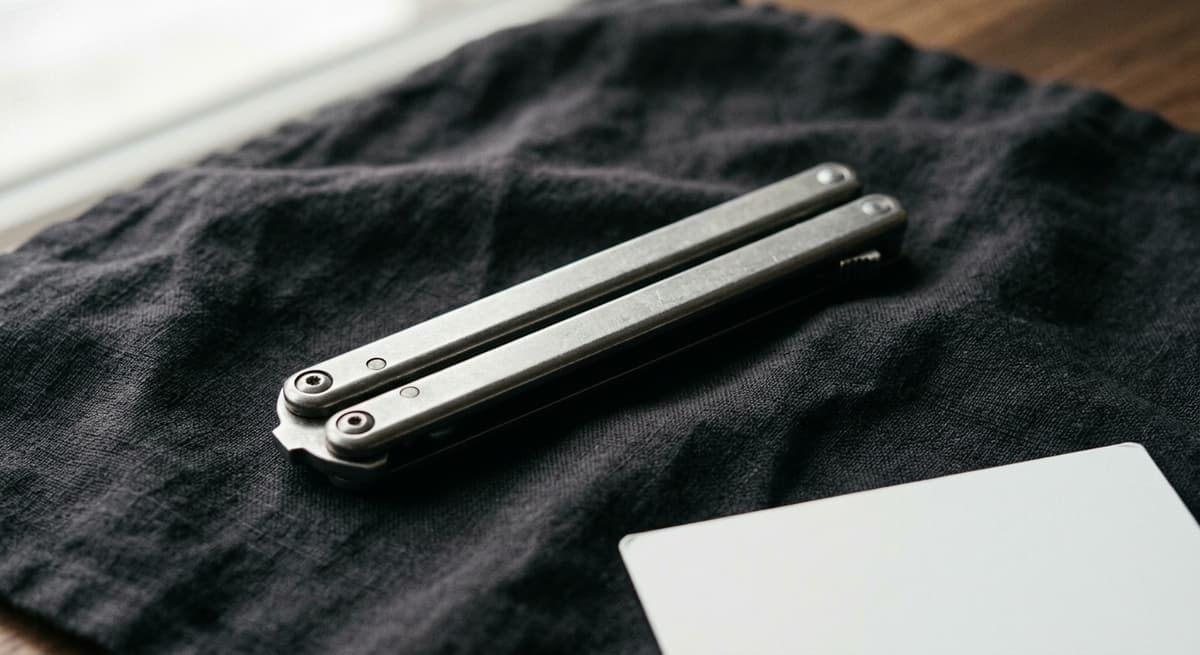
But the term "weapon" is not defined anywhere in the chapter. W.S. § 6-8-403(a), titled "Definitions," defines only "ammunition," "borders of Wyoming," "firearm," "firearms accessories," "generic and insignificant parts," "manufactured," and "antique firearm," and its own subsection (a)(vii) limits "this act" for purposes of those definitions to "W.S. 6-8-402 through 6-8-406," a narrower scope that does not even include § 6-8-401 itself. Title 6's general definitions section, W.S. § 6-1-104, likewise defines "deadly weapon" but not the broader, undefined term "weapon." No definition in Title 6 confirms whether a knife specifically falls within the undefined "weapon" as used in this preemption statute; the statute's structure and its use of "weapon" as a term distinct from "firearm" point toward broader coverage, but that reading is not settled by any definition.
The preemption statute's own carve-out matters here, because it does not exempt weapons regulation specifically, but a much broader municipal power. W.S. § 15-1-103(a)(xviii) authorizes a city or town's governing body to "regulate, prevent or suppress riots, disturbances, disorderly assemblies or parades, or any other conduct which disturbs or jeopardizes the public health, safety, peace or morality, in any public or private place." That general police-power authority is preserved by name in § 6-8-401(c)'s own text, so a municipal ordinance addressing knife-related conduct through that authority, rather than through a weapons-specific regulation, is not obviously reached by the preemption statute at all. The preemption statute's second named carve-out, W.S. § 23-1-302, is unrelated to municipal power: it is the Wyoming game and fish commission's "powers and duties," and its only weapons-relevant clause lets the commission fix hunting seasons and bag limits "for any type of legal weapon," a wildlife-management provision, not another source of local authority.
Federal law: what it does and does not reach
Federal law does not ban an individual from owning or carrying a switchblade. The Federal Switchblade Act, 15 U.S.C. §§ 1241 to 1245, restricts interstate commerce in switchblade knives, barring their manufacture for, or introduction, transport, and sale in, interstate commerce, and, in 15 U.S.C. § 1245, makes it a federal offense to knowingly possess, manufacture, sell, or import a ballistic knife in or affecting interstate commerce or within federal territorial jurisdiction. Sections 1242 and 1243, the two operative offense provisions, do not apply to certain knives and people listed as exceptions in § 1244. A 2009 amendment, § 1244(5), exempts any knife with a spring, detent, or other closure-bias mechanism that requires hand, wrist, or arm exertion on the blade itself to overcome the bias and assist opening, the carve-out that keeps modern assisted-opening folding knives legal in interstate commerce. A separate exemption, § 1244(4), covers a person with only one arm possessing or carrying a switchblade with a blade three inches or less.
Disclaimer: This article provides general legal information about Wyoming's knife laws as of September 2026. It is not legal advice. Consult a lawyer licensed in Wyoming for advice about a specific situation.
For a state-by-state comparison, see knife laws by state. Wyoming's self-defense statutes are covered separately on the Wyoming self-defense laws page.
Statutes cited reflect their in-force version as of 2026-09-18. Last updated: 2026-09-18.
Frequently Asked Questions
Is it legal to carry a knife concealed in Wyoming?
It depends on how the knife is carried or intended to be used, and on whether the carrier has a concealed-carry permit or otherwise qualifies for permitless carry. W.S. § 6-8-104(a) bans carrying a concealed 'deadly weapon,' a term W.S. § 6-1-104(a)(iv) defines functionally as a device 'which in the manner it is used or is intended to be used is reasonably capable of producing death or serious bodily injury.' An ordinary utility knife typically does not meet that test. The state's only Supreme Court decision on this statute, State v. McAdams (1986), came from a charge against a woman carrying a sheathed knife she said she carried for personal protection; the trial court dismissed the charge on state constitutional grounds, and the Wyoming Supreme Court upheld the statute against that challenge without reviving the dismissed charge or deciding whether her knife met the 'deadly weapon' definition. A permit holder or a resident who otherwise qualifies for permitless carry is described elsewhere in the same chapter as authorized to carry a concealed weapon generally, not only a firearm, which likely extends that exemption to a knife as well, though no Wyoming court has confirmed it.
Does Wyoming have a blade-length limit for knives?
No. No Wyoming statute names a knife by type or sets a blade-length threshold for general possession or carry.
Does Wyoming's permitless carry law cover knives?
Likely yes for a person who qualifies for it, though no Wyoming court has confirmed this. The permitless-carry exception is § 6-8-104(a)(iv), and the permit exception is (a)(ii); the surrounding statutes, § 6-8-104(t) and § 6-8-105(b), describe a person who qualifies under either as authorized to carry a concealed 'weapon,' not only a firearm. Only exception (iv)'s closing clause, requiring that 'possession of the firearm by the person is not otherwise unlawful,' is firearm-specific, and it reads as an eligibility condition rather than a limit on what may be carried. A person who holds no permit and does not otherwise qualify for permitless carry has no such exception.
Can a student be expelled for having a knife at school in Wyoming?
Yes. W.S. § 21-4-306(a)(v) requires a one-year expulsion for possessing, using, transferring, carrying, or selling a 'deadly weapon as defined under W.S. 6-1-104(a)(iv)' on a school bus or K-12 school property, and that definition can reach a knife depending on how it is used or intended to be used.
Does Wyoming preempt local knife ordinances?
Wyoming's preemption statute, W.S. § 6-8-401(c), names 'weapons' separately from 'firearms,' suggesting it reaches knives, but the term 'weapon' is not defined anywhere in the chapter or in Title 6's general definitions, so no definition confirms whether it specifically preempts a local knife ordinance. The preemption statute's own carve-out, W.S. § 15-1-103(a)(xviii), preserves a city or town's general power to regulate conduct that disturbs public health, safety, peace, or morality, which is broader than a weapons-specific power and is not obviously displaced by the preemption statute.
Updates
Independently fact-checked against the cited primary sources
Sources and References
- Wyo. Stat. § 6-8-104 - Wearing or carrying concealed weapons; penalties; exceptions; permits(wyoleg.gov).gov
- Wyo. Stat. § 6-1-104 - Definitions (deadly weapon)(wyoleg.gov).gov
- Wyo. Stat. § 6-8-103 - Possession, manufacture or disposition of deadly weapon with unlawful intent; penalties(wyoleg.gov).gov
- Wyo. Stat. § 6-5-209 - Taking deadly weapons into jails, penal institutions, mental hospitals or courtrooms; penalties(wyoleg.gov).gov
- Wyo. Stat. § 21-4-306 - Suspension or expulsion; grounds(wyoleg.gov).gov
- Wyo. Stat. § 6-8-105 - Exceptions for state issued concealed carry permits; penalty (Wyoming Repeal Gun Free Zones Act)(wyoleg.gov).gov
- Wyo. Stat. § 6-8-401 - Firearm, weapon and ammunition regulation and prohibition by state(wyoleg.gov).gov
- Wyo. Stat. § 6-8-403 - Definitions(wyoleg.gov).gov
- Wyo. Stat. § 15-1-103 - General powers of governing bodies(wyoleg.gov).gov
- State v. McAdams, 714 P.2d 1236 (Wyo. 1986)(courtlistener.com)
- Wyo. Stat. § 7-12-104 - Effect of decision on bill of exceptions(wyoleg.gov).gov
- Wyo. Stat. § 23-1-302 - Powers and duties of the game and fish commission(wyoleg.gov).gov
- Wyo. Stat. § 21-3-132 - Repealed by Laws 2025, ch. 61, § 3(wyoleg.gov).gov
- 15 U.S.C. 1241-1245 - Federal Switchblade Act, interstate commerce and ballistic-knife scope(law.cornell.edu)
- 15 U.S.C. 1244 - exceptions, including the 2009 assisted-opening carve-out and the one-arm exception(law.cornell.edu)