Disorderly Conduct and Trespass Laws by State (2026 Guide)
Independently fact-checked against primary sources (last audited October 19, 2026). · 153 primary sources cited on this page. How we verify our legal content
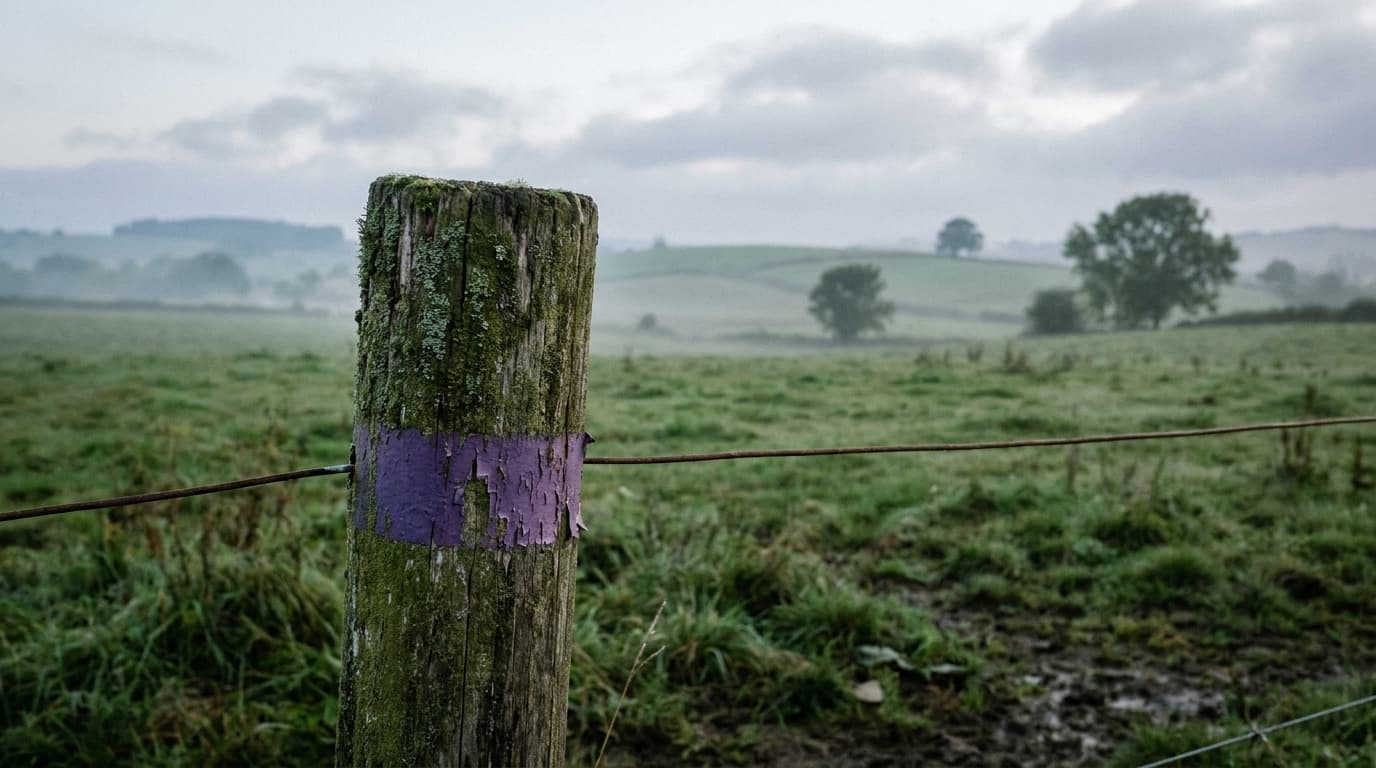
Disorderly conduct is a state offense that punishes conduct such as fighting in public, unreasonable noise, words likely to provoke violence or blocking traffic, and in most states it is a low-level misdemeanor or an even lower non-criminal violation. Criminal trespass is entering or staying on property without permission, usually after notice by words, signs, fencing or, in 17 states, purple paint marks; it is a misdemeanor or a lower grade in its ordinary forms in every state, but 39 states make some form of trespass a felony.
The details change sharply at each state line: the name of the offense, the grade, the number of trespass degrees and what counts as a no trespassing notice. The comparison table below covers all 50 states and the District of Columbia, and each state page has the full statute text, penalties and notice rules.
Information last verified on 2026-10-18. This article has not been reviewed by a licensed lawyer.
Jurisdiction scope: This guide compares the state criminal statutes on disorderly conduct, related public-order offenses and criminal trespass in all 50 states and the District of Columbia, and summarizes the federal statutes and regulations that apply on federal property. It does not cover city and county ordinances, local noise limits and quiet hours (see noise ordinance laws by state), the civil process for removing squatters (see squatters' rights by state), the use of force against intruders (see self-defense laws by state) or civil trespass lawsuits. Each state's own page has the statute text and the full penalty ranges.
What is disorderly conduct?
Disorderly conduct is a catch-all public-order offense defined by each state's criminal code. The typical statute lists specific acts and requires a mental state. Alabama's version (Ala. Code 13A-11-7), for example, requires intent to cause public inconvenience, annoyance or alarm, or recklessly creating a risk of it, and then lists fighting, unreasonable noise, abusive or obscene language in public, disrupting a meeting, blocking traffic and refusing a lawful order to disperse.
That model, intent or recklessness plus a list of acts, appears in many codes. Arkansas, Connecticut, Delaware, Kentucky, New York, Oregon, Pennsylvania and Vermont all use a version of the public inconvenience, annoyance or alarm formula. Other states use different tests: Kansas asks whether the person knows or should know the act will alarm, anger or disturb others, Nevada and Idaho require that the person act "maliciously and willfully," and Wyoming requires "knowledge or probable cause to believe he will disturb the peace."
Disorderly conduct, breach of the peace and disturbing the peace
The same kind of conduct goes by different names:
- Breach of the peace. Connecticut has both breach of the peace in the second degree (53a-181) and a separate disorderly conduct offense (53a-182). Nevada (NRS 203.010) and Wyoming (W.S. 6-6-102) call their main offense breach of the peace, South Carolina keeps breach of the peace as a common-law offense beside its public disorderly conduct statute (16-17-530), and Florida's section 877.03 covers both labels.
- Disturbing the peace. California splits the subject: Penal Code 415 (disturbing the peace) covers fighting, malicious loud noise and offensive words, while Penal Code 647, the section titled disorderly conduct, covers public lewd conduct, lodging without permission and public intoxication. Idaho (18-6409), Louisiana (14:103), Nebraska (28-1322) and Oklahoma (21 O.S. 1362) use disturbing the peace, and Missouri uses peace disturbance (574.010).
- Disorderly persons. Massachusetts punishes "disorderly persons and disturbers of the peace" (G.L. c.272 s.53(b)), Michigan punishes being a "disorderly person" (MCL 750.167), and New Jersey grades disorderly conduct as a petty disorderly persons offense, which is not a crime under N.J.S.2C:1-4.
Nine states have no general offense named disorderly conduct: Idaho, Louisiana, Massachusetts, Michigan, Missouri, Nebraska, Nevada, Oklahoma and Wyoming. Mississippi uses the label only for two narrow offenses, refusing an officer's order where a breach of the peace may follow (97-35-7) and interfering with a business (97-35-5), and keeps its everyday disturbing-the-peace offenses in sections 97-35-13 and 97-35-15.
Noise, swearing and fighting words
Many statutes include an unreasonable noise clause, but quiet hours and decibel limits are usually set by local ordinances; our guide to noise ordinance laws by state covers those. Some state statutes are narrower: Washington's disorderly conduct statute (RCW 9A.84.030) reaches noise only near a funeral, burial, viewing, procession or memorial service, and Georgia's section 16-11-39 has no noise clause at all.
Language clauses are where courts have drawn the firmest limits. Under Chaplinsky v. New Hampshire (1942), states may punish "fighting words," and several state courts have read their statutes down to that category:
- Florida: in State v. Saunders (1976), the Florida Supreme Court held that section 877.03, as applied to speech, reaches only fighting words and knowingly false reports of a physical hazard.
- Georgia: in Freeman v. State (2017), the Georgia Supreme Court held that the violent-or-tumultuous clause reaches expression only when it is fighting words or a true threat.
- Ohio: in State v. Hoffman (1979), the Ohio Supreme Court held that the coarse-utterance and abusive-language wording of R.C. 2917.11(A)(2) can punish speech only if the words are fighting words.
- Massachusetts: in Commonwealth v. A Juvenile (1975), the Supreme Judicial Court held that the idle and disorderly persons provision cannot constitutionally support convictions for offensive and abusive language.
Other states wrote the limit into the statute. Arizona's abusive-language clause applies only to language used to a person present "in a manner likely to provoke immediate physical retaliation" (A.R.S. 13-2904(A)(3)), Kansas defines fighting words in K.S.A. 21-6203 itself, and Virginia's disorderly conduct statute (18.2-415) expressly does not reach "the utterance or display of any words." Courts have also invalidated specific clauses: the Minnesota Supreme Court held the meeting-disturbance clause of 609.72 facially unconstitutional in State v. Hensel (2017), and the Sixth Circuit held Michigan's begging clause unconstitutional in Speet v. Schuette (2013).
Is disorderly conduct a misdemeanor?
In most states, yes, usually in the lowest or second-lowest misdemeanor class. In seven states the base offense sits below the misdemeanor level:

| State | Grade of the base offense | Statute |
|---|---|---|
| Colorado | Petty offense (up to $300, up to 10 days, or both) | C.R.S. 18-9-106 |
| Hawaii | Violation (fine up to $1,000) | HRS 711-1101 |
| New Hampshire | Violation (fine up to $1,000, no jail) | RSA 644:2 |
| New Jersey | Petty disorderly persons offense (up to 30 days, $500) | N.J.S.2C:33-2 |
| New York | Violation (up to 15 days, $250) | Penal Law 240.20 |
| Pennsylvania | Summary offense (up to 90 days, $300) | 18 Pa.C.S. 5503 |
| Utah | Infraction, first offense (fine up to $750) | Utah Code 76-9-102 |
Three more keep the base offense to a fine: Texas makes most forms a Class C misdemeanor with a fine of up to $500 (Penal Code 42.01), Ohio's base form is a minor misdemeanor with a fine of up to $150 (R.C. 2917.11), and Massachusetts punishes a first disorderly persons offense with a fine of up to $150 and no jail (c.272 s.53(b)). Everywhere else the base offense carries possible jail, ranging from 24 hours or a $100 fine in West Virginia (61-6-1b) and 72 hours for a first conviction in Alaska (AS 11.61.110) to up to 12 months in Georgia (16-11-39) and Virginia, where disorderly conduct is a Class 1 misdemeanor (18.2-415).
Disorderly conduct climbs in grade in a few recurring ways:
- Continuing after a warning. Hawaii, New Hampshire, Ohio, Pennsylvania and Utah raise the grade when the person keeps going after a warning or request to stop. West Virginia makes persistence after an officer's request an element of the offense itself.
- Repeat convictions. Missouri makes a second peace disturbance conviction a class A misdemeanor (574.010), Vermont raises the maximum to 120 days on a repeat (1026), South Dakota makes a fourth offense within 10 years a Class 1 misdemeanor (22-18-35) and Utah raises the class with priors within five years.
- Funerals. Kentucky's first-degree disorderly conduct (525.055) and Oregon's funeral form are Class A misdemeanors, Indiana makes disorderly conduct that adversely affects a funeral within 500 feet a Level 6 felony, and Michigan makes disturbing a funeral within 500 feet a disorderly-person felony (MCL 750.167d).
- Weapons and other felony forms. Arizona makes the deadly-weapon form a class 6 felony (13-2904), Connecticut's breach of the peace in the first degree (placing a fake explosive or hazardous substance) is a class D felony (53a-180aa), and Mississippi's offense of refusing an officer's order becomes a felony when the violation shows willful and wanton disregard for the life or safety of another and someone is injured, maimed or killed (97-35-7(3)).
Each state sets the jail and fine range for its classes in a general sentencing statute; our guide to felony and misdemeanor classes by state has the class tables.
Related public-order offenses
Public intoxication. Several states do not make being drunk in public a crime by itself. Idaho bars prosecution under any law that has being intoxicated as an element, with listed exceptions (39-310), Minnesota provides that public drunkenness is not a crime (340A.902), Nevada provides that being found intoxicated is not a public offense (NRS 458.260), and Connecticut repealed its intoxication offenses. Others punish it only with an added element: Alabama (13A-11-10), California (Penal Code 647(f)), Florida (856.011), Indiana, Tennessee (39-17-310) and Texas (49.02) all require endangerment, a disturbance or a similar condition.
Riot and unlawful assembly. Grades run from misdemeanor to felony. Riot is a misdemeanor in Alabama, Colorado (in its basic form), Nevada and Tennessee (in its basic form), and a felony in Alaska (class C, AS 11.61.100), Arizona (class 5), Florida (third degree), Iowa (class D), Oregon (Class C) and Pennsylvania (third degree). Rhode Island has no general riot statute.
Funeral disruption. Many codes have a buffer-zone offense for funerals, with distances that range from 100 feet in Vermont (13 V.S.A. 3771) to 1,500 feet in Montana. Repeat violations become felonies in several states, including Delaware, Illinois, Iowa, New Mexico and North Carolina.
Public camping. Tennessee makes camping on public property a Class E felony, but only after an official warning and continued camping or a return within 24 hours (39-14-414). Indiana made street camping on public land a Class C misdemeanor after a warning and a 48-hour wait, effective July 1, 2026, and Kentucky's unlawful camping offense (511.110) is a violation for a first offense.
When a fight involves physical contact, the charge may fall under assault or battery instead; see assault and battery laws by state.
What is criminal trespass?
Criminal trespass is knowingly entering or remaining on property when not licensed, invited or privileged to be there. Alabama's definition (13A-7-1(3)) is typical, and it sets three rules many states share:
- Places open to the public. A person in a store or other place open to the public is there lawfully unless they defy a lawful order not to enter or remain, personally communicated by the owner or another authorized person. Alaska, Colorado, Delaware, New York and Oregon use the same rule.
- Closed areas. Permission to be in the public part of a building does not extend to the parts that are not open to the public.
- Unfenced, unused land. On unimproved, apparently unused land that is not fenced, a person is there with license unless notice is given personally or by conspicuous posting. Alaska, Colorado and Washington have similar rules.
Trespass degrees
States organize trespass in three main ways:
- Three numbered degrees: Alabama, Arizona, Colorado, Connecticut, Delaware, Kentucky and New York. The lowest degree is often a violation or other non-criminal grade (Alabama, Delaware and Kentucky make third degree a violation, Colorado a petty offense) and in Alabama, Colorado, Delaware and Kentucky the highest degree covers dwellings.
- Two numbered degrees: Alaska, Hawaii, Missouri, Nebraska, North Carolina, Oregon and Washington. Hawaii adds simple trespass, a violation, below its two degrees.
- No numbered degrees: the other 37 jurisdictions. Some use a single statute graded by place (Texas Penal Code 30.05, Pennsylvania 18 Pa.C.S. 3503), some raise the penalty with each conviction (Louisiana 14:63, Idaho 18-7008), and some split the subject across several place-specific statutes (Maryland, Michigan, Virginia).
The lowest tier is often below the misdemeanor level. Missouri's trespass in the second degree is an infraction with a fine of up to $400 (569.150), Wisconsin's trespass to land is a Class B forfeiture, a money penalty of up to $1,000 (943.13), and New Hampshire's criminal trespass is a violation by default (635:2). North Dakota allows a $250 noncriminal citation for posted or fenced land, and Idaho makes a first trespass with no damage, where the person leaves when ordered, a $300 infraction.
Being told to leave
Being told to leave by the owner or another authorized person is a common form of notice, and many states treat defiance of a personal order as the more serious form. Nebraska raises second-degree trespass to a Class II misdemeanor when a person defies an order to leave personally communicated by the owner (28-521), Pennsylvania's defiance of a personal order to leave is a third-degree misdemeanor (3503), and Hawaii counts a written warning from commercial premises, communicated within a one-year period, as the basis for second-degree trespass (708-814(1)(b)).
Squatting statutes now sit beside trespass in several codes, including Arkansas (5-39-215), Georgia (16-7-21.1), Missouri (569.200) and North Dakota. The civil process for removing an occupant is a separate subject; see squatters' rights by state. Questions about removing an intruder or defending property belong to self-defense laws by state, and the steps for reporting a trespass are on our page about how to charge someone with trespassing.
Is trespassing a felony?
Ordinary trespass is a misdemeanor or lower grade in every state. Counting from the table below, 39 states make some form of trespass or unauthorized entry a felony, 10 jurisdictions have no felony trespass offense, and Maine and New Jersey, which grade their top trespass forms as a Class C crime (up to 5 years) and a crime of the fourth degree (up to 18 months), are counted separately. The felony forms fall into a few groups; a state can fall in more than one, and the table gives every state's forms:
- Dwellings and occupied buildings, including Arizona (residential structure, class 6), Colorado (inhabited or occupied dwelling, class 6), Louisiana (unauthorized entry of an inhabited dwelling, 14:62.3), Nevada (invasion of the home), North Dakota (dwelling or highly secured premises, class C), Vermont (dwelling house, up to 3 years), Pennsylvania (building or occupied structure, third-degree felony) and Wyoming (an occupied structure plus battery). Illinois (19-4), Ohio and Hawaii reach entry when a person is inside or likely to be. New Mexico's breaking and entering (30-14-8) reaches any dwelling, structure or vehicle entered by fraud, deception or breaking, and requires no intent to commit a crime inside.
- Critical infrastructure, utilities and nuclear sites. Alabama (damage, interference or an armed drone), Arizona (a posted critical public service facility), Arkansas, Florida (812.141(4)), Indiana, Iowa (enclosed public utility property), Kansas, Louisiana, Michigan (enclosed and posted key facilities), Montana, North Carolina (listed water, agricultural, energy or wastewater facilities), Ohio, Oklahoma, Virginia (an unauthorized drone over critical infrastructure) and Wisconsin (energy provider property), and nuclear facilities in Illinois, Kansas, Mississippi and Missouri. Several of these require intent to damage or impede the facility, so read the condition in the table.
- Research and agricultural sites, including Oregon (entering an agricultural research facility with intent to damage or take its research materials, 164.889), Colorado (agricultural land with intent to commit a felony) and Hawaii (agricultural land with a dangerous instrument, or hunting there without permission).
- Weapons, including Florida (armed trespasser, third-degree felony), New York, where criminal trespass in the first degree (140.17) requires an explosive or deadly weapon, or a gun plus accessible ammunition, in a building, and the armed domestic violence shelter forms in South Carolina (16-25-125) and North Carolina (14-134.3).
- Repeat offenses, including Arkansas (two or more prior Class A trespass convictions), Idaho (damage over $1,000 with two or more priors in 10 years), Indiana (a prior conviction for the same property), New Hampshire (a subsequent offense causing damage over $1,500) and the domestic violence routes below.
- Unlawful occupancy and damage by occupants or trespassers. Arkansas (a third unlawful squatting offense), Florida (an unlawful occupant or trespasser causing $1,000 or more in damage, 806.13(4)), Michigan (750.553 on a second conviction), Mississippi (over $1,000 in damage while unlawfully occupying, among its 2025 squatting fraud felonies), Nevada (repeat housebreaking or unlawful occupancy), North Dakota, Oklahoma, South Carolina, Texas (damaging a habitation by $1,000 or more in the course of a trespass, 28.03), Utah (a trespasser causing $1,500 or more in damage), West Virginia and Wyoming.
- Disaster areas. Kentucky makes first-degree trespass in a dwelling a Class D felony only during a declared disaster emergency, within the impacted area (511.060).
The domestic violence repeat route
In six states, a trespass offense, and in Rhode Island and Wisconsin disorderly conduct too, can count toward a felony through the domestic violence statutes rather than the trespass statute. Each state sets its own list of protected relationships and its own prior-conviction rule:
- Alabama: third-degree trespass against a current or former spouse, a listed relative or step-relative, a co-parent, a present household member (other than a non-romantic co-resident) or a current or former dating partner is third-degree domestic violence, a Class C felony on a third or later conviction, or after a prior first- or second-degree domestic violence, strangulation or substantially similar out-of-state conviction (13A-6-132(d), (e)).
- Colorado: a misdemeanor trespass that includes an act of domestic violence, meaning a crime used to coerce, control, punish, intimidate or take revenge on a current or former intimate partner, is a class 5 felony when the defendant has three or more prior domestic violence convictions, separately brought and tried and arising from separate episodes (18-6-800.3(1), 18-6-801(7)(a)).
- Ohio: when the victim was a family or household member as R.C. 2919.25 defines the term, a prior aggravated trespass conviction (2911.211) makes a later domestic violence offense under 2919.25(A) or (B) a fourth-degree felony, or a third-degree felony after two or more such prior offenses (2919.25(D)(3), (D)(4)).
- Rhode Island: trespass (11-44-26) or disorderly conduct (11-45-1) committed by one family or household member against another, as section 12-29-2 uses the term, is a domestic violence crime; a second violation carries 10 days to 1 year, and a third or later violation is a felony punishable by 1 to 10 years (12-29-5).
- Utah: criminal trespass by one cohabitant against another is a domestic violence offense (77-36-1). A cohabitant (78B-7-102) includes a person 16 or older who is or was a spouse or lived with the other as a spouse, is a parent, grandparent or other relative within the second degree, has a child in common, lives or has lived in the same residence, or is or was in a consensual sexual relationship with the other. A class A trespass in a dwelling becomes a third-degree felony when committed or convicted within 10 years after a prior qualifying domestic violence conviction, or within five years after a prior property damage offense conviction (77-36-1.1(4)(b)).
- Wisconsin: when disorderly conduct or a misdemeanor trespass is also an act of domestic abuse (968.075(1)(a)) against a spouse or former spouse, an adult the person lives or lived with, or an adult with whom the person has a child in common, a domestic abuse repeater faces up to 2 more years, and the increase "changes the status of a misdemeanor to a felony" (939.621). A repeater is a person who commits the act within 72 hours after a domestic abuse arrest, or who was convicted on 2 or more separate occasions in the prior 10 years of crimes carrying, or waiving, the domestic abuse surcharge.
Two other domestic violence trespass felonies are stand-alone offenses rather than repeat routes, and sit in their state rows: entering domestic violence shelter grounds with a dangerous weapon in South Carolina (16-25-125) and armed domestic criminal trespass at a domestic violence safe house in North Carolina (14-134.3). In the District of Columbia, the repeat-conviction statute (22-1804) raises the maximum sentence for a repeat unlawful entry or disorderly conduct conviction, but neither offense becomes a felony.
Entering a building with intent to commit a crime inside is burglary, a separate offense with its own felony grades in every state; each state page names its burglary statute. Whether a disorderly conduct or trespass conviction can later be cleared depends on each state's record-sealing law; see expungement laws by state.
Do you need a No Trespassing sign?
Not always. Many states recognize several forms of notice, and a sign is only one:
- Personal communication, oral or written, from the owner or another authorized person. Indiana and Illinois also count certain court orders.
- Posting in a manner reasonably likely to come to the attention of intruders. Some states set sign specifications: Florida requires letters at least 2 inches high plus the owner's name, no more than 500 feet apart and at each corner; Hawaii requires 2-inch letters and at least three signs to a mile; New Hampshire requires 2-inch block letters no more than 100 yards apart; New Mexico requires English signs of at least 144 square inches; and Wisconsin requires signs at least 11 inches square in at least 2 places for every 40 acres.
- Fencing or other enclosure designed to exclude intruders, which Connecticut, Nebraska, New Jersey, Pennsylvania and South Dakota count as notice by itself.
- Cultivation. Florida and Washington treat visibly cultivated land as notice, and Texas counts a crop grown for human consumption that is under cultivation.
Some places need no notice at all. Delaware's third-degree trespass has no sign or fence requirement, and hunting on another's land without permission is an offense even on unposted land in states such as Colorado (33-6-116), Connecticut and Mississippi (49-7-79). Georgia's trespass statute (16-7-21) works the other way: entry after notice requires prior notice from the owner, the rightful occupant or an authorized representative, and the section has no sign, fence or paint-mark provision.
Purple paint law states
A purple paint law lets an owner mark trees or posts with purple paint instead of putting up signs. Seventeen states have a purple paint rule of some scope, and the rules differ in where the paint counts and how it must be applied.
General no trespassing notice (14 states): Alabama, Arkansas, Illinois, Indiana, Kansas, Kentucky, Louisiana, Maine, Missouri, Pennsylvania, South Carolina, Tennessee, Texas and West Virginia. Several attach conditions:
- Illinois excludes municipalities of over 2,000,000 inhabitants (720 ILCS 5/21-3(b-15)), and Pennsylvania excludes counties of the first or second class (3503(b)(3)).
- Tennessee requires at least one sign at a major entrance explaining that purple paint means no trespassing, and the paint's effect is to remove a statutory consent defense (39-14-405(c)(2)).
- West Virginia accepts purple paint, but signs must still be posted at all roads, driveways or gates of entry (61-3B-1(4)(B)).
- Kentucky applies its purple paint rule to second-degree trespass (511.070(2)), and Kansas puts its rule in the wildlife title (32-1013(b)), which the criminal trespass statute adopts.
Limited scope (3 states): North Carolina allows purple marks for land posted against hunting, fishing, trapping and pine straw removal (G.S. 14-159.7(2)); Virginia allows aluminum or purple marks for land posted against hunting, fishing and trapping (18.2-134.1); and Minnesota added purple paint in 2026 for outdoor-recreation posting under 97B.001, with signs at the primary corners. In all three, the general trespass statutes do not name paint marks.
Alabama, Kentucky, Louisiana and Texas share one standard for the marks: vertical marks at least 8 inches long and 1 inch wide, with the bottom 3 to 5 feet off the ground, no more than 100 feet apart on forest land or 1,000 feet apart on other land. The other ten general-notice states and the two hunting-posting states set their own rules:
| State | Mark size and height | Spacing | Other condition |
|---|---|---|---|
| Arkansas | At least 8 inches long, bottom 3 to 5 feet high | 100 feet on forest land; 1,000 feet and at each entry point on other land | Light purple exterior paint under the Forestry Commission rule |
| Maine | At least 1 inch wide and 8 inches long, bottom 3 to 5 feet high | No more than 100 feet apart and at vehicle entries from a public road | OSHA Safety Purple or a close match |
| Illinois, Indiana and Missouri | Trees: at least 8 inches long, bottom 3 to 5 feet high; posts: top 2 inches marked, bottom 3 to 5 feet 6 inches high | Trees no more than 100 feet apart; posts no more than 36 feet apart | All three: all owners of a shared fence must agree before marking it |
| Kansas | At least 8 inches long, bottom 3 to 5 feet high | No spacing set | Posting in the wildlife title (32-1013(b)), which the trespass statute adopts |
| North Carolina | At least 8 inches long, 3 to 5 feet up | No more than 100 yards apart | Hunting, fishing, trapping and pine straw posting only |
| Pennsylvania | At least 8 inches long and 1 inch wide, bottom 3 to 5 feet high | No more than 100 feet apart | Not in counties of the first or second class |
| South Carolina | At least 8 inches long and 2 inches wide, bottom 3 to 6 feet high | No more than 100 yards apart | Permanent objects on the boundary |
| Tennessee | At least 8 inches long and 1 inch wide, bottom 3 to 5 feet high | At locations reasonably likely to come to the attention of a person entering | At least one sign at a major entrance explaining the marks |
| Virginia | At least 2 inches wide and 8 inches long, center 3 to 6 feet high | At each road entrance and adjacent to public roads and waterways | Aluminum or purple; hunting, fishing and trapping posting only |
| West Virginia | At least 8 inches long and 2 inches wide, bottom 3 to 6 feet high | On permanent objects no more than 100 feet apart | Signs still required at all roads, driveways or gates of entry |
Other paint rules that do not name purple (7 states). Florida's painted notices use international orange and must be accompanied by no trespassing signs (810.011(5)(a)2). Montana requires at least 50 square inches of fluorescent orange paint at each outer gate and normal access point (45-6-201), Nevada accepts fluorescent orange paint on at least 50 square inches or the top 12 inches of a post (NRS 207.200(2)), and Idaho accepts bright orange or fluorescent paint on unfenced, uncultivated land (18-7008(2)(a)(iv)). Maryland's paint-mark posting uses bright blue oil base paint (COMAR 08.01.05.01). Arizona allows orange-painted posts only as interval notices on land posted against hunting, fishing, trapping or guiding (A.R.S. 17-304), and Utah's hunting trespass statute accepts bright yellow, bright orange or fluorescent paint (23A-5-317). The Idaho and Utah rules do not name a color for fluorescent paint.
Rhode Island treats the stencil-painted word "Posted" as sufficient notice (11-44-30), which is a lettering rule rather than a color rule. Wisconsin accepts markings at least one foot long reading "private land" with the owner's name, without naming a color (943.13). In Vermont, a 2026 House bill, H.608, proposes purple paint for hunting and fishing posting; a bill is not law, and Vermont's posting statute still relies on signs.
Disorderly conduct and trespass laws by state: comparison table
Each row summarizes that state's page; follow the state link for the statute text, every penalty range and the exceptions. "Felony trespass forms" counts any felony grade the state attaches to trespass, to damage done in the course of a trespass or unlawful occupancy, or to unauthorized entry, other than burglary and other offenses defined by entry with intent to commit a crime inside.
| State | Disorderly conduct: statute and base grade | Criminal trespass: base grade and degrees | Felony trespass forms | Purple paint rule |
|---|---|---|---|---|
| Alabama | Disorderly conduct (Ala. Code 13A-11-7): Class C misdemeanor, up to 3 months and $500 | Three degrees: third (13A-7-4) a violation; second (13A-7-3) Class C misdemeanor; first (13A-7-2, dwelling or licensed cannabis site) Class A misdemeanor | Yes, through separate offenses: armed drone at or damage to critical infrastructure (Class C felony); a third-degree domestic violence conviction, which can rest on third-degree trespass, when it is a third or later conviction or follows a listed prior domestic violence conviction (13A-6-132) | Yes (13A-7-1(4)) |
| Alaska | Disorderly conduct (AS 11.61.110): class B misdemeanor, jail capped at 72 hours for a first conviction and 10 days for a repeat | Two degrees: first (AS 11.46.320, dwelling, or land with intent to commit a crime) class A misdemeanor; second (11.46.330) class B misdemeanor | No; entering a building with intent to commit a crime is burglary | No |
| Arizona | Disorderly conduct (A.R.S. 13-2904): class 1 misdemeanor; class 6 felony for the deadly weapon form | Three degrees: third (13-1502) class 3 misdemeanor; second class 2 misdemeanor; first (13-1504) class 1 misdemeanor to class 5 felony | Yes: first degree in a residential structure or desecrating religious property (class 6); a critical public service facility posted with the required signage (class 5) | No; orange-painted posts serve only as interval notices on land posted against hunting, fishing, trapping or guiding (17-304) |
| Arkansas | Disorderly conduct (Ark. Code 5-71-207): Class C misdemeanor, up to 30 days and $500 | No degrees (5-39-203): Class C misdemeanor; Class B for an occupiable structure; Class A with listed tools or devices or a prior conviction | Yes, Class D felony: critical infrastructure, including railroad property, two or more prior Class A trespass convictions, or a third unlawful squatting offense (5-39-215) | Yes (18-11-404, 18-11-405; light purple under the Forestry Commission rule) |
| California | Disturbing the peace (Penal Code 415): misdemeanor, up to 90 days and $400, or an infraction; Penal Code 647, titled disorderly conduct: misdemeanor | No degrees: Penal Code 602 lists misdemeanor acts; home entry (602.5) misdemeanor, up to 1 year if a resident is present | No: 602, 602.5 and 602.8 set no felony penalty | No |
| Colorado | Disorderly conduct (C.R.S. 18-9-106): petty offense in most forms, up to $300 and 10 days; firearm forms class 2 or class 1 misdemeanor | Three degrees: third and, in most forms, second are petty offenses; first (18-4-502, dwelling) class 1 misdemeanor | Yes: first degree in an inhabited or occupied dwelling (class 6); agricultural land with intent to commit a felony (class 5 or 6); a misdemeanor trespass that is domestic violence against a current or former intimate partner, after three or more prior domestic violence convictions (class 5, 18-6-801(7)) | No |
| Connecticut | Breach of the peace in the second degree (53a-181): class B misdemeanor; disorderly conduct (53a-182): class C misdemeanor | Three degrees: third (53a-109) class C misdemeanor, class B for hunting, trapping or fishing; second (53a-108) class B; first (53a-107) class A; simple trespass (53a-110a) an infraction | No trespass section is graded as a felony; a persistent offender convicted of first-degree trespass after a listed prior conviction gets the class D felony prison term (53a-40d) | No |
| Delaware | Disorderly conduct (11 Del. C. 1301): unclassified misdemeanor, up to 30 days and $575 | Three degrees: third a violation; second (building or fenced land) unclassified misdemeanor; first (dwelling or animal building) class A misdemeanor | No | No |
| District of Columbia | Disorderly conduct (D.C. Code 22-1321): misdemeanor, up to 90 days and $500; up to 270 days after more than one prior conviction (22-1804) | Unlawful entry (22-3302), no degrees: misdemeanor, up to 180 days for private property or 6 months for public property; 22-1804 raises the maximum for repeats (up to 540 days on a third private-property conviction) | No: unlawful entry is a misdemeanor in every form | No |
| Florida | Breach of the peace and disorderly conduct (Fla. Stat. 877.03): second-degree misdemeanor, up to 60 days and $500 | Structure or conveyance (810.08): second-degree misdemeanor, first-degree if a person is inside; other property after notice (810.09): first-degree misdemeanor | Yes, third-degree felony: armed trespasser; listed sites posted with the required warning; critical infrastructure after notice (812.141(4)); second-degree felony: an unlawful occupant or trespasser causing $1,000 or more in damage (806.13(4)) | No; painted notices use international orange and must be accompanied by signs (810.011(5)(a)2) |
| Georgia | Disorderly conduct (O.C.G.A. 16-11-39): misdemeanor, up to 12 months and $1,000 | No degrees (16-7-21): misdemeanor | Yes, through a separate offense: criminal trespass involving a wild animal in the first degree (1 to 10 years) | No |
| Hawaii | Disorderly conduct (HRS 711-1101): violation, fine up to $1,000; petty misdemeanor with intent to cause substantial harm or persistence after a warning | First degree (708-813) misdemeanor; second degree (708-814) petty misdemeanor; simple trespass (708-815) a violation | Yes, through separate offenses: unauthorized entry in a dwelling while another person is lawfully present (class C or B); agricultural land with a dangerous instrument (class C); hunting without permission on another's agricultural land (class C, 183D-5(d)); habitual property crime, a trespass by a person with the listed number of chapter 708 convictions within ten years (class C, 708-803) | No |
| Idaho | No offense named disorderly conduct; disturbing the peace (Idaho Code 18-6409): misdemeanor, up to 6 months and $1,000 | No degrees (18-7008): a $300 infraction for a first offense with no damage when the person leaves on request; otherwise a misdemeanor rising with priors | Yes: damage over $1,000 by a person with two or more prior trespass violations in 10 years (1 to 5 years); entering a dwelling while pursued by a peace officer (18-7034(2)) | Purple not named; bright orange or fluorescent paint, with no color named for fluorescent (18-7008(2)(a)(iv)) |
| Illinois | Disorderly conduct (720 ILCS 5/26-1(a)(1)): Class C misdemeanor; false alarm and school threat forms Class 4 or Class 3 felony | No degrees (21-3): Class B misdemeanor; Class A for driving onto a crop field, livestock area or orchard after notice | Yes, in listed forms: entering a residence knowing someone is inside (Class 4, 19-4); a nuclear facility (Class 4, 21-8); others in the state page | Yes (21-3(b-5)), except in a municipality of over 2,000,000 inhabitants (21-3(b-15)) |
| Indiana | Disorderly conduct (IC 35-45-1-3): Class B misdemeanor; Level 6 felony at an airport (security) or near a funeral | No degrees (35-43-2-2): Class A misdemeanor, up to 1 year and $5,000 | Yes, Level 6 felony: scientific research or public utility facility, school property or bus, a repeat conviction for the same property; entering a critical infrastructure facility (separate offense) | Yes (35-43-2-2(c)(4), (d)) |
| Iowa | Disorderly conduct (Iowa Code 723.4): simple misdemeanor; obstructing a public way a serious misdemeanor or higher | One offense with several forms (716.7, 716.8): simple misdemeanor with scheduled fines of $500, $1,000 and $1,500; serious misdemeanor with injury or damage over $300 | Yes, class D felony: enclosed public utility property; a repeat food operation trespass; a repeat trespass with a recording camera | No |
| Kansas | Disorderly conduct (K.S.A. 21-6203): class C misdemeanor, up to one month and $500 | No degrees (21-5808): class B nonperson misdemeanor, up to six months and $1,000 | Yes: a nuclear generating facility (66-2303); railroad property with loss over $1,500; aggravated trespass on critical infrastructure with intent to damage or impede it | Yes, in the wildlife title (32-1013(b)), which the trespass statute adopts |
| Kentucky | Disorderly conduct in the second degree (KRS 525.060): Class B misdemeanor; first degree (525.055, near a funeral): Class A misdemeanor | Three degrees: third (511.080) a violation; second (511.070) Class B misdemeanor; first (511.060, dwelling) Class A misdemeanor; third and second rise a level for a repeat within 3 years (offenses on or after July 15, 2026) or in a declared disaster area | Yes: first degree during a declared disaster emergency, within the impacted area (Class D) | Yes, as notice for second-degree trespass (511.070(2)) |
| Louisiana | Disturbing the peace (La. R.S. 14:103): misdemeanor, up to $100 and 90 days in its general forms; since August 1, 2026, disrupting a worship service with a simple battery or simple criminal damage carries up to 2 years, and up to 5 years if armed, with or without hard labor | No degrees (14:63): misdemeanor with penalties rising for each conviction | Yes, through separate unauthorized entry crimes: inhabited dwelling (14:62.3), enclosed place of business (14:62.4), critical infrastructure (14:61) | Yes (14:63(J)) |
| Maine | Disorderly conduct (17-A MRSA 501-A): Class E crime, up to 6 months and $1,000 | Criminal trespass (402): Class E, or Class D for a dwelling place; aggravated criminal trespass (402-A): Class C | Class C crime, up to 5 years: aggravated criminal trespass (402-A), a dwelling entry with an assault or sexual assault inside, or two or more prior dwelling burglary or trespass convictions | Yes (402(4)(B-1)) |
| Maryland | Disorderly conduct (Criminal Law 10-201): misdemeanor, up to 60 days or $500 | No degrees: trespass on posted property (6-402) and wanton trespass (6-403) misdemeanors, rising for repeats within 2 years | No offense in Title 6, Subtitle 4 is a felony | No; paint-mark posting uses bright blue (COMAR 08.01.05.01) |
| Massachusetts | Disorderly persons (G.L. c.272 s.53(b)): fine up to $150 for a first offense; up to 6 months for a second or later | One offense (c.266 s.120): up to $100 and 30 days | Yes, through a separate offense: trespass on a public water supply with intent to corrupt, pollute or defile it, up to 5 years in state prison (c.266 s.123A(b)); section 120 itself has no felony form | No |
| Michigan | Disorderly person (MCL 750.167): misdemeanor in most forms, up to 90 days and $500; disturbing a funeral (750.167d) is a felony, up to 2 years, or up to 4 years with a prior 167d conviction | No degrees (750.552): misdemeanor, up to 30 days and $250 | Yes: state correctional facility (750.552b); an enclosed and posted key facility (750.552c); a second conviction for occupying a dwelling without consent (750.553) | No |
| Minnesota | Disorderly conduct (Minn. Stat. 609.72): misdemeanor, up to 90 days and $1,000 | No degrees (609.605): misdemeanor in most forms; gross misdemeanor in listed places, including critical facilities (609.6055) | No trespass offense is a felony | Yes, since 2026, for outdoor-recreation posting only (97B.001), with signs at the primary corners |
| Mississippi | No single general statute; disorderly conduct (97-35-5, 97-35-7) and disturbing the peace (97-35-13, 97-35-15): misdemeanors, up to $500 and 6 months; felony if a 97-35-7 violation shows willful and wanton disregard for safety and injures, maims or kills | No degrees (97-17-97): misdemeanor, up to $500 and 6 months | Yes: entering a nuclear, missile or explosives facility with intent to commit a crime, or a designated restricted area (97-17-95); 2025 squatting fraud felonies | No |
| Missouri | Peace disturbance (RSMo 574.010): class B misdemeanor; class A for a second or later conviction | Two degrees: first (569.140) class B misdemeanor, class A if targeting a law enforcement officer; second (569.150) an infraction | Yes: first degree at a nuclear power plant (class E) | Yes (569.145) |
| Montana | Disorderly conduct (MCA 45-8-101): up to $100 and 10 days; a false report of an impending explosion up to 1 year | No degrees (45-6-203): up to $500 and 6 months | Yes: a fenced or posted critical infrastructure facility with intent to damage it or impede operations (82-1-602, up to 18 months) | No; fluorescent orange paint (45-6-201) |
| Nebraska | Disturbing the peace (Neb. Rev. Stat. 28-1322): Class III misdemeanor | Two degrees: first (28-520) Class I misdemeanor; second (28-521) Class III, or Class II if an in-person order to leave is defied | No | No |
| Nevada | Breach of peace (NRS 203.010): misdemeanor, up to 6 months and $1,000 | No degrees (207.200): misdemeanor | Yes, through separate statutes: invasion of the home; repeat housebreaking or unlawful occupancy; parachuting from another's structure; armed peering into a dwelling (200.603); school-grounds trespass with a loss of $5,000 or more | No; fluorescent orange paint (207.200(2)) |
| New Hampshire | Disorderly conduct (RSA 644:2): a violation; a misdemeanor if the conduct continues after a request to stop | One offense (635:2): a violation by default; a misdemeanor in listed circumstances | Yes: a subsequent offense causing damage over $1,500 (class B felony, 635:2, II) | No |
| New Jersey | Disorderly conduct (N.J.S.2C:33-2): petty disorderly persons offense; the mask and public-gathering forms are disorderly persons offenses; neither is a crime | One section (2C:18-3): defiant trespass a petty disorderly persons offense; unlicensed entry of a structure a disorderly persons offense; a crime of the fourth degree in listed places | Crime of the fourth degree, up to 18 months: unlicensed entry of a dwelling, school, utility property, an airport's sterile or operational area or a listed facility | No |
| New Mexico | Disorderly conduct (NMSA 30-20-1): petty misdemeanor, up to 6 months and $500 | No degrees (30-14-1): misdemeanor | Yes, through a separate offense: breaking and entering (30-14-8), an unauthorized entry by fraud, deception or breaking, is a fourth degree felony; criminal trespass itself is a misdemeanor | No |
| New York | Disorderly conduct (Penal Law 240.20): a violation, up to 15 days and $250 | Trespass (140.05) a violation; criminal trespass third degree class B misdemeanor; second degree class A misdemeanor; first degree class D felony | Yes: first degree (140.17), in a building with an explosive or deadly weapon, or a gun plus accessible ammunition | No |
| North Carolina | Disorderly conduct (G.S. 14-288.4): Class 2 misdemeanor in most forms; funeral disruption a Class 1 misdemeanor, then a felony on repeats | Two degrees: first (14-159.12) Class 2 misdemeanor; second (14-159.13) Class 3 misdemeanor, Class 2 on a home's curtilage between midnight and 6 a.m. | Yes: listed water, agricultural, energy or wastewater facilities (Class I or G); reentry after a writ for possession or using false ownership evidence (Class I); armed domestic criminal trespass at a domestic violence safe house (Class G, 14-134.3) | Hunting posting only: purple marks for land posted against hunting, fishing, trapping and pine straw removal (14-159.7(2)) |
| North Dakota | Disorderly conduct (N.D.C.C. 12.1-31-01): class B misdemeanor, up to 30 days and $1,500 | No numbered degrees (12.1-22-03): from a $250 noncriminal citation to a class C felony | Yes: a dwelling or highly secured premises (class C); unlawfully occupying a residential dwelling, since August 1, 2025 (class C, class B on a repeat) | No |
| Ohio | Disorderly conduct (R.C. 2917.11): minor misdemeanor, fine up to $150; fourth-degree misdemeanor in listed circumstances | One offense (2911.21): fourth-degree misdemeanor; first-degree on a critical infrastructure facility, including railroad property | Yes, through separate offenses: aggravated trespass on critical infrastructure; railroad vehicle trespass causing listed harm; trespass in a habitation with a person present or likely present; a prior aggravated trespass against a family or household member can make a later domestic violence offense a felony (2919.25(D)(3), (D)(4)) | No |
| Oklahoma | No general offense named disorderly conduct; disturbing the peace (21 O.S. 1362) and breach of the peace (1363): misdemeanors, up to $100 and 30 days | No degrees: simple trespass after being forbidden a fine of up to $250 (1835(A)); higher for farm land, damage or theft | Yes: critical infrastructure with intent to damage or impede operations (Class D3, 1792); an unlawful occupant who damages a dwelling by $1,000 or more (1355) | No |
| Oregon | Disorderly conduct in the second degree (ORS 166.025): Class B misdemeanor; Class A near a funeral | Two degrees: second (164.245) Class C misdemeanor; first (164.255) Class A misdemeanor | Yes, through a separate offense: entering an agricultural research facility with intent to damage or take its research materials (interference with agricultural research, 164.889, Class C felony); criminal trespass itself has no felony form | No |
| Pennsylvania | Disorderly conduct (18 Pa.C.S. 5503): summary offense; third-degree misdemeanor with intent to cause substantial harm or persistence after a warning | One section (3503): from a summary offense (defiant trespass) to a second-degree felony | Yes: entering or secretly remaining in a building or occupied structure (third-degree felony); breaking into one (second-degree felony) | Yes (3503(b)(1)(vi)), except in counties of the first or second class (3503(b)(3)) |
| Rhode Island | Disorderly conduct (R.I. Gen. Laws 11-45-1): up to 6 months and $500 | No degrees (11-44-26): up to 1 year and $1,000 | Domestic violence route only: a third or later domestic violence misdemeanor violation, which can include trespass against a family or household member, is a felony of 1 to 10 years (12-29-5) | No; signs or the stencil-painted word "Posted" (11-44-30) |
| South Carolina | Public disorderly conduct (S.C. Code 16-17-530): misdemeanor, up to $100 or 30 days; breach of the peace is a common-law offense | No degrees: entry after notice (16-11-600) and refusing to leave (16-11-620) misdemeanors | Yes, through separate statutes: entering land to grow marijuana (16-11-617); unlawfully occupying a dwelling and causing $1,000 or more in damage (16-11-790(A), since June 30, 2026); malicious injury to real property over $2,000; entering domestic violence shelter grounds where a household member lives, while charged with or convicted of domestic violence or under a protection or restraining order, with a dangerous weapon (16-25-125) | Yes (16-11-600(B)) |
| South Dakota | Disorderly conduct (SDCL 22-18-35): Class 2 misdemeanor; Class 1 for a fourth or later offense within 10 years | Entering or remaining after notice (22-35-6) Class 2 misdemeanor; criminal trespass (22-35-5) Class 1 misdemeanor | No trespass section is a felony | No |
| Tennessee | Disorderly conduct (T.C.A. 39-17-305): Class C misdemeanor, up to 30 days and $50 | Criminal trespass (39-14-405): Class C misdemeanor, Class A with a motorized vehicle or bicycle (acts on or after July 1, 2026); aggravated criminal trespass (39-14-406): Class B or A misdemeanor | Yes: aggravated criminal trespass at the home of an officer, service member, judge or official with intent to harass the person because of that status (Class E) | Yes, with at least one entrance sign; the marks remove a statutory consent defense (39-14-405(c)(2)) |
| Texas | Disorderly conduct (Penal Code 42.01): Class C misdemeanor, fine up to $500, in most forms; firearm forms Class B | One section (30.05): Class B misdemeanor by default; Class C on farmland within 100 feet of the boundary; Class A in a habitation and other listed places | Yes: trespass committed in the course of smuggling of persons (third degree, 30.05(d)(4)); damaging a habitation by $1,000 or more in the course of a trespass (second degree, 28.03(b)(6)(B), offenses on or after Sept. 1, 2025) | Yes (30.05(b)(2)(D)) |
| Utah | Disorderly conduct (Utah Code 76-9-102): infraction for a first offense, rising to class C, B or A misdemeanor | One offense (76-6-206): class B misdemeanor; class A in a dwelling | Yes, through separate offenses: a trespasser causing $1,500 or more in damage (second degree, 2025); a class A trespass in a dwelling against a cohabitant within 10 years after a prior domestic violence conviction, or 5 years after a property damage offense (third degree, 77-36-1.1) | Purple not named; hunting posting accepts bright yellow, bright orange or fluorescent paint, with no color named for fluorescent (23A-5-317) |
| Vermont | Disorderly conduct (13 V.S.A. 1026): misdemeanor, up to 60 days and $500; 120 days on a repeat | One section (3705): up to 3 months after notice; up to 1 year for a normally locked building; up to 3 years for a dwelling house | Yes: entering a dwelling house without license or privilege (3705(e), up to 3 years, a felony under 13 V.S.A. 1) | No (a 2026 bill, H.608, proposes purple paint for hunting and fishing posting) |
| Virginia | Disorderly conduct (Va. Code 18.2-415): Class 1 misdemeanor, up to 12 months and $2,500 | No degrees (18.2-119): Class 1 misdemeanor; lower classes for several place-specific statutes | Yes, through narrow separate offenses: remaining on school property with intent to abduct a student (Class 6); entering property selected for bias to damage it or interfere with its use (Class 6); an unauthorized drone over critical infrastructure (Class 4) | Hunting posting only: aluminum or purple marks for land posted against hunting, fishing and trapping (18.2-134.1) |
| Washington | Disorderly conduct (RCW 9A.84.030): misdemeanor, up to 90 days and $1,000 | Two degrees: first (9A.52.070, building) gross misdemeanor; second (9A.52.080) misdemeanor | No: neither trespass degree is a felony; first-degree vehicle prowling, entering a motor home or a cabin vessel with intent to commit a crime, is a burglary-type class C felony (9A.52.095) | No |
| West Virginia | Disorderly conduct (W. Va. Code 61-6-1b): misdemeanor, 24 hours in jail or a $100 fine; requires persisting after an officer asks the person to stop | No degrees: structures (61-3B-2) and other property (61-3B-3) misdemeanors, mostly fines | Yes, in special forms: entering an underground coal mine without permission; a second surface-mine conviction; a second animal or crop facility violation; causing over $1,000 in damage while squatting | Yes (61-3B-1(4)(B)), but signs must still be posted at all roads, driveways or gates of entry |
| Wisconsin | Disorderly conduct (Wis. Stat. 947.01): Class B misdemeanor, up to 90 days and $1,000; a felony for a domestic abuse repeater when the conduct is also domestic abuse (939.621) | Land (943.13): a Class B forfeiture, a money penalty up to $1,000; dwelling (943.14): Class A misdemeanor under breach-of-the-peace circumstances | Yes: entering energy provider property without authority and consent (Class H, 943.143); a misdemeanor trespass that is also domestic abuse, for a domestic abuse repeater (939.621) | No; markings reading "private land" with the owner's name, no color specified (943.13) |
| Wyoming | No offense named disorderly conduct; breach of the peace (W.S. 6-6-102): misdemeanor, up to 6 months and $750 | No degrees (6-3-303): misdemeanor, up to 6 months and $750 | Yes, through separate offenses: entering an occupied structure plus battery (6-3-307); 2025 squatting fraud and property damage felonies | No |
How the counts on this page were made. Each count comes from the rows above, one per jurisdiction (51 in all, counting the District of Columbia). A state counts as having a purple paint rule if any statute or posting rule on its page lets purple paint marks serve as notice, whatever the scope: that gives 17 (14 general, 3 limited to hunting or outdoor-recreation posting). The 7 other-paint states are those whose rules accept paint marks of another color, or fluorescent paint with no color named (Idaho and Utah), but do not name purple. A state counts as having a felony trespass form if its page names a felony grade for trespass, for damage done in the course of a trespass or unlawful occupancy, or for a separate unauthorized-entry offense, other than burglary and other offenses defined by entry with intent to commit a crime inside, whatever their name: 39 states. That rule takes in New Mexico's breaking and entering (30-14-8), which has no intent element, Oregon's interference with agricultural research (164.889(1)(d)) and Texas's criminal mischief to a habitation in the course of a trespass (28.03(b)(6)(B)). It leaves out Washington's first-degree vehicle prowling (9A.52.095), Connecticut's home invasion (53a-100aa) and Maryland's home invasion (Criminal Law 6-202(b)), each of which requires entry with intent to commit a crime inside. Sentencing enhancements that lengthen a repeat offender's term without making the offense a felony, Connecticut's persistent-offender rule (53a-40d) and the District's repeat-conviction statute (22-1804), are not counted. The 10 "No" jurisdictions are Alaska, California, Connecticut, Delaware, the District of Columbia, Maryland, Minnesota, Nebraska, South Dakota and Washington; Maine and New Jersey are counted separately because their top trespass grades are a Class C crime and a crime of the fourth degree rather than grades labeled felony. The seven below-misdemeanor disorderly conduct states and the degree counts were tallied from the same rows.
Federal law: federal property, the Capitol and riots
The federal provisions on disorderly conduct and trespass are place-specific. Ordinary streets, private property and state or local land are governed by state law, and the federal rules below apply only on particular federal property or to riot and civil-disorder conduct. Federal prosecution does not displace the states: the Anti-Riot Act expressly preserves state and local jurisdiction over the same conduct (18 U.S.C. 2101(f)).
The Capitol and restricted buildings
U.S. Capitol Grounds and Buildings. Federal law (40 U.S.C. 5104(e)(2)) bars willfully and knowingly uttering "loud, threatening, or abusive language," or engaging "in disorderly or disruptive conduct," anywhere in the Grounds or Capitol Buildings with intent to impede, disrupt or disturb a session of Congress or a committee hearing or deliberation. The same subsection covers obstructing passage, acts of physical violence, unauthorized entry onto the House or Senate floor and into galleries, and parading, demonstrating or picketing in any of the Capitol Buildings. Violations of 5104(e)(2) carry a fine under title 18, up to six months in prison, or both; the firearms, explosives and incendiary device offenses in 5104(e)(1) carry up to five years (40 U.S.C. 5109).
Restricted buildings or grounds. 18 U.S.C. 1752 makes it a federal crime to knowingly enter or remain in a restricted building or grounds without lawful authority, or to engage in disorderly or disruptive conduct in or near one, with intent to impede or disrupt government business or official functions, when the conduct in fact impedes or disrupts them (1752(a)(2)). "Restricted buildings or grounds" means a posted, cordoned off or otherwise restricted area of the White House or the Vice President's residence, of a place where the President or another Secret Service protectee is or will be temporarily visiting, or of a special event of national significance (1752(c)). It is not a general public-building statute. The penalty is up to one year, or up to 10 years if the person uses or carries a deadly or dangerous weapon or firearm or the offense results in significant bodily injury (1752(b)).
Federal buildings, military bases, parks and aircraft
- Federal buildings protected by DHS. Since November 5, 2025, the Department of Homeland Security's rule at 6 CFR part 139 governs conduct on federal property under its protection. Section 139.35 prohibits disorderly conduct (including fighting, harassing, intimidating or threatening behavior), loud or unusual noise, obstructing entrances, lobbies and other areas, camping outside designated areas, and trespassing in areas closed to the public. A violation carries a fine under title 18, up to 30 days, or both (6 CFR 139.85). The older General Services Administration rules at 41 CFR 102-74.390 and 102-74.450 no longer appear in the Code of Federal Regulations; a GSA rule published and effective January 20, 2026 (91 FR 2316) removed that subpart as duplicative of the DHS rule.
- Military installations. Entering a military, naval or Coast Guard installation for a purpose prohibited by law or regulation, or reentering after being removed or ordered not to return, carries up to six months (18 U.S.C. 1382). Entering federal property, or a secure area of an airport or seaport, by fraud or false pretense carries up to six months, or up to 10 years with intent to commit a felony (18 U.S.C. 1036).
- National parks. National Park Service rules prohibit disorderly conduct, including fighting or threatening behavior, obscene or physically threatening language, and unreasonable noise, when done with intent to cause public alarm, nuisance, jeopardy or violence or with a knowing or reckless risk of it (36 CFR 2.34), and trespassing on park property not open to the public (36 CFR 2.31). The obstruction rule states that "the mere gathering of persons to hear a speaker communicate, or simply being a member of such a gathering, does not constitute obstruction." Violations are punished under 18 U.S.C. 1865: up to six months, a fine under title 18, or both (36 CFR 1.3).
- National forests. The Forest Service's disorderly conduct rule (36 CFR 261.4) covers fighting or other violent behavior, obscene or threatening utterances or acts, and unreasonable noise, when done intentionally to cause, or recklessly risking, public alarm, nuisance, jeopardy or violence, with a penalty of up to six months or a fine under 18 U.S.C. 3571, or both (36 CFR 261.1b).
- Aircraft. Interfering with a flight crew member or flight attendant by assault or intimidation on an aircraft in the special aircraft jurisdiction of the United States carries up to 20 years, and any term of years or life if a dangerous weapon is used (49 U.S.C. 46504).
For federal offenses that say "fined under this title," the general fine ceilings apply: an offense with a maximum of six months or less but more than 30 days is a Class B misdemeanor (18 U.S.C. 3559(a)(7)) with an individual fine of up to $5,000, and an offense with a maximum of one year or less but more than six months is a Class A misdemeanor (3559(a)(6)) with a fine of up to $100,000 (18 U.S.C. 3571(b)).
The Anti-Riot Act and civil disorder
The Anti-Riot Act (18 U.S.C. 2101) punishes traveling in interstate or foreign commerce, or using a facility of commerce such as the mail, telephone, radio or television, with intent to incite, organize, participate in or commit violence in furtherance of a riot, followed by an overt act. The maximum is five years. Federal law defines a riot as a public disturbance involving acts of violence, or threats of violence with the ability of immediate execution, by one or more persons in an assemblage of three or more, that pose a clear and present danger of, or result in, injury to persons or damage to property (18 U.S.C. 2102(a)), and provides that inciting a riot does not include "the mere oral or written (1) advocacy of ideas or (2) expression of belief, not involving advocacy of any act or acts of violence or assertion of the rightness of, or the right to commit, any such act or acts" (2102(b)). In United States v. Miselis (2020), the Fourth Circuit held the Act substantially overbroad in part and severed the words "encourage," "promote" and "urging" from 2101(a)(2) and 2102(b), along with the final phrase of 2102(b) beginning "not involving." Section 2101(e) adds that the Act does not reach travel for "the legitimate objectives of organized labor, through orderly and lawful means."
A separate civil-disorder statute (18 U.S.C. 231) punishes teaching the use of firearms or explosives for use in a civil disorder, transporting them for that purpose, and obstructing a firefighter or law enforcement officer during a civil disorder that affects commerce or a federally protected function, with up to five years.
Federal law: what the Supreme Court has held
The U.S. Supreme Court does not write state disorderly conduct laws, but its First Amendment and due process decisions limit how far those laws can reach:
- Chaplinsky v. New Hampshire (1942). The Court described "fighting words" as "those which by their very utterance inflict injury or tend to incite an immediate breach of the peace," and upheld New Hampshire's statute as the state court had construed it, limited to "face-to-face words plainly likely to cause a breach of the peace by the addressee."
- Cohen v. California (1971). The Court reversed a conviction under the "offensive conduct" clause of California Penal Code 415 for wearing a jacket bearing a four-letter expletive in an anti-draft slogan, holding that absent a more particularized and compelling reason the State may not make the simple public display of that word a criminal offense.
- Gooding v. Wilson (1972). The Court held a Georgia statute punishing insulting or abusive spoken words facially unconstitutional because Georgia courts had not limited it to fighting words as Chaplinsky defines them.
- City of Houston v. Hill (1987). The Court held a city ordinance making it unlawful to "in any manner oppose, molest, abuse or interrupt any policeman in the execution of his duty" substantially overbroad and facially invalid, writing that "the freedom of individuals verbally to oppose or challenge police action without thereby risking arrest is one of the principal characteristics by which we distinguish a free nation from a police state."
- Papachristou v. City of Jacksonville (1972). The Court held Jacksonville's vagrancy ordinance void for vagueness, both because it failed to give fair notice and because it encouraged arbitrary and erratic arrests and convictions.
- Kolender v. Lawson (1983). The Court held California Penal Code 647(e), which as construed required a person who loiters or wanders without apparent reason to provide "credible and reliable" identification when a peace officer asks, unconstitutionally vague.
- City of Chicago v. Morales (1999). The Court held Chicago's gang-loitering ordinance, which defined loitering as remaining in one place "with no apparent purpose," unconstitutionally vague as construed, because it "affords too much discretion to the police and too little notice to citizens who wish to use the public streets."
Two other decisions are often cited in this area but decided different questions. Snyder v. Phelps (2011) was a civil damages case, not a criminal one: the Court held that the First Amendment shielded a church from tort liability for picketing near a funeral on public land next to a public street, and called its holding "narrow." City of Grants Pass v. Johnson (2024) held that enforcing generally applicable laws regulating camping on public property does not constitute cruel and unusual punishment under the Eighth Amendment; it was not a vagueness or free-speech decision.
Related guides
- Noise ordinance laws by state
- Squatters' rights by state
- Self-defense laws by state
- Felony and misdemeanor classes by state
- Assault and battery laws by state
- Expungement laws by state
- How to charge someone with trespassing
This guide provides general legal information about state disorderly conduct and criminal trespass statutes in all 50 states and the District of Columbia, and about federal law on federal property, as of 2026-10-18. It is not legal advice. For advice about a specific situation, contact a lawyer licensed in the state where it arose.
Last updated: 2026-10-18.
Frequently Asked Questions
What is disorderly conduct?
Disorderly conduct is a state public-order offense. A typical statute, such as Alabama's 13A-11-7, punishes fighting, unreasonable noise, abusive language in public, disrupting a meeting or blocking traffic, done with intent to cause public inconvenience, annoyance or alarm, or recklessly risking it.
Is disorderly conduct a misdemeanor?
In most states, yes. Colorado, Hawaii, New Hampshire, New Jersey, New York, Pennsylvania and Utah grade the base offense below the misdemeanor level, and some states make aggravated forms, such as the deadly-weapon form in Arizona, a felony.
Is disorderly conduct the same as breach of the peace or disturbing the peace?
They cover similar conduct under different names. Connecticut has both breach of the peace and disorderly conduct, Nevada and Wyoming call their offense breach of the peace, and California, Idaho, Louisiana, Nebraska and Oklahoma use disturbing the peace.
What is criminal trespass?
Criminal trespass is knowingly entering or remaining on property without license or privilege, usually after notice by words, signs, fencing or paint marks. In a place open to the public, many states require that the person defy a personal order to leave.
Is trespassing a felony?
Ordinary trespass is not. Thirty-nine states make some form a felony, typically for dwellings, critical infrastructure, weapons or repeat offenses, while 10 jurisdictions, including Alaska, California and Delaware, have no felony trespass offense.
Which states have a purple paint law?
Seventeen states: Alabama, Arkansas, Illinois, Indiana, Kansas, Kentucky, Louisiana, Maine, Missouri, Pennsylvania, South Carolina, Tennessee, Texas and West Virginia for general notice, plus North Carolina, Virginia and Minnesota for hunting or outdoor-recreation posting only.
What does purple paint on a tree or fence post mean?
In purple paint states it means no trespassing, if the marks meet the state's size, height and spacing rules. A common standard is a vertical mark at least 8 inches long, 3 to 5 feet off the ground, used in Alabama, Kentucky, Louisiana and Texas.
Do I need a No Trespassing sign?
Not in every case. Most states also accept an oral or written order from the owner, fencing designed to keep people out and, in some states, cultivation or paint marks; Delaware's third-degree trespass has no sign or fence requirement.
Is it a federal crime to trespass on federal property?
On specific federal property, yes: the Capitol (40 U.S.C. 5104), restricted Secret Service areas (18 U.S.C. 1752), military installations (18 U.S.C. 1382), national parks (36 CFR 2.31) and DHS-protected federal buildings (6 CFR 139.35) each have their own rules and penalties.
Can you be charged with disorderly conduct for swearing?
Only if the words fit the statute and the constitutional limits. The Supreme Court allows punishment of fighting words, and courts in states such as Florida, Georgia, Ohio and Massachusetts have read their statutes to reach offensive language only within that narrow category.
Updates
Independently fact-checked against the cited primary sources
State-by-state comparison
Each state guide below is paired with the governing statute our editors adjudicated for it, held in our own legal record and verified against the official source.
Each statute shown is the same adjudicated anchor its state guide renders, independently verified against primary sources. A dash means not yet adjudicated in our record — never that no law exists.
The Law Behind This Article
This article rests on the statutory provisions below, held in our own legal record and retrieved from the official source. Tap a section to read the operative text.
United States Code Title 40
§ 5104Unlawful activitiesIn force
In this section— The term “act of physical violence” means any act involving— an assault or other infliction or threat of infliction of death or bodily harm on an individual; or damage to, or destruction of, real or personal property. The term “dangerous weapon” includes— all articles enumerated in section 14(a) of the Act of July 8, 1932 (ch. 465, 47 Stat. 654); and a device designed to expel or hurl a projectile capable of causing injury to individuals or property, a dagger, a dirk, a stiletto, and a knife having a blade over three inches in length. The term “explosives” has the meaning given that term in section 841(d) of title 18. The term “firearm” has the meaning given that term in section 921(3) 1 So in original. Probably should be “921(a)(3)”. of title 18. A person may not occupy the roads in the United States Capitol Grounds in a manner that obstructs or hinders their proper use, or use the roads in the area of the Grounds, south of Constitution Avenue and B Street and north of Independence Avenue and B Street, to convey goods or merchandise, except to or from the United States Capitol on Federal Government service.
Official text (excerpt) · last checked 2026-07-28 · Read the full text in our law library · Verify at uscode.house.gov
United States Code Title 18
§ 1752Restricted building or groundsIn force
Whoever— knowingly enters or remains in any restricted building or grounds without lawful authority to do so; knowingly, and with intent to impede or disrupt the orderly conduct of Government business or official functions, engages in disorderly or disruptive conduct in, or within such proximity to, any restricted building or grounds when, or so that, such conduct, in fact, impedes or disrupts the orderly conduct of Government business or official functions; knowingly, and with the intent to impede or disrupt the orderly conduct of Government business or official functions, obstructs or impedes ingress or egress to or from any restricted building or grounds; or 1 So in original. The word “or” probably should not appear. knowingly engages in any act of physical violence against any person or property in any restricted building or grounds; 2 So in original. Probably should be followed by “or”.
Official text (excerpt) · last checked 2026-07-28 · Read the full text in our law library · Verify at uscode.house.gov
§ 2101RiotsIn force
Whoever travels in interstate or foreign commerce or uses any facility of interstate or foreign commerce, including, but not limited to, the mail, telegraph, telephone, radio, or television, with intent— to incite a riot; or to organize, promote, encourage, participate in, or carry on a riot; or to commit any act of violence in furtherance of a riot; or to aid or abet any person in inciting or participating in or carrying on a riot or committing any act of violence in furtherance of a riot; and who either during the course of any such travel or use or thereafter performs or attempts to perform any other overt act for any purpose specified in subparagraph (A), (B), (C), or (D) of this paragraph— 1 So in original. Probably should be “paragraph (1), (2), (3), or (4) of this subsection—”. Shall be fined under this title, or imprisoned not more than five years, or both. In any prosecution under this section, proof that a defendant engaged or attempted to engage in one or more of the overt acts described in subparagraph (A), (B), (C), or (D) of paragraph (1) of subsection (a) 2 So in original. Probably should be “paragraph (1), (2), (3), or (4) of subsection (a)”.
Official text (excerpt) · last checked 2026-07-28 · Read the full text in our law library · Verify at uscode.house.gov
§ 2102DefinitionsIn force
As used in this chapter, the term “riot” means a public disturbance involving (1) an act or acts of violence by one or more persons part of an assemblage of three or more persons, which act or acts shall constitute a clear and present danger of, or shall result in, damage or injury to the property of any other person or to the person of any other individual or (2) a threat or threats of the commission of an act or acts of violence by one or more persons part of an assemblage of three or more persons having, individually or collectively, the ability of immediate execution of such threat or threats, where the performance of the threatened act or acts of violence would constitute a clear and present danger of, or would result in, damage or injury to the property of any other person or to the person of any other individual.
Official text (excerpt) · last checked 2026-07-28 · Read the full text in our law library · Verify at uscode.house.gov
§ 231Civil disordersIn force
Whoever teaches or demonstrates to any other person the use, application, or making of any firearm or explosive or incendiary device, or technique capable of causing injury or death to persons, knowing or having reason to know or intending that the same will be unlawfully employed for use in, or in furtherance of, a civil disorder which may in any way or degree obstruct, delay, or adversely affect commerce or the movement of any article or commodity in commerce or the conduct or performance of any federally protected function; or Whoever transports or manufactures for transportation in commerce any firearm, or explosive or incendiary device, knowing or having reason to know or intending that the same will be used unlawfully in furtherance of a civil disorder; or Whoever commits or attempts to commit any act to obstruct, impede, or interfere with any fireman or law enforcement officer lawfully engaged in the lawful performance of his official duties incident to and during the commission of a civil disorder which in any way or degree obstructs, delays, or adversely affects commerce or the movement of any article or commodity in commerce or the conduct or performance of any federally…
Official text (excerpt) · last checked 2026-07-28 · Read the full text in our law library · Verify at uscode.house.gov
§ 1382Entering military, naval, or Coast Guard propertyIn force
Whoever, within the jurisdiction of the United States, goes upon any military, naval, or Coast Guard reservation, post, fort, arsenal, yard, station, or installation, for any purpose prohibited by law or lawful regulation; or Whoever reenters or is found within any such reservation, post, fort, arsenal, yard, station, or installation, after having been removed therefrom or ordered not to reenter by any officer or person in command or charge thereof— Shall be fined under this title or imprisoned not more than six months, or both.
Official text (excerpt) · last checked 2026-07-28 · Read the full text in our law library · Verify at uscode.house.gov
Code of Federal Regulations Title 6
§ 139.35Prohibited conduct.In force
All persons are prohibited from engaging in the following conduct, on Federal property or in areas outside Federal property, that affects, threatens, or endangers Federal property or persons on the Federal property— (a) Disorderly conduct, which includes, but is not limited to, assaulting, fighting, harassing, intimidating, threatening or other violent behavior, lewd acts, or the inappropriate disposal of feces, urine, and other bodily fluids. (b) Wearing a mask, hood, disguise, or device that conceals the identity of the wearer when attempting to avoid detection or identification while violating any Federal, state, or local law, ordinance, or regulation. (c) Creating a loud or unusual noise, noxious odor, or other nuisance. (d) Obstructing the usual use, enjoyment, or access to Federal property, including but not limited to use of entrances, exits, exterior areas, plazas, courtyards, foyers, lobbies, corridors, offices, elevators, escalators, stairways, parking areas, garages, loading docks, and areas on Federal property designated as closed during an emergency.
Official text (excerpt) · last checked 2026-07-28 · Read the full text in our law library · Verify at ecfr.gov
§ 139.25Preservation of Federal property.In force
All persons are prohibited from the following conduct affecting Federal property: (a) Littering; (b) Damaging or otherwise changing the appearance of Federal property in any way except through authorized normal and customary use; (c) Removing Federal property without proper authority; (d) Creating any hazard or threat of hazard on Federal property to persons or things; (e) Throwing articles of any kind from or at Federal property; (f) Climbing on any statue, fountain, or part of a Federal facility, or any tree, shrub, or plant on Federal property; and (g) Using, operating, parking, locking, or storing any vehicle or personal transportation device on Federal property, except as either required by individuals with mobility impairments, or otherwise specifically allowed in designated areas.
Official text (excerpt) · last checked 2026-07-28 · Read the full text in our law library · Verify at ecfr.gov
Search our full record of US law — 2.1 million sections, every state + federal →
Sources and References
- 40 U.S.C. 5104, Unlawful activities (Capitol Grounds and Buildings)(govinfo.gov).gov
- 18 U.S.C. 1752, Restricted building or grounds(govinfo.gov).gov
- Gooding v. Wilson, 405 U.S. 518 (1972)(static.case.law)
- City of Chicago v. Morales, 527 U.S. 41 (1999)(static.case.law)
- Chaplinsky v. New Hampshire, 315 U.S. 568 (1942)(static.case.law)
- State v. Saunders, 339 So. 2d 641 (Fla. 1976)(static.case.law)
- Freeman v. State, 302 Ga. 181 (2017)(courtlistener.com)
- State v. Hoffman, 57 Ohio St.2d 129 (1979)(static.case.law)
- Commonwealth v. A Juvenile, 368 Mass. 580 (1975)(static.case.law)
- State v. Hensel, 901 N.W.2d 166 (Minn. 2017), Minnesota Supreme Court opinion A15-0005(mn.gov).gov
- Speet v. Schuette, 726 F.3d 867 (6th Cir. 2013)(static.case.law)
- Ala. Code 13A-11-7, Disorderly conduct(alison.legislature.state.al.us).gov
- Ala. Code 13A-7-2, Criminal trespass in the first degree(alison.legislature.state.al.us).gov
- Ala. Code 13A-7-1, Definitions (enter or remain unlawfully; posting in a conspicuous manner)(alison.legislature.state.al.us).gov
- AS 11.61.110, disorderly conduct(akleg.gov).gov
- AS 11.46.320, criminal trespass in the first degree(akleg.gov).gov
- A.R.S. 13-2904, disorderly conduct; classification(azleg.gov).gov
- A.R.S. 13-1504, criminal trespass in the first degree(azleg.gov).gov
- A.R.S. 17-304, posting of private land against hunting, fishing, trapping or guiding(azleg.gov).gov
- Arkansas Code (official), Title 5, chapters 4, 38, 39 and 71; Title 6, chapter 21; Title 18, chapter 11, subchapter 4 (including 5-71-207 disorderly conduct, 5-39-203 criminal trespass, 18-11-405 posting)(arkleg.state.ar.us).gov
- Posting Paint Rules, 238.02.24 Ark. Code R. 001(law.cornell.edu)
- Cal. Penal Code 415, disturbing the peace(leginfo.legislature.ca.gov).gov
- Cal. Penal Code 602.11, obstructing access to health facilities, worship and schools(leginfo.legislature.ca.gov).gov
- C.R.S. 18-9-106, disorderly conduct (Title 18, 2026 official compilation)(olls.info).gov
- C.R.S. 18-4-201 (unlawful entry and posting), 18-4-502 to 18-4-504.5 (criminal trespass), 18-4-510, 18-4-515(olls.info).gov
- Conn. Gen. Stat. 53a-182, disorderly conduct(cga.ct.gov).gov
- Conn. Gen. Stat. 53a-107, criminal trespass in the first degree(cga.ct.gov).gov
- 11 Del. C. 1301, disorderly conduct; unclassified misdemeanor(delcode.delaware.gov).gov
- 11 Del. C. 821, criminal trespass in the third degree(delcode.delaware.gov).gov
- D.C. Code 22-1321, disorderly conduct(code.dccouncil.gov).gov
- D.C. Code 22-3302, unlawful entry on property(code.dccouncil.gov).gov
- Fla. Stat. ch. 877, including 877.03 (breach of the peace; disorderly conduct) and 877.13 (school disruption)(leg.state.fl.us).gov
- Fla. Stat. ch. 810, burglary and trespass (810.011, 810.02, 810.08, 810.09, 810.095, 810.097, 810.0975, 810.098, 810.10, 810.115, 810.12, 810.15)(leg.state.fl.us).gov
- Official Code of Georgia Annotated, free public access (O.C.G.A. 16-11-30 to 16-11-44, 16-7-1, 16-7-21 to 16-7-26, 17-10-3, 17-10-4, 12-3-10, 20-2-1180, 20-2-1181, 27-1-33, 27-1-38, 27-3-1)(advance.lexis.com)
- HRS 711-1101, disorderly conduct(capitol.hawaii.gov).gov
- HRS 708-813, criminal trespass in the first degree(capitol.hawaii.gov).gov
- Idaho Code 18-6409, disturbing the peace(legislature.idaho.gov).gov
- Idaho Code 18-7008, criminal trespass(legislature.idaho.gov).gov
- 720 ILCS 5/26-1, disorderly conduct(ilga.gov).gov
- 720 ILCS 5/21-3, criminal trespass to real property(ilga.gov).gov
- Indiana Code 2026, IC 35-45-1 (offenses against public order: 35-45-1-1, 35-45-1-2 rioting, 35-45-1-3 disorderly conduct)(iga.in.gov).gov
- Indiana Code 2026, IC 35-43-2 (burglary, residential entry and criminal trespass: 35-43-2-1, 35-43-2-1.5, 35-43-2-2)(iga.in.gov).gov
- Iowa Code chapter 723 (public disorder), including 723.1 to 723.6(legis.iowa.gov).gov
- Iowa Code chapter 716 (damage and trespass to property), including 716.7, 716.7A, 716.8 and 716.11 to 716.14(legis.iowa.gov).gov
- K.S.A. 21-6203, disorderly conduct(ksrevisor.gov).gov
- K.S.A. 21-5808, criminal trespass(ksrevisor.gov).gov
- K.S.A. 32-1013, taking wildlife on land posted by written permission only(ksrevisor.gov).gov
- KRS 525.060, disorderly conduct in the second degree(apps.legislature.ky.gov).gov
- KRS 511.060, criminal trespass in the first degree(apps.legislature.ky.gov).gov
- KRS 511.070, criminal trespass in the second degree(apps.legislature.ky.gov).gov
- La. R.S. 14:103, Disturbing the peace(legis.la.gov).gov
- La. R.S. 14:63, Criminal trespass; squatters(legis.la.gov).gov
- 17-A MRSA 501-A, Disorderly conduct(mainelegislature.org).gov
- 17-A MRSA 402, Criminal trespass(mainelegislature.org).gov
- Md. Code, Criminal Law 10-201, disturbing the peace and disorderly conduct(mgaleg.maryland.gov).gov
- Md. Code, Criminal Law 6-402, trespass on posted property(mgaleg.maryland.gov).gov
- COMAR 08.01.05.01, posting requirements for trespass(dsd.maryland.gov).gov
- G.L. c.272 s.53, penalty for certain offenses (disorderly persons and disturbers of the peace)(malegislature.gov).gov
- G.L. c.266 s.120, entry upon private property after being forbidden as trespass(malegislature.gov).gov
- MCL 750.167, disorderly person(legislature.mi.gov).gov
- MCL 750.552, trespass upon lands or premises of another(legislature.mi.gov).gov
- Minn. Stat. 609.72, disorderly conduct(revisor.mn.gov).gov
- Minn. Stat. 609.605, trespass(revisor.mn.gov).gov
- Minn. Stat. 97B.001, trespass (outdoor recreation)(revisor.mn.gov).gov
- Mississippi Code (official, Lexis-hosted) via the Mississippi Legislature, including Title 97 chapters 17, 29 and 35, Title 1, Title 33, Title 37, Title 45, Title 49 and 99-19-31(legislature.ms.gov).gov
- RSMo 574.010, Peace disturbance(revisor.mo.gov).gov
- RSMo 569.140, Trespass in the first degree(revisor.mo.gov).gov
- RSMo 569.145, Posting of property against trespass (purple marks)(revisor.mo.gov).gov
- MCA 45-8-101, disorderly conduct(mca.legmt.gov).gov
- MCA 45-6-203, criminal trespass to property(mca.legmt.gov).gov
- MCA 45-6-201, definition of enter or remain unlawfully(mca.legmt.gov).gov
- Neb. Rev. Stat. 28-1322, disturbing the peace(nebraskalegislature.gov).gov
- Neb. Rev. Stat. 28-520, criminal trespass, first degree(nebraskalegislature.gov).gov
- NRS 203.010, breach of peace(leg.state.nv.us).gov
- NRS 207.200, unlawful trespass upon land; warning against trespassing(leg.state.nv.us).gov
- RSA 644:2, Disorderly Conduct(gc.nh.gov).gov
- RSA 635:2, Criminal Trespass(gc.nh.gov).gov
- N.J.S.2C:33-2, disorderly conduct(lis.njleg.state.nj.us).gov
- N.J.S.2C:18-3, unlicensed entry of structures; defiant trespasser; peering into dwelling places; defenses(lis.njleg.state.nj.us).gov
- NMSA 1978 Chapter 30, Criminal Offenses, including 30-20-1 (disorderly conduct), Article 20B (funerals) and 30-14-1 (criminal trespass)(nmonesource.com).gov
- N.Y. Penal Law 240.20, disorderly conduct(nysenate.gov).gov
- N.Y. Penal Law 140.17, criminal trespass in the first degree(nysenate.gov).gov
- N.C. Gen. Stat. 14-288.4, disorderly conduct(ncleg.gov).gov
- N.C. Gen. Stat. 14-159.12, first degree trespass(ncleg.gov).gov
- N.C. Gen. Stat. 14-159.7, posting property (signs and purple paint)(ncleg.gov).gov
- N.D.C.C. ch. 12.1-31, including 12.1-31-01 (disorderly conduct), 12.1-31-01.1 (funeral), 12.1-31-14 (surreptitious intrusion) and 12.1-31-15 (masks)(ndlegis.gov).gov
- N.D.C.C. ch. 12.1-22, including 12.1-22-03 (criminal trespass), 12.1-22-04, 12.1-22-05 (stowing away) and 12.1-22-06(ndlegis.gov).gov
- Ohio Rev. Code 2917.11, disorderly conduct(codes.ohio.gov).gov
- Ohio Rev. Code 2911.21, criminal trespass(codes.ohio.gov).gov
- 21 O.S. 1362, disturbance by loud or unusual noise or abusive language (Oklahoma State Courts Network)(oscn.net).gov
- 21 O.S. 1835, trespass after being forbidden (Oklahoma State Courts Network)(oscn.net).gov
- ORS chapter 166, including 166.015 (riot), 166.023 and 166.025 (disorderly conduct), 166.116, 166.119 and 166.122 to 166.128(oregonlegislature.gov).gov
- ORS chapter 164, including 164.205 to 164.278 (criminal trespass, burglary and unlawful entry into a motor vehicle), 164.887 and 164.889 (agricultural operations and research)(oregonlegislature.gov).gov
- 18 Pa.C.S. Chapter 55, Subchapter A, riot, disorderly conduct and related offenses (5501-5517)(palegis.us).gov
- 18 Pa.C.S. Chapter 35, burglary and other criminal intrusion (3501-3505)(palegis.us).gov
- R.I. Gen. Laws 11-45-1, Disorderly conduct(webserver.rilegislature.gov).gov
- R.I. Gen. Laws 11-44-26, Willful trespass; remaining on land after warning; exemption for tenants holding over(webserver.rilegislature.gov).gov
- R.I. Gen. Laws 11-44-30, Posting of signs; types(webserver.rilegislature.gov).gov
- S.C. Code Title 16, chapter 17 (16-17-420, 16-17-520, 16-17-525, 16-17-530, 16-17-570, 16-17-722, 16-17-725)(scstatehouse.gov).gov
- S.C. Code Title 16, chapter 11 (16-11-310, 16-11-313, 16-11-520, 16-11-600 to 16-11-640, 16-11-780)(scstatehouse.gov).gov
- SDCL 22-18-35, disorderly conduct(sdlegislature.gov).gov
- SDCL 22-35-6, entering or refusing to leave property after notice(sdlegislature.gov).gov
- Tennessee Code Annotated, official free public access portal (search T.C.A. 39-17-301 to 39-17-317, 39-16-502, 39-16-517, 39-14-401, 39-14-402, 39-14-405, 39-14-406, 39-14-407, 39-14-411, 39-14-414, 40-35-111, 46-1-313, 70-4-106)(lexisnexis.com)
- Tennessee Public Chapter 907 (2026), amending T.C.A. 39-14-405(d) and (g) (criminal trespass with a motorized vehicle or bicycle)(publications.tnsosfiles.com).gov
- Tex. Penal Code ch. 42: 42.01 disorderly conduct, 42.02 riot, 42.03 obstructing passageway, 42.04, 42.05, 42.055 funeral service disruptions, 42.06 and 42.0601 false reports, 42.12 discharge of firearm in certain municipalities(statutes.capitol.texas.gov).gov
- Tex. Penal Code ch. 30: 30.01 definitions, 30.02 burglary, 30.05 criminal trespass, 30.06 and 30.07 license holder trespass(statutes.capitol.texas.gov).gov
- Utah Code 76-9-102, disorderly conduct(le.utah.gov).gov
- Utah Code 76-6-206, criminal trespass(le.utah.gov).gov
- Utah Code 23A-5-317, trespassing while taking wildlife; properly posted land(le.utah.gov).gov
- 13 V.S.A. 1026, disorderly conduct(legislature.vermont.gov).gov
- 13 V.S.A. 3705, unlawful trespass(legislature.vermont.gov).gov
- Va. Code 18.2-415, disorderly conduct in public places(law.lis.virginia.gov).gov
- Va. Code 18.2-119, trespass after having been forbidden to do so(law.lis.virginia.gov).gov
- Va. Code 18.2-134.1, method of posting lands(law.lis.virginia.gov).gov
- RCW chapter 9A.84, including 9A.84.030 (disorderly conduct), 9A.84.020 (failure to disperse) and 9A.84.010 (criminal mischief)(app.leg.wa.gov).gov
- RCW chapter 9A.52, burglary and trespass (9A.52.010 definitions, 9A.52.070, 9A.52.080, 9A.52.090 defenses, 9A.52.092, 9A.52.105)(app.leg.wa.gov).gov
- W. Va. Code 61-6-1b, disorderly conduct; penalty(code.wvlegislature.gov).gov
- W. Va. Code 61-3B-3, trespass on property other than structure or conveyance(code.wvlegislature.gov).gov
- W. Va. Code 61-3B-1, trespass definitions, including posted land and purple paint(code.wvlegislature.gov).gov
- Wis. Stat. 947.01, disorderly conduct(docs.legis.wisconsin.gov).gov
- Wis. Stat. ch. 943, crimes against property (943.10 to 943.15, burglary and trespass)(docs.legis.wisconsin.gov).gov
- W.S. 6-6-101 to 6-6-105, fighting in public, breach of the peace, telephone threats, funeral protest(wyoleg.gov).gov
- W.S. 6-3-301 to 6-3-307, burglary, criminal entry, criminal trespass, forcible entry, unlawful entry into an occupied structure(wyoleg.gov).gov
- 18 U.S.C. 2101, Riots(govinfo.gov).gov
- 40 U.S.C. 5109, Penalties (Capitol Grounds and Buildings)(govinfo.gov).gov
- 6 CFR 139.5, Scope and applicability(ecfr.gov).gov
- 6 CFR 139.35, Prohibited conduct (Conduct on Federal Property)(ecfr.gov).gov
- 6 CFR 139.85, Penalties(ecfr.gov).gov
- 41 CFR part 102-74, Facility management(ecfr.gov).gov
- 18 U.S.C. 1382, Entering military, naval, or Coast Guard property(govinfo.gov).gov
- 18 U.S.C. 1036, Entry by false pretenses to any real property, vessel, or aircraft of the United States or secure area of any airport or seaport(govinfo.gov).gov
- 36 CFR 2.34, Disorderly conduct (National Park Service)(ecfr.gov).gov
- 36 CFR 2.31, Trespassing, tampering and vandalism (National Park Service)(ecfr.gov).gov
- 18 U.S.C. 1865, Penalties (National Park System regulations)(govinfo.gov).gov
- 36 CFR 1.3, Penalties (National Park Service)(ecfr.gov).gov
- 36 CFR 261.4, Disorderly conduct (Forest Service)(ecfr.gov).gov
- 36 CFR 261.1b, Penalty (Forest Service)(ecfr.gov).gov
- 49 U.S.C. 46504, Interference with flight crew members and attendants(govinfo.gov).gov
- 18 U.S.C. 3559, Sentencing classification of offenses(govinfo.gov).gov
- 18 U.S.C. 3571, Sentence of fine(govinfo.gov).gov
- 18 U.S.C. 2102, Definitions (riots)(govinfo.gov).gov
- 18 U.S.C. 231, Civil disorders(govinfo.gov).gov
- Cohen v. California, 403 U.S. 15 (1971)(static.case.law)
- City of Houston v. Hill, 482 U.S. 451 (1987)(static.case.law)
- Papachristou v. City of Jacksonville, 405 U.S. 156 (1972)(static.case.law)
- Kolender v. Lawson, 461 U.S. 352 (1983)(static.case.law)
- Snyder v. Phelps, 562 U.S. 443 (2011)(static.case.law)
- City of Grants Pass v. Johnson, 603 U.S. ___ (2024), slip opinion(supremecourt.gov).gov
- Federal Register, 91 FR 2316 (Jan. 20, 2026), GSA final rule, Federal Management Regulation; Conduct on Federal Property(www.federalregister.gov).gov
- United States v. Miselis, No. 19-4550 (4th Cir. 2020)(www.ca4.uscourts.gov).gov
- Ala. Code 13A-6-132, Domestic violence in the third degree(alison.legislature.state.al.us).gov
- Ohio Rev. Code 2919.25, domestic violence(codes.ohio.gov).gov
- R.I. Gen. Laws 12-29-5, Disposition of domestic violence cases(webserver.rilegislature.gov).gov
- Utah Code 77-36-1.1, enhancement of offense and penalty for subsequent domestic violence offenses(le.utah.gov).gov
- Wis. Stat. 939.621, increased penalty for certain domestic abuse offenses(docs.legis.wisconsin.gov).gov
- S.C. Code Title 16, Chapter 25, domestic violence (including 16-25-125)(www.scstatehouse.gov).gov
- N.C. Gen. Stat. 14-134.3, domestic criminal trespass(www.ncleg.gov).gov
- D.C. Code 22-1804, increased penalties for second and third convictions(code.dccouncil.gov).gov
- Conn. Gen. Stat. 53a-40d, persistent offenders of crimes involving trespass and related offenses(www.cga.ct.gov).gov
- HRS 708-803, Habitual property crime(www.capitol.hawaii.gov).gov
- HRS 183D-5, penalties (wildlife)(www.capitol.hawaii.gov).gov
- Act 238 of 2025 (HB 1049), unlawful squatting, Ark. Code 5-39-215(arkleg.state.ar.us).gov
- G.L. c.266 s.120E1/2, reproductive health care facilities(malegislature.gov).gov
- MCL 750.167d, funeral, memorial service, viewing, procession or burial(www.legislature.mi.gov).gov
- MCL 750.552c, entering or remaining in a key facility(www.legislature.mi.gov).gov
- KRS 511.080, criminal trespass in the third degree(apps.legislature.ky.gov).gov
- Fla. Stat. 806.13, criminal mischief(www.leg.state.fl.us).gov
- Tex. Penal Code 28.03, criminal mischief(statutes.capitol.texas.gov).gov
- RCW 9A.52.095, vehicle prowling in the first degree(app.leg.wa.gov).gov
Paid attorney referral. RecordingLaw may receive compensation when you use an attorney-help link. RecordingLaw is not a law firm. Submitting a request does not guarantee that an attorney will accept your case and does not create an attorney-client relationship.