
Wisconsin
Wisconsin Landlord-Tenant Recording Laws: Cameras, Surveillance, and Privacy (2026)
Independently fact-checked against primary sources (last audited August 15, 2026). · Reviewed by the RecordingLaw editorial team. · Law checked current as of August 15, 2026. · 8 primary sources cited on this page. How we verify our legal content
Wisconsin is a one-party consent state under Wis. Stat. 968.31, so either a tenant or a landlord may record any conversation they personally join without notifying the other party. Landlords who install a hidden device to observe a tenant in a state of nudity commit a crime under Wis. Stat. 942.08, which turns on the intent to observe nudity rather than camera placement alone.
The intersection of recording law and landlord-tenant law in Wisconsin raises important questions for both renters and property owners. Under Wisconsin's one-party consent law, tenants can record their conversations with landlords to document disputes. At the same time, landlords must navigate privacy restrictions when installing surveillance systems on their properties.
This guide covers tenant recording rights, landlord surveillance rules, security camera placement in rental properties, lease provisions about recording, and the legal remedies available when recording laws are violated in the landlord-tenant context.
Tenant Recording Rights
Recording Conversations With Your Landlord
Under Wis. Stat. 968.31, Wisconsin's one-party consent law, you can record any conversation you participate in with your landlord without telling them. This includes:
- In-person conversations about lease terms, rent, repairs, or disputes
- Phone calls with your landlord or property manager
- Conversations during property inspections or maintenance visits
- Meetings about lease violations or eviction notices
- Interactions with maintenance workers sent by your landlord
You do not need to announce that you are recording. The one-party consent exception covers you as a participant in the conversation.
Why Tenants Record Landlords
Common reasons tenants record interactions with landlords include:
- Documenting verbal agreements about repairs, upgrades, or rent adjustments that the landlord may later deny
- Preserving evidence of harassment or threatening behavior
- Recording illegal entry into the rental unit without proper notice
- Documenting discrimination based on race, sex, disability, familial status, or other protected characteristics
- Recording refusal to make repairs that affect habitability
- Preserving evidence for security deposit disputes at the end of a lease
Using Recordings in Tenant-Landlord Disputes
Recordings made legally under one-party consent can be used as evidence in:
- Small claims court for security deposit disputes, repair cost recovery, or damage claims
- Eviction proceedings to contest improper eviction notices
- Administrative complaints with the Wisconsin Department of Agriculture, Trade and Consumer Protection (DATCP) for violations of the state's landlord-tenant law
- Fair housing complaints with the Wisconsin Equal Rights Division or HUD for housing discrimination
- Civil lawsuits for breach of the rental agreement, constructive eviction, or other claims
Landlord Surveillance Rules
Where Landlords Can Install Cameras
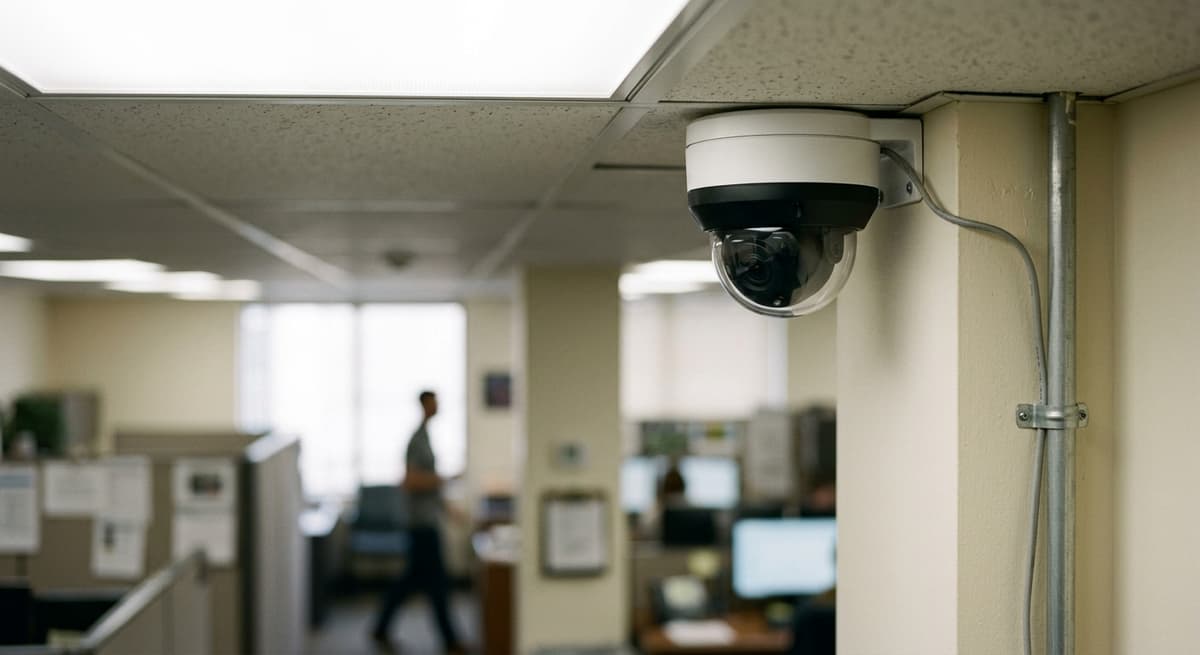
Landlords can install security cameras in common areas of multi-unit buildings for legitimate security purposes. Permitted locations include:
- Building entrances and exits. Front doors, back doors, and side entrances.
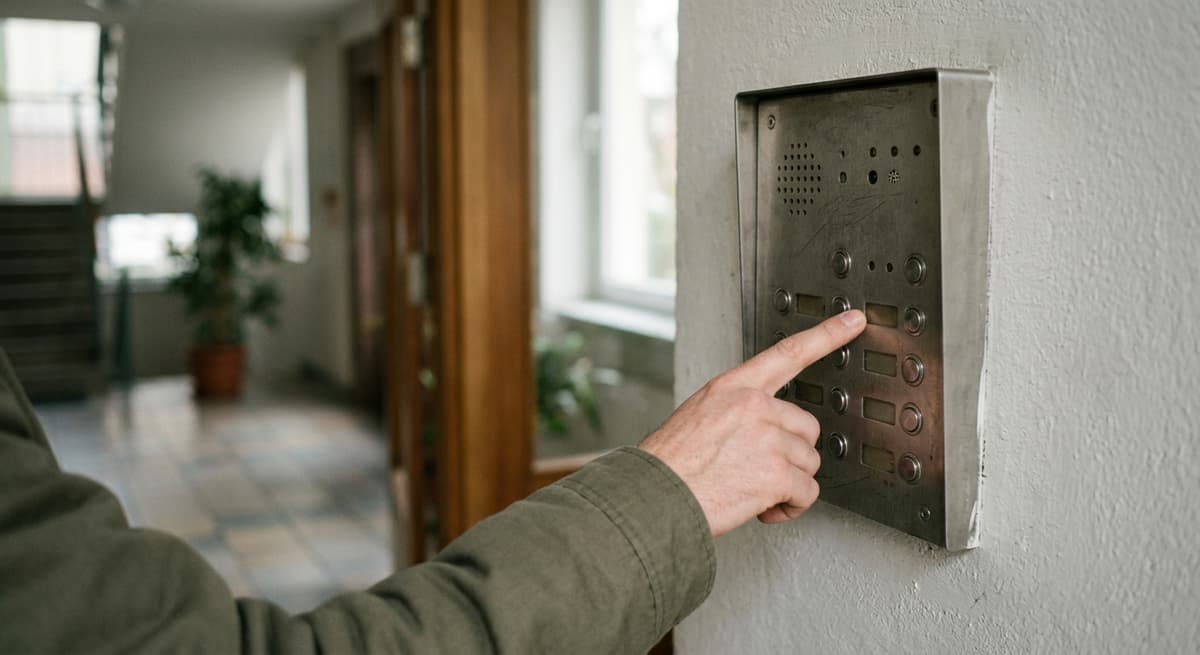
- Hallways and stairwells. Common corridors in apartment buildings.
- Lobbies and reception areas. Common gathering spaces.
- Parking lots and garages. Outdoor and covered parking areas.
- Laundry rooms. Common laundry facilities (though some tenants may have privacy concerns).
- Mailbox areas. Where mailboxes are located in common spaces.
- Building exterior. Cameras monitoring the outside of the building.
Where Landlords Cannot Install Cameras
Under Wis. Stat. 942.08, landlords commit a crime by installing a surveillance device with the intent to observe a nude or partially nude person in a place where the tenant reasonably expects privacy. In practice that covers cameras in:
- Inside rental units. Apartments, houses, rooms, or any space rented to a tenant.
- Bathrooms and restrooms. Including shared bathrooms in rooming houses.
- Bedrooms. Whether in an individual unit or a shared living arrangement.
- Private outdoor spaces. Balconies, patios, and decks that are exclusive to a specific unit.
- Areas where tenants undress. Pool changing areas, if applicable.
A landlord who installs hidden cameras inside a rental unit faces criminal charges under Wis. Stat. 942.08 (Class A misdemeanor, up to 9 months jail, $10,000 fine) and potentially under Wis. Stat. 942.09 if intimate images are captured (up to Class I felony).
Audio Recording by Landlords
If a landlord's surveillance cameras include audio recording capability, the audio portion is subject to Wis. Stat. 968.31. A landlord cannot use audio-enabled cameras to eavesdrop on tenant conversations in common areas without at least one participant's consent. Best practice for landlords is to either disable audio on common area cameras or post clear notice that audio recording is in effect.
Tenant Security Camera Rights
Installing Cameras in Your Rental Unit
Tenants generally have the right to install security cameras inside their own rental units. This includes:
- Indoor security cameras (Ring Indoor Cam, Wyze, Nest, etc.)
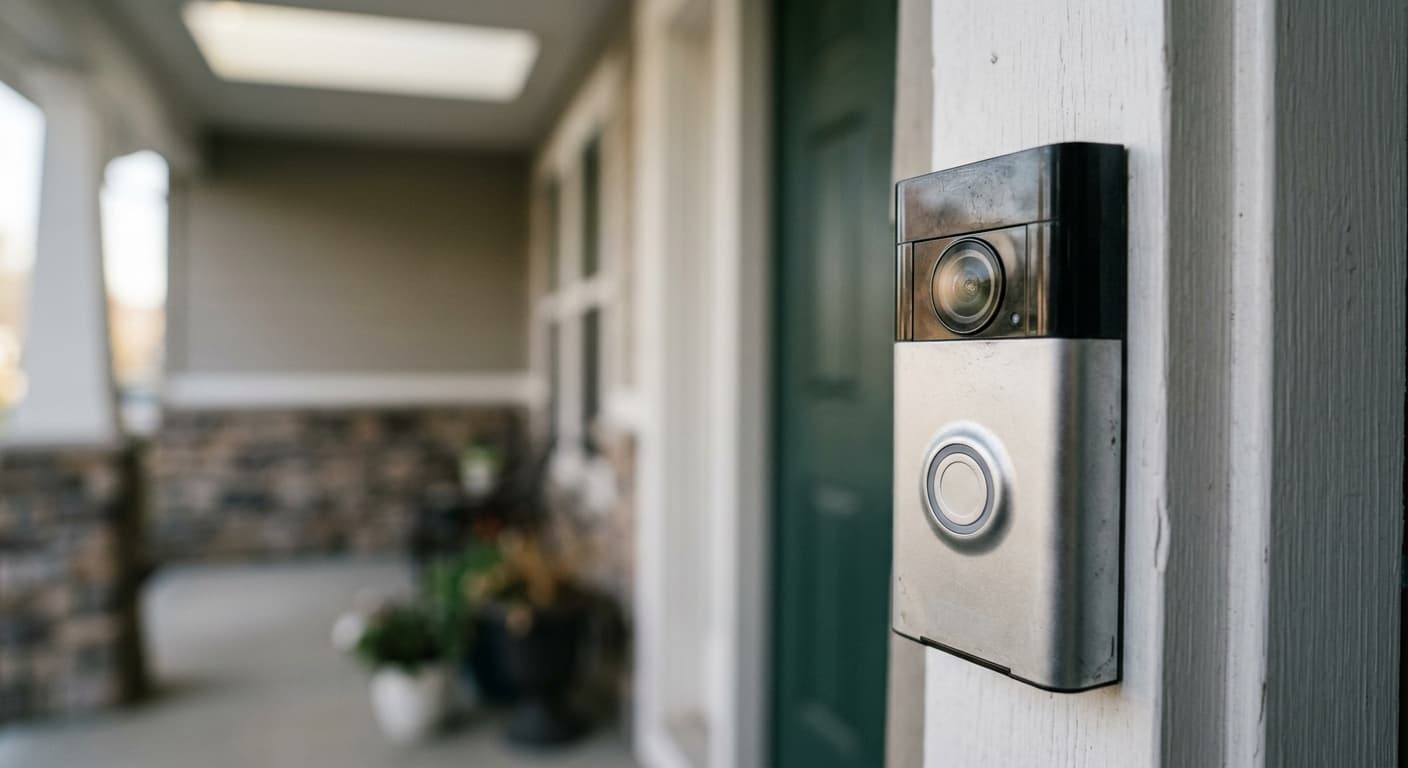
- Doorbell cameras on your apartment door (check with landlord about mounting)
- Baby monitors
- Pet cameras
- Nanny cameras
Lease Restrictions
Your lease may contain provisions about modifications to the rental unit. Common restrictions that affect camera installation include:
- No holes or mounting hardware. Some leases prohibit drilling into walls or doors, which may limit exterior camera mounting options. Adhesive mounts can be a workaround.
- No modifications without landlord approval. Some leases require written permission for any modifications, including camera installation.
- No exterior alterations. A lease may prohibit mounting anything on the exterior of the building.
Even if a lease restricts modifications, tenants may argue that a security camera is a reasonable safety measure. Wisconsin courts would likely weigh the tenant's security interest against the landlord's property interest.
Cameras in Shared Living Spaces
If you have roommates, camera placement requires more care. You can install cameras in your own bedroom (as long as you are the only occupant). Cameras in shared spaces like the living room or kitchen may raise privacy concerns from roommates. Best practice is to discuss camera placement with roommates and get their agreement.
Landlord Entry and Recording

Wisconsin's Notice Requirement
Under Wis. Stat. 704.05(2), a landlord must provide advance notice before entering a rental unit for non-emergency purposes; the specific 12 hours advance notice figure comes from Wis. Admin. Code ATCP 134.09(2)(a). The entry must be at a reasonable time and for a legitimate reason, such as:
- Making repairs or performing maintenance
- Showing the unit to prospective tenants or buyers
- Conducting inspections
- Addressing emergencies (no notice required for genuine emergencies)
Recording During Landlord Entry
You can record your landlord's visit to your rental unit. As a participant in any conversation that occurs during the visit, you are covered by one-party consent. This can help you document:
- Whether the landlord provided proper notice
- The condition of the unit before and after maintenance work
- What the landlord said during the inspection
- Whether the landlord's entry was for a legitimate purpose
- Any unauthorized access to your personal belongings
What to Do About Illegal Entry
If your landlord enters your unit without proper notice or consent, and your security camera captures the entry:
- Save the footage. Back up the recording to cloud storage.
- Document the incident. Note the date, time, and what the landlord did during the entry.
- Notify the landlord in writing. Send a letter or email documenting the illegal entry and requesting that it not happen again.
- File a complaint. Contact DATCP or a local tenant advocacy organization.
- Consult an attorney. Repeated illegal entries may justify a rent abatement, lease termination, or other legal remedies.
Hidden Cameras in Rental Properties
What to Do If You Find a Hidden Camera
Discovering a hidden camera in your rental unit is a serious matter. Take these steps:
- Do not touch or disturb the camera. Photograph it in place.
- Call the police. Hidden cameras in rental units are a criminal offense under Wis. Stat. 942.08.
- Document everything. Take photos from multiple angles showing where the camera is placed.
- Contact an attorney. You may have grounds for a civil lawsuit seeking damages.
- Report to DATCP. The Wisconsin Department of Agriculture, Trade and Consumer Protection handles consumer complaints about landlord violations.
- Consider contacting the media. In cases of widespread landlord surveillance, public exposure can protect other tenants.
Civil Remedies for Tenants
Tenants who discover hidden cameras or unauthorized surveillance by landlords can pursue:
- Invasion of privacy claims under common law
- Statutory damages under Wis. Stat. 942.08
- Emotional distress damages (both intentional and negligent)
- Punitive damages for particularly egregious conduct
- Lease termination without penalty
- Rent abatement for the period of surveillance
- Relocation costs if the tenant must move due to the landlord's conduct
Security Deposits and Move-Out Recordings
Documenting Unit Condition
One of the most practical uses of recording in the landlord-tenant context is documenting the condition of a rental unit at move-in and move-out. Wisconsin law (Wis. Admin. Code ATCP 134.06) provides specific rules about security deposit returns, and video evidence can help resolve disputes.
At move-in:
- Record a walkthrough video showing every room, wall, floor, and appliance
- Document any existing damage or wear
- Keep the recording with your lease documents
At move-out:
- Record another walkthrough showing the unit's condition
- Compare with your move-in video
- Provide the video to the landlord if they claim damage
Under Wis. Admin. Code ATCP 134.06, landlords must return security deposits within 21 days of the lease ending, with an itemized statement of any deductions. Video evidence can be compelling in small claims court if a landlord withholds a deposit without justification.
Fair Housing and Surveillance
Landlords who use surveillance to target tenants based on protected characteristics may violate fair housing laws. Under Wisconsin's Open Housing Law (Wis. Stat. 106.50) and the federal Fair Housing Act, it is illegal to use surveillance as a tool of harassment or discrimination based on race, color, national origin, sex, disability, familial status, or religion.
If you believe surveillance is being used to discriminate against you, contact the Wisconsin Equal Rights Division or file a complaint with HUD.
More Wisconsin Recording Laws
Audio Recording | Video Recording | Voyeurism & Hidden Cameras | Workplace Recording | Recording Police | Phone Call Recording | Security Cameras | Recording in Public | Landlord-Tenant | Dashcam Laws | Schools | Medical Recording
Back to Wisconsin Recording Laws
More Wisconsin Recording Topics
More Wisconsin Laws
Frequently Asked Questions
Can I record my landlord in Wisconsin?
Yes. Wisconsin's one-party consent law under Wis. Stat. 968.31 allows you to record any conversation you participate in with your landlord without telling them. This includes in-person meetings, phone calls, and interactions during property inspections.
Can my landlord put cameras inside my apartment in Wisconsin?
No. Landlords cannot install surveillance cameras inside rental units. This violates Wis. Stat. 942.08 (invasion of privacy), which is a Class A misdemeanor punishable by up to 9 months in jail and a $10,000 fine. If intimate images are captured, the offense can be elevated to a felony.
Can my landlord have cameras in the hallway in Wisconsin?
Yes. Landlords can install security cameras in common areas of multi-unit buildings, including hallways, lobbies, stairwells, parking lots, and building entrances. These areas do not carry the same expectation of privacy as individual rental units.
Can I install a doorbell camera in my apartment in Wisconsin?
Generally yes, but check your lease. You have the right to install security cameras inside your unit. For doorbell cameras that require mounting hardware on the exterior, your lease may require landlord approval for modifications. Adhesive-mount cameras can be an alternative that avoids lease issues.
What should I do if I find a hidden camera in my rental unit?
Do not touch the camera. Photograph it in place, then call the police immediately. Hidden cameras in rental units are a criminal offense under Wis. Stat. 942.08. Also contact an attorney about civil remedies and report the landlord to DATCP. You may be entitled to damages for invasion of privacy.
Updates
Corrected a link that was both dead and mislabeled: it pointed to Wis. Stat. 106.50 as the 'Wisconsin Fair Employment Law,' but that section is actually Wisconsin's Open Housing Law; the link text and URL are now both accurate.
Independently fact-checked against the cited primary sources; governing law re-checked for recent changes
Governing law re-checked for recent changes
Corrected two mis-cited legal sources: the 21-day security deposit return rule is Wis. Admin. Code ATCP 134.06 (not Wis. Stat. 134.06, which is an unrelated chauffeur-kickback statute), and the 12-hour landlord entry notice figure comes from Wis. Admin. Code ATCP 134.09(2)(a), not Wis. Stat. 704.05(2) (which requires advance notice but sets no specific hour count).
Corrected the Sources box entry that misidentified the security-deposit authority as the chauffeur-kickback statute Wis. Stat. 134.06; the correct authority (already fixed in the body text) is Wis. Admin. Code ATCP 134.06.
Governing law re-checked for recent changes
Reviewed and approved by an editor
The Law Behind This Article
This article rests on the statutory provisions below, held in our own legal record and retrieved from the official source. Tap a section to read the operative text.
Wisconsin Statutes, Chapter 968: Commencement Of Criminal Proceedings
§ 968.31Interception and disclosure of wire, electronic or oral communications prohibited.In forcecited in 22 of our articles
(1) Except as otherwise specifically provided in ss. 196.63 or 968.28 to 968.30, whoever commits any of the acts enumerated in this section is guilty of a Class H felony: (a) Intentionally intercepts, attempts to intercept or procures any other person to intercept or attempt to intercept, any wire, electronic or oral communication. (b) Intentionally uses, attempts to use or procures any other person to use or attempt to use any electronic, mechanical or other device to intercept any oral communication. (c) Discloses, or attempts to disclose, to any other person the contents of any wire, electronic or oral communication, knowing or having reason to know that the information was obtained through the interception of a wire, electronic or oral communication in violation of this section or under circumstances constituting violation of this section. (d) Uses, or attempts to use, the contents of any wire, electronic or oral communication, knowing or having reason to know that the information was obtained through the interception of a wire, electronic or oral communication in violation of this section or under circumstances constituting violation of this section.
Official text (excerpt) · last checked 2026-08-31 · Read the full text in our law library · Verify at docs.legis.wisconsin.gov
Cited in 23 court opinions in our collectionLatest citing opinion in our collection: 2026
In the courts (editorial summary, independently checked):State v. Maloney held recordings made with one party's prior consent fall under Section 968.31(2)(b) and (c), and that aiding a police sting is not an "injurious act." State v. Gilmore pointed to 968.31(2m) damages and 968.31(1)(e) penalties, reserving suppression for illegal interceptions.
Opinions citing this section in our collection:
- State v. Maloney (Wisconsin Supreme Court 2005, 281 Wis. 2d 595)✓A homicide suspect's girlfriend let police record her hotel room conversations with him in Las Vegas; the court held the videotapes lawful under 968.31(2)(b) and (c) because she was a consenting party, and that helping a lawful sting is not an injurious act.
- State v. Popenhagen (Wisconsin Supreme Court 2008, 309 Wis. 2d 601)“…Arnold, 51 Wis.2d at 442 , 187 N.W.2d 354 (citing Wis. Stat. § 968.31 (2)(b)). However, in considering all th…”
- State v. Gilmore (Wisconsin Supreme Court 1996, 201 Wis. 2d 820)✓Prosecutors filed a public complaint quoting 27 pages of lawfully wiretapped calls; the court held the unsealed filing violated the surveillance law but refused suppression, pointing to the civil action in 968.31(2m) and the criminal penalty in 968.31(1)(e) as the remedies.
Identified automatically from the court opinions citing this section — not a ranking of which case controls.
Also relied on in: One-Party Consent States: Complete 2026 Guide, Wisconsin Security Camera Laws: Home, Business, and HOA Rules (2026), Wisconsin Video Recording Laws: Surveillance, Filming, and Privacy Rules (2026)
Wisconsin Statutes, Chapter 106: Apprentice, Employment And Equal Rights Programs
§ 106.50Open housing.In forcecited in 2 of our articles
(1) Intent. It is the intent of this section to render unlawful discrimination in housing. It is the declared policy of this state that all persons shall have an equal opportunity for housing regardless of sex, race, color, sexual orientation, disability, religion, national origin, marital status, family status, status as a victim of domestic abuse, sexual assault, or stalking, lawful source of income, age, or ancestry and it is the duty of the political subdivisions to assist in the orderly prevention or removal of all discrimination in housing through the powers granted under ss. 66.0125 and 66.1011. The legislature hereby extends the state law governing equal housing opportunities to cover single-family residences that are owner-occupied. The legislature finds that the sale and rental of single-family residences constitute a significant portion of the housing business in this state and should be regulated. This section shall be considered an exercise of the police powers of the state for the protection of the welfare, health, peace, dignity, and human rights of the people of this state. (1m) Definitions.
Official text (excerpt) · last checked 2026-07-29 · Read the full text in our law library · Verify at docs.legis.wisconsin.gov
Cited in 8 court opinions in our collectionLatest citing opinion in our collection: 2025
Opinions citing this section in our collection:
- Harvot v. Solo Cup Co. (Wisconsin Supreme Court 2009, 320 Wis. 2d 1)“…Act to make available both an administrative action under Wis. Stat. § 106.50 (6) and a civil action under Wis. Stat…”
- Jones v. Baecker (Court of Appeals of Wisconsin 2016, 373 Wis. 2d 235)“…ions of Wisconsin's Open Housing Law, which is codified in Wis. Stat. § 106.50 (2013-14), 6 and it may issue a charg…”
- Kitten v. State Department of Workforce Development (Wisconsin Supreme Court 2002, 252 Wis. 2d 561)“…otherwise indicated. The WOHA has since been renumbered as Wis. Stat. § 106.50 (1999-2000). See 1999…”
Identified automatically from the court opinions citing this section — not a ranking of which case controls.
Also relied on in: Wisconsin Background Check Laws (2026 Guide)
Wisconsin Statutes, Chapter 704: Landlord And Tenant
§ 704.05Rights and duties of landlord and tenant in absence of written agreement to contrary.In force
(1) When section applicable. So far as applicable, this section governs the rights and duties of the landlord and tenant in the absence of any inconsistent provision in writing signed by both the landlord and the tenant. Except as otherwise provided in this section, this section applies to any tenancy. (2) Possession of tenant and access by landlord. Until the expiration date specified in the lease, or the termination of a periodic tenancy or tenancy at will, and so long as the tenant is not in default, the tenant has the right to exclusive possession of the premises, except as hereafter provided. The landlord may upon advance notice and at reasonable times inspect the premises, make repairs and show the premises to prospective tenants or purchasers; and if the tenant is absent from the premises and the landlord reasonably believes that entry is necessary to preserve or protect the premises, the landlord may enter without notice and with such force as appears necessary. (3) Use of premises, additions or alterations by tenant.
Official text (excerpt) · last checked 2026-07-29 · Read the full text in our law library · Verify at docs.legis.wisconsin.gov
Cited in 7 court opinions in our collectionLatest citing opinion in our collection: 2022
Opinions citing this section in our collection:
- Maryland Arms Ltd. Partnership v. Connell (Wisconsin Supreme Court 2010, 326 Wis. 2d 300)“…rd and the tenant. This section applies to any tenancy. Wis. Stat. § 704.05 (1) (emphasis added). This section ackn…”
- Cambier v. Integrity Mutual Insurance (Court of Appeals of Wisconsin 2007, 305 Wis. 2d 337)“…the premises, not the owner or landlord. See Wis. Stat. § 704.05 (2) (with very limited exceptions the t…”
- Olson v. City of La Crosse (Court of Appeals of Wisconsin 2015, 364 Wis. 2d 615)“…o two state statutes and an administrative code provision: Wis. Stat. §§ 704.05 (2) and 704.07(2), and Wis. Admin. Code…”
Identified automatically from the court opinions citing this section — not a ranking of which case controls.
Wisconsin Statutes, Chapter 942: Crimes Against Reputation, Privacy And Civil Liberties
§ 942.08Invasion of privacy.In forcecited in 13 of our articles
(1) In this section: (a) “Nude or partially nude person” means any human being who has less than fully and opaquely covered genitals, pubic area or buttocks, any female human being who has less than a fully opaque covering over any portion of a breast below the top of the nipple, or any male human being with covered genitals in a discernibly turgid state. (b) “Private place” means a place where a person may reasonably expect to be safe from being observed without his or her knowledge and consent. (c) “Surveillance device” means any device, instrument, apparatus, implement, mechanism or contrivance used, designed to be used to observe, or capable of observing, the activities of a person. “Surveillance device” includes a peephole. (2) Except as provided in sub. (4), whoever does any of the following is guilty of a Class A misdemeanor: (a) Knowingly installs a surveillance device in any private place, or uses a surveillance device to observe in a private place, with the intent to observe any nude or partially nude person without the consent of the person observed.
Official text (excerpt) · last checked 2026-08-31 · Read the full text in our law library · Verify at docs.legis.wisconsin.gov
Cited in 7 court opinions in our collectionLatest citing opinion in our collection: 2026
In the courts (editorial summary, independently checked):Wisconsin courts have applied Wis. Stat. 942.08 to hidden surveillance of nudity. Gillund v. Meridian Mutual Insurance (2009) concluded that secretly videotaping a houseguest violated 942.08(2) and that, unlike the civil privacy statute, it requires specific intent. State v. Jahnke (2008) described 942.08 as addressing live viewing.
Opinions citing this section in our collection:
- Gillund v. Meridian Mutual Insurance (Court of Appeals of Wisconsin 2009, 323 Wis. 2d 1)✓An uncle secretly videotaped his niece undressed in his home; applying Wis. Stat. 942.08(2) (1999-2000), the court held his admitted conduct violated the criminal invasion of privacy statute even though he was never convicted, so the penal-law exclusion barred coverage.
- State v. Culver (Court of Appeals of Wisconsin 2018, 384 Wis. 2d 222)✓Convicted of posting nude photos of a woman online, Culver attacked the definition of "nude or partially nude person" that the post-or-publish statute borrows from Wis. Stat. 942.08(1)(a); the court declined to analyze it in detail and said it reasonably tracked common usage.
- State v. Jahnke (Court of Appeals of Wisconsin 2008, 316 Wis. 2d 324)“…nces. As the State points out, at least one other statute, Wis. Stat. § 942.08 , our "Peeping Tom" law, addresses live…”
Identified automatically from the court opinions citing this section — not a ranking of which case controls.
Also relied on in: Wisconsin Medical Recording Laws: Patient Rights, HIPAA, and Consent (2026), Wisconsin Laws on Recording in Public: Filming, Photography, and Privacy (2026), Wisconsin Voyeurism and Hidden Camera Laws: Privacy Crimes and Penalties (2026)
§ 942.09Representations depicting nudity.In forcecited in 13 of our articles
(1) In this section: (a) “Captures a representation” means takes a photograph, makes a motion picture, videotape, recording, or other visual or audio representation, or records or stores in any medium data that represents a visual image. (ae) “Consent” means words or overt actions by a person who is competent to give informed consent indicating a freely given agreement to the act. A person who has not attained the age of 18 is incapable of consent. The following persons are presumed incapable of consent but the presumption may be rebutted by competent evidence, subject to the provisions of s. 972.11 (2): 1. A person suffering from a mental illness or defect that impairs capacity to appraise personal conduct. 2. A person who is unconscious or for any other reason is physically unable to communicate unwillingness to an act. (ag) “Intimate representation” means any of the following: 1. A representation of a nude or partially nude person. 2. A representation of clothed, covered, or partially clothed or covered genitalia or buttock that is not otherwise visible to the public. 3. A representation of a person urinating, defecating, or using a feminine hygiene product. 4.
Official text (excerpt) · last checked 2026-08-30 · Read the full text in our law library · Verify at docs.legis.wisconsin.gov
Cited in 12 court opinions in our collectionLatest citing opinion in our collection: 2025
In the courts (editorial summary, independently checked):State v. Nelson (2006) gave "reasonable expectation of privacy" in Wis. Stat. 942.09 its ordinary meaning, not the Fourth Amendment test. State v. Jahnke (2008) called that incomplete: the test is whether one reasonably expected not to be recorded nude. State v. Culver (2018) upheld the post-or-publish ban against overbreadth.
Opinions citing this section in our collection:
- State v. Nelson (Court of Appeals of Wisconsin 2006, 294 Wis. 2d 578)✓Nelson secretly videotaped neighbors through their bathroom window from next door. Affirming his 942.09(2)(a) conviction, the court held "reasonable expectation of privacy" has its ordinary meaning under an objective reasonable-person test, not Fourth Amendment case law.
- State v. Culver (Court of Appeals of Wisconsin 2018, 384 Wis. 2d 222)✓Culver posted nude photos of a woman online without her consent and pleaded guilty under 942.09(3m)(a)2. The court rejected his overbreadth and vagueness attacks on the post-or-publish statute, found he lacked standing to raise a Commerce Clause claim, and affirmed.
- State v. Chagnon (Court of Appeals of Wisconsin 2015, 364 Wis. 2d 719)✓Chagnon, a registered sex offender, cut 189 photos of clothed girls out of magazines and pasted them into a notebook. The court held that 942.09(1)(a)'s definition of "captures a representation" does not reach that conduct, and reversed the refusal to dismiss 23 counts.
Identified automatically from the court opinions citing this section — not a ranking of which case controls.
Also relied on in: Wisconsin Smart Glasses Recording Laws, Wisconsin AI Laws and Regulation (2026), Wisconsin Sexting Laws: Legal Consequences and Penalties
Search our full record of US law — 2.1 million sections, every state + federal →
Sources and References
- Wis. Stat. 968.31 - Wiretapping(docs.legis.wisconsin.gov).gov
- Wis. Stat. 942.08 - Invasion of Privacy(docs.legis.wisconsin.gov).gov
- Wis. Stat. 704.05 - Landlord Entry(docs.legis.wisconsin.gov).gov
- Wis. Admin. Code ATCP 134.06 - Security Deposits(docs.legis.wisconsin.gov).gov
- Wisconsin DATCP(datcp.wi.gov).gov
- Wisconsin DWD - Equal Rights Division(dwd.wisconsin.gov).gov
- HUD Fair Housing(hud.gov).gov
- Wis. Stat. 942.09 - Representations Depicting Nudity(docs.legis.wisconsin.gov).gov