
United Kingdom
Is Wild Camping Legal in the UK? England, Wales, Scotland and Dartmoor Rules
Independently fact-checked against primary sources (last audited September 28, 2026). · 7 primary sources cited on this page. How we verify our legal content
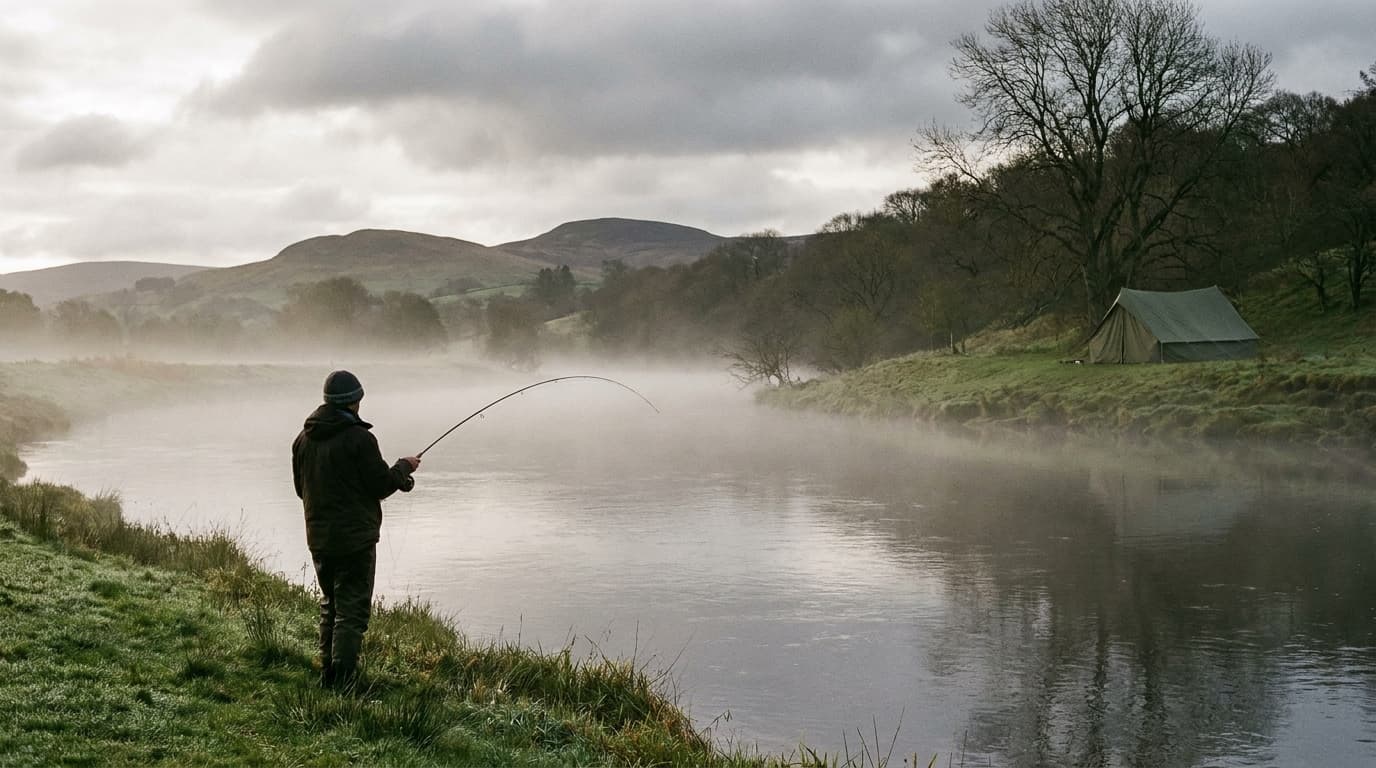
In England and Wales, the general right to roam does not include a right to camp: the Countryside and Rights of Way Act 2000 names camping as one of the specific things it excludes. The Dartmoor Commons are the one confirmed exception, after the Supreme Court finally settled years of litigation in 2025. Scotland runs the opposite rule: its right to roam positively includes lightweight wild camping almost everywhere the access right applies. This page covers England, Wales and Scotland; Northern Ireland's access to land law is separate and is not covered here.
England and Wales: the right to roam does not include camping
The Countryside and Rights of Way Act 2000 gives the public a right to roam over defined areas of open access land, including mountain, moor, heath, down and registered common land. That right comes with restrictions set out in Schedule 2 of the Act, and camping is one of them by name. Schedule 2, paragraph 1(s), lists among the things a person exercising the right of access must not do: engage in "camping, hang-gliding or para-gliding" (legislation.gov.uk: Countryside and Rights of Way Act 2000, Schedule 2). This is not a matter of guidance or interpretation. The Act itself names camping as excluded from the general right to roam, so outside a specific local exception, the general right to roam in England and Wales gives no right to pitch a tent on access land.
Dartmoor: the one confirmed exception, now settled by the Supreme Court
Dartmoor is different because its commons are governed by their own separate statute, the Dartmoor Commons Act 1985, not just by CROW. Section 10(1) of that Act gives the public "a right of access to the commons for open-air recreation," and whether that separately worded right stretches to camping was litigated for years.

The case, Darwall and another v Dartmoor National Park Authority, went through three stages:
- High Court, 13 January 2023 ([2023] EWHC 35 (Ch)). The Chancellor of the High Court ruled for the landowners, holding that the section 10(1) "right of access" described only the right to roam and did not confer any right to pitch tents or otherwise make camp.
- Court of Appeal, judgment handed down 31 July 2023 ([2023] EWCA Civ 927), after a hearing on 18 July 2023. The Court of Appeal reversed the High Court. Sir Geoffrey Vos, Master of the Rolls, held directly: "the words of section 10(1) are indeed clear and unambiguous. They allow the public to engage in open-air recreation on the Dartmoor Commons provided they proceed on foot or on horseback. Open-air recreation includes wild camping, although such an activity must be conducted in strict accordance with the applicable byelaws" (judiciary.uk: Darwall v Dartmoor National Park Authority, Court of Appeal judgment).
- Supreme Court, 21 May 2025 ([2025] UKSC 20). The landowners appealed again, and the Supreme Court unanimously dismissed their appeal. The Court's own press summary states the outcome directly: "The Supreme Court unanimously dismisses the appeal. The clear wording of section 10(1) shows that it confers a right of public access which includes wild camping" (supremecourt.uk: Darwall v Dartmoor National Park Authority, press summary).
That Supreme Court ruling is final, since there is no further domestic appeal available once the UK's highest court has ruled. Wild camping on the Dartmoor commons, conducted in strict accordance with the byelaws made under the 1985 Act, is now settled, confirmed law, not a disputed or ongoing question. The National Park Authority's current byelaws bar camping in listed areas, within 100 metres of a public road or in an enclosure, and on the same site for more than two consecutive nights (Dartmoor National Park Authority: byelaws), and the Authority describes backpack camping for one or two nights in some areas of open moorland, out of sight of roads and settlements (Dartmoor National Park Authority: camping). The Authority says it is revising its byelaws, so check the current version before you go.
A separate, unrelated case sometimes turns up in the same searches: Wild Justice v Dartmoor Commoners' Council, decided by the High Court on 17 March 2026 ([2026] EWHC 626 (Admin)). That case concerns the Commoners' Council's statutory duties to assess and prevent overgrazing of livestock on the commons, a completely different subject from public camping access, and it should not be cited as authority on whether camping is lawful.
Scotland: camping is part of the right to roam
Scotland runs the opposite rule. The Land Reform (Scotland) Act 2003, section 1, gives a statutory right of access for recreational, educational and certain other purposes, defined as the right to be "going into, passing over and remaining on it for any of those purposes and then leaving it" (legislation.gov.uk: Land Reform (Scotland) Act 2003, section 1).
The Scottish Outdoor Access Code, the statutory code of practice made under the same Act, confirms that this includes camping: you can enjoy the outdoors on most land if you act responsibly, and that includes lightweight camping in a tent, in small numbers, for no more than two or three nights in one place (Scottish Outdoor Access Code: camping). Scotland's right to roam positively includes short stay, lightweight wild camping as a matter of course, wherever the general access right applies, which is the opposite starting position from England and Wales's express statutory exclusion.
That general right is not absolute everywhere in Scotland, though. Loch Lomond and the Trossachs National Park Authority runs its own camping byelaws, creating Camping Management Zones that restrict wild camping during the busier part of the year. The Authority's own page describes the effect directly: "byelaws covering camping and firelighting are in effect in some parts of the Park between March and September. Camping from October to February is unaffected... The byelaws create Camping Management Zones covering less than 4% of Loch Lomond & The Trossachs National Park. Camping outside of these areas is unaffected... Camping within these Zones (March - September) is only possible in campsites or with a camping permit" (Loch Lomond and the Trossachs National Park Authority: camping byelaws). The current permit fee is £4.30 per tent or motorhome per night, and the same page warns that refusing to comply with the byelaws could result in a report to the Procurator Fiscal and a fine of up to £500. The byelaws apply from 1 March to 30 September each year, both dates inclusive (Loch Lomond and the Trossachs National Park Camping Management Byelaws 2017).
Wales and Northern Ireland
Wales sits under the same CROW Act 2000 access land framework as England, including the Schedule 2 exclusion of camping from the right to roam, since CROW's access land provisions apply to England and Wales together. Northern Ireland's access to land law is separate again, and this page does not cover it; check gov.uk or nidirect directly for the current Northern Ireland position before assuming any parallel right exists there.

For other everyday legal questions, see the UK everyday law hub.
Frequently Asked Questions
Is wild camping legal in England?
Not as a right. The Countryside and Rights of Way Act 2000 gives a right to roam over open access land, but Schedule 2 of the Act expressly excludes camping from that right, so outside the Dartmoor Commons you need the landowner's permission to wild camp. The Dartmoor commons are the confirmed exception, under their own separate statute, the Dartmoor Commons Act 1985.
Is wild camping legal on Dartmoor?
Yes on the Dartmoor Commons, in the areas where the byelaws allow it, following the Supreme Court's ruling on 21 May 2025 in Darwall and another v Dartmoor National Park Authority. The Court unanimously held that the Dartmoor Commons Act 1985's right of access for open air recreation includes wild camping, provided it is conducted in strict accordance with the applicable byelaws. This followed a Court of Appeal ruling for camping in July 2023, after an earlier High Court ruling against it in January 2023. The byelaws bar camping in listed areas, within 100 metres of a public road or in an enclosure, and on the same site for more than two consecutive nights, and the National Park Authority describes backpack camping for one or two nights in some areas of open moorland.
Is wild camping legal in Scotland?
Generally yes. The Land Reform (Scotland) Act 2003 gives a statutory right of access for recreational purposes, and the Scottish Outdoor Access Code confirms this includes lightweight camping in a tent, for small numbers of people and no more than two or three nights in one place. Some areas, including parts of Loch Lomond and the Trossachs National Park, have their own byelaws that restrict this during the March to September season.
Do I need a permit to camp in Loch Lomond and the Trossachs National Park?
Within the park's Camping Management Zones, which cover under 4% of the park, you need a campsite or a camping permit during the March to September season, currently priced at £4.30 per tent or motorhome per night. Outside those zones, and outside that season, the general Scottish camping right applies without a permit.
Is wild camping legal in Wales?
Wales sits under the same Countryside and Rights of Way Act 2000 framework as England, including the exclusion of camping from the general right to roam, since that Act's access land provisions cover England and Wales together. You can still camp with the landowner's permission.
Updates
Independently fact-checked against the cited primary sources
The Law Behind This Article
This article rests on the statutory provisions below, held in our own legal record and retrieved from the official source. Tap a section to read the operative text.
Land Reform (Scotland) Act 2003
s. 1Access rightsIn force
(1) Everyone has the statutory rights established by this Part of this Act. (2) Those rights (in this Part of this Act called “access rights”) are— (a) the right to be, for any of the purposes set out in subsection (3) below, on land; and (b) the right to cross land. (3) The right set out in subsection (2)(a) above may be exercised only— (a) for recreational purposes; (b) for the purposes of carrying on a relevant educational activity; or (c) for the purposes of carrying on, commercially or for profit, an activity which the person exercising the right could carry on otherwise than commercially or for profit. (4) The reference— (a) in subsection (2)(a) above to being on land for any of the purposes set out in subsection (3) above is a reference to— (i) going into, passing over and remaining on it for any of those purposes and then leaving it; or (ii) any combination of those; (b) in subsection (2)(b) above to crossing land is a reference to going into it, passing over it and leaving it all for the purpose of getting from one place outside the land to another such place.
Official text (excerpt) · last checked 2026-08-14 · Read the full text in our law library · Verify at legislation.gov.uk
Search our record of UK legislation — retrieved from legislation.gov.uk →
Sources and References
- Countryside and Rights of Way Act 2000, Schedule 2(legislation.gov.uk).gov
- Darwall v Dartmoor National Park Authority, Court of Appeal judgment, [2023] EWCA Civ 927(judiciary.uk).gov
- Darwall and another v Dartmoor National Park Authority, Supreme Court case UKSC/2023/0126(supremecourt.uk).gov
- Darwall and another v Dartmoor National Park Authority, Supreme Court press summary(supremecourt.uk).gov
- Land Reform (Scotland) Act 2003, section 1(legislation.gov.uk).gov
- Loch Lomond and the Trossachs National Park Authority: camping byelaws(lochlomond-trossachs.org)
- Dartmoor National Park Authority: byelaws(dartmoor.gov.uk).gov
- Dartmoor National Park Authority: backpack camping(dartmoor.gov.uk).gov
- Loch Lomond and the Trossachs National Park Camping Management Byelaws 2017(lochlomond-trossachs.org)
- Scottish Outdoor Access Code: camping(outdooraccess-scotland.scot)