
Connecticut
Connecticut Dashcam Laws: Mounting Rules, Audio Recording, and Evidence (2026)
Independently fact-checked against primary sources (last audited August 22, 2026). · Reviewed by the RecordingLaw editorial team. · Law checked current as of August 22, 2026. · 5 primary sources cited on this page. How we verify our legal content
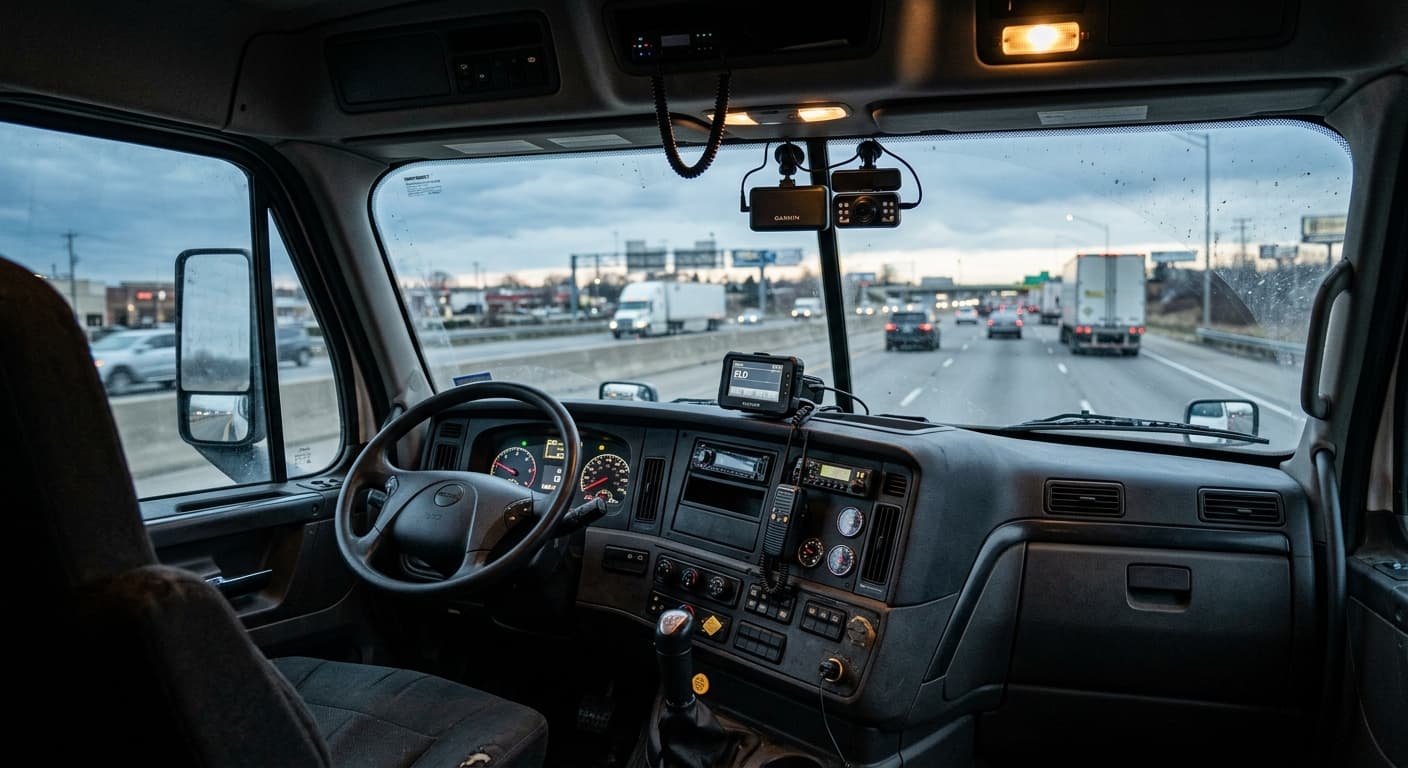
Connecticut dashcams are legal on all roads. Video recording in public is unrestricted, but audio splits under two statutes: in-car conversations need only one-party consent under Conn. Gen. Stat. 53a-187, while phone calls the dashcam captures fall under Conn. Gen. Stat. 52-570d, which is satisfied by all-party consent, a recorded verbal notice at the start of the call, or a repeating audible tone warning. Windshield mounts must not obstruct the driver's view.
Dashcams have become an essential tool for Connecticut drivers, providing video evidence of accidents, traffic violations, road rage incidents, and other events. Connecticut law permits the use of dashcams, but drivers must navigate rules about windshield mounting, audio recording, and employer monitoring requirements for commercial vehicles.
This guide covers Connecticut's dashcam legal framework as of 2026, including mounting requirements, audio recording rules, using dashcam footage as evidence, employer fleet dashcams, and privacy considerations.
Are Dashcams Legal in Connecticut?
Yes, With Mounting Restrictions
Dashcams are legal in Connecticut. No state law prohibits the use of dashboard cameras in private vehicles. However, the way you mount your dashcam matters. Connecticut regulates objects placed on windshields to ensure they do not obstruct the driver's view.
Windshield Mounting Rules Under CGS 14-99f
CGS 14-99f regulates windshield obstructions in Connecticut. The statute prohibits attaching or affixing any article, device, sticker or ornament in a manner or location that would "interfere with the operator's unobstructed view of the highway or to distract the attention of the operator." This does not specifically mention dashcams, but it sets the standard for any device mounted on the windshield.
To comply with this requirement:
- Mount the dashcam behind the rearview mirror where it does not block the driver's forward view
- Use a small, compact dashcam that minimizes the area of windshield covered
- Avoid mounting in the center of the windshield or in the driver's direct line of sight
- Ensure the dashcam and its wiring do not interfere with the operation of the vehicle
Dashboard and Non-Windshield Mounting
Alternatively, you can mount your dashcam on the dashboard itself, on the rearview mirror, or on a suction cup positioned at the edge of the windshield. These placements avoid the windshield obstruction issue entirely and keep the camera out of the driver's primary field of vision.
Video Recording While Driving
Public Roads: No Expectation of Privacy
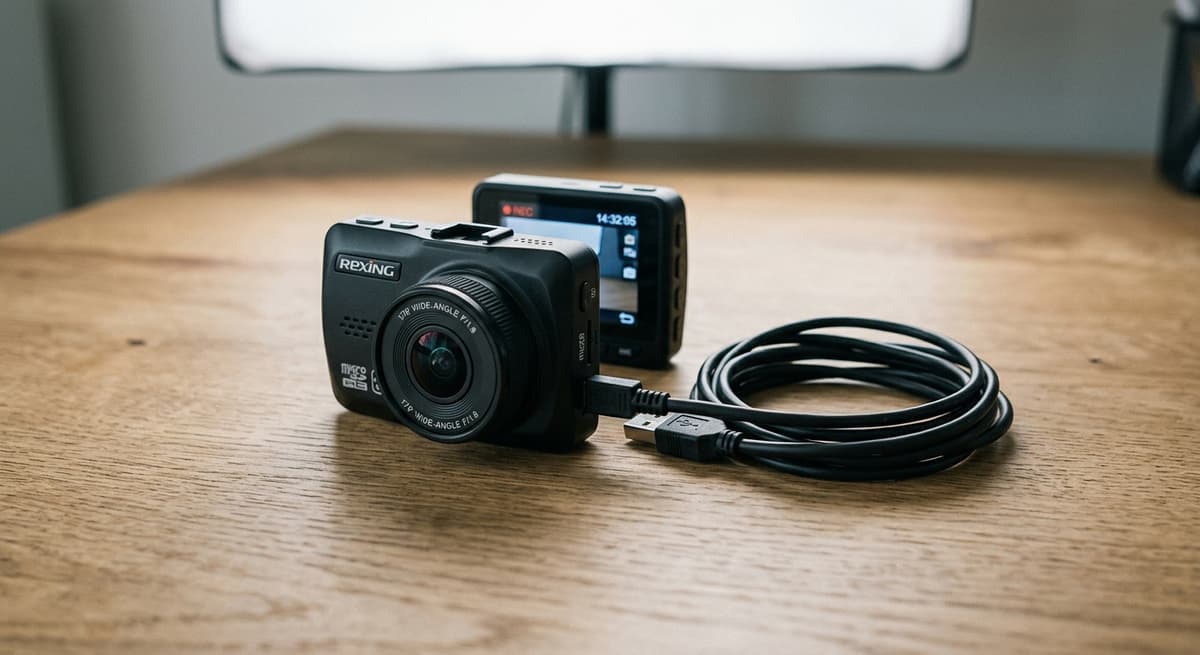
Dashcam video recording of public roads, traffic, other vehicles, and pedestrians on public streets is generally legal. People and vehicles on public roads have a reduced expectation of privacy. Recording what you can see from your vehicle as you drive is comparable to looking out the window, and the law does not prohibit it.
What Your Dashcam Can Record
Legal dashcam video recording includes:
- Traffic conditions and road hazards
- Other vehicles, including their license plates
- Pedestrians and cyclists on public roads and sidewalks
- Traffic accidents and near-misses
- Police encounters and traffic stops
- Road infrastructure, signage, and traffic signals
- Weather conditions affecting driving
Privacy Limitations on Video
While recording on public roads is generally permissible, using a dashcam to intentionally record into private property, such as aiming the camera at someone's windows or into their yard, could raise privacy concerns. A dashcam that incidentally captures private property while recording the road ahead is not a problem. A camera deliberately positioned to surveil a specific private area may be.
Audio Recording Rules for Dashcams

The Critical Audio Question
Many modern dashcams record audio by default, capturing conversations inside the vehicle as well as external sounds. This audio component is where Connecticut's consent laws come into play.
In-Car Conversations: One-Party Consent
When your dashcam records audio of conversations inside your vehicle, Connecticut's one-party consent rule under CGS 53a-187 applies. Since you are the driver and a participant in any conversation happening in your car, your consent satisfies the one-party requirement. You do not need to tell your passengers that the dashcam is recording audio.
However, consider these scenarios:
- You are alone in the car: No consent issue, as there is no one else's conversation to capture.
- You are talking with a passenger: Your one-party consent covers the recording.
- Passengers are talking to each other and you are not participating: If you are not part of the conversation and no passenger consents, the audio recording of their private discussion could be problematic. In practice, if you are present in the vehicle and the conversation includes you, the risk is minimal.
Phone Calls in the Car
If your dashcam captures audio of a phone call being made in the vehicle, CGS 52-570d governs the recording. The statute is satisfied by any one of three methods: consent of all parties to the call, a recorded verbal notice given at the start of the call, or an automatic tone warning that repeats roughly every fifteen seconds while recording. A dashcam capturing a phone call typically cannot deliver a verbal notice or tone warning, so getting the other party's consent is usually the only practical option. To avoid this issue:
- Disable audio recording on your dashcam when making phone calls
- Inform the other party that your dashcam records audio and obtain their consent
- Use headphones or earbuds to keep the call audio off the dashcam microphone
Practical Audio Recommendation
The simplest approach to avoid consent issues is to disable audio recording on your dashcam entirely. Video-only recording captures the most important evidence (road conditions, accidents, traffic stops) without creating audio consent complications. If you prefer to keep audio enabled, inform passengers that the dashcam records sound.
Dashcam Footage as Evidence
Traffic Accidents
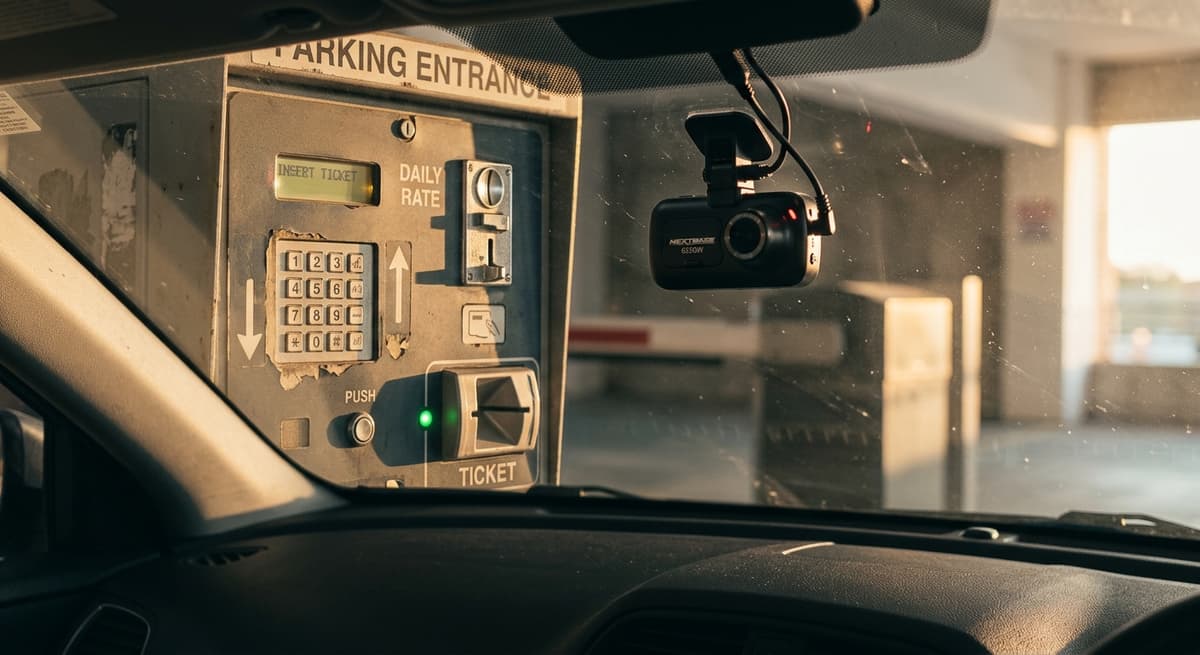
Dashcam footage is one of the most valuable forms of evidence in traffic accident cases. It can show:
- Which driver ran a red light or stop sign
- Speed and direction of travel at the time of impact
- Road and weather conditions at the time of the accident
- Actions of all drivers in the moments before the collision
- The sequence of events in a multi-vehicle accident
Admissibility in Connecticut Courts
Dashcam footage is admissible in Connecticut courts if it meets standard evidentiary requirements:
- Authentication: You must be able to verify the footage is from your dashcam, recorded at the relevant time and place
- Relevance: The footage must be relevant to the matter at issue
- Integrity: The footage must not have been edited, altered, or tampered with
- Legal recording: The footage must have been obtained legally
Video-only dashcam footage recorded on public roads almost always meets these requirements. Audio components may face additional scrutiny under CGS 52-570d if they do not satisfy its all-party consent, verbal notice, or tone warning requirements for telephone conversations.
Insurance Claims
Dashcam footage can significantly strengthen insurance claims by providing objective evidence of:
- Fault in an accident
- The extent of vehicle damage
- Whether traffic laws were being followed
- Fraudulent accident claims or staged accidents
Connecticut insurance companies increasingly accept dashcam footage as supporting evidence for claims. Having clear video evidence can speed up the claims process and help resolve disputes about fault.
Traffic Violations and Criminal Cases
Dashcam footage can be used in traffic violation cases and criminal proceedings. If your dashcam captures a hit-and-run, road rage assault, DUI, or other crime, the footage can be provided to law enforcement and may be used as evidence in prosecution.
Commercial Vehicle and Fleet Dashcams
Employer Monitoring Requirements
When employers install dashcams in commercial vehicles driven by employees, Connecticut's employer electronic monitoring statute applies. Under CGS 31-48d, employers must:
- Provide prior written notice to employees before installing dashcams in company vehicles
- Post a conspicuous notice describing the monitoring
- Give prior written notice before dashcam monitoring begins; the statute does not tie the notice to an employee's hire date, only that it precede the monitoring, and a conspicuously posted notice satisfies the requirement
Audio in Commercial Dashcams
If commercial dashcams record audio, the employer faces additional obligations:
- Employee notice under CGS 31-48d
- One-party consent considerations for in-vehicle conversations
- Compliance with CGS 52-570d for phone calls captured by the dashcam, typically satisfied by all-party consent since a dashcam cannot deliver the statute's recorded verbal notice or tone warning alternatives
Many fleet management companies recommend disabling audio on commercial dashcams to simplify compliance.
Employer Monitoring Penalties
Employers who install dashcams without proper notice face penalties under CGS 31-48d:
| Violation | Penalty |
|---|---|
| First offense | $500 |
| Second offense | $1,000 |
| Each subsequent offense | $3,000 |
GPS Tracking in Commercial Vehicles
Many commercial dashcam systems include GPS tracking. CGS 31-48d defines "electronic monitoring" as the collection of information "on an employer's premises," so whether the statute's written-notice requirement reaches GPS tracking of a vehicle traveling public roads (rather than a fixed worksite) is not settled by the statute's text alone. Even so, employers who inform employees that a company vehicle's location is being tracked and explain how the data will be used reduce their legal and workplace-relations risk.
Rideshare and Taxi Dashcams
Rideshare Driver Dashcams
Rideshare drivers (Uber, Lyft) in Connecticut may install dashcams in their vehicles. Since the driver owns the vehicle and is a participant in conversations with passengers, one-party consent covers the audio recording of in-car conversations. However, drivers should consider:
- Posting a visible notice inside the vehicle informing passengers that recording is in progress
- Rideshare platform policies about dashcam use, which may have their own requirements
- Passenger phone calls captured by the dashcam, which fall under CGS 52-570d and are typically satisfied only by all-party consent since a dashcam cannot deliver the statute's verbal notice or tone warning alternatives
Taxi and Livery Dashcams
Taxis and livery vehicles in Connecticut may use dashcams for driver safety and dispute resolution. The same one-party consent principles apply. Many taxi companies post notices informing passengers that audio and video recording is in progress.
Rear-Facing and Multi-Camera Dashcam Systems
Rear Dashcams
Rear-facing dashcams mounted on the back window or rear bumper are legal in Connecticut and are not subject to windshield obstruction rules. These cameras are valuable for documenting rear-end collisions and backing accidents.
Interior-Facing Cameras
Some dashcam systems include an interior-facing camera to monitor driver behavior. For personal vehicles, this is a matter of personal choice. For employer-installed systems, CGS 31-48d notice requirements apply, and employees must be informed that the camera monitors their behavior inside the vehicle.
Multi-Camera Systems
Multi-camera dashcam systems that combine forward, rear, and interior views are legal in Connecticut. Each camera must comply with the relevant mounting and recording rules. The audio recording consent analysis applies to the system as a whole.
Dashcam Data and Privacy
Cloud Storage and Data Security
Many modern dashcams upload footage to cloud storage automatically. When using cloud-connected dashcams, consider:
- The security of the cloud storage service
- Who has access to your footage
- Data retention policies and how long footage is stored
- Whether the dashcam manufacturer can access or share your footage
Law Enforcement Access
Police in Connecticut generally need a warrant to access dashcam footage stored in your vehicle or on cloud services. However, you may voluntarily provide footage to law enforcement. If you are involved in an accident or witness a crime, sharing relevant dashcam footage with police can help their investigation.
More Connecticut Recording Laws
Audio Recording | Video Recording | Voyeurism & Hidden Cameras | Workplace Recording | Recording Police | Phone Call Recording | Security Cameras | Recording in Public | Landlord-Tenant | Dashcam Laws | Schools | Medical Recording
Back to Connecticut Recording Laws
More Connecticut Recording Topics
More Connecticut Laws
Frequently Asked Questions
Are dashcams legal in Connecticut?
Yes. Dashcams are legal in Connecticut. However, windshield-mounted dashcams must not materially obstruct the driver's view under CGS 14-99f. Mount your dashcam behind the rearview mirror or on the dashboard to comply with this requirement. Video recording on public roads is generally unrestricted.
Does my dashcam need to have audio disabled in Connecticut?
Not necessarily, but it simplifies legal compliance. Video-only recording avoids consent issues entirely. If your dashcam records audio, Connecticut's one-party consent rule covers in-car conversations you participate in. However, phone calls captured by the dashcam are governed by CGS 52-570d, which is satisfied by all-party consent, a recorded verbal notice, or a repeating tone warning; since a dashcam cannot deliver the notice or tone warning, consent is usually the only practical option. Disabling audio eliminates these concerns.
Can dashcam footage be used in court in Connecticut?
Yes. Dashcam footage is admissible in Connecticut courts if it is properly authenticated, relevant to the case, and has not been tampered with. Video of traffic accidents, police encounters, and other incidents recorded on public roads is routinely accepted as evidence. Audio components may face additional scrutiny if they do not satisfy CGS 52-570d's consent, verbal notice, or tone warning requirements for phone conversations.
Can my employer put a dashcam in my work vehicle in Connecticut?
Yes, but the employer must provide prior written notice under CGS 31-48d before installing the dashcam. The notice must describe the monitoring and be given before it begins; the statute does not require it be tied to the employee's hire date, and a conspicuously posted notice satisfies this requirement. A conspicuous notice must also be posted. Employers who fail to provide notice face fines of $500 for the first offense, $1,000 for the second, and $3,000 for subsequent violations.
Where should I mount my dashcam in Connecticut?
Mount your dashcam in a position that does not materially obstruct your view through the windshield, as required by CGS 14-99f. The best placement is behind the rearview mirror, where the dashcam is in the area already blocked by the mirror. Alternatively, mount it on the dashboard itself or use a low-profile mount at the top edge of the windshield.
Updates
Independently fact-checked against the cited primary sources; governing law re-checked for recent changes
Corrected a fabricated statutory quotation about windshield obstructions (CGS 14-99f) and clarified that phone call recordings under CGS 52-570d can also be made lawful with a recorded verbal notice or audible tone warning, not only all-party consent.
Completed the CGS 52-570d correction: the Rideshare Driver Dashcams bullet and both admissibility mentions of phone-call audio now reflect all three of the statute's compliance methods (consent, verbal notice, or tone warning), not consent alone.
Corrected two CGS 31-48d claims: the statute's electronic-monitoring notice requirement is defined as covering an employer's premises (its application to GPS tracking of vehicles on public roads is unsettled, not a flat requirement), and the statute does not tie notice to an employee's hire date.
Governing law re-checked for recent changes
Reviewed and approved by an editor
The Law Behind This Article
This article rests on the statutory provisions below, held in our own legal record and retrieved from the official source. Tap a section to read the operative text.
Connecticut General Statutes, Title 53a (Penal Code), Chapter 952
§ 53a-189Eavesdropping: Class D felony.In forcecited in 16 of our articles
(a) A person is guilty of eavesdropping when he unlawfully engages in wiretapping or mechanical overhearing of a conversation. (b) Eavesdropping is a class D felony.
Official text (excerpt) · last checked 2026-08-31 · Read the full text in our law library · Verify at cga.ct.gov
Cited in 14 court opinions in our collectionLatest citing opinion in our collection: 2020
In the courts (editorial summary, independently checked):Washington v. Meachum (1996) held the eavesdropping statutes, section 53a-189 among them, are violated only when neither party to a call knows it is being monitored. State v. McLoughlin (1998), a trial court ruling on a scanner intercept, read 53a-189 to cover cordless calls, a question no Connecticut appellate court had decided.
Opinions citing this section in our collection:
- State v. McLoughlin (Connecticut Superior Court 1998, 45 Conn. Super. Ct. 497)“…on. Subsequently, the defendant was charged in violation of General Statutes § 53a-189, eavesdropping, which is a class D felo…”
- Rado v. Board of Education of the Borough of Naugatuck (Supreme Court of Connecticut 1990, 216 Conn. 541)✓A tenured teacher acquitted of eavesdropping was fired after a panel found he tampered with the school phone system to overhear staff calls; the court treated that conduct as proscribed by section 53a-189 and upheld the moral-misconduct finding.
- Washington v. Meachum (Supreme Court of Connecticut 1996, 238 Conn. 692)✓Inmates challenged prison rules allowing officials to monitor and record their nonprivileged phone calls; the Connecticut Supreme Court held the eavesdropping statutes are violated only when neither party knows the call is being monitored, so the noticed recording was lawful.
Identified automatically from the court opinions citing this section — not a ranking of which case controls.
Also relied on in: Connecticut Recording Laws (2026): Hybrid Consent Rules Explained, Connecticut Phone Call Recording Laws: All-Party Consent Rules and Penalties (2026), Connecticut Audio Recording Laws: Mixed Consent Rules and Penalties (2026)
§ 53a-187Definitions. Applicability.In forcecited in 18 of our articles
(a) The following definitions are applicable to sections 53a-188 and 53a-189: (1) “Wiretapping” means the intentional overhearing or recording of a telephonic or telegraphic communication or a communication made by cellular radio telephone by a person other than a sender or receiver thereof, without the consent of either the sender or receiver, by means of any instrument, device or equipment. The normal operation of a telephone or telegraph corporation and the normal use of the services and facilities furnished by such corporation pursuant to its tariffs shall not be deemed “wiretapping”. (2) “Mechanical overhearing of a conversation” means the intentional overhearing or recording of a conversation or discussion, without the consent of at least one party thereto, by a person not present thereat, by means of any instrument, device or equipment. (3) “Unlawfully” means not specifically authorized by law. For purposes of this section, “cellular radio telephone” means a wireless telephone authorized by the Federal Communications Commission to operate in the frequency bandwidth reserved for cellular radio telephones.
Official text (excerpt) · last checked 2026-07-29 · Read the full text in our law library · Verify at cga.ct.gov
Cited in 12 court opinions in our collectionLatest citing opinion in our collection: 2021
In the courts (editorial summary, independently checked):Connecticut courts read section 53a-187's definitions to reach only surreptitious, nonconsensual monitoring. State v. Grullon (1989) applied it to place one-party-consent recordings outside the eavesdropping statutes, and Washington v. Meachum (1996) held those statutes are violated only when neither party knows the call is monitored.
Opinions citing this section in our collection:
- State v. Grullon (Supreme Court of Connecticut 1989, 212 Conn. 195)✓Police recorded the defendant's calls with his brother, who consented; the court held that replacing the older wiretap penal statute with section 53a-187, which reaches recording only when no party consents, gave no reason to exclude the transcripts.
- Washington v. Meachum (Supreme Court of Connecticut 1996, 238 Conn. 692)✓Inmates challenged prison rules allowing nonprivileged collect calls to be monitored after posted signs, signed forms and a recurring tone; reading section 53a-187's consent-based definitions, the court held the eavesdropping statutes are violated only when neither party knows.
- State v. McVeigh (Supreme Court of Connecticut 1993, 224 Conn. 593)✓Police used a scanner in a neighbor's apartment to record a couple's cordless phone calls; the court rejected the State's argument that a 1989 amendment adding cellular phones to section 53a-187's wiretapping definition left cordless calls unprotected, and ordered suppression.
Identified automatically from the court opinions citing this section — not a ranking of which case controls.
Also relied on in: Connecticut Laws on Recording Police: Your Rights and Limits (2026), Connecticut Laws on Recording in Public: What Is Legal (2026), Connecticut School Recording Laws: Students, Teachers, and Campus Rules (2026)
Connecticut General Statutes, Title 14 (Motor Vehicles. Use of the Highway By Vehicles. Gasoline), Chapter 246
§ 14-99fWindshield. Obstruction of view.In forcecited in 2 of our articles
(a) Each motor vehicle shall be equipped with a windshield of a type prescribed by section 14-100 and a windshield cleaner or wiper in effective working order located directly in front of the operator while in use on the highway. The windshield shall be reasonably free of defects and accumulations, inside and out, of snow, ice, condensation and dirt. The provisions of this subsection shall not apply to a motorcycle or a vehicle designed by the manufacturer for nonhighway operation without a windshield. (b) No person shall operate a motor vehicle required to be equipped with such a windshield if the windshield is in a condition to interfere with an unobstructed view of the highway. (c) No article, device, sticker or ornament shall be attached or affixed to or hung on or in any motor vehicle in such a manner or location as to interfere with the operator's unobstructed view of the highway or to distract the attention of the operator. (d) Violation of any provision of this section shall be an infraction.
Official text (excerpt) · last checked 2026-09-07 · Read the full text in our law library · Verify at cga.ct.gov
Cited in 6 court opinions in our collectionLatest citing opinion in our collection: 2013
Opinions citing this section in our collection:
- State v. Cyrus (Supreme Court of Connecticut 2010, 297 Conn. 829)“…ing a motor vehicle with an obstructed view in violation of General Statutes § 14-99f(c). [2] State v. *61 Cyrus, 111…”
- Pinheiro v. Board of Education (Connecticut Appellate Court 1993, 30 Conn. App. 263)“…99; (4) it is not equipped with a windshield as required by General Statutes § 14-99f; (5) it is not equipped with fenders or…”
- HVT, INC. v. Law (Supreme Court of Connecticut 2011, 300 Conn. 623)“…tatutes § 14-80h (failure to satisfy braking requirements); General Statutes § 14-99f (operating vehicle with obstructed wind…”
Identified automatically from the court opinions citing this section — not a ranking of which case controls.
Also relied on in: Connecticut Windshield Mounting Laws (2026 Guide)
Connecticut General Statutes, Title 31 (Labor), Chapter 557
§ 31-48dEmployers engaged in electronic monitoring required to give prior notice to employees. Exceptions. Civil penalty.In forcecited in 22 of our articles
(a) As used in this section: (1) “Employer” means any person, firm or corporation, including the state and any political subdivision of the state which has employees; (2) “Employee” means any person who performs services for an employer in a business of the employer, if the employer has the right to control and direct the person as to (A) the result to be accomplished by the services, and (B) the details and means by which such result is accomplished; and (3) “Electronic monitoring” means the collection of information on an employer's premises concerning employees' activities or communications by any means other than direct observation, including the use of a computer, telephone, wire, radio, camera, electromagnetic, photoelectronic or photo-optical systems, but not including the collection of information (A) for security purposes in common areas of the employer's premises which are held out for use by the public, or (B) which is prohibited under state or federal law.
Official text (excerpt) · last checked 2026-08-31 · Read the full text in our law library · Verify at cga.ct.gov
Cited in 4 court opinions in our collectionLatest citing opinion in our collection: 2021
In the courts (editorial summary, independently checked):Gerardi v. City of Bridgeport (2010) held that section 31-48d creates no private right of action, reading subsection (c) to delegate all enforcement of the electronic monitoring notice duty to the labor commissioner. J.P. Alexandre, LLC v. Egbuna (2012) cited that reading when rejecting an implied right of action under a tax statute.
Opinions citing this section in our collection:
- Gerardi v. City of Bridgeport (Supreme Court of Connecticut 2010, 294 Conn. 461)✓Bridgeport put GPS units in fire inspectors' city vehicles without telling them, then disciplined them; the Connecticut Supreme Court held section 31-48d creates no private right of action because subsection (c) leaves enforcement to the labor commissioner.
- Borelli v. Renaldi (Supreme Court of Connecticut 2020, 336 Conn. 1)“…(2010) (comparing electronic monitoring statute, General Statutes § 31-48d, to other employment statutes…”
- J.P. Alexandre, LLC v. Egbuna (Connecticut Appellate Court 2012, 137 Conn. App. 340)“…idgeport, supra, 294 Conn. 472 (rejecting claim that General Statutes § 31-48d [c] provided private right of action wh…”
Identified automatically from the court opinions citing this section — not a ranking of which case controls.
Also relied on in: Employer Guide to Wearable Recording Device Policies (2026), Connecticut Security Camera Laws: Home, Business, and Workplace Rules (2026), Connecticut Video Recording Laws: Consent, Surveillance, and Privacy Rules (2026)
Connecticut General Statutes, Title 52 (Civil Actions), Chapter 925
§ 52-570dAction for illegal recording of private telephonic communications.In forcecited in 21 of our articles
(a) No person shall use any instrument, device or equipment to record an oral private telephonic communication unless the use of such instrument, device or equipment (1) is preceded by consent of all parties to the communication and such prior consent either is obtained in writing or is part of, and obtained at the start of, the recording, or (2) is preceded by verbal notification which is recorded at the beginning and is part of the communication by the recording party, or (3) is accompanied by an automatic tone warning device which automatically produces a distinct signal that is repeated at intervals of approximately fifteen seconds during the communication while such instrument, device or equipment is in use.
Official text (excerpt) · last checked 2026-08-28 · Read the full text in our law library · Verify at cga.ct.gov
Cited in 22 court opinions in our collectionLatest citing opinion in our collection: 2024
In the courts (editorial summary, independently checked):Holler v. Buckley Broadcasting Corp. (1998) held section 52-570d creates a cause of action unknown at common law that is strictly construed, and does not reach a third party's rerecording of an already illegal tape. Jezouit v. Malloy (2019) held the statute does not waive the state's sovereign immunity from suit.
Opinions citing this section in our collection:
- Holler v. Buckley Broadcasting Corp. (Connecticut Appellate Court 1998, 47 Conn. App. 764)✓A girlfriend secretly taped a radio employee's call, and a coworker re-recorded that tape and used it to get him fired. The court held section 52-570d, strictly construed, bars taping a private call but not a third party's re-recording of an already illegal tape.
- Jezouit v. Malloy (Connecticut Appellate Court 2019, 193 Conn. App. 576)“…his complaint because (1) he brought his claim pursuant to General Statutes § 52-570d, which he contends waives sovereign imm…”
- State v. Skok (Supreme Court of Connecticut 2015)“…on without the consent of all parties to the communication. General Statutes § 52-570d (a) prohibits the use of ‘‘any instrume…”
Identified automatically from the court opinions citing this section — not a ranking of which case controls.
Also relied on in: Can I Sue Someone for Recording Me on Private or Public Property?, Connecticut Landlord-Tenant Recording and Surveillance Laws (2026), Connecticut Medical Recording Laws: Patients, Doctors, and HIPAA Rules (2026)
Search our full record of US law — 2.1 million sections, every state + federal →
Sources and References
- Conn. Gen. Stat. 14-99f - Windshield Obstructions(cga.ct.gov).gov
- Conn. Gen. Stat. 53a-187 - Eavesdropping Definitions(cga.ct.gov).gov
- Conn. Gen. Stat. 52-570d - Recording of Telephone Communications(cga.ct.gov).gov
- Conn. Gen. Stat. 31-48d - Employer Electronic Monitoring(cga.ct.gov).gov
- Connecticut DMV(portal.ct.gov).gov