
Minnesota
Leyes de Montaje en el Parabrisas de Minnesota (Guía 2026)
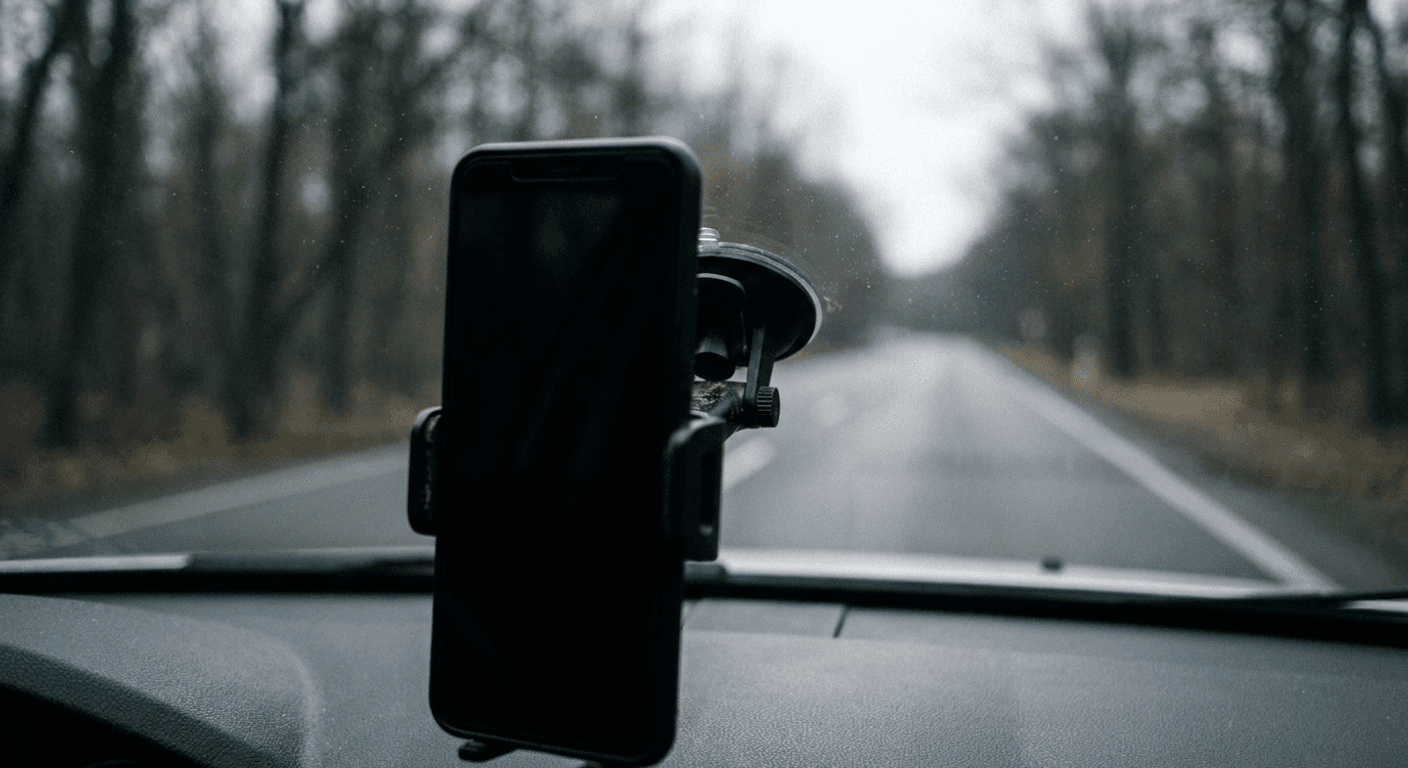
Minnesota prohíbe los objetos suspendidos entre el conductor y el parabrisas bajo el Minn. Stat. 169.71, pero el estatuto permite expresamente los dispositivos GPS cerca de la parte más baja del parabrisas y el equipo de retroalimentación del conductor y monitoreo de seguridad, la categoría que incluye las dashcams, inmediatamente detrás, un poco arriba o un poco debajo del espejo retrovisor.
Minnesota es uno de los pocos estados que menciona explícitamente los sistemas de GPS o navegación, el equipo de retroalimentación del conductor y monitoreo de seguridad, y los dispositivos electrónicos de cobro de peaje como objetos montados en el parabrisas permitidos. El Minn. Stat. 169.71 establece una prohibición general contra los objetos suspendidos entre el conductor y el parabrisas, y luego crea excepciones específicas para seis categorías de dispositivos y equipos. Comprender estas excepciones es esencial para cualquier conductor que use un sistema de navegación, tenga una dashcam o lleve un transpondedor de peaje en Minnesota.
Ley de Obstrucción del Parabrisas de Minnesota (Minn. Stat. 169.71)
Minnesota Statutes Section 169.71, Subdivisión 1 establece la prohibición general. Una persona no debe conducir ni operar un vehículo motorizado con ningún objeto suspendido entre el conductor y el parabrisas. El estatuto luego enumera seis excepciones a esa regla.
Los Seis Objetos Permitidos para Montar en el Parabrisas
Bajo el Minn. Stat. 169.71, Subdivisión 1, Párrafo (a), Inciso (2), los siguientes elementos están exentos de la prohibición general:
- Las viseras solares
- Los espejos retrovisores
- Los equipos de retroalimentación del conductor y monitoreo de seguridad (incluidas las dashcams) cuando se montan inmediatamente detrás, un poco arriba o un poco debajo del espejo retrovisor
- Los sistemas de posicionamiento global o sistemas de navegación cuando se montan o ubican cerca de la parte más baja del parabrisas
- Los dispositivos electrónicos de cobro de peaje (como los transpondedores E-ZPass o MnPass)
- Los dispositivos de identificación de empresas de redes de transporte (TNC) según se definen en el Minn. Stat. 169.58, Subdivisión 5, cuando se montan o ubican cerca de la parte más baja del parabrisas
Esta lista enumerada es más detallada que la de la mayoría de los estados. Muchos estados usan un lenguaje amplio sobre "obstruir la vista del conductor" sin nombrar tipos de dispositivos específicos.
Reglas para Dispositivos de GPS y Navegación
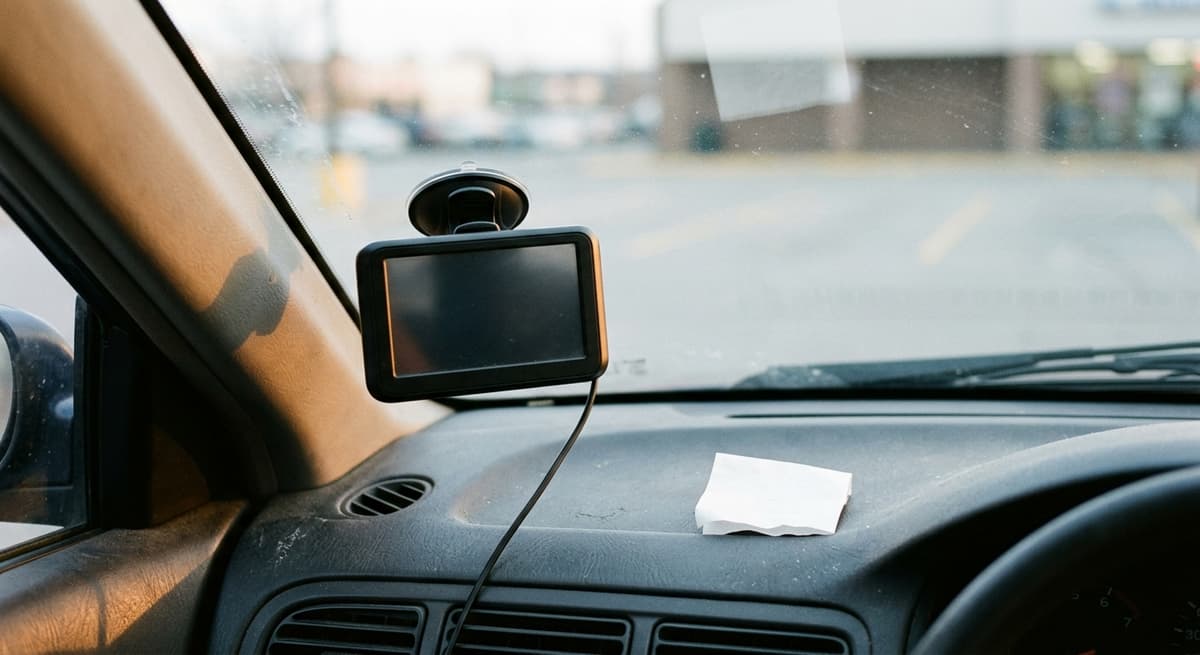
La ley de Minnesota permite explícitamente los sistemas de GPS y navegación en el parabrisas. El único requisito de colocación es que el dispositivo debe montarse o ubicarse cerca de la parte más baja del parabrisas. El estatuto no define "cerca" en pulgadas ni centímetros, por lo que el estándar es cualitativo y no numérico.
Pautas Prácticas de Colocación
Para cumplir con el Minn. Stat. 169.71, los usuarios de dispositivos de GPS y navegación deben:
- Montar el dispositivo lo más bajo posible en el parabrisas
- Mantener el dispositivo del lado del pasajero cuando sea posible para evitar obstruir la línea de visión directa del conductor
- Usar un soporte de ventosa que se adhiera a la parte inferior del parabrisas
- Asegurarse de que el dispositivo no bloquee la vista del conductor hacia el tráfico, los semáforos o las señales de tránsito
Los conductores que prefieran una posición de montaje más alta deben considerar un soporte para tablero, que evita por completo la restricción del parabrisas.
Requisitos de Montaje de la Dashcam
Minnesota es uno de los estados que aborda específicamente las dashcams mediante la disposición de "equipo de retroalimentación del conductor y monitoreo de seguridad". Una dashcam está permitida en el parabrisas, pero el lugar de montaje se limita a inmediatamente detrás, un poco arriba o un poco debajo del espejo retrovisor.
Este requisito de colocación es diferente de la regla del GPS. Mientras que los dispositivos GPS van cerca de la parte inferior del parabrisas, las dashcams pertenecen cerca del espejo retrovisor. Esta distinción tiene sentido desde el punto de vista de la visibilidad: una dashcam detrás del espejo queda mayormente oculta de la vista frontal del conductor mientras sigue captando el camino por delante.
Qué Se Considera "Equipo de Monitoreo de Seguridad"
El estatuto usa la frase "equipo de retroalimentación del conductor y monitoreo de seguridad". Esta categoría amplia cubre:
- Dashcams orientadas hacia adelante
- Cámaras de monitoreo del conductor orientadas hacia la cabina
- Dispositivos de telemática de flotas con componentes de cámara
- Cámaras de sistemas avanzados de asistencia al conductor (ADAS)
- Cámaras de advertencia de salida de carril
Cualquier dispositivo que monitoree el comportamiento de manejo o grabe eventos con fines de seguridad entra en esta excepción, siempre que se monte cerca del espejo retrovisor.
Grabación de Audio con la Dashcam
Minnesota es un estado de consentimiento de una sola parte para la grabación de audio. El conductor cuenta como la parte que da su consentimiento, por lo que grabar audio dentro del vehículo junto con el video de la dashcam es legal siempre que el conductor sepa que la dashcam está grabando.
Dispositivos Electrónicos de Cobro de Peaje
Minnesota permite los dispositivos electrónicos de cobro de peaje en el parabrisas sin especificar un lugar de montaje en particular. El programa E-ZPass de Minnesota (anteriormente MnPass) ofrece etiquetas transpondedoras que normalmente se montan en el interior del parabrisas cerca del espejo retrovisor.
Colocación de la Etiqueta E-ZPass
Según el Departamento de Transporte de Minnesota, la etiqueta E-ZPass debe colocarse horizontalmente en el interior del parabrisas cerca del espejo retrovisor. Para los vehículos con tinte metálico en el parabrisas que pueda interferir con la transmisión de la señal, hay disponible una etiqueta montada en la placa por una tarifa única de $15.
La exención para los dispositivos electrónicos de cobro de peaje se agregó al Minn. Stat. 169.71 en 2005 mediante la ley 2005 Minn. Laws ch. 136, art. 8, sec. 2. La edición de 2004 del estatuto no la contenía.
Dispositivos de Identificación para Transporte por Aplicación (TNC)
El Minn. Stat. 169.58, Subdivisión 5 define los requisitos para los dispositivos de identificación de las empresas de redes de transporte. Los conductores de servicios como Uber y Lyft pueden exhibir hasta dos dispositivos de identidad de marca removibles, montados en el interior, en el parabrisas cerca de la parte más baja.
Estos dispositivos pueden iluminarse con un haz de luz constante de color sólido cuando el conductor está conectado a la red digital. El dispositivo de identificación no debe mostrar luces rojas, ámbar o azules, no debe parpadear ni oscilar, y no debe proyectar una luz deslumbrante o encandilante.
Soportes para Teléfono y la Ley de Manos Libres
La ley de manos libres de Minnesota (Minn. Stat. 169.475), vigente desde el 1 de agosto de 2019, prohíbe sostener un dispositivo de comunicación inalámbrica mientras se opera un vehículo motorizado. La ley exige que los conductores usen el modo activado por voz o manos libres para llamadas, mensajes de texto y uso de aplicaciones.
Dónde Montar un Teléfono
La ley de manos libres hace que los soportes para teléfono sean prácticamente necesarios, pero el Minn. Stat. 169.71 no incluye una exención específica para los soportes de teléfono en el parabrisas. Un teléfono usado como dispositivo de GPS o navegación entraría en la exención de sistemas de navegación y podría montarse cerca de la parte más baja del parabrisas.
Para un teléfono que no se use para navegación, la opción legal más segura es un soporte para el tablero, un clip de ventilación o un soporte de consola. Montar en el parabrisas un teléfono que no funcione como dispositivo de navegación podría técnicamente violar la prohibición general de objetos suspendidos entre el conductor y el parabrisas.
Sanciones de la Ley de Manos Libres
| Infracción | Multa |
|---|---|
| Primera infracción de manos libres | $50 más costos judiciales |
| Segunda infracción y posteriores | $275 más costos judiciales |
Solo la multa de $275 por la segunda infracción y las posteriores figura en el propio estatuto, en el Minn. Stat. 169.475, Subdivisión 2(b). El estatuto no establece un monto en dólares para la primera infracción; ese monto proviene de la lista estatal de pagos y no de la Sección 169.475. Estas sanciones son independientes de cualquier sanción por obstrucción del parabrisas.
Requisitos sobre la Condición del Parabrisas
Más allá de los dispositivos montados, el Minn. Stat. 169.71 también regula la condición física de los parabrisas.
Parabrisas Agrietados o Descoloridos
Bajo la Subdivisión 1, Párrafo (a), Inciso (1), un conductor no debe operar un vehículo con un parabrisas que esté agrietado o descolorido al punto de limitar u obstruir la visión adecuada. No existe un umbral de tamaño específico para las grietas. El estándar es si el daño limita u obstruye la vista del conductor.
Carteles, Afiches y Calcomanías
La Subdivisión 1, Párrafo (a), Inciso (3) prohíbe cualquier cartel, afiche u otro material no transparente en el parabrisas, las ventanillas triangulares o las ventanas laterales o traseras. La excepción son los certificados o documentos exigidos por ley o autorizados por el director estatal de la División de Manejo de Emergencias o por el comisionado de seguridad pública.
Descongelamiento y Desempañado
Bajo la Subdivisión 3, un conductor no debe operar un vehículo motorizado con el parabrisas o las ventanas delanteras laterales cubiertas de vapor o escarcha al punto de impedir la visión adecuada. El vehículo también debe estar equipado con un limpiaparabrisas que el conductor pueda controlar (Subdivisión 2).
Reglas de Polarizado de Ventanas
El Minn. Stat. 169.71, Subdivisión 4 regula el polarizado de ventanas por separado de los dispositivos montados en el parabrisas.
Límites de Polarizado
| Ventana | Transmisión de Luz | Reflectancia |
|---|---|---|
| Parabrisas | No se permite polarizado postventa | No debe ser reflectante |
| Ventanas laterales delanteras | Mínimo 50% (más o menos 3%) | Máximo 20% (más o menos 3%) |
| Ventanas laterales traseras | Mínimo 50% (más o menos 3%) | Máximo 20% (más o menos 3%) |
| Ventana trasera | Mínimo 50% (más o menos 3%) | Máximo 20% (más o menos 3%) |
El Minn. Stat. 169.71, Subdivisión 4(1) prohíbe cualquier material en el parabrisas que lo haga más reflectante o que de otro modo reduzca la transmisión de luz, y sus excepciones expresas (Subdivisión 4a: vidrio de fábrica sin modificar, una receta médica documentada, o ciertas camionetas pickup, furgonetas, vehículos funerarios, limusinas y vehículos policiales) no incluyen una franja de polarizado general en la parte superior del parabrisas ni una excepción por la línea AS-1.
Exención Médica de Polarizado
Minnesota permite una exención médica de las restricciones de polarizado. Un conductor o pasajero con una condición médica documentada puede usar un polarizado más oscuro si lleva en el vehículo una constancia o receta médica. La documentación médica debe:
- Especificar si la condición es temporal o permanente
- Indicar el porcentaje mínimo de transmisión de luz necesario
- Incluir una fecha de vencimiento no mayor a dos años desde la fecha de emisión, a menos que el médico indique que la condición es permanente
Estos requisitos provienen de la Subdivisión 4a, párrafo (a), inciso (2), y son los únicos que debe cumplir un conductor o pasajero con su propia receta.
Existe una regla aparte para la documentación de un tercero. Bajo la Subdivisión 4a, párrafo (b), un conductor puede basarse en una receta o constancia médica expedida a una persona que no está en el vehículo solo si esa persona es el padre, la madre, el hijo, la hija, el abuelo, la abuela, el nieto, la nieta, un hermano, una hermana o el cónyuge del conductor, o alguien para quien el conductor es asistente de cuidado personal. Solo en ese caso, la receta o constancia también debe especificar la marca, el modelo y la placa de uno o dos vehículos que tendrán las ventanas polarizadas, y el conductor debe llevar el documento en el vehículo.
Exenciones para Vehículos Policiales y de Emergencia
El Minn. Stat. 169.71, Subdivisión 1 establece dos exenciones para vehículos oficiales:
- Los vehículos de las fuerzas del orden están exentos tanto de las reglas de obstrucción del parabrisas (Inciso 2) como de la prohibición de carteles y materiales no transparentes (Inciso 3)
- Los vehículos de emergencia autorizados están exentos solo de las reglas de obstrucción del parabrisas (Inciso 2)
Estas exenciones permiten que los vehículos policiales monten equipos como unidades de radar, computadoras portátiles y sistemas de cámara en el parabrisas o cerca de él sin violar el estatuto.
Sanciones por Infracciones del Parabrisas
Las infracciones al Minn. Stat. 169.71 se clasifican como faltas menores (petty misdemeanors) bajo las disposiciones generales de sanciones del Minn. Stat. 169.89.
| Detalle | Información |
|---|---|
| Clasificación de la infracción | Falta menor (petty misdemeanor) |
| Multa máxima | $300 |
| Tiempo en la cárcel | Ninguno (las faltas menores no conllevan cárcel) |
| Agravante | Puede elevarse a delito menor (misdemeanor) si se comete de una manera que pone en peligro a una persona o a la propiedad, o si está precedida por dos o más condenas por faltas menores en los 12 meses anteriores |
El monto real de la multa para una infracción específica del parabrisas lo determina la Lista Estatal de Pagos que mantiene el Consejo Judicial de Minnesota. El monto a pagar suele ser inferior al máximo estatutario de $300.
Posibilidad de una Citación de Reparación ("Fix-It Ticket")
Para infracciones relacionadas con la condición del parabrisas (grietas, escarcha, limpiaparabrisas rotos), los oficiales pueden emitir una orden de reparación de equipo en lugar de una citación. Corregir el problema dentro del plazo especificado por el oficial normalmente satisface la orden sin necesidad de pagar una multa.
Más Leyes de Minnesota
- Leyes de Grabación de Minnesota
- Ley Limón de Minnesota
- Leyes de Choque y Fuga de Minnesota
- Leyes de Asientos de Auto para Niños de Minnesota
Preguntas frecuentes
¿Puedo montar un GPS en el parabrisas en Minnesota?
Sí. La Sección 169.71 de los Estatutos de Minnesota permite específicamente los sistemas de posicionamiento global y los sistemas de navegación en el parabrisas. El dispositivo debe montarse cerca de la parte más baja del parabrisas. Los soportes para tablero también son una opción y evitan cualquier problema de colocación en el parabrisas.
¿Dónde puedo montar una dashcam en Minnesota?
Una dashcam debe montarse inmediatamente detrás, un poco arriba o un poco debajo del espejo retrovisor según el Minn. Stat. 169.71. Montar una dashcam en otros lugares del parabrisas, incluso en el tablero en una posición que bloquee la vista del parabrisas, podría violar la ley de Minnesota.
¿Es legal montar mi teléfono en el parabrisas en Minnesota?
Si usa el teléfono como dispositivo de GPS o navegación, entra en la exención del sistema de navegación y debe montarse cerca de la parte más baja del parabrisas. Para el uso general del teléfono, un soporte para tablero o un clip de ventilación es la opción legal más segura porque el estatuto no incluye una exención independiente para los soportes de teléfono.
¿Cuál es la multa por una infracción de obstrucción del parabrisas en Minnesota?
La obstrucción del parabrisas es una falta menor en Minnesota con una multa máxima de $300 y sin tiempo en la cárcel. El monto real de la multa lo determina la Lista Estatal de Pagos y normalmente es inferior al máximo estatutario. Las infracciones reincidentes dentro de 12 meses pueden elevarse a un delito menor.
¿Minnesota permite exenciones médicas para un polarizado de ventanas más oscuro?
Sí. Bajo el Minn. Stat. 169.71, Subdivisión 4, un conductor o pasajero con una condición médica calificada puede usar un polarizado más oscuro con una constancia médica. La documentación debe especificar la condición, el porcentaje mínimo de transmisión de luz necesario y una fecha de vencimiento no mayor a dos años desde su emisión.
Actualizaciones
Se corrigió la lista de excepciones del parabrisas para reflejar el texto exacto del estatuto, se reubicaron los requisitos de la documentación médica de polarizado en el párrafo correcto, se eliminó una versión no verificada de cuándo se agregó la exención del transpondedor de peaje y una línea sobre puntos en la licencia que no se pudo confirmar, y se aclaró qué multa de manos libres proviene realmente del estatuto.
Se eliminó una afirmación no respaldada de que el Minn. Stat. 169.71 permite una franja de polarizado tipo AS-1 en el parabrisas (el texto del estatuto prohíbe cualquier material reflectante o que reduzca la transmisión de luz sin esa excepción), y se eliminó una sección de 'enmienda de 2025' fabricada cuyo lenguaje citado no aparece en el texto vigente del estatuto.
La ley detrás de este artículo
Este artículo se apoya en las disposiciones legales a continuación, conservadas en nuestro propio registro jurídico y obtenidas de la fuente oficial. Toque una sección para leer el texto vigente.
Minnesota Statutes, Chapter 169: TRAFFIC REGULATIONS
§ 169.71WINDSHIELDVigentecitada en 4 de nuestros artículos
Subdivision 1. Prohibitions generally; exceptions. (a) A person shall not drive or operate any motor vehicle with: (1) a windshield cracked or discolored to an extent to limit or obstruct proper vision; (2) any objects suspended between the driver and the windshield, other than: (i) sun visors; (ii) rearview mirrors; (iii) driver feedback and safety monitoring equipment when mounted immediately behind, slightly above, or slightly below the rearview mirror; (iv) global positioning systems or navigation systems when mounted or located near the bottommost portion of the windshield; (v) electronic toll collection devices; and (vi) an identifying device as provided in section 169.58, subdivision 5, when the device is mounted or located near the bottommost portion of the windshield; or (3) any sign, poster, or other nontransparent material upon the front windshield, sidewings, or side or rear windows of the vehicle, other than a certificate or other paper required to be so displayed by law or authorized by the state director of the Division of Emergency Management or the commissioner of public safety. (b) Paragraph (a), clauses (2) and (3), do not apply to law enforcement vehicles.
Texto oficial (extracto) · verificado el 2026-09-07 · Lea el texto completo en nuestra biblioteca legal · Verifique en revisor.mn.gov
Citada en 17 resoluciones judiciales de nuestra colecciónResolución más reciente que la cita en nuestra colección: 2026
En los tribunales (resumen editorial, verificado de forma independiente):State v. Varnado (1998) trató una infracción del parabrisas bajo Minn. Stat. 169.71 como causa probable para la parada, pero sostuvo que es solo una falta menor que no justificaba el cacheo. State v. Smith (2002) supuso sin decidir que la subdivisión sobre polarizado era inconstitucional y sostuvo que la regla de exclusión no impedía usar la prueba.
Resoluciones que citan esta sección en nuestra colección:
- State v. Smith (Court of Appeals of Minnesota 2002, 652 N.W.2d 546)✓Un ayudante del sheriff detuvo un auto a través del cual no podía ver por polarizado excesivo bajo Minn. Stat. 169.71, subd. 4; la corte asumió sin decidir que el estatuto violaba la igual protección y sostuvo que la regla de exclusión no alcanzaba la evidencia hallada tras la parada.
- Gerding v. Commissioner of Public Safety (Court of Appeals of Minnesota 2001, 628 N.W.2d 197)✓Un oficial detuvo a Gerding tras ver un objeto colgado de su espejo retrovisor; la corte interpretó que la versión entonces vigente de Minn. Stat. 169.71, subd. 1 prohibía cualquier objeto suspendido salvo las viseras y los espejos, obstruya o no la visión, por lo que la parada estaba justificada.
- State v. Varnado (Supreme Court of Minnesota 1998, 582 N.W.2d 886)✓Los oficiales detuvieron a Varnado por un parabrisas agrietado y la cachearon antes de sentarla en la patrulla; la corte calificó esa infracción de Minn. Stat. 169.71 como un delito menor leve que justificaba la parada pero no el cacheo, y restableció la orden de supresión.
Identificado automáticamente a partir de las opiniones judiciales que citan esta sección; no es un ranking de qué caso prevalece.
§ 169.475USE OF WIRELESS COMMUNICATIONS DEVICEVigentecitada en 2 de nuestros artículos
Subdivision 1. Definitions. (a) For purposes of this section, the following terms have the meanings given. (b) "Electronic message" means a self-contained piece of digital communication that is designed or intended to be transmitted between physical devices. An electronic message includes, but is not limited to: email; a text message; an instant message; a command or request to access a web page; a voice mail message; a transmitted image; transmitted video content, including through video calling; transmitted gaming data; and other data transmitted using a commonly recognized electronic communications protocol. An electronic message does not include: voice or audio data transmitted as a result of making a phone call; data transmitted between a motor vehicle and a wireless communications device located in the vehicle; data transmitted by a two-way radio, citizens band radio, or amateur radio used in accordance with Federal Communications Commission rules and regulations; or data transmitted automatically without direct initiation by a person.
Texto oficial (extracto) · verificado el 2026-07-29 · Lea el texto completo en nuestra biblioteca legal · Verifique en revisor.mn.gov
§ 169.58IDENTIFICATION LAMPSVigente
Subdivision 1. Wide or long vehicle. Any vehicle or combination of vehicles having a width including load thereon at any part in excess of 80 inches or which exceeds 30 feet in overall length may be equipped with identification lamps on the front displaying three amber or white lights and identification lamps on the rear displaying three red lights, and when so equipped the lights in each such group shall be evenly spaced not less than 6 nor more than 12 inches apart, along a horizontal line as near to the top of the vehicle as practicable, and these lights shall be visible from a distance of 500 feet to the front and rear, respectively, of the vehicle. Subd. 2. Red lamp; permit for volunteer emergency responders. Upon obtaining a permit from the commissioner of public safety, any motor vehicles operated by an active member of a volunteer fire department authorized by or contracting with any city, town, or township in this state, an emergency medical first responder, or an ambulance crew member may be equipped with a lamp emitting a red light to the front of such vehicle. The lens of such lamp shall be not more than three inches in diameter.
Texto oficial (extracto) · verificado el 2026-07-29 · Lea el texto completo en nuestra biblioteca legal · Verifique en revisor.mn.gov
§ 169.89PENALTIESVigentecitada en 3 de nuestros artículos
Subdivision 1. Violation; when petty misdemeanor enhanced to misdemeanor. Unless otherwise declared in this chapter with respect to particular offenses, it is a petty misdemeanor for any person to do any act forbidden or fail to perform any act required by this chapter; except that: (1) a violation which is committed in a manner or under circumstances so as to endanger or be likely to endanger any person or property; or (2) exclusive of violations relating to the standing or parking of an unattended vehicle, a violation of any of the provisions of this chapter, classified therein as a petty misdemeanor, when preceded by two or more petty misdemeanor convictions within the immediate preceding 12-month period; is a misdemeanor to which the provisions of subdivision 2 shall not apply. Subd. 2. Petty misdemeanor penalty; no jury trial. A person charged with a petty misdemeanor is not entitled to a jury trial but shall be tried by a judge without a jury. If convicted, the person is not subject to imprisonment but shall be punished by a fine of not more than $300. Subd. 3. [Obsolete] Subd. 4. Driver's record.
Texto oficial (extracto) · verificado el 2026-07-29 · Lea el texto completo en nuestra biblioteca legal · Verifique en revisor.mn.gov
Citada en 23 resoluciones judiciales de nuestra colecciónResolución más reciente que la cita en nuestra colección: 2016
Resoluciones que citan esta sección en nuestra colección:
- State v. Johnson (Supreme Court of Minnesota 1994, 514 N.W.2d 551)“…on in a year, he was charged with a misdemeanor pursuant to Minn.Stat. § 169.89, subd. I. 2 Appellant…”
- State v. Batzer (Court of Appeals of Minnesota 1989, 448 N.W.2d 565)“…ty misdemeanor and would result in a maximum fine of $100. Minn. Stat. § 169.89 , subd. 1(b). Appellant, however, had t…”
- State v. Host (Court of Appeals of Minnesota 1984, 350 N.W.2d 479)“…lties provided in section 169.89 apply. Id. Minn.Stat. § 169.89 (1982) in turn provides: Unless…”
Identificado automáticamente a partir de las opiniones judiciales que citan esta sección; no es un ranking de qué caso prevalece.
Minnesota Statutes, Chapter 171: DRIVERS' LICENSES AND TRAINING SCHOOLS
§ 171.12DRIVING RECORD; FILING; PRIVATE DATAVigentecitada en 2 de nuestros artículos
Subdivision 1. Licenses filed in alphabetical order. (a) The department shall file every application for a driver's license received by it and shall maintain suitable indices containing, in alphabetical order: (1) all applications denied and the reason for denial; (2) all applications granted; and (3) the name of every person whose license has been suspended, revoked, or canceled or who has been disqualified from operating a commercial motor vehicle by the department, and after each name the reasons for the action. (b) Notwithstanding section 260B.171 or 260C.171, data revealing that the reason for the action under paragraph (a), clause (3) is an order of the juvenile court are accessible to the public. Subd. 1a. Driver and vehicle services information system; security and auditing. (a) The commissioner must establish written procedures to ensure that only individuals authorized by law may enter, update, or access not public data collected, created, or maintained by the driver and vehicle services information system.
Texto oficial (extracto) · verificado el 2026-07-29 · Lea el texto completo en nuestra biblioteca legal · Verifique en revisor.mn.gov
Citada en 4 resoluciones judiciales de nuestra colecciónResolución más reciente que la cita en nuestra colección: 2016
Resoluciones que citan esta sección en nuestra colección:
- Barlow v. Commissioner of Public Safety (Supreme Court of Minnesota 1985, 365 N.W.2d 232)“…and accurate accounts of incidents involving drivers. Thus Minn.Stat. § 171.12, subd. 1 (1984), requires the Commissio…”
- Schumann v. State, Department of Public Safety (Court of Appeals of Minnesota 1985, 367 N.W.2d 688)“…ying the administrative sanctions of § 169.121, subd. 4(d). Minn.Stat. § 171.12, subd. 3, requires that driving records…”
- Commissioner of Public Safety v. Barlow (Court of Appeals of Minnesota 1984, 352 N.W.2d 851)“…and after each such name the reason for such action. Minn.Stat. § 171.12, subd. 1(3) (1982). The reason for this…”
Identificado automáticamente a partir de las opiniones judiciales que citan esta sección; no es un ranking de qué caso prevalece.
Fuentes y referencias
- Minn. Stat. 169.71 - Parabrisas(revisor.mn.gov).gov
- Minn. Stat. 169.475 - Uso de Dispositivos de Comunicación Inalámbrica(revisor.mn.gov).gov
- Minn. Stat. 169.58 - Identificación de Vehículos y Dispositivos TNC(revisor.mn.gov).gov
- Minn. Stat. 169.89 - Sanciones por Infracciones de Tránsito(revisor.mn.gov).gov
- MnDOT - Información sobre la Etiqueta E-ZPass(dot.minnesota.gov).gov
- MnDOT - Programa E-ZPass de Minnesota(dot.minnesota.gov).gov
- Minn. Stat. 169.71 (edición de 2005) - nota de historial que menciona 2005 c 136 art 8 s 2(revisor.mn.gov)
- Minn. Stat. 171.12 - Registros del Departamento; contenido del historial de manejo(revisor.mn.gov)