Papua New Guinea E-Scooter Laws: Motor Vehicle Rules Apply (2026)
This article is general information about e-scooter law in Papua New Guinea and is not legal advice. PNG's Road Traffic Authority (RTA) or a PNG-admitted lawyer can confirm the current position for your situation. Information last verified on 23 July 2026.
Are e-scooters legal in Papua New Guinea?
PNG's Road Traffic Act 2014 (No. 15 of 2014) repealed the older Motor Traffic Act and set out a new "motor vehicle" definition in its Interpretation section: "a vehicle drawn or propelled by mechanical power, including a trailer, but does not include (a) a vehicle running on rails; or (b) a pedestrian-controlled vehicle; or (c) a mobility device." Read on its own, that third exclusion might look like it clears a path for a personal mobility device such as an e-scooter.
It does not, once the Act's own definition of "mobility device" is checked. The Act defines the term narrowly, as a device "designed and constructed for use by persons who require mobility assistance due to a physical or neurological impairment" and "solely powered by a motor that has a maximum output of 1,500 watts." That is a disability-assistance carve-out, not a general PMD exception. A standard e-scooter, ridden by someone who does not need mobility assistance, is not a "mobility device" under this wording, and it is not "pedestrian-controlled" either, since it is ridden rather than walked alongside. It falls back inside the "motor vehicle" definition, with registration and driving licence requirements attached, the same outcome reached under Brunei, Fiji, Solomon Islands, and Vanuatu's differently worded but similarly broad definitions.
What counts as an e-scooter here
PNG's Road Traffic Authority (RTA) publishes five categories of rules on its own resources page: driver licensing, vehicle registration, passenger and goods licensing, vehicle standards, and road user rules. None of them mention e-scooters, personal mobility devices, or micromobility. The only device-specific wattage figure in the Act, 1,500 watts, applies solely to the disability-assistance "mobility device" definition, not to e-scooters generally.
Where you can ride
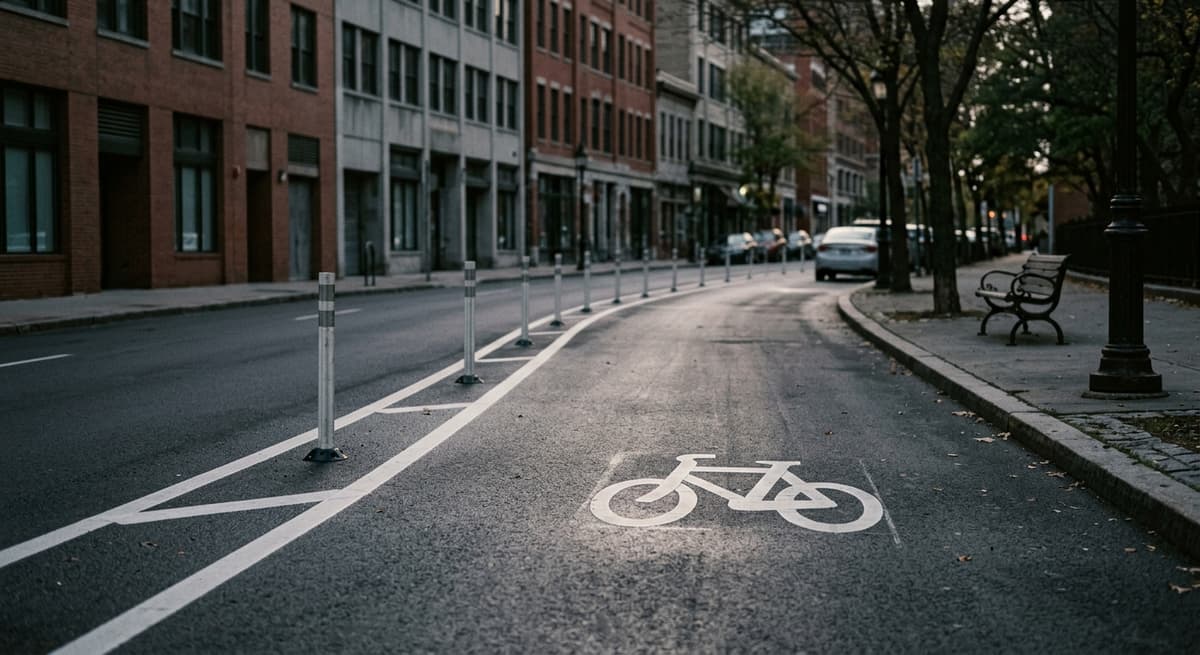
Because a general-use e-scooter is a "motor vehicle" under the Act rather than an excluded device, no source located for this article describes a lawful path to ride an unregistered, unlicensed e-scooter on PNG's roads. Nothing in the RTA's published road user rules creates a cycle lane or sidewalk exception for scooters.
Rider rules
With a scooter treated as a motor vehicle, the Act's general registration and driving licence requirements would apply to it the same as to a car or motorcycle. The Act's definition of "permit" references an Authority-issued exception for driving an unregistered motor vehicle in some circumstances, but this research did not confirm whether that mechanism is ever used for micromobility devices in practice, so it is noted as an open question rather than a workaround.
Penalties
This research did not confirm specific penalty or fine amounts for operating an unregistered or unlicensed motor vehicle under the Road Traffic Act 2014, so none is stated here.
Enforcement in practice
No enforcement data, whether citation counts, seizures, or reported incidents, specific to e-scooters in PNG was found. As elsewhere in this research, that absence of documented enforcement does not change the legal position described above, and it is not evidence that riding one is permitted. For how Australia's states and territories handle e-scooters by comparison, see Australia's e-scooter laws.
Frequently Asked Questions
Are e-scooters legal in Papua New Guinea?
PNG's Road Traffic Act 2014 defines 'motor vehicle' broadly and only excludes a disability-specific 'mobility device' capped at 1,500 watts, not general-use e-scooters. A standard e-scooter falls inside the motor vehicle definition and its registration and licensing requirements.
Does PNG's 'mobility device' exception cover e-scooters?
No. The Act defines 'mobility device' as a device designed for people who require mobility assistance due to a physical or neurological impairment, capped at 1,500 watts. A general-use e-scooter ridden for transport does not meet that definition.
Do I need to register an e-scooter in PNG?
Because a standard e-scooter meets the Act's 'motor vehicle' definition, the same registration requirements that apply to cars and motorcycles would apply to it. No dedicated e-scooter registration category was found.
Is there an e-scooter rental scheme in Papua New Guinea?
No rental e-scooter scheme was found operating in PNG in this research.
What replaced PNG's old Motor Traffic Act?
The Road Traffic Act 2014 (No. 15 of 2014) repealed the earlier Motor Traffic Act 1950 and introduced the current 'motor vehicle' and 'mobility device' definitions described above.
How is this enforced in PNG in practice?
No enforcement data specific to e-scooters was found. That gap does not indicate the rules do not apply.
Sources and References
- Road Traffic Act 2014 (No. 15 of 2014), s.1 Interpretation, 'motor vehicle' definition and exclusions(parliament.gov.pg).gov
- Road Traffic Act 2014, s.1 Interpretation, 'mobility device' definition (1,500 watt cap, disability-assistance purpose)(parliament.gov.pg).gov
- Road Traffic Act 2014, s.1 Interpretation, 'permit' definition referencing an Authority-issued exception for unregistered motor vehicles(parliament.gov.pg).gov
- Papua New Guinea Road Traffic Authority (RTA), Rules resource page, five categories listed with no PMD or e-scooter mention(rta.gov.pg).gov