
South Carolina
South Carolina Car Seat Laws (2026): 4 Stages & Fit Test
Independently fact-checked against primary sources (last audited September 17, 2026). · Reviewed by the RecordingLaw editorial team. · Law checked current as of August 20, 2026. · 9 primary sources cited on this page. How we verify our legal content
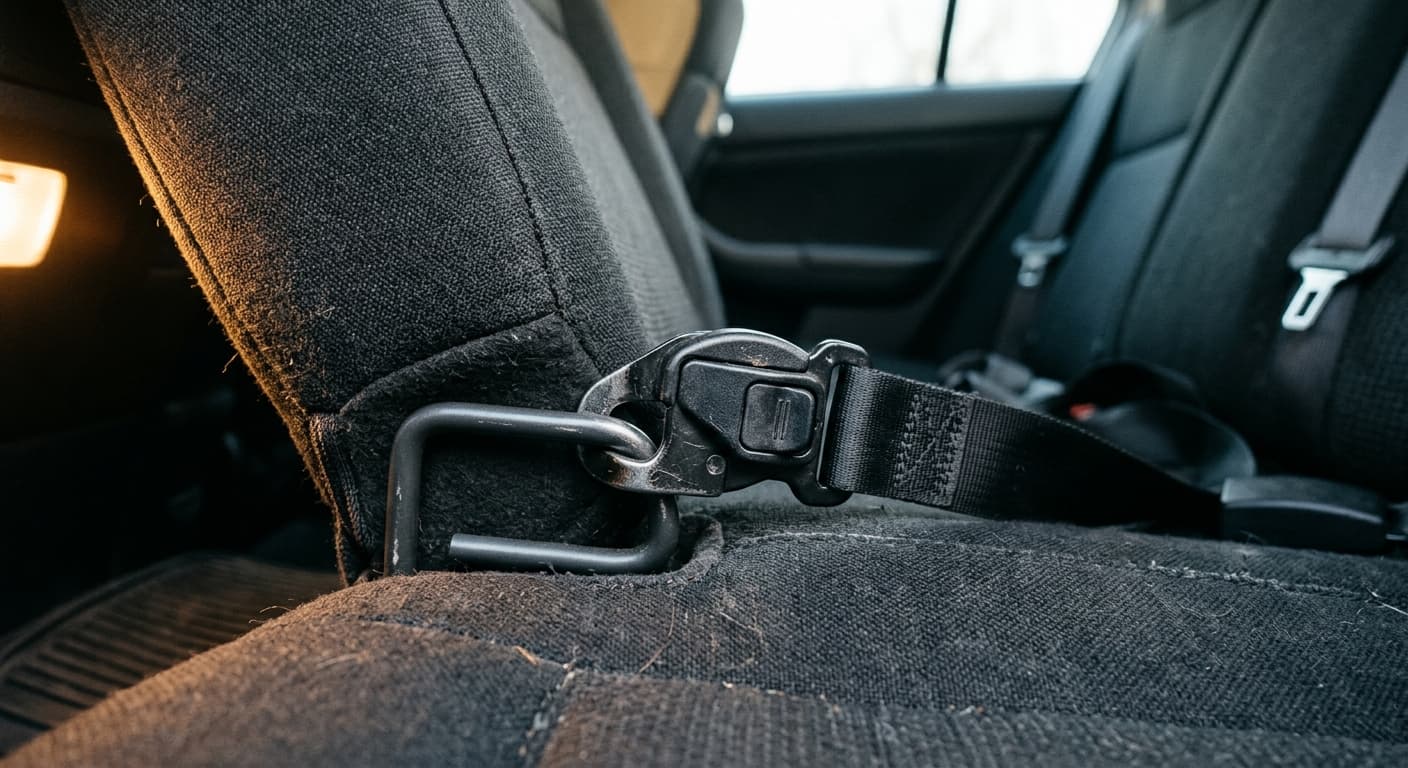
South Carolina runs a four-stage child restraint law under S.C. Code § 56-5-6410: rear-facing under 2, forward-facing from 2 until the seat's own limits are exceeded, a belt-positioning booster from 4 until a fit test is passed, and seat-belt eligibility at 8 or 57 inches tall, subject to that same fit test. The rear-seat placement those stages describe is the default, not absolute: section 56-5-6420 permits a child under 8 to ride in front if the vehicle has no rear passenger seat or all rear seating positions are already occupied by other children under 8. A violation carries a fine of not more than $150, waivable on proof of having acquired a conforming seat. This page reflects the statute's text as of September 2026.
Jurisdiction scope: This article covers car seat and child-restraint law in the state of South Carolina only. It does not address any other state. For other states, see the car seat laws hub.
| Stage | Who | Rule | Statute |
|---|---|---|---|
| Rear-facing | Under 2, until the seat's own height/weight limit | Rear-facing child passenger restraint system, in a rear passenger seat (front-seat exception applies, see below) | § 56-5-6410(A)(1) |
| Forward-facing | At least 2 (or under 2 having outgrown rear-facing), until the seat's own height/weight limit | Forward-facing child passenger restraint system with a harness, in a rear seat (front-seat exception applies, see below) | § 56-5-6410(A)(2) |
| Belt-positioning booster | At least 4, having outgrown forward-facing, until able to pass the belt fit test | Belt-positioning booster seat in a rear seat; not to be used with a lap belt alone (front-seat exception applies, see below) | § 56-5-6410(A)(3) |
| Seat belt (fit test) | At least 8, or at least 57 inches tall | Adult safety seat belt, only if the 3-part fit test is met | § 56-5-6410(A)(4) |
| Front-seat exception | Under 8, no rear passenger seat available or all rear positions occupied by other children under 8 | May ride in front if properly secured in the restraint system or booster the applicable stage above requires | § 56-5-6420 |
Who this article covers
Section 56-5-6410(A)'s duty applies to "every driver of a motor vehicle (passenger car, pickup truck, van, or recreational vehicle) operated on the highways and streets of this State when transporting a child under eight years of age." Section 56-5-6445 adds a further limit: "The provisions of this article apply to all motor vehicles equipped with safety belts." Together, these two provisions set the article's outer boundary: the vehicle types it reaches, and that it only reaches a vehicle equipped with safety belts in the first place.
Under 2: the rear-facing stage
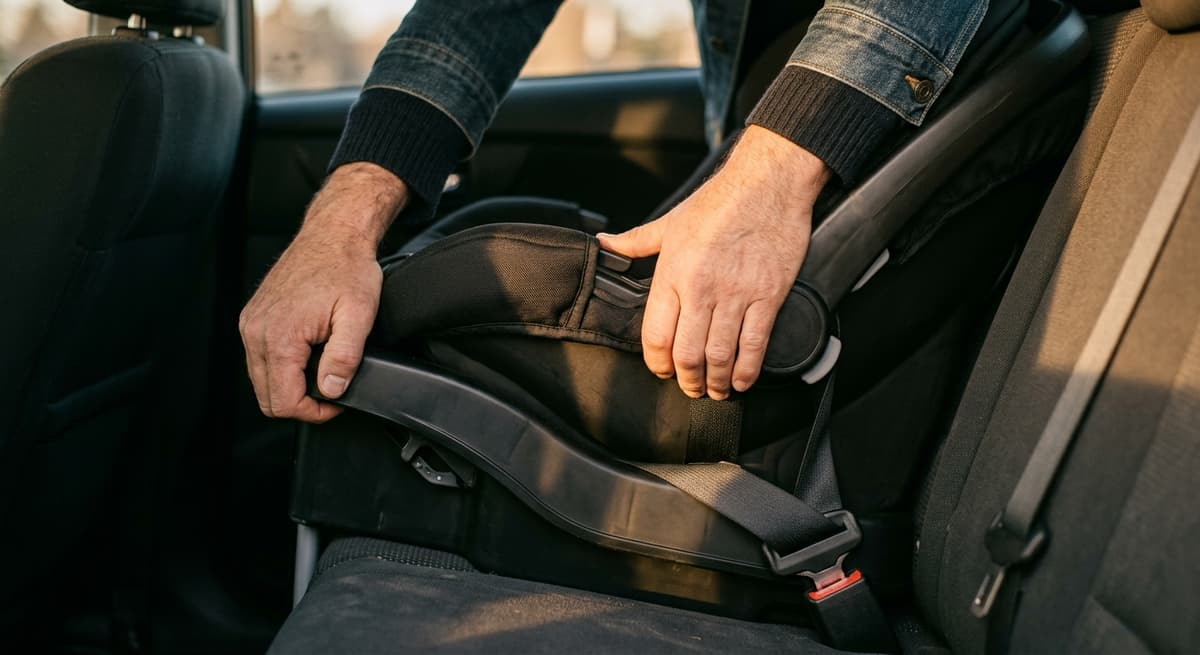
Section 56-5-6410(A)(1) requires an infant or child under 2 to be "properly secured in a rear-facing child passenger restraint system in a rear passenger seat of the vehicle until the child exceeds the height or weight limit allowed by the manufacturer of the child passenger restraint system being used." The stage ends when the seat's own manufacturer limits are exceeded, not on a fixed South Carolina weight or height number. This rear-seat placement is subject to the front-seat exception described below.
Ages 2 and up: forward-facing until the seat's own limits are exceeded
Section 56-5-6410(A)(2) covers "a child at least two years of age or a child under two years of age who has outgrown his rear-facing child passenger restraint system": that child "must be secured in a forward-facing child passenger restraint system with a harness in a rear passenger seat of the vehicle until the child exceeds the highest height or weight requirements of the forward-facing child passenger restraint system." As with the rear-facing stage, the exit point is the seat's own rated limit, not a statutory age or weight cutoff, and rear-seat placement is subject to the same front-seat exception.
At least 4: the belt-positioning booster stage
Once a child is "at least four years of age" and has outgrown a forward-facing restraint system, section 56-5-6410(A)(3) requires the child to "be secured by a belt-positioning booster seat in a rear seat of the vehicle until he can meet the height and fit requirements for an adult safety seat belt." The statute is explicit that "a booster seat must not be used with a lap belt alone"; it has to be paired with a lap-and-shoulder belt combination. Rear-seat placement here is also subject to the front-seat exception below.
At least 8 or 57 inches: seat belt, if it actually fits
Section 56-5-6410(A)(4) lets a child who is "at least eight years of age or at least fifty-seven inches tall" move to an adult safety seat belt in place of a booster, but only "if the child can be secured properly by an adult safety seat belt." The statute defines that fit with a three-part test: the lap belt has to lie across the thighs and hips, not ride up onto the abdomen; the shoulder belt has to cross the chest, not the neck; and the child has to be able to sit with their back straight and knees bent over the edge of the seat. A child who reaches 8 or 57 inches but doesn't pass this fit test is not automatically cleared to use only a seat belt under this provision.
When a child may ride in the front seat
The rear-seat placement required by stages 1 through 3 above is the default, not an absolute rule. S.C. Code § 56-5-6420, "Transportation of children in the front seat of a motor vehicle," reads in full: "If a motor vehicle lacks a rear passenger seat or if all of its rear seating positions are occupied by children under eight years of age, a child under eight years of age may be transported in the front seat of the motor vehicle if the child is secured properly in an appropriate child passenger safety restraint system or belt-positioning booster seat as described in Section 56-5-6410(1), (2), or (3)." So a two-seat pickup with no back seat, or a full back row already carrying other children under 8, has a lawful front-seat answer: the child still has to be secured in whatever restraint system or booster their age and size require, just not in a rear seating position. Separately, section 56-5-6410(B) says that for purposes of this section, any portion of a recreational vehicle equipped with temporary living quarters counts as a rear passenger seat.
Exemptions
S.C. Code § 56-5-6440 exempts several categories from the restraint article entirely: taxi drivers; drivers of emergency vehicles when operating in an emergency situation; church, day care, and school bus drivers; public transportation operators; and commercial vehicles. A separate provision, section 56-5-6410(A)(5), is not an exemption from restraint at all: it lets a child who is unable to be transported in a standard child passenger safety restraint system be transported instead in one designed for their medical needs, based on written documentation from the child's physician, advanced nurse practitioner, or physician assistant. That provision authorizes a medically-designed restraint; it does not excuse a child from being restrained.
Penalty for violating South Carolina's car seat law
Section 56-5-6450 sets the penalty: a person who violates the restraint article, on conviction, "must be fined not more than one hundred fifty dollars." The same section requires the court to waive that fine for a person who, "before, or upon the appearance date on the summons, supplies the court with evidence of acquisition, purchase, or rental of a child restraint system meeting the requirements of this article." A driver cited for not having a seat can avoid the fine by showing up to court with proof that they've since gotten one.
Leaving a child unattended, and smoking in a vehicle
South Carolina has no statute directed specifically at leaving a child unattended in a vehicle. A 2011-2012 bill, H.4026, would have created one using an under-15 age threshold, but it stayed in the House Judiciary Committee and was never enacted; it is not current law. South Carolina also has no statute directed specifically at smoking in a vehicle with a minor present. Conduct of either kind could still be reached by other, more general South Carolina law, such as child-endangerment or neglect statutes; the absence described here is specific to a dedicated vehicle statute, not a claim that no law of any kind could ever apply.
Federal guidance vs. South Carolina law
The federal standard governing child car seats as products, FMVSS 213 (49 CFR 571.213), sets crash-test and performance requirements a seat must meet to be sold; it creates no duty on a parent or driver to use the seat a particular way, which is South Carolina's own statute's job. The National Highway Traffic Safety Administration and the American Academy of Pediatrics separately recommend keeping a child rear-facing as long as the seat's own height and weight limits allow, then moving through a forward-facing harness, a booster, and finally a seat belt; South Carolina's own rear-facing and forward-facing stages already track that guidance as binding law, tied to the seat's own rated limits rather than a fixed statutory age. NHTSA has also adopted a newer federal side-impact performance standard for car seats themselves, FMVSS 213a (49 CFR 571.213a), that is being phased in for manufacturers on its own separate schedule; that standard changes what a seat must be built to withstand, not what South Carolina law requires a driver to do.
Related South Carolina traffic law pages
Disclaimer: This article provides general legal information about South Carolina's car seat law as of September 2026. It is not legal advice. Statutes, exemptions, and penalties change; verify the current text of the law before relying on it, and talk to a lawyer licensed in South Carolina about a specific situation.
Statutes cited reflect their in-force version as of 2026-09-17. Last updated: 2026-09-17.
Frequently Asked Questions
Until what age does a child need a car seat in South Carolina?
South Carolina runs four stages: rear-facing under 2, forward-facing from 2 until the seat's own limit is exceeded, a belt-positioning booster from 4 until a belt fit test is passed, and seat-belt eligibility at 8 or 57 inches, subject to that fit test, under S.C. Code section 56-5-6410.
What is the belt fit test for a South Carolina booster seat exit?
A child at least 8, or at least 57 inches tall, may use an adult seat belt instead of a booster only if the lap belt crosses the thighs and hips (not the abdomen), the shoulder belt crosses the chest (not the neck), and the child sits with a straight back and knees bent over the seat's edge.
Can a child ride in the front seat in South Carolina?
A child under 8 may ride in the front seat if the vehicle lacks a rear passenger seat, or if all rear seating positions are already occupied by other children under 8, under S.C. Code section 56-5-6420. The child still has to be properly secured in the restraint system or booster seat their stage under section 56-5-6410 requires.
What is the fine for a car seat violation in South Carolina?
A fine of not more than $150, under S.C. Code section 56-5-6450. The court must waive the fine if the person supplies evidence, by the appearance date, of having acquired, purchased, or rented a conforming child restraint system.
Are taxi and school bus drivers exempt from South Carolina's car seat law?
Yes. Taxi drivers, emergency vehicle drivers in an emergency, church/day care/school bus drivers, public transportation operators, and commercial vehicles are all exempt under S.C. Code section 56-5-6440.
Does South Carolina have a law about leaving a child alone in a car?
South Carolina has no statute directed specifically at leaving a child unattended in a vehicle; a 2011-2012 bill, H.4026, would have created one but stayed in House Judiciary and was never enacted. That isn't the same as no legal exposure: general child-endangerment and neglect law, including S.C. Code section 63-5-70 (unlawful conduct toward a child), can still reach the conduct.
Updates
Rebuilt from the current statute text after an independent review: restraint stages, exemptions, front-seat rules and penalties re-verified against the statute.
Independently fact-checked against the cited primary sources
Independently fact-checked against the cited primary sources; governing law re-checked for recent changes
Governing law re-checked for recent changes
Reviewed and approved by an editor
The Law Behind This Article
This article rests on the statutory provisions below, held in our own legal record and retrieved from the official source. Tap a section to read the operative text.
South Carolina Code of Laws, Title 56: MOTOR VEHICLES
§ 56-5-6410Child passenger restraint systems; age and weight as basis for required restraining system; standardsIn force
(A) Every driver of a motor vehicle (passenger car, pickup truck, van, or recreational vehicle) operated on the highways and streets of this State when transporting a child under eight years of age upon the public streets and highways of the State must properly secure the child in the vehicle as follows: (1) An infant or child under two years of age must be properly secured in a rear-facing child passenger restraint system in a rear passenger seat of the vehicle until the child exceeds the height or weight limit allowed by the manufacturer of the child passenger restraint system being used. (2) A child at least two years of age or a child under two years of age who has outgrown his rear-facing child passenger restraint system must be secured in a forward-facing child passenger restraint system with a harness in a rear passenger seat of the vehicle until the child exceeds the highest height or weight requirements of the forward-facing child passenger restraint system.
Official text (excerpt) · last checked 2026-09-16 · Read the full text in our law library · Verify at scstatehouse.gov
§ 56-5-6420Transportation of children in the front seat of a motor vehicleIn force
If a motor vehicle lacks a rear passenger seat or if all of its rear seating positions are occupied by children under eight years of age, a child under eight years of age may be transported in the front seat of the motor vehicle if the child is secured properly in an appropriate child passenger safety restraint system or belt-positioning booster seat as described in Section 56-5-6410(1), (2), or (3).
Official text (excerpt) · last checked 2026-07-29 · Read the full text in our law library · Verify at scstatehouse.gov
§ 56-5-6450Penalty for violation of article; waiver of fineIn force
A person who violates the provisions of this article, upon conviction, must be fined not more than one hundred fifty dollars. The court shall waive the fine against a person who, before, or upon the appearance date on the summons, supplies the court with evidence of acquisition, purchase, or rental of a child restraint system meeting the requirements of this article.
Official text (excerpt) · last checked 2026-07-29 · Read the full text in our law library · Verify at scstatehouse.gov
§ 56-5-6440Persons and vehicles excepted from articleIn force
The provisions of this article do not apply to: (1) Taxi drivers. (2) Drivers of emergency vehicles when operating in an emergency situation. (3) Church, day care and school bus drivers. (4) Public transportation operators. (5) Commercial vehicles.
Official text (excerpt) · last checked 2026-07-29 · Read the full text in our law library · Verify at scstatehouse.gov
§ 56-5-6445Applicability of chapterIn force
The provisions of this article apply to all motor vehicles equipped with safety belts.
Official text (excerpt) · last checked 2026-07-29 · Read the full text in our law library · Verify at scstatehouse.gov
South Carolina Code of Laws, Title 63: SOUTH CAROLINA CHILDREN'S CODE
§ 63-5-70Unlawful conduct toward a childIn force
(A) It is unlawful for a person who has charge or custody of a child, or who is the parent or guardian of a child, or who is responsible for the welfare of a child as defined in Section 63-7-20 to: (1) place the child at unreasonable risk of harm affecting the child's life, physical or mental health, or safety; (2) do or cause to be done unlawfully or maliciously any bodily harm to the child so that the life or health of the child is endangered or likely to be endangered; or (3) wilfully abandon the child. (B) A person who violates subsection (A) is guilty of a felony and for each offense, upon conviction, must be fined in the discretion of the court or imprisoned not more than ten years, or both.
Official text (excerpt) · last checked 2026-07-29 · Read the full text in our law library · Verify at scstatehouse.gov
Cited in 10 court opinions in our collectionLatest citing opinion in our collection: 2026
Opinions citing this section in our collection:
- State v. Greene (Supreme Court of South Carolina 2018, 814 S.E.2d 496)“…tfeeding "place[d] the child at unreasonable risk of harm," S.C. Code Ann. § 63-5-70(A)(1) (2010), and constituted "an act o…”
- State v. Palmer (Supreme Court of South Carolina 2015, 413 S.C. 410)“…charges of unlawful conduct towards a child in violation of S.C. Code Ann. § 63-5-70 (2010).5 This statute provides:…”
- State v. Walker (Supreme Court of South Carolina 2018, 422 S.C. 89)“…n "the problem presented involves child abuse or neglect"); S.C. Code Ann. § 63-5-70(A)(1) (2010) ("It is unlawful for . . .…”
Identified automatically from the court opinions citing this section — not a ranking of which case controls.
Code of Federal Regulations Title 49
§ 571.213Child restraint systems; Applicable unless a vehicle or child restraint system is certified to § 571.213b.In forcecited in 51 of our articles
S1. Scope. This standard specifies requirements for child restraint systems used in motor vehicles and aircraft. S2. Purpose. The purpose of this standard is to reduce the number of children killed or injured in motor vehicle crashes and in aircraft. S3. Application. This standard applies to passenger cars, multipurpose passenger vehicles, trucks and buses, and to child restraint systems for use in motor vehicles and aircraft, manufactured before December 5, 2026. FMVSS No. 213b applies to child restraint systems manufactured on or after December 5, 2026. S4. Definitions. Add-on child restraint system means any portable child restraint system. Backless child restraint system means a child restraint, other than a belt-positioning seat, that consists of a seating platform that does not extend up to provide a cushion for the child's back or head and has a structural element designed to restrain forward motion of the child's torso in a forward impact.
Official text (excerpt) · last checked 2026-07-28 · Read the full text in our law library · Verify at ecfr.gov
Cited in 16 court opinions in our collectionLatest citing opinion in our collection: 2022
Opinions citing this section in our collection:
- Welsh Ex Rel. Welsh v. Century Products, Inc. (District Court, D. Maryland 1990, 745 F. Supp. 313)“…afety Act”) and Federal Motor Vehicle Safety Standard 213, 49 C.F.R. § 571.213 (1989) (“FMVSS 213”). In particular, C…”
- Hendrix Ex Rel. Gp v. Evenflo Co., Inc. (Court of Appeals for the Eleventh Circuit 2010, 609 F.3d 1183)“…meets the requirements imposed by federal regulations. See 49 C.F.R. § 571.213. When used properly, the base is positio…”
- Hendrix v. Evenflo Co. (District Court, N.D. Florida 2009, 255 F.R.D. 568)“…ance requirements and a testing procedure for CRS modules. 49 C.F.R. § 571.213 . Van Arsdell’s mechanical engineering…”
Identified automatically from the court opinions citing this section — not a ranking of which case controls.
Also relied on in: Car Seat Laws by State 2026: Rear-Facing, Booster, Front Seat Rules, Alabama Car Seat Laws (2026): Ages, Stages & Penalties, Alaska Car Seat Laws (2026): 5 Stages & Penalties
§ 571.213a§ 571.213a Standard No. 213a; Child restraint systems—side impact protection.In forcecited in 2 of our articles
S1. Scope. This standard specifies side impact protection requirements for child restraint systems recommended for children in a weight range that includes weights up to 18 kilograms (40 pounds) or by children in a height range that includes heights up to 1100 millimeters (43 inches). S2. Purpose. The purpose of this standard is to reduce the number of children killed or injured in motor vehicle side impacts. Each child restraint system subject to this standard shall also meet all applicable requirements in FMVSS No. 213 (§ 571.213). S3. Application. This standard applies to add-on child restraint systems that are either recommended for use by children in a weight range that includes weights up to 18 kilograms (40 pounds) regardless of height, or by children in a height range that includes heights up to 1100 millimeters regardless of weight, except for car beds and harnesses. S4. Definitions. Add-on child restraint system means any portable child restraint system.
Official text (excerpt) · last checked 2026-07-28 · Read the full text in our law library · Verify at ecfr.gov
Sources and References
- S.C. Code § 56-5-6410, Restraint systems required for children(scstatehouse.gov).gov
- S.C. Code § 56-5-6420, Transportation of children in the front seat of a motor vehicle(scstatehouse.gov).gov
- S.C. Code § 56-5-6440, Exemptions from article(scstatehouse.gov).gov
- S.C. Code § 56-5-6450, Penalties; waiver of fine(scstatehouse.gov).gov
- 49 CFR § 571.213, FMVSS No. 213, Child restraint systems(ecfr.gov).gov
- 49 CFR § 571.213a, FMVSS No. 213a, Child restraint systems (side impact)(ecfr.gov).gov
- American Academy of Pediatrics, Car Safety Seats: Information for Families(healthychildren.org)
- South Carolina H. 4026 (2011-2012 session), bill history(scstatehouse.gov).gov
- S.C. Code § 56-5-6445, Applicability of article(scstatehouse.gov).gov
- S.C. Code § 63-5-70, Unlawful conduct toward a child(scstatehouse.gov).gov