
South Carolina
South Carolina Fireworks Laws (2026): Two Statutes, Penalties
Independently fact-checked against primary sources (last audited September 18, 2026). · 18 primary sources cited on this page. How we verify our legal content
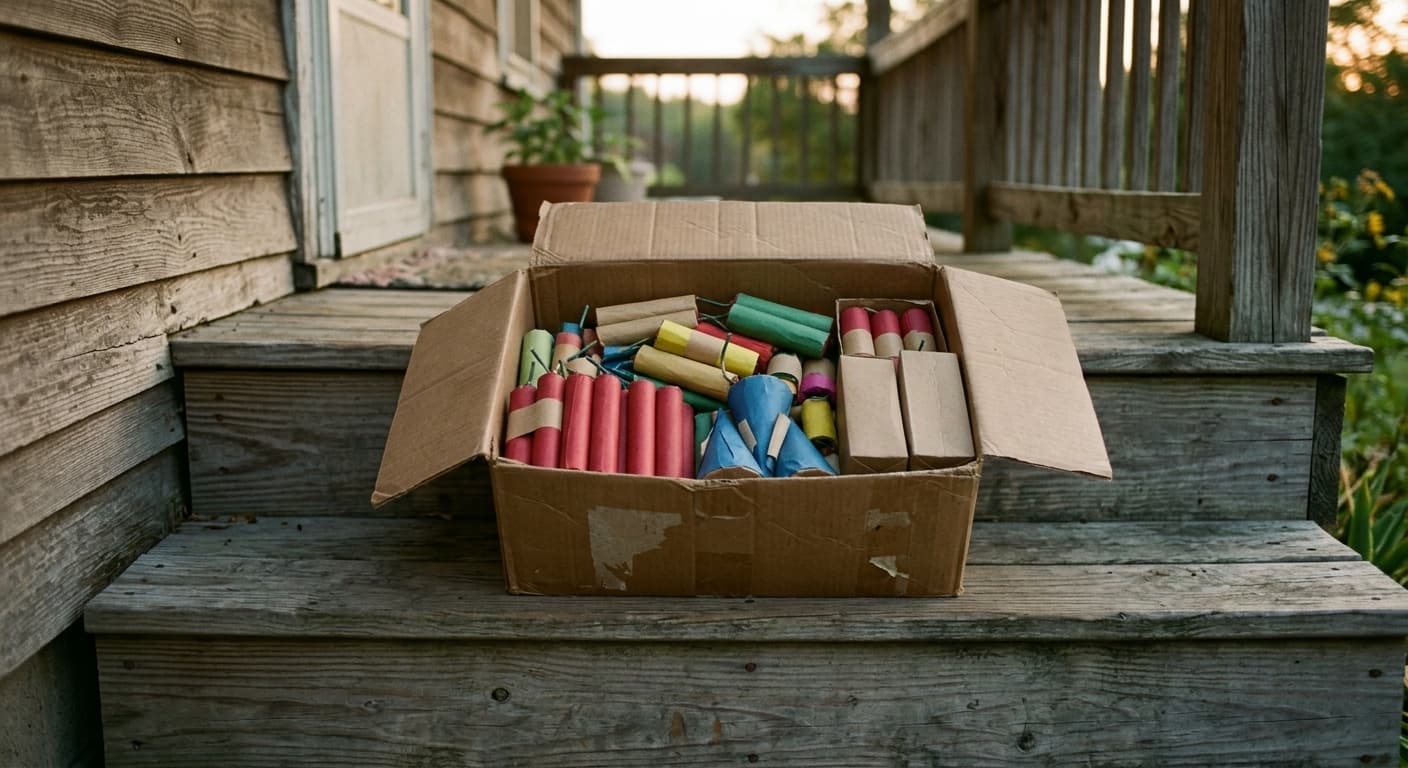
South Carolina allows a broad, licensed retail market for consumer fireworks statewide with no calendar sale window, but it runs two separate fireworks statutes at once, a modern licensing chapter and an older dangerous-device ban, and getting only one side of that picture misses real exposure, under S.C. Code Ann. Title 40, Chapter 56 and Title 23, Chapter 35.
Jurisdiction scope: This article addresses South Carolina's state fireworks law under both S.C. Code Ann. Title 40, Chapter 56 (State Board of Pyrotechnic Safety licensing, device definitions, and penalties) and Title 23, Chapter 35, all five of its live sections (§23-35-45, indoor proximate-audience pyrotechnics; §23-35-130, the loud/piercing-device ban and interstate-shipment rule; §23-35-150, Chapter 35's default penalty ladder; §23-35-170, sale of dynamite and similar powerful explosives; and §23-35-175, Fireworks Prohibited Zones). It does not address county or municipal fire-code ordinances beyond the state-level Fireworks Prohibited Zone mechanism described here.
What's Legal: A Federally Defined Consumer Category
South Carolina defines "consumer fireworks" by federal standard rather than by a vague allowance:

"'Consumer fireworks' means any small firework device designed to produce visible effects by combustion and which must comply with the construction, chemical composition, and labeling regulations of the U.S. Consumer Product Safety Commission, as set forth in Title 16, Code of Federal Regulations, parts 1500 and 1507 and APA Standard 87-1. Some small devices designed to produce audible effects are consumer fireworks, including, but not limited to, whistling devices, ground devices containing 50 mg or less of explosive materials, and aerial devices containing 130 mg or less of explosive materials. Consumer fireworks are classified as fireworks UN0336, and UN0337 ... This term does not include fused setpieces containing components which together exceed 50 mg of salute powder."
S.C. Code Ann. §40-56-20(3)
Read the quote's limiting words carefully: the 50 mg and 130 mg figures attach only to "small devices designed to produce audible effects," not to the consumer-fireworks category as a whole. What actually defines "consumer fireworks" is compliance with the CPSC and APA 87-1 standard and DOT hazard classification 1.4G (formerly "Class C Fireworks"); a visual-effect consumer device, such as a fountain or a Roman candle, is not milligram-capped by this definition at all. The 50 mg ground / 130 mg aerial figures cap only the audible, salute-type effect inside a device, and a fused setpiece whose components together exceed 50 mg of combined salute powder is not a consumer firework at all, it is bumped into the "display fireworks" category described next.
What's Not Allowed: Small Bottle Rockets, Display Fireworks, and Loud/Piercing Devices
South Carolina bans three distinct things, and they do not overlap. First, a device the statute defines and then specifically outlaws despite it otherwise fitting the consumer category:
"'Small bottle rocket' is a consumer firework with a motor less than one-half inch in diameter and three inches in length, a stabilizing stick less than fifteen inches in length, and a total pyrotechnic composition not exceeding 20 grams in weight."
S.C. Code Ann. §40-56-20(12)
"Retail sale and use of small bottle rockets are not legal within South Carolina."
S.C. Code Ann. §40-56-220(C)
Second, "display fireworks," the DOT 1.3G class (salutes over 2 grains/130 milligrams, aerial shells over 40 grams of pyrotechnic composition, or setpieces over 50 milligrams combined salute powder), require a wholesale license under §40-56-240 and may be sold only to another licensee for a licensed public display, never at retail to a consumer.
Third, and separate from the Title 40 licensing chapter entirely, an older statute bans a category defined by effect rather than by the consumer/display line:
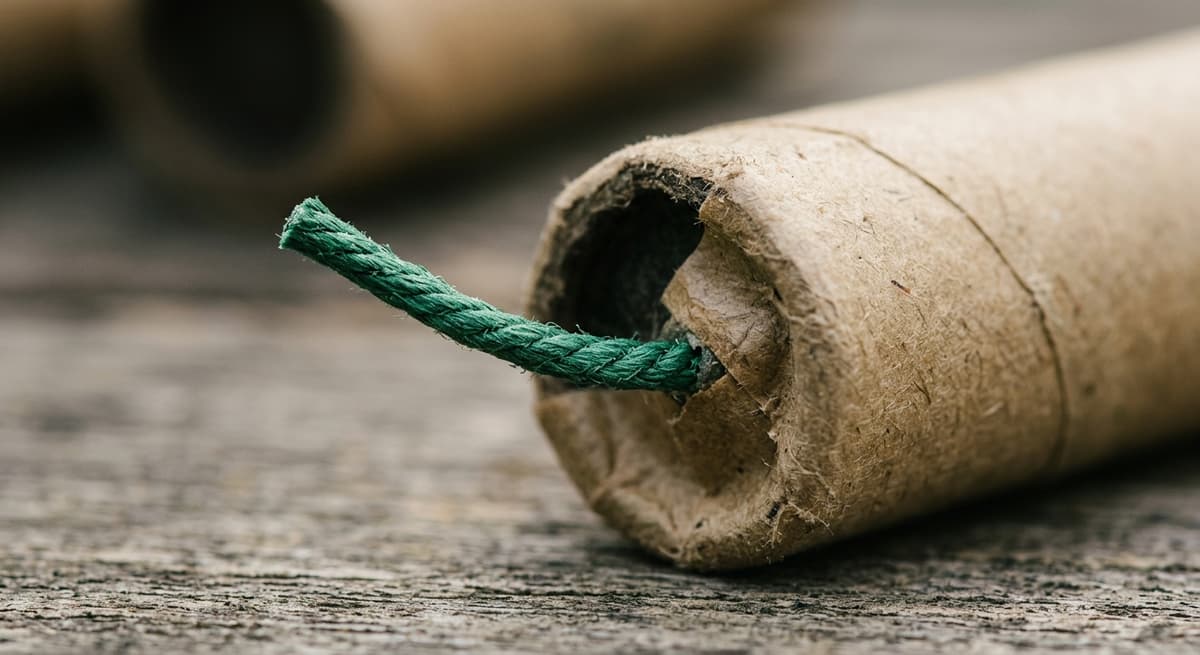
"It is unlawful to manufacture, store, transport, or possess fireworks containing pyrotechnic composition in excess of two grains, designed to produce a loud and piercing effect, including, but not limited to, fireworks commonly called 'ground salutes' or 'cherry bombs', M-80's, T-N-T salutes, and 'bulldog salutes'. A manufacturer shall obtain a permit to store or assemble materials for public fireworks displays. No manufacturer may store public display material in the same building where legal fireworks are offered for sale to retailers."
S.C. Code Ann. §23-35-130(A)
The same subsection also regulates the manufacturer side directly: a manufacturer must get a permit to store or assemble material for a public fireworks display, and cannot store that display material in the same building where legal fireworks are sold to retailers. Because the loud/piercing-effect ban runs on pyrotechnic composition and effect rather than on the display-fireworks licensing category, a device could in principle be a lawfully licensed display firework under Title 40 and still fall inside this older, independent ban if it produces the loud, piercing effect the statute targets and exceeds 2 grains. A South Carolina reader should treat these as two separate legal risks, not one.
Two More Chapter 35 Provisions: Indoor Pyrotechnics and Non-Fireworks Explosives
Title 23, Chapter 35 has five live sections in total, and two more round out the picture beyond the loud/piercing-device ban and the Fireworks Prohibited Zone mechanism described below. Section 23-35-45 permits pyrotechnic materials to be used indoors, before a proximate audience in an enclosed entertainment or assembly venue, without violating the chapter, so long as the display follows NFPA Standard 1126 (1992 edition); the State Fire Marshal Division administers this and may charge a per-performance fee to cover enforcement. Section 23-35-170 is not about fireworks at all: it separately bars selling, delivering, or disposing of dynamite or a similar powerful explosive, other than ordinary gunpowder, unless the seller personally knows the buyer and is satisfied the explosive will not be used to kill fish; requires a written purchase application and a sales record; bars any sale to a buyer under 18 or to a convicted felon; requires sworn quarterly sales reports to the county auditor; and carries its own misdemeanor penalty of up to $100 or 30 days, separate from every other penalty described in this article.
Purchase Age and Licensing Age Are Different Numbers
South Carolina sets two distinct age floors that are easy to conflate. On the buyer side:
"Fireworks may not be sold to anyone under the age of sixteen."
S.C. Code Ann. §40-56-220(D)
On the seller side, a much higher floor applies to whoever holds the license to manufacture, sell, or store fireworks in the first place:
"A license may not be issued to anyone under the age of eighteen."
S.C. Code Ann. §40-56-35(A)(1)
A 16-year-old can lawfully be sold consumer fireworks; an 18-year-old is the minimum age to run the business selling them.
Licensing
A person, firm, or entity that manufactures, sells, or stores fireworks needs a State Board of Pyrotechnic Safety license, required for each physical address, issued only per calendar year, non-transferable, and issued only after a board agent inspects the facility, under §40-56-35(A). A retail applicant must also submit a copy of its South Carolina Department of Revenue retail-sales license. Limited license-free activities exist: railroad torpedoes and automotive, aeronautical, and marine flares and smoke signals; use by the U.S. Armed Forces; use by the State Fire Marshal or a commissioned law enforcement officer acting officially; and fireworks the U.S. Department of Transportation has deregulated, under §40-56-35(B). A retail fireworks sales license application must be accompanied by proof of at least $1,000,000 in public liability insurance for the sales location and permitted sale period, and the insurer must give the board 30 days' notice before canceling, suspending, or non-renewing that coverage, except a policy issued for fewer than 90 days' use for a seasonal permit, which carries no such notice requirement; the insured must still immediately notify the board if the coverage is canceled, suspended, or non-renewed, under §40-56-230. A wholesale license, separately, is required to store display fireworks or to sell or provide fireworks for a licensed display, and a wholesale licensee must also comply with federal ATF regulations, under §40-56-240.
No Statewide Sale Window, Use Window, or Hours Restriction
Neither Title 40 Chapter 56 nor Title 23 Chapter 35 sets a calendar sale-date, use-date, or clock-hours restriction. Licensed retail sale runs year-round, and licenses themselves are issued per calendar year rather than per season. Use is instead restricted by device class, the small-bottle-rocket and over-2-grain loud/piercing bans described above, and by location, through the Fireworks Prohibited Zone mechanism described next, rather than by any date.
Local Option: Fireworks Prohibited Zones, Not a Municipal Ban
South Carolina does not give a county or city a general power to ban fireworks sale or use inside its borders. Instead, the mechanism is property-based:
"An owner, a lessee, or managing authority of real property may establish a Fireworks Prohibited Zone by: (1) filing a Discharge of Fireworks Prohibited Agreement with the law enforcement agency having jurisdiction over the subject property; and (2) posting at least two signs or placards in conspicuous locations on the subject property ... not less than twelve inches by twelve inches..."
S.C. Code Ann. §23-35-175(C)
A local governing body, meaning a county or municipal government, may separately approve extending a filed zone onto adjoining public property, but it cannot create a zone unilaterally the way it could under a direct municipal-ban power. The discharge ban itself is broader than firing something into the zone from outside: it is unlawful to knowingly and willfully discharge fireworks "from, in, or into" a posted Fireworks Prohibited Zone, so someone standing inside the zone and firing outward is covered too, a misdemeanor described in the penalties section below, under §23-35-175(B). One drafting quirk worth flagging: §23-35-175(A)(1) defines "fireworks" for this section as "ICC Class C Common Fireworks as defined and enumerated Section 23-35-10," and Section 23-35-10 no longer appears anywhere in the current chapter; treat that definitional cross-reference as unresolved rather than assuming it narrows the zone's coverage.
Penalties: Several Ladders Across Two Titles
South Carolina does not have a single fireworks penalty; the conduct determines which statute applies, and Title 23 Chapter 35 alone runs two different ladders side by side. A licensing violation under Title 40, meaning operating without a required license, operating on a suspended or revoked license, or otherwise violating Chapter 56 or its regulations, is a misdemeanor:
"A person required by this chapter to obtain a license to do business in this State, who has not obtained a license or who operates while his license is suspended or revoked or who violates a provision of this chapter or a regulation promulgated pursuant to this chapter, is guilty of a misdemeanor and, upon conviction, must be fined not less than one thousand dollars and not more than two thousand dollars or imprisoned for not less than ninety days and not more than one year."
S.C. Code Ann. §40-56-200(A)
That is not Title 40's only enforcement track. The State Board of Pyrotechnic Safety can separately seek civil penalties and injunctive relief for any Chapter 56 violation, under §40-56-210, and can issue administrative citations carrying an administrative penalty of up to $2,500 per violation against a licensee, appealable to the board within 15 days, under §40-56-250. These run independently of, and in addition to, the criminal misdemeanor above.
Manufacturing, storing, transporting, or possessing an over-2-grain loud/piercing-effect device under the older Title 23 statute carries a separate, harsher misdemeanor:
"A person who violates the provisions of this section is guilty of a misdemeanor and, upon conviction, must be fined not more than ten thousand dollars or imprisoned not more than two years, or both."
S.C. Code Ann. §23-35-130(C)
Chapter 35 also carries its own default penalty ladder, separate from the loud/piercing-device penalty above, for any other violation of the chapter or of a State Fire Marshal or State Board of Pyrotechnic Safety regulation adopted under it:
"Any person violating any provisions of this chapter or regulations promulgated by the State Fire Marshal or the State Board of Pyrotechnic Safety, unless otherwise specifically provided in this chapter, is guilty of a misdemeanor and, upon conviction, must be punished: (1) for a first offense, by a fine of not more than two hundred dollars or imprisonment for not more than thirty days; (2) for a second offense, by a fine of not less than five hundred dollars nor more than twenty-five hundred dollars or imprisonment for not less than sixty days, or both; (3) for a third offense, by a fine of not less than one thousand dollars or imprisonment of not less than ninety days nor more than one year, or both. In addition to the above penalties, the license of any wholesaler, jobber, or retailer must be permanently revoked upon conviction for a third offense."
S.C. Code Ann. §23-35-150
That is a real escalating, first/second/third-offense penalty ladder, plus a permanent license-revocation consequence on a third conviction for a wholesaler, jobber, or retailer, sitting in the same chapter as the loud/piercing-device ban. Discharging fireworks from, in, or into a posted Fireworks Prohibited Zone carries its own, lighter penalty, described in the Local Option section above: up to $100 and 30 days for a first offense, up to $200 and 30 days for a second or subsequent offense, under §23-35-175(B). Section 23-35-170's dynamite/explosives-dealer misdemeanor, described above, is capped at $100 or 30 days and does not escalate. Of the penalties described here, only §23-35-150's default Chapter 35 ladder and its license-revocation consequence, and §23-35-175(B)'s zone-discharge penalty, escalate for a subsequent offense; the Title 40 licensing penalty (§40-56-200), the Title 23 loud/piercing-device penalty (§23-35-130(C)), and the dynamite/explosives penalty (§23-35-170) do not.
Crossing State Lines
South Carolina's own dangerous-device statute addresses interstate movement directly. It permits genuine pass-through shipment while banning anything the federal government itself forbids from transport:
"The provisions of this chapter do not prohibit continuous interstate commerce through this State into another state of any item of fireworks permitted for shipment by the regulations of the Interstate Commerce Commission or the United States Department of Transportation ... It is unlawful to ship into or through this State or possess, sell, or use, under any circumstances, any article of fireworks that is forbidden for transportation by regulations of the Interstate Commerce Commission, the United States Department of Transportation, or their successors."
S.C. Code Ann. §23-35-130(B)
On top of that state rule, federal law sets the floor: 16 CFR 1500.17 and Part 1507 define which consumer devices may be sold at all; 27 CFR 555.141(a)(7) exempts the importation, distribution and storage of consumer fireworks from ATF licensing (manufacture is not exempt); 18 U.S.C. 836 makes it a federal offense, punishable by up to one year, to transport fireworks into any state whose law specifically prohibits or regulates their use, in violation of that law, except in the course of continuous interstate transportation, with exceptions for common carriers, water carriers and federal agencies; and USPS Publication 52 § 341.22 bars fireworks from the mail entirely. Because South Carolina separately bans small bottle rockets and any over-2-grain loud/piercing device regardless of a neighboring state's rules, bringing either of those in from another state risks both the state ban and, depending on the device, the federal transport statute.
For a neighboring state with a narrower consumer category, see North Carolina's fireworks laws; for another state using the same broad federal consumer-fireworks class, see Georgia's fireworks laws.
For how South Carolina's rule compares with every other state, see the fireworks laws by state comparison.
Disclaimer: This article provides general legal information about fireworks laws in the United States as of September 2026. It is not legal advice. Fireworks statutes, local Fireworks Prohibited Zones, and penalties change frequently; verify the current rule with the South Carolina State Board of Pyrotechnic Safety or local law enforcement before buying, selling, or using fireworks, and consult a lawyer licensed in your state for advice about a specific situation.
Statutes cited reflect their in-force version as of 2026-09-17. Last updated: 2026-09-17.
Frequently Asked Questions
Are fireworks legal in South Carolina?
Yes, broadly. "Consumer fireworks" meeting federal CPSC and APA 87-1 standards and DOT hazard classification 1.4G are legal statewide for retail sale and use, under S.C. Code Ann. §40-56-20(3). That definition's 50 mg (ground) and 130 mg (aerial) figures cap only the explosive material inside a small audible-effect device, not the whole consumer category. Small bottle rockets are specifically banned, and any device over 2 grains designed for a loud, piercing effect (cherry bombs, M-80s, and similar) is separately illegal under §23-35-130.
How old do you have to be to buy fireworks in South Carolina?
16, under §40-56-220(D). A separate, higher age of 18 applies to whoever holds the license to sell, manufacture, or store fireworks, under §40-56-35(A)(1).
Is there a season when you can buy fireworks in South Carolina?
No. Neither Title 40 Chapter 56 nor Title 23 Chapter 35 sets a statewide calendar sale-date restriction. Licensed retail sale is effectively year-round; licenses themselves run on a calendar year, not a seasonal window.
What is the penalty for illegal fireworks in South Carolina?
It depends on the violation. An unlicensed sale or other Title 40 violation is a misdemeanor with a $1,000 to $2,000 fine and 90 days to a year in jail, under §40-56-200(A); the Board of Pyrotechnic Safety can also seek civil penalties or a $2,500-per-violation administrative citation. Possessing a device over 2 grains designed for a loud, piercing effect is a separate misdemeanor carrying up to a $10,000 fine and up to 2 years, under §23-35-130(C). Chapter 35's own default penalty escalates by offense up to a fine of at least $1,000 and 90 days to a year in jail on a third offense, with permanent license revocation for a wholesaler, jobber, or retailer, under §23-35-150. Discharging fireworks from, in, or into a posted Fireworks Prohibited Zone carries a lighter penalty, up to $100 and 30 days for a first offense, under §23-35-175(B).
Can my neighborhood or HOA ban fireworks in South Carolina?
Yes, through the Fireworks Prohibited Zone process: a property owner, lessee, or condominium managing authority can file a Discharge of Fireworks Prohibited Agreement with local law enforcement and post two conforming signs to make their property a no-discharge zone, under §23-35-175(C). A county or municipality can extend an existing zone onto adjoining public property.
Updates
Independently fact-checked against the cited primary sources
Sources and References
- S.C. Code Ann. §40-56-20 - Definitions (consumer fireworks, display fireworks, small bottle rocket)(scstatehouse.gov).gov
- S.C. Code Ann. §40-56-35 - License required for manufacture, sale, or storage of fireworks; exceptions(scstatehouse.gov).gov
- S.C. Code Ann. §40-56-200 - Penalties; fire codes and regulations adopted by State Fire Marshal(scstatehouse.gov).gov
- S.C. Code Ann. §40-56-220 - Facilities compliance; small bottle rocket ban; no sale to anyone under sixteen(scstatehouse.gov).gov
- S.C. Code Ann. §40-56-230 - Insurance ($1,000,000 minimum public liability)(scstatehouse.gov).gov
- S.C. Code Ann. §40-56-240 - Wholesale licenses; display fireworks(scstatehouse.gov).gov
- S.C. Code Ann. §23-35-130 - Manufacture, storage, transportation or possession of certain fireworks illegal; penalty(scstatehouse.gov).gov
- S.C. Code Ann. §23-35-175 - Fireworks Prohibited Zones; discharge prohibited agreements; posting of notice(scstatehouse.gov).gov
- S.C. Code Ann. §23-35-45 - Use of pyrotechnic materials indoors; regulation(scstatehouse.gov).gov
- S.C. Code Ann. §23-35-150 - Penalties (Chapter 35 default first/second/third-offense ladder, license revocation on third conviction)(scstatehouse.gov).gov
- S.C. Code Ann. §23-35-170 - Powerful explosives, unlawful to sell, possess, or deliver; exceptions, penalties(scstatehouse.gov).gov
- S.C. Code Ann. §40-56-210 - Civil penalties and injunctive relief(scstatehouse.gov).gov
- S.C. Code Ann. §40-56-250 - Orders of board to remove or correct hazardous condition; administrative citations and administrative penalties(scstatehouse.gov).gov
- 16 C.F.R. § 1500.17 - CPSC banned-hazardous-substance device standards for fireworks(ecfr.gov).gov
- 16 C.F.R. Part 1507 - Fireworks devices consumer product safety standard(ecfr.gov).gov
- 27 C.F.R. § 555.141(a)(7) - ATF explosives-licensing exemption for importation, distribution, and storage of consumer fireworks(ecfr.gov).gov
- 18 U.S.C. § 836 - Transportation of fireworks into a state that specifically prohibits or regulates their use(uscode.house.gov).gov
- USPS Publication 52 § 341.22 - All fireworks are nonmailable explosives(pe.usps.com).gov