
Oklahoma
Oklahoma Car Seat Laws (2026): Ages, Exemptions & Fines
Independently fact-checked against primary sources (last audited September 17, 2026). · Reviewed by the RecordingLaw editorial team. · Law checked current as of August 20, 2026. · 3 primary sources cited on this page. How we verify our legal content
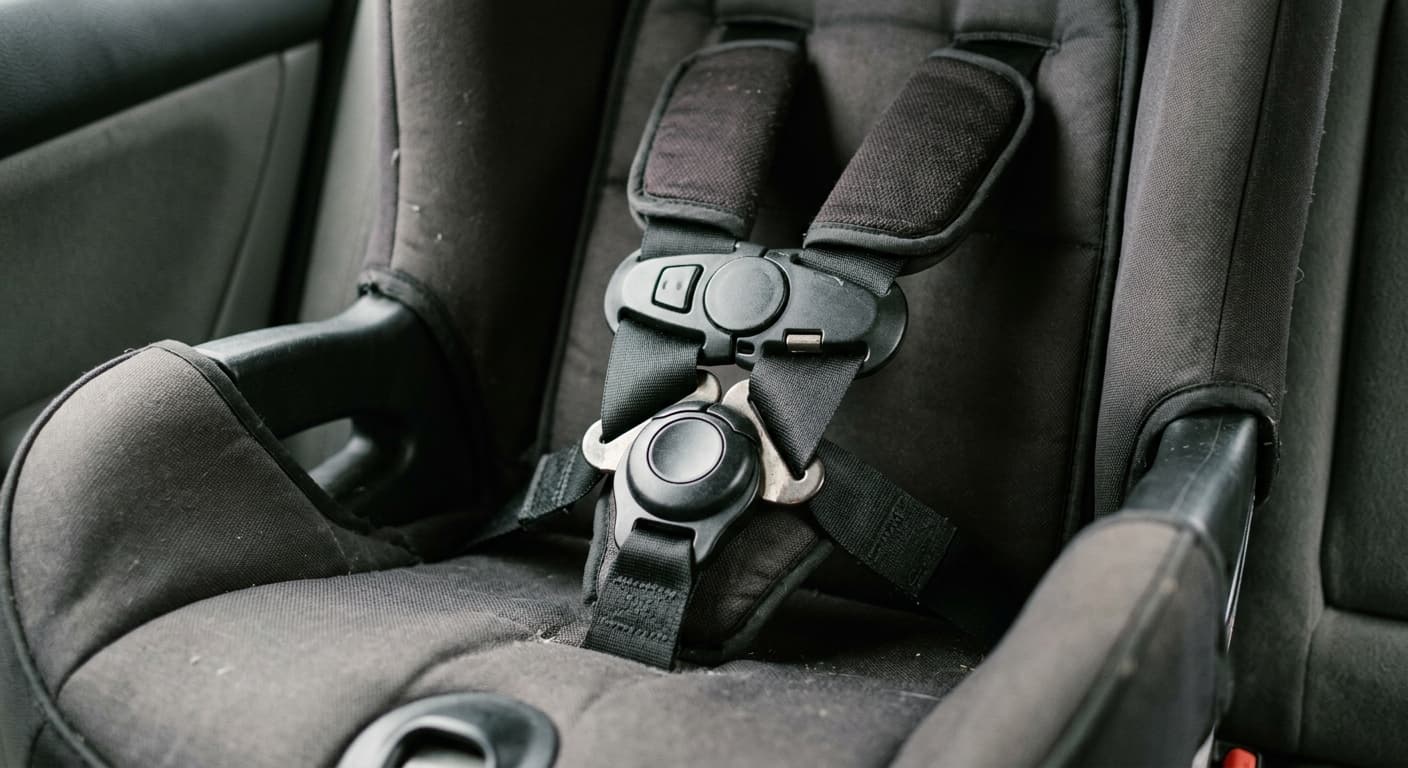
Oklahoma requires a rear-facing child passenger restraint system until age 2 or the seat's own weight or height limit, whichever comes first, then a forward-facing restraint or booster through age 7 for a child not taller than 4 feet 9 inches, and allows a seat belt once a child turns 8 or reaches 4 feet 9 inches, under 47 O.S. § 11-1112. This page reflects the statute's text as of September 2026.
Jurisdiction scope: This article covers car seat and child-restraint law in the state of Oklahoma only. It does not address any other state. For other states, see the car seat laws hub.
| Stage | Who | Rule | Statute |
|---|---|---|---|
| Rear-facing restraint | Under 4, rear-facing until age 2 or the seat's weight/height limit | Child passenger restraint system, rear-facing until age 2 or the manufacturer's rear-facing limit, whichever occurs first | 47 O.S. § 11-1112(A)(1) |
| Restraint system or booster | At least 4, younger than 8, and not taller than 4'9" | Child passenger restraint system or booster seat | § 11-1112(A)(2) |
| Seat belt | Age 8 or taller than 4'9", whichever first | A properly secured seat belt is sufficient | § 11-1112(B) |
| Lap-belt-only exception | Over 40 lbs, back seat without lap-and-shoulder belts | Lap belt alone permitted under (C)(5)'s specific conditions | § 11-1112(C)(5) |
Under 4: rear-facing until age 2 or the seat's own limit
Section 11-1112(A)(1) sets the youngest stage in two layers. First, a child under 4 must be properly secured in a child passenger restraint system. Second, that system has to be rear-facing "until the child reaches two (2) years of age or until the child reaches the weight or height limit of the rear-facing child passenger restraint system as allowed by the manufacturer... whichever occurs first." Because most convertible seats now allow rear-facing well past a child's second birthday, a child can lawfully stay rear-facing beyond age 2 under this statute; the law sets a floor, not a ceiling, and a family that keeps a child rear-facing longer than the statutory minimum isn't violating it.
Ages 4 through 7, under 4'9": restraint system or booster
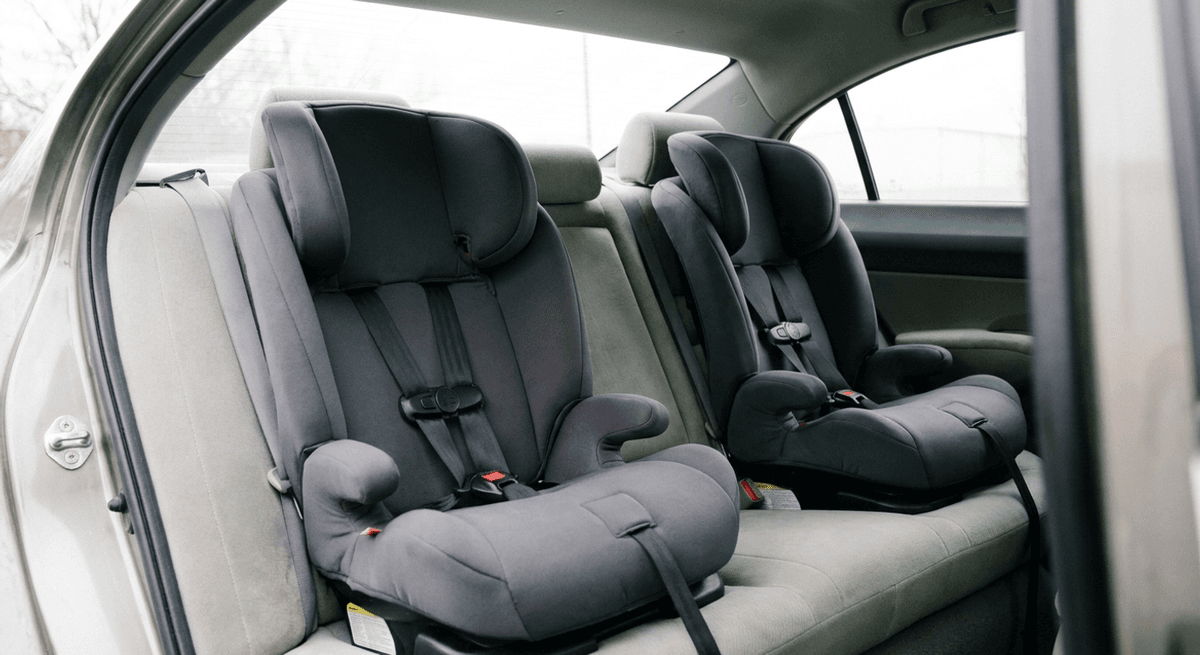
Once a child is at least 4 but younger than 8, and not taller than 4 feet 9 inches, section 11-1112(A)(2) requires either a child passenger restraint system or a booster seat. Either device satisfies this stage.
Age 8 or 4'9" tall: seat belt is sufficient
Section 11-1112(B) closes the loop: "If a child is eight (8) years of age or is taller than 4 feet 9 inches in height, a seat belt properly secured to the vehicle shall be sufficient." Because this condition is an "or," a child who reaches 4 feet 9 inches before turning 8 can move to a seat belt at that point, even though the (A)(2) stage would otherwise still apply based on age alone.
The disability-placard forward-facing exemption
Oklahoma has a specific exemption that doesn't appear in most other states' laws. Under subsection (G), a driver who has been issued a detachable placard or license plate indicating physical disability, and who separately carries a valid letter of forward-facing exemption from the Department of Public Safety, may transport a child under 4 in a forward-facing child passenger restraint system rather than rear-facing. Both documents have to be present, the disability placard or plate and the DPS letter; holding only one of the two doesn't qualify a driver for this exemption.
Other exemptions
Oklahoma also exempts the driver of a school bus, taxicab, moped, motorcycle, or other vehicle not required by state or federal law to have safety belts; the driver of an ambulance or emergency vehicle; a driver in a vehicle where all the seat belts are already in use; and a child who, for medical reasons documented in writing by a physician, is unable to be placed in a restraint device. A separate provision, (C)(5), permits a lap-belt-only arrangement for a child weighing more than 40 pounds riding in the back seat, when that seat lacks lap-and-shoulder combination belts or when the combination belts are already occupied by other children over 40 pounds.
Penalty for a car seat violation
A violation carries a $50 fine plus court costs. On a first offense only, that fine is suspended and court costs are capped at $15 if the person shows proof of having purchased or acquired by loan a child passenger restraint system. No points are assessed to the driving record for a violation of this section.
Leaving a child unattended in a vehicle
Oklahoma has a dedicated unattended-child statute, 47 O.S. § 11-1119(B)-(C), that applies to a child 6 years old or younger. It isn't a flat prohibition on leaving a young child alone in a vehicle for any length of time; the statute is written around an actual risk condition. A person responsible for the child may not leave the child unattended in a motor vehicle if the conditions present a risk to the child's health or safety. It's also written to allow for reasonable supervision by someone else: it isn't a violation if the child is accompanied in the vehicle by a person at least 12 years old who isn't mentally incompetent.
A violation is a misdemeanor. Under section 11-1119(D), the fine is not less than $50 on a first conviction, not less than $100 plus at least 50 hours of community service on a second conviction, and not less than $200 on a third or subsequent conviction, with the full record forwarded to the Department of Human Services. Subsection (E) adds a fine of not less than $500 where the child was left unattended on the premises of a business holding an on-premises liquor license and the responsible person consumed alcohol while the child was unattended.
Federal guidance vs Oklahoma law
The federal standard that governs child car seats as products, FMVSS 213 (49 CFR 571.213), regulates what a manufacturer may sell, not how a parent must use the seat; Oklahoma's own statute, described above, sets the use requirement. The National Highway Traffic Safety Administration and the American Academy of Pediatrics separately recommend keeping a child rear-facing as long as the seat's own height and weight limits allow, which is consistent with Oklahoma's own "whichever occurs first" framing, but the two are still distinct: the agency recommendation is guidance, and Oklahoma's age-2-or-seat-limit rule is the actual legal floor.
Related Oklahoma traffic law pages
Disclaimer: This article provides general legal information about Oklahoma's car seat law as of September 2026. It is not legal advice. Statutes, exemptions, and penalties change; verify the current text of the law before relying on it, and talk to a lawyer licensed in Oklahoma about a specific situation.
Statutes cited reflect their in-force version as of 2026-09-16. Last updated: 2026-09-16.
Frequently Asked Questions
Until what age must a child ride rear-facing in Oklahoma?
A child under 4 must be in a rear-facing restraint system until age 2 or until the seat reaches its own manufacturer weight or height limit, whichever comes first, under 47 O.S. section 11-1112(A)(1). Staying rear-facing longer than that is also lawful.
When can a child in Oklahoma switch to a regular seat belt?
Once the child turns 8 years old, or reaches 4 feet 9 inches tall, whichever happens first, a properly secured seat belt is sufficient under section 11-1112(B).
What is the fine for a car seat violation in Oklahoma?
It's $50 plus court costs. On a first offense only, the fine is suspended and court costs are capped at $15 if the driver shows proof of having purchased or acquired by loan a child passenger restraint system. No driving-record points are assessed.
Does Oklahoma have an exemption for disabled drivers who need a forward-facing seat?
Yes. A driver with a disability placard or plate, who also has a valid Department of Public Safety forward-facing exemption letter, may transport a child under 4 forward-facing instead of rear-facing. Both documents must be in the vehicle.
Is it illegal to leave a young child alone in a car in Oklahoma?
For a child 6 or younger, it's illegal only if the conditions present a risk to the child's health or safety, under 47 O.S. section 11-1119. It isn't a violation if a competent person at least 12 years old stays with the child. A violation is a misdemeanor: not less than $50 on a first conviction, not less than $100 plus at least 50 hours of community service on a second, and not less than $200 on a third or later conviction.
Updates
Rebuilt from the current statute text after an independent review: restraint stages, exemptions, front-seat rules and penalties re-verified against the statute.
Independently fact-checked against the cited primary sources
Removed a fabricated requirement that 2- and 3-year-olds must ride forward-facing (Oklahoma law actually allows rear-facing through age 2 or the seat's own limit, and never mandates forward orientation for this age), and added the $50 fine plus court costs for a violation, which the page previously omitted entirely.
Independently fact-checked against the cited primary sources; governing law re-checked for recent changes
Reviewed and approved by an editor
The Law Behind This Article
This article rests on the statutory provisions below, held in our own legal record and retrieved from the official source. Tap a section to read the operative text.
Oklahoma Statutes, Title 47: MOTOR VEHICLES
§ 11-1112Child passenger restraint system required for certainIn force
vehicles - Exemptions. A. Every driver, when transporting a child under eight (8) years of age in a motor vehicle operated on the roadways, streets, or highways of this state, shall provide for the protection of said child by properly using a child passenger restraint system as follows: 1. A child under four (4) years of age shall be properly secured in a child passenger restraint system. Except as provided in subsection G of this section, the child passenger restraint system shall be rear-facing until the child reaches two (2) years of age or until the child reaches the weight or height limit of the rear-facing child passenger restraint system as allowed by the manufacturer of the child passenger restraint system, whichever occurs first; and 2. A child at least four (4) years of age but younger than eight (8) years of age, if not taller than 4 feet 9 inches in height, shall be properly secured in either a child passenger restraint system or child booster seat. For purposes of this section and Section 11-1113 of this title, "child passenger restraint system" means an infant or child passenger restraint system which meets the federal standards as set by 49 C.F.R., Section 571.213.
Official text (excerpt) · last checked 2026-09-16 · Read the full text in our law library · Verify at oklegislature.gov
§ 11-1119Definitions - Unattended child or vulnerable adult inIn force
motor vehicle prohibited - Exception - Penalty. A. As used in the Forget-Me-Not Vehicle Safety Act: 1. “Person responsible for a child” means a custodial parent or legal guardian of a child, or a person who has been directed or authorized to supervise a child by that child’s custodial parent or legal guardian; 2. “Unattended” means beyond a person’s direct ability to care for or come to the aid of the unaccompanied person; and 3. “Motor vehicle” means the same as defined in Section 1-134 of Title 47 of the Oklahoma Statutes. B. A person responsible for a child who is six (6) years of age or younger, or a caretaker of a vulnerable adult as defined by Section 10-103 of Title 43A of the Oklahoma Statutes, shall not leave that child or vulnerable adult unattended in a motor vehicle if the conditions, including, but not limited to, extreme weather, inadequate ventilation, or hazardous or malfunctioning components within the vehicle present a risk to the health or safety of the unattended child or vulnerable adult. C.
Official text (excerpt) · last checked 2026-07-31 · Read the full text in our law library · Verify at oklegislature.gov
Code of Federal Regulations Title 49
§ 571.213Child restraint systems; Applicable unless a vehicle or child restraint system is certified to § 571.213b.In forcecited in 51 of our articles
S1. Scope. This standard specifies requirements for child restraint systems used in motor vehicles and aircraft. S2. Purpose. The purpose of this standard is to reduce the number of children killed or injured in motor vehicle crashes and in aircraft. S3. Application. This standard applies to passenger cars, multipurpose passenger vehicles, trucks and buses, and to child restraint systems for use in motor vehicles and aircraft, manufactured before December 5, 2026. FMVSS No. 213b applies to child restraint systems manufactured on or after December 5, 2026. S4. Definitions. Add-on child restraint system means any portable child restraint system. Backless child restraint system means a child restraint, other than a belt-positioning seat, that consists of a seating platform that does not extend up to provide a cushion for the child's back or head and has a structural element designed to restrain forward motion of the child's torso in a forward impact.
Official text (excerpt) · last checked 2026-07-28 · Read the full text in our law library · Verify at ecfr.gov
Cited in 16 court opinions in our collectionLatest citing opinion in our collection: 2022
Opinions citing this section in our collection:
- Welsh Ex Rel. Welsh v. Century Products, Inc. (District Court, D. Maryland 1990, 745 F. Supp. 313)“…afety Act”) and Federal Motor Vehicle Safety Standard 213, 49 C.F.R. § 571.213 (1989) (“FMVSS 213”). In particular, C…”
- Hendrix Ex Rel. Gp v. Evenflo Co., Inc. (Court of Appeals for the Eleventh Circuit 2010, 609 F.3d 1183)“…meets the requirements imposed by federal regulations. See 49 C.F.R. § 571.213. When used properly, the base is positio…”
- Hendrix v. Evenflo Co. (District Court, N.D. Florida 2009, 255 F.R.D. 568)“…ance requirements and a testing procedure for CRS modules. 49 C.F.R. § 571.213 . Van Arsdell’s mechanical engineering…”
Identified automatically from the court opinions citing this section — not a ranking of which case controls.
Also relied on in: Car Seat Laws by State 2026: Rear-Facing, Booster, Front Seat Rules, Alabama Car Seat Laws (2026): Ages, Stages & Penalties, Alaska Car Seat Laws (2026): 5 Stages & Penalties
Explore the law
This article also draws on these acts and chapters (opening at their first section): Oklahoma Statutes, Title 47: MOTOR VEHICLES § 1-101 (Definition of words and phrases)
Related law for further reading — not part of this article’s citations.
Sources and References
- 47 O.S. § 11-1112, Child passenger restraint systems(oklegislature.gov).gov
- 47 O.S. § 11-1119, Unattended child in motor vehicle(oscn.net).gov
- 49 CFR § 571.213, FMVSS No. 213, Child restraint systems(ecfr.gov).gov
- American Academy of Pediatrics, Car Safety Seats: Information for Families(healthychildren.org)