Hawaii Camera Ticket Laws: State-Run Red Light and Speed Cameras
Independently fact-checked against primary sources (last audited August 12, 2026). · 5 primary sources cited on this page. How we verify our legal content
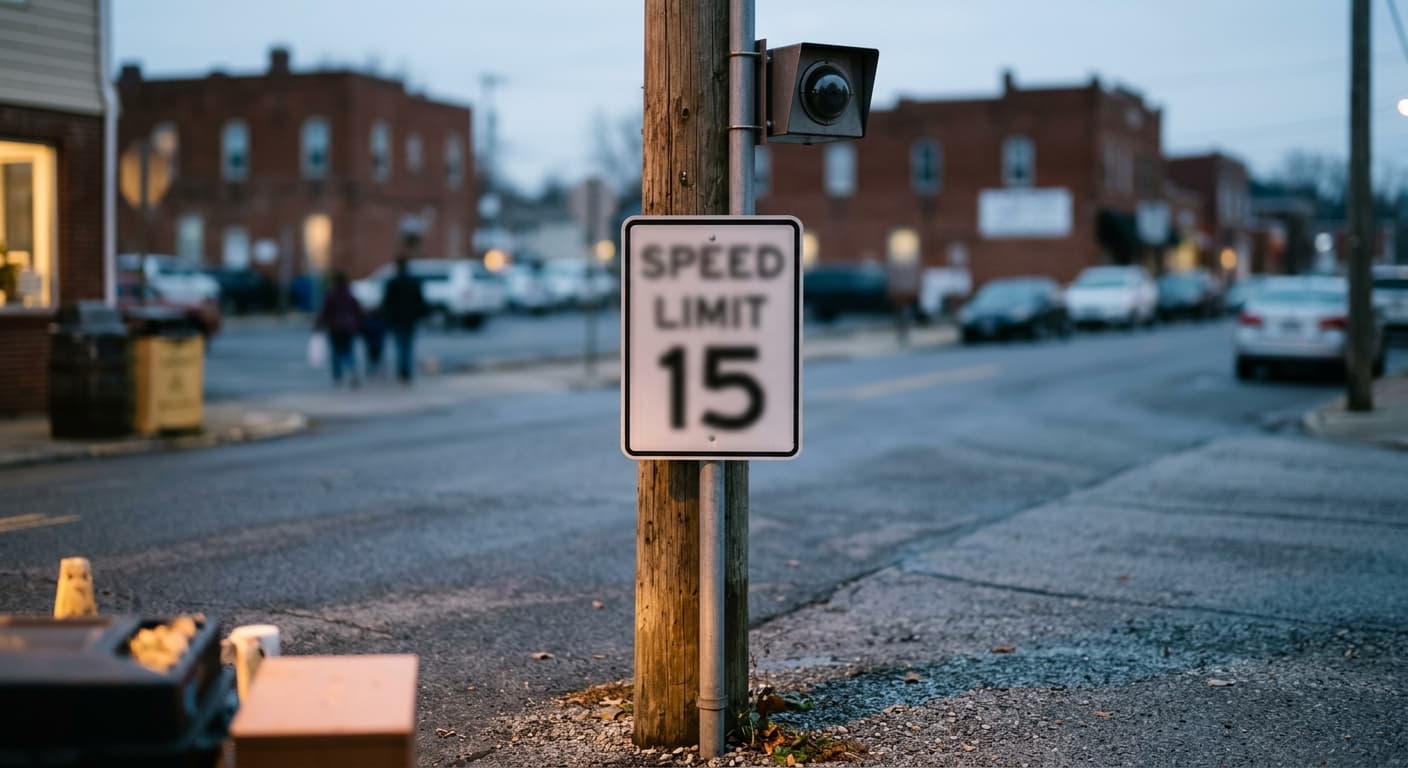
Hawaii's camera enforcement looks different from most states in one important way: it is run by the state, not by individual counties choosing whether to opt in. Red light cameras operate under one chapter of state law, and speed cameras operate under a newer chapter that deliberately limits itself to locations already approved for red light enforcement, a design choice that traces back to a failed statewide speed-camera program from two decades ago.
A State-Run Program, Not a City-by-City Patchwork
Most states that allow camera enforcement leave the decision to individual cities or counties. Hawaii does the opposite. The two chapters are not parallel on this point, and the difference matters. HRS 291J-2 establishes the photo red light program, which «may be implemented by the State or any county following completion of a pilot program in the city and county of Honolulu.» A Hawaii county can therefore stand up a red light camera program of its own under that chapter.
The speed-camera chapter is state-only. HRS 291L-2 says the automated speed enforcement systems program «shall be implemented by the State,» and HRS 291L-3(a) repeats that «the State shall establish and implement» the system. Neither section names a county as an implementer, and neither attaches a pilot-program precondition. Counties have a supporting role instead: under HRS 291L-3 the state department of transportation cooperates with a county where the system affects county property and runs the public information campaign in conjunction with that county, and under HRS 291L-4(c) and HRS 291L-5(d) the county police department reviews and verifies the images before a citation goes out. Whether any county besides Honolulu has actually deployed a red light system is not confirmed here; check your county's own program page for current deployment.
Speed Cameras Only Where Red Light Cameras Already Are
Hawaii's speed-camera law is unusually restrictive about where it can operate. HRS 291L-2 states plainly that the program «shall be limited to only those locations where a photo red light imaging detector system has been implemented pursuant to chapter 291J.» In other words, Hawaii cannot deploy a speed camera at a location unless a red light camera has already been approved and installed there under the older chapter. Speed camera citations under this program began January 1, 2025, per HRS 291L-5(a).
This design is a direct legacy of Hawaii's 2002 «van cam» program, a statewide mobile speed-camera initiative that was repealed after a public backlash. Tethering the newer speed program to already-vetted red light locations appears to be a legislative attempt to avoid repeating that history.
Points, Insurance, and Your Traffic Abstract
Hawaii's red light camera statute contains a clean promise: HRS 291J-10(b) states that «any summons or citations issued or convictions resulting from this chapter shall not be recorded on a person's traffic abstract and shall not be used for insurance purposes in the provision of motor vehicle insurance coverage.» That is a strong, explicit protection.
The speed-camera chapter carries the same promise. HRS 291L-5(g) provides that «any summons or citations issued or convictions resulting from this chapter shall not be recorded on a person's traffic abstract and shall not be used for insurance purposes in the provision of motor vehicle insurance coverage,» language identical to the red light provision. A Hawaii camera citation of either kind therefore stays off your abstract and out of your insurance rating.
Owner and Lessor Liability: Hawaii's Rental-Car Twist
Both Hawaii camera statutes impose strict liability on the registered owner of the vehicle. For rental and leased vehicles, Hawaii takes an approach that is the reverse of what many mainland states do. Rather than letting the rental company transfer liability by naming the renter, Hawaii's statute makes the lessor liable in the first instance, while separately allowing the lessor to «pursue reimbursement from any applicable renter or lessee.» Practically, this means the citation itself is addressed to the rental or leasing company, which then bills the actual driver under its own rental agreement rather than the state directly substituting the renter as the liable party.

Fines and What Happens If You Don't Respond
Red light camera fines come straight out of the general traffic penalty schedule, and the amounts are set by state statute rather than by each county. HRS 291J-10(a) provides that the penalties for disregarding a steady red signal detected by a photo red light imaging detector system «shall be as provided in section 291C-161,» and HRS 291C-161(b) caps the fine at not more than $250 for a first violation, $300 for a second violation committed within one year after the first, and $500 for a third or subsequent violation committed within one year after the first. Those are statutory ceilings rather than flat amounts, so the figure printed on a given citation can be lower.
Speed camera fines run off HRS 291C-108, the underlying offense the cameras enforce. Two figures in that section are fixed rather than capped. Subsection (c) adds a $10 surcharge, deposited into the neurotrauma special fund, whenever the maximum speed limit is exceeded by more than ten miles per hour. Subsection (d) sets a $250 fine where the vehicle exceeds the limit by thirty miles per hour or more, or travels at eighty miles per hour or more regardless of the posted limit. For lesser speeds, HRS 291C-108 fixes no separate amount, which leaves those citations to the same 291C-161(b) ceilings.
Fine revenue is earmarked to dedicated special funds. HRS 291J-12 routes red light fines into the photo red light imaging detector systems program special fund, and HRS 291L-10 routes fines under chapter 291L and section 291C-108 into the automated speed enforcement systems program special fund. Both are spent in the county where the fine was imposed.
If you fail to answer a citation within 30 days of the mailing date, both HRS 291J-8 and HRS 291L-7 route the matter into Hawaii's civil traffic adjudication system, where the district court can enter a notice of default judgment against you. This is a real consequence, and it is worth treating a Hawaii camera notice as something that needs a response, even if you plan to contest it.
Information last verified on 2026-08-12. This article has not yet been reviewed by a licensed lawyer.
Related Resources
- Traffic Camera Ticket Laws by State
- Do You Have to Pay a Camera Ticket?
- How to Fight a Camera Ticket
- Automated License Plate Reader Laws
- Hawaii Bodycam Laws
Last updated: 2026-08-12.
More Hawaii Laws
Frequently Asked Questions
Are Hawaii's traffic cameras run by the state or by individual counties?
It depends which camera. HRS 291J-2 lets either the State or any county implement a photo red light program, following completion of a pilot program in the city and county of Honolulu. The speed-camera program is state-only: HRS 291L-2 says it shall be implemented by the State, and HRS 291L-3(a) says the State shall establish and implement it. No county can run its own automated speed enforcement program under chapter 291L.
Does a Hawaii speed camera ticket affect my insurance the same way a red light ticket does?
No, both are protected the same way. HRS 291J-10(b) bars a red light camera summons, citation, or conviction from being recorded on your traffic abstract or used for insurance purposes, and HRS 291L-5(g) applies the identical bar to citations and convictions resulting from the speed-camera chapter.
I got a camera ticket on a rental car in Hawaii. Who is liable?
Under Hawaii law, the rental or leasing company (the lessor) is the party held liable to the state in the first instance, though it can then seek reimbursement from you as the renter under its own rental agreement.
What happens if I don't respond to a Hawaii camera citation?
If you don't answer within 30 days of the mailing date, the matter can move into Hawaii's civil traffic adjudication system, where the district court may enter a default judgment against you.
Does Hawaii have speed cameras everywhere, or only in certain places?
Only where a red light camera has already been implemented. HRS 291L-2 limits speed cameras to locations that already have an approved photo red light imaging detector system in place; there is no independent, standalone speed-camera network.
Has Hawaii tried automated speed enforcement before?
Yes. A statewide mobile «van cam» speed-enforcement program ran in 2002 and was repealed after public backlash. The current program's decision to only place speed cameras at existing red-light sites reflects that history.
Updates
Corrected who runs each Hawaii camera program (red light may be run by the State or a county under HRS 291J-2, while automated speed enforcement is State-only under HRS 291L-2 and 291L-3(a)), replaced the unconfirmed note about fines with the statutory amounts in HRS 291C-161(b) and HRS 291C-108(c)-(d), and corrected the insurance section, which had said the speed-camera chapter offered no traffic-abstract or insurance protection when HRS 291L-5(g) provides exactly the same protection as the red light rule.
Independently fact-checked against the cited primary sources
The Law Behind This Article
This article rests on the statutory provisions below, held in our own legal record and retrieved from the official source. Tap a section to read the operative text.
Hawaii Revised Statutes, Chapter 291J: PHOTO RED LIGHT IMAGING DETECTOR SYSTEMS
§ 291J-7Registered owner's responsibility for a summons or citationIn force
In any proceeding for a violation of this chapter, the information contained in the summons or citation, mailed in accordance with section 291J-6, shall be deemed prima facie evidence that a violation of section 291C-32(c) occurred. The registered owner shall be strictly liable for a violation of section 291C-32(c). [L 2020, c 30, pt of §2; am L 2022, c 124, §6]
Official text (excerpt) · last checked 2026-09-14 · Read the full text in our law library · Verify at capitol.hawaii.gov
§ 291J-9Liability for rental or U-drive motor vehicleIn force
Notwithstanding any law to the contrary, any registered owner of record who is the lessor of a rental or U-drive motor vehicle, including those defined in section 286-2 shall be liable for any summons or citation issued pursuant to this chapter. The registered owner shall not be precluded from pursuing reimbursement from any applicable renter or lessee. [L 2020, c 30, pt of §2]
Official text (excerpt) · last checked 2026-07-30 · Read the full text in our law library · Verify at capitol.hawaii.gov
§ 291J-10PenaltyIn force
(a) The penalties for all consequences of a violation for disregarding a steady red signal initiated by the use of a photo red light imaging detector system shall be as provided in section 291C-161. (b) Any summons or citations issued or convictions resulting from this chapter shall not be recorded on a person's traffic abstract and shall not be used for insurance purposes in the provision of motor vehicle insurance coverage. [L 2020, c 30, pt of §2]
Official text (excerpt) · last checked 2026-07-30 · Read the full text in our law library · Verify at capitol.hawaii.gov
Hawaii Revised Statutes, Chapter 291L: AUTOMATED SPEED ENFORCEMENT SYSTEMS
§ 291L-2Automated speed enforcement systems program; establishedIn force
There shall be established the automated speed enforcement systems program, which shall be implemented by the State to enforce the speed restriction laws of the State. The automated speed enforcement system program shall be limited to only those locations where a photo red light imaging detector system has been implemented pursuant to chapter 291J. [L 2024, c 112, pt of §2]
Official text (excerpt) · last checked 2026-07-30 · Read the full text in our law library · Verify at capitol.hawaii.gov
Hawaii Revised Statutes, Chapter 291C: [STATEWIDE TRAFFIC CODE]
§ 291C-161Penalties; photo red light imaging detector system fines; automated speed enforcement system finesIn force
(a) It shall be a violation for any person to violate any of the provisions of this chapter, except as otherwise specified in subsections (c) and (d) and unless the violation is by other law of this State declared to be a felony, misdemeanor, or petty misdemeanor. (b) Except as provided in subsections (c) and (d), every person who is determined to have violated any provision of this chapter for which another penalty is not provided shall be fined not more than: (1) $250 for a first violation thereof; (2) $300 for a second violation committed within one year after the date of the first violation; and (3) $500 for a third or subsequent violation committed within one year after the date of the first violation. (c) Every person convicted under or found in violation of section 291C-12, 291C-12.5, 291C-12.6, 291C-13, 291C-14, 291C-15, 291C-16, 291C-72, 291C-73, 291C-95, 291C-102, 291C-103, 291C-104, or 291C-105 shall be sentenced or fined in accordance with those sections.
Official text (excerpt) · last checked 2026-07-30 · Read the full text in our law library · Verify at capitol.hawaii.gov
Cited in 10 court opinions in our collectionLatest citing opinion in our collection: 2021
Opinions citing this section in our collection:
- State v. Gonzalez. (Hawaii Supreme Court 2012, 128 Haw. 314)“…The penalty for a violation of HRS § 291C-102 is set by HRS § 291C-161 (2011). HRS § 291C-161 provides in rele…”
- State v. Shimabukuro (Hawaii Supreme Court 2002, 100 Haw. 324)“…ot provide for any term of imprisonment as a penalty. See HRS § 291C-161 (Supp.2000). HRS § 291-4.5 was repealed…”
- State v. Barros (Hawaii Supreme Court 2002, 98 Haw. 337)“…lking is a fine. [2] No jail sentence is prescribed. See HRS §§ 291C-161 (Supp.1999) & 291C-73. HRS chapter 291C…”
Identified automatically from the court opinions citing this section — not a ranking of which case controls.
Search our full record of US law — 2.1 million sections, every state + federal →
Sources and References
- HRS 291J-7 to 291J-10, Photo red light imaging detector systems(capitol.hawaii.gov).gov
- HRS 291J-9, Lessor and lessee liability (red light)(capitol.hawaii.gov).gov
- HRS 291L-2, Program limited to existing red light camera locations(capitol.hawaii.gov).gov
- HRS 291L-6 to 291L-8, Owner and lessor liability (speed)(capitol.hawaii.gov).gov
- HRS 291C-161, General penalty schedule for traffic violations(capitol.hawaii.gov).gov
- HRS 291J-2, Photo red light imaging detector systems program; established (State or any county after Honolulu pilot)(data.capitol.hawaii.gov)
- HRS 291J-10, Penalty; red light citations not on traffic abstract or used for insurance(data.capitol.hawaii.gov)
- HRS 291J-12, Photo red light imaging detector systems program special fund(data.capitol.hawaii.gov)
- HRS 291L-3, State powers and duties for automated speed enforcement(data.capitol.hawaii.gov)
- HRS 291L-5, Summons or citation; speed citations not on traffic abstract or used for insurance(data.capitol.hawaii.gov)
- HRS 291L-10, Automated speed enforcement systems program special fund(data.capitol.hawaii.gov)
- HRS 291C-32(c), Traffic-control signal legend; registered-owner strict liability at photo red light locations(data.capitol.hawaii.gov)
- HRS 291C-108, Noncompliance with maximum speed limit under automated speed enforcement system(data.capitol.hawaii.gov)