Kentucky Camera Ticket Laws: Work-Zone Speed Enforcement
Independently fact-checked against primary sources (last audited August 12, 2026). · 2 primary sources cited on this page. How we verify our legal content
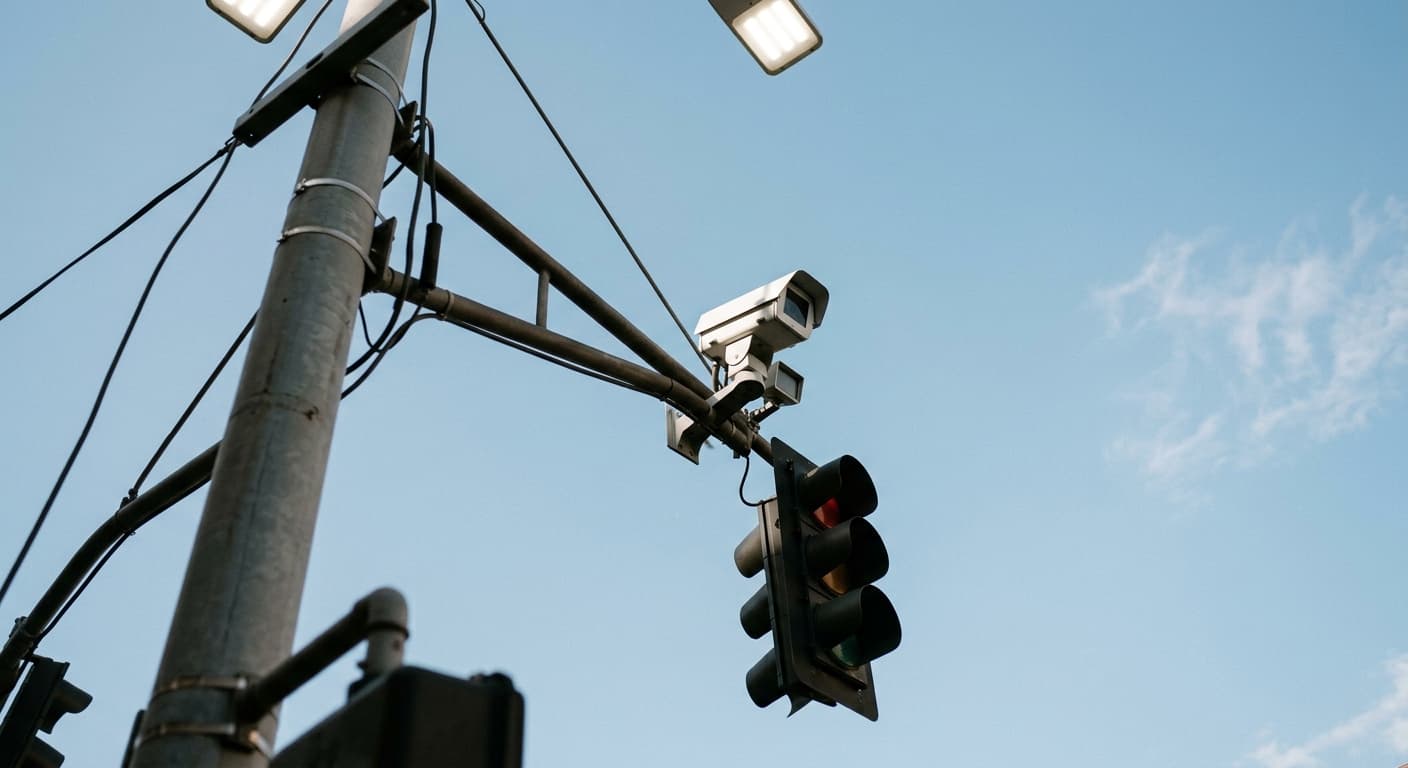
Kentucky now runs two camera-enforcement programs that work in opposite ways, so the first thing to pin down is which one sent you something. The work-zone speed camera law is not a mail-a-ticket-to-the-owner system: under the 2025 Jared Lee Helton Act, a real peace officer has to be physically present at the work zone and personally issue the citation, using device images only as supporting evidence. That single design choice means a Kentucky work-zone camera ticket behaves like an ordinary officer-issued speeding ticket, not like the civil, no-points camera tickets common elsewhere. The school bus stop-arm camera law that took effect on July 15, 2026 is the opposite: the notice goes by first-class mail to the registered owner and the penalty is civil.
How Kentucky's Work-Zone Camera Law Actually Works
Kentucky's automated speed enforcement law, KRS 189.2326, was created by the 2025 «Jared Lee Helton Act» and took effect June 27, 2025. It authorizes camera-assisted speed enforcement, but only inside active highway work zones, and only under a strict set of conditions written directly into the statute.
The law states: «A peace officer may issue a citation at the time of an offense in a highway work zone based on images transmitted by an automated speed enforcement device if: (a) A motor vehicle is detected traveling in excess of ten (10) miles per hour over the posted speed limit; (b) At least one (1) bona fide worker is present in the highway work zone; and (c) There is a peace officer certified... present in or near the end of the highway work zone in a marked vehicle.»
All three conditions have to be true at once: the speed threshold, an actual worker present, and a certified officer stationed nearby. This is meaningfully different from a typical automated-enforcement law, where a vendor's system mails a notice weeks later with no officer involved at all.
Why This Is a Real Ticket, Not a Civil Penalty
Most states covered on this site route camera violations through a civil, owner-liability process that keeps the violation off the driving record and out of insurance calculations. Kentucky's law does the opposite by design. Because a certified officer personally issues the citation at the time of the offense, against the driver, this functions as an ordinary Kentucky traffic citation, not a mailed civil notice against the vehicle's owner.
That matters directly for consequences. Because it is issued as a real citation against the driver, Kentucky's ordinary moving-violation rules presumptively apply, which can include points on the driver's record. There is no single flat point number for a KRS 189.2326 citation, and there is a specific, documented reason why: Kentucky's official point regulation, 601 KAR 13:025, was last amended in 2019, before the 2025 work-zone camera statute existed, and its own «RELATES TO» cross-reference clause never names KRS 189.2326. Instead, the regulation assigns points by measured speed bracket the same way it does for any other Kentucky speeding conviction: three points for 15 mph or less over the limit, six points for 16 to 25 mph over. Since KRS 189.2326 itself only triggers above 10 mph over the work-zone limit, a conviction under it would likely land in one of those brackets depending on how fast the vehicle was actually measured going, but that is an inference from the regulation's structure and speed-bracket logic, not a citation that names the work-zone statute directly. What is confirmed is that this is not a no-points civil penalty the way many other states' camera programs are.
The statute does offer drivers an alternative to a straight fine: «A driver may attend a state traffic school or a county attorney-operated traffic safety program... for a violation of KRS 189.2326.» This mirrors options available for many ordinary Kentucky traffic offenses.
Fines
The base fine under KRS 189.2327 is $500, and it is prepayable if the violation did not result in any injury or death. If the violation results in physical injury to or death of any person, the fine range jumps to $500 to $10,000. This is a fine on a traffic citation, not a civil penalty: KRS 189.2327(2)(b) provides that if the underlying offense can be classified as a misdemeanor, those penalties apply in addition to the fine. Kentucky law also requires signage announcing increased work-zone fines and a worker actually present before the higher penalty tier can apply. Fine revenue is directed to a highway work zone safety fund, used exclusively to fund enhanced law enforcement within work zones.
Deployment Status: A Brand-New Program
Kentucky's work-zone camera law is one of the newest programs covered on this site, having taken effect in mid-2025. The statute requires the Kentucky Transportation Cabinet to install flashing-light signage, calibrate devices annually, and issue administrative regulations governing the program. Whether those regulations are finalized and whether devices are actually deployed and issuing citations statewide as of 2026 was not independently confirmed for this article. If you received a citation, that confirms the program is active at that specific location, but do not assume it is running everywhere in the state yet.
Owner and Driver: Who Actually Gets the Citation
Under KRS 189.2326, because an officer issues the citation in person at the time of the violation, it goes to the driver, not automatically to whoever owns the vehicle on paper, the way a mailed civil notice would. That is true of the work-zone speed program specifically; the school bus stop-arm camera program described below does run on owner liability. The work-zone statute also protects the recorded images: they «shall not be disclosed to anyone other than the driver of the vehicle,» limiting who can see the evidence used against you.
School Bus Stop-Arm Cameras: Kentucky's Mailed, Owner-Liability Program
Kentucky added a second and very different camera program in 2026. KRS 158.485 to 158.490, created by 2026 Ky. Acts ch. 62 and effective July 15, 2026, lets a school district install and maintain camera monitoring systems on its school buses to enforce a civil penalty against the owner of a vehicle that illegally passes a stopped bus in violation of KRS 189.370. Districts may contract with a private vendor to run the systems, and a bus carrying one has to display a warning sign.
This is the mailed, owner-liability model that the work-zone speed law deliberately avoids. A law enforcement agency, a certified peace officer, or a school resource officer reviews the recorded images and decides whether to enforce (KRS 158.486). If a notice issues, it goes by first-class mail to the registered owner within 30 days of the violation, along with a copy of the images and a signed, sworn officer statement, and it must state the penalty amount, how to pay it, and how to contest it (KRS 158.488).
The civil penalty is $300 for a first violation and $500 for each subsequent violation issued to the same owner within a three-year period, and the money is retained by the school district that operates the system (KRS 158.487). Unlike a work-zone citation, a stop-arm camera violation does not put points on the driving record of the owner or the operator.
A contest is heard in District Court, and liability is decided by a preponderance of the evidence rather than a criminal standard. The recorded image is sufficient evidence of a KRS 189.370 violation and is admitted without further authentication, and there is a rebuttable presumption that a bus stopped with its stop arm activated was loading or unloading passengers. The statute lists the available defenses: the vehicle or its plates were stolen, the stop arm was not actually activated, the owner was not driving (which requires naming the driver under penalty of perjury), the driver already received an officer-issued citation for the same incident, the pass was necessary to let an emergency vehicle through, or the driver was in a funeral procession (KRS 158.489).
Ignoring the notice has consequences. If the penalty is not paid or contested within 60 days, the enforcing agency may notify the Transportation Cabinet, which sends a suspension notice by certified mail and suspends the vehicle's registration until the penalty is paid (KRS 158.490).
Because this program only took effect on July 15, 2026, whether any particular district has actually installed cameras on its buses is a local question, not a statewide one.
No Red Light Camera Law in Kentucky
Kentucky has no statute of any kind, positive or negative, addressing red light cameras. This reflects an absence of authorization rather than a ban; no Kentucky law either allows or prohibits red light camera enforcement. The school bus stop-arm camera statutes described above are the only Kentucky law authorizing a camera-generated notice mailed to a vehicle's owner.
Information last verified on 2026-09-22. This article has not yet been reviewed by a licensed lawyer.

Related Resources
- Traffic Camera Ticket Laws by State
- Do You Have to Pay a Camera Ticket?
- How to Fight a Camera Ticket
- Automated License Plate Reader Laws
Last updated: 2026-09-22.
More Kentucky Laws
Frequently Asked Questions
Does Kentucky have red light or speed cameras?
Kentucky has a speed camera law, but only for highway work zones, under KRS 189.2326 (2025), and it requires an officer on the scene rather than a mailed notice. There is no Kentucky statute authorizing red light cameras anywhere in the state. Kentucky does have a mailed camera program of a different kind: school bus stop-arm cameras under KRS 158.485 to 158.490, effective July 15, 2026.
How does Kentucky's work-zone camera ticket actually work?
Unlike a typical mailed camera ticket, a certified peace officer must be physically present near the work zone and personally issue the citation at the time of the offense, using device images as supporting evidence. It requires a worker present, a speed over 10 mph above the limit, and the officer's presence, all at once.
Will a Kentucky work-zone camera ticket go on my driving record?
Because it is a real citation issued by an officer against the driver, ordinary Kentucky moving-violation consequences presumptively apply, which can include points. There is no single flat point number, because Kentucky's point regulation, 601 KAR 13:025, was last amended in 2019 and never names KRS 189.2326; it assigns points by measured speed bracket instead (3 points for 15 mph or less over, 6 points for 16 to 25 mph over), so the applicable bracket depends on the speed actually measured.
How much is a Kentucky work-zone speeding camera fine?
The base fine is $500 and is prepayable if no one was injured. If the violation causes injury or death, the fine rises to a range of $500 to $10,000.
Is Kentucky's work-zone camera program actually running yet?
It is a brand-new program that took effect in mid-2025. Whether the Transportation Cabinet has finalized its regulations and deployed devices statewide as of 2026 was not independently confirmed for this article; a citation confirms the program is active at that specific location, not necessarily everywhere.
Can I take traffic school instead of paying a Kentucky work-zone camera fine?
Yes. The statute allows a driver to attend a state traffic school or a county attorney-operated traffic safety program as an alternative for a KRS 189.2326 violation.
Does Kentucky ever mail a camera ticket to the vehicle's owner?
Yes, but only for school bus stop-arm violations. Under KRS 158.488, the notice is mailed first-class to the registered owner within 30 days, with a copy of the images and a sworn officer statement. Work-zone speed citations are not mailed; an officer issues them in person to the driver.
How much is a Kentucky school bus stop-arm camera ticket?
Under KRS 158.487, the civil penalty is $300 for a first violation and $500 for each subsequent violation issued to the same owner within three years. It does not add points to a driving record. If it is not paid or contested within 60 days, KRS 158.490 allows the Transportation Cabinet to suspend the vehicle's registration until it is paid.
Updates
Added Kentucky's school bus stop-arm camera program (KRS 158.485 to 158.490, effective July 15, 2026), which does mail an owner-liability civil penalty, narrowed the page's no-mailed-ticket statements to the work-zone speed law, and corrected the work-zone fine, which is a fine on a traffic citation rather than a civil penalty.
Independently fact-checked against the cited primary sources
The Law Behind This Article
This article rests on the statutory provisions below, held in our own legal record and retrieved from the official source. Tap a section to read the operative text.
Kentucky Revised Statutes, Chapter 189: TRAFFIC REGULATIONS -- VEHICLE EQUIPMENT AND STORAGE
§ 189.2326Automated speed enforcement devices in highway work zone -- Definitions -- Procedures -- Administrative regulationsIn force
(1) As used in this section: (a) "Automated speed enforcement device" means a photographic, radar, lidar, laser, or other device with one (1) or more vehicle sensors that transmits a vehicle's speed and an image of the rear license plate of a vehicle exceeding the speed limit; and (b) "Images" means images transmitted by an automated speed enforcement device showing the speed and rear license plate of a motor vehicle. (2) A peace officer may issue a citation at the time of an offense in a highway work zone based on images transmitted by an automated speed enforcement device if: (a) A motor vehicle is detected traveling in excess of ten (10) miles per hour over the posted speed limit; (b) At least one (1) bona fide worker is present in the highway work zone; and (c) There is a peace officer certified under KRS 15.380 to 15.404 present in or near the end of the highway work zone in a marked vehicle. (3) The cabinet shall: (a) 1. Install signage in highway work zones notifying the public that vehicle speed within the work zone may be enforced by an automated speed enforcement device; and 2.
Official text (excerpt) · last checked 2026-09-14 · Read the full text in our law library · Verify at apps.legislature.ky.gov
§ 189.2327Fines in highway work zone -- Highway work zone safety fundIn force
(1) Subject to the requirements of subsection (2) of this section, if a violation of KRS 189.2326, 189.290 to 189.575, or 189.910 to 189.960 occurred in a highway work zone, the fine shall be: (a) 1. Five hundred dollars ($500) if no person is physically injured or dies as a result of the violation. Notwithstanding the provisions of KRS 189.999, the fine under this paragraph is prepayable; and 2. A driver may attend a state traffic school or a county attorney-operated traffic safety program established pursuant to KRS 186.574 for a violation of KRS 189.2326; and (b) Not less than five hundred dollars ($500) nor more than ten thousand dollars ($10,000) if the violation results in physical injury to or death of any person. (2) (a) In order for an increased fine to be imposed under this section, the highway work zone must have: 1. Signs displayed informing drivers of the existence of a highway work zone and that fines are increased in it; and 2. At least one (1) bona fide worker is present in the highway work zone.
Official text (excerpt) · last checked 2026-07-29 · Read the full text in our law library · Verify at apps.legislature.ky.gov
Search our full record of US law — 2.1 million sections, every state + federal →
Sources and References
- KRS 189.2326, Automated speed enforcement device in highway work zone; citation procedure(apps.legislature.ky.gov).gov
- KRS 189.2327, Work-zone speeding fines and traffic school option(apps.legislature.ky.gov).gov
- 601 KAR 13:025, Kentucky driver-license penalty point regulation (last amended 2019; no reference to KRS 189.2326)(law.cornell.edu)
- KRS 158.486, School bus stop arm camera monitoring systems; enforcement of violations; use of recorded images (eff. July 15, 2026)(apps.legislature.ky.gov)
- KRS 158.487, Stop arm camera violation civil penalties ($300 first, $500 subsequent within 3 years) and disposition of revenues; no points assessed(apps.legislature.ky.gov)
- KRS 158.488, Stop arm camera violation notice mailed first-class to the registered owner within 30 days; required contents; destruction of recorded images(apps.legislature.ky.gov)
- KRS 158.489, Contest of a stop arm camera violation; recorded image as sufficient evidence; preponderance standard; enumerated defenses(apps.legislature.ky.gov)
- KRS 158.490, Suspension of motor vehicle registration for nonpayment of a stop arm camera civil penalty after 60 days(apps.legislature.ky.gov)
- KRS 158.485, Definitions for KRS 158.485 to 158.490 (camera monitoring system, recorded images, stop arm camera violation)(apps.legislature.ky.gov)