South Carolina Traffic Camera Tickets: Why They're Banned
Independently fact-checked against primary sources (last audited August 12, 2026). · 3 primary sources cited on this page. How we verify our legal content
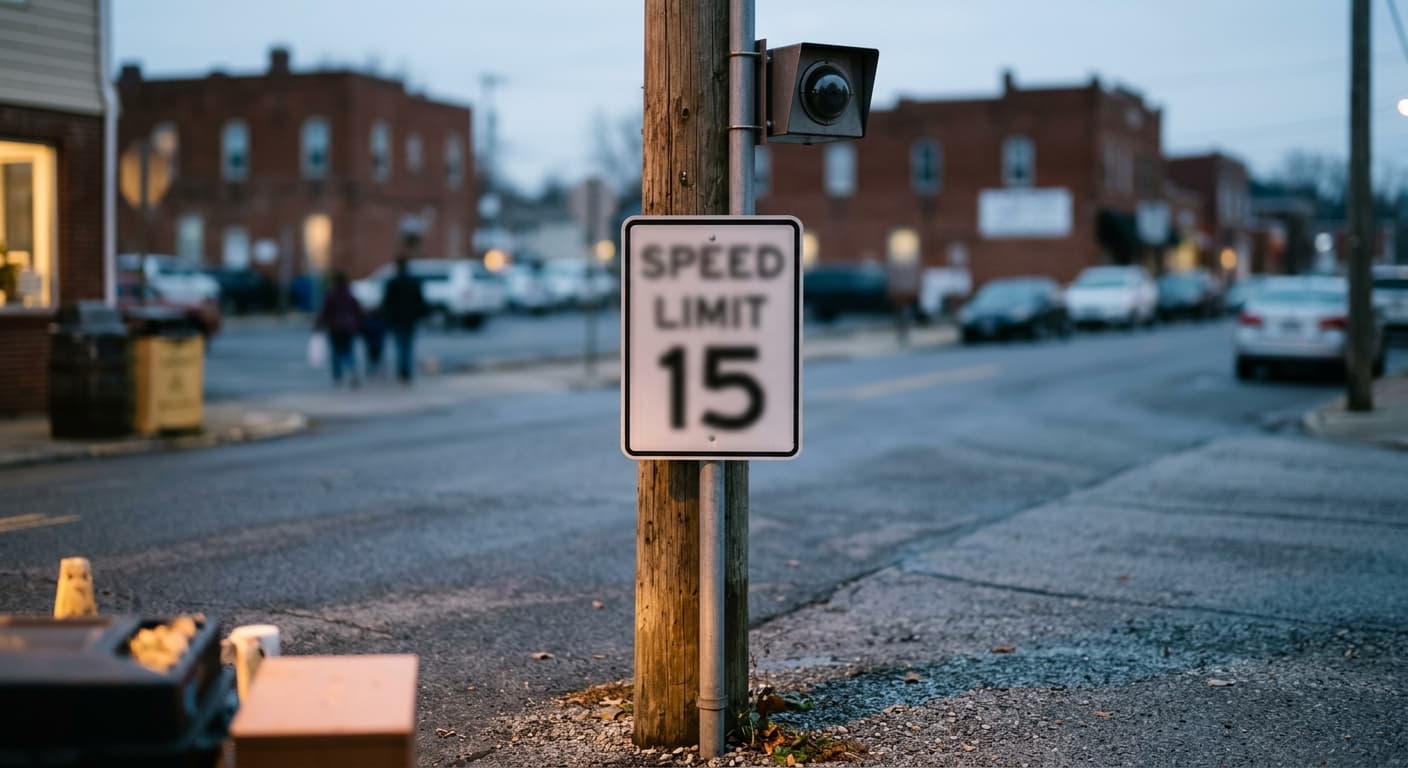
South Carolina does not have a red light or speed camera ticket program, and it can't lawfully have one for ordinary traffic enforcement. State law requires every uniform traffic ticket for speeding or for disregarding a traffic control device to be handed to the driver in person at the time of the stop, and separately bars those citations from resting on photographic evidence. Between the two rules, automated camera ticketing for speeding or red lights is off the table statewide.
The Two Rules That Ban Camera Tickets
South Carolina's ban works through two separate statutory requirements rather than a single sentence outlawing cameras. First, S.C. Code 56-7-35(A), for speeding, and (B), for traffic-control-device violations including red lights, require that a ticket be issued «incident to and contemporaneous with a traffic stop,» with the copy of the citation delivered directly to the offender at the time of the stop. Mailing a citation is separately and explicitly prohibited.
Second, the same subsections bar issuing a citation based, in the speeding statute's words, «in whole or in part» upon photographic evidence, and in the traffic-control-device statute's slightly narrower words, «based in whole upon» photographic evidence. Either way, the statute is explicit that this bar applies «whether the camera or other electronic device capturing the photographic evidence was attended or unattended.» Photo or video evidence can only be used to corroborate a violation an officer personally witnessed, not to generate a ticket on its own. 56-5-710(B) repeats this bar specifically against local authorities, closing off any attempt to run a camera program through a city or county ordinance instead of state authorization.
Together, these rules mean there is no lawful path in South Carolina for an unattended red light or speed camera to generate a mailed traffic ticket, for the state or for any city or county within it.
Where This Ban Came From
The ban dates to 2011 Act No. 65, effective June 17, 2011, and was amended by 2014 Act No. 274. It responded directly to the Town of Ridgeland's speed-camera-van program along Interstate 95, which drew statewide attention and criticism before the legislature acted to shut the practice down. The rule has remained stable since the 2014 amendment.

The One Camera Exception: Declared Emergencies
There is a single, narrow carve-out. S.C. Code 56-5-70(E) allows a photo-based speeding or traffic-control-device citation only for violations that occur while relief from federal motor carrier hours-of-service regulations has been granted due to a declared emergency, under 49 C.F.R. 390.23. This is not a general enforcement tool; it applies only during the kind of emergency-declaration period, such as evacuation or disaster response, where those federal relief provisions are in effect.
Even inside that window, the exception does not authorize an ordinary automated, mailed camera ticket. The second sentence of 56-5-70(E) requires that a person who receives a photo-based speeding or traffic-control-device citation «must be served in person with notice of the violation within one hour of the occurrence of the violation», unless a collision occurred and fault cannot be determined immediately, or the party who caused the collision is not immediately accessible because of medical treatment. In practice that keeps even the emergency carve-out an in-person, on-scene process rather than a notice that shows up in the mail weeks later.
What's Still Legal: Toll Cameras and School Buses
Two camera uses survive the ban entirely.

Toll collection is expressly excluded. 56-7-35(C)(1) states plainly that the section's rules «do not apply to» toll collection, so South Carolina's toll roads can continue to use license-plate photo billing for unpaid tolls. That is an administrative billing matter, not a traffic citation, and it is a different legal category from the red light and speed camera tickets this page covers.
School-bus stop-arm violations are also carved out. 56-7-35(C)(2) exempts citations issued under a separate statute, 56-5-2770, from the entire section, meaning the in-person-issuance rule and the photo-evidence bar do not apply to school-bus passing violations. That carve-out means camera-based enforcement of illegally passing a stopped school bus operates on different legal footing than the red light and speed cameras this ban targets; readers with a school-bus camera ticket should look to that separate statute rather than this page.
If You Get a Camera-Based Notice From Another State
South Carolina's ban only controls what South Carolina and its cities and counties can do inside the state. It does not shield a South Carolina driver from a red light or speed camera ticket incurred while driving in a state that does allow the practice. Owner-liability civil penalties from other states' programs travel by mail using vehicle registration lookups, and South Carolina's ban has no bearing on whether that out-of-state notice is valid.
Information last verified on 2026-08-12. This article has not yet been reviewed by a licensed lawyer.
Related Resources
- Traffic Camera Ticket Laws by State
- How to Fight a Camera Ticket
- Do You Have to Pay a Camera Ticket?
- Hit and Run Laws in the United States
- South Carolina Police Bodycam Laws
Last updated: 2026-08-12.
More South Carolina Laws
Frequently Asked Questions
Are red light and speed cameras illegal in South Carolina?
Effectively, yes, for ordinary traffic enforcement. State law requires every uniform traffic ticket for speeding or for disregarding a traffic control device to be issued in person at the time of a stop, and bars those citations from resting on photographic evidence, which together rule out automated camera ticketing statewide. The rule is written for those two violation types rather than traffic citations generally, and it does not reach toll collection or school-bus stop-arm citations issued under 56-5-2770.
Can a South Carolina city or county set up its own camera program by local ordinance?
No. S.C. Code 56-5-710(B) repeats the same bar specifically against local authorities, so no city or county ordinance can revive camera ticketing.
Are there any exceptions to South Carolina's camera ban?
One narrow exception exists for photo-based citations issued during a declared emergency where federal hours-of-service relief has been granted under 49 C.F.R. 390.23. It is not a routine enforcement tool, and it still is not automated: 56-5-70(E) requires that the driver be served in person with notice of the violation within one hour of the violation, unless a collision occurred and fault cannot be determined immediately or the at-fault party is not immediately reachable because of medical treatment.
Can South Carolina still use cameras to bill unpaid tolls?
Yes. Toll collection is expressly excluded from the ban, so photo-based toll billing on South Carolina's toll roads is unaffected.
What about cameras on South Carolina school buses?
School-bus stop-arm violations are carved out of the ban under a separate statute, 56-5-2770, so camera-based enforcement of illegal school-bus passing operates on different legal footing than the red light and speed camera ban.
Can I still get a camera ticket in South Carolina from another state's program?
Yes, if you were driving in a state that does allow camera enforcement. South Carolina's ban only controls what happens inside South Carolina; it does not invalidate a genuine out-of-state camera ticket.
Updates
Clarified that South Carolina’s in-person ticketing rule applies to speeding and traffic-control-device citations specifically, and added the requirement that even an emergency-period photo citation must be served in person within one hour.
Independently fact-checked against the cited primary sources
The Law Behind This Article
This article rests on the statutory provisions below, held in our own legal record and retrieved from the official source. Tap a section to read the operative text.
South Carolina Code of Laws, Title 56: MOTOR VEHICLES
§ 56-7-35Uniform traffic ticket for speeding or disregarding traffic control device; incident to and contemporaneous with traffic stop; delivery; use of photographic evidence; exception for toll collection violationIn force
(A)(1) A law enforcement officer who issues a uniform traffic ticket for a violation of a local ordinance or traffic laws relating to speeding must do so incident to and contemporaneous with a traffic stop. (2) A copy of the citation must be given directly to the offender by the law enforcement officer issuing the citation at the time of the traffic stop for the offense. (3) A law enforcement agency may not utilize the United States mail, a parcel delivery service, electronic means, or otherwise to send to the operator or owner of a motor vehicle or motorcycle, as defined in Section 56-3-20, a uniform traffic citation alleging a violation of a local ordinance or the traffic laws relating to speeding. This subsection does not prohibit the law enforcement agency from sending the operator or owner an additional copy of a uniform citation that was issued to the operator or owner during the traffic stop for the offense upon request of the operator or owner.
Official text (excerpt) · last checked 2026-09-16 · Read the full text in our law library · Verify at scstatehouse.gov
§ 56-5-710Powers of local authoritiesIn force
(A) Subject to the limitations prescribed in Section 56-5-930, the provisions of this chapter shall not be deemed to prevent local authorities with respect to streets and highways under their jurisdiction and within the reasonable exercise of the police power from: (1) regulating the standing or parking of vehicles; (2) regulating traffic by means of police officers or traffic control signals; (3) regulating or prohibiting processions or assemblages on the highways; (4) designating particular highways as one-way highways and requiring that all vehicles thereon be moved in one specific direction; (5) regulating the speed of vehicles in public parks; (6) designating any highway as a through highway and requiring that all vehicles stop before entering or crossing it or designating any intersection as a stop intersection and requiring all vehicles to stop at one or more entrances at such intersection; (7) restricting the use of highways as authorized in Sections 56-5-4210 and 56-5-4220; (8) regulating the operation of bicycles and requiring the registration and licensing of them, including the requirement of a registration fee; (9) regulating or prohibiting the turning of…
Official text (excerpt) · last checked 2026-07-29 · Read the full text in our law library · Verify at scstatehouse.gov
§ 56-5-70Certain vehicle requirements suspended during state of emergency; declarations of emergency triggering federal relief under 49 C.F.R. 390.23In force
(A)(1) Notwithstanding any provision of this chapter or any other provision of law, during a state of emergency declared by the Governor and in the course of responding to the state of emergency: (a) requirements relating to registration, permitting, length, width, weight, and load are suspended for commercial and utility vehicles traveling on noninterstate routes for up to one hundred twenty days, provided the vehicles do not exceed a gross weight of ninety thousand pounds and do not exceed a width of twelve feet; (b) requirements relating to time of service suspensions for commercial and utility vehicles traveling on interstate and noninterstate routes are suspended for up to thirty days, unless extended for additional periods in accordance with 49 C.F.R. 390-399. (2) All vehicles operated upon the public highways of this State under the authority of this section must: (a) be operated in a safe manner; (b) maintain required limits of insurance; and (c) be clearly identified as a utility vehicle or provide appropriate documentation indicating it is a commercial vehicle responding to the emergency.
Official text (excerpt) · last checked 2026-07-29 · Read the full text in our law library · Verify at scstatehouse.gov
Code of Federal Regulations Title 49
§ 390.23Automatic relief from regulations.In force
(a) Presidential declaration of emergency. Parts 390 through 399 of this chapter, or any section thereof, shall not apply to any motor carrier or driver operating a commercial motor vehicle so long as the motor carrier or driver is providing direct assistance during an emergency declared by the President of the United States pursuant to 42 U.S.C. 5191(b) during the emergency period or 30 days from the date of the initial declaration of the emergency, whichever is less. (b) Regional declarations of emergency. Except as provided in paragraph (b)(1) of this section, §§ 395.3 and 395.5 of this chapter shall not apply to a motor carrier or driver operating a commercial motor vehicle so long as the motor carrier or driver is providing direct assistance during an emergency declared by the Governor of a State, their authorized representative, or FMCSA during the emergency period or 14 days from the date of the initial declaration of emergency, whichever is less. (1) Residential heating fuel shortages.
Official text (excerpt) · last checked 2026-07-28 · Read the full text in our law library · Verify at ecfr.gov
Cited in 2 court opinions in our collectionLatest citing opinion in our collection: 2018
Opinions citing this section in our collection:
- Acuity Ins. Co. v. McDonald's Towing & Rescue (Court of Appeals for the Sixth Circuit 2018)“…or Carrier Safety Administration (“FMCSA”). They argue that 49 C.F.R. § 390.23(a), which exempts “tow trucks respondin…”
- Appeal of Fred Fuller Oil Co. (Supreme Court of New Hampshire 2000, 144 N.H. 607)“…ving-time limitations for fuel-oil delivery drivers. See 49 C.F.R. § 390.23 (1998). Also on that date, Fuller Oil…”
Identified automatically from the court opinions citing this section — not a ranking of which case controls.
Search our full record of US law — 2.1 million sections, every state + federal →
Sources and References
- S.C. Code 56-7-35, Uniform traffic tickets; in-person issuance requirement; bar on photographic-evidence citations; toll and school-bus exceptions(scstatehouse.gov).gov
- S.C. Code 56-5-710(B), Bar on local authorities issuing citations based on photographic evidence(scstatehouse.gov).gov
- S.C. Code 56-5-70(E), Narrow declared-emergency exception for photo-based citations(scstatehouse.gov).gov