
Hawaii
Is Lane Splitting Legal in Hawaii? (2026 Motorcycle Law)
Independently fact-checked against primary sources (last audited October 10, 2026). · 13 primary sources cited on this page. How we verify our legal content
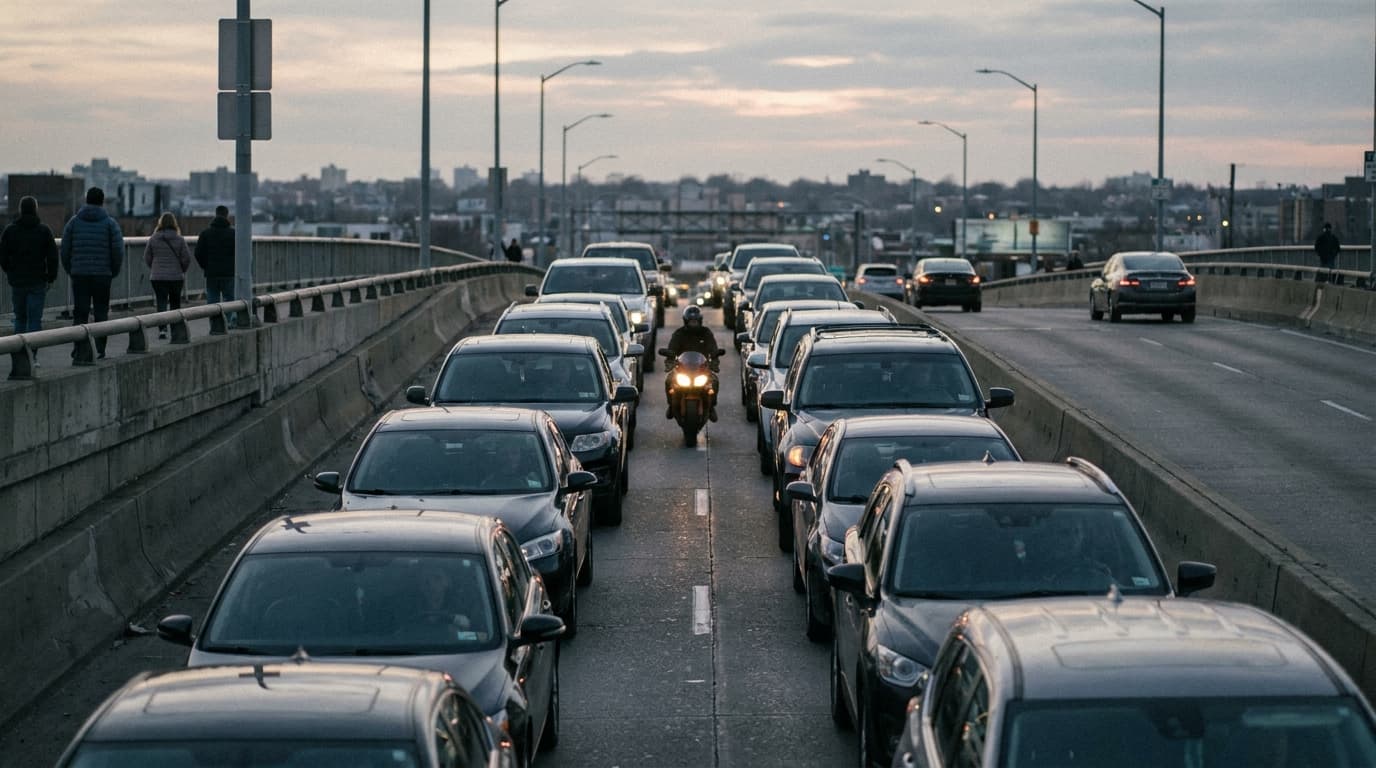
No. Lane splitting and lane filtering are both illegal in Hawaii: HRS 291C-153(c) provides that "No person shall operate a motorcycle between lanes of traffic or between adjacent lines or rows of vehicles," and the only exemption is for police officers performing their official duties. No motorcycle provision of the traffic code authorizes riding on the shoulder, passing on the right may never be done by driving off the pavement or main-traveled portion of the roadway, and a 2018 act that temporarily changed the motorcycle lane rule was repealed at the end of 2020. For how other states treat the same maneuvers, see our guide to lane splitting laws by state.
Information last verified on 2026-10-08. This article has not been reviewed by a licensed lawyer.
Jurisdiction scope: This article covers Hawaii state law in the Hawaii Revised Statutes (HRS): the motorcycle part of the Statewide Traffic Code (HRS 291C-151 to 291C-155, centered on 291C-153), the HOV-lane rules in 291C-53 and 291C-222, the passing, lane and speed rules in 291C-43, 291C-44, 291C-49 and 291C-101, the penalty section 291C-161, the reckless driving and inattention offenses in HRS 291-2 and 291-12, and Act 218 of the 2018 Session Laws. It does not cover county ordinances, license points, insurance consequences, or the law of other states.
What Hawaii's law says about riding between lanes
Hawaii's motorcycle lane rules are in HRS 291C-153, "Operating motorcycles on roadways laned for traffic." Subsection (c) is the ban:
"(c) No person shall operate a motorcycle between lanes of traffic or between adjacent lines or rows of vehicles."
"Between lanes of traffic" covers lane splitting, riding along the line between two lanes of moving vehicles. "Between adjacent lines or rows of vehicles" covers lane filtering, moving up between rows of cars stopped at a light. The subsection draws no line between moving and stopped traffic.
Hawaii's wording is the same as subsection (c) of section 11-1303 in the 1968 revision of the Uniform Vehicle Code, a model traffic code published by the National Committee on Uniform Traffic Laws and Ordinances.
The only exemption is subsection (e): "Subsections (b) and (c) shall not apply to police officers in the performance of their official duties." It covers the between-lanes ban and the same-lane passing ban, not the two-abreast limit, and no other rider.
Splitting, filtering, shoulders and riding two abreast
| Maneuver | Hawaii rule |
|---|---|
| Lane splitting (riding between lanes of moving traffic) | Prohibited by HRS 291C-153(c) |
| Lane filtering (riding between rows of stopped vehicles) | Prohibited by 291C-153(c); no stopped-traffic exception |
| Passing a vehicle within its own lane | Prohibited by 291C-153(b) |
| Riding on the shoulder to pass traffic | Prohibited: HRS 291C-44(b) bars passing on the right by driving off the pavement or main-traveled portion of the roadway, and 291C-1 defines the roadway to exclude the berm or shoulder |
| Riding two abreast in one lane | Allowed; more than two abreast is prohibited by 291C-153(d) |
| Using an HOV lane | Allowed regardless of the number of occupants (291C-222(d)); on a controlled-access highway, for motorcycles otherwise permitted there (291C-53(a)) |
Passing in the same lane
Subsection (b) reads: "The operator of a motorcycle shall not overtake and pass in the same lane occupied by the vehicle being overtaken." It covers a rider who slips past a car without crossing a lane line, staying inside the car's own lane.
Full use of a lane and riding two abreast
Subsection (a) protects the rider's space:
"(a) All motorcycles are entitled to full use of a lane and no motor vehicle shall be driven in such a manner as to deprive any motorcycle of the full use of a lane. This subsection shall not apply to motorcycles operated two abreast in a single lane."
The rule runs against car drivers as well as riders: a motor vehicle may not be driven in a way that deprives a motorcycle of the full use of its lane.
Two riders may share a lane with each other. Subsection (d) sets the limit: "Motorcycles shall not be operated more than two abreast in a single lane."
Section 291C-151 links these special rules to the rest of the traffic code. Every motorcyclist "shall be granted all of the rights and shall be subject to all of the duties applicable to the driver of any other vehicle under this chapter, except as to special regulations in this part and except as to those provisions of this chapter which by their nature can have no application."
Riding on the shoulder and the temporary 2018 change
No motorcycle provision of Hawaii's traffic code authorizes riding on the shoulder under current law. The general passing rule also stands in the way: under HRS 291C-44, passing on the right is allowed only around a vehicle making or about to make a left turn, on a street or highway with unobstructed pavement and lanes marked for two or more lines of moving vehicles in each direction, or on a one-way roadway free of obstructions and wide enough for two or more lines of moving vehicles, and only "under conditions permitting such movement in safety." Subsection (b) adds: "In no event shall such movement be made by driving off the pavement or main-traveled portion of the roadway." Section 291C-1 defines the roadway as the part of a highway used for vehicular travel, "exclusive of the berm or shoulder."
In 2018 the Legislature passed Act 218, which added a section letting the Department of Transportation designate shoulders on which two-wheeled motorcycles could ride, and amended 291C-153 (along with 291C-43, 291C-44, 291C-49 and 291C-125) so riders could cross lanes to reach a designated shoulder. The act became law on July 10, 2018, without the governor's signature, and was temporary by its own terms. Section 9 provides:
"This Act shall take effect on January 1, 2019; provided that on December 31, 2020, this Act shall be repealed and sections 291C-43, 291C-44, 291C-49, 291C-125, and 291C-153, Hawaii Revised Statutes, shall be reenacted in the form in which they read on the day before the effective date of this Act."
The current text of 291C-153 carries Act 218 in its history line but contains no shoulder provision; it reads in the form set out above. Outside the definitions in 291C-1, Chapter 291C mentions motorcycles only in the HOV-lane rules (291C-53 and 291C-222) and the motorcycle part, 291C-151 to 291C-155, and none of those sections authorizes riding on the shoulder, splitting, or filtering.
HOV lanes
Motorcycles get one lane privilege that cars do not. HRS 291C-53(a) provides: "Persons operating motorcycles which are otherwise permitted on a controlled-access roadway or highway shall be permitted to use any high occupancy vehicle lane designated on such roadway or highway." Section 291C-222(d) adds that "A motorcycle may use any high occupancy vehicle lane, regardless of the number of occupants." Neither section creates an exception to the between-lanes ban in 291C-153.
Penalty for lane splitting in Hawaii
Section 291C-153 has no penalty clause of its own, so the default in HRS 291C-161 applies. Under 291C-161(a), "It shall be a violation for any person to violate any of the provisions of this chapter," except as specified in subsections (c) and (d), which list other sections and do not include 291C-153.
Section 291C-161(b) caps the fine for a provision "for which another penalty is not provided":
| Offense | Maximum fine |
|---|---|
| First violation | $250 |
| Second violation within one year after the date of the first | $300 |
| Third or later violation within one year after the date of the first | $500 |
These are maximums, not fixed amounts. The court may also require a driver-retraining course "in addition to any other penalties imposed" (291C-161(h)).
Other rules and heavier charges
Reckless driving and inattention to driving are separate charges with their own elements; whether a particular ride meets them depends on the facts. A between-lanes stop can also involve the general traffic rules:
| Rule | What it requires | Penalty |
|---|---|---|
| Single lane, HRS 291C-49(1) | A vehicle "shall be driven as nearly as practicable entirely within a single lane" and not moved from it until the move can be made with safety | Violation; 291C-161(b) fine caps above |
| Passing on the left, 291C-43(1) | An overtaking driver "shall pass to the left thereof at a safe distance" | Violation; 291C-161(b) fine caps above |
| Passing on the right, 291C-44 | Only in the listed conditions, in safety, and never by driving off the pavement or main-traveled portion of the roadway | Violation; 291C-161(b) fine caps above |
| Speed, 291C-101 | No speed "greater than is reasonable and prudent" for the hazards and conditions | Violation; 291C-161(b) fine caps above |
| Reckless driving, HRS 291-2 | Operating a vehicle "recklessly in disregard of the safety of persons or property" | Fine up to $1,000, up to 30 days in jail, or both |
| Inattention to driving, HRS 291-12 | Operating a vehicle "negligently as to cause a collision with, or injury or damage to" any person, vehicle or other property | Fine up to $500, up to 30 days in jail, or both, plus a surcharge of up to $100 |
If a crash happens while splitting or filtering
Riding between lanes violates 291C-153(c), and that fact can come up after a collision. How it bears on fault, insurance and an injury claim is covered in our guide to Hawaii motorcycle accident laws. For the rules that apply to crashes generally, see Hawaii car accident laws.
Related pages
This article provides general legal information about Hawaii law, not legal advice. For advice about a specific situation, contact a lawyer licensed in Hawaii.
Last updated: 2026-10-08.
Frequently Asked Questions
Is lane splitting legal in Hawaii?
No. HRS 291C-153(c) provides that no person shall operate a motorcycle between lanes of traffic or between adjacent lines or rows of vehicles.
Is lane filtering legal in Hawaii?
No. The ban in HRS 291C-153(c) covers riding between adjacent lines or rows of vehicles and has no exception for stopped traffic; only police officers on official duty are exempt under 291C-153(e).
Can motorcycles ride on the shoulder in Hawaii?
Not to pass traffic. HRS 291C-44(b) says passing on the right may in no event be made by driving off the pavement or main-traveled portion of the roadway, and no current provision lets motorcycles use the shoulder. Act 218 of 2018, which let the Department of Transportation designate shoulders for two-wheeled motorcycles, applied only from January 1, 2019, until its repeal on December 31, 2020.
What is the fine for lane splitting in Hawaii?
Under HRS 291C-161(b), the fine is not more than $250 for a first violation, not more than $300 for a second within one year, and not more than $500 for a third or later within one year. Riding recklessly in disregard of the safety of persons or property is the separate offense of reckless driving under HRS 291-2, with a fine of up to $1,000, up to 30 days in jail, or both.
Can motorcycles use the HOV lane in Hawaii?
Yes. HRS 291C-222(d) says a motorcycle may use any high occupancy vehicle lane, regardless of the number of occupants, and 291C-53(a) applies the same rule to HOV lanes on controlled-access highways.
Can two motorcycles ride side by side in Hawaii?
Yes. HRS 291C-153(d) bars operating motorcycles more than two abreast in a single lane, so two abreast is within the rule.
Updates
Independently fact-checked against the cited primary sources
The Law Behind This Article
This article rests on the statutory provisions below, held in our own legal record and retrieved from the official source. Tap a section to read the operative text.
Hawaii Revised Statutes, Chapter 291C: [STATEWIDE TRAFFIC CODE]
§ 291C-153Operating motorcycles on roadways laned for trafficIn forcecited in 2 of our articles
(a) All motorcycles are entitled to full use of a lane and no motor vehicle shall be driven in such a manner as to deprive any motorcycle of the full use of a lane. This subsection shall not apply to motorcycles operated two abreast in a single lane. (b) The operator of a motorcycle shall not overtake and pass in the same lane occupied by the vehicle being overtaken. (c) No person shall operate a motorcycle between lanes of traffic or between adjacent lines or rows of vehicles. (d) Motorcycles shall not be operated more than two abreast in a single lane. (e) Subsections (b) and (c) shall not apply to police officers in the performance of their official duties. [L 1971, c 150, pt of §1; am L 2018, c 218, §§6, 9]
Official text (excerpt) · last checked 2026-07-30 · Read the full text in our law library · Verify at capitol.hawaii.gov
Also relied on in: Motorcycle Accident Laws in Hawaii (2026): Deadlines & Helmets
§ 291C-161Penalties; photo red light imaging detector system fines; automated speed enforcement system finesIn forcecited in 5 of our articles
(a) It shall be a violation for any person to violate any of the provisions of this chapter, except as otherwise specified in subsections (c) and (d) and unless the violation is by other law of this State declared to be a felony, misdemeanor, or petty misdemeanor. (b) Except as provided in subsections (c) and (d), every person who is determined to have violated any provision of this chapter for which another penalty is not provided shall be fined not more than: (1) $250 for a first violation thereof; (2) $300 for a second violation committed within one year after the date of the first violation; and (3) $500 for a third or subsequent violation committed within one year after the date of the first violation. (c) Every person convicted under or found in violation of section 291C-12, 291C-12.5, 291C-12.6, 291C-13, 291C-14, 291C-15, 291C-16, 291C-72, 291C-73, 291C-95, 291C-102, 291C-103, 291C-104, or 291C-105 shall be sentenced or fined in accordance with those sections.
Official text (excerpt) · last checked 2026-07-30 · Read the full text in our law library · Verify at capitol.hawaii.gov
Cited in 10 court opinions in our collectionLatest citing opinion in our collection: 2021
Opinions citing this section in our collection:
- State v. Gonzalez. (Hawaii Supreme Court 2012, 128 Haw. 314)“…The penalty for a violation of HRS § 291C-102 is set by HRS § 291C-161 (2011). HRS § 291C-161 provides in rele…”
- State v. Shimabukuro (Hawaii Supreme Court 2002, 100 Haw. 324)“…ot provide for any term of imprisonment as a penalty. See HRS § 291C-161 (Supp.2000). HRS § 291-4.5 was repealed…”
- State v. Barros (Hawaii Supreme Court 2002, 98 Haw. 337)“…lking is a fine. [2] No jail sentence is prescribed. See HRS §§ 291C-161 (Supp.1999) & 291C-73. HRS chapter 291C…”
Identified automatically from the court opinions citing this section — not a ranking of which case controls.
Also relied on in: Hawaii E-Scooter Laws: Sidewalk, Helmet & Age Rules (2026), Hawaii Windshield Mounting Laws (2026 Guide), Hawaii Camera Ticket Laws: State-Run Red Light and Speed Cameras
§ 291C-53Restrictions on use of controlled-access roadway or highwayIn force
(a) The director of transportation by rules adopted in accordance with chapter 91, and the counties by ordinance, may regulate or prohibit the use of any controlled-access roadway or highway within their respective jurisdictions by any class or kind of traffic which is found to be incompatible with the normal and safe movement of traffic. Persons operating motorcycles which are otherwise permitted on a controlled-access roadway or highway shall be permitted to use any high occupancy vehicle lane designated on such roadway or highway. For the purposes of this subsection, "high occupancy vehicle lane" means a designated lane of a laned roadway where the use of such designated lane is restricted to vehicles carrying at least the minimum number of persons designated by the director of transportation as indicated on official signs and other official traffic-control devices, and to other vehicles as provided by rules adopted in accordance with chapter 91, or by county ordinance. Notwithstanding any law to the contrary, no person shall operate a neighborhood electric vehicle on any controlled-access roadway or highway.
Official text (excerpt) · last checked 2026-07-30 · Read the full text in our law library · Verify at capitol.hawaii.gov
Search our full record of US law — 2.1 million sections, every state + federal →
Sources and References
- HRS 291C-153, Operating motorcycles on roadways laned for traffic(capitol.hawaii.gov).gov
- Uniform Vehicle Code and Model Traffic Ordinance, Revised 1968, section 11-1303(law.resource.org)
- HRS 291C-151, rights and duties of persons operating motorcycles(capitol.hawaii.gov).gov
- Session Laws of Hawaii 2018, Act 218(capitol.hawaii.gov).gov
- HRS 291C-53, Restrictions on use of controlled-access roadway or highway (motorcycles in HOV lanes)(capitol.hawaii.gov).gov
- HRS 291C-161 (penalties for violations of chapter 291C)(capitol.hawaii.gov).gov
- HRS 291C-44, when overtaking on the right is permitted(capitol.hawaii.gov).gov
- HRS 291C-43, overtaking a vehicle or bicycle on the left(capitol.hawaii.gov).gov
- HRS 291C-49, driving on roadways laned for traffic(capitol.hawaii.gov).gov
- HRS 291C-101, basic speed rule(capitol.hawaii.gov).gov
- HRS 291C-1, definitions (roadway)(capitol.hawaii.gov).gov
- HRS 291C-222, designation of high occupancy vehicle lane(capitol.hawaii.gov).gov
- HRS 291-2, reckless driving of vehicle(capitol.hawaii.gov).gov
- HRS 291-12, inattention to driving(capitol.hawaii.gov).gov