
Vermont
Vermont Squatters Rights and Adverse Possession Laws (2026)
Independently fact-checked against primary sources (last audited August 18, 2026). · Reviewed by the RecordingLaw editorial team. · Law checked current as of August 8, 2026. How we verify our legal content
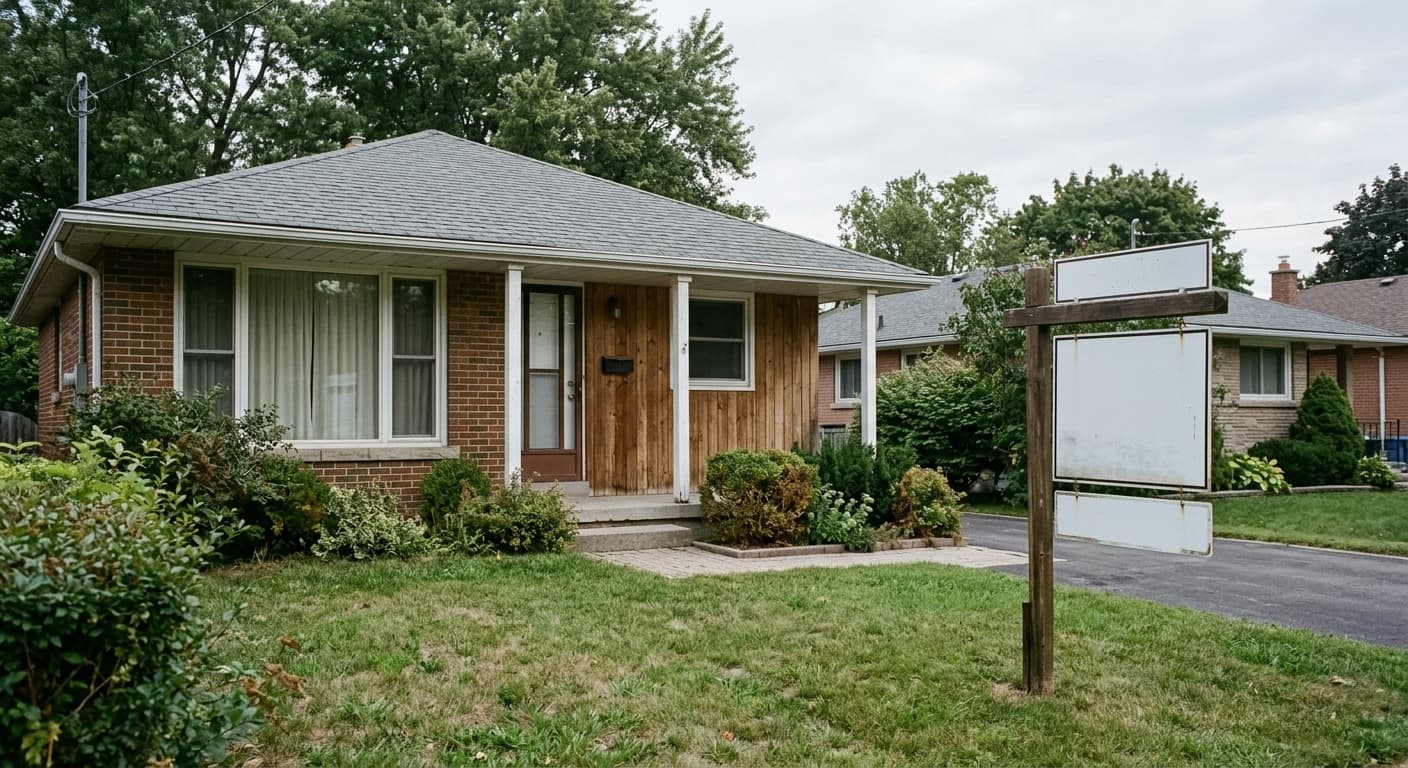
Vermont sets one of the longer adverse possession timelines in the country: a squatter must occupy property openly and continuously for 15 years under 12 V.S.A. § 501 before any ownership claim can ripen. Property owners who discover an unlawful occupant can pursue removal through ejectment under 12 V.S.A. § 4761 or, where a landlord-tenant relationship is alleged, through the residential eviction process under 9 V.S.A. ch. 137.
Information last verified on May 27, 2026. This article provides general legal information, not legal advice.
Jurisdiction scope: This article covers Vermont state law only. For a comparison of squatter protections and adverse possession timelines across all 50 states, see the national squatters rights guide.
Adverse Possession in Vermont: Period and Elements
The 15-Year Statutory Period
Vermont codifies adverse possession in Title 12 of the Vermont Statutes Annotated. Section 501 of that title provides that no action for the recovery of lands may be brought after 15 years from the time the right to bring the action first accrued. Section 502 separately confirms that the right-of-entry period is also 15 years, meaning a landowner who has the right to retake possession must act within that window or risk losing the legal ability to do so.

The 15-year period is among the longer thresholds in the northeastern United States. Vermont has not created a shorter period for claimants holding color of title, nor does Vermont require a claimant to have paid property taxes on the disputed land. Both of those features distinguish Vermont from states such as California or Florida, where shorter periods or tax-payment conditions apply.
Elements a Claimant Must Prove
To establish adverse possession in Vermont, a claimant must show that possession was:
Actual. The claimant must physically use the land in a manner consistent with its character. Farming, fencing, maintaining a structure, or regular landscaping can all satisfy this element depending on the parcel type.
Open and notorious. The occupation must be visible and obvious, not hidden. A reasonable landowner inspecting the property should be able to see that someone is using it.
Exclusive. The claimant cannot share possession with the true owner or the general public. Using land alongside the record owner defeats this element.
Hostile. In Vermont, "hostile" does not require ill intent. It means the claimant used the property without the owner's permission and in a manner inconsistent with the owner's title. A claimant who used the land with the owner's consent cannot later claim adverse possession because permissive use is the opposite of hostile use.
Continuous for 15 years. Possession must be unbroken throughout the full period. Seasonal gaps that are consistent with ordinary land use do not necessarily break continuity, but abandoning the property and returning later typically restarts the clock.
Government Land Exception
Vermont adverse possession does not run against public land. Under 12 V.S.A. § 462, nothing in the limitations chapter that contains the 15-year period "shall extend to lands given, granted, sequestered, or appropriated to a public, pious, or charitable use, or to lands belonging to the State." A squatter who occupies State or municipal property cannot accumulate the statutory 15-year period against that owner, and the same protection reaches privately held land devoted to a pious or charitable use, such as church or cemetery parcels. This rule keeps public parcels such as state forests, road rights-of-way, and municipal land from being privatized through long-term occupation.
Tacking
Vermont allows a claimant to add, or "tack," the periods of possession of prior occupants to meet the 15-year requirement, provided there is privity of possession between the successive occupants. A deed, devise, or other transfer of the possessory interest can establish that privity. Without it, each occupant's period starts fresh.
How to Remove a Squatter in Vermont
Step 1: Confirm the Person Has No Legal Right to Be There
Before taking any action, determine whether the occupant has ever had any form of tenancy or license to be on the property. If the person once paid rent or had written or oral permission to be present, Vermont courts may treat them as a tenant or licensee rather than a pure squatter. That distinction controls which legal process applies.

If no permission was ever granted, the occupant is an unlawful entrant and the ejectment process is appropriate.
Step 2: Do Not Use Self-Help Removal
Vermont property owners cannot physically remove a squatter, change the locks while the occupant is present, shut off utilities, or harass the occupant into leaving. Self-help eviction is prohibited under Vermont law and can expose a landlord or property owner to civil liability. The only lawful route is through the courts.
Step 3: Ejectment Action Under 12 V.S.A. § 4761
For a squatter who has no claim to tenancy, the proper remedy is an ejectment action filed in Vermont Superior Court. Title 12, beginning at § 4761, provides the framework for these actions. The property owner (plaintiff) files a complaint in the Superior Court Civil Division for the county where the land is located. The complaint must describe the property, assert the plaintiff's title or right to possession, and allege that the defendant unlawfully withholds possession.
The court issues a summons. If the defendant does not appear or the plaintiff prevails at hearing, the court can enter a judgment for possession and authorize the sheriff to remove the occupant. Vermont does not run unlawful entrants through a separate expedited track. Residential eviction travels the same chapter: 9 V.S.A. § 4468 directs a landlord whose tenant holds over to bring the action for possession under 12 V.S.A. chapter 169, subchapter 3, the same ejectment chapter that governs a squatter. Both routes move on the court's regular civil calendar. Owners should expect the process to take several weeks to a few months depending on court scheduling.
Step 4: Residential Eviction Under 9 V.S.A. ch. 137
If the squatter asserts that a tenancy exists, or if the facts show that the person at some point paid rent or was given permission to occupy the dwelling, the landlord must use the residential eviction procedure under Title 9, Chapter 137. The key notice requirements under 9 V.S.A. § 4467 are:
- Non-payment of rent: at least 14 days' written notice before termination takes effect.
- Material breach of a rental agreement: at least 30 days' written notice (14 days for criminal activity or threats to safety).
- No-cause termination where there is no written rental agreement (§ 4467(c)): 60 days' notice for a monthly tenancy of two years or less, 90 days' notice for a monthly tenancy of more than two years, and 21 days' notice for a weekly tenancy.
- No-cause termination where there is a written rental agreement (§ 4467(e)): 30 days' notice before the end of the stated term for a tenancy of two years or less, and 60 days' notice for a tenancy of more than two years.
After the notice period expires and the occupant fails to vacate, the landlord files a complaint for eviction in the Civil Division of the Superior Court for the county where the property is located. Vermont courts schedule a hearing, and if the landlord prevails, a writ of possession issues and the sheriff enforces removal.
Under 9 V.S.A. § 4467(k), a notice to terminate will not support a judgment of eviction unless the proceeding is commenced no later than 60 days from the termination date stated in the notice, so a landlord who misses that window must issue a new notice.
Step 5: Document Everything
Throughout the process, property owners should photograph the condition of the property, document all communications with the occupant, and preserve any evidence that no tenancy was created. This documentation supports the case in court and protects against counterclaims.

No Expedited Squatter-Removal Law in Vermont
As of May 2026, Vermont has not enacted any expedited or administrative squatter-removal statute comparable to laws passed in states such as Florida (2024) or Georgia. Vermont property owners must use the court-based ejectment or eviction process described above. Legislative tracking through the 2025 and 2026 sessions did not surface any enrolled bill creating an accelerated squatter-removal mechanism.
This article is general legal information, not legal advice. Vermont property and landlord-tenant law involves fact-specific analysis. If you face a squatter situation or adverse possession claim, consult a licensed Vermont real estate or landlord-tenant attorney before taking action.
Sources
- 12 V.S.A. § 501, Vermont Statutes Annotated, Title 12, Chapter 23 (Limitation of Time for Commencement of Actions; 15-year period to recover lands). Vermont Legislature, legislature.vermont.gov.
- 12 V.S.A. § 502, Vermont Statutes Annotated, Title 12, Chapter 23 (Right of entry; 15-year period). Vermont Legislature, legislature.vermont.gov.
- 12 V.S.A. § 462, Vermont Statutes Annotated, Title 12, Chapter 23 (Lands for a public, pious, or charitable use). Vermont Legislature, legislature.vermont.gov.
- 12 V.S.A. § 4761, Vermont Statutes Annotated, Title 12, Chapter 169 (Ejectment; who may maintain action). Vermont Legislature, legislature.vermont.gov.
- 9 V.S.A. § 4468, Vermont Statutes Annotated, Title 9, Chapter 137 (Action for possession brought under 12 V.S.A. chapter 169, subchapter 3). Vermont Legislature, legislature.vermont.gov.
- 9 V.S.A. § 4467, Vermont Statutes Annotated, Title 9, Chapter 137 (Residential rental agreements; termination; notice requirements). Vermont Legislature, legislature.vermont.gov.
- Vermont Judiciary, Civil Division, Superior Court procedures for ejectment and eviction. vtcourts.gov.
For squatter laws in other states and a full comparison of adverse possession periods, see the national squatters rights guide.
RecordingLaw.com provides legal information for educational purposes only. No attorney-client relationship is formed by reading this site.
More Vermont Laws
Frequently Asked Questions
How long does a squatter have to stay in Vermont to claim adverse possession?
A squatter must occupy the property openly, continuously, exclusively, and without the owner's permission for 15 consecutive years under 12 V.S.A. § 501 before any adverse possession claim can succeed. This is one of the longer periods in the country.
Does Vermont require squatters to pay property taxes to claim adverse possession?
No. Vermont does not require a claimant to pay property taxes on the disputed parcel as a condition of adverse possession. The sole statutory requirement is 15 years of qualifying possession under 12 V.S.A. § 501.
Can a squatter claim adverse possession of government land in Vermont?
No. Under 12 V.S.A. § 462 the limitations chapter does not extend to lands belonging to the State or appropriated to a public, pious, or charitable use, so a squatter occupying State or municipal property cannot accumulate any statutory period toward an ownership claim.
What is the fastest way to remove a squatter in Vermont?
The fastest legal route is an ejectment action under 12 V.S.A. § 4761 filed in Vermont Superior Court. Vermont has no expedited administrative removal process as of May 2026, so property owners must obtain a court judgment and sheriff's enforcement. Consulting a Vermont real estate attorney at the outset can shorten the timeline by avoiding procedural delays.
Can a Vermont landlord change the locks to remove a squatter?
No. Self-help removal, including changing locks, shutting off utilities, or physically removing belongings, is prohibited under Vermont law and can result in civil liability. The property owner must go through the court process.
Does the 15-year adverse possession period apply even if the squatter has a document that looks like a deed?
Yes. Vermont does not have a shorter color-of-title period, so a squatter holding a defective or fraudulent document purporting to convey title still must satisfy the full 15-year period under 12 V.S.A. § 501.
What notice is required before filing an eviction against a squatter who claims to be a tenant?
If the occupant asserts tenant status, Vermont law under 9 V.S.A. § 4467 requires notice before the landlord can file for eviction. Non-payment of rent takes at least 14 days. For a no-cause termination the period depends on whether there is a written rental agreement: without one, 60 days for a monthly tenancy of two years or less and 90 days for a longer one; with a written agreement, 30 days before the end of the stated term for a tenancy of two years or less and 60 days for a longer one. After the notice period, the landlord files in Superior Court.
Updates
Corrected the statutory chapters cited for Vermont's 15-year period and ejectment statute, split the no-cause eviction notice periods into the written and unwritten rental agreement rules, and added the statute (12 V.S.A. § 462) behind the public-land exception.
Independently fact-checked against the cited primary sources
Governing law re-checked for recent changes
Reviewed and approved by an editor
The Law Behind This Article
This article rests on the statutory provisions below, held in our own legal record and retrieved from the official source. Tap a section to read the operative text.
Vermont Statutes Annotated, Title 12: Court Procedure, Chapter 23: Limitation of Time for Commencement of Actions, Subchapter: ACTIONS LIMITED
§ 501Recovery of landsIn forcecited in 2 of our articles
Except as otherwise provided in 32 V.S.A. § 5263, an action for the recovery of lands, or the possession thereof, shall not be maintained, unless commenced within 15 years after the cause of action first accrues to the plaintiff or those under whom he or she claims. (Amended, 1959, No. 218, § 6.)
Official text (excerpt) · last checked 2026-09-08 · Read the full text in our law library · Verify at legislature.vermont.gov
Cited in 57 court opinions in our collectionLatest citing opinion in our collection: 2026
In the courts (editorial summary, independently checked):Russell held 15 years of adverse seasonal use created a prescriptive lake-access easement and allowed tacking without deed language. Roy held years of church ownership protected by § 462 cannot count toward § 501. Nesti held § 501 does not govern takings, trespass or nuisance claims.
Opinions citing this section in our collection:
- Russell v. Pare (Supreme Court of Vermont 1974, 132 Vt. 397)✓Seymour Lodge's owners and predecessors seasonally fished, docked, launched boats and picnicked across a lakeside parcel. The court held 15 years under § 501 perfected a prescriptive easement in 1936 and permitted tacking through transfer even without deed language.
- Roy v. Woodstock Community Trust, Inc. (Supreme Court of Vermont 2014, 195 Vt. 427)✓Neighbors claimed landscaped strips by adverse possession. The court excluded years when the land was owned by a nonprofit church and dedicated to pious use under § 462, preventing the 15 years required by § 501, and affirmed rejection of those claims.
- Frances Nesti v. Agency of Transportation (Supreme Court of Vermont 2023, 296 A.3d 729)✓Nesti alleged a state drainage project caused runoff onto her land and argued § 501's 15-year period governed her taking, trespass and nuisance claims. The court held the six-year civil period applied to all three and affirmed judgment for the state.
Identified automatically from the court opinions citing this section — not a ranking of which case controls.
Also relied on in: Vermont Statute of Limitations: Filing Deadlines by Case Type
§ 502Entry into houses or landsIn force
A person having right or title of entry into houses or lands shall not enter after 15 years from the time such right of entry accrues.
Official text (excerpt) · last checked 2026-08-01 · Read the full text in our law library · Verify at legislature.vermont.gov
Cited in 7 court opinions in our collectionLatest citing opinion in our collection: 2024
Opinions citing this section in our collection:
- Huntington v. McCarty (Supreme Court of Vermont 2002, 174 Vt. 69)“…tations, and accordingly, was still enforceable pursuant to 12 V.S.A. § 502. Following the original order, t…”
- Chittenden v. Waterbury Center Community Church, Inc. (Supreme Court of Vermont 1998, 168 Vt. 478)“…riod to actions seeking recovery or possession of land. See 12 V.S.A. § 502. Accordingly, one who seeks to maintain…”
- state v. atlantic richfield (Vermont Superior Court 2023)“…riod to actions seeking recovery or possession of land, See 12 V.S.A. § 502. Accordingly, one who seeks to maintain…”
Identified automatically from the court opinions citing this section — not a ranking of which case controls.
Vermont Statutes Annotated, Title 12: Court Procedure, Chapter 169: Ejectment, Subchapter: GENERAL PROVISIONS
§ 4761When maintainable; partiesIn force
A person having claim to the seisin or possession of lands, tenements, or hereditaments shall have an action of ejectment, according to the nature of the case, which shall be brought as well against the landlord, if any, as against the tenant in possession of the premises, or against a person that is occupying a dwelling unit, for which subleasing is prohibited pursuant to a written rental agreement, without right or permission pursuant to 9 V.S.A. § 4456b(a)(2); and, if otherwise brought, on motion, the same shall be abated. Tenants in common of lands may join in an action concerning their common interest in such lands. (Amended 2015, No. 126 (Adj. Sess.), § 4.)
Official text (excerpt) · last checked 2026-08-01 · Read the full text in our law library · Verify at legislature.vermont.gov
Cited in 16 court opinions in our collectionLatest citing opinion in our collection: 2026
Opinions citing this section in our collection:
- Kellogg v. Shushereba (Supreme Court of Vermont 2013, 194 Vt. 446)“…ly viewed as a common law action for' ejectment governed by 12 V.S.A. § 4761, with such “damages” as would be due un…”
- Anello v. Vinci (Supreme Court of Vermont 1983, 142 Vt. 583)“…r a proper notice to quit is a common law ejectment action, 12 V.S.A. § 4761, or a district court ejectment action,…”
- In re William J. McCarty, Jr. (Supreme Court of Vermont 2013, 194 Vt. 109)“…udgment from the court awarding possession to the landlord. 12 V.S.A. § 4761. The judgment must be served on the ten…”
Identified automatically from the court opinions citing this section — not a ranking of which case controls.
Vermont Statutes Annotated, Title 9: Commerce and Trade, Chapter 137: Residential Rental Agreements, Subchapter: RESIDENTIAL RENTAL AGREEMENTS
§ 4467Termination of tenancy; noticeIn forcecited in 2 of our articles
(a) Termination for nonpayment of rent. The landlord may terminate a tenancy for nonpayment of rent by providing actual notice to the tenant of the date on which the tenancy will terminate, which shall be at least 14 days after the date of the actual notice. The rental agreement shall not terminate if the tenant pays or tenders rent due through the end of the rental period in which payment is made or tendered. Acceptance of partial payment of rent shall not constitute a waiver of the landlord’s remedies for nonpayment of rent or an accord and satisfaction for nonpayment of rent. (b) Termination for breach of rental agreement. (1) The landlord may terminate a tenancy for failure of the tenant to comply with a material term of the rental agreement or with obligations imposed under this chapter by actual notice given to the tenant at least 30 days prior to the termination date specified in the notice.
Official text (excerpt) · last checked 2026-08-01 · Read the full text in our law library · Verify at legislature.vermont.gov
Cited in 55 court opinions in our collectionLatest citing opinion in our collection: 2026
Opinions citing this section in our collection:
- Andrus v. Dunbar (Supreme Court of Vermont 2005, 178 Vt. 554)“…notice is served in accordance with statutory requirements. 9 V.S.A. § 4467(a) (allowing termination for nonpayment…”
- State of Vermont Agency of Development & Community Affairs v. Bisson (Supreme Court of Vermont 1993, 161 Vt. 8)“…Bullock a notice to vacate within thirty days, pursuant to 9 V.S.A. § 4467(d) (Landlord and Tenant Act; terminatio…”
- Golden Key, LLC v. Harper (Supreme Court of Vermont 2000, 170 Vt. 641)“…ion. Landlord provided sixty days notice in accordance with 9 VS.A. § 4467, which applies to the termination of re…”
Identified automatically from the court opinions citing this section — not a ranking of which case controls.
Also relied on in: Vermont Landlord-Tenant Laws (2026): Deposits, Notice, and Tenant Rights
§ 4468Termination of tenancy; action for possessionIn force
If the tenant remains in possession after termination of the rental agreement without the express consent of the landlord, the landlord may bring an action for possession, damages, and costs under 12 V.S.A. chapter 169, subchapter 3. (Added 1985, No. 175 (Adj. Sess.), § 1.)
Official text (excerpt) · last checked 2026-08-01 · Read the full text in our law library · Verify at legislature.vermont.gov
Cited in 15 court opinions in our collectionLatest citing opinion in our collection: 2026
Opinions citing this section in our collection:
- Andrus v. Dunbar (Supreme Court of Vermont 2005, 178 Vt. 554)“…e in chapter 169 of Title 12, normally 12 V.S.A. §4851. See 9 V.S.A. §4468 (granting landlords an action for posse…”
- In re William J. McCarty, Jr. (Supreme Court of Vermont 2013, 194 Vt. 109)“…ompelled to bring an action for possession as authorized by 9 V.S.A. § 4468, et. al. ¶ 5. On August 17, 2001…”
- Clark v. Richards (Vermont Superior Court 2025)“…lacks the effective termination required under 9 V.S.A. § 4468 to sustain the action, and it must be…”
Identified automatically from the court opinions citing this section — not a ranking of which case controls.
Vermont Statutes Annotated, Title 12: Court Procedure, Chapter 23: Limitation of Time for Commencement of Actions, Subchapter: GENERALLY
§ 462Lands for a public, pious, or charitable useIn force
Nothing contained in this chapter shall extend to lands given, granted, sequestered, or appropriated to a public, pious, or charitable use, or to lands belonging to the State.
Official text (excerpt) · last checked 2026-08-01 · Read the full text in our law library · Verify at legislature.vermont.gov
Cited in 22 court opinions in our collectionLatest citing opinion in our collection: 2026
Opinions citing this section in our collection:
- Mahoney v. Tara, LLC (Supreme Court of Vermont 2014, 197 Vt. 412)“…y had acquired the land by adverse possession. We held that 12 V.S.A. § 462’s exemption for public, charitable and…”
- Jarvis v. Gillespie (Supreme Court of Vermont 1991, 155 Vt. 633)“…a public use are exempted from adverse possession claims by 12 V.S.A. § 462. The trial court found that at v…”
- MacDonough-Webster Lodge No. 26 v. Wells (Supreme Court of Vermont 2003, 175 Vt. 382)“…The Masons moved for partial summary judgment, arguing that 12 V.S.A. § 462, which exempts lands held “for a public…”
Identified automatically from the court opinions citing this section — not a ranking of which case controls.
Search our full record of US law — 2.1 million sections, every state + federal →
Sources and References
- 12 V.S.A. § 501 - Actions for Recovery of Real Property(legislature.vermont.gov)
- 12 V.S.A. § 502 - Right of Entry or Action(legislature.vermont.gov)
- 12 V.S.A. § 4761 - Ejectment(legislature.vermont.gov)
- 9 V.S.A. § 4467 - Termination of Residential Tenancies(legislature.vermont.gov)
- Vermont Judiciary - Civil Division Housing Information(vtcourts.gov)
- 12 V.S.A. § 501 - Lands, possession (15-year limitation), Title 12 ch. 23(legislature.vermont.gov)
- 12 V.S.A. § 502 - Right of entry, Title 12 ch. 23(legislature.vermont.gov)
- 12 V.S.A. § 462 - Lands for a public, pious, or charitable use(legislature.vermont.gov)
- 12 V.S.A. § 4761 - Ejectment; who may maintain action, Title 12 ch. 169(legislature.vermont.gov)
- 9 V.S.A. § 4468 - Action for possession under 12 V.S.A. chapter 169, subchapter 3(legislature.vermont.gov)