
Nebraska
Nebraska Ring Doorbell Laws: What You Need to Know in 2026
Independently fact-checked against primary sources (last audited August 17, 2026). · Reviewed by the RecordingLaw editorial team. · Law checked current as of August 17, 2026. · 6 primary sources cited on this page. How we verify our legal content
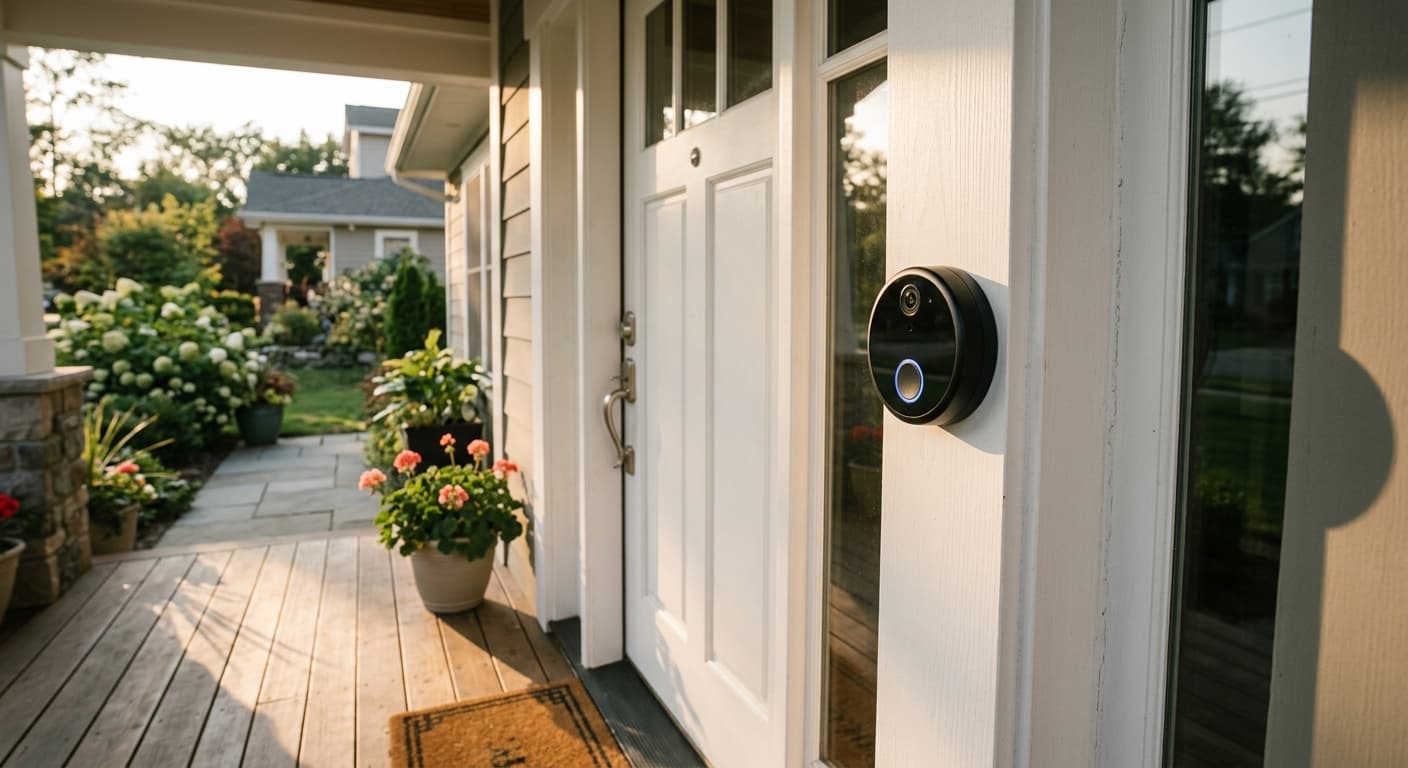
Nebraska residents installing Ring doorbell cameras operate under a legal framework that favors property owners. The state follows a one-party consent standard for audio recording under Neb. Rev. Stat. 86-290, meaning at least one person involved in a conversation needs to consent to the recording. Nebraska also enacted the Nebraska Data Privacy Act (effective January 1, 2025), adding a new layer of consumer data protections that affect how companies like Ring handle recorded footage.
Understanding how Nebraska law applies to Ring doorbells requires looking at three separate areas: the wiretapping statute governing audio, privacy laws governing video, and the practical rules around HOAs, landlords, and law enforcement access.

Audio Recording Laws and Ring Doorbells in Nebraska
Nebraska's wiretapping statute, Neb. Rev. Stat. 86-290, prohibits intercepting or recording wire, oral, or electronic communications without the consent of at least one party. This is the one-party consent standard, and it applies directly to Ring doorbell audio recording.
When you use your Ring doorbell's two-way talk feature to speak with a delivery driver, neighbor, or visitor, you are a party to that conversation. Your participation counts as consent under Nebraska law, so you can legally record that exchange.
The statute includes an important limitation: the recording cannot be made "for the purpose of committing any criminal or tortious act" (Neb. Rev. Stat. 86-290(2)(c)). Recording a conversation to use as evidence in a legitimate dispute is permitted. Recording a conversation to blackmail, harass, or intimidate someone is not.
Ambient Audio and Third-Party Conversations
Ring doorbells pick up ambient sounds continuously when motion is detected or the device is in live view mode. If your Ring doorbell records a conversation between two people standing on your porch where neither knows they are being recorded and you are not a party to the exchange, the one-party consent rule does not protect that recording.
However, Nebraska courts consider whether the speakers had a reasonable expectation of privacy. Conversations on a front porch visible from the street carry a lower expectation of privacy than conversations inside a home. The physical setting matters in determining whether a recording violates the statute.
Posting a visible sign near your Ring doorbell that states "Audio and Video Recording in Progress" further reduces legal risk by putting visitors on notice and undermining any claim that they expected privacy.
Video Recording Laws and Ring Doorbells
Nebraska does not have a broad statute prohibiting outdoor video surveillance on residential property. Recording video of your own porch, front walkway, driveway, and yard with a Ring doorbell is legal because those areas are visible to the public.
Voyeurism and Hidden Camera Protections (Neb. Rev. Stat. 28-311.08)
Nebraska's voyeurism statute, Neb. Rev. Stat. 28-311.08, provides specific protections against invasive recording. The law makes it a crime to:
- Knowingly intrude upon another person without consent in a place of solitude or seclusion (Class I misdemeanor; Class IV felony for second or subsequent offense)
- Knowingly photograph, film, or record an image of another person's intimate area without their knowledge and consent (Class IV felony)
- Distribute recordings made in violation of the statute without consent (Class IIA felony; Class II felony for third or subsequent offense)
This statute targets voyeuristic behavior rather than standard security cameras. A Ring doorbell recording your front porch does not violate Neb. Rev. Stat. 28-311.08. Knowingly using a camera to view or record someone in a state of undress, without their consent, in a place where they would intend to be undressed and have a reasonable expectation of privacy, such as a bathroom, could. So could knowingly and intentionally recording a person's intimate area, where it would not be generally visible to the public, without their knowledge and consent.
The penalty escalation for distribution offenses is severe. A Class IIA felony carries up to 20 years in prison, and a Class II felony (third or subsequent offense) carries 1 to 50 years.
Reasonable Expectation of Privacy
Nebraska courts apply the reasonable expectation of privacy standard when evaluating surveillance disputes. Areas visible from a public road or sidewalk generally carry no reasonable expectation of privacy. Enclosed backyards, bedrooms visible through windows, and similar spaces do carry that expectation.
Ring doorbell owners should keep the camera aimed at their own property. If the wide-angle lens captures a portion of a neighbor's yard or driveway, that is generally acceptable as long as the camera is not deliberately aimed to surveil private areas of a neighbor's property.

HOA Rules and Ring Doorbells in Nebraska
Nebraska does not have a comprehensive statute specifically regulating homeowners associations. HOAs in the state operate under their own governing documents (CC&Rs, bylaws, architectural guidelines) and are subject to general state laws including the Nebraska Condominium Property Act where applicable.
Architectural Review Requirements
Many Nebraska HOAs classify Ring doorbells as exterior modifications that require approval from an architectural review committee (ARC) before installation. Common HOA requirements include submitting a written application describing the device model and proposed location, following guidelines about camera color, size, and mounting method, avoiding placement that captures detailed views of common areas or neighboring units, and removing the device if approval is denied or the homeowner sells the property.
Homeowners who install a Ring doorbell without required ARC approval may face fines, mandatory removal, or liens against the property.
HOA Limitations
While Nebraska HOAs have broad authority through their CC&Rs, they cannot adopt rules that violate state or federal law. An HOA rule that required homeowners to record audio in common areas without consent would conflict with Neb. Rev. Stat. 86-290. Similarly, federal regulations prevent HOAs from completely prohibiting certain communication devices under the FCC's Over-the-Air Reception Devices (OTARD) rule, though this primarily applies to antennas and satellite dishes rather than doorbell cameras.
The flag protection homeowners often hear about is federal as well, not a Nebraska statute. The Freedom to Display the American Flag Act of 2005 provides that a condominium association, cooperative association, or residential real estate management association "may not adopt or enforce any policy, or enter into any agreement, that would restrict or prevent a member of the association from displaying the flag of the United States" on property the member owns or has an exclusive right to use, subject to the federal flag code and reasonable time, place, and manner rules. Nebraska has no comparable statute limiting HOA authority, and it is not a solar-access state: its solar provisions at Neb. Rev. Stat. 66-901 to 66-914 authorize voluntary solar agreements, easements, and local zoning variances rather than overriding restrictive covenants.
Landlord and Tenant Rights for Ring Doorbells
Nebraska's landlord-tenant laws (Neb. Rev. Stat. Chapter 76, Article 14) do not specifically address doorbell cameras. The legal framework depends on the lease agreement and general property law principles.
Tenant Installation
Tenants who want to install a Ring doorbell should check their lease for clauses about exterior modifications. If the lease prohibits alterations to the exterior of the property, a wired Ring doorbell that requires drilling into the door frame could be a lease violation. Battery-powered models with adhesive mounting may fall outside the scope of that restriction, but tenants should get written permission from the landlord before installation.
The Ring account and all footage belong to the person who created the account. If a tenant installs a Ring doorbell, the landlord has no right to access the recordings without the tenant's consent or a court order.
Landlord Installation
Landlords can install security cameras on exterior common areas of rental properties, including main entrances, parking lots, and shared hallways. Nebraska's one-party consent law (Neb. Rev. Stat. 86-290) still applies to audio recording, so a landlord-installed Ring doorbell with audio enabled in areas where tenants have private conversations raises legal concerns if no party has consented.
Landlords cannot place cameras inside a tenant's rental unit or in any area where the tenant has a reasonable expectation of privacy. Doing so could violate Neb. Rev. Stat. 28-311.08 and Nebraska's landlord access rules at Neb. Rev. Stat. 76-1423, which require at least twenty-four hours' written notice of an intent to enter and provide that the landlord "shall not abuse the right of access or use it to harass the tenant."

Law Enforcement Access to Ring Doorbell Footage in Nebraska
Nebraska law enforcement can obtain Ring doorbell footage through several legal channels, each with different requirements.
As of January 2024, Ring (owned by Amazon) requires law enforcement to present a warrant, subpoena, or court order before the company will release customer footage. Ring discontinued its previous practice of allowing police to request footage directly from users through the Neighbors app.
Nebraska police can still approach you in person and ask you to voluntarily share Ring footage. You have no legal obligation to comply with a voluntary request. If police present a valid search warrant signed by a Nebraska judge, compliance is required.
Federal law (18 U.S.C. 2702) permits Ring to disclose footage to law enforcement without a warrant in emergency situations involving imminent danger of death or serious physical injury. Ring evaluates each emergency request on a case-by-case basis.
The Nebraska Data Privacy Act
The Nebraska Data Privacy Act, which took effect on January 1, 2025, gives Nebraska consumers new rights over their personal data. While this law primarily targets businesses and data controllers, it affects how companies like Ring process and store Nebraska residents' footage data. Under the Act, consumers can request access to, correction of, or deletion of their personal data held by covered entities.

Penalties for Illegal Recording in Nebraska
Nebraska imposes significant penalties for recording violations:
| Offense | Classification | Maximum Prison | Maximum Fine |
|---|---|---|---|
| Illegal wiretapping (Neb. Rev. Stat. 86-290) | Class IV felony | 2 years + 12 months post-release supervision | $10,000 |
| Intrusion upon seclusion, first offense (28-311.08) | Class I misdemeanor | 1 year | $1,000 |
| Intrusion upon seclusion, second offense (28-311.08) | Class IV felony | 2 years | $10,000 |
| Recording intimate areas without consent (28-311.08) | Class IV felony | 2 years | $10,000 |
| Distributing illegal intimate recording (28-311.08) | Class IIA felony | 20 years | N/A |
Civil Liability
Beyond criminal penalties, Neb. Rev. Stat. 86-297 allows victims of illegal wiretapping to file a civil lawsuit. Available damages include the greater of actual damages suffered and any profits the violator made from the illegal recording, or statutory damages of whichever is greater between $100 per day of violation and $10,000, so a violation lasting more than 100 days can yield more than $10,000 in statutory damages. Victims can also recover reasonable attorney's fees and equitable and declaratory relief (including court orders to stop the recording). The statute of limitations for civil claims is two years from the date the victim discovered or had a reasonable opportunity to discover the violation.
How to Use a Ring Doorbell Legally in Nebraska
Nebraska's one-party consent standard is relatively permissive, but these practices help Ring doorbell owners stay well within the law:
Aim the camera at your own property. Point your Ring doorbell at your front door, porch, walkway, and driveway. Avoid angling the camera to capture detailed views of a neighbor's windows or private spaces. Use Ring's privacy zone feature to block out sensitive areas.
Post visible signage. A sign near your Ring doorbell stating "Audio and Video Recording in Progress" provides notice to visitors and reduces the likelihood of any privacy dispute. While Nebraska's one-party consent law does not require signage, it is a practical safeguard.
Check your HOA rules. Review your CC&Rs for language about exterior modifications or security cameras. Submit any required architectural review applications before installation to avoid fines.
Get written landlord permission. Tenants should confirm in writing that the landlord approves the installation before mounting a Ring doorbell, especially for models that require drilling.
Do not record for criminal purposes. Nebraska law specifically prohibits recordings made for the purpose of committing criminal or tortious acts. Keep your Ring doorbell's purpose focused on home security.
Manage footage responsibly. Avoid posting Ring footage on social media in ways that could violate someone's privacy. Be cautious about distributing footage that shows identifiable people in potentially embarrassing situations.
Review Ring's privacy settings. Periodically check your motion zone settings, audio toggle, and video sharing preferences. Ring updates its software and features regularly.
More Nebraska Laws
Nebraska has specific laws covering many areas that affect residents. These related guides provide detailed information on other legal topics in the state:
- Nebraska Recording Laws cover the full scope of one-party consent rules for phone calls, in-person conversations, and electronic communications.
- Nebraska Hit and Run Laws explain reporting requirements and penalties for leaving the scene of an accident.
- Nebraska Lemon Law outlines protections for buyers of defective new vehicles.
This article provides general legal information about Ring doorbell camera laws in Nebraska. Laws change, and their application depends on specific facts. Consult an attorney for advice specific to your situation. Information is current as of April 2026.
Frequently Asked Questions
Can I record audio with my Ring doorbell in Nebraska?
Nebraska is a one-party consent state under Neb. Rev. Stat. 86-290. If you are a party to the conversation (such as using two-way talk), your consent is sufficient. Recording conversations between third parties where no one has consented may violate the statute, though conversations in areas with no reasonable expectation of privacy receive less protection.
What are the penalties for illegal wiretapping in Nebraska?
Illegal wiretapping under Neb. Rev. Stat. 86-290 is a Class IV felony, carrying up to 2 years in prison, 12 months of post-release supervision, and fines up to $10,000. Victims can also file civil lawsuits under Neb. Rev. Stat. 86-297 for statutory damages of whichever is greater: $100 per day of violation or $10,000, so longer-running violations can yield more than $10,000.
Can my Nebraska HOA ban Ring doorbells?
Nebraska HOAs can regulate Ring doorbell installation through their CC&Rs and architectural review processes. They can require prior approval and set guidelines for placement and appearance. Whether a complete ban would be enforceable depends on the specific language in the governing documents.
Can my landlord access my Ring doorbell footage in Nebraska?
If you created the Ring account, you control the footage. Your landlord has no right to access your recordings without your voluntary consent or a valid court order. The Ring account belongs to the person who set it up, not the property owner.
Do Nebraska police need a warrant to get my Ring footage?
As of January 2024, Ring requires law enforcement to present a warrant, subpoena, or court order before releasing customer footage. Police can ask you to voluntarily share footage, but you have no obligation to do so. In narrow emergency situations, federal law allows Ring to disclose footage without a warrant.
Updates
Corrected our description of Nebraska's unlawful intrusion statute to reflect that it covers viewing or recording a person in a state of undress, or recording an intimate area, not merely aiming a camera at a window.
Corrected the Neb. Rev. Stat. 28-311.08 penalty summary to distinguish first-offense intrusion upon seclusion (a Class I misdemeanor) from recording an intimate area (a Class IV felony), reattributed the flag and antenna HOA protections to federal law and removed an unsupported Nebraska solar claim, and replaced the landlord habitability reference with Nebraska's landlord access statute, Neb. Rev. Stat. 76-1423.
Independently fact-checked against the cited primary sources; governing law re-checked for recent changes
Corrected the civil-damages description for Neb. Rev. Stat. 86-297: $10,000 is a statutory-damages floor (the greater of $100/day or $10,000), not a cap, so violations lasting more than 100 days can recover more than $10,000.
Governing law re-checked for recent changes
Reviewed and approved by an editor
The Law Behind This Article
This article rests on the statutory provisions below, held in our own legal record and retrieved from the official source. Tap a section to read the operative text.
Nebraska Revised Statutes, Chapter 86: TELECOMMUNICATIONS AND TECHNOLOGY
§ 86-290Unlawful acts; penaltyIn forcecited in 18 of our articles
(1) Except as otherwise specifically provided in sections 86-271 to 86-295, it is unlawful to: (a) Intentionally intercept, endeavor to intercept, or procure any other person to intercept or endeavor to intercept any wire, electronic, or oral communication; (b) Intentionally use, endeavor to use, or procure any other person to use or endeavor to use any electronic, mechanical, or other device to intercept any oral communication when (i) such device is affixed to, or otherwise transmits a signal through, a wire, cable, or other like connection used in wire communication or (ii) such device transmits communications by radio or interferes with the transmission of such communication; (c) Intentionally disclose or endeavor to disclose to any other person the contents of any wire, electronic, or oral communication, knowing or having reason to know that the information was obtained through the interception of a wire, electronic, or oral communication in violation of this subsection; (d) Intentionally use or endeavor to use the contents of any wire, electronic, or oral communication, knowing or having reason to know that the information was obtained through the interception of a wire,…
Official text (excerpt) · last checked 2026-09-24 · Read the full text in our law library · Verify at nebraskalegislature.gov
Cited in 3 court opinions in our collectionLatest citing opinion in our collection: 2022
Opinions citing this section in our collection:
- Hays v. Hays (Nebraska Court of Appeals 2022)“…to her. We address these arguments, in turn. Under Neb. Rev. Stat. § 86-290(2)(c) (Reissue 2016), “it is not unlawf…”
- Ades v. Omni Hotels Management Corp. (District Court, C.D. California 2014, 46 F. Supp. 3d 999)“…f the carrier or provider of such communication services.”' Neb.Rev.Stat. § 86-290(2)(a). Based on this provision, Omni co…”
- Lewton Ex Rel. Lewton v. Divingnzzo (District Court, D. Nebraska 2011, 772 F. Supp. 2d 1046)“…7) to exclude the recordings as illegally intercepted under Neb.Rev.Stat. § 86-290(a) (see Doc. 137-16 at p.…”
Identified automatically from the court opinions citing this section — not a ranking of which case controls.
Also relied on in: Nebraska Recording Laws (2026): One-Party Consent Rules, Nebraska Audio Recording Laws: One-Party Consent Rules and Penalties (2026), Nebraska Dashcam Laws: Mounting Rules, Audio Recording, and Evidence (2026)
§ 86-297Interception; civil actionIn forcecited in 10 of our articles
(1) Any person whose wire, electronic, or oral communication is intercepted, disclosed, or intentionally used in violation of sections 86-271 to 86-295 and 86-298 to 86-2,103 may in a civil action recover from the person or entity which engaged in that violation such relief as may be appropriate. (2) In an action under this section, appropriate relief includes: (a) Such preliminary and other equitable or declaratory relief as may be appropriate; (b) Damages under subsection (3) of this section; and (c) Reasonable attorney's fees and other litigation costs reasonably incurred. (3)(a) In an action under this section, if the conduct in violation of sections 86-271 to 86-295 and 86-298 to 86-2,103 is the private viewing of a private satellite video communication that is not scrambled or encrypted or if the communication is a radio communication that is transmitted on frequencies allocated for remote pickup broadcast stations under subpart D of 47 C.F.R.
Official text (excerpt) · last checked 2026-07-29 · Read the full text in our law library · Verify at nebraskalegislature.gov
Cited in 1 court opinions in our collectionLatest citing opinion in our collection: 2020
Opinions citing this section in our collection:
- Brumbaugh v. Bendorf (Nebraska Supreme Court 2020, 945 N.W.2d 116)“…warded under 18 U.S.C. § 2520 (2018) or Neb. Rev. Stat. § 86-297 (Reissue 2014) is addressed to the tria…”
Identified automatically from the court opinions citing this section — not a ranking of which case controls.
Also relied on in: Nebraska Phone Call Recording Laws: Consent Rules for Landline, Cell, and VoIP (2026), Nebraska Voyeurism Laws: Hidden Cameras, Penalties, and Privacy Protections (2026), Nebraska Smart Glasses Recording Laws 2026
§ 86-271Definitions, where foundIn force
For purposes of sections 86-271 to 86-2,115, unless the context otherwise requires, the definitions found in sections 86-272 to 86-289 apply.
Official text (excerpt) · last checked 2026-07-29 · Read the full text in our law library · Verify at nebraskalegislature.gov
Cited in 3 court opinions in our collectionLatest citing opinion in our collection: 2019
Opinions citing this section in our collection:
- State v. Knutson (Nebraska Supreme Court 2014, 288 Neb. 823)“…an expectation of privacy in these records. 39 See Neb. Rev. Stat. §§ 86-271 to 86-2,115 (Reissue 2008 & Cum. Supp.…”
- State v. Russell (Nebraska Court of Appeals 2018)“…e conversations and text messages” obtained in violation of Neb. Rev. Stat. §§ 86-271 to 86-296 (Reissue 2014) [intercepted c…”
- Russell v. Frakes (District Court, D. Nebraska 2019)“…e conversations and text messages obtained in violation of Neb. Rev. Stat. §§ 86-271 to 86-296 and the Fourth and Fourteent…”
Identified automatically from the court opinions citing this section — not a ranking of which case controls.
Nebraska Revised Statutes, Chapter 28: CRIMES AND PUNISHMENTS
§ 28-311.08Unlawful intrusion; photograph, film, or record image or video of intimate area; distribute or make public; penalty; court; duties; registration under Sex Offender Registration Act; statute of limitationsIn forcecited in 17 of our articles
(1) It shall be unlawful for any person to knowingly intrude upon any other person without his or her consent in a place of solitude or seclusion. Violation of this subsection is a Class I misdemeanor. A second or subsequent violation of this subsection is a Class IV felony. (2) It shall be unlawful for any person to knowingly and intentionally photograph, film, or otherwise record an image or video of the intimate area of any other person without his or her knowledge and consent when his or her intimate area would not be generally visible to the public regardless of whether such other person is located in a public or private place. Violation of this subsection is a Class IV felony. (3) It shall be unlawful for any person to knowingly and intentionally distribute or otherwise make public an image or video of another person recorded in violation of subsection (2) of this section without that person's consent. A first or second violation of this subsection is a Class IIA felony. A third or subsequent violation of this subsection is a Class II felony.
Official text (excerpt) · last checked 2026-08-31 · Read the full text in our law library · Verify at nebraskalegislature.gov
Cited in 4 court opinions in our collectionLatest citing opinion in our collection: 2024
Opinions citing this section in our collection:
- State v. McGovern (Nebraska Supreme Court 2022, 311 Neb. 705)“…62 See Riley v. California, supra note 5. 63 See Neb. Rev. Stat. § 28-311.08 (Reissue 2016 & Cum. Supp. 2020).…”
- State v. Zitterkopf (Nebraska Supreme Court 2024, 317 Neb. 312)“…unlawful distribution of an intimate image in violation of Neb. Rev. Stat. § 28-311.08(3) (Cum. Supp. 2022). Zitterkopf claims…”
- In Re Interest of Dustin S. (Nebraska Supreme Court 2008, 276 Neb. 635)“…le undressing would constitute a Class II misdemeanor under Neb. Rev.Stat. § 28-311.08 (Cum.Supp.2006). Therefore, Dustin is a…”
Identified automatically from the court opinions citing this section — not a ranking of which case controls.
Also relied on in: Nebraska Medical Recording Laws: Patient Rights, HIPAA, and Consent (2026), Nebraska Public Recording Laws: Filming in Public Spaces and Government Meetings (2026), Nebraska Security Camera Laws: Rules for Homes, Businesses, and HOAs (2026)
§ 28-105Felonies; classification of penalties; sentences; where served; eligibility for probationIn forcecited in 8 of our articles
(1) For purposes of the Nebraska Criminal Code and any statute passed by the Legislature after the date of passage of the code, felonies are divided into ten classes which are distinguished from one another by the following penalties which are authorized upon conviction: Class I felony Death Class IA felony Life imprisonment Class IB felony Maximum—life imprisonment Minimum—twenty years imprisonment Class IC felony Maximum—fifty years imprisonment Mandatory minimum—five years imprisonment Class ID felony Maximum—fifty years imprisonment Mandatory minimum—three years imprisonment Class II felony Maximum—fifty years imprisonment Minimum—one year imprisonment Class IIA felony Maximum—twenty years imprisonment Minimum—none Class III felony Maximum—four years imprisonment and two years post-release supervision or twenty-five thousand dollars fine, or both Minimum—none for imprisonment and none for post-release supervision Class IIIA felony Maximum—three years imprisonment and eighteen months post-release supervision or ten thousand dollars fine, or both Minimum—none for imprisonment and none for post-release supervision Class IV felony Maximum—two years imprisonment and twelve months…
Official text (excerpt) · last checked 2026-07-29 · Read the full text in our law library · Verify at nebraskalegislature.gov
Cited in 941 court opinions in our collectionLatest citing opinion in our collection: 2026
Opinions citing this section in our collection:
- State v. Iromuanya (Nebraska Supreme Court 2006, 272 Neb. 178)“…ar's imprisonment and a maximum of 50-years' imprisonment. Neb. Rev. Stat. § 28-105 (1) (Cum. Supp. 2004) and §§ 28-201(4)(…”
- State v. Stephens (Nebraska Supreme Court 1991, 237 Neb. 551)“…28-319(2), punishable by from 1 to 50 years’ imprisonment, Neb. Rev. Stat. § 28-105 (1) (Reissue 1985). Stephens’ sentence…”
- State v. Gibson (Nebraska Court of Appeals 2018, 26 Neb. Ct. App. 559)“…I felonies are punishable by 1 to 50 years' imprisonment. Neb. Rev. Stat. § 28-105 (Supp. 2017). Therefore, if the court…”
Identified automatically from the court opinions citing this section — not a ranking of which case controls.
Also relied on in: Nebraska Sexting Laws: Legal Consequences and Penalties, Nebraska Surveillance Camera Laws (2026 Guide), Nebraska Hit and Run Laws: Penalties and What to Do
United States Code Title 18
§ 2702Voluntary disclosure of customer communications or recordsIn forcecited in 19 of our articles
Except as provided in subsection (b) or (c)— a person or entity providing an electronic communication service to the public shall not knowingly divulge to any person or entity the contents of a communication while in electronic storage by that service; and a person or entity providing remote computing service to the public shall not knowingly divulge to any person or entity the contents of any communication which is carried or maintained on that service— on behalf of, and received by means of electronic transmission from (or created by means of computer processing of communications received by means of electronic transmission from), a subscriber or customer of such service; solely for the purpose of providing storage or computer processing services to such subscriber or customer, if the provider is not authorized to access the contents of any such communications for purposes of providing any services other than storage or computer processing; and a provider of remote computing service or electronic communication service to the public shall not knowingly divulge a record or other information pertaining to a subscriber to or customer of such service (not including the contents of…
Official text (excerpt) · last checked 2026-07-28 · Read the full text in our law library · Verify at uscode.house.gov
Cited in 259 court opinions in our collectionLatest citing opinion in our collection: 2026
In the courts (editorial summary, independently checked):Freeman v. Directv, Inc. (2006) held Sections 2702 and 2707 do not support secondary liability claims such as aiding and abetting or conspiracy. Alexander v. Verizon Wireless (2017) applied Section 2702(c)(4)'s emergency exception and found a provider's good-faith reliance on a law enforcement request a complete defense.
Opinions citing this section in our collection:
- Matthew Alexander v. Verizon Wireless Services, LL (Court of Appeals for the Fifth Circuit 2017, 875 F.3d 243)✓A detective sent Verizon a certified emergency form after an arson, and Verizon released the subscriber's non-content cell records; the Fifth Circuit applied an objective good faith standard to section 2702(c)(4) and held Verizon statutorily immune from the SCA suit.
- Doe 1 v. AOL LLC (Court of Appeals for the Ninth Circuit 2009, 552 F.3d 1077)“…rs, alleging violations of federal electronic privacy law, 18 U.S.C. § 2702 (a). A subclass of AOL members who are…”
- Freeman v. Directv, Inc. (Court of Appeals for the Ninth Circuit 2006, 457 F.3d 1001)✓Users whose message board posts were seized from a website operator and passed to DirecTV sued for aiding and abetting and conspiracy; the Ninth Circuit held sections 2702 and 2707 name who can be liable and do not support secondary liability, affirming dismissal.
Identified automatically from the court opinions citing this section — not a ranking of which case controls.
Also relied on in: Stored Communications Act Explained: 18 U.S.C. § 2701, Georgia Ring Doorbell Laws: What You Need to Know in 2026, Hawaii Ring Doorbell Laws: What You Need to Know in 2026
Nebraska Revised Statutes, Chapter 66: OILS, FUELS, AND ENERGY
§ 66-901Legislative findingsIn force
The Legislature hereby finds and declares that the use of solar energy and wind energy in Nebraska: (1) Can help reduce the nation's reliance upon irreplaceable domestic and imported fossil fuels; (2) can reduce air and water pollution resulting from the use of conventional energy sources; (3) requires effective legislation and efficient administration of state and local programs to be of greatest value to its citizens; and (4) is of such importance to the public health, safety, and welfare that the state should take appropriate action to encourage its use. As the use of solar energy and wind energy devices increases, the possibility of future shading and obstruction of such devices by structures or vegetation will also increase. The Legislature therefor declares that the purpose of sections 66-901 to 66-914 is to promote the public health, safety, and welfare by protecting access to solar energy and wind energy as provided in sections 66-901 to 66-914.
Official text (excerpt) · last checked 2026-07-29 · Read the full text in our law library · Verify at nebraskalegislature.gov
Cited in 1 court opinions in our collectionLatest citing opinion in our collection: 2020
Opinions citing this section in our collection:
- Laredo Ridge Wind, LLC v. Nebraska Public Power District (District Court, D. Nebraska 2020)“…should take appropriate action to encourage its use.” Neb. Rev. Stat. § 66-901. It is therefore in the public interes…”
Identified automatically from the court opinions citing this section — not a ranking of which case controls.
Nebraska Revised Statutes, Chapter 76: REAL PROPERTY
§ 76-1423AccessIn forcecited in 3 of our articles
(1) The tenant shall not unreasonably withhold consent to the landlord to enter into the dwelling unit in order to inspect the premises, make necessary or agreed repairs, decorations, alterations, or improvements, supply necessary or agreed services, or exhibit the dwelling unit to prospective or actual purchasers, mortgagees, tenants, workmen, or contractors. (2) The landlord may enter the dwelling unit without consent of the tenant in case of emergency. (3) The landlord shall not abuse the right of access or use it to harass the tenant. Except in case of emergency or if it is impracticable to do so, the landlord shall: (a) Give the tenant at least twenty-four hours' written notice of the landlord's intent to enter. Such notice shall be provided to each individual unit and include the intended purpose for entry and a reasonable period during which the landlord anticipates making entry; and (b) Enter only at reasonable times. (4) The landlord has no other right of access except by court order, as permitted by subsection (2) of section 76-1432, or if the tenant has abandoned or surrendered the premises.
Official text (excerpt) · last checked 2026-07-29 · Read the full text in our law library · Verify at nebraskalegislature.gov
Also relied on in: Nebraska Landlord-Tenant Recording Laws: Cameras, Audio, and Privacy Rights (2026), Nebraska Landlord-Tenant Laws (2026): Deposits, Notice, and Tenant Rights
Search our full record of US law — 2.1 million sections, every state + federal →
Sources and References
- Neb. Rev. Stat. 86-290 - Interception of Communications; Penalties(nebraskalegislature.gov).gov
- Neb. Rev. Stat. 86-297 - Interception; Civil Action(nebraskalegislature.gov).gov
- Neb. Rev. Stat. 28-311.08 - Voyeurism; Hidden Camera; Penalties(nebraskalegislature.gov).gov
- Neb. Rev. Stat. 28-105 - Felonies; Classification of Penalties(nebraskalegislature.gov).gov
- Neb. Rev. Stat. 86-271 - Definitions for Electronic Surveillance Act(nebraskalegislature.gov).gov
- Ring Law Enforcement Information Requests Policy(ring.com)
- Ring Law Enforcement Guidelines(ring.com)
- 18 U.S.C. 2702 - Voluntary Disclosure of Customer Communications(law.cornell.edu)
- Nebraska Data Privacy Act (LB 1074) Overview(whitecase.com)
- Nebraska Department of Justice - Tenants and Landlords Information(ago.nebraska.gov).gov
- Neb. Rev. Stat. 76-1423 - Landlord; Access to Dwelling Unit; Notice; Limitations(nebraskalegislature.gov)
- Freedom to Display the American Flag Act of 2005 (Pub. L. 109-243)(govinfo.gov)