
Colorado
Colorado Ring Doorbell Laws: What You Need to Know in 2026
Independently fact-checked against primary sources (last audited August 17, 2026). · Reviewed by the RecordingLaw editorial team. · Law checked current as of August 17, 2026. · 8 primary sources cited on this page. How we verify our legal content
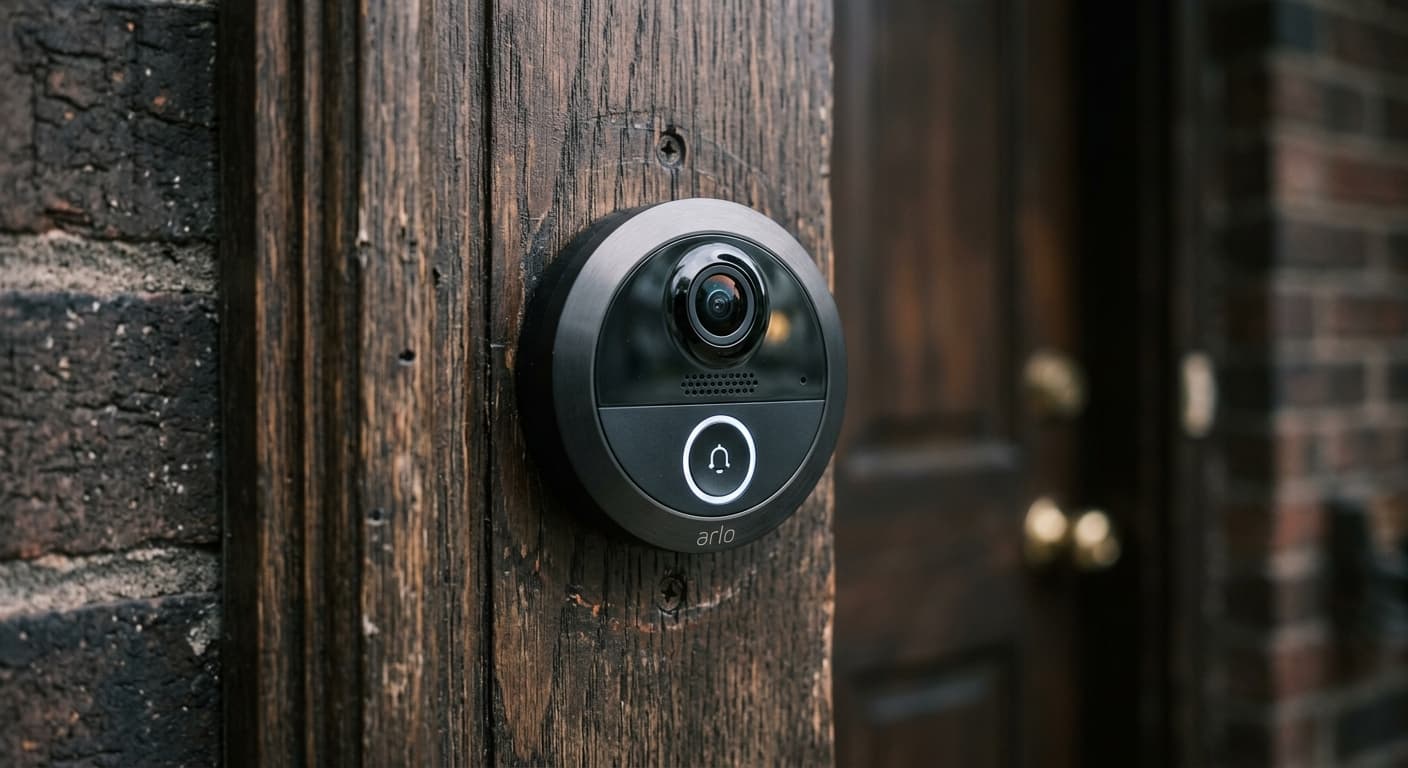
Colorado is a one-party consent state for audio recording, and its eavesdropping and wiretapping statutes sit toward the more lenient end of the national range. Wiretapping is a Class 2 misdemeanor under C.R.S. 18-9-303, the same classification as eavesdropping, punishable by up to 120 days in jail and a fine of up to $750. For offenses committed on or after March 1, 2022, Colorado divides misdemeanors into just two classes, and Class 2 is the lower of them. Colorado also has a specific statutory exception for security devices used on your own property, making it one of the few states that directly addresses doorbell camera scenarios in its wiretapping law. Understanding how these statutes apply to Ring doorbells is essential for every Colorado homeowner and renter.
Audio Recording Laws and Ring Doorbells in Colorado
Colorado addresses audio recording through two distinct statutes: the wiretapping law (C.R.S. 18-9-303) and the eavesdropping law (C.R.S. 18-9-304). Both are one-party consent statutes, but they cover different types of communications and carry different penalties.
C.R.S. 18-9-303: Wiretapping
Colorado's wiretapping statute prohibits knowingly overhearing or recording a telephone or electronic communication without the consent of at least one party. This law applies primarily to phone calls, emails, and electronic messages. Wiretapping is classified as a Class 2 misdemeanor, the same classification as eavesdropping under C.R.S. 18-9-304, carrying up to 120 days in jail and a fine of up to $750.
For Ring doorbells, the wiretapping statute becomes relevant when the device captures telephone conversations. If a visitor on your porch is talking on a cell phone and your Ring doorbell records that call, the wiretapping statute could apply since you are not a party to the phone conversation.

C.R.S. 18-9-304: Eavesdropping
The eavesdropping statute covers in-person oral communications. It prohibits any person "not visibly present during a conversation or discussion" from knowingly overhearing or recording that conversation without the consent of at least one principal party. Eavesdropping is a Class 2 misdemeanor, punishable by up to 120 days in jail and a fine of up to $750.
The "not visibly present" language is significant for Ring doorbell owners. When a homeowner is physically present at the door during a conversation, they are a principal party and their consent satisfies the one-party requirement. When the homeowner is away and the Ring doorbell automatically records audio of visitors' conversations, the homeowner is not "visibly present," which could bring the recording within the scope of C.R.S. 18-9-304.
The Security Device Exception: C.R.S. 18-9-305
Colorado law provides a critical exception that directly benefits Ring doorbell owners. C.R.S. 18-9-305 states that a person may use eavesdropping devices "on his own premises for security or business purposes" if "reasonable notice of the use of such devices is given to the public."
The provision is written as a scope exception rather than an affirmative defense. Its text says that nothing in the wiretapping and eavesdropping sections "shall be interpreted to prevent" the covered conduct, so where the exception applies the offense does not reach the conduct at all. Three conditions have to line up: the device is on the user's own premises, it serves a security or business purpose, and reasonable notice of its use is given to the public. A Ring doorbell mounted on the homeowner's own front door readily satisfies the first two. The third, reasonable notice, is the one that takes deliberate action: posting a visible sign or sticker alerting visitors that audio and video recording is in progress.
Colorado does not shift the burden of proof onto the accused here. Under C.R.S. 18-1-407, a defendant raising a defense need only "present some credible evidence on that issue," and once the issue is raised the prosecution must still establish guilt "beyond a reasonable doubt as to that issue as well as all other elements of the offense."
Without visible notice, the security device exception does not apply, and a Ring doorbell recording audio of visitors' conversations could violate C.R.S. 18-9-304. The Colorado Division of Real Estate has issued guidance emphasizing the importance of providing proper notice when audio and video surveillance devices are present on residential properties.
Video Recording Laws for Ring Doorbells
Colorado imposes fewer restrictions on video-only recording than on audio. There is no general prohibition on recording video in public spaces or areas visible from public view.
C.R.S. 18-7-801: Criminal Invasion of Privacy
Colorado's invasion of privacy statute prohibits knowingly observing or taking a photograph of another person's intimate parts without consent in a situation where the person has a reasonable expectation of privacy. This is a Class 2 misdemeanor.
This statute is narrower than it first appears. It is triggered only when the recording actually captures another person's intimate parts, as that term is defined in C.R.S. 18-3-401(2), in a situation where that person had a reasonable expectation of privacy. Aiming a camera so that it takes in a neighbor's yard, driveway, or window is not by itself criminal invasion of privacy under this section, and a standard doorbell camera capturing the porch, walkway, and public street would not trigger it. The exposure arises only in the unusual case where the camera records a person's intimate parts, for example through a bathroom or bedroom window.
C.R.S. 18-3-405.6: Invasion of Privacy for Sexual Gratification
A separate statute, C.R.S. 18-3-405.6, addresses invasion of privacy committed for sexual gratification purposes. This offense is a Class 1 misdemeanor, and it escalates to a Class 6 felony when the victim is under 15 or the offender has prior convictions for unlawful sexual behavior.
Reasonable Expectation of Privacy
Colorado courts follow the reasonable expectation of privacy standard. Areas visible from public spaces, including front porches, driveways, and unfenced front yards, generally carry no reasonable expectation of privacy. Fenced backyards, interior rooms visible through windows, and other secluded areas do.
Ring doorbell owners should confirm their camera's field of view captures only their own property and publicly visible areas. Ring's privacy zones feature allows users to block out specific areas of the camera's view, which can help avoid capturing neighboring private spaces.
HOA Rules and Ring Doorbells in Colorado
Colorado HOAs operate under the Colorado Common Interest Ownership Act (CCIOA, C.R.S. 38-33.3-101 et seq.), which establishes the legal framework for community associations. The CCIOA does not specifically address doorbell cameras, but its provisions on governance, rule-making, and property modifications apply.

Architectural Review Authority
Most Colorado HOAs require homeowners to obtain approval from an architectural review committee before making exterior modifications. Ring doorbell installation typically falls under this requirement. The HOA's governing documents, including CC&Rs and design guidelines, dictate the approval process and any restrictions.
Colorado legal experts have recommended that HOAs adopt specific policies addressing doorbell cameras rather than relying on general exterior modification rules. For single-family home communities, architectural review of doorbell cameras should generally focus on visual impact and community aesthetics. For condominium communities, associations may have broader authority to limit installations to doorbell-type systems that monitor front entries while minimizing impact to common elements.
Can a Colorado HOA Ban Ring Doorbells?
A blanket prohibition on all security cameras would be difficult for a Colorado HOA to justify. Under the CCIOA, HOA rules must be reasonable and consistently enforced. An outright ban on security devices could face legal challenge, particularly if the HOA allows other exterior modifications of similar visual impact.
However, HOAs can impose reasonable conditions, such as requiring architectural approval, limiting camera placement, mandating that audio recording be disabled in common areas, or specifying aesthetic standards for visible devices.
Landlord and Tenant Rights in Colorado
Colorado landlord-tenant law does not specifically address doorbell cameras, but several principles apply.

Tenant Installation
Tenants who want to install a Ring doorbell should obtain written landlord permission before making any exterior modifications. Most Colorado leases require approval for changes to the property's exterior, including drilling for mounting hardware. Battery-powered Ring models that avoid permanent modifications may face less resistance from landlords.
Landlord-Installed Cameras
Landlords who install surveillance cameras on rental properties, including Ring doorbells at building entries, must comply with Colorado's eavesdropping and wiretapping laws. Cameras in common areas are generally permissible if tenants are informed and the cameras do not capture private interior spaces. Audio recording requires compliance with C.R.S. 18-9-304 and the notice requirement of C.R.S. 18-9-305.
The Colorado Division of Real Estate has emphasized that audio surveillance on properties requires notice, and landlords who fail to inform tenants about surveillance devices risk liability under state wiretapping and eavesdropping laws.
Multi-Unit Considerations
In apartment buildings and condominiums, a Ring doorbell in a shared hallway captures activity involving multiple residents and their guests. Colorado's one-party consent rule does not protect recordings of conversations where the device owner is neither present nor a party to the discussion. Posting visible signage near the doorbell and, ideally, disabling audio recording in these settings reduces legal exposure.
Law Enforcement Access to Ring Footage in Colorado
Colorado law enforcement generally needs a warrant or subpoena to compel access to Ring doorbell footage. The Fourth Amendment to the U.S. Constitution and Article II, Section 7 of the Colorado Constitution protect against unreasonable searches and seizures.

How Police Can Obtain Footage
Law enforcement in Colorado can access Ring footage through several channels:
Voluntary sharing. Police can ask a Ring owner to share footage voluntarily. The homeowner is free to comply or decline, and no warrant is needed for voluntary disclosure.
Search warrant. A warrant issued by a Colorado court upon a showing of probable cause compels the homeowner or Ring/Amazon to provide specific footage. This is the most common method for obtaining footage the owner refuses to share.
Subpoena. A grand jury or prosecutorial subpoena can require disclosure of footage stored in the cloud by Ring/Amazon.
Exigent circumstances. In emergencies where immediate action is necessary to prevent harm or preserve evidence, police may access footage without a warrant. This exception is narrowly applied and subject to judicial review.
Ring's Changing Policies
In January 2024, Ring announced it would stop allowing police to request footage directly from users through its Neighbors app. However, in 2025, Ring's partnership with Axon introduced a new platform for law enforcement evidence requests, where users can opt in to share recordings. Ring still maintains an emergency disclosure exception for situations involving imminent danger of death or serious physical injury.
As of April 2026, Colorado has not enacted state-specific legislation governing law enforcement access to consumer doorbell camera footage.
Penalties for Illegal Recording in Colorado
Colorado treats illegal recording as a misdemeanor rather than a felony, which places it toward the more lenient end of the national range. Michigan, by contrast, makes eavesdropping on a private conversation a felony punishable by up to two years in state prison under MCL 750.539c. A Colorado conviction is still a criminal conviction carrying jail exposure, a fine, and a lasting record.
Wiretapping (C.R.S. 18-9-303): Class 2 misdemeanor. Up to 120 days in jail and a fine of up to $750, the same classification and penalty range as eavesdropping.
Eavesdropping (C.R.S. 18-9-304): Class 2 misdemeanor. Up to 120 days in jail and a fine of up to $750.
Criminal invasion of privacy (C.R.S. 18-7-801): Class 2 misdemeanor. Up to 120 days in jail and a fine of up to $750.
Invasion of privacy for sexual gratification (C.R.S. 18-3-405.6): Class 1 misdemeanor (up to 364 days in jail), escalating to a Class 6 felony for offenses involving minors or repeat offenders.
Civil liability: Individuals whose privacy has been violated may also pursue civil damages in Colorado courts, including claims for invasion of privacy and intentional infliction of emotional distress.
Federal penalties: The FTC's 2023 enforcement action against Ring resulted in a $5.8 million settlement and required Ring to delete improperly obtained data and implement stronger privacy controls.
How to Use a Ring Doorbell Legally in Colorado
Colorado's security device exception in C.R.S. 18-9-305 provides a clear path for legal Ring doorbell use, but it requires proactive steps.
Post visible notice of recording. This is the most important step for Colorado residents. C.R.S. 18-9-305 requires "reasonable notice" to the public to invoke the security device exception. Place a clearly visible sign or sticker near the doorbell stating that audio and video recording is in progress. Without this notice, the exception does not apply.
Aim the camera at your property and public areas. Confirm the Ring doorbell captures your porch, walkway, and driveway, not your neighbor's windows or fenced backyard. Use Ring's privacy zones to exclude neighboring private spaces.
Consider disabling audio for automated recordings. When you are home and interacting with visitors through the Ring doorbell, one-party consent protects the audio recording. When you are away and the device records automatically, the "not visibly present" language of C.R.S. 18-9-304 creates uncertainty. Disabling audio for motion-activated recordings eliminates this risk.
Get HOA approval. If you live in an HOA community, submit a request to your architectural review committee before installation. Include details about the device's appearance, placement, and field of view.
Get landlord permission in writing. Tenants should document landlord approval before installing a Ring doorbell, specifying the installation method, location, and removal obligations.
Enable end-to-end encryption and two-factor authentication. Following the FTC's 2023 findings about Ring's security failures, enabling these features protects your footage from unauthorized access.
More Colorado Laws
Colorado has laws addressing many aspects of daily life. Here are other Colorado legal guides on RecordingLaw.com:
- Colorado Recording Laws covers the full scope of one-party consent rules.
- Colorado Security Camera Laws addresses broader video surveillance regulations.
- Colorado Audio Recording Laws explains audio consent requirements.
- Colorado Video Recording Laws details video-specific rules.
- Colorado Landlord-Tenant Recording Laws addresses surveillance in rental properties.
- Colorado Data Privacy Laws covers the Colorado Privacy Act.
- Colorado Hit and Run Laws covers accident reporting obligations.
- Colorado Lemon Laws explains vehicle warranty protections.
This article provides general legal information about Ring doorbell laws in Colorado, not legal advice. Laws and their interpretations can change. Consult an attorney for advice specific to your situation.
Frequently Asked Questions
Is it legal to use a Ring doorbell in Colorado?
Yes. Ring doorbells are legal in Colorado. The state is a one-party consent jurisdiction, and C.R.S. 18-9-305 specifically allows eavesdropping devices on your own premises for security purposes if you provide reasonable notice to the public. Posting a visible sign indicating audio and video recording is the key compliance step.
Does Colorado require me to post a sign about my Ring doorbell?
Colorado's security device exception under C.R.S. 18-9-305 requires reasonable notice to the public to apply. While there is no specific sign format required by law, posting a clearly visible notice near the doorbell that states audio and video recording is in progress satisfies this requirement and invokes the statutory protection.
Is wiretapping a felony in Colorado?
No. Wiretapping under C.R.S. 18-9-303 is a Class 2 misdemeanor in Colorado, punishable by up to 120 days in jail and a fine of up to $750. This applies primarily to intercepting phone and electronic communications. Eavesdropping on in-person conversations under C.R.S. 18-9-304 carries the same Class 2 misdemeanor classification.
Can my Colorado HOA ban Ring doorbells?
A blanket ban on all security cameras would be difficult for a Colorado HOA to justify under the CCIOA. However, HOAs can impose reasonable restrictions on camera placement, require architectural review approval, and mandate conditions like disabling audio recording in common areas. Review your HOA's CC&Rs and submit a formal request before installing.
Do Colorado police need a warrant for my Ring footage?
Generally, yes. Colorado law enforcement typically needs a search warrant or subpoena to compel access to Ring footage. Police can ask for voluntary sharing at any time, and homeowners can choose to comply or refuse. Ring's emergency disclosure exception allows footage release without consent in cases involving imminent danger of death or serious physical injury.
Updates
Corrected the article's characterization of Colorado's recording penalties, which described them as among the steepest in the country when a class 2 misdemeanor is the lower of Colorado's two misdemeanor classes; corrected the description of the C.R.S. 18-9-305 security-device provision, which is a statutory exception rather than an affirmative defense that shifts the burden of proof onto the camera owner; and narrowed the description of C.R.S. 18-7-801 to the intimate-parts element the statute actually requires.
No corrections needed. The page's description of Ring's 2025 partnership with Axon for voluntary law enforcement footage requests was independently re-verified as accurate; an earlier automated review had incorrectly flagged it as fabricated.
Independently fact-checked against the cited primary sources; governing law re-checked for recent changes
Corrected wiretapping under C.R.S. 18-9-303: it is a Class 2 misdemeanor (identical to eavesdropping), not the fabricated Class 6 felony this page previously stated; also removed the repealed cordless-telephone carve-out.
Governing law re-checked for recent changes
Reviewed and approved by an editor
The Law Behind This Article
This article rests on the statutory provisions below, held in our own legal record and retrieved from the official source. Tap a section to read the operative text.
Colorado Revised Statutes, Title 18: Criminal Code
§ 18-9-304Eavesdropping prohibited - penaltyIn forcecited in 17 of our articles
(1) Any person not visibly present during a conversation or discussion commits eavesdropping if he: (a) Knowingly overhears or records such conversation or discussion without the consent of at least one of the principal parties thereto, or attempts to do so; or (b) Intentionally overhears or records such conversation or discussion for the purpose of committing, aiding, or abetting the commission of an unlawful act; or (c) Knowingly uses for any purpose, discloses, or attempts to use or disclose to any other person the contents of any such conversation or discussion while knowing or having reason to know the information was obtained in violation of this section; or (d) Knowingly aids, authorizes, agrees with, employs, permits, or intentionally conspires with any person to violate the provisions of this section. (2) Eavesdropping is a class 2 misdemeanor.
Official text (excerpt) · last checked 2026-09-23 · Read the full text in our law library · Verify at olls.info
Also relied on in: Colorado Security Camera Laws: Residential, Commercial, and Privacy Rules, Colorado Audio Recording Laws: One-Party Consent Rules and Penalties, Colorado Medical Recording Laws: Patient Rights, HIPAA, and Provider Rules
§ 18-9-305ExceptionsIn forcecited in 4 of our articles
(1) Nothing in sections 18-9-302 to 18-9-304 shall be interpreted to prevent a news agency, or an employee thereof, from using the accepted tools and equipment of that news medium in the course of reporting or investigating a public and newsworthy event; nor shall said sections prevent any person from using wiretapping or eavesdropping devices on his own premises for security or business purposes if reasonable notice of the use of such devices is given to the public. (2) No part of sections 18-9-302 to 18-9-304 shall apply to the normal use of services, facilities, and equipment provided by a provider of wire or electronic communication service pursuant to its tariffs on file with the public utilities commission of the state of Colorado and with the federal communications commission; and said sections shall not apply to the normal functions of any operator of a switchboard nor to any officer, agent, or employee of a provider of wire or electronic communication service or other person engaged in the business of providing service, equipment, and facilities for communication who performs an otherwise prohibited act if such act is necessary to provide the communication services,…
Official text (excerpt) · last checked 2026-07-29 · Read the full text in our law library · Verify at olls.info
Also relied on in: Colorado Phone Call Recording Laws: One-Party Consent and Interstate Rules, Colorado Recording Laws (2026): One-Party Consent Rules
§ 18-9-303Wiretapping prohibited - penaltyIn forcecited in 18 of our articles
(1) Any person not a sender or intended receiver of a telephone or telegraph communication commits wiretapping if he: (a) Knowingly overhears, reads, takes, copies, or records a telephone, telegraph, or electronic communication without the consent of either a sender or a receiver thereof or attempts to do so; or (b) Intentionally overhears, reads, takes, copies, or records a telephone, telegraph, or electronic communication for the purpose of committing or aiding or abetting the commission of an unlawful act; or (c) Knowingly uses for any purpose or discloses to any person the contents of any such communication, or attempts to do so, while knowing or having reason to know the information was obtained in violation of this section; or (d) Knowingly taps or makes any connection with any telephone or telegraph line, wire, cable, or instrument belonging to another or with any electronic, mechanical, or other device belonging to another or installs any device whether connected or not which permits the interception of messages; or (e) Repealed.
Official text (excerpt) · last checked 2026-08-28 · Read the full text in our law library · Verify at olls.info
Cited in 4 court opinions in our collectionLatest citing opinion in our collection: 2001
Opinions citing this section in our collection:
- Bartnicki v. Vopper (Supreme Court of the United States 2001, 532 U.S. 514)“…5-60-120 (1997); Cal. Penal Code Ann. §631 (West 1999); Colo. Rev. Stat. §18-9-303 (2000); Del. Code Ann., Tit. 11, § 133…”
- Boehner, John A. v. McDermott, James A. (Court of Appeals for the D.C. Circuit 1999, 191 F.3d 463)“…oncert with them); Cal.Penal Code §§ 631, 632 (West 1999); Colo. Rev. Stat. § 18-9-303 (1986 & Supp.1995); Conn. Gen. Stat. §…”
- Sequa Corp. v. Lititech, Inc. (District Court, D. Colorado 1992, 807 F. Supp. 653)“…Menaman. Defendants rely on Colorado’s wiretapping statute, C.R.S. § 18-9-303, which provides in relevant part:…”
Identified automatically from the court opinions citing this section — not a ranking of which case controls.
Also relied on in: Colorado Dashcam Laws: Legality, Mounting Rules, and Evidence Use, Colorado Landlord-Tenant Recording Laws: Cameras, Privacy, and Rights, Colorado Laws on Recording Police: Rights, Protections, and Body Cameras
§ 18-7-801Criminal invasion of privacyIn forcecited in 13 of our articles
(1) A person who knowingly observes or takes a photograph of another person's intimate parts, as defined in section 18-3-401 (2), without that person's consent, in a situation where the person observed or photographed has a reasonable expectation of privacy, commits criminal invasion of privacy. (2) Criminal invasion of privacy is a class 2 misdemeanor. (3) For the purposes of this section, photograph includes a photograph, motion picture, videotape, live feed, print, negative, slide, or other mechanically, electronically, digitally, or chemically reproduced visual material.
Official text (excerpt) · last checked 2026-08-31 · Read the full text in our law library · Verify at olls.info
Also relied on in: Colorado School Recording Laws: Classrooms, IEP Meetings, and Surveillance, Colorado Video Recording Laws: What Is Legal and What Is Not, Colorado Workplace Recording Laws: Employee and Employer Rights
§ 18-3-405.6Invasion of privacy for sexual gratificationIn forcecited in 10 of our articles
(1) A person who knowingly observes or takes a photograph of another person's intimate parts without that person's consent, in a situation where the person observed or photographed has a reasonable expectation of privacy, for the purpose of the observer's own sexual gratification, commits unlawful invasion of privacy for sexual gratification. (2) (a) Except as otherwise provided in subsection (2)(b) of this section, invasion of privacy for sexual gratification is a class 1 misdemeanor. (b) Invasion of privacy for sexual gratification is a class 6 felony and is an extraordinary risk crime subject to the modified sentencing range specified in section 18-1.3-401 (10) if either of the following circumstances exist: (I) The offense is committed subsequent to a prior conviction, as defined in section 16-22-102 (3), C.R.S., for unlawful sexual behavior as defined in section 16-22-102 (9), C.R.S.; or (II) The person observes or takes a photograph of the intimate parts of a person under fifteen years of age. This subparagraph (II) shall not apply if the defendant is less than four years older than the person observed or photographed.
Official text (excerpt) · last checked 2026-07-29 · Read the full text in our law library · Verify at olls.info
Cited in 1 court opinions in our collectionLatest citing opinion in our collection: 2026
Opinions citing this section in our collection:
- United States v. Watkins (Court of Appeals for the Tenth Circuit 2026)“…n part),2 Ark. Code Ann. § 5-71-213; Cal. Penal Code § 647; Colo. Rev. Stat. § 18-3-405.6;2 Colo. Rev. Stat. § 18-7-801;2 Conn. G…”
Identified automatically from the court opinions citing this section — not a ranking of which case controls.
Also relied on in: Colorado Voyeurism and Hidden Camera Laws: Offenses, Penalties, and Protections, Colorado Smart Glasses Recording Laws 2026, Colorado Surveillance Camera Laws (2026 Guide)
§ 18-1-407Affirmative defenseIn force
(1) Affirmative defense means that unless the state's evidence raises the issue involving the alleged defense, the defendant, to raise the issue, shall present some credible evidence on that issue. (2) If the issue involved in an affirmative defense is raised, then the guilt of the defendant must be established beyond a reasonable doubt as to that issue as well as all other elements of the offense.
Official text (excerpt) · last checked 2026-07-29 · Read the full text in our law library · Verify at olls.info
Cited in 3 court opinions in our collectionLatest citing opinion in our collection: 2009
Opinions citing this section in our collection:
- Planned Parenthood of the Rocky Mountains Services Corp. v. Owens (District Court, D. Colorado 2000, 107 F. Supp. 2d 1271)“…old burden to provide some credible evidence on that issue. Colo.Rev.Stat. § 18-1-407; People v. Janes, 982 P.2d 300, 303…”
- PLANNED PARENTHOOD, ROCKY MOUNTAINS SERV. CORP. v. Owens (District Court, D. Colorado 2000, 107 F. Supp. 2d 1271)“…old burden to provide some credible evidence on that issue. Colo.Rev.Stat. § 18-1-407; People v. Janes, 982 P.2d 300, 303…”
- DelMonico v. Capito (Court of Appeals for the Tenth Circuit 2009, 356 F. App'x 144)“…port it. Cassels v. People, 92 P.3d 951, 956 (Colo. 2004); Colo. Rev. Stat. § 18-1-407(1). Plaintiff fails to show that Ms. R…”
Identified automatically from the court opinions citing this section — not a ranking of which case controls.
§ 18-1.3-501Misdemeanors classified - drug misdemeanors and drug petty offenses classified - penalties - legislative intent - definitionsIn forcecited in 4 of our articles
(1) (a) Except as otherwise provided in subsection (1)(d) of this section, for offenses committed prior to March 1, 2022, misdemeanors are divided into three classes that are distinguished from one another by the following penalties that are authorized upon conviction except as provided in subsection (1.5) of this section: Class Minimum Sentence Maximum Sentence 1 Six months imprisonment, or five Eighteen months imprisonment, hundred dollar fine, or both or five thousand dollar fine, or both 2 Three months imprisonment, or two Three hundred sixty-four days imprisonment, hundred fifty dollar fine, or both or one thousand dollar fine, or both 3 Fifty dollar fine Six months imprisonment, or seven hundred fifty dollar fine, or both (a.5) Except as otherwise provided in subsection (1)(d) of this section, for offenses committed on or after March 1, 2022, misdemeanors are divided into two classes that are distinguished from one another by the following penalties that are authorized upon conviction: Class Maximum Sentence 1 364 days imprisonment, not more than a one thousand dollar fine, or both 2 120 days imprisonment, not more than a seven hundred fifty dollar fine, or…
Official text (excerpt) · last checked 2026-07-29 · Read the full text in our law library · Verify at olls.info
Also relied on in: Colorado Dog Bite Laws: Liability and Victim Rights, Colorado Whistleblower Laws: Protections and How to Report
§ 18-3-401DefinitionsIn forcecited in 2 of our articles
As used in this part 4, unless the context otherwise requires: (1) Actor means the person accused of a sexual offense pursuant to this part 4. (1.5) Consent means cooperation in act or attitude pursuant to an exercise of free will and with knowledge of the nature of the act. A current or previous relationship shall not be sufficient to constitute consent under the provisions of this part 4. Submission under the influence of fear shall not constitute consent. Nothing in this definition shall be construed to affect the admissibility of evidence or the burden of proof in regard to the issue of consent under this part 4. (1.7) Diagnostic test means a human immunodeficiency virus (HIV) screening test followed by a supplemental HIV test for confirmation in those instances when the HIV screening test is repeatedly reactive. (2) Intimate parts means the external genitalia or the perineum or the anus or the buttocks or the pubes or the breast of any person. (2.4) Medical-reporting victim means a victim who seeks medical treatment services following a sexual assault but who elects not to participate in the criminal justice system at the time the victim receives medical services.
Official text (excerpt) · last checked 2026-07-29 · Read the full text in our law library · Verify at olls.info
Cited in 11 court opinions in our collectionLatest citing opinion in our collection: 2026
Opinions citing this section in our collection:
- Abbott v. County Court of the Fourteenth Judicial District in & for the County of Grand (Supreme Court of Colorado 1994, 18 Brief Times Rptr. 2152)“…ch in this case [was] not sufficiently specific pursuant to C.R.S. § 18-3-401(4)." [8] Rule 106 review is limited…”
- United States v. De La Cruz-Garcia (Court of Appeals for the Tenth Circuit 2010, 590 F.3d 1157)“…r the purposes of sexual arousal, gratification, or abuse. Colo. Rev. Stat. § 18-3-401(4). We hold that the Colorado s…”
- United States v. Austin (Court of Appeals for the Tenth Circuit 2005, 426 F.3d 1266)“…purposes of sexual arousal, gratification, or abuse. Colo. Rev. Stat. § 18-3-401(4). A corresponding statute entitled “U…”
Identified automatically from the court opinions citing this section — not a ranking of which case controls.
Also relied on in: Colorado Age of Consent Laws: Statutes, Penalties and Reporting
Colorado Revised Statutes, Title 38: Property - Real and Personal
§ 38-33.3-101Short titleIn force
This article shall be known and may be cited as the Colorado Common Interest Ownership Act.
Official text (excerpt) · last checked 2026-07-29 · Read the full text in our law library · Verify at olls.info
Michigan Compiled Laws
§ 750.539cEavesdropping upon private conversationIn forcecited in 44 of our articles
Any person who is present or who is not present during a private conversation and who wilfully uses any device to eavesdrop upon the conversation without the consent of all parties thereto, or who knowingly aids, employs or procures another person to do the same in violation of this section, is guilty of a felony punishable by imprisonment in a state prison for not more than 2 years or by a fine of not more than $2,000.00, or both.
Official text (excerpt) · last checked 2026-09-24 · Read the full text in our law library · Verify at legislature.mi.gov
Cited in 32 court opinions in our collectionLatest citing opinion in our collection: 2025
In the courts (editorial summary, independently checked):Michigan courts read MCL 750.539c to reach third-party eavesdropping only. Sullivan v. Gray (1982) held the statutory phrase "private discourse of others" excludes recording by a participant in the conversation; People v. Lucas (1991) held an officer who answered an arrestee's ringing car phone did not violate the section.
Opinions citing this section in our collection:
- People v. Lucas (Michigan Court of Appeals 1991, 188 Mich. App. 554)✓Police answering the arrested defendant's ringing car phone took drug-purchase calls and testified to them; the court held the officer was not an eavesdropper because there was no private discourse between the sender and some other receiver, so MCL 750.539c was not violated.
- Sullivan v. Gray (Michigan Court of Appeals 1982, 117 Mich. App. 476)✓A party to a phone call about a failed car dealership sale secretly taped it and the transcript was used in later litigation; reading the statute to reach only the private discourse of others, the court held participant recording is not eavesdropping under MCL 750.539c.
- People v. Warner (Michigan Supreme Court 1977, 401 Mich. 186)✓A motel switchboard operator deliberately listened in on a guest's call and reported it to police; the court held her willful eavesdropping violated MCL 750.539c, but the defendant, not shown to be a party to the call, had no standing to suppress the resulting evidence.
Identified automatically from the court opinions citing this section — not a ranking of which case controls.
Also relied on in: Michigan Landlord-Tenant Recording Laws: Surveillance, Privacy, and Tenant Rights (2026), Michigan Security Camera Laws: Rules for Homes, Businesses, and Neighbors (2026), Michigan Dashcam Laws: Windshield Rules, Audio Recording, and Legal Use (2026)
Search our full record of US law — 2.1 million sections, every state + federal →
Sources and References
- C.R.S. 18-9-303 - Wiretapping Prohibited(leg.colorado.gov).gov
- C.R.S. 18-9-304 - Eavesdropping Prohibited(leg.colorado.gov).gov
- C.R.S. 18-9-305 - Exceptions (Security Device on Own Premises)(leg.colorado.gov).gov
- C.R.S. 18-7-801 - Criminal Invasion of Privacy(leg.colorado.gov).gov
- Colorado Division of Real Estate - Audio and Video Surveillance in Properties(dre.colorado.gov).gov
- Colorado Common Interest Ownership Act (CCIOA) - C.R.S. 38-33.3-101 et seq.(leg.colorado.gov).gov
- FTC v. Ring LLC - Settlement and Enforcement Action(ftc.gov).gov
- Ring Law Enforcement Information Requests Policy(ring.com)
- Colorado Constitution, Article II, Section 7 - Security of Person and Property(leg.colorado.gov).gov
- C.R.S. 18-1.3-501 - Misdemeanors Classified and Penalties (Class 2: 120 days, $750)(content.leg.colorado.gov)
- MCL 750.539c - Michigan Eavesdropping Upon Private Conversation (felony, up to 2 years)(legislature.mi.gov)