
New Jersey
New Jersey Fireworks Laws (2026): Novelties-Only, Age 16
Independently fact-checked against primary sources (last audited September 18, 2026). · 5 primary sources cited on this page. How we verify our legal content
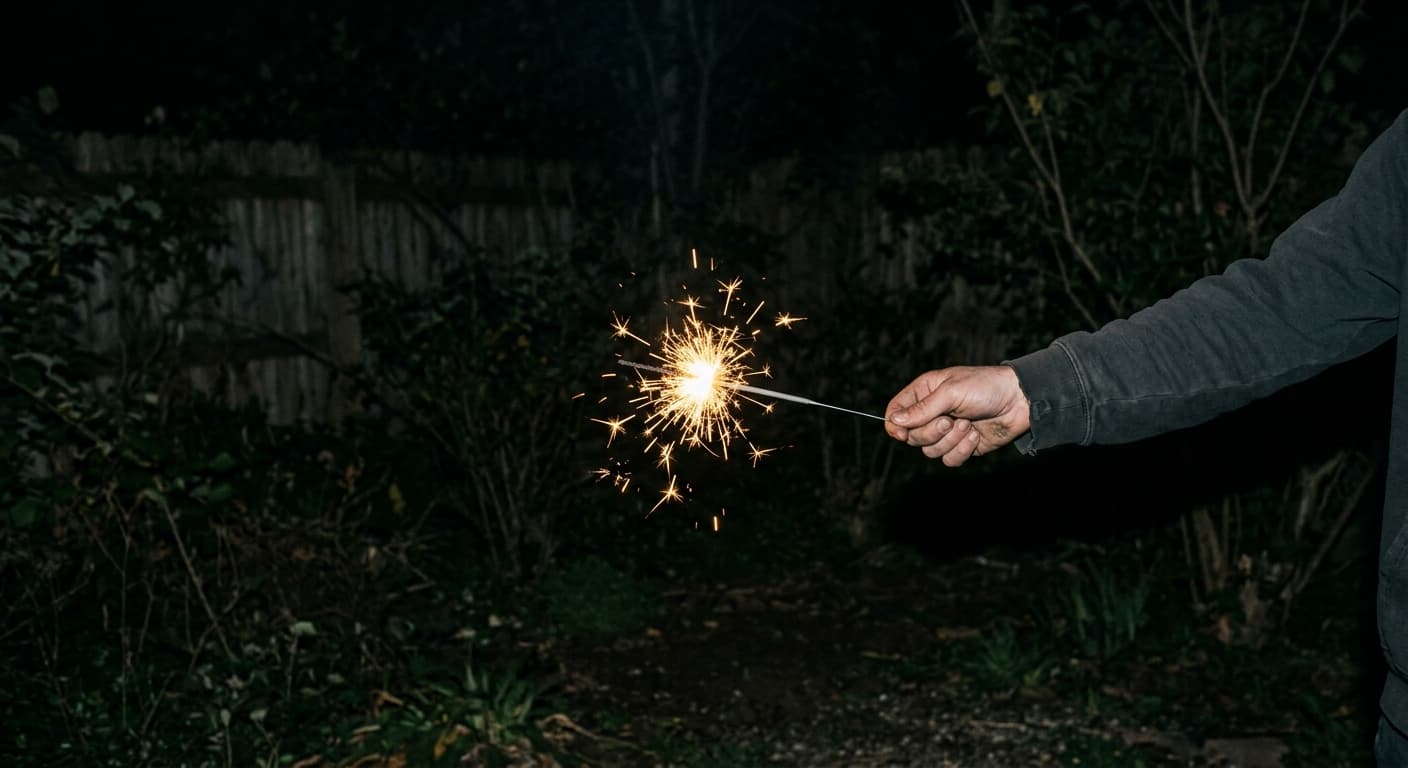
New Jersey is a novelties-only state. Its Fireworks Regulation Act bans essentially everything most people picture when they hear "fireworks," from firecrackers to Roman candles to skyrockets, but carves out a narrow, specifically defined category of ground-based "sparkling devices and novelties" that anyone 16 or older may buy, possess, and use without a permit.
Jurisdiction scope: This article covers New Jersey's state-level fireworks framework under the Fireworks Regulation Act, N.J.S.A. Title 21, Chapters 2 and 3, including the sparkling-devices-and-novelties carve-out, the banned-fireworks category, the age-16 rule, the municipal permit process for public displays, and penalties. Storage and sale standards under the incorporated NFPA 1124 code are noted but not reproduced in full; a retailer should consult that code directly.
New Jersey Bans "Fireworks," Then Carves Out Novelties
New Jersey's starting point is a ban. The statute makes it unlawful to sell, possess, or use nearly everything the word "fireworks" typically covers:
It shall be unlawful for any person to offer for sale, expose for sale, sell, possess or use, or explode any blank cartridge, toy pistol, toy cannon, toy cane or toy gun in which explosives are used... firecrackers; torpedoes; skyrockets, Roman candles, bombs, or other fireworks of like construction... other than aviation and railroad signal light flares.
N.J.S.A. 21:3-2(a)
Out of that ban, the same statute lawfully permits one narrow, specifically defined category:
Notwithstanding subsection a. of this section, it shall be lawful for a person to offer for sale, expose for sale, sell, store, possess, or use... sparkling devices and novelties as defined in R.S.21:2-2 if the person is 16 years of age or older.
N.J.S.A. 21:3-2(b)(2)
What Counts as "Sparkling Devices and Novelties"
The statute defines the lawful category by three specific sub-types, each with its own weight or composition cap:
"Sparkling devices and novelties" mean: a. wood sticks or wire sparklers of not more than 100 grams of pyrotechnic mixture per item; b. hand held or ground based sparkling devices which are non-explosive and non-aerial, which may produce a crackling or whistling effect, and contain 75 grams or less of pyrotechnic composition per tube or a total of 500 grams or less for multiple tubes; and c. snakes and glow worms, smoke devices, and trick noisemakers, which include party poppers, snappers, and drop pops, each consisting of 25/100 grains or less of explosive mixture.
N.J.S.A. 21:2-2
A fourth toy-cap category is capped separately: a toy pistol, cane, or gun using paper or plastic caps with 0.25 grain or less of explosive compound per cap, or paper or plastic toy-pistol caps with less than 0.20 grain of explosive mixture per cap, under N.J.S.A. 21:3-2(b)(1). Nothing here is aerial. New Jersey's lawful category is ground-based sparklers, crackling or whistling novelties, and smoke or noise items, not the broader consumer-fireworks class some neighboring states allow.
Dangerous Fireworks: Banned With No Exception
A separately defined "dangerous fireworks" subclass sits entirely outside the lawful carve-out and cannot be manufactured, sold, transported, or used anywhere in the state:
It shall be unlawful to manufacture, sell, transport or use dangerous fireworks within the state.
N.J.S.A. 21:2-6
That subclass includes toy torpedoes with more than 5 grains of explosive, paper caps exceeding 0.35 grain, firecrackers or salutes longer than 5 inches or wider than 3/4 inch, cannons or pistols that do not use paper caps, and anything containing yellow or white phosphorus, mercury, or a detonator or blasting cap. N.J.S.A. 21:2-6 itself carries no exception at all; the aviation-and-railroad-signal-light-flare carve-out belongs to the separate general fireworks ban at N.J.S.A. 21:3-2(a), not to the dangerous-fireworks subclass.
Age Minimum: 16 for Sparkling Devices and Novelties
The same subsection that legalizes sparkling devices and novelties sets the age floor for buying, possessing, or using them:
Notwithstanding subsection a. of this section, it shall be lawful for a person to offer for sale, expose for sale, sell, store, possess, or use... sparkling devices and novelties as defined in R.S.21:2-2 if the person is 16 years of age or older.
N.J.S.A. 21:3-2(b)(2)
No separate state purchase permit is required beyond that age floor. N.J.S.A. 21:3-8, 21:3-2, and 21:2-2, as searched, do not set out a specific penalty section for selling sparkling devices or novelties to someone under 16, as distinct from the fourth-degree-crime and petty-disorderly-persons penalties in N.J.S.A. 21:3-8, which by their terms cover the banned fireworks category.
Sale and Use Windows
No statewide calendar sale-date or use-date window applies to sparkling devices and novelties. The sections governing sale, possession, and use (21:2-1, 21:2-2, 21:3-1, 21:3-2, 21:3-3, 21:3-4) gate access on the age-16 floor and NFPA 1124 storage and sale standards rather than on a fixed date range, and no discharge-hours restriction for novelties appears in 21:3-2 or 21:3-4. For a permitted public display of banned fireworks, the date and hour come from the individual municipal permit application under 21:3-4, not from a statewide season.
Local Regulation Is Preempted, With One Safety Standard
New Jersey deliberately took the local-ban option off the table for novelties:
Sparkling devices and novelties, including their sale or use, shall not be subject to further regulation by a municipality pursuant to R.S.40:48-1, except that the storage and sale of items listed in this paragraph shall be consistent with the standards set forth in NFPA 1124 National Fire Protection Association Code for the Manufacture, Transportation, Storage and Retail Sales of Fireworks and Pyrotechnic Articles, 2006 edition; and
N.J.S.A. 21:3-2(b)(2)
A municipality cannot ban or add extra local restrictions on sparkling devices and novelties beyond the state statute. The only condition layered on top is a technical one: storage and retail sale must conform to NFPA 1124, the National Fire Protection Association's Code for the Manufacture, Transportation, Storage and Retail Sales of Fireworks and Pyrotechnic Articles (2006 edition). A municipality's governing body does retain a separate role for the banned-fireworks category: it may grant a permit for a supervised public display by an approved organization, on a surety of at least $2,500 under N.J.S.A. 21:3-5, with sign-off from both the police and fire chiefs, but that is a permit-granting function for professional displays, not a local vote on retail novelty sales.
Buying True Fireworks for a Public Display
Banned fireworks can lawfully reach only two kinds of buyers:

Except as otherwise may be provided in this chapter, it shall be lawful to sell fireworks to a person only if that person is named as the authorized purchaser in a valid permit issued pursuant to R.S.21:3-3 or that person is the owner, manager, or designated employee acting as the agent of the owner or manager, of a legally operated commercial enterprise registered pursuant to section 10 of P.L.1991, c.55 (C.21:2-37), and the permit is presented to the manufacturer, seller or distributor at the time of purchase.
N.J.S.A. 21:3-2(c)
The first path is the authorized purchaser named on a municipal public-display permit. That permit is issued by the municipality's governing body, not a county, on written application backed by a surety of not less than $2,500 under N.J.S.A. 21:3-5, and approval from both the police and fire chiefs that the display will not be hazardous. It must state the date, hour, and place of both the display and the storage of the fireworks, and is non-transferable. The second path is a commercial enterprise annually registered under N.J.S.A. 21:2-37 with the local Uniform Fire Safety Act enforcing agency, a registration of which a copy goes to the state Office of Safety Compliance in the Department of Labor; if the manufacturer, seller, or distributor is located outside New Jersey, the purchase must be made by mail-order form with a photocopy of the valid permit or registration submitted with it.
Penalties
New Jersey splits its fireworks penalty by conduct, not by device type:
Any person who sells, offers or exposes for sale, or possesses with intent to sell any fireworks as herein mentioned is guilty of a crime of the fourth degree. Any person who purchases, uses, discharges, causes to be discharged, ignites, fires, or otherwise sets in action, or possesses any fireworks is guilty of a petty disorderly persons offense.
N.J.S.A. 21:3-8
Selling banned fireworks, or possessing them with intent to sell, is a fourth-degree crime, New Jersey's classification for an indictable offense. Simply purchasing, using, discharging, or possessing banned fireworks without intent to sell is a petty disorderly persons offense, the lowest tier in New Jersey's criminal code. The specific fine and jail ranges for a fourth-degree crime and a petty disorderly persons offense are set in New Jersey's general criminal code rather than restated in Title 21; consult N.J.S.A. 2C:43-3 and 2C:43-8, or a New Jersey attorney, for the current amounts rather than assuming a figure.
Storage and Sale Standards
Beyond the age and preemption rules, storage and sale of sparkling devices and novelties must independently conform to NFPA 1124, the incorporated fire-safety code covering manufacture, transportation, storage, and retail sale of fireworks and pyrotechnic articles. Fireworks manufacturing plants and storage facilities separately face extensive Department of Labor safety regulation under N.J.S.A. 21:2-8 through 21:2-30, covering fencing, fire protection, signage, and package marking, none of which reaches a consumer buying novelties at retail.
Crossing State Lines
Federal law sets the floor: 16 CFR 1500.17 and Part 1507 define which consumer devices may be sold at all; 27 CFR 555.141(a)(7) exempts the importation, distribution and storage of consumer fireworks from ATF licensing (manufacture is not exempt); 18 U.S.C. 836 makes it a federal offense, punishable by up to one year, to transport fireworks into any state whose law specifically prohibits or regulates their use, in violation of that law, except in the course of continuous interstate transportation, with exceptions for common carriers, water carriers and federal agencies; and USPS Publication 52 § 341.22 bars fireworks from the mail entirely.
Because New Jersey bans everything outside the narrow sparkling-devices-and-novelties carve-out, bringing consumer-grade aerial fireworks purchased legally in a neighboring state into New Jersey can violate both the state ban and 18 U.S.C. 836.
For a neighboring state with a much broader consumer-fireworks category, see Pennsylvania's fireworks laws and New York's fireworks laws. For how New Jersey's rule compares with every other state, see the fireworks laws by state comparison.
Disclaimer: This article provides general legal information about fireworks laws in New Jersey as of September 2026. It is not legal advice. Fireworks statutes, permit standards, and penalties change; confirm current requirements with the New Jersey Division of Fire Safety or your local fire official, and consult a lawyer licensed in New Jersey for advice about a specific situation.
Statutes cited reflect their in-force version as of 2026-09-17. Last updated: 2026-09-17.
Frequently Asked Questions
Are fireworks legal in New Jersey?
Most fireworks are not. New Jersey bans firecrackers, skyrockets, Roman candles, and similar devices under N.J.S.A. 21:3-2(a). The exception is a narrow category called "sparkling devices and novelties," ground-based sparklers, crackling or whistling devices, and smoke or noise novelties, which are lawful for anyone 16 or older under N.J.S.A. 21:3-2(b)(2).
What is the minimum age to buy sparklers or novelties in New Jersey?
16, under N.J.S.A. 21:3-2(b)(2). No separate state purchase permit is required for sparkling devices and novelties.
Can a New Jersey town ban sparklers or novelty fireworks?
No. N.J.S.A. 21:3-2(b)(2) preempts further municipal regulation of sparkling devices and novelties beyond the state statute; the only added condition is that storage and sale conform to the NFPA 1124 fire-safety code.
How can I legally use fireworks other than sparklers in New Jersey?
Only through a municipal public-display permit under N.J.S.A. 21:3-3, which names an authorized purchaser, requires a surety of at least $2,500 under N.J.S.A. 21:3-5, and needs sign-off from both the local police and fire chiefs, or by buying from a commercial enterprise registered under N.J.S.A. 21:2-37. There is no personal-use permit route for banned fireworks.
What is the penalty for illegal fireworks in New Jersey?
It depends on the conduct. Selling banned fireworks or possessing them with intent to sell is a fourth-degree crime under N.J.S.A. 21:3-8. Purchasing, using, or simply possessing banned fireworks without intent to sell is a petty disorderly persons offense, New Jersey's lowest criminal tier. The specific fine and jail ranges are set in New Jersey's general criminal code, not restated in the fireworks statute.
Updates
Independently fact-checked against the cited primary sources
Sources and References
- N.J.S.A. 21:2-2 - General definitions (sparkling devices and novelties)(law.justia.com)
- N.J.S.A. 21:2-3 - Dangerous fireworks defined(law.justia.com)
- N.J.S.A. 21:2-6 - Dangerous fireworks prohibited(law.justia.com)
- N.J.S.A. 21:2-37 - Commercial enterprise fireworks registration(law.justia.com)
- N.J.S.A. 21:3-2 - Sale, possession or use prohibited; sparkling devices and novelties exception, age 16(law.justia.com)
- N.J.S.A. 21:3-3 - Public display permits; application; restrictions(law.justia.com)
- N.J.S.A. 21:3-4 - Contents of permit applications; non-transferability(law.justia.com)
- N.J.S.A. 21:3-5 - Surety by licensee ($2,500 bond)(law.justia.com)
- N.J.S.A. 21:3-8 - Penalties for violations(law.justia.com)
- 16 CFR 1500.17 - Banned hazardous substances (consumer fireworks device standard)(ecfr.gov).gov
- 16 CFR Part 1507 - Fireworks devices(ecfr.gov).gov
- 27 CFR 555.141(a)(7) - Exemption for importation, distribution, and storage of consumer fireworks(ecfr.gov).gov
- 18 U.S.C. 836 - Transportation of fireworks into a state where prohibited or regulated(uscode.house.gov).gov
- USPS Publication 52 § 341.22 - Nonmailable explosives (fireworks)(pe.usps.com).gov