Cambodia E-Scooter Laws: No License Under 11kW, But Registration Still Applies (2026)
This article is general information about e-scooter law in Cambodia and is not legal advice. For a specific situation, consult a Cambodian lawyer or the Ministry of Public Works and Transport directly. Information last verified on 23 July 2026.
Are e-scooters legal in Cambodia?
Not banned, but not given a dedicated legal status either. Cambodia's Law on Road Traffic, first enacted in January 2015 and substantially amended in January 2017, defines "motor vehicle" as all categories of vehicles powered by machine on the road. That definition carries no minimum power, displacement, or speed threshold, and it does not exclude electric motors. An electric scooter is a vehicle powered by machine, so on the plain text it is a "motor vehicle" the same as a car or a motorcycle, not a device the law leaves alone.
That does not mean an e-scooter is treated exactly like a car, and it does not mean owning or riding one is illegal. It means the law was not written with e-scooters specifically in mind, and it sorts them into its existing power-based categories instead.
What counts as an e-scooter here
The law does not use the term "e-scooter" or "personal mobility device." What it defines, in a 2017 amendment to Articles 8 and 40, is a power and displacement threshold that decides whether a driving license is required. A "Category A" motorcycle is one with an engine of 125cc or more, or an electric engine of 11 kilowatts or more. Anything below that line, whether it burns fuel or runs on a battery, falls outside Category A.
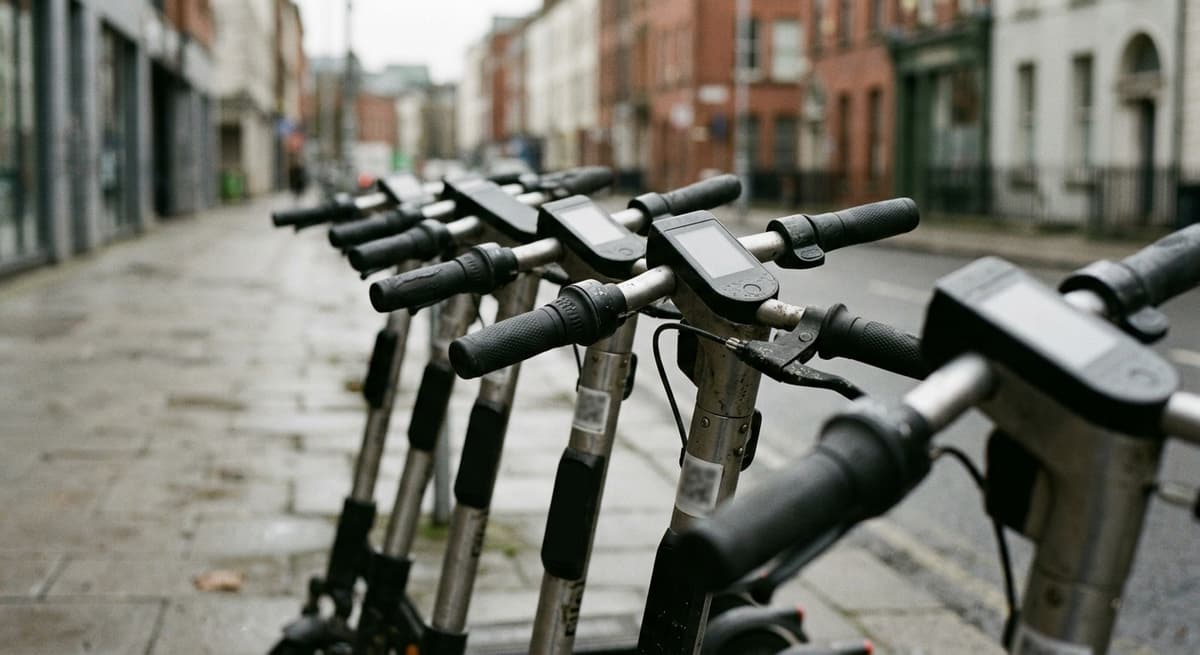
11 kilowatts is a large threshold by e-scooter standards. Consumer electric scooters typically run motors of 250 watts to about 2,000 watts, a small fraction of 11,000 watts. The cutoff was clearly written with small electric motorcycles and mopeds in mind, not stand-up kick scooters, but the wording sweeps in both the same way.
Rider rules
Driving license. Not required for a vehicle under 125cc or under 11kW electric. Instead, the rider must be at least 15 years old and carry a national identification card or other certified identity document. A rider on a 125cc-or-more, or 11kW-or-more, vehicle needs a Category A license and must be at least 18.
Registration and number plate. Required in principle, regardless of power. The amended law states that all types of vehicles moving on the road must be attached with a vehicle identification certificate and a number plate, and that all types of vehicles must be registered to get one, with the detailed procedure set out in a sub-decree. Unlike the driving-license rule, this clause states no power exemption in the statute's own text.
What that looks like in practice is murkier, and this is where the Cambodia page differs most from a straightforward moped-regime country. A Ministry of Public Works and Transport presentation from January 2026 describes the practical registration threshold as engines "more than 50cc," a different number from the 125cc/11kW license threshold, and separately lists as an open problem "the number of scooters that are not eligible for registration," saying the ministry needs to fix this to hit its electric-vehicle targets. A 2021 technical report on electric motorcycles in Cambodia found the same friction from a different angle: registration is available under Sub-decree No.73 of 2019 for a US$10 fee, but a Ministry representative told researchers that few electric motorcycles actually get registered, because most owners cannot produce the import tax paperwork the registration process requires. Without registration, those owners generally cannot buy standard insurance or resell the vehicle through normal channels. This research did not find a resolution to that gap for lighter e-scooters specifically, only the ministry's own acknowledgment that one exists.
Helmet. The law's helmet mandate is written for "motorcycle drivers and passengers" and "tri-cycle drivers with trailers." It does not separately name e-scooters, and this research found no confirmation either way of whether authorities read it to cover e-scooter riders too.
Alcohol, phone use, passengers. General rules apply to "all kinds of vehicle drivers": a blood/breath alcohol limit, a ban on handheld phone use while driving, and a ban on loading passengers or goods that block a driver's view. Nothing in these clauses is written specifically for or against e-scooters, so they apply on the same plain-text basis as the "motor vehicle" definition itself.
Where you can ride
The law does not set out a scooter-specific lane, sidewalk, or roadway rule. Its general provisions require keeping right and staying within marked lanes, the same as for any vehicle. This research found no cycle-lane or sidewalk carve-out for low-power electric vehicles in either copy of the statute read for this article.
Penalties
Two relevant penalty articles were both rewritten by the 2017 amendment, and the change matters for anyone estimating a fine from an older source:
- Driving without a vehicle identification certificate or number plate. The 2015 original law set a fixed fine of 100,000 to 800,000 Cambodian Riel plus 6 days to 1 month imprisonment. The 2017 amendment replaced that with an unspecified "provisional penalty as prescribed in the sub-decree," meaning the actual current amount sits in a separate instrument this research did not locate. Do not treat the older Riel figures as current.
- Driving without a license. The same change applies: a first offense becomes a sub-decree-set provisional penalty. A repeat offense within 6 months escalates to 1-6 months imprisonment plus 800,000-4,000,000 Riel, but the amended article explicitly states that escalation "is not applied to the drivers of motorcycles, motorcycles with trailers or tricycles," meaning even a repeat offender on a scooter-class vehicle faces only the lighter administrative penalty, not imprisonment.
Enforcement in practice
The clearest documented enforcement reality in Cambodia is not a crackdown story, it is a paperwork one. The ministry's own materials describe electric two-wheelers, including scooter-class devices, as caught between a registration duty that exists on paper and a registration process that many owners cannot complete, largely over import documentation rather than the vehicle itself. That gap does not change the legal status described above and is not permission to skip the age or ID requirement; it means the practical experience of registering an e-scooter in Cambodia, if a rider tries, may be harder than the statute alone suggests.
Beyond that registration friction, this research found no incident reporting, crackdown coverage, or roadside-enforcement statistics specific to e-scooters, and no shared or rental e-scooter scheme operating in Phnom Penh or Siem Reap in the sources checked.
Legal history
The current law replaces an earlier 2007 Road Traffic Law. The base law was ratified by the National Assembly on 5 December 2014, approved by the Senate on 30 December 2014, and promulgated by Royal Kram No. NS/RKM/0115/001 on 9 January 2015. It was then amended, Articles 8, 40, 41, 47, 48, 75, 77, 82, and 90 specifically, by a law ratified by the National Assembly on 26 December 2016, approved by the Senate on 4 January 2017, and promulgated by Royal Kram No. NS/RKM/0117/002 on 26 January 2017. That 2017 amendment is the current operative text for the license and registration split described in this article. An older, un-amended English translation of the law still circulates online and states different numbers, including a 16-plus, 49-to-125cc license category that the 2017 amendment replaced, so a reader checking a secondary source should confirm it reflects the amended articles rather than the 2015 original.
For how other countries in the region handle the same question, see the world e-scooter law guide.
Frequently Asked Questions
Are e-scooters legal in Cambodia?
Yes, in the sense that they are not banned. Cambodia's Law on Road Traffic classifies an e-scooter as a "motor vehicle" under a power-neutral definition, which brings registration duties, while a 2017 amendment exempts it from needing a driving license as long as its motor is under 11 kilowatts.
Do I need a driving license to ride an e-scooter in Cambodia?
No, if its motor is under 11 kilowatts, which is true of virtually every consumer e-scooter. You must instead be at least 15 years old and carry a national identification card.
Does an e-scooter need to be registered in Cambodia?
The law says all types of vehicles must be registered with a number plate, with no stated exemption for low power. In practice, Cambodia's own transport ministry has acknowledged that many scooters are not currently eligible for registration under the existing process, so this is a real gap between the statute's text and what is actually available to riders.
What is the fine for riding an unregistered e-scooter in Cambodia?
Not a fixed number under the current law. A 2017 amendment moved this penalty from a fixed Riel fine to an unspecified "provisional penalty" set by a separate sub-decree that this research did not locate.
Is there a minimum age to ride an e-scooter in Cambodia?
15 years old, with a national ID card, for any vehicle under the 125cc/11kW threshold that exempts it from a driving license.
Is there a helmet law for e-scooters in Cambodia?
The law's helmet mandate names motorcycle riders and tricycle-with-trailer drivers. Whether this is read to include e-scooter riders was not confirmed in the sources checked for this article.
Are rental e-scooters available in Cambodia?
No shared or rental e-scooter scheme was found operating in Phnom Penh or Siem Reap in the sources checked for this article.
Sources and References
- Law on Road Traffic (2015 original English translation, since amended)(jbac.info)
- Cambodian government's own hosted copy of the Law on Road Traffic, consolidated with the January 2017 amendment marked article-by-article(pressocm.gov.kh).gov
- Global Green Growth Institute: "Promoting Green Mobility Through Electric Motorcycles in Cambodia" (2021), covering the 125cc/11kW license threshold and the Sub-decree No.73 registration process and its real-world gaps(gggi.org)
- Cambodia's Ministry of Public Works and Transport, presentation slides for the National Workshop on Electric Mobility in Public Transport for Cambodia (23 January 2026), acknowledging scooters not currently eligible for registration(unescap.org)