Alberta Civil Laws Explained: What Courts Handle Civil Cases
Independently fact-checked against primary sources (last audited June 18, 2026). · 4 primary sources cited on this page. How we verify our legal content
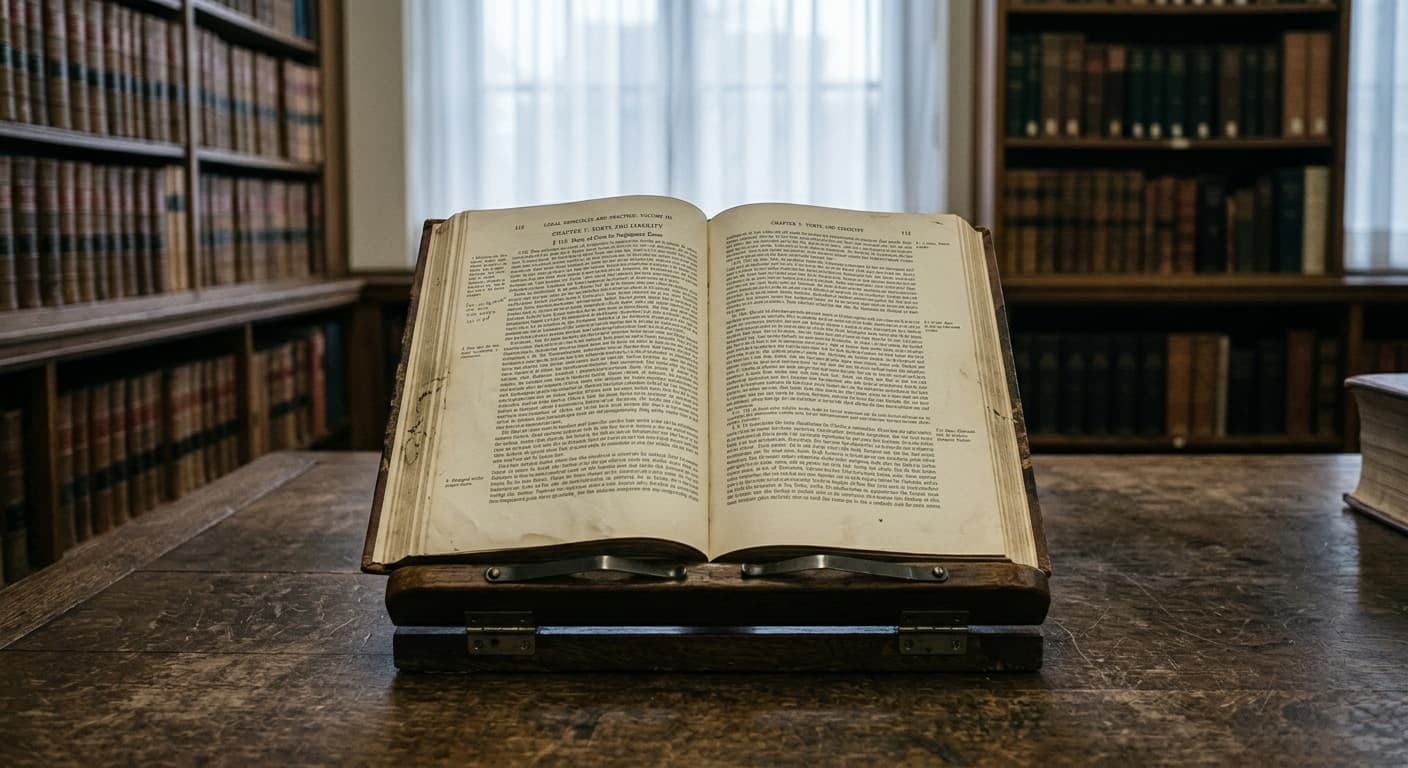
In Alberta, civil cases are heard in the Alberta Court of Justice for claims of $100,000 or less and in the Court of King's Bench for larger claims. The Court of King's Bench also hears appeals from Court of Justice rulings and handles personal injury, bankruptcy, and estate litigation.
In Alberta, civil cases are heard by the Alberta Court of Justice (small claims), the Court of King's Bench, or the family law division of the Court of King's Bench, depending on the type and value of the claim. If you are unsure where to file a claim, contact a lawyer or a clerk of the court near you.
Quick take: Alberta civil laws and procedures explained
- Alberta's civil laws deal with disputes between private individuals or corporations.
- The Court of King's Bench is superior to the Alberta Court of Justice (small claims).
- The court handles both criminal and civil cases.
- You may appeal Alberta Court of Justice rulings in the Court of King's Bench.
- If you get served, failure to send a statement of defence may cause the court to assume liability.
- Download the Court of King's Bench civil forms to file or respond to a claim.
What laws come under civil law in Alberta?
Alberta's Court of King's Bench and the Alberta Court of Justice handle civil disputes between private individuals or businesses, and negligent acts that cause harm to others. For example, if your employer wrongfully dismisses you, you may file a claim in either court, depending on the amount you seek.
In civil proceedings, the court cannot find a defendant guilty. Instead, if the claimant can prove his claim, the defendant becomes liable.
In short, you need to remember that the term "civil case" refers to a private case where one sues the other. Unlike criminal cases, the accused will not face prosecution under the Criminal Code of Canada or the Controlled Drugs and Substances Act.
How does the civil litigation process work in Alberta?
Suppose a person suffers emotional, financial, or physical injury on your property or because of your actions or negligence. That person may file a claim in the Alberta Court of Justice or the Court of King's Bench.
Stages of a civil suit in Alberta
Before trial, the parties have the option to settle the claim through mediation or a pre-trial conference. If the claim goes to court, the process begins with:
Pleading
During this stage, the plaintiff or claimant:
- Files a complaint against the defendant or accused.
- States an allegation and remedy for the injury suffered.
- Serves the claim on the defendant.
- Waits for a statement of defence. If the defendant does not send one, the court assumes the allegations are true, and the defendant may lose by default.
Tip: the two sides may reach an agreement at this stage.
Discovery
Before trial, each party will have an opportunity to examine the evidence and clarify the claims. If the court finds enough evidence and negotiations fail, the matter will move to trial.
Trial
During the trial, the burden of proof is on the plaintiff. You must prove:
- The allegation against the defendant is true.
- The defendant caused the damages.
If the court finds the defendant liable, the judge may order the remedies below, considering the facts, the requested remedies, and how to compensate the claimant. Depending on the facts, the court may also order punitive damages. The remedies for civil cases in Alberta include:
- Monetary remedies. The court may consider the expenses incurred by the claimant.
- Court-ordered activities (injunctions).
- Restitution.
Canadian civil laws explained: What is the Court of King's Bench in Alberta?
Under provincial laws, Alberta's small claims court, the Alberta Court of Justice, hears and adjudicates civil claims of $100,000 or less. It is a less expensive, more accessible alternative to the Court of King's Bench, Court of Appeal, Federal Courts, and the Supreme Court of Canada. You do not need a lawyer to file a claim at the Alberta Court of Justice, although one is recommended for complex cases.
What if you decide to sue for more than $100,000?
Provincial laws say that the Alberta Court of Justice cannot hear any claim above $100,000. However, the claimant has the option to "abandon" any amount above the set limit. If you decide to do that, you may file your claim at the Court of Justice.
What civil cases does the King's Bench division deal with?
If you intend to file a claim valued at more than $100,000, you must do it at the Court of King's Bench. In Alberta, the King's Bench court hears and adjudicates civil and criminal matters. Just like the Alberta Court of Justice, you may or may not need a lawyer.
We recommend getting a lawyer if:
- The judge recommends it.
- You have problems with public speaking.
- You cannot handle the paperwork.
What does the Court of King's Bench do in Alberta?
In civil matters, the court hears and adjudicates:
- Personal injury claims
- Bankruptcy and insolvency cases
- Litigation involving wills and estates
- Appeals from Alberta Court of Justice rulings
The court also has the power to try summary and indictable offenses, including:
- Conspiracy to commit an offense
- Murder or manslaughter
- Drug trafficking
How to Appeal Alberta Court of Justice Decisions in Edmonton, Alberta
Alberta's Court of King's Bench is superior to the Alberta Court of Justice. Because of that, you may appeal a judgment made in the Alberta Court of Justice.
When you file an appeal, the court reviews and then reverses or changes the decision made in the Alberta Court of Justice. Remember, the burden of proof is on the applicant, meaning you must show the court that the previous judge or decision-maker made an error that affected the outcome of your case.
To appeal a decision or ruling made in the Alberta Court of Justice, you should:
- Fill out a Notice of Appeal, small claims decision.
- Order a copy of the original court hearing transcript.
- Send both copies and the payment receipt to the Court of King's Bench.
- Serve the appeal to the respondent.
- Attend the initial court appearance and the appeal hearing.
How to file a claim in the Court of King's Bench in Edmonton, Alberta
Under Alberta's Limitations Act, you generally must commence a civil legal action within two years, and any action worth more than $100,000 must be filed at the Court of King's Bench. Failure to commence an action within the limitation period may grant the defendant immunity from the claim.
To begin, you must submit a statement that outlines the nature of the claim, the allegations against the defendant, the amount you seek, and the facts establishing the claim. Once you file a claim at the Court of King's Bench, you have 12 months to serve it on the defendant.
When serving, the court allows you to:
- Post a notice on the defendant's front door.
- Use a process server.
- Send it through recorded mail.
- Serve the document through anyone who has direct contact with the respondent.
What to do if you get served in Alberta
Under provincial laws, you have twenty days to send a statement of defence. If the defendant is from outside Alberta, the individual or organization has 30 days to send either document. You may also have a counterclaim. Sending a counterclaim makes the applicant a "Defendant by Counter Claim." A defendant by counterclaim also has twenty days to send a counterclaim or statement of defence.
What to remember:
- If you are a defendant and there is a co-defendant from whom you seek indemnity or contribution, you have twenty days to file and serve a Notice of Claim against Co-Defendant.
- A claimant or plaintiff may file a reply within ten days after receiving a statement of defence.
- The documents above are known as "proceedings."
Alberta Rules of Court section 3.30, "reply to defence and demand for notice," reads, quote:
"A defendant who is served with a statement of claim may do one or more of the following: (a) apply to the Court to set aside service in accordance with rule 11.31 ; (b) apply to the Court for an order under rule 3.68 ; (c) file and serve a statement of defense or demand for notice."
Rule 11.31 says that you may apply to set aside, quote: "(a) service of a commencement document, (b) an order for substitutional service of a commencement document, or (c) an order dispensing with service of a commencement document."
You may also:
"A defendant may do one or more of the following: (a) file a claim against a co-defendant in accordance with rule 3.43 ; (b) file a third-party claim in accordance with rule 3.44 ; (c) file a counterclaim in accordance with rule 3.56 (Right to counterclaim)."
Tip: the process can get convoluted, so we recommend working with a lawyer.
Related Alberta Guides:
- How to file a civil claim in Edmonton
- How long a civil lawsuit takes in Alberta
- Alberta's hit-and-run laws
- Are divorce records public in Alberta?
- Alberta's domestic violence laws
- Alberta slip-and-fall claims
- Right of first refusal in Alberta
Related Canadian Guides
Updates
Refreshed for accuracy: updated all references from the former Court of Queen's Bench and Provincial Court to their current names, the Court of King's Bench and the Alberta Court of Justice; corrected a stale $50,000 small-claims heading to the current $100,000 limit; repaired 17 broken links left over from the WordPress migration; fixed several run-together bullet lists; consolidated two duplicate related-links sections into one; and corrected the reference to Canada's federal drug law to its proper name, the Controlled Drugs and Substances Act.
Independently fact-checked against the cited primary sources
Sources and References
- Court of King's Bench of Alberta civil forms, including the Statement of Defence and Notice of Claim against Co-Defendant forms.(albertacourts.ca).gov
- Notice of Appeal, Small Claims Decision form, Government of Alberta.(cfr.forms.gov.ab.ca).gov
- How to order a courtroom transcript, Government of Alberta.(alberta.ca).gov
- Alberta Court of Justice, Civil area of law overview.(albertacourts.ca).gov
- Limitations Act, RSA 2000, c L-12 (CanLII).(canlii.org)