
Montana
Montana Car Seat Laws (2026): Ages, Booster & 2025 Update
Independently fact-checked against primary sources (last audited September 17, 2026). · Reviewed by the RecordingLaw editorial team. · Law checked current as of August 20, 2026. · 5 primary sources cited on this page. How we verify our legal content
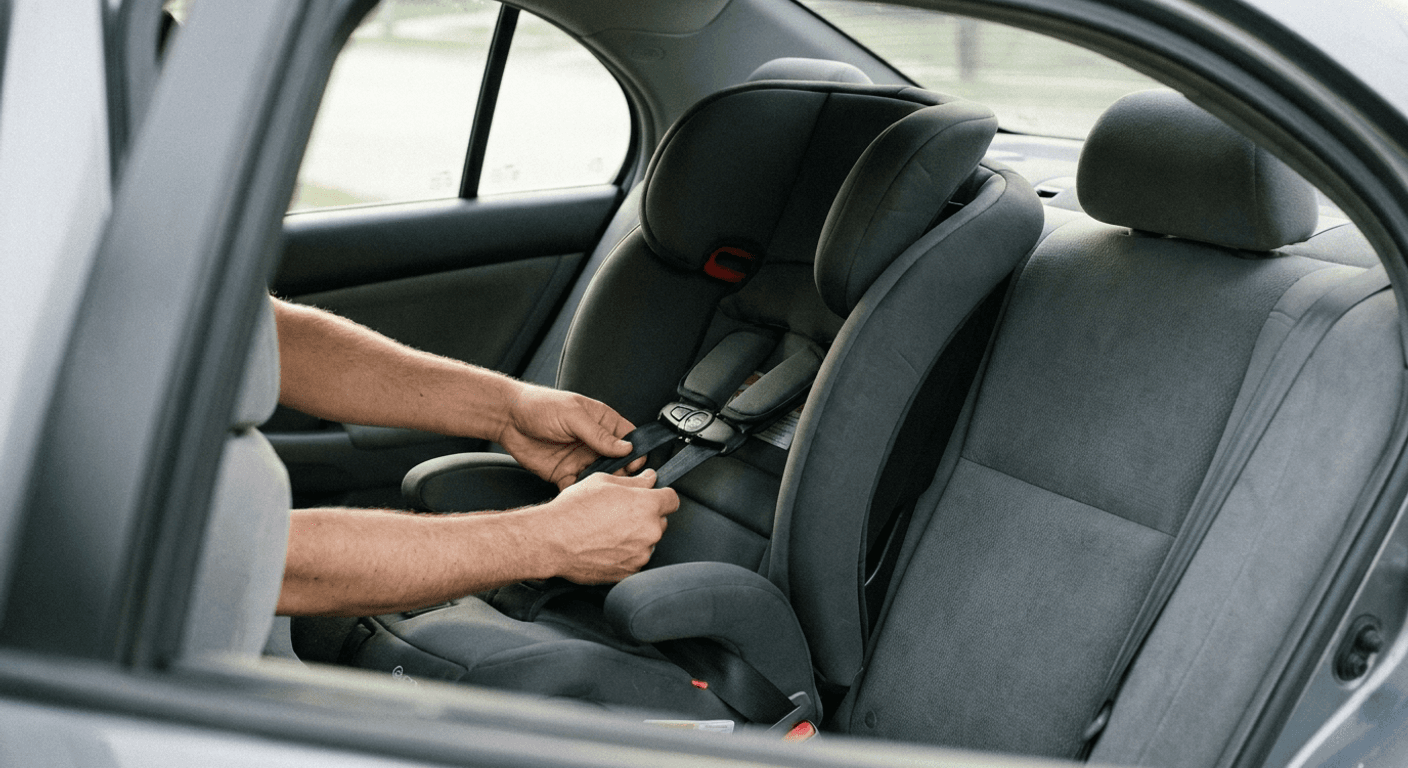
Montana requires a rear-facing seat until age 2, then a rear- or forward-facing harness seat until 4, then a forward-facing harness seat or booster until 8, under MCA 61-9-420. Both 61-9-420 and its exemptions were amended by a 2025 law. This page reflects the statute's text as of September 2026.
Jurisdiction scope: This article covers car seat and child-restraint law in the state of Montana only. It does not address any other state. For other states, see the car seat laws hub.
| Stage | Who | Rule | Statute |
|---|---|---|---|
| Rear-facing | From birth until 2 | Rear-facing child safety restraint system meeting federal safety standards | MCA 61-9-420 |
| Rear- or forward-facing harness | Age 2 until 4 | Rear-facing or forward-facing restraint system with an internal harness | MCA 61-9-420 |
| Forward-facing harness or booster | Age 4 until 8 or outgrown | Forward-facing restraint system with an internal harness, or a booster seat secured with a lap-shoulder belt | MCA 61-9-420 |
| Seat belt | Age 9, or once the booster is outgrown | Adult safety belt | MCA 61-9-420 |
Rear-facing through age 2
Montana requires a rear-facing child safety restraint system that complies with federal motor vehicle safety standards until a child turns 2.
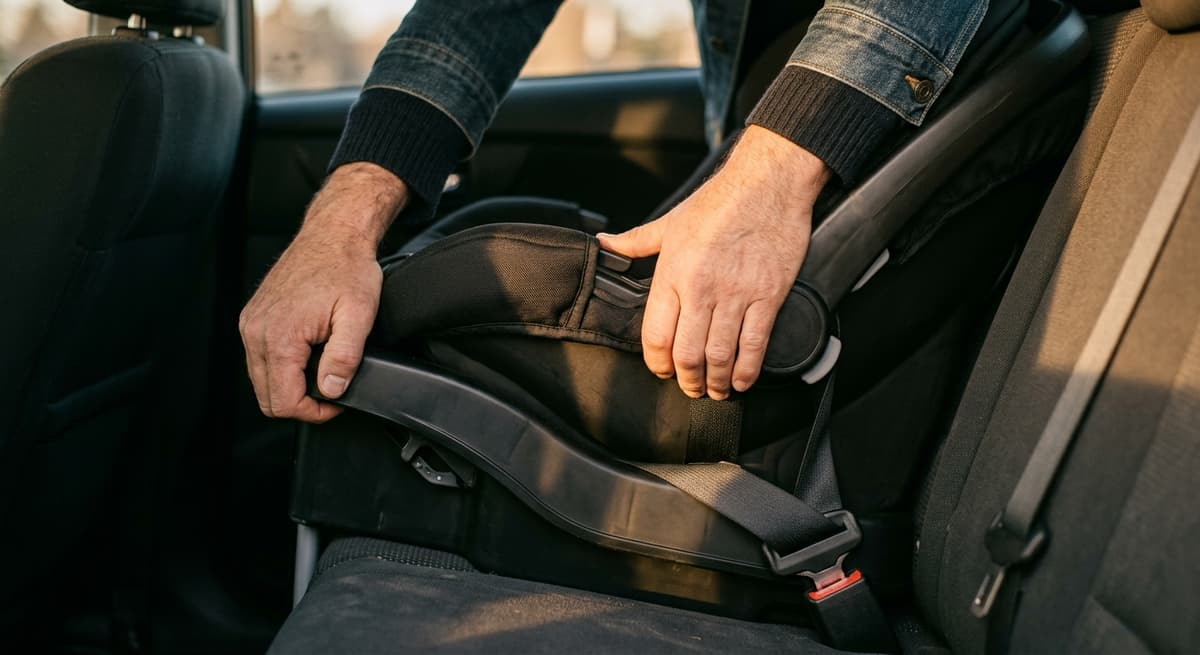
Ages 2 through 4: rear- or forward-facing harness
Once a child turns 2, the statute allows either a rear-facing or a forward-facing restraint system, as long as it has an internal harness, through age 4. Montana's law gives families the option to keep a child rear-facing past 2 during this stage rather than requiring a switch to forward-facing at that age.
Ages 4 through 8: forward-facing harness or booster
From age 4 until a child turns 8 or outgrows the seat, whichever comes first, the statute requires either a forward-facing restraint system with an internal harness or a child booster seat secured with the vehicle's lap-shoulder seat belt. Subsection (4) then places a passenger who is at least 9, or who has outgrown the booster's manufacturer height or weight limits, whichever comes first, in an adult safety belt. The text has a gap at exactly age 8: subsection (3) runs "up to 8 years of age" and subsection (4) doesn't start until "at least 9 years of age," so neither subsection names an 8-year-old who still fits the booster directly. Nothing in the statute releases that child early, so the practical reading is that the booster stage continues to cover them until they turn 9 or outgrow the seat, whichever comes first.
The 2025 amendment
Both the restraint requirement in 61-9-420 and the exemptions in 61-9-421 were amended by the same act in the 2025 legislative session, 2025 Mont. Laws Ch. 692. The stage structure and exemptions described on this page reflect that amended, current text. A driver relying on an older printout or a pre-2025 summary of Montana's car seat law should confirm they're looking at the current version.
Exemptions
MCA 61-9-421 exempts several categories. Under subsection (1), a vehicle is exempt if it is a motor home, school bus, taxicab, farm tractor, bicycle, moped, quadricycle, motorcycle, or motor-driven cycle, or if it "is not required to be equipped with safety belts under 49 CFR 571 as it reads on January 3, 2025." An ambulance or other emergency vehicle designated or authorized by the department is exempt under subsection (2). Subsection (3) exempts a situation where a life-threatening emergency exists, threatening the life of either the driver or a child who would otherwise need to be restrained. The medical exemption lives in a different section, 61-9-420(6): the department may by rule exempt a child who, because of a physical or medical condition or body size, cannot be placed in a child safety restraint system. That runs through the department's own rulemaking authority rather than a self-executing physician-certification procedure written into the statute's text.
Penalty and the 7-day waiver
A violation of 61-9-420 carries a fine of not more than $100, under MCA 61-9-423; the statute does not grade the fine differently for a first versus a later violation. The fine must be waived if the driver presents proof of acquiring an appropriate child safety restraint within 7 days of the violation to the office of the charging officer, but only if the driver hasn't already had a previous 61-9-420 violation dismissed under this same waiver provision. In other words, this relief is available once, not on every citation.
Leaving a child unattended in a vehicle
Montana doesn't have a criminal statute written specifically for leaving a child alone in a parked car. But its general child-endangerment statute, MCA 45-5-622, directly addresses this situation rather than leaving it entirely unaddressed. Since a 2023 amendment, the statute states that "a parent or guardian of a child does not violate a duty of care, protection, or support by permitting the child to engage in independent activities consistent with the child's intellectual, emotional, and physical maturity," including remaining for less than 15 minutes in a vehicle if the temperature inside the vehicle isn't, and won't become, dangerously hot or cold. The maturity condition is what limits this safe harbor; it is not a blanket permission to leave a child of any age alone for up to 15 minutes regardless of that child's ability to handle it. Once a child is left longer than 15 minutes, the vehicle's temperature becomes dangerous, or leaving the child isn't consistent with that child's maturity, the general endangerment statute, which carries a misdemeanor penalty of up to 6 months and a $500 fine for a first offense, can reach a caregiver who has otherwise violated their duty of care.
Federal guidance vs. Montana law
The federal standard governing car seats as products, FMVSS 213 (49 CFR 571.213), regulates what a manufacturer may sell, not how a parent must use the seat; Montana's own statute, described above, sets the use requirement. NHTSA and the American Academy of Pediatrics separately recommend keeping a child rear-facing as long as the seat's own height and weight limits allow, which Montana's law already permits through the rear-or-forward-facing choice built into its 2-to-4 stage. That's still safety guidance, not a separate legal floor. A newer federal side-impact standard for car seats themselves, FMVSS 213a/213b, becomes mandatory for manufacturers on December 5, 2026; it changes what a seat must be built to withstand, not what Montana law requires a driver to do.
Related Montana traffic law pages
Disclaimer: This article provides general legal information about Montana's car seat law as of September 2026. It is not legal advice. Statutes, exemptions, and penalties change; verify the current text of the law before relying on it, and talk to a lawyer licensed in Montana about a specific situation.
Statutes cited reflect their in-force version as of 2026-09-16. Last updated: 2026-09-16.
Frequently Asked Questions
Until what age does a child need a car seat in Montana?
A rear-facing seat is required until age 2, then a rear- or forward-facing harness seat until 4, then a forward-facing harness seat or booster until 8 or until the child outgrows it, under MCA 61-9-420.
Did Montana's car seat law change recently?
Yes. Both the restraint requirement (61-9-420) and its exemptions (61-9-421) were amended by 2025 Mont. Laws Ch. 692. The current statute reflects that amendment.
Can you get a Montana car seat fine waived?
Yes, once. The $100 fine, which the statute does not grade by first versus later violation, must be waived if the driver shows proof of acquiring an appropriate restraint within 7 days, as long as they haven't already used this waiver for a previous 61-9-420 violation.
Is it illegal to leave a child alone in a car in Montana?
Montana has no dedicated statute for this. Its general child-endangerment law, MCA 45-5-622, provides that a parent does not violate their duty of care by permitting a child to engage in independent activities consistent with the child's intellectual, emotional, and physical maturity, including remaining in a vehicle for less than 15 minutes if the temperature isn't dangerous. That maturity condition limits the safe harbor; it isn't permission for a child of any age or maturity level. Beyond that condition, or that time or temperature, the general endangerment statute can apply.
Is Montana's booster requirement satisfied by a harness seat instead?
Yes. From age 4 until 8 or until the child outgrows it, the statute allows either a forward-facing harness seat or a booster seat secured with a lap-shoulder belt; either option satisfies the law.
Updates
Rebuilt from the current statute text after an independent review: restraint stages, exemptions, front-seat rules and penalties re-verified against the statute.
Independently fact-checked against the cited primary sources
Rewrote the child restraint framework from an incorrect single under-6/under-60lb threshold to Montana's actual current four-tier structure: rear-facing required under 2, rear-facing or forward-facing harness for ages 2 to under 4, forward-facing harness or booster for ages 4 to under 8, and an adult seat belt at 9 or once the booster's manufacturer limits are outgrown, whichever comes first, per the 2025-amended MCA 61-9-420.
Independently fact-checked against the cited primary sources; governing law re-checked for recent changes
Reviewed and approved by an editor
The Law Behind This Article
This article rests on the statutory provisions below, held in our own legal record and retrieved from the official source. Tap a section to read the operative text.
Montana Code Annotated, Title 61
§ 61-9-420Child Safety Restraint Systems -- Standards -- ExemptionsIn forcecited in 2 of our articles
61-9-420. Child safety restraint systems -- standards -- exemptions. (1) A motor vehicle passenger who is under 2 years of age must be properly restrained in a rear-facing child safety restraint system that complies with federal motor vehicle safety standards. (2) A motor vehicle passenger who is between 2 years of age and up to 4 years of age must be properly restrained in a rear-facing or forward-facing child safety restraint system with an internal harness that complies with federal motor vehicle safety standards. (3) A motor vehicle passenger who is between 4 years of age and up to 8 years of age must be properly restrained in a forward-facing child safety restraint system with an internal harness or a child booster seat that is secured with a vehicle lap-shoulder seat belt, whichever is applicable, that complies with federal motor vehicle safety standards. (4) A motor vehicle passenger who is at least 9 years of age or has outgrown the height or weight limits of a child booster seat as set by the manufacturer, whichever comes first, must be secured with a motor vehicle adult safety belt.
Official text (excerpt) · last checked 2026-09-14 · Read the full text in our law library · Verify at mca.legmt.gov
Cited in 2 court opinions in our collectionLatest citing opinion in our collection: 2025
Opinions citing this section in our collection:
- State v. K. Mullendore (Montana Supreme Court 2025, 2025 MT 282)“…and weighed less than 60 pounds at the time of the crash. Section 61-9-420, MCA, provides that a “passenger who is unde…”
- State v. Grimes (Montana Supreme Court 1999, 295 Mont. 22)“…f the motion. Grimes contends that the child restraint law, § 61-9-420, MCA (1995), did not provide sufficient caus…”
Identified automatically from the court opinions citing this section — not a ranking of which case controls.
Also relied on in: Car Seat Laws by State 2026: Rear-Facing, Booster, Front Seat Rules
§ 61-9-421Certain Vehicles ExemptIn force
61-9-421. Certain vehicles exempt. Section 61-9-420 is not applicable as follows: (1) if a vehicle is a motor home, school bus, taxicab, farm tractor, bicycle, moped, quadricycle, motorcycle, or motor-driven cycle or is not required to be equipped with safety belts under 49 CFR 571 as it reads on January 3, 2025; (2) if a vehicle is an ambulance or other emergency vehicle designated or authorized by the department; or (3) if an emergency exists that threatens the life of a person operating a motor vehicle to whom this section would otherwise apply or the life of a child who would otherwise be required to be properly restrained as provided in 61-9-420.
Official text (excerpt) · last checked 2026-07-29 · Read the full text in our law library · Verify at mca.legmt.gov
§ 61-9-423PenaltyIn force
61-9-423. Penalty. (1) Except as provided in subsection (2), violation of 61-9-420 is punishable by a fine of not more than $100. (2) The fine provided for in subsection (1) must be waived if proof of acquisition of an appropriate child safety restraint is presented within 7 days of the violation to the office of the charging officer and there has been no previous dismissal of a violation of 61-9-420 under this subsection.
Official text (excerpt) · last checked 2026-07-29 · Read the full text in our law library · Verify at mca.legmt.gov
Montana Code Annotated, Title 45
§ 45-5-622Endangering Welfare Of ChildrenIn forcecited in 2 of our articles
45-5-622. Endangering welfare of children. (1) (a) A parent, guardian, or other person supervising the welfare of a child less than 18 years old commits the offense of endangering the welfare of children if the parent, guardian, or other person knowingly endangers the child's welfare by violating a duty of care, protection, or support. (b) A parent or guardian of a child does not violate a duty of care, protection, or support by permitting the child to engage in independent activities consistent with the child's intellectual, emotional, and physical maturity, including: (i) traveling to and from school by walking, running, bicycling, public transit, or other means; (ii) traveling to and from nearby commercial or recreational facilities; (iii) engaging in outdoor play; (iv) remaining for less than 15 minutes in a vehicle if the temperature inside the vehicle is not or will not become dangerously hot or cold; (v) remaining at home if the parent or guardian: (A) returns home the same day on which the parent or guardian gives the child permission to remain at home; (B) makes provisions for the child to contact the parent or guardian; and (C) makes provisions for any…
Official text (excerpt) · last checked 2026-07-29 · Read the full text in our law library · Verify at mca.legmt.gov
Cited in 9 court opinions in our collectionLatest citing opinion in our collection: 2026
Opinions citing this section in our collection:
- State v. Powers (Montana Supreme Court 1982, 198 Mont. 289)“…of care, protection or support is a misdemeanor in Montana. Section 45-5-622, MCA. Admissible bits of evidence to show a…”
- State v. Campbell (Montana Supreme Court 1981, 191 Mont. 75)“…a m i s - demeanor, i n v i o l a t i o n of s e c t i o n 45-5-622, MCA. A f t e r s e v e r a l c o n…”
- City of Three Forks v. Schillinger (Montana Supreme Court 2007, 340 Mont. 211)“…unts of endangering the welfare of a minor, in violation of § 45-5-622, MCA. The charges arose from a graduation p…”
Identified automatically from the court opinions citing this section — not a ranking of which case controls.
Also relied on in: Montana Age of Consent Laws: Statutes, Penalties and Reporting
Code of Federal Regulations Title 49
§ 571.213Child restraint systems; Applicable unless a vehicle or child restraint system is certified to § 571.213b.In forcecited in 51 of our articles
S1. Scope. This standard specifies requirements for child restraint systems used in motor vehicles and aircraft. S2. Purpose. The purpose of this standard is to reduce the number of children killed or injured in motor vehicle crashes and in aircraft. S3. Application. This standard applies to passenger cars, multipurpose passenger vehicles, trucks and buses, and to child restraint systems for use in motor vehicles and aircraft, manufactured before December 5, 2026. FMVSS No. 213b applies to child restraint systems manufactured on or after December 5, 2026. S4. Definitions. Add-on child restraint system means any portable child restraint system. Backless child restraint system means a child restraint, other than a belt-positioning seat, that consists of a seating platform that does not extend up to provide a cushion for the child's back or head and has a structural element designed to restrain forward motion of the child's torso in a forward impact.
Official text (excerpt) · last checked 2026-07-28 · Read the full text in our law library · Verify at ecfr.gov
Cited in 16 court opinions in our collectionLatest citing opinion in our collection: 2022
Opinions citing this section in our collection:
- Welsh Ex Rel. Welsh v. Century Products, Inc. (District Court, D. Maryland 1990, 745 F. Supp. 313)“…afety Act”) and Federal Motor Vehicle Safety Standard 213, 49 C.F.R. § 571.213 (1989) (“FMVSS 213”). In particular, C…”
- Hendrix Ex Rel. Gp v. Evenflo Co., Inc. (Court of Appeals for the Eleventh Circuit 2010, 609 F.3d 1183)“…meets the requirements imposed by federal regulations. See 49 C.F.R. § 571.213. When used properly, the base is positio…”
- Hendrix v. Evenflo Co. (District Court, N.D. Florida 2009, 255 F.R.D. 568)“…ance requirements and a testing procedure for CRS modules. 49 C.F.R. § 571.213 . Van Arsdell’s mechanical engineering…”
Identified automatically from the court opinions citing this section — not a ranking of which case controls.
Also relied on in: Alabama Car Seat Laws (2026): Ages, Stages & Penalties, Alaska Car Seat Laws (2026): 5 Stages & Penalties, Arizona Car Seat Laws (2026): Booster Age & Penalty Rules
Search our full record of US law — 2.1 million sections, every state + federal →
Sources and References
- MCA 61-9-420, child restraint systems required: age/stage staging through subsection (4), medical exemption in (6) (amended 2025 Mont. Laws Ch. 692)(mca.legmt.gov).gov
- MCA 61-9-421, exemptions from the child restraint requirement (amended 2025 Mont. Laws Ch. 692)(mca.legmt.gov).gov
- MCA 61-9-423, penalty and waiver of fine(mca.legmt.gov).gov
- MCA 45-5-622, endangering the welfare of children: general statute, including the 2023-added (1)(b) independent-activities safe harbor(mca.legmt.gov).gov
- 49 CFR 571.213, FMVSS No. 213: child restraint systems, federal product standard(ecfr.gov).gov
- American Academy of Pediatrics, Car Safety Seats: Information for Families(healthychildren.org)