
Louisiana
Louisiana Car Seat Laws (2026): Stages, Taxi Rule & Fines
Independently fact-checked against primary sources (last audited September 17, 2026). · Reviewed by the RecordingLaw editorial team. · Law checked current as of August 20, 2026. · 2 primary sources cited on this page. How we verify our legal content
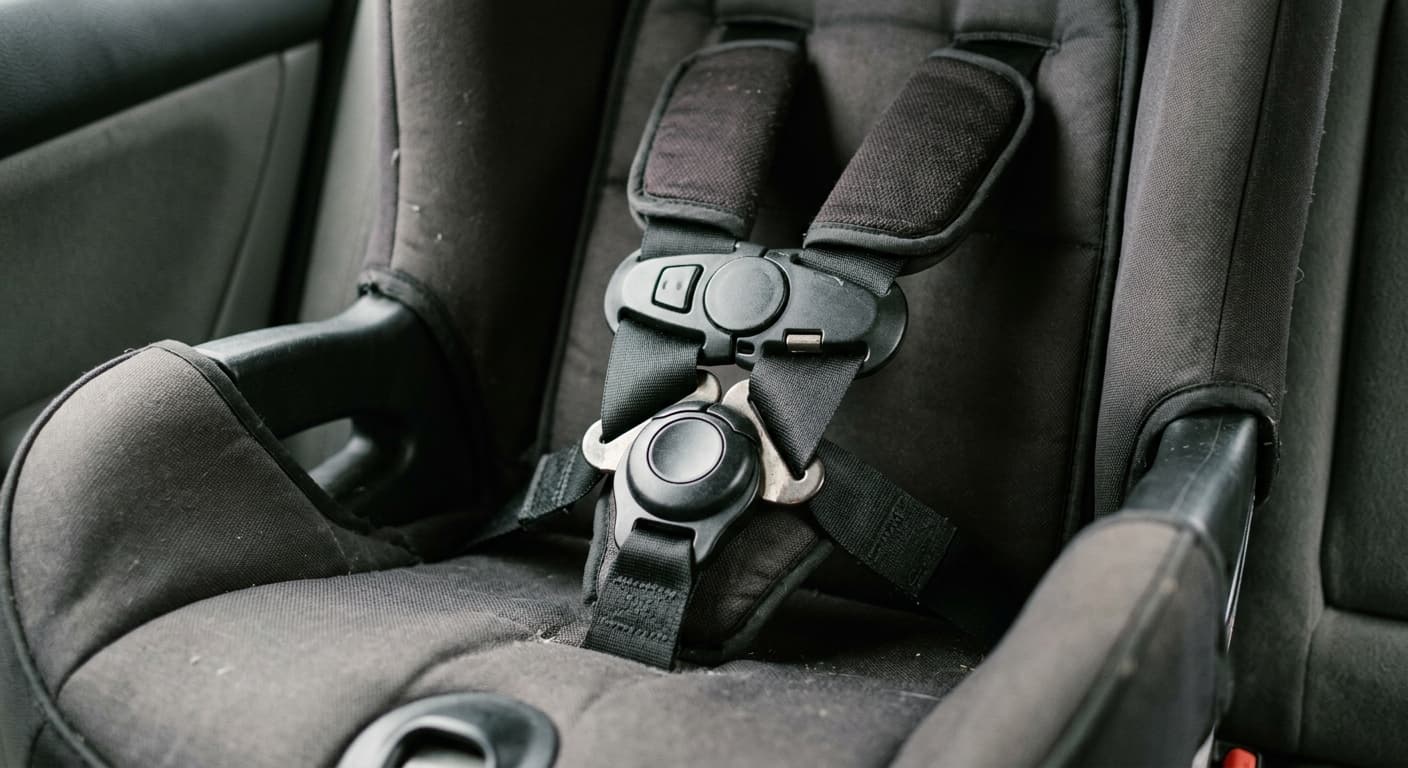
Louisiana requires a rear-facing seat until age 2 (or sooner if the seat's manufacturer limit is reached first), then a forward-facing harness seat, then a booster seat, under La. R.S. 32:295. A first-offense violation carries a $100 fine. This reflects the statute's text as of September 2026.
Jurisdiction scope: This page covers Louisiana state law only, specifically La. R.S. 32:295 and R.S. 32:295.3. It does not cover local ordinances or Louisiana's DUI-related child-endangerment enhancements.
| Stage | Applies until | Statute |
|---|---|---|
| Rear-facing | Age 2, or the seat manufacturer's rear-facing weight/height limit, whichever comes first | R.S. 32:295(A)(1) |
| Forward-facing harness | Enters at 2+ after exiting rear-facing; exits at the seat manufacturer's forward-facing weight/height limit | R.S. 32:295(A)(2) |
| Booster seat | Enters at 4+ after exiting forward-facing harness; exits at age 9 or the booster's manufacturer limit, whichever comes first | R.S. 32:295(A)(3) |
| Seat belt | From age 9 (or earlier once booster limits are outgrown) to 18 | R.S. 32:295(A)(4) |
| Rear seat, when available | Under 13 years old (applies alongside every restraint stage above) | R.S. 32:295(A)(5) |
Louisiana's rear-facing, forward-facing, and booster stages
Louisiana's law moves a child through three restraint types before a seat belt alone becomes sufficient, and each transition depends on a real condition, not age by itself. Under R.S. 32:295(A)(1), "a child who is younger than the age of two years shall be restrained in a rear-facing child restraint system... until the child reaches the weight or height limit of the child restraint system as set by the manufacturer." That means a child can be required to stay rear-facing past age 2 if the seat's own limit has not been reached, or can move out of rear-facing before age 2 if it has.
The forward-facing harness stage under R.S. 32:295(A)(2) requires both conditions together: the child must be "at least two years of age or older" AND have "reached the rear-facing weight or height limits of the child restraint system." The booster stage under R.S. 32:295(A)(3) works the same way, requiring the child to be "at least four years of age" AND to have "outgrown the forward-facing weight or height limits" of the harness seat. If a child's age and weight would place them in more than one of these categories at the same time, R.S. 32:295(A)(6) resolves the overlap: "a child who because of age or weight can be placed in more than one category shall be placed in the more protective category," meaning the earlier, more restrictive stage controls.
When a Louisiana child can move to a seat belt alone
R.S. 32:295(A)(4) ends the booster requirement once "a child who is at least nine years of age or has outgrown the height or weight limits of a child restraint system or belt-positioning child booster seat," whichever happens first, "shall be restrained with the motor vehicle's adult safety belt adjusted and fastened around the child's body to fit correctly." A child who outgrows a booster seat's manufacturer limits before turning 9 can move to a seat belt alone at that point; a child who has not outgrown the limits still needs the booster until turning 9.
Rear seat required for every child under 13
R.S. 32:295(A)(5) requires that "a child who is younger than thirteen years of age shall be transported in the rear seat of a motor vehicle, when available, in a properly used child restraint system, belt-positioning child booster seat, or adult safety belt that complies with all applicable federal regulations." This is a general rear-seat duty for every child under 13, not a rule limited to the air-bag scenario described next; a driver with a rear seat available has to use it for any child under 13, whether or not the front passenger air bag is active.
The passenger air bag rule
Layered on top of that general duty, Louisiana's statute separately requires that "when the vehicle is equipped with a passenger side air bag supplemental restraint system and the air bag system is activated, the driver of a vehicle transporting a child who is younger than six years of age or weighs less than sixty pounds shall transport the child in the rear seat positions in the vehicle, if rear seats are available." This air-bag-specific rule narrows in on children under 6 or under 60 pounds, but it does not replace the broader under-13 rear-seat duty in (A)(5) above; a driver has to satisfy both.
Taxi, commercial vehicle, and emergency/medical exemptions
Louisiana's child restraint law does not merely carve out an exemption for taxis and commercial vehicles; it removes them from the statute's coverage entirely. R.S. 32:295(B)(1) defines "motor vehicle" for purposes of the whole section to exclude a "commercial truck, van, or taxi," along with bicycles, farm tractors, motorcycles, trucks over 2,000 pounds of rated carrying capacity, ambulances and other emergency vehicles, school buses, and church, private, or recreational buses seating more than 10 passengers. Because the exclusion sits in the statute's own definition of a covered vehicle, none of the restraint, booster, or seat belt stages above apply inside a taxi or commercial vehicle at all.

Separately, R.S. 32:295(E) exempts three specific situations from the whole section, not just from the vehicle-definition exclusion above: when the vehicle is being used as an ambulance or other emergency vehicle; when an emergency exists that threatens the life of the driver or of a child who would otherwise need to be restrained; and when a child who would otherwise need to be restrained is physically unable, because of medical reasons, to use a child passenger safety system or safety belt.
A separate rule addresses a vehicle that is not exempt but simply does not have enough restraints for every child: R.S. 32:295(D) requires that when the number of children under 13 exceeds the number of age- or size-appropriate restraints and seat belts available, the unrestrained children must sit in a rear seat, if one is available.
Penalty for a Louisiana car seat violation
Louisiana's penalty subsection sets a fine that rises with repeat violations: $100 for a first offense, $250 to $500 for a second offense, and $500 plus all court costs for a third or subsequent offense. A narrower category applies when the only violation is using the wrong type of restraint for an otherwise-secured child; that violation is capped at $100 including fees and court costs. The statute does not include a waiver or dismissal provision for acquiring a conforming seat after citation.
Enforcement differs by which kind of violation it is. Failing to secure a child in any child restraint system at all is a primary offense, meaning an officer can stop and cite a driver for that alone. But R.S. 32:295(H) makes the narrower wrong-restraint-type violation, using an age- or size-appropriate restraint incorrectly for an otherwise-secured child, a secondary offense: a driver can be cited for it only if already stopped for a moving violation. Two further rules apply across the whole section: under (G), a driver already cited for a violation is not guilty of a second violation until 24 hours have passed from the date and time of the first citation, and under (F), failing to use a required restraint is never treated as comparative negligence, is not admissible as evidence in a civil action, and is not itself a moving violation.
Unattended children in vehicles
Louisiana has a dedicated statute for this, R.S. 32:295.3, separate from the child restraint law. It is unlawful for a driver or operator to leave a child under 6 "unattended and unsupervised" in a motor vehicle. "Unattended" means the driver is more than 10 feet from the vehicle and unable to continuously observe the child; "unsupervised" means no person at least 10 years old is physically present in the vehicle. An officer may remove a child left unattended or unsupervised for more than 10 minutes. A first offense carries a fine of up to $500, imprisonment of up to 6 months, or both; a second or later offense carries 1 to 2 years of imprisonment, with or without hard labor, and a fine of $1,000 to $2,000.
Federal guidance vs. Louisiana's legal minimum
Federal law under 49 CFR 571.213 (FMVSS 213) sets performance and crash-test standards a car seat must meet before it can be sold; it does not tell a Louisiana parent how to use the seat. NHTSA's and the American Academy of Pediatrics' guidance that a child stay rear-facing "as long as possible," until reaching the seat manufacturer's own limit, is consumer safety guidance layered on top of Louisiana's age-2 legal floor. Louisiana's own rear-facing stage already tracks that same manufacturer-limit language, so in practice the legal minimum and the national guidance point in the same direction, but only the statute is enforceable as law.
Disclaimer: This article provides general legal information about Louisiana's car seat law as of September 2026. It is not legal advice. Consult a lawyer licensed in Louisiana for advice about a specific situation.
Related reading: car seat laws by state, Louisiana DUI laws, and Louisiana window tint laws.
Statutes cited reflect their in-force version as of 2026-09-16. Last updated: 2026-09-16.
Frequently Asked Questions
When can a child stop using a booster seat in Louisiana?
A child can move to a seat belt alone once they turn 9, or earlier if they outgrow the booster seat's manufacturer weight or height limit first. Until one of those two conditions is met, a child who is at least 4 and has outgrown the forward-facing harness seat's limits must use a booster.
Does Louisiana's car seat law apply to taxis and Uber?
Louisiana's statute excludes 'commercial truck, van, or taxi' from its own definition of a covered motor vehicle, which removes the entire child restraint law from those vehicles. Louisiana's statute predates rideshare services and does not name transportation network companies specifically, so whether it treats an Uber or Lyft the same as a taxi is not addressed in the text.
What is the fine for a car seat violation in Louisiana?
A first offense carries a $100 fine. A second offense rises to $250-$500, and a third or later offense is $500 plus all court costs. A narrower violation involving only the wrong restraint type for an otherwise-secured child is capped at $100 including fees and costs, and that specific violation is a secondary offense, meaning a driver can be cited for it only after being stopped for a moving violation.
Is it illegal to leave a child alone in a car in Louisiana?
Yes, for a child under 6. R.S. 32:295.3 makes it unlawful to leave a child under 6 unattended (more than 10 feet from the caregiver) and unsupervised (no one at least 10 years old present) in a vehicle. An officer can remove a child left that way for more than 10 minutes. Penalties run from a fine up to $500 and up to 6 months in jail for a first offense to 1-2 years for a repeat offense.
Do Louisiana car seat rules change when the front passenger air bag is on?
There is already a general rule requiring every child under 13 to ride in the rear seat when one is available, under R.S. 32:295(A)(5). Layered on top of that, if a vehicle has an active passenger-side air bag, the driver must also place a child younger than 6 or under 60 pounds in a rear seat position, if one is available. Neither rule is a blanket ban on any child riding in the front seat, but a driver has to satisfy both when a rear seat is available.
Updates
Rebuilt from the current statute text after an independent review: restraint stages, exemptions, front-seat rules and penalties re-verified against the statute.
Independently fact-checked against the cited primary sources
Corrected the unattended-vehicle law to state it applies to children under 6 (not any child) and disclosed the full second-offense penalty range; sourced and corrected the smoking-in-vehicle claim to the actual statute (RS 32:300.4, under-13 threshold) instead of leaving it uncited; and added a new section disclosing the child-restraint law's own fine schedule, which the page never stated.
Independently fact-checked against the cited primary sources; governing law re-checked for recent changes
Reviewed and approved by an editor
The Law Behind This Article
This article rests on the statutory provisions below, held in our own legal record and retrieved from the official source. Tap a section to read the operative text.
Louisiana Revised Statutes
§ 32:295Child passenger restraint systemIn forcecited in 2 of our articles
A. Except as provided in Subsections C, D, and E of this Section, every driver in this state who transports a child or children under the age of eighteen years in a motor vehicle that is in motion and is required by federal safety standards to be equipped with a safety belt system or lower anchors and tethers for children in a passenger seating position shall have the child properly restrained according to the vehicle and child safety seat manufacturer's instructions, as follows: (1) A child who is younger than the age of two years shall be restrained in a rear-facing child restraint system that complies with all applicable federal regulations until the child reaches the weight or height limit of the child restraint system as set by the manufacturer. (2) A child who is at least two years of age or older and has reached the rear-facing weight or height limits of the child restraint system as set by the manufacturer, shall be restrained in a forward-facing child restraint system with an internal harness until the child reaches the weight or height limit of the child restraint system set by the manufacturer.
Official text (excerpt) · last checked 2026-09-10 · Read the full text in our law library · Verify at legis.la.gov
Cited in 5 court opinions in our collectionLatest citing opinion in our collection: 2025
Opinions citing this section in our collection:
- Salaiman v. Louisiana Casino Cruises, Inc. (Louisiana Court of Appeal 2002, 835 So. 2d 823)“…E, [1] JJ. FOIL, J. At issue in this appeal is whether La. R.S. 32:295, which requires that children under the…”
- Opinion Number (Louisiana Attorney General Reports 1999)“…t of your opinion request relating to the following: Does La. R.S. 32:295 allow the assessment of court costs fo…”
- Louviere v. State (Louisiana Court of Appeal 1993, 625 So. 2d 1129)“…he statute. Defendant bases its argument on the language in La.R.S. 32:295.-1(E) which refers to the “... failure…”
Identified automatically from the court opinions citing this section — not a ranking of which case controls.
Also relied on in: Car Seat Laws by State 2026: Rear-Facing, Booster, Front Seat Rules
§ 32:295.3Leaving children unattended and unsupervised in motor vehicles; prohibition; penaltiesIn force
A. It is unlawful for any driver or operator to leave a child or children under the age of six years unattended and unsupervised in a motor vehicle. B.(1) The term "unattended" as used in this Section means a child who has been left in a motor vehicle when the driver or operator of the vehicle is more than ten feet from the vehicle and unable to continuously observe the child. (2) The term "unsupervised" as used in this Section means an unattended child when a person ten years of age or older is not physically present in the motor vehicle. C.(1) A law enforcement officer who observes a child left unattended and unsupervised for a period in excess of ten minutes in violation of the provisions of this Section shall use whatever means are reasonably necessary to protect the child and remove the child from the motor vehicle. (2) If the child is removed from the immediate area by a law enforcement officer pursuant to the provisions of this Section, the law enforcement officer shall place notification on the motor vehicle. The law enforcement officer shall hold the child until the parent or guardian returns. D.
Official text (excerpt) · last checked 2026-07-29 · Read the full text in our law library · Verify at legis.la.gov
§ 32:300.4Smoking in motor vehicles prohibited; penaltiesIn force
A. It shall be unlawful for the operator or any passenger in a motor vehicle to smoke cigarettes, pipes, cigars, or any vaping devices in a motor vehicle, passenger van, or pick-up truck when a child who is younger than thirteen is also present in such vehicle, regardless of whether windows of the motor vehicle are down. For purposes of this Section, the term "smoke" shall mean to inhale, to exhale, to burn, or to carry any activated aerosol or vapor or any lighted cigarette, cigar, pipe, weed, plant, or other combustible substance in any manner or in any form. B. Whoever violates the provisions of this Section shall be fined one hundred fifty dollars per offense, or at the discretion of the judge, may be sentenced to no less than twenty-four hours of community service. C. Probable cause for a violation of this Section shall be based solely upon a law enforcement officer's clear and unobstructed view of a person smoking as prohibited by this Section.
Official text (excerpt) · last checked 2026-07-29 · Read the full text in our law library · Verify at legis.la.gov
Code of Federal Regulations Title 49
§ 571.213Child restraint systems; Applicable unless a vehicle or child restraint system is certified to § 571.213b.In forcecited in 51 of our articles
S1. Scope. This standard specifies requirements for child restraint systems used in motor vehicles and aircraft. S2. Purpose. The purpose of this standard is to reduce the number of children killed or injured in motor vehicle crashes and in aircraft. S3. Application. This standard applies to passenger cars, multipurpose passenger vehicles, trucks and buses, and to child restraint systems for use in motor vehicles and aircraft, manufactured before December 5, 2026. FMVSS No. 213b applies to child restraint systems manufactured on or after December 5, 2026. S4. Definitions. Add-on child restraint system means any portable child restraint system. Backless child restraint system means a child restraint, other than a belt-positioning seat, that consists of a seating platform that does not extend up to provide a cushion for the child's back or head and has a structural element designed to restrain forward motion of the child's torso in a forward impact.
Official text (excerpt) · last checked 2026-07-28 · Read the full text in our law library · Verify at ecfr.gov
Cited in 16 court opinions in our collectionLatest citing opinion in our collection: 2022
Opinions citing this section in our collection:
- Welsh Ex Rel. Welsh v. Century Products, Inc. (District Court, D. Maryland 1990, 745 F. Supp. 313)“…afety Act”) and Federal Motor Vehicle Safety Standard 213, 49 C.F.R. § 571.213 (1989) (“FMVSS 213”). In particular, C…”
- Hendrix Ex Rel. Gp v. Evenflo Co., Inc. (Court of Appeals for the Eleventh Circuit 2010, 609 F.3d 1183)“…meets the requirements imposed by federal regulations. See 49 C.F.R. § 571.213. When used properly, the base is positio…”
- Hendrix v. Evenflo Co. (District Court, N.D. Florida 2009, 255 F.R.D. 568)“…ance requirements and a testing procedure for CRS modules. 49 C.F.R. § 571.213 . Van Arsdell’s mechanical engineering…”
Identified automatically from the court opinions citing this section — not a ranking of which case controls.
Also relied on in: Alabama Car Seat Laws (2026): Ages, Stages & Penalties, Alaska Car Seat Laws (2026): 5 Stages & Penalties, Arizona Car Seat Laws (2026): Booster Age & Penalty Rules