Maine Traffic Camera Ticket Laws: Why Red Light and Speed Cameras Are Banned
Independently fact-checked against primary sources (last audited August 12, 2026). · 2 primary sources cited on this page. How we verify our legal content
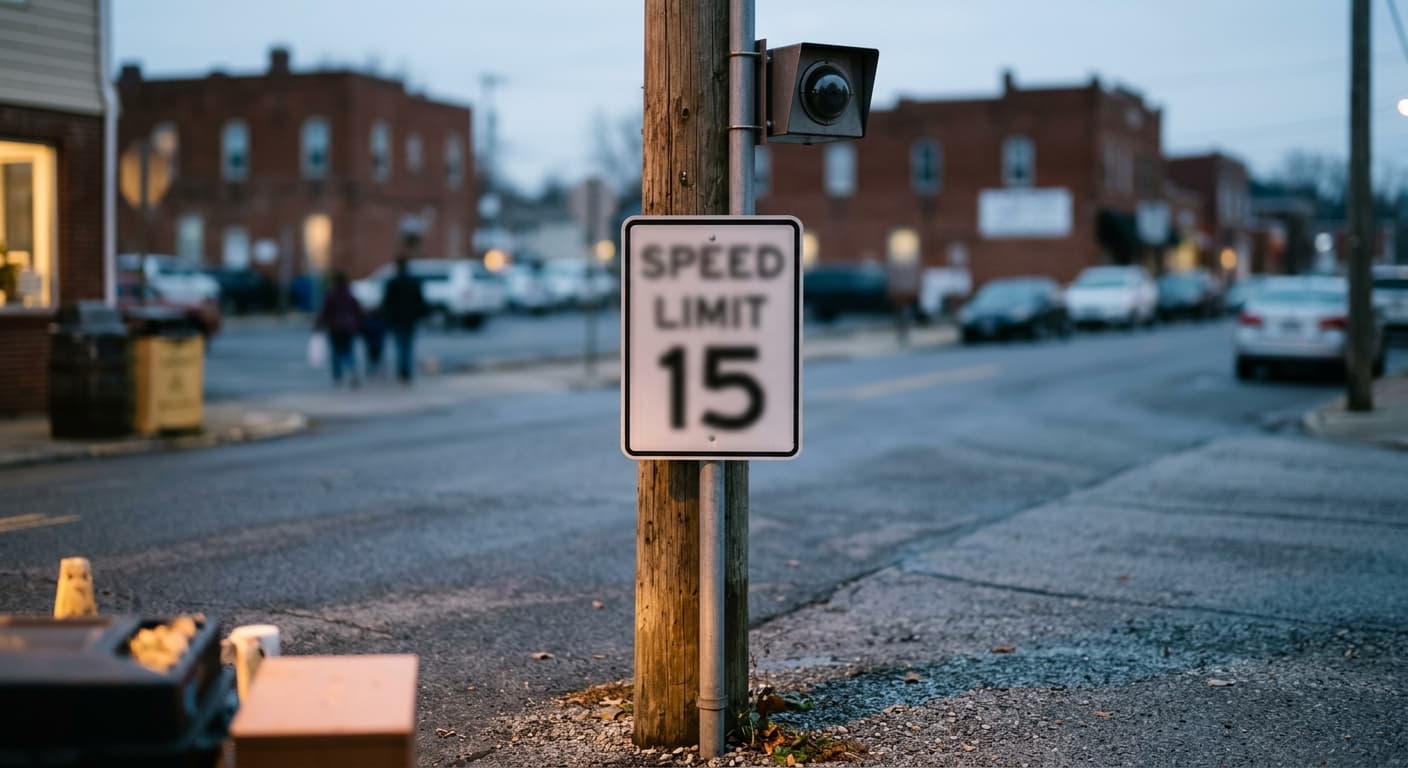
Maine is one of the clearest camera-ban states in the country. State law bars the use of a traffic surveillance camera to prove or enforce almost any motor vehicle violation, and that ban has been on the books since 2009 and reaffirmed since. If you got a ticket in Maine that you believe came from a red light or speed camera, the statute itself is a strong starting point for understanding why that should not have happened, and where the real, narrow exceptions actually sit.
The Ban: 29-A M.R.S. Section 2117
Maine's ban is written broadly and directly. Section 2117 states: «Except as provided in subsections 1 and 2, the State or a municipality may not use a traffic surveillance camera to prove or enforce a violation of this Title.» The statute defines a «traffic surveillance camera» as a device that, in conjunction with a lighted traffic-control device or a lane direction control device, as described in section 2057, subsections 1 and 3, or a speed measurement device as described in section 2075, subsection 4, automatically produces a photograph, microphotograph, videotape, or other recorded image of a vehicle at the time it is operated in violation of state law. Speed measurement devices are named in the definition itself, and section 2075, subsection 4 is the provision covering radar, laser and other electronic speed-measuring instruments. So the ban reaches red light cameras and automated speed cameras alike by the express words of the statute, not by inference from its purpose.
The ban was enacted by PL 2009 c. 223. PL 2019 c. 318, section 1, then amended the definition paragraph and enacted both of the carve-outs that exist today: subsection 1 for school-bus stop-arm cameras and subsection 2 for Maine Turnpike Authority toll photo-monitoring. The 2019 act is worth noting for what it did not do: it did not weaken the general ban or open any camera-enforcement pathway for red light or speed violations.
The ban holds today, but it is not settled politics. LD 1457 in the 132nd Legislature, a resolve that would have allowed the Maine Turnpike Authority to run a pilot program using automated speed control systems in highway work zones, was referred to the Transportation Committee on April 8, 2025 and carried over on May 19, 2025. It was reported out on March 31, 2026 on a divided report, with the committee majority recommending ought to pass as amended and the minority recommending ought not to pass. On April 9, 2026 the minority ought-not-to-pass report was accepted and the resolve died. Until a bill like that actually passes, section 2117 is what governs.
The Two Exceptions, and Why They Do Not Reopen the Ban
Section 2117's own exceptions are narrow and specific:
- School-bus stop-arm cameras. A camera mounted on a school bus may be used to enforce stop-arm violations under 29-A M.R.S. sec. 2308(2). Recordings from these cameras are confidential and subject to a 30-day retention cap unless they are released for an investigation or prosecution.
- Maine Turnpike toll photo-monitoring. The Maine Turnpike Authority may use photo-monitoring for toll enforcement under 23 M.R.S. sec. 1980. This is a billing and toll-collection mechanism, not a red light or speed camera program, and it sits outside the sec. 2117 ban by design.
Neither exception touches red light or speed enforcement on ordinary roads. If you receive a bus stop-arm citation or a turnpike toll notice, you are dealing with one of these two carved-out systems, not a workaround to the general ban. Toll billing amounts, notice procedures and dispute options are set by the Maine Turnpike Authority rather than by the camera-ban statute, so check those directly with the Authority.
Maine Drivers and Out-of-State Camera Fines
Section 2117 controls what Maine and its municipalities may do. It does not stop another state from mailing a Maine-plated driver a red light or speed camera notice for driving there. What Maine's own law addresses is which out-of-state outcomes follow you back to your license. The Driver License Compact, 29-A M.R.S. sec. 1454, is framed entirely around convictions: the home-state licensing authority gives the same effect to reported convictions for vehicular manslaughter or negligent homicide, operating under the influence, any felony committed with a motor vehicle, and failure to stop and render aid, and it treats other reported convictions as the home state's own laws provide.
A civil camera penalty assessed against a registered owner in another state is not a conviction of that kind, so it is not the sort of report the compact is built to act on. That is a point about the compact mechanism only. Whether an unpaid out-of-state camera fine can still reach you through collection, a registration hold, or that state's own court process depends on that state's law, so treat an out-of-state notice on its own terms.
Information last verified on 2026-08-12. This article has not yet been reviewed by a licensed lawyer.

Related Resources
- Traffic Camera Ticket Laws by State
- Do You Have to Pay a Camera Ticket?
- How to Fight a Camera Ticket
- Mississippi Traffic Camera Ticket Laws
- Can You Get a Speeding Ticket Without Being Pulled Over?
Last updated: 2026-08-12.
More Maine Laws
Frequently Asked Questions
Are red light cameras legal in Maine?
No. 29-A M.R.S. sec. 2117 bars the state or any municipality from using a traffic surveillance camera to prove or enforce a violation of the Motor Vehicle Title, which covers red light enforcement.
Are speed cameras legal in Maine?
No. The same statute, 29-A M.R.S. sec. 2117, prohibits camera-based speed enforcement, and it does so expressly: its definition of a traffic surveillance camera reaches a device used in conjunction with a speed measurement device as described in 29-A M.R.S. sec. 2075, subsection 4. Maine has no local-option or pilot-program exception for speed cameras. LD 1457, which would have let the Maine Turnpike Authority pilot automated speed control systems in highway work zones, was defeated on April 9, 2026.
Does Maine's camera ban have any exceptions?
Two, and both are narrow: school-bus-mounted cameras that enforce stop-arm violations under 29-A M.R.S. sec. 2308(2), and Maine Turnpike Authority toll photo-monitoring under 23 M.R.S. sec. 1980. Neither authorizes red light or speed camera tickets.
Can Maine Turnpike toll cameras issue tickets?
Toll photo-monitoring is a separate enforcement track for unpaid tolls, not a red light or speed camera ticket, and it is expressly carved out of the sec. 2117 ban. It is worth distinguishing from the ban because readers sometimes assume «no camera enforcement» covers tolls, and it does not.
If I get a school-bus stop-arm camera ticket in Maine, does the camera ban apply?
No. School-bus stop-arm cameras are one of the two statutory exceptions to Maine's camera ban and operate under their own rules, including a confidentiality requirement and a 30-day retention cap on recordings unless released for an investigation or prosecution.
Updates
Corrected the quoted definition of a traffic surveillance camera to include the speed-measurement clause that makes Maine's speed camera ban explicit, corrected the legislative history of the 2019 amendment, and added the outcome of the 2026 work-zone speed camera bill.
Independently fact-checked against the cited primary sources
The Law Behind This Article
This article rests on the statutory provisions below, held in our own legal record and retrieved from the official source. Tap a section to read the operative text.
Maine Revised Statutes, Title 29-A: MOTOR VEHICLES AND TRAFFIC, Chapter 19: OPERATION
§ 2117Use of traffic surveillance cameras restrictedIn force
Except as provided in subsections 1 and 2, the State or a municipality may not use a traffic surveillance camera to prove or enforce a violation of this Title. For purposes of this section, "traffic surveillance camera" means a device that, in conjunction with a lighted traffic-control device or a lane direction control device, as described in section 2057, subsections 1 and 3, or a speed measurement device as described in section 2075, subsection 4, automatically produces one or more photographs, one or more microphotographs, a videotape or any other recorded image of a vehicle at the time the vehicle is operated in violation of state law. [PL 2019, c. 318, §1 (AMD).] 1. School buses. The State or a municipality may use a traffic surveillance camera mounted on a school bus in conjunction with a lighted traffic-control device to prove or enforce a violation of section 2308, subsection 2.
Official text (excerpt) · last checked 2026-09-16 · Read the full text in our law library · Verify at legislature.maine.gov
United States Code Title 23
§ 148Highway safety improvement programIn forcecited in 3 of our articles
In this section, the following definitions apply: The term “high risk rural road” means any roadway functionally classified as a rural major or minor collector or a rural local road with significant safety risks, as defined by a State in accordance with an updated State strategic highway safety plan. The term “highway basemap” means a representation of all public roads that can be used to geolocate attribute data on a roadway. The term “highway safety improvement program” means projects, activities, plans, and reports carried out under this section. The term “highway safety improvement project” means strategies, activities, and projects on a public road that are consistent with a State strategic highway safety plan and— correct or improve a hazardous road location or feature; or address a highway safety problem. The term “highway safety improvement project” only includes a project for 1 or more of the following: An intersection safety improvement that provides for the safety of all road users, as appropriate, including a multimodal roundabout. Pavement and shoulder widening (including addition of a passing lane to remedy an unsafe condition).
Official text (excerpt) · last checked 2026-07-28 · Read the full text in our law library · Verify at uscode.house.gov
Cited in 6 court opinions in our collectionLatest citing opinion in our collection: 2021
Opinions citing this section in our collection:
- Loren Van Abbema and Barbara Van Abbema, and Edward R. Koeber and Mary D. Koeber v. Paul Fornell, D/B/A Warsaw Barge Loading Facility John O. Marsh, Secretary of the Army, and Lt. Gen. J.K. Bratton, Chief of Engineers, Department of the Army, Loren Van Abbema and Barbara Van Abbema, and Edward R. Koeber and Mary D. Koeber, People of the State of Illinois, Plaintiff-Intervenor-Appellant v. Paul Fornell, D/B/A Warsaw Barge Loading Facility John O. Marsh, Secretary of the Army, and Lt. Gen. J.K. Bratton, Chief of Engineers, Department of the Army (Court of Appeals for the Seventh Circuit 1986, 807 F.2d 633)“…er) and its surroundings. See Appellants' Brief at 22-33; 23 U.S.C. 148. However, not only did the Federal Hi…”
- Abbema v. Fornell (Court of Appeals for the Seventh Circuit 1986, 807 F.2d 633)“…er) and its surroundings. See Appellants’ Brief at 22-33; 23 U.S.C. 148. However, not only did the Federal Highw…”
- Diana Glazer v. State of Arizona (Arizona Supreme Court 2015, 237 Ariz. 160)“…Opinion of the Court travel. See 23 U.S.C. § 148(c)(1) (requiring a state to implement a…”
Identified automatically from the court opinions citing this section — not a ranking of which case controls.
Also relied on in: Maryland Traffic Camera Ticket Laws: Red Light, Speed & Work Zone Cameras Explained, Montana Traffic Camera Ticket Laws: Why Red Light and Speed Cameras Are Banned
Search our full record of US law — 2.1 million sections, every state + federal →
Sources and References
- 29-A M.R.S. sec. 2117, Traffic surveillance cameras prohibited (with school-bus and turnpike exceptions)(mainelegislature.org).gov
- 29-A M.R.S. sec. 1454, Driver License Compact, Article IV (effect of convictions in home state)(mainelegislature.org).gov
- 23 U.S.C. 148, Federal Highway Safety Improvement Program (no camera-specific national mandate)(law.cornell.edu)
- NHTSA/FHWA, Speed Safety Camera Program Planning and Operations Guide (2023)(pedbikeinfo.org)
- 29-A M.R.S. sec. 2075(4), Speed measurement (radar, laser and other electronic speed-measuring instruments) - the device class cross-referenced in the sec. 2117 camera definition(legislature.maine.gov)
- Maine Legislature, LD 1457 (132nd Legislature) status - Maine Turnpike Authority work-zone automated speed control pilot; minority ought-not-to-pass report accepted April 9, 2026(legislature.maine.gov)