Chicago Camera Tickets: Red Light and Speed Camera Rules
Independently fact-checked against primary sources (last audited August 12, 2026). · 9 primary sources cited on this page. How we verify our legal content
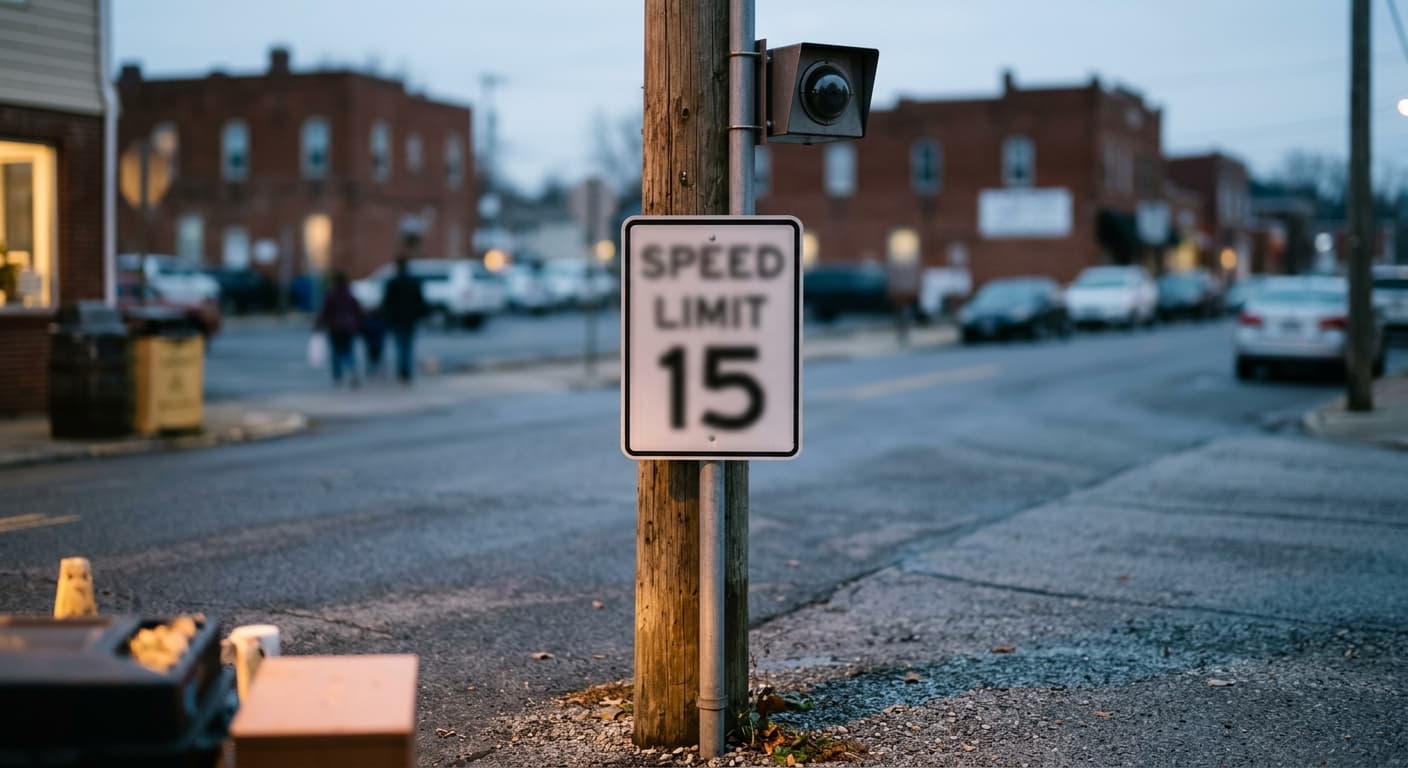
Chicago runs Illinois's largest camera-enforcement program, and both its red-light and speed cameras are owner-liability civil penalties under state law, meaning no license points and no effect on your driving record, whatever the fine amount.
Chicago's Current Camera Fines
Illinois law authorizes red-light cameras under 625 ILCS 5/11-208.6, limited to eight named counties including Cook, and speed cameras under 625 ILCS 5/11-208.8, which by its own text applies only to municipalities of 1,000,000 or more residents, meaning Chicago alone. The city's own 2024 Automated Enforcement Annual Report confirms the current fine schedule: «Red light running tickets have remained $100 since 2003,» and speed tickets run «$35... for vehicles exceeding the speed limit by 6-10 mph» and «$100... for 11 or more mph over,» a threshold change from the earlier 10-mph trigger that took effect in 2021.
The two programs are legally separate systems, not one camera doing two jobs. Section 11-208.6 expressly forbids using a red-light system to also record speed, and section 11-208.8 confines speed cameras to a defined «safety zone,» within one-eighth of a mile of school or park property. A camera you pass every day may lawfully issue only one kind of ticket depending on which statute authorizes it and where it sits.
Why the Camera Fine Doesn't Touch Your License or Insurance
Illinois's statute states directly that a civil camera penalty «is not a violation of a traffic regulation governing the movement of vehicles and may not be recorded on the driving record of the owner of the vehicle» (625 ILCS 5/11-208.6(j)), with a parallel clause governing speed cameras under § 11-208.8. This is also the right place to correct a piece of dead law that still circulates widely: Illinois used to allow license suspension after five unpaid camera tickets under 625 ILCS 5/6-306.5, but that statute shows as «Repealed by P.A. 101-652, eff. 7-1-21» on the state's own code site. Content describing that suspension regime as current is describing a rule that has not existed since mid-2021.
The Warning Periods Before You Can Be Fined
Chicago builds in two separate warning mechanisms. Any newly activated camera location runs a 30-day warning-only period during which violations generate no fine. Separately, and independent of how long the camera has been active, «each registered license plate will receive one additional warning notice the first time it violates the speed limit in a Speed Safety Zone,» per the city's own program FAQ, a zero-dollar first ticket confirmed in the 2024 annual report.
How to Contest a Chicago Camera Ticket
You have 21 days from the date the citation issues to contest it, by mail or in person, per the city's Automated Speed Enforcement FAQ. If you do not respond within that window, «a Notice of Determination is sent to the vehicle owner stating that he or she has been found liable by default,» and reversing that requires an in-person appearance to petition to set the default aside. Behind the scenes, Chicago's review chain runs from the vendor to the Department of Finance to an independent vendor and finally to a Department of Finance employee for the actual final determination, a structure the city adopted following a vendor-corruption scandal involving a prior camera contractor. The 2024 annual report confirms the city now bars vendor political contributions and requires that final call to be made by a city employee, not the vendor.
Enforcement Hours
Chicago's school-zone cameras may record a violation only on school days, and then no earlier than 6 a.m. and no later than 8:30 p.m. when the school day falls Monday through Thursday, or 9 p.m. when the school day is a Friday. That is narrower than «weekdays»: on summer break, winter break, and other days the school district is not in session, a school-zone camera has no authority to record a violation at all. A park-zone camera may operate no earlier than one hour before the park facility opens to the public and no later than one hour after it closes (625 ILCS 5/11-208.8(a-5)).

What Happens If You Don't Pay
State law provides the backbone here. An unpaid, finally determined camera fine «will constitute a debt due and owing the municipality,» which Chicago can pursue as an ordinary civil money judgment, and a vehicle becomes «eligible for immobilization,» the boot, once its owner accumulates the number of unpaid final determinations set by city ordinance, with a mandatory pre-boot notice and a right to a hearing on that notice (625 ILCS 5/11-208.3). The city's own Department of Finance fee schedule shows exactly what missing the payment deadline costs: its Late Penalty Payment Amount equals the initial fine on every camera-violation line, so a $35 speed ticket (6 to 10 mph over) becomes $70 total, and a $100 red-light or 11-plus-mph speed ticket becomes $200 total. CHI311's official boot-eligibility rule sets the ordinance threshold precisely: a registered owner becomes boot-eligible after accruing three or more unpaid parking, red light, or automated speed enforcement tickets in final determination status, or two or more such tickets if any one of them is more than a year old. CHI311 also lists a $100 boot fee for a passenger vehicle, and states a booted, still-unpaid vehicle becomes eligible to be towed after 24 hours, plus a $150 tow fee and per-day storage fees. What state law forecloses outright is license suspension: that hook was repealed in 2021, and nothing in current Illinois or Chicago law revives it.
Defenses You Can Raise
The available defenses differ depending on which camera issued the ticket, because the two programs sit in different statutes.
On a red-light ticket, 625 ILCS 5/11-208.6(h) lets the court or hearing officer consider that the vehicle or its registration plates were stolen before the violation occurred, that the vehicle was hijacked, that the driver entered the intersection on red in order to yield the right-of-way to an emergency vehicle or as part of a funeral procession, and any other evidence or issue a municipal or county ordinance adds.
On a speed-camera ticket, 625 ILCS 5/11-208.8(j) lists stolen plates or a stolen vehicle, a hijacked vehicle, and the fact «that the driver of the motor vehicle received a Uniform Traffic Citation from a police officer for a speeding violation occurring within one-eighth of a mile and 15 minutes of the violation that was recorded by the system,» plus anything municipal ordinance adds. In plain terms, if an officer already pulled you over and wrote you a speeding ticket for essentially the same moment and place, the camera citation does not stack on top of it.
Naming the driver is not a defense to either ticket. Illinois's affidavit-of-custody-and-control provision applies «For purposes of the required traffic education program only» (625 ILCS 5/11-208.6(j-5)): a registered owner may swear that a named person had custody and control of the vehicle, and if that person completes the required traffic education program, the owner does not have to. The provision says nothing about the civil penalty, which stays with the registered owner, and it has no counterpart anywhere in the speed-camera statute. Whichever defense applies, it is raised through the same 21-day contest process described above, whether by mail or at an administrative hearing.
Information last verified on 2026-08-12. This article has not yet been reviewed by a licensed lawyer.
Related Resources
- Traffic Camera Ticket Laws by State
- Do You Have to Pay a Camera Ticket?
- How to Fight a Camera Ticket
- NYC Camera Tickets
- Illinois Traffic Camera Tickets
Last updated: 2026-08-12.
Frequently Asked Questions
How much is a Chicago red light camera ticket?
A flat $100, a figure the city's own program has held since 2003, per Chicago's 2024 Automated Enforcement Annual Report.
How much is a Chicago speed camera ticket?
$35 for driving 6 to 10 mph over the posted limit, and $100 for 11 mph or more over. The 6-mph threshold has been current since a 2021 change lowered it from the earlier 10-mph trigger.
Can Chicago suspend my license for unpaid camera tickets?
No. Illinois repealed the statute that once allowed license suspension for unpaid camera tickets, 625 ILCS 5/6-306.5, effective July 1, 2021. Advice describing that suspension risk today is describing dead law.
How long do I have to contest a Chicago camera ticket?
21 days from the citation date, by mail or in person, per the city's Automated Speed Enforcement FAQ. Missing that window results in a default finding of liability.
Will I get a warning before a Chicago camera ticket?
Generally yes, in two ways: every newly activated camera location has a 30-day warning-only period, and every license plate separately gets one zero-dollar warning notice the first time it violates the speed limit in a Speed Safety Zone.
Can Chicago boot my car over unpaid camera tickets?
Yes. CHI311 sets the ordinance threshold: three or more unpaid parking, red light, or speed camera tickets in final determination status, or two or more if one is over a year old. State law backs this with a mandatory pre-boot notice and hearing right (625 ILCS 5/11-208.3), and a booted, still-unpaid vehicle becomes eligible to be towed after 24 hours.
What happens if I pay a Chicago camera ticket late?
The fine doubles. Chicago's Department of Finance fee schedule sets the Late Penalty Payment Amount equal to the initial fine on every camera-violation line, so a $35 speed ticket (6-10 mph over) becomes $70 total, and a $100 red-light or 11-plus-mph speed ticket becomes $200 total.
Does a Chicago camera ticket affect my insurance?
No. Illinois law states a civil camera penalty is not a moving-violation conviction and is not recorded on the driving record, which keeps it out of reach for insurers.
Updates
Corrected the defenses section: Illinois's custody-and-control affidavit applies only to the traffic education program and does not shift the red-light penalty to the driver you name, the speed-camera statute has its own separate defense list (including a same-time-and-place police citation), and school-zone cameras are authorized only on school days rather than all weekdays.
Independently fact-checked against the cited primary sources
The Law Behind This Article
This article rests on the statutory provisions below, held in our own legal record and retrieved from the official source. Tap a section to read the operative text.
Illinois Compiled Statutes Chapter 625, Act 5 (Illinois Vehicle Code)
§ 11-208.6Automated traffic law enforcement systemIn forcecited in 4 of our articles
(a) As used in this Section, "automated traffic law enforcement system" means a device with one or more motor vehicle sensors working in conjunction with a red light signal to produce recorded images of motor vehicles entering an intersection against a red signal indication in violation of Section 11-306 of this Code or a similar provision of a local ordinance. An automated traffic law enforcement system is a system, in a municipality or county operated by a governmental agency, that produces a recorded image of a motor vehicle's violation of a provision of this Code or a local ordinance and is designed to obtain a clear recorded image of the vehicle and the vehicle's license plate. The recorded image must also display the time, date, and location of the violation. (b) As used in this Section, "recorded images" means images recorded by an automated traffic law enforcement system on: (1) 2 or more photographs; (2) 2 or more microphotographs; (3) 2 or more electronic images; or (4) a video recording showing the motor vehicle and, on at least one image or portion of the recording, clearly identifying the registration plate or digital registration plate number of the motor vehicle.
Official text (excerpt) · last checked 2026-09-14 · Read the full text in our law library · Verify at ilga.gov
Cited in 8 court opinions in our collectionLatest citing opinion in our collection: 2025
Opinions citing this section in our collection:
- Fischetti v. Village of Schaumburg (Appellate Court of Illinois 2012, 359 Ill. Dec. 920)“…uch a violation.” Pub. Act 94-795, § 5 (eff. May 22, 2006); 625 ILCS 5/11-208.6 (West 2006). Section 11-208.3 of t…”
- Kennedy v. City of Chicago (Appellate Court of Illinois 2022, 2022 IL App (1st) 210492)“…The red light camera statute of the Illinois Vehicle Code (625 ILCS 5/11-208.6(m) (West 2014)) authorizes municipalit…”
- Farrar v. The City of Rolling Meadows (Appellate Court of Illinois 2014, 2013 IL App (1st) 130734)“…r a similar provision of a local ordinance.” 625 ILCS 5/11-208.6(a) (West 2012). Section 11-306 o…”
Identified automatically from the court opinions citing this section — not a ranking of which case controls.
Also relied on in: Do You Have to Pay a Camera Ticket? What Happens If You Don't, How to Fight a Camera Ticket: Real Defenses by State, Illinois Camera Ticket Laws: Red Light, Speed & License Rules
§ 11-208.8Automated speed enforcement systems in safety zonesIn forcecited in 2 of our articles
(a) As used in this Section: "Automated speed enforcement system" means a photographic device, radar device, laser device, or other electrical or mechanical device or devices installed or utilized in a safety zone and designed to record the speed of a vehicle and obtain a clear photograph or other recorded image of the vehicle and the vehicle's registration plate or digital registration plate while the driver is violating Article VI of Chapter 11 of this Code or a similar provision of a local ordinance. An automated speed enforcement system is a system, located in a safety zone which is under the jurisdiction of a municipality, that produces a recorded image of a motor vehicle's violation of a provision of this Code or a local ordinance and is designed to obtain a clear recorded image of the vehicle and the vehicle's license plate. The recorded image must also display the time, date, and location of the violation. "Owner" means the person or entity to whom the vehicle is registered.
Official text (excerpt) · last checked 2026-07-29 · Read the full text in our law library · Verify at ilga.gov
Cited in 3 court opinions in our collectionLatest citing opinion in our collection: 2024
Opinions citing this section in our collection:
- Maschek v. City of Chicago (Appellate Court of Illinois 2016, 2015 IL App (1st) 150520)“…rom operating an ASE camera near a school on that day. 625 ILCS 5/11-208.8(a-5) (West 2014) (ASE law). ¶2 Th…”
- Levine v. City of Chicago (Appellate Court of Illinois 2024, 2024 IL App (1st) 231245)“…3-1245 208.8 of the Illinois Vehicle Code (Vehicle Code) (625 ILCS 5/11-208.8 (West 2010)). Specifically, section 11…”
Identified automatically from the court opinions citing this section — not a ranking of which case controls.
§ 11-208.3Administrative adjudication of violations of traffic regulations concerning the standing, parking, or condition of vehicles, automated traffic law violations, and automated speed enforcement system violationsIn forcecited in 3 of our articles
(a) Any municipality or county may provide by ordinance for a system of administrative adjudication of vehicular standing and parking violations and vehicle compliance violations as described in this subsection, automated traffic law violations as defined in Section 11-208.6, 11-208.9, or 11-1201.1, and automated speed enforcement system violations as defined in Section 11-208.8. The administrative system shall have as its purpose the fair and efficient enforcement of municipal or county regulations through the administrative adjudication of automated speed enforcement system or automated traffic law violations and violations of municipal or county ordinances regulating the standing and parking of vehicles, the condition and use of vehicle equipment, and the display of municipal or county wheel tax licenses within the municipality's or county's borders. The administrative system shall only have authority to adjudicate civil offenses carrying fines not in excess of $500 or requiring the completion of a traffic education program, or both, that occur after the effective date of the ordinance adopting such a system under this Section.
Official text (excerpt) · last checked 2026-07-29 · Read the full text in our law library · Verify at ilga.gov
Cited in 28 court opinions in our collectionLatest citing opinion in our collection: 2026
Opinions citing this section in our collection:
- Waicekauskas v. Burke (Appellate Court of Illinois 2002)“…e violates the fair hearing requirement of Illinois Statute 625 ILCS 5/11-208.3. Between April 5 and April 14, 1999…”
- Mashal v. City of Chicago (Illinois Supreme Court 2012, 981 N.E.2d 951)“…hould be mailed to the vehicle’s registered owner. See 625 ILCS 5/11-208.3(b)(3), (b)(5)(i) (West 2010); Chicago…”
- Fischetti v. Village of Schaumburg (Appellate Court of Illinois 2012, 359 Ill. Dec. 920)“…vehicle.” Pub. Act 94-795, § 5 (eff. May 22, 2006) (adding 625 ILCS 5/11-208.3(b)(3) (West 2006)). Section 11-208…”
Identified automatically from the court opinions citing this section — not a ranking of which case controls.
Search our full record of US law — 2.1 million sections, every state + federal →
Sources and References
- 625 ILCS 5/11-208.6 (Chicago-area red light camera civil penalty; driver-custody affidavit; stolen/hijacked vehicle defenses)(www.ilga.gov).gov
- 625 ILCS 5/11-208.8 (Chicago speed camera authorization, municipalities of 1,000,000 or more)(www.ilga.gov).gov
- 625 ILCS 5/11-208.3 (adjudication, civil judgment, and vehicle immobilization for unpaid camera fines)(www.ilga.gov).gov
- 625 ILCS 5/6-306.5 (Illinois license-suspension statute for unpaid camera tickets, repealed eff. 7/1/2021)(www.ilga.gov).gov
- City of Chicago, 2024 Automated Enforcement Annual Report (current fine schedule; warning periods; review chain; vendor reforms)(www.chicago.gov).gov
- City of Chicago, Red Light Camera Enforcement Program(www.chicago.gov).gov
- City of Chicago, Automated Speed Enforcement Frequently Asked Questions (21-day contest window; default-determination process)(www.chicago.gov).gov
- City of Chicago Department of Finance, current parking/camera violation fee schedule (Late Penalty Payment Amount equals the initial fine on every camera-violation line)(www.chicago.gov).gov
- CHI311, Booted Vehicle Information (boot-eligibility threshold, boot fee, 24-hour tow eligibility)(311.chicago.gov).gov