
Colorado
Colorado Slip and Fall Laws: Proving Premises Liability Under the PLA
Independently fact-checked against primary sources (last audited August 17, 2026). · Reviewed by the RecordingLaw editorial team. · Law checked current as of August 17, 2026. · 5 primary sources cited on this page. How we verify our legal content

To win a slip and fall claim in Colorado, you must prove that the property owner failed to exercise reasonable care under the Premises Liability Act (C.R.S. § 13-21-115) and that this failure caused your injury. Colorado uses a modified comparative negligence rule with a 50% bar.
Proving a slip and fall claim in Colorado
Colorado slip and fall law is governed entirely by the Premises Liability Act (PLA), codified at C.R.S. § 13-21-115. The PLA replaced the common-law negligence framework and is the exclusive remedy for injuries that occur on another person's property. This means traditional negligence doctrines do not independently apply; the statutory framework controls.
Your right to recover depends first on your visitor status at the time of the fall. An invitee is someone invited onto the property for a business purpose or as a member of the public for a purpose for which the land is open. For invitees, the owner must use reasonable care to protect against dangers the owner actually knew about or should have known about in the exercise of reasonable care. One statutory carve-out narrows even that duty: under C.R.S. § 13-21-115(4)(c)(II), if the landowner's real property is classified for property-tax purposes as agricultural land or vacant land, an invitee may recover only for dangers the landowner actually knew about, which matters for falls on undeveloped lots and open parcels. A licensee receives somewhat narrower protection, generally limited to known dangers. A trespasser is owed only a duty not to be willfully or deliberately harmed.
Notice is central to most invitee claims. You must show the owner had actual notice of the hazard (a spill was reported, an employee created it) or constructive notice (the hazard existed long enough that a reasonable inspection would have discovered it). Courts often look to store inspection logs, surveillance footage, and employee testimony to establish what the owner knew and when.
The open-and-obvious doctrine in Colorado
Colorado does not allow property owners to escape liability simply because a hazard was obvious. In Vigil v. Franklin, 103 P.3d 322 (Colo. 2004), the Colorado Supreme Court held that the common-law open-and-obvious doctrine cannot be asserted as a defense under the PLA. The statute's specific enumeration of landowner duties to invitees, licensees, and trespassers makes no reference to whether a condition was open and obvious, and grafting that doctrine onto the PLA would contradict the legislature's chosen framework.
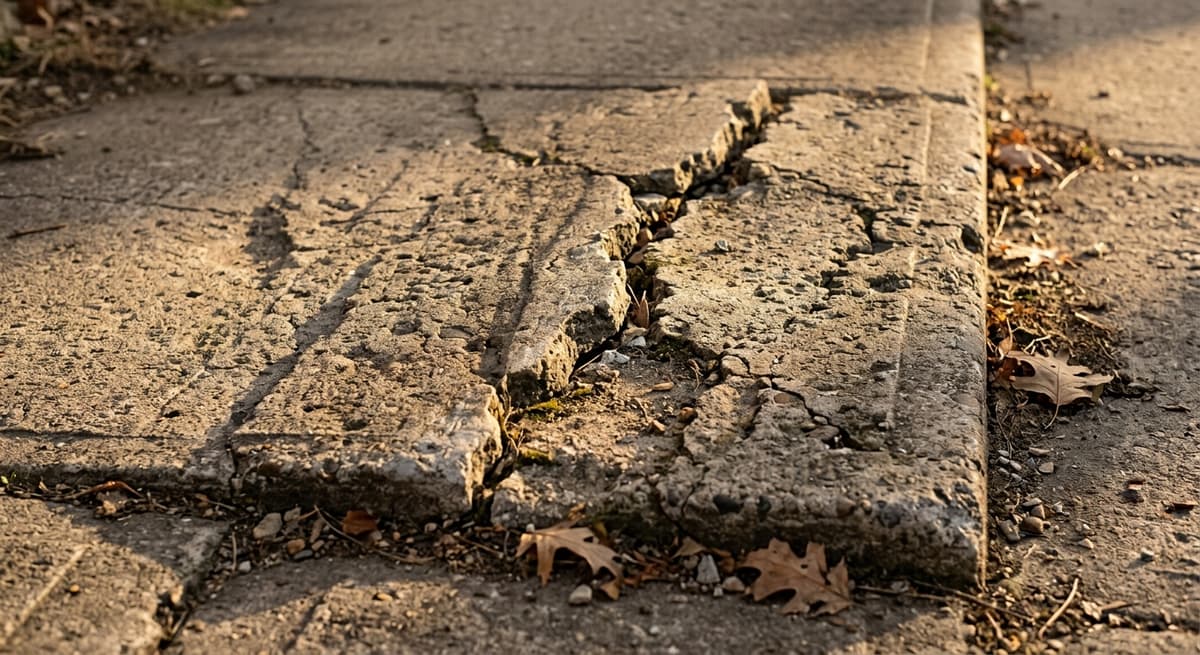
This is a significant departure from how most states handle obvious hazards. In Colorado, if the owner knew or should have known about a dangerous condition and failed to address it, the fact that the hazard was visible to you does not automatically defeat your claim. Under Vigil, the owner's duty, if any, is decided under the Premises Liability Act alone, without the common-law open-and-obvious defense. Separately, your own share of fault is still apportioned under Colorado's comparative negligence rule: recovery is reduced if you bear some fault, but it is not eliminated unless your fault reaches or exceeds 50%.
Ice, snow, and natural accumulation in Colorado
Colorado does not follow the "natural accumulation" rule that shields owners in some other states. Many jurisdictions hold that a property owner has no duty to remove ice or snow that accumulated naturally, reasoning that requiring removal would be impractical. Colorado rejected this approach.
Under the Premises Liability Act, a landowner owes invitees an ordinary reasonable-care duty to protect against dangers of which they knew or should have known, and this extends to ice and snow hazards. There is no blanket immunity for naturally fallen snow or ice that forms overnight. If a parking lot has had a recurring ice patch for days, if a landlord's exterior staircase regularly freezes and tenants have complained, or if a business's entryway collects water that freezes by morning, the owner cannot simply argue "it accumulated naturally" and walk away. Liability turns on whether the owner exercised reasonable care given what they knew or should have known, not on a natural-versus-unnatural distinction. In Vigil v. Franklin, 103 P.3d 322 (Colo. 2004), a diving case that did not involve ice or snow, the Colorado Supreme Court held that the PLA sets out the exclusive duties a landowner owes and displaced common-law defenses to those duties. The court also noted that its holding does not upset the common-law rule that property owners owe no duty to pedestrians to keep the sidewalks abutting their property reasonably clear of naturally accumulating snow and ice, because a fall on a publicly owned sidewalk is not an injury on the landowner's own real property.
How fault is shared: Colorado's negligence rule
Colorado follows modified comparative negligence with a 50% bar under C.R.S. § 13-21-111. Under this framework, your contributory negligence does not bar recovery unless your fault is "equal to or greater than" the negligence of the defendant(s). A plaintiff at exactly 50% fault recovers nothing; a plaintiff at 49% fault recovers 51% of their damages.
In practical terms: if a jury finds your total damages to be $100,000 but assigns you 30% of the fault, you recover $70,000. If the jury assigns you 50% or more, you recover zero. The statute itself is written in the singular, barring recovery when your share is "equal to or greater than the negligence of the person against whom recovery is sought," and it does not spell out how that comparison is run when several defendants are sued, which is a question Colorado courts work out case by case. A separate statute, C.R.S. § 13-21-111.5, then limits each defendant to paying only its own percentage of the fault: outside of a deliberate conspiracy, Colorado does not impose joint and several liability, so one defendant does not pay another's share.
This rule underlines why the open-and-obvious issue matters: an owner's attorney will argue that if you saw or should have seen the hazard and proceeded anyway, your fault percentage should be high. The more of that blame a jury assigns to you, the more your recovery shrinks or disappears entirely once it reaches 50%.
Deadlines: statute of limitations and government claims
Two deadlines govern Colorado slip and fall cases, and missing either one can permanently end your claim.
Personal-injury statute of limitations: Under C.R.S. § 13-80-102, you have 2 years from the date of injury to file a lawsuit in Colorado. There is a Colorado-specific exception worth noting: tort claims arising from a motor-vehicle accident have a 3-year deadline under C.R.S. § 13-80-101, but that does not apply to ordinary premises-liability slip and fall cases. For more on Colorado's civil filing deadlines, see the Colorado statute of limitations page.
Government notice of claim: If your fall occurred on state or municipal property, a second, much shorter deadline applies. The Colorado Governmental Immunity Act (C.R.S. § 24-10-109) requires a written notice of claim within 182 days after the date you discovered the injury. This is not merely procedural; Colorado courts treat CGIA compliance as a jurisdictional prerequisite to suing a government entity, and an untimely notice permanently bars the suit without exception. State-entity notices go to the Attorney General; local-entity notices go to the governing body or attorney of that entity. If you slipped in a city park, on a public sidewalk maintained by a municipality, or in a government building, you must act quickly.
What a Colorado slip and fall claim is worth
The value of a slip and fall settlement or verdict in Colorado depends on three main categories of damages.

Economic damages cover your actual financial losses: medical bills (emergency care, surgery, rehabilitation, future treatment), lost wages and lost earning capacity, and out-of-pocket expenses like medical equipment or home modifications. Economic damages are uncapped in Colorado.
Non-economic damages cover pain and suffering, emotional distress, loss of enjoyment of life, and similar intangible harms. Colorado caps non-economic damages under C.R.S. § 13-21-102.5 at exactly $1,500,000, but the scope of that cap is narrower than it first looks. Subsection (3)(a)(II) applies the $1,500,000 figure to civil actions filed on or after January 1, 2025 and before January 1, 2026, and to any claim for relief that accrues on or after January 1, 2025. A claim that accrued before 2025 and was not filed during 2025 falls under the older and substantially lower cap in subsection (3)(a)(I) instead. The $1,500,000 figure is fixed rather than floating: the statute does not adjust it for inflation until January 1, 2028, and every two years after that. Medical-malpractice and wrongful-death claims are governed by their own separate caps.
Comparative fault reduction: Whatever total damages a jury awards, they are reduced by your percentage of fault. If you are 30% at fault, you receive 70% of the verdict. Reach 50% fault and you receive nothing.
Use the Colorado Slip and Fall Settlement Calculator to get a rough sense of how these factors interact in your specific situation.
This article is general legal information, not legal advice. Premises liability law varies by state and changes, and case values depend on the specific facts. For advice about a specific fall, consult a licensed attorney in Colorado.
Related:
- Slip and Fall Laws by State (full 50-state hub)
- Colorado Slip and Fall Settlement Calculator
More Colorado Laws
Frequently Asked Questions
How do I prove a slip and fall in Colorado?
Under Colorado's Premises Liability Act (C.R.S. § 13-21-115), you must establish your visitor status (usually invitee), that a dangerous condition existed, that the owner had actual or constructive notice of the hazard, that the owner failed to exercise reasonable care, and that the failure caused your injury. Notice evidence includes surveillance video, inspection logs, prior complaints, and the duration the hazard was present.
Is Colorado an open-and-obvious state?
No. Colorado abolished the common-law open-and-obvious defense for premises-liability claims. The Colorado Supreme Court held in Vigil v. Franklin (2004) that the defense cannot be asserted under the Premises Liability Act. An obvious hazard cannot be used to defeat your claim under the common-law open-and-obvious doctrine; whether the owner owed and breached a duty is decided under the Premises Liability Act alone.
Can I sue for falling on ice in Colorado?
Yes. Colorado does not follow the natural-accumulation rule. Property owners owe invitees an ordinary reasonable-care duty under the PLA, which includes ice and snow hazards they knew or should have known about. There is no blanket immunity for naturally fallen ice or snow; liability depends on whether the owner exercised reasonable care. This applies to the owner's own property: in Vigil v. Franklin (2004) the Colorado Supreme Court noted that the common-law rule that owners owe pedestrians no duty to clear naturally accumulating snow and ice from public sidewalks abutting their property was left intact.
How long do I have to file a slip and fall lawsuit in Colorado?
Two years from the date of injury under C.R.S. § 13-80-102. If the fall occurred on government property (a public sidewalk, city building, state facility), you must also file a written notice of claim with the government entity within 182 days of discovering the injury under the Colorado Governmental Immunity Act (C.R.S. § 24-10-109). Missing the 182-day deadline is fatal to a government-entity claim.
Can I recover damages if I was partly at fault for my fall?
Yes, as long as your fault is below 50%. Colorado uses modified comparative negligence with a 50% bar (C.R.S. § 13-21-111). If you are 49% or less at fault, you recover damages reduced by your fault percentage. If you are exactly 50% at fault or more, you recover nothing.
How much is a Colorado slip and fall claim worth?
It depends on your economic losses (medical bills, lost wages), non-economic losses (pain and suffering), and your percentage of fault. Economic damages are uncapped. Non-economic damages are capped at $1,500,000 under C.R.S. § 13-21-102.5 for actions filed during 2025 and for any claim for relief that accrues on or after January 1, 2025; a claim that accrued earlier and was filed later falls under the older, substantially lower cap. Your total award is then reduced by your share of fault.
What is the Colorado Premises Liability Act?
C.R.S. § 13-21-115 is the exclusive statute governing slip and fall and other on-premises injury claims in Colorado. It replaced common-law landowner-duty rules and sets the owner's duty based on your visitor status: invitee (reasonable care for known or knowable dangers, narrowed to actually known dangers on land taxed as agricultural or vacant), licensee (known dangers), and trespasser (no willful harm). Because the PLA is exclusive, common-law defenses like open-and-obvious no longer apply (Vigil v. Franklin, 2004).
Updates
Corrected the description of Vigil v. Franklin to the holding the Colorado Supreme Court actually reached (the open-and-obvious defense does not survive the Premises Liability Act) and noted that the case did not address ice or snow on an owner's premises and left the public-sidewalk snow and ice no-duty rule intact.
Corrected the noneconomic damages cap to the exact $1,500,000 figure and its actual statutory date scope, removed a quotation misattributed to Colorado's comparative negligence statute, and added the agricultural and vacant land carve-out to the Premises Liability Act invitee duty.
Independently fact-checked against the cited primary sources; governing law re-checked for recent changes
Governing law re-checked for recent changes
Reviewed and approved by an editor
The Law Behind This Article
This article rests on the statutory provisions below, held in our own legal record and retrieved from the official source. Tap a section to read the operative text.
Colorado Revised Statutes, Title 13: Courts and Court Procedure
§ 13-21-115Actions against landowners - short title - legislative declaration - definitionsIn forcecited in 3 of our articles
(1) The short title of this section is the Colorado Premises Liability Act. (2) The general assembly finds and declares that: (a) The provisions of this section were enacted in 1986 to promote a state policy of responsibility by both landowners and those upon the land as well as to ensure that the ability of an injured party to recover is correlated with the injured party's status as a trespasser, licensee, or invitee; (b) These objectives were characterized by the Colorado supreme court as legitimate governmental interests in Gallegos v. Phipps, 779 P.2d 856 (Colo.
Official text (excerpt) · last checked 2026-09-07 · Read the full text in our law library · Verify at olls.info
Cited in 61 court opinions in our collectionLatest citing opinion in our collection: 2026
Opinions citing this section in our collection:
- Sofford v. Schindler Elevator Corp. (District Court, D. Colorado 1997, 954 F. Supp. 1459)“…ues. Is the Colorado landowner liability statute, C.R.S. § 13-21-115 (1996 Cum.Supp.), the sole basis for la…”
- Nelson v. United States (Court of Appeals for the Tenth Circuit 2019, 915 F.3d 1243)“…andowners may be liable to entrants on their property, see Colo. Rev. Stat. § 13-21-115(2)–(5), and aspects of it represent “su…”
- Traynom v. Cinemark USA, Inc. (District Court, D. Colorado 2013, 940 F. Supp. 2d 1339)“…emises liability under the Colorado Premises Liability Act, C.R.S. § 13-21-115; common law negligence; and as to some…”
Identified automatically from the court opinions citing this section — not a ranking of which case controls.
Also relied on in: Colorado Dog Bite Laws: Liability and Victim Rights, Tenth Circuit Affirms Club Q Dismissals Under Colorado's CPLA
§ 13-21-111Negligence cases - comparative negligence as measure of damagesIn forcecited in 7 of our articles
(1) Contributory negligence shall not bar recovery in any action by any person or his legal representative to recover damages for negligence resulting in death or in injury to person or property, if such negligence was not as great as the negligence of the person against whom recovery is sought, but any damages allowed shall be diminished in proportion to the amount of negligence attributable to the person for whose injury, damage, or death recovery is made. (2) In any action to which subsection (1) of this section applies, the court, in a nonjury trial, shall make findings of fact or, in a jury trial, the jury shall return a special verdict which shall state: (a) The amount of the damages which would have been recoverable if there had been no contributory negligence; and (b) The degree of negligence of each party, expressed as a percentage.
Official text (excerpt) · last checked 2026-09-08 · Read the full text in our law library · Verify at olls.info
Cited in 26 court opinions in our collectionLatest citing opinion in our collection: 2026
Opinions citing this section in our collection:
- Lyons v. Nasby (Supreme Court of Colorado 1989, 13 Brief Times Rptr. 324)“…statute and is himself negligent as a matter of law. See C.R.S. section 13-21-111(1) (1973).” 8 Id. In our view,…”
- Colorado Flying Academy, Inc., a Colorado Corporation, Federal Insurance Company, and Associated Aviation Underwriters v. The United States of America (Court of Appeals for the Tenth Circuit 1984, 724 F.2d 871)“…lorado comparative negligence statute. See Colo.Rev.Stat. § 13-21-111 (1973). 10 . Plain…”
- Weaver v. Blake Ex Rel. Blake (Court of Appeals for the Tenth Circuit 2006, 454 F.3d 1087)“…percentage of responsibility is fifty percent or more. See Colo. Rev. Stat. § 13-21-111(1) (2005) (“Contributory negligence sha…”
Identified automatically from the court opinions citing this section — not a ranking of which case controls.
Also relied on in: Colorado Dashcam Laws: Legality, Mounting Rules, and Evidence Use, Colorado Car Accident Laws: Fault, Insurance, and Your Claim, Truck Accident Laws in Colorado (2026): Deadlines & Liability
§ 13-80-102General limitation of actions - two yearsIn forcecited in 9 of our articles
(1) The following civil actions, regardless of the theory upon which suit is brought, or against whom suit is brought, must be commenced within two years after the cause of action accrues, and not thereafter: (a) Tort actions, including but not limited to actions for negligence, trespass, malicious abuse of process, malicious prosecution, outrageous conduct, interference with relationships, and tortious breach of contract; except that this paragraph (a) does not apply to any tort action arising out of the use or operation of a motor vehicle as set forth in section 13-80-101 (1)(n); (b) All actions for strict liability, absolute liability, or failure to instruct or warn; (c) All actions, regardless of the theory asserted, against any veterinarian; (d) All actions for wrongful death, except as described in subsection (2) of this section; (e) Repealed.
Official text (excerpt) · last checked 2026-09-08 · Read the full text in our law library · Verify at olls.info
Cited in 214 court opinions in our collectionLatest citing opinion in our collection: 2026
Opinions citing this section in our collection:
- Bad Boys of Cripple Creek Mining Co. v. City of Cripple Creek (Colorado Court of Appeals 2000, 2000 Colo. J. C.A.R. 892)“…claim is barred by the applicable statute of limitations, C.R.S. 13-80-102(l)(h) and (i). 2. The Court find…”
- Workman v. Jordan (Court of Appeals for the Tenth Circuit 1994, 32 F.3d 475)“…lorado’s two-year limitations period applies to this claim. Colo. Rev.Stat. § 13-80-102 (1987). 5 Section 1983 claims accrue w…”
- McKay v. Hammock (Court of Appeals for the Tenth Circuit 1984, 730 F.2d 1367)“…s is the one-year period for false imprisonment provided by Colo.Rev.Stat. § 13-80-102 (1973), and that this period was extend…”
Identified automatically from the court opinions citing this section — not a ranking of which case controls.
Also relied on in: Colorado Statute of Limitations: Filing Deadlines by Case Type, Motorcycle Accident Laws in Colorado (2026): Deadlines & Helmets, Colorado Wrongful Death Laws (2026): Deadlines & Who Can Sue
§ 13-21-102.5Limitations on damages for noneconomic loss or injury - definitionsIn forcecited in 3 of our articles
(1) The general assembly finds, determines, and declares that awards in civil actions for noneconomic losses or injuries often unduly burden the economic, commercial, and personal welfare of persons in this state; therefore, for the protection of the public peace, health, and welfare, the general assembly enacts this section placing monetary limitations on such damages for noneconomic losses or injuries. (2) As used in this section: (a) Derivative noneconomic loss or injury means nonpecuniary harm or emotional stress to persons other than the person suffering the direct or primary loss or injury. (a.5) Inflation means the annual percentage change in the United States department of labor's bureau of labor statistics consumer price index for Denver-Aurora-Lakewood for all items paid by all urban consumers, or its successor index. (b) Noneconomic loss or injury means nonpecuniary harm for which damages are recoverable by the person suffering the direct or primary loss or injury, including pain and suffering, inconvenience, emotional stress, and impairment of the quality of life.
Official text (excerpt) · last checked 2026-07-29 · Read the full text in our law library · Verify at olls.info
Cited in 18 court opinions in our collectionLatest citing opinion in our collection: 2025
Opinions citing this section in our collection:
- James v. Coors Brewing Co. (District Court, D. Colorado 1999, 73 F. Supp. 2d 1250)“…ges for non-economic losses). The introductory paragraph to C.R.S. § 13-21-102.5 states: The general assembly fin…”
- LEDSTROM BY AND THROUGH LEDSTROM v. Keeling (District Court, D. Colorado 1998, 10 F. Supp. 2d 1195)“…limitation on damages for noneconomic loss or injury under C.R.S. § 13-21-102.5? Factual Background…”
- Dorr v. Briggs (District Court, D. Colorado 1989, 709 F. Supp. 1005)“…his action and not to apply the non-economic damages cap of C.R.S. § 13-21-102.5 (1987 Repl.Vol. 6A) because of its unco…”
Identified automatically from the court opinions citing this section — not a ranking of which case controls.
§ 13-21-111.5Civil liability cases - pro rata liability of defendants - respondeat superior - shifting financial responsibility for negligence in construction agreements - legislative declarationIn force
(1) In an action brought as a result of a death or an injury to person or property, no defendant shall be liable for an amount greater than that represented by the degree or percentage of the negligence or fault attributable to such defendant that produced the claimed injury, death, damage, or loss, except as provided in subsection (4) of this section. (1.5) (a) Notwithstanding any provision of subsection (1) of this section to the contrary, when an employer or principal acknowledges vicarious liability for an employee's or agent's negligence, a plaintiff's direct negligence claims against the employer or principal are not barred. A plaintiff may bring such claims, and conduct associated discovery, in addition to claims and discovery based on respondeat superior. (b) Consistent with current law, nothing in this subsection (1.5) permits a plaintiff to recover compensatory and exemplary damages more than once for the same injury. (c) In enacting this subsection (1.5), it is the intent of the general assembly to reverse the holding in Ferrer v. Okbamicael, 390 P.3d 836 (Colo.
Official text (excerpt) · last checked 2026-07-29 · Read the full text in our law library · Verify at olls.info
Cited in 83 court opinions in our collectionLatest citing opinion in our collection: 2026
Opinions citing this section in our collection:
- Resolution Trust Corp. v. Heiserman (Supreme Court of Colorado 1995, 19 Brief Times Rptr. 1148)“…iability may be imposed on two or more persons, pursuant to C.R.S. § 13-21-111.5(4), where the alleged “tortious act” is…”
- Slack v. Farmers Insurance Exchange (Supreme Court of Colorado 2000, 2000 Colo. J. C.A.R. 3458)“…bility may be imposed on two or more persons, pursuant to C.R.S. § 13-21-111.5(4), where the alleged "tortious act" is…”
- People v. Rosenfeld (Supreme Court of Colorado 2007, 180 P.3d 448)“…a custody order in the state case. 9 . C.R.S.§ 13-21-111.5(4). 10 . The recor…”
Identified automatically from the court opinions citing this section — not a ranking of which case controls.
§ 13-80-101General limitation of actions - three yearsIn forcecited in 7 of our articles
(1) The following civil actions, regardless of the theory upon which suit is brought, or against whom suit is brought, shall be commenced within three years after the cause of action accrues, and not thereafter: (a) All contract actions, including personal contracts and actions under the Uniform Commercial Code, except as otherwise provided in section 13-80-103.5; (b) Repealed. (c) All actions for fraud, misrepresentation, concealment, or deceit except those in section 13-80-102 (1)(j); (d) and (e) Repealed.
Official text (excerpt) · last checked 2026-07-29 · Read the full text in our law library · Verify at olls.info
Cited in 77 court opinions in our collectionLatest citing opinion in our collection: 2026
Opinions citing this section in our collection:
- Jones v. Cox (Supreme Court of Colorado 1992, 16 Brief Times Rptr. 555)“…Accident Reparations Act", part 7 of article 4 of title 10, C.R.S. § 13-80-101(1)(j), 6 C.R.S. (1986 Supp.). Jones arg…”
- Grynberg v. Total S.A. (Court of Appeals for the Tenth Circuit 2008, 538 F.3d 1336)“…uciary duty is three years from when the claim accrues. See Colo. Rev. Stat. § 13-80-101(1)(f). To establish a claim under Color…”
- Ebrahimi v. E.F. Hutton & Co. (Court of Appeals for the Tenth Circuit 1988, 852 F.2d 516)“…three-year limitations period for general fraud pursuant to Colo.Rev.Stat. § 13-80-101(l)(c) (1987), 3 rather than the antifr…”
Identified automatically from the court opinions citing this section — not a ranking of which case controls.
Also relied on in: Colorado Debt Collection Laws: Wage Garnishment, Statute of Limitations, and Repossession
Colorado Revised Statutes, Title 24: Government - State
§ 24-10-109Notice required - contents - to whom given - limitationsIn force
(1) Any person claiming to have suffered an injury by a public entity or by an employee thereof while in the course of such employment, whether or not by a willful and wanton act or omission, shall file a written notice as provided in this section within one hundred eighty-two days after the date of the discovery of the injury, regardless of whether the person then knew all of the elements of a claim or of a cause of action for such injury. Compliance with the provisions of this section shall be a jurisdictional prerequisite to any action brought under the provisions of this article, and failure of compliance shall forever bar any such action. (2) The notice shall contain the following: (a) The name and address of the claimant and the name and address of his attorney, if any; (b) A concise statement of the factual basis of the claim, including the date, time, place, and circumstances of the act, omission, or event complained of; (c) The name and address of any public employee involved, if known; (d) A concise statement of the nature and the extent of the injury claimed to have been suffered; (e) A statement of the amount of monetary damages that is being requested.
Official text (excerpt) · last checked 2026-07-29 · Read the full text in our law library · Verify at olls.info
Cited in 77 court opinions in our collectionLatest citing opinion in our collection: 2025
Opinions citing this section in our collection:
- East Lakewood Sanitation District v. District Court in & for the County of Jefferson (Supreme Court of Colorado 1992, 16 Brief Times Rptr. 1997)“…al parties in a timely fashion pursuant to Colorado Statute C.R.S. 24-10-109. Although [Dalinas] was able to contact…”
- Woodsmall v. Regional Transportation District (Supreme Court of Colorado 1990, 800 P.2d 63)“…document to RTD *66 entitled “Notice of Claim Pursuant to C.R.S. 24-10-109,” with a copy to RTD’s legal counsel. T…”
- Brock v. Nyland (Supreme Court of Colorado 1998, 98 Colo. J. C.A.R. 1725)“…iff has substantially complied with the notice provision of C.R.S. § 24-10-109” because “[tlhe plaintiffs attorney sen…”
Identified automatically from the court opinions citing this section — not a ranking of which case controls.
Search our full record of US law — 2.1 million sections, every state + federal →
Sources and References
- C.R.S. § 13-21-115 — Colorado Premises Liability Act(leg.colorado.gov).gov
- C.R.S. § 13-21-111 — Contributory Negligence / Comparative Fault(leg.colorado.gov).gov
- C.R.S. § 13-80-102 — 2-Year Personal-Injury Statute of Limitations(leg.colorado.gov).gov
- C.R.S. § 24-10-109 — Colorado Governmental Immunity Act, Notice of Claim(leg.colorado.gov).gov
- C.R.S. § 13-21-102.5 — Non-Economic Damages Cap(leg.colorado.gov).gov
- Vigil v. Franklin, 103 P.3d 322 (Colo. 2004)(leg.colorado.gov)
- Colorado Revised Statutes 2025, Title 13 (Office of Legislative Legal Services) - C.R.S. 13-21-102.5, 13-21-111, 13-21-111.5, 13-21-115(content.leg.colorado.gov)
- C.R.S. 13-21-111.5 - Pro rata liability of defendants (Colorado OLLS, CRS 2025 Title 13)(olls.info)