
Alaska
Alaska Slip and Fall Laws: Proving Premises Liability
Independently fact-checked against primary sources (last audited August 17, 2026). · Reviewed by the RecordingLaw editorial team. · Law checked current as of August 17, 2026. How we verify our legal content

To win a slip and fall claim in Alaska, you must show that a property owner was negligent (owed you a duty of care, failed to address a hazardous condition, and that failure caused your injuries). Alaska applies pure comparative fault under AS 09.17.060, meaning your own partial fault reduces your recovery but never bars it entirely.
Proving a slip and fall claim in Alaska
Every premises liability claim in Alaska rests on four elements: duty, breach, causation, and damages. A property owner or occupier owes invitees (customers, guests) a duty to maintain the premises in a reasonably safe condition and to warn of known hazards. A mere tenant or social guest may receive a lesser duty, but commercial invitees get the full duty of care.
The notice requirement is central to most slip and fall cases. You must show the owner either had actual notice of the dangerous condition (an employee saw it, for example) or constructive notice (the hazard existed long enough that a reasonable inspection would have discovered it). The longer a hazard existed before your fall, the stronger the argument that the owner should have known about it and corrected it.
Causation ties the hazard to your injury. You must show the dangerous condition, not some other factor, was the proximate cause of your fall and resulting harm. Alaska courts apply the standard "but for" test of causation in premises cases. The stronger your medical records and incident documentation, the clearer the causal link.
The open-and-obvious doctrine in Alaska
In many states an open and obvious hazard is a complete defense, barring the injured person's recovery entirely. Alaska takes a different approach. In the seminal case Kremer v. Carr's Food Center, Inc., 462 P.2d 747 (Alaska 1969), the Alaska Supreme Court adopted Restatement (Second) of Torts Section 343A(1), which holds that a land possessor IS liable for harm from a known or obvious danger when the possessor should anticipate the harm despite its obviousness.
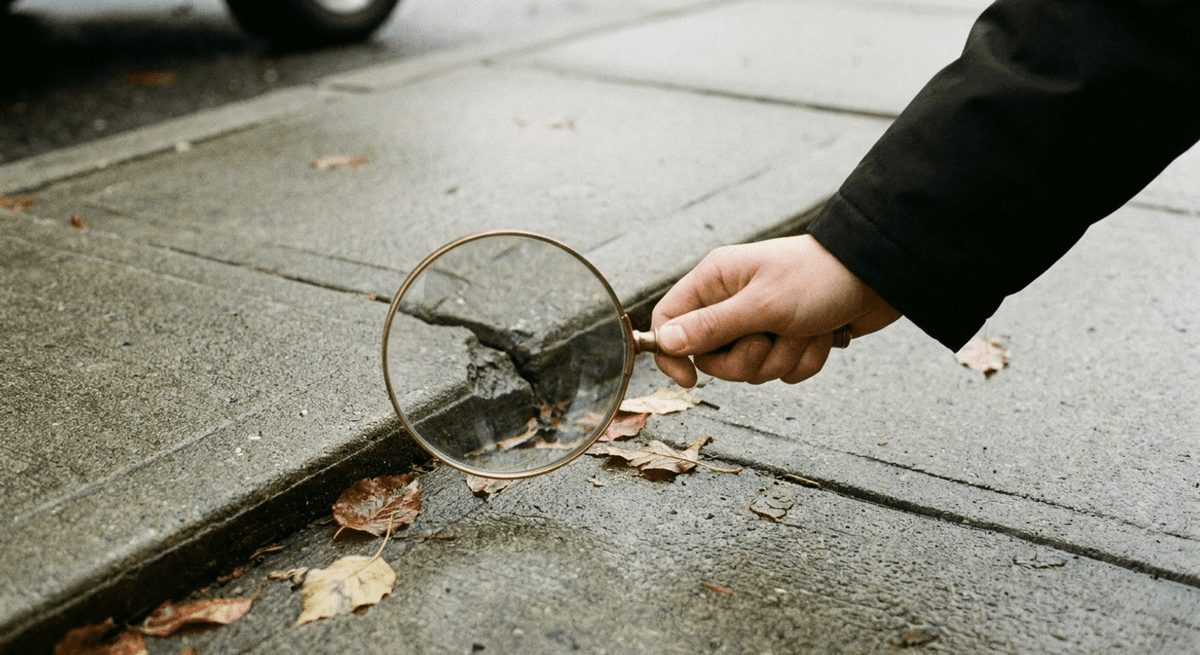
This means the question is not simply whether you could see the hazard. The court asks whether the owner should have anticipated that invitees would encounter the obvious risk anyway, perhaps because they are distracted, have no reasonable alternative route, or because the hazard is not truly easy to avoid in context. A slippery parking lot surface, a wet floor near the only exit, or an icy walkway customers must cross to enter a store can all generate liability even if the danger is visible.
Because Alaska is a pure comparative fault state, a plaintiff's awareness of the hazard goes to apportionment of fault rather than elimination of the owner's duty. Knowing about a risk and proceeding anyway may increase your share of fault, but it does not wipe out the owner's liability. Obviousness is a comparative factor, not a complete bar.
Ice, snow, and natural accumulation in Alaska
A number of states follow the "natural accumulation" doctrine, which holds that property owners have no duty to remove or warn of ice or snow that accumulated naturally from weather conditions. Alaska does not apply this rule to business invitees on private property, although the Alaska Supreme Court in Kremer noted that the rule had so far been limited to cases involving the duty municipalities owe to licensees.
The Kremer decision is directly on point: the Alaska Supreme Court reversed a directed verdict for a grocery store where a customer slipped on snow and ice that had formed into "deep ruts and sharp ridges" in the store parking lot. The court held that the jury could find the store failed to exercise reasonable care for its parking lot conditions. There was no exception shielding the store simply because the accumulation was caused by natural weather.
What this means for Alaska fall victims is that you do not need to prove the owner created the hazardous ice or tracked snow inside. You need to prove the owner knew or should have known about the dangerous condition and failed to address it within a reasonable time. What reasonable care requires depends on the facts of each case; Kremer did not adopt a flat requirement that owners keep their land free of ice and snow, but regular inspections, salting, sanding, or otherwise mitigating ice hazards can be part of it.
How fault is shared: Alaska's negligence rule
Alaska is a pure comparative fault state under AS 09.17.060 and AS 09.17.080. Under this system, the jury assigns a percentage of fault to each party, and each party's damages are reduced (but not eliminated) by their own percentage of fault. A plaintiff found 30% at fault recovers 70% of their damages. Even a plaintiff found 90% at fault can recover 10%.
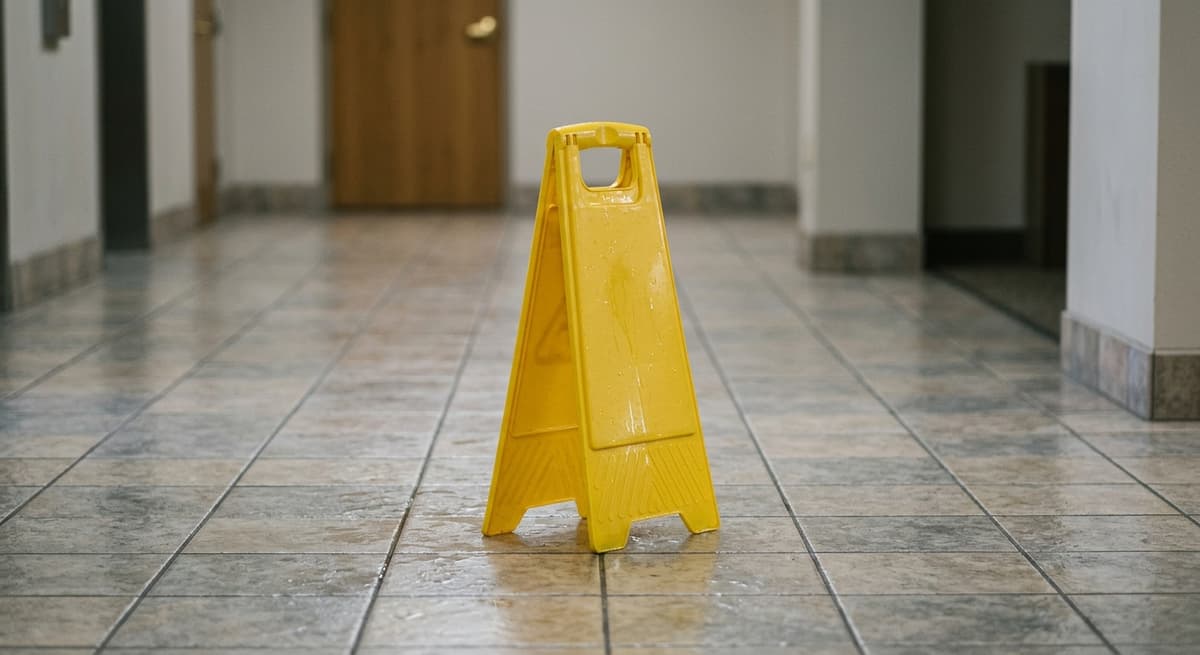
This rule is significantly more plaintiff-friendly than the modified comparative fault systems used in most states (which cut off recovery at 50% or 51% fault) and far more favorable than the pure contributory negligence rule used in a handful of states (Alabama, Maryland, North Carolina, Virginia, and DC), where any plaintiff fault bars all recovery.
Alaska also generally applies several liability rather than joint and several liability, meaning each defendant is responsible only for their own share of fault. If the at-fault parties include the property owner, a maintenance contractor, and a third party, each pays their proportionate share. Collecting the full judgment requires pursuing each defendant separately for their portion.
Deadlines: statute of limitations and government claims
Under AS 09.10.070, Alaska sets a 2-year statute of limitations for personal injury actions. The clock generally starts running on the date of the fall. However, Alaska applies a discovery rule: if the injury or its connection to the fall was not immediately apparent, the clock begins when you knew or reasonably should have known about it. Tolling (pausing the clock) applies for minors, persons who are legally incapacitated, and for defendants who conceal themselves. The two years usually start on the day of the fall, so get a free consultation with an Alaska premises liability lawyer to confirm your deadline and file before it passes (attorney advertising).
For falls on public property (state-owned buildings, municipal sidewalks, public parks), Alaska stands apart from most states in a critical way. There is NO special pre-suit notice-of-claim requirement. The State Tort Claims Act, AS 09.50.250, waives sovereign immunity but contains no short-notice-of-claim deadline. Suits against municipalities are authorized by AS 09.65.070, which likewise imposes no statutory notice period.
In Johnson v. City of Fairbanks, 583 P.2d 181 (Alaska 1978), the Alaska Supreme Court invalidated a city charter provision requiring a 120-day pre-suit notice, holding that such local notice requirements conflict with the uniform statewide limitations period. The controlling deadline for government claims is the general 2-year period. Practical caution: individual municipalities may still have local ordinance notice requirements, but those rules are legally vulnerable under Johnson. Note that AS 09.50.280 does not cap a state judgment; it bars only punitive damages against the state, while interest on the judgment is still allowed under AS 09.30.070's general rule. The state, like any other defendant, remains subject to the general non-economic-damages cap under AS 09.17.010 (the greater of $400,000 or life expectancy in years multiplied by $8,000, or the greater of $1,000,000 or life expectancy multiplied by $25,000 where the award is for severe permanent physical impairment or severe disfigurement).
For more on Alaska's personal injury time limits, see the Alaska statute of limitations page.
What an Alaska slip and fall claim is worth
Economic damages in Alaska (medical bills, lost wages, rehabilitation costs, future care) are not capped and are recoverable in full. The value of economic damages turns on the severity of your injuries, your earnings history, and your projected future care needs.

Non-economic damages (pain and suffering, emotional distress, loss of enjoyment of life) are capped in Alaska under AS 09.17.010, but the cap is a formula rather than a flat dollar ceiling. Under subsection (b), the limit is $400,000 or the injured person's life expectancy in years multiplied by $8,000, whichever is greater. Under subsection (c), where the award is for severe permanent physical impairment or severe disfigurement, the limit is $1,000,000 or life expectancy in years multiplied by $25,000, whichever is greater.
Because the statute applies whichever figure is larger, the cap rises above the headline dollar amounts whenever remaining life expectancy exceeds 50 years. A claimant with a 60-year life expectancy faces a cap of $480,000 under subsection (b) and $1,500,000 under subsection (c). Younger claimants therefore have a higher ceiling than the flat numbers suggest. The statute contains no inflation index or automatic adjustment, so the $8,000 and $25,000 multipliers change only if the legislature amends them.
Under subsection (d), multiple injuries sustained by one person in a single incident are treated as a single injury for cap purposes.
Both categories of damages are subject to reduction by your comparative fault percentage. If your total damages are $500,000 and you are found 25% at fault, your net recovery is $375,000 (before the cap analysis on non-economic damages). Use the Alaska slip and fall settlement calculator to model how fault percentages and damage categories interact in your scenario.
This article is general legal information, not legal advice. Premises liability law varies by state and changes, and case values depend on the specific facts. For advice about a specific fall, consult a licensed attorney in Alaska.
Related: Slip and Fall Laws by State (hub) | Alaska Slip and Fall Settlement Calculator | Alaska Statute of Limitations
More Alaska Laws
Frequently Asked Questions
How do I prove a slip and fall in Alaska?
You must prove four elements: (1) the property owner owed you a duty of care, (2) a hazardous condition existed on the premises, (3) the owner had actual or constructive notice of the hazard and failed to address it, and (4) that failure caused your injury and damages. Documenting the scene, gathering witness names, obtaining an incident report, and seeing a doctor immediately all strengthen your case.
Is Alaska an open-and-obvious state?
No, not in the way that bars recovery. Alaska adopted Restatement (Second) of Torts Section 343A in Kremer v. Carr's Food Center (1969), which means a visible hazard does not automatically defeat your claim. The owner can still be liable if it should have anticipated invitees would encounter the risk anyway. Your awareness of the hazard may increase your comparative fault share, but it does not eliminate the owner's duty.
Can I sue for falling on ice in Alaska?
Yes. Alaska does not apply the natural accumulation doctrine to business invitees on private property. A private possessor of land, such as a store, owes its business invitees a duty of reasonable care against ice and snow hazards, including in its parking lot. Kremer v. Carr's Food Center (1969) established this directly in an icy-parking-lot case. You must still show the owner knew or should have known about the dangerous condition and failed to act.
How long do I have to file a slip and fall lawsuit in Alaska?
You generally have 2 years from the date of your fall under AS 09.10.070. Alaska applies a discovery rule, so the clock may start later if your injury was not immediately apparent. If you were injured on government property (state or municipal), there is no short pre-suit notice-of-claim deadline in Alaska; the 2-year statute of limitations applies.
Can I recover if I was partly at fault for my fall?
Yes. Alaska uses pure comparative fault (AS 09.17.060), which means your damages are reduced by your share of fault but you are never barred from recovering entirely. Even if a jury finds you 80% responsible for your own fall, you can still recover 20% of your proven damages. This is one of the most plaintiff-friendly fault rules in the country.
How much is an Alaska slip and fall claim worth?
Every case turns on its specific facts. Economic damages (medical bills, lost income, future care) are uncapped and recoverable in full. Non-economic damages (pain and suffering) are capped under AS 09.17.010 at the greater of $400,000 or your life expectancy in years multiplied by $8,000, and, where the award is for severe permanent physical impairment or severe disfigurement, at the greater of $1,000,000 or life expectancy multiplied by $25,000. Because the statute takes whichever figure is larger, a younger claimant with a long life expectancy has a higher cap than the flat dollar amounts suggest. Both categories are reduced by your comparative fault percentage. Use the Alaska slip and fall settlement calculator to model your scenario.
Do I need to file a notice of claim before suing the government in Alaska?
No. Unlike most states, Alaska imposes no special pre-suit notice-of-claim deadline for suing the state or a municipality. The State Tort Claims Act (AS 09.50.250) and the municipal tort statute (AS 09.65.070) contain no such requirement, and the Alaska Supreme Court struck down a city charter notice provision in Johnson v. City of Fairbanks (1978). The controlling deadline is the standard 2-year personal injury statute of limitations.
Updates
Corrected the description of Kremer v. Carr's Food Center to reflect that the court declined to apply the natural accumulation rule to business invitees of private property owners, rather than rejecting the rule outright.
Corrected Alaska's noneconomic damages cap under AS 09.17.010: it is the greater of $400,000 or life expectancy in years times $8,000 (or the greater of $1,000,000 or life expectancy times $25,000 for severe permanent impairment or disfigurement), not a flat ceiling, and it carries no inflation adjustment.
Fixed 8 case-law and statute citations that all pointed at a generic Alaska court-library index page (and would have pointed at a now-dead touchngo.com mirror) instead of the specific cited section or court opinion; each now links to the actual text.
Independently fact-checked against the cited primary sources; governing law re-checked for recent changes
Corrected a fabricated '$400,000 state liability cap' attributed to AS 09.50.280, which only bars punitive damages and prejudgment interest against the state; the $400,000 figure is the general non-economic-damages cap under the unrelated AS 09.17.010.
Corrected a prior fix wave's error: AS 09.50.280 bars punitive damages against the state but does not bar prejudgment interest, which the statute's own text says runs under AS 09.30.070's general rule for judgments.
Governing law re-checked for recent changes
Reviewed and approved by an editor
The Law Behind This Article
This article rests on the statutory provisions below, held in our own legal record and retrieved from the official source. Tap a section to read the operative text.
Alaska Statutes, Title 9. Code of Civil Procedure, Chapter 17. Civil Damages and Apportionment of Fault
§ 09.17.060Effect of contributory faultIn forcecited in 8 of our articles
In an action based on fault seeking to recover damages for injury or death to a person or harm to property, contributory fault chargeable to the claimant diminishes proportionately the amount awarded as compensatory damages for the injury attributable to the claimant's contributory fault, but does not bar recovery.
Official text (excerpt) · last checked 2026-09-08 · Read the full text in our law library · Verify at akleg.gov
Cited in 20 court opinions in our collectionLatest citing opinion in our collection: 2025
In the courts (editorial summary, independently checked):Sowinski v. Walker (2008) described AS 09.17.060 as stating that a claimant cannot recover the portion of damages attributable to the claimant's own fault. Smith v. Ingersoll-Rand Co. (2000) held the 1986 act that enacted this rule broadened comparative fault in strict products liability to include a plaintiff's ordinary negligence.
Opinions citing this section in our collection:
- Sowinski v. Walker (Alaska Supreme Court 2008, 198 P.3d 1134)✓Two minors who drank liquor bought at DelRois Liquor Store died when their ATV struck a cable. The court described AS 09.17.060 as Alaska's codified comparative negligence rule and, with the pure several liability of AS 09.17.080, held the store owed only its 35 percent share.
- Loeb v. Rasmussen (Alaska Supreme Court 1991, 822 P.2d 914)✓A liquor store sold alcohol to a 17-year-old without checking her age, and she was hurt driving drunk. The court read AS 09.17.060 as leaving intact the rule barring the licensee from charging the minor's fault, but Sowinski (2008) called that passage dicta and superseded it.
- Smith v. Ingersoll-Rand Co. (Alaska Supreme Court 2000, 14 P.3d 990)“…s). 28 . Id. 29 . AS 09.17.060. 30 . AS 09.17.900…”
Identified automatically from the court opinions citing this section — not a ranking of which case controls.
Also relied on in: Alaska Dog Bite Laws: Liability and Victim Rights, Alaska Hit and Run Laws: Penalties and What to Do, Medical Malpractice Laws in Alaska (2026): Deadlines & Caps
§ 09.17.010Noneconomic damagesIn forcecited in 5 of our articles
(a) In an action to recover damages for personal injury or wrongful death, all damage claims for noneconomic losses shall be limited to compensation for pain, suffering, inconvenience, physical impairment, disfigurement, loss of enjoyment of life, loss of consortium, and other nonpecuniary damage. (b) Except as provided under (c) of this section, the damages awarded by a court or a jury under (a) of this section for all claims, including a loss of consortium claim, arising out of a single injury or death may not exceed $400,000 or the injured person's life expectancy in years multiplied by $8,000, whichever is greater. (c) In an action for personal injury, the damages awarded by a court or jury that are described under (b) of this section may not exceed $1,000,000 or the person's life expectancy in years multiplied by $25,000, whichever is greater, when the damages are awarded for severe permanent physical impairment or severe disfigurement. (d) Multiple injuries sustained by one person as a result of a single incident shall be treated as a single injury for purposes of this section.
Official text (excerpt) · last checked 2026-07-31 · Read the full text in our law library · Verify at akleg.gov
Cited in 26 court opinions in our collectionLatest citing opinion in our collection: 2025
Opinions citing this section in our collection:
- Evans Ex Rel. Kutch v. State (Alaska Supreme Court 2002, 56 P.3d 1046)“…1997:(1) the cap on noneconomic and punitive damages under AS 09.17.010 and .020; (2) the requirement that half…”
- L.D.G., Inc. v. Brown (Alaska Supreme Court 2009, 211 P.3d 1110)“…he non-economic damages were subject to a damages cap under AS 09.17.010, which would limit the non-economic dam…”
- State v. Carpenter (Alaska Supreme Court 2007, 171 P.3d 41)“…claim. Carpenter moved after trial for an order declaring AS 09.17.010(b) and AS 09.17.020(j) unconstitutional…”
Identified automatically from the court opinions citing this section — not a ranking of which case controls.
Also relied on in: Truck Accident Laws in Alaska (2026): Deadlines & Liability, Wrongful Death Laws in Alaska (2026): Deadlines & Who Can Sue, Motorcycle Accident Laws in Alaska (2026): Deadlines & Helmets
§ 09.17.080Apportionment of damagesIn forcecited in 2 of our articles
(a) In all actions involving fault of more than one person, including third-party defendants and persons who have settled or otherwise been released, the court, unless otherwise agreed by all parties, shall instruct the jury to answer special interrogatories or, if there is no jury, shall make findings, indicating (1) the amount of damages each claimant would be entitled to recover if contributory fault is disregarded; and (2) the percentage of the total fault that is allocated to each claimant, defendant, third-party defendant, person who has been released from liability, or other person responsible for the damages unless the person was identified as a potentially responsible person, the person is not a person protected from a civil action under AS 09.10.055, and the parties had a sufficient opportunity to join that person in the action but chose not to; in this paragraph, sufficient opportunity to join means the person is (A) within the jurisdiction of the court; (B) not precluded from being joined by law or court rule; and (C) reasonably locatable.
Official text (excerpt) · last checked 2026-07-31 · Read the full text in our law library · Verify at akleg.gov
Cited in 93 court opinions in our collectionLatest citing opinion in our collection: 2025
Opinions citing this section in our collection:
- Evans Ex Rel. Kutch v. State (Alaska Supreme Court 2002, 56 P.3d 1046)“…020(j); (3) the comparative apportionment of damages under AS 09.17.080; (4) the revised offer of judgment proc…”
- L.D.G., Inc. v. Brown (Alaska Supreme Court 2009, 211 P.3d 1110)“…4 P.3d 136 , 140 (Alaska 2004)). 22 . AS 09.17.080(a)(2). 23 . Evans…”
- Bohna v. HUGHES, THORSNESS, GANTZ (Alaska Supreme Court 1992, 828 P.2d 745)“…The trial court apparently applied the current version of AS 09.17.080(d). [15] However, the current version…”
Identified automatically from the court opinions citing this section — not a ranking of which case controls.
Alaska Statutes, Title 9. Code of Civil Procedure, Chapter 10. Limitations of Actions
§ 09.10.070Actions for torts, for injury to personal property, for certain statutory liabilities, and against peace officers and coroners to be brought in two yearsIn forcecited in 14 of our articles
(a) Except as otherwise provided by law, a person may not bring an action (1) for libel, slander, assault, battery, seduction, or false imprisonment, (2) for personal injury or death, or injury to the rights of another not arising on contract and not specifically provided otherwise; (3) for taking, detaining, or injuring personal property, including an action for its specific recovery; (4) upon a statute for a forfeiture or penalty to the state; or (5) upon a liability created by statute, other than a penalty or forfeiture; unless the action is commenced within two years of the accrual of the cause of action. (b) A person may not bring an action against a peace officer or coroner upon a liability incurred by the doing of an act in an official capacity or by the omission of an official duty, including the nonpayment of money collected upon an execution, unless brought within two years. This subsection does not apply to an action for an escape.
Official text (excerpt) · last checked 2026-07-31 · Read the full text in our law library · Verify at akleg.gov
Cited in 228 court opinions in our collectionLatest citing opinion in our collection: 2026
In the courts (editorial summary, independently checked):Alaska courts apply the two-year limit of AS 09.10.070(a) to personal injury and other tort claims. Cikan v. ARCO Alaska, Inc. (2005) held mental incompetency under AS 09.10.140(a) can toll it, with the competency dispute resolved at a pretrial hearing. Robinson v. Alaska Hous. Fin. Corp. (2019) applied it to dismiss untimely tort claims.
Opinions citing this section in our collection:
- Adkins v. Nabors Alaska Drilling, Inc. (Alaska Supreme Court 1980, 609 P.2d 15)✓A worker who suffered a head injury tripping over a hose at a drilling site added a new defendant eight months after AS 09.10.070's two-year period ran. The court held his evidence of concussion and amnesia raised a fact issue on tolling, so summary judgment was improper.
- Evans Ex Rel. Kutch v. State (Alaska Supreme Court 2002, 56 P.3d 1046)✓Injured plaintiffs facially challenged Alaska's 1997 tort reform, including how AS 09.10.070's two-year limit works with the minors tolling rule. The court held the narrower tolling given to children hurt before their eighth birthday is rationally based and upheld the scheme.
- Cikan v. ARCO Alaska, Inc. (Alaska Supreme Court 2005, 125 P.3d 335)✓A woman who slipped on ice outside an office building and hit her head sued nearly nine years later. The court held AS 09.10.070(a)'s two-year limit would ordinarily bar the claim, but her evidence of post-concussion incompetency required a pretrial evidentiary hearing.
Identified automatically from the court opinions citing this section — not a ranking of which case controls.
Also relied on in: Alaska Car Accident Laws: Fault, Insurance, and Your Claim, Alaska Defamation Laws: Libel, Slander & Suing (2026), Alaska Medical Records Retention Laws (2026 Guide)
Alaska Statutes, Title 9. Code of Civil Procedure, Chapter 50. Actions Where State a Party
§ 09.50.250Actionable claims against the stateIn force
A person or corporation having a contract, quasi-contract, or tort claim against the state may bring an action against the state in a state court that has jurisdiction over the claim. A person who may present the claim under AS 44.77 may not bring an action under this section except as set out in AS 44.77.040(c). A person who may bring an action under AS 36.30.560 36.30.695 may not bring an action under this section except as set out in AS 36.30.685. However, an action may not be brought if the claim (1) is an action for tort, and is based upon an act or omission of an employee of the state exercising due care in the execution of a statute or regulation, whether or not the statute or regulation is valid; or is an action for tort, and based upon the exercise or performance or the failure to exercise or perform a discretionary function or duty on the part of a state agency or an employee of the state, whether or not the discretion involved is abused; (2) is for damages caused by the imposition or establishment of, or the failure to impose or establish, a quarantine or isolation, or by other actions, by the state or its agents, officers, or employees under AS 18.15.355 18.15.395,…
Official text (excerpt) · last checked 2026-07-31 · Read the full text in our law library · Verify at akleg.gov
Cited in 158 court opinions in our collectionLatest citing opinion in our collection: 2025
Opinions citing this section in our collection:
- Adams v. State (Alaska Supreme Court 1976, 555 P.2d 235)“…der the first two requirements, is nonetheless immunized by AS 09.50.250, because the actions or inaction compla…”
- State v. Abbott (Alaska Supreme Court 1972, 498 P.2d 712)“…through her guardian, brought suit against the state under AS 09.50.250 alleging that the state had been neglig…”
- University of Alaska v. National Aircraft Leasing, Ltd. (Alaska Supreme Court 1975, 536 P.2d 121)“…t the University and the state are the same for purposes of AS 09.50.250-.300 which set forth the conditions und…”
Identified automatically from the court opinions citing this section — not a ranking of which case controls.
§ 09.50.280Judgment for plaintiff; punitive damagesIn force
If judgment is rendered for the plaintiff, it shall be for the legal amount found due from the state with interest as provided under AS 09.30.070 and without punitive damages.
Official text (excerpt) · last checked 2026-07-31 · Read the full text in our law library · Verify at akleg.gov
Cited in 22 court opinions in our collectionLatest citing opinion in our collection: 2009
Opinions citing this section in our collection:
- State v. Phillips (Alaska Supreme Court 1970, 470 P.2d 266)“…e from the state] became due.” 24 The statute, AS 09.50.280, now reads: If judgment is rende…”
- National Bank of Alaska v. J. B. L. & K. of Alaska, Inc. (Alaska Supreme Court 1976, 546 P.2d 579)“…State, [49] this court stated that the 1965 amendment to AS 09.50.280 ... evinces an intent that prejudgmen…”
- Stewart & Grindle, Inc. v. State (Alaska Supreme Court 1974, 524 P.2d 1242)“…llips [3] is misplaced. In Phillips, we ruled that under AS 09.50.280, [4] plaintiffs in a wrongful death ac…”
Identified automatically from the court opinions citing this section — not a ranking of which case controls.
Alaska Statutes, Title 9. Code of Civil Procedure, Chapter 65. Actions, Immunities, Defenses, and Duties
§ 09.65.070Suits against incorporated units of local governmentIn force
(a) Except as provided in this section, an action may be maintained against a municipality in its corporate character and within the scope of its authority. (b) A municipality may not require a person to post bond as a condition to bringing a cause of action against it. (c) An action may not be maintained against an employee or member of a fire department operated and maintained by a municipality or village if the claim is an action for tort or breach of a contractual duty and is based upon the act or omission of the employee or member of the fire department in the execution of a function for which the department is established.
Official text (excerpt) · last checked 2026-07-31 · Read the full text in our law library · Verify at akleg.gov
Cited in 56 court opinions in our collectionLatest citing opinion in our collection: 2025
Opinions citing this section in our collection:
- Breck v. Ulmer (Alaska Supreme Court 1987, 745 P.2d 66)“…t apply to assembly members, and that even if it did apply, AS 09.65.070(d)(2) shielded them from personal liabi…”
- Gates v. City of Tenakee Springs (Alaska Supreme Court 1991, 822 P.2d 455)“…the city had municipal immunity against Gates’ claims under AS 09.65.070. Gates’ appeal to this court raises fur…”
- Atkinson v. Haldane (Alaska Supreme Court 1977, 569 P.2d 151)“…y by virtue of 28 U.S.C. § 1360 (a) 1970, AS 09.55.580 and AS 09.65.070. [2] The superior court further ruled…”
Identified automatically from the court opinions citing this section — not a ranking of which case controls.
Alaska Statutes, Title 9. Code of Civil Procedure, Chapter 30. Judgments
§ 09.30.070Interest on judgments; prejudgment interestIn forcecited in 2 of our articles
(a) Notwithstanding AS 45.45.010, the rate of interest on judgments and decrees for the payment of money, including prejudgment interest, is three percentage points above the 12th Federal Reserve District discount rate in effect on January 2 of the year in which the judgment or decree is entered, except that a judgment or decree founded on a contract in writing, providing for the payment of interest until paid at a specified rate not exceeding the legal rate of interest for that type of contract, bears interest at the rate specified in the contract if the interest rate is set out in the judgment or decree. (b) Except when the court finds that the parties have agreed otherwise and except as provided by AS 45.05.111(d), prejudgment interest accrues from the day process is served on the defendant or the day the defendant received written notification that an injury has occurred and that a claim may be brought against the defendant for that injury, whichever is earlier. The written notification must be of a nature that would lead a prudent person to believe that a claim will be made against the person receiving the notification, for personal injury, death, or damage to property.
Official text (excerpt) · last checked 2026-07-31 · Read the full text in our law library · Verify at akleg.gov
Cited in 68 court opinions in our collectionLatest citing opinion in our collection: 2025
Opinions citing this section in our collection:
- Power Constructors, Inc. v. Taylor & Hintze (Alaska Supreme Court 1998, 960 P.2d 20)“…the normal statutory rate of 10.5%. See former AS 09.30.070(a). 25 PCI contends that t…”
- Shaw v. State, Department of Administration (Alaska Supreme Court 1993, 861 P.2d 566)“…n Shaw's obtaining post-conviction relief. Therefore, under AS 09.30.070, prejudgment interest commences upon se…”
- Alaska State Housing Authoarity v. Riley Pleas, Inc. (Alaska Supreme Court 1978, 586 P.2d 1244)“…t the quoted language remained the same. 8 AS 09.30.070 provides: Interest on Judgmen…”
Identified automatically from the court opinions citing this section — not a ranking of which case controls.
Also relied on in: Alaska Small Claims Court: $10,000 Limit, Fees and How to File
Search our full record of US law — 2.1 million sections, every state + federal →
Sources and References
- Kremer v. Carr's Food Center, Inc., 462 P.2d 747 (Alaska 1969)(law.justia.com)
- Johnson v. City of Fairbanks, 583 P.2d 181 (Alaska 1978)(law.justia.com)
- AS 09.10.070 (2-year personal injury statute of limitations)(law.justia.com)
- AS 09.17.060/.080 (pure comparative fault and apportionment)(law.justia.com)
- AS 09.17.010 (non-economic damages cap)(law.justia.com)
- AS 09.50.250 (Alaska State Tort Claims Act)(law.justia.com)
- AS 09.50.280 (bars punitive damages against the state; judgment interest still runs under AS 09.30.070; not a liability cap)(law.justia.com)
- AS 09.65.070 (municipal tort liability)(law.justia.com)
- AS 09.17.010 (noneconomic damages cap: greater of $400,000 or life expectancy x $8,000; greater of $1,000,000 or life expectancy x $25,000 for severe permanent impairment or disfigurement)(akleg.gov)
Paid attorney referral. RecordingLaw may receive compensation when you use an attorney-help link. RecordingLaw is not a law firm. Submitting a request does not guarantee that an attorney will accept your case and does not create an attorney-client relationship.