
Alaska
Alaska Ring Doorbell Laws: What You Need to Know in 2026
Independently fact-checked against primary sources (last audited August 17, 2026). · Reviewed by the RecordingLaw editorial team. · Law checked current as of August 17, 2026. · 5 primary sources cited on this page. How we verify our legal content
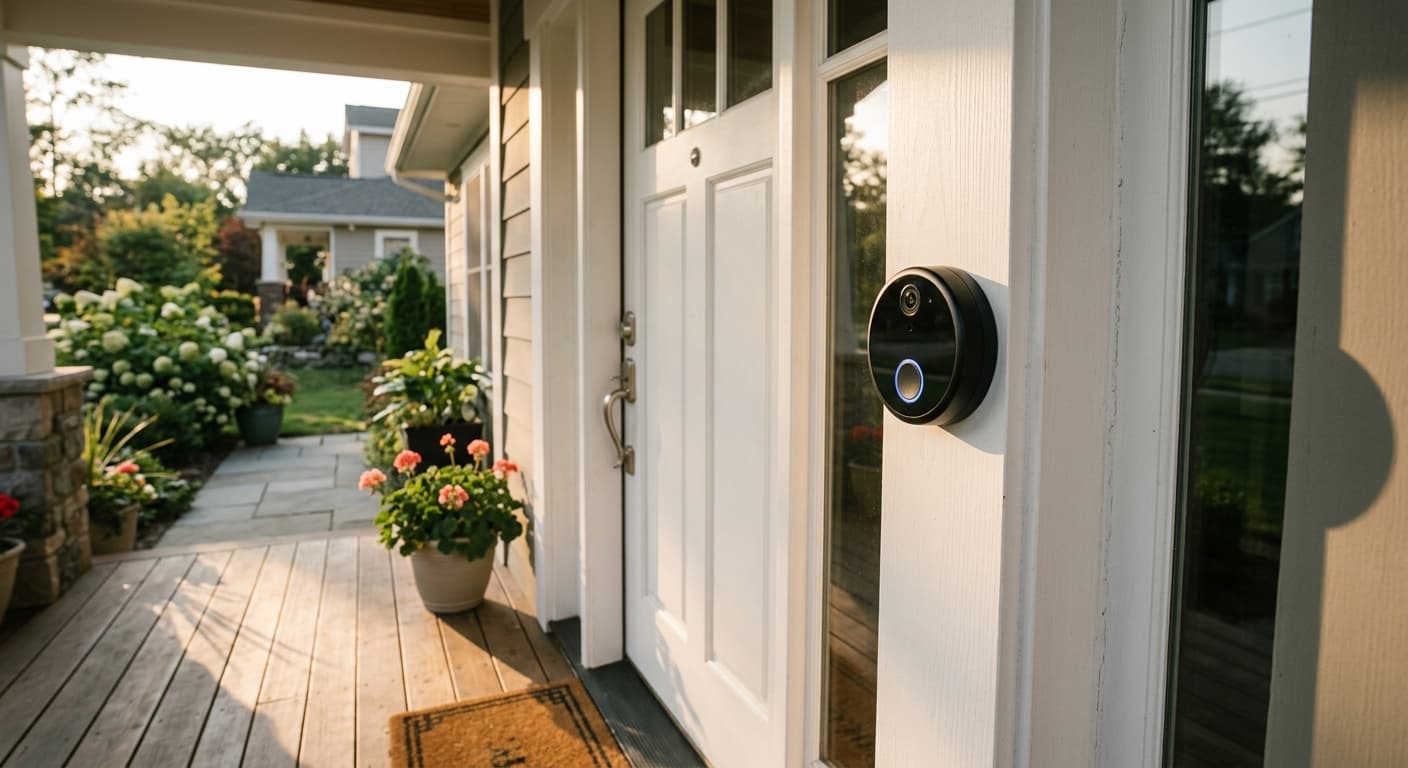
Alaska's vast landscapes and remote communities make home security a top priority for many residents. Ring doorbells have become a popular choice across the state, from Anchorage neighborhoods to rural communities. But Alaska's eavesdropping laws create specific legal considerations for anyone using a doorbell camera with audio capabilities. Under Alaska Statute § 42.20.310, recording conversations without the consent of at least one participant is a criminal offense. Alaska residents who understand these rules can use Ring doorbells confidently and legally.
Alaska Audio Recording Laws and Ring Doorbells
Audio recording is the central legal issue for Ring doorbell owners in Alaska. Every Ring doorbell includes a microphone that automatically captures audio along with video. This triggers Alaska's eavesdropping statute.
One-Party Consent Rule
Alaska follows a one-party consent framework for audio recording. Under AS 42.20.310, a person may not "use an eavesdropping device to hear or record all or any part of an oral conversation without the consent of a party to the conversation." The critical phrase is "a party," meaning only one participant needs to consent.
Alaska's highest court has reinforced this interpretation, holding that the eavesdropping statute was intended to prohibit only third-party interception of communications. A participant in a conversation who records it does not violate the law.
For Ring doorbell owners, this means that when a homeowner answers the doorbell through the Ring app and speaks with a visitor, the homeowner is a consenting party. That conversation can be legally recorded. The homeowner's participation satisfies the one-party consent requirement.

When Audio Recording Creates Legal Risk
The legal risk increases when the Ring doorbell captures conversations the homeowner is not part of. If neighbors have a conversation on the sidewalk near the Ring camera, or if a delivery driver speaks with a passenger, the homeowner is not a participant. Recording those conversations without any participant's consent could violate AS 42.20.310.
The statute applies broadly to "any device" capable of recording oral conversation, which includes Ring doorbells. The question of whether a front porch or entrance area constitutes a location where people reasonably expect private conversation has not been specifically addressed by Alaska courts, as of April 2026.
Proposed Changes to Alaska Recording Law
In February 2025, Alaska Governor Mike Dunleavy proposed Senate Bill 85 (SB 85), which would change Alaska from a one-party consent state to an all-party consent state. Under SB 85, all parties to a conversation would need to consent before recording is legal. The bill includes an exemption for law enforcement officers.
If SB 85 were to pass, Ring doorbell owners would face stricter requirements. Recording any conversation, even ones the homeowner participates in, would require the consent of every person involved. As of April 2026, SB 85 has not been enacted into law, and Alaska remains a one-party consent state.
Disabling Audio as a Precaution
Ring devices allow users to disable the audio recording feature through the app settings. Alaska homeowners who want to eliminate legal uncertainty around eavesdropping can turn off the microphone while keeping the video surveillance active.
Video Recording Laws in Alaska
Alaska does not have a broad video surveillance prohibition for residential property owners. Homeowners can install security cameras on their own property to monitor entrances, driveways, walkways, and other areas they own or control.
Where Video Recording Is Permitted
Video recording of areas visible from public spaces is generally permitted under Alaska law. A Ring doorbell pointed at a front door, porch, walkway, or driveway captures areas where visitors have limited expectations of privacy. Streets, sidewalks, and public areas visible from the Ring camera's position are also permissible recording zones.

Indecent Viewing Laws (AS 11.61.123)
Alaska does have a specific statute addressing invasive visual surveillance. Under AS 11.61.123, a person commits the crime of indecent viewing or production of a picture if they knowingly view, view a picture of, or produce a picture of the private exposure of another person's genitals, anus, or female breast. A private exposure is one made in a place and under circumstances where the person reasonably believed would not result in their body being viewed by the defendant or produced in a picture.
This statute can reach Ring doorbells that are positioned to capture images through windows or into areas where people have a reasonable expectation of privacy. A Ring camera aimed at a neighbor's bathroom or bedroom window could trigger this law if it is knowingly used to view or record that kind of private exposure.
For standard doorbell camera placement, AS 11.61.123 is unlikely to apply. The law targets knowing viewing or recording of a private exposure, not incidental capture of public-facing spaces. An affirmative defense exists for security surveillance systems when notice of the surveillance has been posted and the viewing is done only in the interest of crime prevention or prosecution.
Penalties for Indecent Viewing
AS 11.61.123(g) sets out a four-way penalty grid, and the line that matters most for camera owners is the one between viewing and producing a picture. A Ring doorbell records, so it produces pictures rather than merely watching, which places it in a higher tier than many people assume.
Viewing an adult's private exposure, or viewing a picture of it, is a class A misdemeanor under AS 11.61.123(g)(3). That carries up to one year in jail under AS 12.55.135(a) and a fine of up to $25,000 under AS 12.55.035(b)(5).
Producing a picture of an adult's private exposure is a class C felony under AS 11.61.123(g)(2)(B), punishable by up to five years in prison and a fine of up to $50,000 under AS 12.55.035(b)(4). A camera aimed at a neighbor's bathroom or bedroom window that records an adult falls in this felony tier, not the misdemeanor one.
Where a minor is involved, the penalties climb further. Viewing a minor, or viewing a picture of a minor, is a class C felony under AS 11.61.123(g)(2)(A). Producing a picture of a minor is a class B felony under AS 11.61.123(g)(1), the most severe tier in the statute, punishable by up to ten years in prison and a fine of up to $100,000 under AS 12.55.035(b)(3).
HOA Rules and Ring Doorbells in Alaska
Alaska HOAs can regulate Ring doorbell installation through their governing documents. While Alaska does not have comprehensive state-level HOA legislation that specifically addresses security cameras, individual associations maintain authority over exterior modifications and electronic devices through their CC&Rs.
HOA Authority Over Security Cameras
Many Alaska HOAs require homeowners to submit an architectural application before making changes to the exterior of their home. Installing a Ring doorbell, particularly wired models that require modification to the door frame or electrical system, may trigger this requirement.
HOAs can adopt specific security camera policies that address device placement, camera angle restrictions, and aesthetic requirements. Some associations restrict cameras that can record common areas or other homeowners' properties.
Reviewing HOA Documents
Before installing a Ring doorbell, Alaska homeowners in HOA communities should check their CC&Rs, architectural guidelines, and any specific security camera policies. Requesting written approval from the HOA board before installation creates a record that protects the homeowner in case of disputes.
If the CC&Rs are silent on security cameras, the homeowner generally has the right to install a Ring doorbell. However, broad clauses about exterior modifications or aesthetic standards could still give the HOA grounds to require approval or impose conditions.
Landlord and Tenant Rights
Alaska's Uniform Residential Landlord and Tenant Act (AS 34.03) governs the landlord-tenant relationship, including property modifications by tenants.

Tenant Installation Rights
Alaska tenants should review their lease agreement for any restrictions on exterior modifications or security devices before installing a Ring doorbell. Most leases require the landlord's written consent before making changes to the property.
Wired Ring doorbells that require drilling or electrical work clearly qualify as property modifications. Battery-powered models that use adhesive mounting may present a gray area, but seeking landlord approval in writing is the safest approach.
If a landlord denies the request, tenants have limited recourse under Alaska law. There is no specific Alaska statute granting tenants a right to install security cameras. Tenants can negotiate with their landlord, offering to restore the property to its original condition upon move-out.
Landlord Surveillance Limitations
Alaska landlords who install Ring doorbells on rental properties must comply with the same eavesdropping laws. A landlord cannot use a Ring doorbell to monitor tenants' private conversations. Cameras positioned to surveil tenants inside their units could violate the eavesdropping statute and, if they capture a private exposure, Alaska's indecent viewing law.
Landlords must provide 24 hours' notice before entering a rental unit under AS 34.03.140, except in emergencies. Using a Ring doorbell to monitor tenant comings and goings is generally permissible when the camera captures common areas or exterior spaces, but tenants should be informed about any surveillance devices on the property.
Law Enforcement Access to Ring Footage
Alaska residents have specific rights regarding police requests for Ring doorbell footage. The interplay between federal law, Alaska state law, and Ring's corporate policies determines how law enforcement can access recordings.

Voluntary Sharing vs. Compelled Disclosure
Police in Alaska can ask homeowners to voluntarily share Ring footage. Homeowners have no legal obligation to comply with a verbal request. If the homeowner declines, law enforcement can pursue a search warrant or subpoena through the courts.
A search warrant requires a judge to find probable cause that evidence of a crime exists on the recording. A subpoena, which has a lower threshold, can also compel Amazon (Ring's parent company) to produce footage directly.
Ring's Current Policy
As of April 2026, Ring requires a valid legal order before sharing customer footage with law enforcement. Ring ended an earlier program that allowed police departments to request footage directly from users through the Neighbors app. In September 2025, Ring launched Community Requests, which lets verified local public safety agencies ask Neighbors users in a specific area to share video voluntarily; shared clips go to Axon Evidence, and users can ignore the request.
Ring maintains a limited exception for emergency situations involving imminent danger of death or serious physical injury. In these cases, Ring may provide footage to law enforcement without the customer's consent or a warrant.
Fourth Amendment Protections
The Fourth Amendment to the U.S. Constitution protects against unreasonable searches and seizures. Ring doorbell footage stored on Amazon's servers may receive different constitutional protections than footage stored locally. Courts across the country continue to address how the Fourth Amendment applies to cloud-stored surveillance footage, and Alaska courts have not yet issued definitive guidance on this question as of April 2026.
Penalties for Illegal Recording in Alaska
Alaska imposes criminal penalties for violations of its eavesdropping and privacy statutes.
Eavesdropping (AS 42.20.310)
Using a device to record oral conversations without the consent of at least one party is a Class A misdemeanor under AS 42.20.330. Penalties include up to one year in jail under AS 12.55.135(a) and a fine of up to $25,000 under AS 12.55.035(b)(5).
Using or Divulging Illegally Obtained Information (AS 42.20.310)
The same statute prohibits using or divulging information obtained through illegal eavesdropping. Publishing the contents of illegally intercepted conversations carries the same Class A misdemeanor penalties.
Indecent Viewing (AS 11.61.123)
Viewing an adult's private exposure, or viewing a picture of it, is a Class A misdemeanor under AS 11.61.123(g)(3). That carries up to one year in jail under AS 12.55.135(a) and a fine of up to $25,000 under AS 12.55.035(b)(5).
Producing a picture of an adult's private exposure is a Class C felony under AS 11.61.123(g)(2)(B), punishable by up to five years in prison and a fine of up to $50,000. Because a doorbell camera records rather than merely watches, this is the tier that applies to captured footage.
When the subject viewed is a minor, the offense is a Class C felony under AS 11.61.123(g)(2)(A). When the subject photographed is a minor, it is a Class B felony under AS 11.61.123(g)(1), punishable by up to ten years in prison and a fine of up to $100,000.
Civil Liability
Beyond criminal penalties, individuals whose privacy is violated through illegal recording may pursue civil lawsuits for damages. Alaska courts recognize privacy torts, including intrusion upon seclusion, which could apply to misuse of Ring doorbell cameras.
How to Use a Ring Doorbell Legally in Alaska
These guidelines help Alaska residents stay compliant with state law while using Ring doorbell cameras.
Position for Your Property Only
Aim the Ring doorbell at your own front door, porch, walkway, and driveway. Avoid positioning the camera to look directly into neighbors' windows or private outdoor spaces like fenced yards.
Evaluate Audio Recording Needs
Consider whether audio recording is necessary for your security needs. Disabling the microphone in the Ring app eliminates the eavesdropping concern entirely while preserving video surveillance. If audio is important, ensure participation in conversations recorded through the two-way talk feature.
Post Surveillance Notices
Alaska's indecent viewing statute (AS 11.61.123) provides an affirmative defense for security surveillance systems when notice is posted. Placing a visible sign near the Ring doorbell that states "Audio and Video Recording in Progress" strengthens the homeowner's legal position and provides implicit notice to visitors.
Monitor Legislative Changes
Governor Dunleavy's SB 85 proposal could change Alaska from a one-party consent state to an all-party consent state. Ring doorbell owners should monitor this legislation, as passage would require all participants in a recorded conversation to consent. Check the Alaska State Legislature website at akleg.gov for updates on this bill.
Secure Your Account
Enable two-factor authentication on the Ring account and use a strong, unique password. The FTC's 2023 enforcement action against Ring highlighted the risks of unauthorized access to doorbell camera footage. Keeping firmware updated and reviewing connected devices regularly helps protect against security breaches.
Understand Your Rights with Police
Voluntary sharing of Ring footage with law enforcement is a personal choice, not a legal requirement. If police request footage, the homeowner can ask them to obtain a warrant. Homeowners who choose to share footage voluntarily should keep a record of what was provided and to whom.
More Alaska Laws
Alaska has additional laws that affect residents' rights and responsibilities:
- Alaska Recording Laws cover all aspects of audio and video recording consent in the state.
- Alaska Hit and Run Laws explain the legal requirements after a traffic accident.
- Alaska Lemon Law protects consumers who purchase defective vehicles.
This article provides general legal information about Ring doorbell laws in Alaska, not legal advice. Laws and their interpretations can change, and proposed legislation like SB 85 could alter the legal landscape. Consult an attorney licensed in Alaska for advice specific to your situation.
Frequently Asked Questions
Is it legal to use a Ring doorbell in Alaska?
Yes, using a Ring doorbell is legal in Alaska. Video recording from your own property is permitted, and audio recording is legal when you participate in the conversation being recorded under Alaska's one-party consent law (AS 42.20.310). Consider disabling audio recording if you want to avoid any potential issues with capturing third-party conversations.
Will Alaska become an all-party consent state?
Governor Dunleavy proposed SB 85 in February 2025, which would require all parties to consent before a conversation can be recorded. As of April 2026, this bill has not been enacted. If it passes, Ring doorbell owners would need consent from every person in a recorded conversation, with an exemption for law enforcement. Monitor the Alaska State Legislature website for updates.
Can Alaska police access my Ring doorbell footage without my permission?
Police cannot compel you to share Ring footage through a verbal request. You can voluntarily share or decline. If you decline, law enforcement can obtain a search warrant or subpoena to compel Ring (Amazon) to provide the footage. Ring may also share footage without your consent in emergency situations involving imminent danger of death or serious physical injury.
Do I need HOA approval to install a Ring doorbell in Alaska?
It depends on your HOA's governing documents. Many Alaska HOAs require architectural approval for exterior modifications, which can include doorbell cameras. Review your CC&Rs and any security camera policies before installation. If the documents are silent on security cameras, you generally have the right to install one, though broad modification clauses could still apply.
What happens if I illegally record someone with my Ring doorbell in Alaska?
Illegal eavesdropping is a Class A misdemeanor under AS 42.20.330, punishable by up to one year in jail under AS 12.55.135(a) and a fine of up to $25,000 under AS 12.55.035(b)(5). Using or publishing illegally obtained recordings carries the same penalties. If the recording captures a private exposure of the genitals, anus, or female breast covered by Alaska's indecent viewing law (AS 11.61.123), the exposure is far more serious: producing a picture of an adult's private exposure is a class C felony under AS 11.61.123(g)(2)(B), and producing a picture of a minor is a class B felony. Civil lawsuits for privacy violations are also possible.
Updates
Corrected our description of Alaska's indecent viewing law (AS 11.61.123) to match the statute, which covers only the knowing viewing or recording of a private exposure of the genitals, anus, or female breast, and added Ring's 2025 Community Requests feature to the police-access section.
Corrected the indecent viewing penalties: producing a picture of an adult's private exposure is a class C felony under AS 11.61.123(g)(2)(B), not a class A misdemeanor, and the one-year jail cap is now correctly cited to AS 12.55.135(a) rather than the fines statute AS 12.55.035.
Corrected the maximum fine for Alaska eavesdropping (AS 42.20.330) and base-tier indecent viewing (AS 11.61.123) violations, both class A misdemeanors, from $1,000 to the $25,000 cap set by Alaska's general sentencing statute, AS 12.55.035.
Independently fact-checked against the cited primary sources; governing law re-checked for recent changes
Corrected the AS 11.61.123 minor-victim penalty tiers: producing/photographing a picture of a minor's private exposure is the more severe class B felony (up to 10 years, $100,000 fine), while merely viewing one is class C (up to 5 years, $50,000 fine) -- the page had collapsed both into a single class C tier.
Governing law re-checked for recent changes
Reviewed and approved by an editor
The Law Behind This Article
This article rests on the statutory provisions below, held in our own legal record and retrieved from the official source. Tap a section to read the operative text.
Alaska Statutes, Title 42. Public Utilities and Carriers and Energy Programs, Chapter 20. Telegraph and Telephone Systems and Cable Lines; Eavesdropping
§ 42.20.310EavesdroppingIn forcecited in 21 of our articles
(a) A person may not (1) use an eavesdropping device to hear or record all or any part of an oral conversation without the consent of a party to the conversation; (2) use or divulge any information which the person knows or reasonably should know was obtained through the illegal use of an eavesdropping device for personal benefit or another's benefit; (3) publish the existence, contents, substance, purport, effect, or meaning of any conversation the person has heard through the illegal use of an eavesdropping device; (4) divulge, or publish the existence, contents, substance, purport, effect, or meaning of any conversation the person has become acquainted with after the person knows or reasonably should know that the conversation and the information contained in the conversation was obtained through the illegal use of an eavesdropping device. (b) In this section eavesdropping device means any device capable of being used to hear or record oral conversation whether the conversation is conducted in person, by telephone, or by any other means; provided that this definition does not include devices used for the restoration of the deaf or hard-of-hearing to normal or partial hearing.
Official text (excerpt) · last checked 2026-09-23 · Read the full text in our law library · Verify at akleg.gov
Also relied on in: Alaska Recording Laws (2026): One-Party Consent Rules, Alaska Audio Recording Laws: One-Party Consent Rules and Penalties (2026), Alaska Security Camera Laws: Home, Business, and Surveillance Rules (2026)
§ 42.20.330PenaltyIn forcecited in 11 of our articles
A person who violates any of the provisions of AS 42.20.300 and 42.20.310 is guilty of a class A misdemeanor.
Official text (excerpt) · last checked 2026-07-31 · Read the full text in our law library · Verify at akleg.gov
Also relied on in: Alaska Phone Call Recording Laws: Rules for Landline, Cell, and VoIP (2026), Alaska Smart Glasses Recording Laws 2026, Alaska Dashcam Laws: Recording Rules, Windshield Mounting, and Legal Limits (2026)
Alaska Statutes, Title 11. Criminal Law, Chapter 61. Offenses Against Public Order
§ 11.61.123Indecent viewing or production of a pictureIn forcecited in 19 of our articles
(a) A person commits the crime of indecent viewing or production of a picture if the person knowingly (1) views, or views a picture of, the private exposure of the genitals, anus, or female breast of another person; or (2) produces a picture of the private exposure of the genitals, anus, or female breast of another person. (b) Each viewing of a person, and each production of a picture of a person, whose genitals, anus, or female breast are viewed or are shown in a picture constitutes a separate violation of this section. (c) This section does not apply to the viewing or production of a picture conducted by a law enforcement agency for a law enforcement purpose. (d) In a prosecution under this section, it is an affirmative defense that the viewing or production of a picture was conducted as a security surveillance system, notice of the viewing or production was posted, and any viewing or use of pictures produced is done only in the interest of crime prevention or prosecution.
Official text (excerpt) · last checked 2026-08-31 · Read the full text in our law library · Verify at akleg.gov
Cited in 3 court opinions in our collectionLatest citing opinion in our collection: 2015
Opinions citing this section in our collection:
- Knutsen v. State (Court of Appeals of Alaska 2004, 101 P.3d 1065)“…eumstance that makes the defendant's conduct criminal under AS 11.61.123(a), we interpret AS 11.61.123(a) to mea…”
- Faye H. v. James B. (Alaska Supreme Court 2015, 348 P.3d 876)“…(1), .220(a)(1)(c), .436(a)(2). 4 See AS 11.61.123(a)(2). 5 See AS 1…”
- United States v. Moreland (Court of Appeals for the Fifth Circuit 2011, 665 F.3d 137)“…nority of states criminalize viewing child pornography. See Alaska Stat. § 11.61.123 (2009); Ark. Code Ann. § 5-27-602 (2010…”
Identified automatically from the court opinions citing this section — not a ranking of which case controls.
Also relied on in: Alaska Landlord-Tenant Recording Laws: Cameras, Privacy Rights, and Disputes (2026), Alaska Workplace Recording Laws: Employee and Employer Rights (2026), Alaska Video Recording Laws: Surveillance, Filming, and Consent Rules (2026)
Alaska Statutes, Title 12. Code of Criminal Procedure, Chapter 55. Sentencing and Probation
§ 12.55.035FinesIn forcecited in 10 of our articles
(a) Upon conviction of an offense, a defendant may be sentenced to pay a fine as authorized in this section or as otherwise authorized by law. (b) Upon conviction of an offense, a defendant who is not an organization may be sentenced to pay, unless otherwise specified in the provision of law defining the offense, a fine of not more than (1) $500,000 for murder in the first or second degree, attempted murder in the first degree, murder of an unborn child, sexual assault in the first degree under AS 11.41.410(a)(1)(A), (2), (3), or (4), sexual abuse of a minor in the first degree, kidnapping, sex trafficking in the first degree under AS 11.66.110(a)(2), or misconduct involving a controlled substance in the first degree; (2) $250,000 for a class A felony; (3) $100,000 for a class B felony; (4) $50,000 for a class C felony; (5) $25,000 for a class A misdemeanor; (6) $2,000 for a class B misdemeanor; (7) $500 for a violation.
Official text (excerpt) · last checked 2026-07-31 · Read the full text in our law library · Verify at akleg.gov
Cited in 30 court opinions in our collectionLatest citing opinion in our collection: 2025
Opinions citing this section in our collection:
- Manderson v. State (Court of Appeals of Alaska 1983, 655 P.2d 1320)“…urden the payment of the fine will impose. See AS 12.55.035(a). 5 Clearly, the $1,…”
- Hillman v. Municipality of Anchorage (Court of Appeals of Alaska 1997, 941 P.2d 211)“…ture of an $8000 vehicle violates Alaska law because, under AS 12.55.035(b), the maximum fine for a class A misd…”
- Wilson v. State (Court of Appeals of Alaska 1988, 756 P.2d 307)“…ted on the basis of ability to pay. See, e.g., AS 12.55.035. A maximum fine does not necessarily in…”
Identified automatically from the court opinions citing this section — not a ranking of which case controls.
Also relied on in: Alaska Surveillance Camera Laws (2026 Guide), Alaska AI Meeting Recording Laws (2026), Alaska Sexting Laws: Legal Consequences and Penalties
§ 12.55.135Sentences of imprisonment for misdemeanorsIn forcecited in 6 of our articles
(a) A defendant convicted of a class A misdemeanor may be sentenced to a definite term of imprisonment of not more than one year. (b) A defendant convicted of a class B misdemeanor may be sentenced to a definite term of imprisonment of not more than 90 days unless otherwise specified in the provision of law defining the offense. (c) A defendant convicted of assault in the fourth degree that is a crime involving domestic violence committed in violation of the provisions of an order issued or filed under AS 12.30.027 or AS 18.66.100 18.66.180 and not subject to sentencing under (g) of this section shall be sentenced to a minimum term of imprisonment of 20 days.
Official text (excerpt) · last checked 2026-07-31 · Read the full text in our law library · Verify at akleg.gov
Cited in 49 court opinions in our collectionLatest citing opinion in our collection: 2024
Opinions citing this section in our collection:
- Doe v. State, Department of Public Safety (Alaska Supreme Court 2004, 92 P.3d 398)“…y up to one year in jail and by a fine up to $10,000. See AS 12.55.135(a), .035(b)(5). [18] AS 18.65.087 au…”
- Dawson v. State (Court of Appeals of Alaska 2011, 264 P.3d 851)“…ode Revision, Tentative Draft, Part 5, p. 87. [16] See AS 12.55.135(b). [17] See R. Perkins & R. Boyce…”
- Miller v. State (Court of Appeals of Alaska 2013, 312 P.3d 1112)“…he faced a minimum sentence of 30 days' imprisonment under AS 12.55.135(g) 4 The defénse attorney never *1116…”
Identified automatically from the court opinions citing this section — not a ranking of which case controls.
Also relied on in: Alaska Medical Recording Laws: Patient Rights, HIPAA, and One-Party Consent (2026), Alaska GPS Tracking Laws: Is It Legal to Put a Tracker on a Car? (2026)
Alaska Statutes, Title 34. Property, Chapter 03. Uniform Residential Landlord and Tenant Act
§ 34.03.140AccessIn forcecited in 3 of our articles
(a) The tenant may not unreasonably withhold consent to the landlord to enter into the dwelling unit in order to inspect the premises, make necessary or agreed repairs, decorations, alterations, or improvements, supply necessary or agreed services, remove personal property belonging to the landlord that is not covered by a written rental agreement, or exhibit the dwelling unit to prospective or actual purchasers, mortgagees, tenants, workers, or contractors. (b) The landlord may enter the dwelling unit without the consent of the tenant in the case of emergency. (c) A landlord may not abuse the right of access or use it to harass the tenant. Except in case of emergency or if it is impracticable to do so, the landlord shall give the tenant at least 24 hours notice of intention to enter and may enter only at reasonable times and with the tenant's consent. (d) The landlord does not have a right of access to the dwelling unit (1) except (A) as permitted by this section; (B) by court order; or (C) as permitted by AS 34.03.230(b); or (2) unless the tenant has abandoned or surrendered the premises.
Official text (excerpt) · last checked 2026-07-31 · Read the full text in our law library · Verify at akleg.gov
Cited in 2 court opinions in our collectionLatest citing opinion in our collection: 2000
Opinions citing this section in our collection:
- Public Safety Employees Ass'n v. State (Alaska Supreme Court 1983, 658 P.2d 769)“…es for the purpose of harassment of tenants in violation of AS 34.03.140(c); 12 that the state had…”
- Chilton-Wren v. Olds (Alaska Supreme Court 2000, 1 P.3d 693)“…entered her apartment on several occasions in violation of AS 34.03.140. The statutory penalty under AS 34.03.3…”
Identified automatically from the court opinions citing this section — not a ranking of which case controls.
Also relied on in: Alaska Landlord-Tenant Laws (2026): Deposits, Notice, and Tenant Rights
Search our full record of US law — 2.1 million sections, every state + federal →
Sources and References
- AS 42.20.310 - Eavesdropping(womenslaw.org)
- AS 42.20.330 - Penalty for Eavesdropping(touchngo.com)
- AS 11.61.123 - Indecent Viewing or Production of a Picture(womenslaw.org)
- Alaska SB 85 - Proposed All-Party Consent Bill(akleg.gov).gov
- Alaska SB 85 Bill Text - Amending Eavesdropping Statutes(akleg.gov).gov
- Alaska Landlord and Tenant Act - Alaska Department of Law(law.alaska.gov).gov
- Alaska Recording Guide - Reporters Committee for Freedom of the Press(rcfp.org)
- FTC Says Ring Employees Illegally Surveilled Customers (May 2023)(ftc.gov).gov
- Gov. Dunleavy Proposes New Limits on Recording Conversations - Alaska Beacon(alaskabeacon.com)
- Alaska Landlord and Tenant Act - Alaska Court System(public.courts.alaska.gov).gov
- AS 11.61.123 - Indecent Viewing or Production of a Picture (Alaska State Legislature)(akleg.gov)
- AS 12.55.035 - Fines (Alaska State Legislature)(akleg.gov)
- AS 12.55.135 - Sentences of Imprisonment for Misdemeanors (Alaska State Legislature)(akleg.gov)
- Ring Launches Community Requests: A New Way to Help Your Community (The Ring Blog)(blog.ring.com)