
Mississippi
Mississippi Pepper Spray and Stun Gun Laws (2026)
Independently fact-checked against primary sources (last audited September 23, 2026). · 7 primary sources cited on this page. How we verify our legal content

Mississippi's weapons offenses chapter, Title 97, Chapter 37, has no statute naming pepper spray, tear gas, or a chemical-spray device, and the state's felon-possession statute in that chapter, a closed list, does not include either device. Mississippi does name a stun gun, but in a separate title: Section 45-9-101 licenses carrying one concealed and defines the term. Mississippi's concealed-weapon statute, Section 97-37-1, is not a closed list: alongside its named items it bars carrying concealed any "deadly weapon," an open term the statute does not define, and whether that residual term reaches a concealed pepper-spray canister or a concealed stun gun is a question its text does not answer, with a far longer sentence if the carrier has a prior felony conviction. Mississippi licenses a stun gun for concealed carry only; open carry and mere possession need no license, but carrying one concealed without the license runs into that same open question and its real penalties, not a minor administrative fine.
Jurisdiction scope: This page covers Mississippi state law only, principally Miss. Code Ann. Sections 97-37-1, 97-37-5, 97-37-13, 97-37-19, 45-9-51, and 45-9-101. It does not cover the concealed-carry license application process in detail or any municipal ordinance beyond Jackson's general offenses chapter, which contains no provision on either device.
Is pepper spray legal in Mississippi?
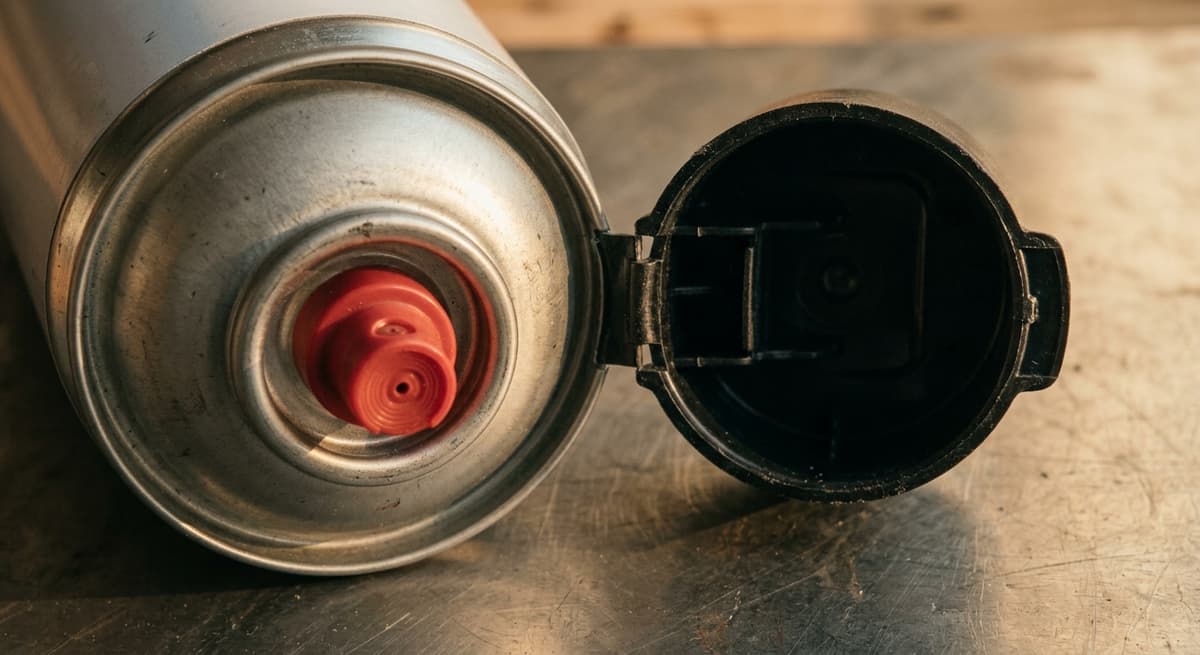
Yes, and no statute anywhere in Title 97, Chapter 37, the chapter that covers Mississippi's weapons offenses, names pepper spray, tear gas, or a chemical-spray device specifically. Miss. Code Ann. Section 97-37-5(1), which bars a convicted felon from possessing certain weapons, is a closed, named list: "It shall be unlawful for any person who has been convicted of a felony... to possess any firearm or any bowie knife, dirk knife, butcher knife, switchblade knife, metallic knuckles, blackjack, or any muffler or silencer for any firearm." Pepper spray is absent from that list, so Mississippi's felon-possession bar does not reach mere possession of it.

Mississippi's other weapons statute is not built the same way. Section 97-37-1(1), which bars carrying certain items concealed, opens with "Except as otherwise provided in Section 45-9-101," then lists "any bowie knife, dirk knife, butcher knife, switchblade knife, metallic knuckles, blackjack, slingshot, pistol, revolver, or any rifle with a barrel of less than sixteen (16) inches in length, or any shotgun with a barrel of less than eighteen (18) inches in length, machine gun or any fully automatic firearm or deadly weapon, or any muffler or silencer for any firearm." That last named category, "deadly weapon," is open-ended: the statute does not define it, and whether an ordinary pepper-spray canister meets it is not answered by the text. If it does, carrying one concealed without an exception (below) is a crime under Section 97-37-1, and a prior felony conviction increases the exposure sharply: subsection (1)(d) sets confinement of 1 to 10 years for a person previously convicted of any felony who is convicted under this section, regardless of the narrower list in the felon-possession statute above.
Section 97-37-1(2) does not make it a violation for a person over the age of eighteen (18) years to carry a firearm or deadly weapon concealed within one's own home, place of business, or associated real property, or in a motor vehicle. Subsection (3) exempts a person engaged in, or going to or returning from, a "legitimate weapon-related sports activity" such as hunting, fishing, or target shooting. Subsection (4) defines "concealed" as "hidden or obscured from common observation," which excludes a weapon carried in a visible holster, sheath, or case.
Section 97-37-13 bars selling, giving, or lending to a minor under 18, or to a person known to be intoxicated, "any deadly weapon, or other weapon the carrying of which concealed is prohibited, or pistol cartridge," punishable by a fine of up to $1,000, up to a year in jail, or both. Section 97-37-19 separately punishes brandishing "any deadly weapon, or other weapon the carrying of which concealed is prohibited by Section 97-37-1" in a threatening manner in another person's presence, "not in necessary self-defense," or unlawfully using it in a fight, by a fine of up to $500, up to 3 months in jail, or both. Both provisions turn on the same open "deadly weapon" term as Section 97-37-1.
Are stun guns legal in Mississippi?
Yes, and the licensing structure is narrower than it first appears. Miss. Code Ann. Section 45-9-101 is titled a license "to carry stun guns, concealed pistols or revolvers," which reads at first like a general permit requirement for owning a stun gun. Subsection (14)(b) resolves that directly: "The licensing requirements of this section do not apply to the carrying by any person of a stun gun, pistol or revolver, knife, or other deadly weapon that is not concealed as defined in Section 97-37-1." A Department of Public Safety license is required only to carry a stun gun concealed; mere possession and open carry need no license at all. Section 45-9-101(21) defines the device broadly: "'stun gun' means a portable device or weapon from which an electric current, impulse, wave or beam may be directed, which current, impulse, wave or beam is designed to incapacitate temporarily, injure, momentarily stun, knock out, cause mental disorientation or paralyze."
The concealed-carry license itself is the same credential that covers concealed pistols and revolvers, not a separate stun-gun-only permit. It runs for five years, costs an $80 nonrefundable fee, and is generally available starting at 21, though an active, reserve, or veteran service member holding valid identification can qualify at 18 to 20 (Section 45-9-101(2)(b)). To obtain it, an applicant must clear a prohibited-persons screen: unpardoned or unexpunged felons; a person who chronically or habitually abuses controlled substances or alcohol to the point of impaired faculties, with statutory presumptions tied to a prior commitment or qualifying convictions within three years; a person adjudicated mentally incompetent, absent five years since restoration, or committed to a mental institution or treatment facility absent a five-year psychiatrist's certificate; a person with a felony adjudication withheld or a sentence suspended, absent three years since completing probation; a fugitive from justice; or a person federally disqualified from possessing a weapon. Those bars govern eligibility for the concealed-carry license; they do not independently criminalize mere possession or open carry of a stun gun by someone in one of those categories, the way Section 97-37-5 independently criminalizes a felon's firearm possession.
A valid, unrevoked, and unexpired license to carry a stun gun or a concealed pistol or revolver issued by another state is recognized in Mississippi (Section 45-9-101(19)).
Failing to carry the license and identification, or failing to report an address change or a lost license within 30 days, is a noncriminal violation carrying a $25 fine, enforceable by summons (Section 45-9-101(1)(b)). That administrative fine is not the exposure for carrying a stun gun concealed without holding the license at all. Section 45-9-101(14)(b) exempts only a stun gun that is carried unconcealed, not one carried concealed without a license, so an unlicensed concealed carry runs into Section 97-37-1's own concealed-weapon penalties, from a $100 fine up to confinement of 1 to 10 years for a person with a prior felony conviction, if a stun gun meets that section's open "deadly weapon" term.
Where you can't carry either device
Mississippi's restricted-places list for a licensed concealed carrier, Section 45-9-101(13), applies equally to a stun gun, a concealed pistol, or a revolver: it bars carrying into a place of nuisance under Section 95-3-1; police, sheriff, or highway patrol stations; detention facilities, prisons, and jails; courthouses, with courtrooms allowed only at a judge's discretion; polling places; government meeting rooms and the Legislature; schools, colleges, and professional athletic events unrelated to firearms use; the alcohol-service area of a bar or an on-premises drinking establishment; airport passenger terminals, apart from checked baggage; churches and places of worship, subject to a separate exception in Section 45-9-171; a permitted parade or demonstration; any place where carrying a firearm is barred by federal law; and any other place where whoever controls that location, public or private, posts a readable notice, visible from at least 10 feet away, that carrying a pistol or revolver is prohibited. That full list governs a licensed concealed carrier.

Mississippi's educational-property weapons statute, Section 97-37-17(1)(d), confines the term "Weapon" to any device enumerated in subsection (2) or (4): subsections (2) and (3) reach only a gun, rifle, pistol, other firearm, or an explosive, and subsection (4) reaches a named list, a BB gun, air rifle, air pistol, bowie knife, dirk, dagger, slingshot, leaded cane, switchblade knife, blackjack, metallic knuckles, razors, and any other sharp-pointed or edged instrument. A pepper-spray canister is not a firearm, an explosive, or a sharp-pointed or edged instrument, so the statute does not reach it on school property. A contact-only stun gun is not either, but a dart-firing model's barbed probes raise a question the statute's text does not answer, so the statute's reach to that kind of stun gun on school property is unresolved. Outside Section 45-9-101(13)'s place list for a licensed carrier, no provision in Title 97, Chapter 37 or Title 45, Chapter 9 names pepper spray, tear gas, or a stun gun by place; carrying either device concealed runs into the open "deadly weapon" question addressed above rather than a place-specific rule, and open carry of either device is not reached by that section.
Local regulation: Mississippi preempts firearms, not either device
Section 45-9-51(1) bars a Mississippi county or municipality from adopting "any ordinance that restricts the possession, carrying, transportation, sale, transfer or ownership of firearms or ammunition or their components." Neither a stun gun nor a chemical spray is a firearm or ammunition, so that preemption does not reach either device, and a Mississippi city or county is free to regulate pepper spray or a stun gun on its own. Jackson, the state's capital and largest city, has not done so: the only weapons provisions in its general offenses chapter, Sections 86-1 through 86-20, are Section 86-8 (discharge of firearms within the city), Section 86-9 (carrying firearms in certain places), and Section 86-10 (air guns, BB guns, and toy firearms); nothing in the chapter names pepper spray, tear gas, a stun gun, or an electric weapon.
Federal law: what it does and does not reach
No federal statute regulates a civilian's purchase or possession of pepper spray or a stun gun. Federal law matters in three places.
Federal buildings. Under 18 U.S.C. § 930(a), whoever knowingly possesses or causes to be present "a firearm or other dangerous weapon in a Federal facility (other than a Federal court facility)" faces a fine, imprisonment of up to 1 year, or both. Subsection (e) sets up to 2 years for a federal court facility, and subsection (b) up to 5 years where the weapon is intended to be used in a crime. Section 930(g)(2) defines the term:
The term "dangerous weapon" means a weapon, device, instrument, material, or substance, animate or inanimate, that is used for, or is readily capable of, causing death or serious bodily injury, except that such term does not include a pocket knife with a blade of less than 2½ inches in length.
The definition names neither device. Whether a particular spray or stun gun is "readily capable of" causing serious bodily injury is a question of fact the statute does not answer. Subsection (d)(3) exempts "the lawful carrying of firearms or other dangerous weapons in a Federal facility incident to hunting or other lawful purposes," and subsection (h) requires notice of the ban to be posted at each public entrance. A "Federal facility" is "a building or part thereof owned or leased by the Federal Government, where Federal employees are regularly present for the purpose of performing their official duties."
Air travel. The Transportation Security Administration's screening rules, which are agency policy rather than statute, bar both devices from carry-on bags. One 4 fl. oz. (118 ml) container of mace or pepper spray is permitted in checked baggage if it has a safety mechanism to prevent accidental discharge, and sprays containing more than 2 percent by mass of tear gas (CS or CN) are prohibited in checked baggage. Tasers, stun guns and other electro-shock weapons may travel in checked baggage only if transported so the device cannot discharge accidentally. Airlines may set stricter rules.
National parks. National Park Service regulations prohibit possessing, carrying or using a "weapon" in a park area except as the regulations provide (36 CFR 2.4(b)(1)). 36 CFR 1.4 defines "weapon" to include an "irritant gas device" and any "weapon the possession of which is prohibited under the laws of the State in which the park area or portion thereof is located."
Disclaimer: This article provides general legal information about Mississippi's pepper spray and stun gun laws as of September 2026. It is not legal advice. Consult a lawyer licensed in Mississippi for advice about a specific situation.
For a state-by-state comparison, see pepper spray and stun gun laws by state. Mississippi's self-defense statutes are covered separately on the Mississippi self-defense laws page.
Statutes cited reflect their in-force version as of 2026-09-23. Last updated: 2026-09-23.
Frequently Asked Questions
Does Mississippi limit the size or formula of pepper spray?
No section names pepper spray, tear gas, or a chemical-spray device, so no size or formula limit is stated for it. But an ordinary canister could still fall within Section 97-37-1's open 'deadly weapon' term if carried concealed, a question the statute's text does not resolve.
Can a felon legally possess pepper spray in Mississippi?
Mere possession, yes: Section 97-37-5's felon-possession bar is a closed list, a firearm and specific named knives, metallic knuckles, a blackjack, and firearm mufflers or silencers, that does not include pepper spray. Carrying it concealed is a separate question: Section 97-37-1(1)(d) sets confinement of 1 to 10 years for a person previously convicted of any felony who is convicted under that section, which reaches an open 'deadly weapon' category the statute does not define.
Do you need a permit to carry a stun gun in Mississippi?
Only to carry it concealed. Section 45-9-101(14)(b) states the licensing requirement does not apply to a stun gun that is not concealed, so open carry and mere possession need no license. Carrying one concealed without the license is not merely a $25 administrative matter: it runs into Section 97-37-1's concealed-weapon penalties, from a $100 fine up to confinement of 1 to 10 years for a person with a prior felony conviction, if a stun gun meets that section's open 'deadly weapon' term.
How old do you have to be to get Mississippi's concealed stun-gun license?
21, generally, under Section 45-9-101(2)(b)(i). An active, reserve, or veteran service member holding a valid Mississippi driver's license, ID, or tribal ID can qualify starting at 18.
Where can't I carry a stun gun even with a Mississippi concealed-carry license?
Section 45-9-101(13) bars a licensed carrier from police and jail facilities, courthouses absent judicial permission, polling places, schools and colleges, a bar's alcohol-service area, airport terminals, houses of worship, a permitted parade, any place where federal law bars firearms, and any place, public or private, posted with a readable notice that carrying a pistol or revolver is prohibited.
Does Mississippi recognize an out-of-state stun-gun or concealed-carry license?
Yes. A valid, unrevoked, and unexpired license to carry a stun gun or a concealed pistol or revolver issued by another state is recognized in Mississippi under Section 45-9-101(19).
Can a Mississippi city or county ban pepper spray or a stun gun even though state law allows them?
Yes. Section 45-9-51 preempts local regulation of firearms and ammunition specifically; neither a stun gun nor a chemical spray is either one. Jackson, Mississippi's largest city, has not adopted an ordinance on either device; the only weapons provisions in its general offenses chapter, Sections 86-1 through 86-20, address firearms, air guns and toy guns.
Updates
Independently fact-checked against the cited primary sources
Sources and References
- Miss. Code Ann. 97-37-1 - Deadly weapons; carrying while concealed; use or attempt to use; penalties; "concealed" defined (in-force text; unamended by 2023 HB 912, whose Section 7 makes it effective only on a contingency that has not occurred)(billstatus.ls.state.ms.us).gov
- Miss. Code Ann. 97-37-5 - Unlawful for convicted felon to possess any firearms, or other weapons or devices; penalties; exceptions(law.justia.com)
- Miss. Code Ann. 97-37-13 - Deadly weapons; weapons and cartridges not to be given to minor or intoxicated person(law.justia.com)
- Miss. Code Ann. 97-37-19 - Deadly weapons; exhibiting in threatening manner(law.justia.com)
- Miss. Code Ann. 97-37-17 - Possession of weapons by students; aiding or encouraging(law.justia.com)
- Miss. Code Ann. 45-9-51 - Prohibition against adoption of certain ordinances(law.justia.com)
- Miss. Code Ann. 45-9-101 - License to carry stun gun, concealed pistol or revolver; definitions; eligibility; restricted places; penalties(billstatus.ls.state.ms.us).gov
- Jackson, Mississippi Code of Ordinances, Chapter 86, Article I (General Offenses, Secs. 86-1 to 86-20)(library.municode.com).gov
- 18 U.S.C. § 930 - Possession of firearms and dangerous weapons in Federal facilities(law.cornell.edu)
- Transportation Security Administration - What Can I Bring? Pepper Spray(tsa.gov).gov
- Transportation Security Administration - What Can I Bring? Stun Guns/Shocking Devices(tsa.gov).gov
- 36 CFR 1.4 - National Park Service definitions (weapon)(ecfr.gov).gov
- 36 CFR 2.4 - Weapons, traps and nets(ecfr.gov).gov