
Alabama
Alabama Pepper Spray and Stun Gun Laws (2026)
Independently fact-checked against primary sources (last audited September 23, 2026). · 14 primary sources cited on this page. How we verify our legal content
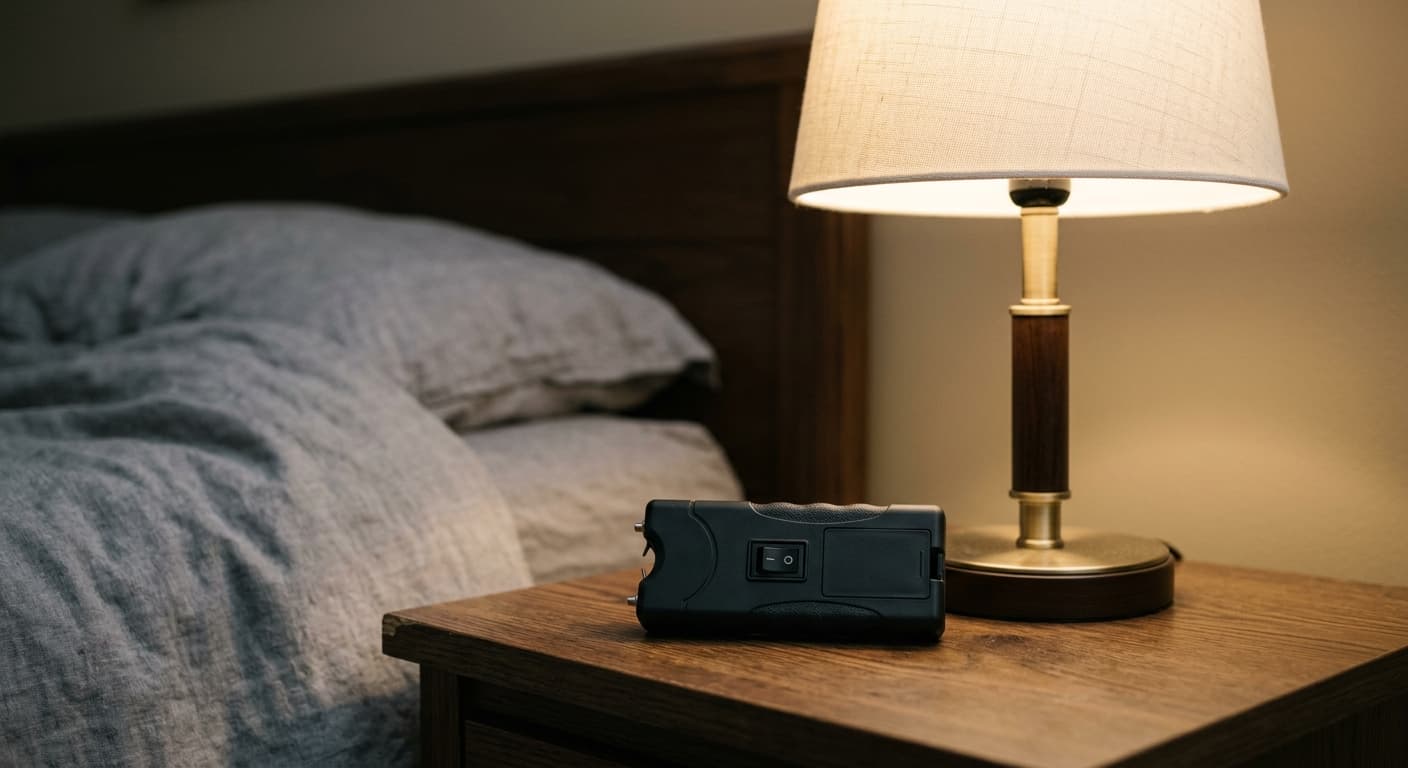
Pepper spray and stun guns are both legal in Alabama for personal self-defense, and state law places no permit, age floor, or purchase restriction on owning or carrying either device. Alabama's weapons statutes do not regulate ordinary possession of a defense spray or an electronic weapon at all; the one state law that names pepper spray, Code of Alabama 1975 § 13A-6-27, criminalizes using one as a weapon against another person during a crime or against a law enforcement officer on duty, not buying, owning, or carrying it. No Alabama statute defines or restricts a stun gun, electric weapon, or taser by name, and no statute preempts a city or county from regulating either device by local ordinance.
Jurisdiction scope: This page covers Alabama state law only, principally Code of Alabama 1975 §§ 13A-6-27, 13A-6-21, 13A-1-2, 13A-11-72, 13A-11-92, 13A-11-61.3, 16-1-24.1, and Title 13A, Article 4 (the state's weapons chapter, §§ 13A-11-50 through 13A-11-98). It does not cover Alabama's concealed-pistol permit statutes in detail.
Is pepper spray legal in Alabama?
Yes. Alabama has no statute that restricts buying, owning, or carrying pepper spray, mace, or any other self-defense chemical spray. The state's weapons chapter, Title 13A, Article 4, contains no age minimum, no capacity or formula limit, no permit requirement, and no felon-specific possession ban for a defense spray; its provisions cover concealed pistols, brass knuckles, and similar items instead.

The only Alabama statute that names pepper spray directly is Code of Alabama 1975 § 13A-6-27, "Use of Pepper Spray, Etc.," and it reaches misuse, not possession: "The crime of criminal use of a defense spray is committed if the perpetrator uses a defense spray including, but not limited to pepper spray, foam and any other self-defense chemical spray against another person in the commission of a crime or against a law enforcement officer while the law enforcement officer is performing his or her official duties." Criminal use of a defense spray under this section is a Class C felony. The statute has not been amended since it was enacted in 1998.
Is a stun gun legal in Alabama?
Yes, and more completely than pepper spray: no Alabama statute defines or restricts a stun gun, electric weapon, or taser at all. Title 13A, Article 4's full list of weapons provisions covers carrying a concealed weapon, carrying a pistol on private property, brass knuckles and slingshots, rifle or shotgun walking canes, selling a pistol or Bowie knife to a minor, dealer licensing, and permits to carry a pistol, among other firearm-focused rules, but none of them mentions an electronic or stun weapon. That silence is consistent with how Alabama treats the device: legal to buy, own, and carry, with no state license and no statutory age floor.
Because no dedicated statute exists, misuse of a stun gun is prosecuted under Alabama's general assault and dangerous-instrument law rather than a device-specific offense. Alabama's dangerous-instrument definition, Code of Alabama 1975 § 13A-1-2(5), covers "any instrument, article, or substance which, under the circumstances in which it is used, attempted to be used, or threatened to be used, is highly capable of causing death or serious physical injury." Assault in the second degree, § 13A-6-21(a)(2)-(3), is committed by causing physical injury to another, with intent, by means of a deadly weapon or a dangerous instrument, or by recklessly causing serious physical injury by the same means, a Class C felony. A stun gun used to injure someone can qualify as a dangerous instrument under that functional test and support this charge, even though it is not itself a regulated weapon under Alabama's weapons chapter. Act 2026-370 amends § 13A-6-21 effective October 1, 2026; the text above is the version in force through September 30, 2026.
Restricted places and penalties
Alabama has no statewide statute barring pepper spray or a stun gun from a specific location by name, the way it restricts firearms in several settings. Two firearm-specific place statutes genuinely do not reach either device: § 13A-11-59, which bars possessing a "firearm" at or near a public demonstration, defines "firearm" in subsection (a)(2) as "[a]ny pistol, rifle, shotgun or firearm of any kind, whether loaded or not"; and § 13A-11-61.2, which bars possessing a "firearm" in a courthouse, jail, psychiatric facility, and similar locations, is written around "firearm" and "pistol" throughout. Neither reaches a chemical spray or an electronic device.

Alabama's school-premises felony, § 13A-11-72(d)(1), is a closer question. Subject to the exceptions in § 13A-11-74, it makes it a Class C felony to knowingly, with intent to do bodily harm, carry or possess a "deadly weapon" on the premises of a school, defined at § 13A-11-72(h)(5) to mean a school composed of grades K-12, including a school bus; § 13A-11-72(e) exempts authorized school security personnel and resource officers, law enforcement officers, and a person with a permit issued under § 13A-11-75. "Deadly weapon" is defined at § 13A-11-72(h)(2): "a firearm or anything manifestly designed, made, or adapted for the purposes of inflicting death or serious physical injury, and the term includes, but is not limited to, a bazooka, hand grenade, missile, or explosive or incendiary device; a pistol, rifle, or shotgun; or a switch-blade knife, gravity knife, stiletto, sword, or dagger; or any club, baton, billy, black-jack, bludgeon, or metal knuckles." That "includes, but is not limited to" language means the list is illustrative, not exhaustive. Pepper spray and a stun gun are absent from the named examples, but the operative test is the open functional clause, whether the device is "manifestly designed, made, or adapted" to inflict death or serious injury, and the statute's text does not resolve that question for either device.
Two other statutes reach "weapons" more broadly than firearms on and around a school or campus. § 13A-11-92(a) lets the governing body of a public two-year or four-year college or university "adopt policies governing the possession of firearms or other weapons on grounds owned or controlled by the institution," language that can reach a stun gun or a chemical spray, even though the statute's mandatory vehicle-carry protection in subsection (b) is written for a firearm only. § 16-1-24.1(a) requires the State Board of Education and every local school board to adopt a discipline plan addressing students or others who bring "illegal drugs, alcohol, or weapons" onto a school campus, and § 16-1-24.1(b)(1) requires a principal to notify law enforcement of a weapons-policy violation, an administrative layer separate from and broader than § 13A-11-72(d)'s own intent-to-harm felony.
No Alabama statute preempts a city or county from regulating pepper spray or a stun gun by local ordinance. Alabama's firearms-preemption statute, § 13A-11-61.3(a), occupies the field only for "firearms, ammunition, and firearm accessories," and § 13A-11-61.3(b)(4) cross-references "the same meaning as in Section 13A-8-1(4)" for "firearm"; the Legislature has not updated that cross-reference since Act 2016-109 renumbered the definitions in § 13A-8-1, so "firearm" now sits at § 13A-8-1(5), "a weapon from which a shot is discharged by gunpowder," one subdivision after the cross-reference points, while § 13A-8-1(4) itself now defines "financial institution." Neither term reaches a chemical spray or an electronic device, so an Alabama municipality remains free to adopt its own ordinance for either.
Penalties that apply directly to these devices in Alabama are narrow: criminal use of a defense spray against a person during a crime, or against an on-duty law enforcement officer, is a Class C felony under § 13A-6-27. There is no equivalent dedicated penalty statute for a stun gun; misuse is charged as assault in the second degree under § 13A-6-21 when the dangerous-instrument or deadly-weapon element is met, a section Act 2026-370 amends effective October 1, 2026.
Federal law: what it does and does not reach
No federal statute regulates a civilian's purchase or possession of pepper spray or a stun gun. Federal law matters in three places.
Federal buildings. Under 18 U.S.C. § 930(a), whoever knowingly possesses or causes to be present "a firearm or other dangerous weapon in a Federal facility (other than a Federal court facility)" faces a fine, imprisonment of up to 1 year, or both. Subsection (e) sets up to 2 years for a federal court facility, and subsection (b) up to 5 years where the weapon is intended to be used in a crime. Section 930(g)(2) defines the term:
The term "dangerous weapon" means a weapon, device, instrument, material, or substance, animate or inanimate, that is used for, or is readily capable of, causing death or serious bodily injury, except that such term does not include a pocket knife with a blade of less than 2½ inches in length.
The definition names neither device. Whether a particular spray or stun gun is "readily capable of" causing serious bodily injury is a question of fact the statute does not answer. Subsection (d)(3) exempts "the lawful carrying of firearms or other dangerous weapons in a Federal facility incident to hunting or other lawful purposes," and subsection (h) requires notice of the ban to be posted at each public entrance. A "Federal facility" is "a building or part thereof owned or leased by the Federal Government, where Federal employees are regularly present for the purpose of performing their official duties."
Air travel. The Transportation Security Administration's screening rules, which are agency policy rather than statute, bar both devices from carry-on bags. One 4 fl. oz. (118 ml) container of mace or pepper spray is permitted in checked baggage if it has a safety mechanism to prevent accidental discharge, and sprays containing more than 2 percent by mass of tear gas (CS or CN) are prohibited in checked baggage. Tasers, stun guns and other electro-shock weapons may travel in checked baggage only if transported so the device cannot discharge accidentally. Airlines may set stricter rules.
National parks. National Park Service regulations prohibit possessing, carrying or using a "weapon" in a park area except as the regulations provide (36 CFR 2.4(b)(1)). 36 CFR 1.4 defines "weapon" to include an "irritant gas device" and any "weapon the possession of which is prohibited under the laws of the State in which the park area or portion thereof is located."
Disclaimer: This article provides general legal information about Alabama's pepper spray and stun gun laws as of September 2026. It is not legal advice. Consult a lawyer licensed in Alabama for advice about a specific situation.
For a state-by-state comparison, see pepper spray and stun gun laws by state. Alabama's self-defense statutes are covered separately on the Alabama self-defense laws page.
Statutes cited reflect their in-force version as of 2026-09-19. Code of Alabama 1975 § 13A-6-21 is amended by Act 2026-370, effective October 1, 2026. Last updated: 2026-09-19.
Frequently Asked Questions
Is pepper spray legal to carry in Alabama?
Yes. Alabama has no statute restricting who can buy, own, or carry pepper spray, and there is no age minimum, permit requirement, or size cap in state law. The only statute naming pepper spray, Code of Alabama 1975 13A-6-27, criminalizes using it against a person during a crime or against an on-duty law enforcement officer, a Class C felony; it does not restrict ordinary carrying.
Is a stun gun legal in Alabama?
Yes. No Alabama statute defines or restricts a stun gun, electric weapon, or taser. The state's weapons chapter (Title 13A, Article 4) has no permit, age, or possession requirement for one. Misusing a stun gun to injure someone can still be prosecuted as assault in the second degree under Alabama's general dangerous-instrument standard.
Do you need a permit to buy pepper spray or a stun gun in Alabama?
No. Alabama does not require a permit or license to purchase, own, or carry either a defense spray or a stun gun.
Can pepper spray or a stun gun be carried on Alabama school grounds?
Alabama's school-weapons felony, 13A-11-72(d), bars knowingly carrying a 'deadly weapon' on school premises with intent to do bodily harm. That term is defined openly, not as a closed list, so whether it reaches pepper spray or a stun gun depends on the underlying functional test, whether the device is manifestly designed to inflict death or serious injury, which the statute's text does not resolve. Separately, 13A-11-92 lets a public college adopt its own policy on 'firearms or other weapons,' and 16-1-24.1 requires K-12 school boards to address 'weapons' generally, both broader than the felony statute's own list.
What happens if you use pepper spray or a stun gun to hurt someone in Alabama?
Using a defense spray against a person during a crime, or against an on-duty law enforcement officer, is a Class C felony under 13A-6-27. Using a stun gun to injure someone can be charged as assault in the second degree under 13A-6-21(a)(2)-(3), also a Class C felony, when the device meets Alabama's 'dangerous instrument' definition at 13A-1-2(5). Act 2026-370 amends 13A-6-21 effective October 1, 2026.
Can an Alabama city or county ban pepper spray or stun guns?
Alabama's firearms-preemption statute, 13A-11-61.3, occupies the field only for firearms, ammunition, and firearm accessories, so nothing in state law stops a city or county from adopting its own ordinance regulating pepper spray or a stun gun.
Updates
Independently fact-checked against the cited primary sources
Sources and References
- Code of Alabama 1975 13A-6-27 - Use of Pepper Spray, Etc. (criminal use of a defense spray, Class C felony)(alison.legislature.state.al.us).gov
- Code of Alabama 1975 Title 13A, Article 4 - Firearms and Weapons (13A-11-50 through 13A-11-98, no stun gun or electronic weapon provision)(alison.legislature.state.al.us).gov
- Code of Alabama 1975 13A-1-2 - Definitions (dangerous instrument, deadly weapon)(alison.legislature.state.al.us).gov
- Code of Alabama 1975 13A-6-21 - Assault in the Second Degree (deadly weapon or dangerous instrument, Class C felony; amended by Act 2026-370 effective October 1, 2026)(alison.legislature.state.al.us).gov
- Code of Alabama 1975 13A-11-72 - Certain Persons Forbidden to Possess Firearm (subsection (d), deadly weapon on school premises, Class C felony; (h)(2) deadly weapon definition)(alison.legislature.state.al.us).gov
- Code of Alabama 1975 13A-11-59 - Possession of Firearms at Demonstrations (firearm defined as pistol/rifle/shotgun only)(alison.legislature.state.al.us).gov
- Code of Alabama 1975 13A-11-61.2 - Possession of Firearms in Certain Places (courthouse, jail, psychiatric facility)(alison.legislature.state.al.us).gov
- Code of Alabama 1975 13A-11-92 - Higher-education institution policies on firearms or other weapons(alison.legislature.state.al.us).gov
- Code of Alabama 1975 16-1-24.1 - Safe School and Drug-Free School Policy (weapons discipline plan)(alison.legislature.state.al.us).gov
- Code of Alabama 1975 13A-11-61.3 - Regulation of Firearms, Ammunition, and Firearm Accessories (state preemption limited to firearms)(alison.legislature.state.al.us).gov
- 18 U.S.C. § 930 - Possession of firearms and dangerous weapons in Federal facilities(law.cornell.edu)
- Transportation Security Administration - What Can I Bring? Pepper Spray(tsa.gov).gov
- Transportation Security Administration - What Can I Bring? Stun Guns/Shocking Devices(tsa.gov).gov
- 36 CFR 1.4 - National Park Service definitions (weapon)(ecfr.gov).gov
- 36 CFR 2.4 - Weapons, traps and nets(ecfr.gov).gov