
Vermont
Is Lane Splitting Legal in Vermont? Rules and Penalties (2026)
Independently fact-checked against primary sources (last audited October 10, 2026). · 17 primary sources cited on this page. How we verify our legal content
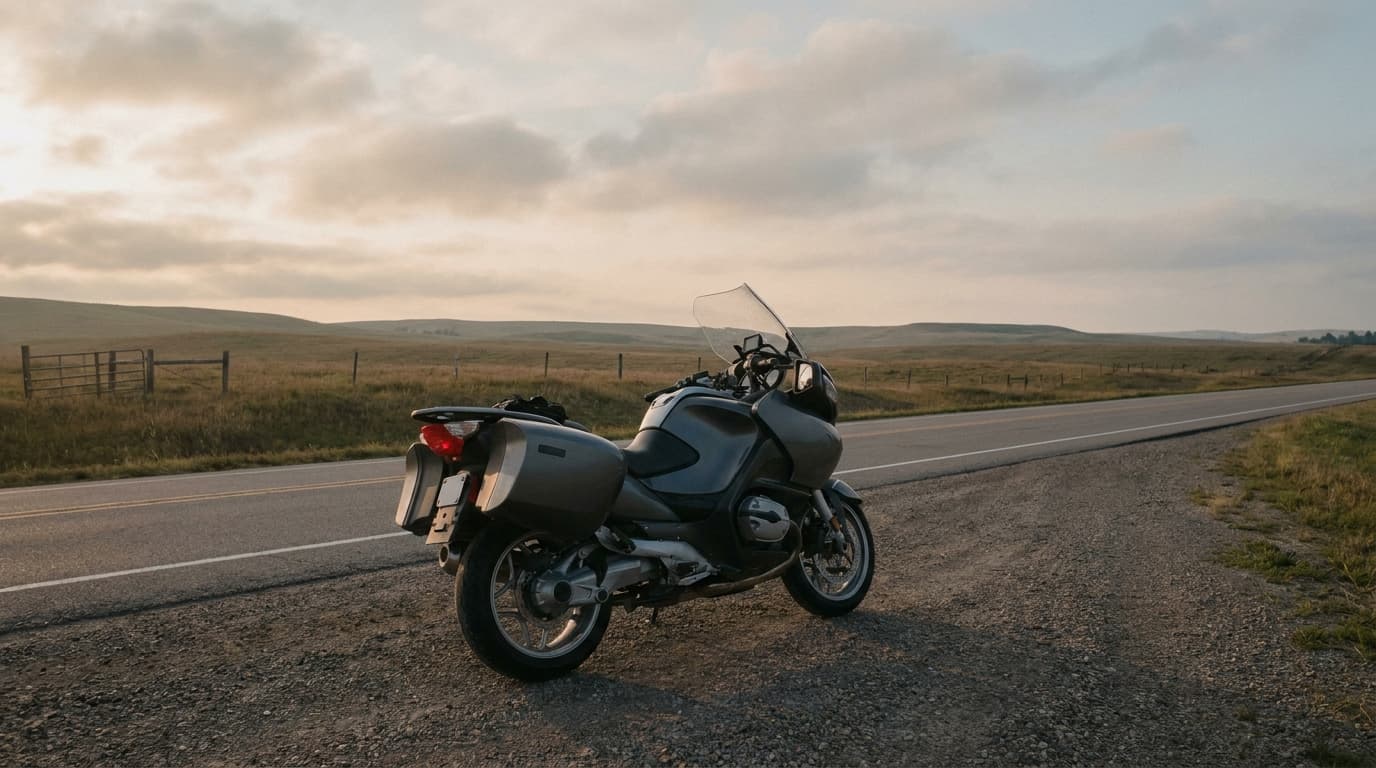
Lane splitting and lane filtering are illegal in Vermont. Under 23 V.S.A. 1115(c), "No person shall operate a motorcycle or motor-driven cycle between lanes of traffic or between adjacent lines or rows of vehicles," and the only exemption, in 1115(e), is for police officers in the performance of their official duties. A violation is a civil traffic violation, not a crime; the Vermont Judicial Bureau's waiver penalty schedule lists a $220 waiver penalty and 2 points for section 1115. For how other states handle it, see our guide to lane splitting laws by state.
Information last verified on 2026-10-09. This article has not been reviewed by a licensed lawyer.
Jurisdiction scope: This article covers Vermont state law in Title 23 of the Vermont Statutes Annotated: the motorcycle lane rule in 23 V.S.A. 1115, the lane and passing rules in 1033, 1034 and 1038, the definitions in section 4, the basic speed rule in 1081, the negligent and grossly negligent operation offenses in 1091, excessive speed in 1097, the civil-violation and penalty rule in 2302, the points schedule in 2502 and the point-suspension rules in 2505 and 2506, together with the surcharges in 13 V.S.A. 7282 and the Vermont Judicial Bureau's waiver penalty schedule. It does not cover town or city ordinances, other Department of Motor Vehicles suspension rules, insurance consequences, fault in a crash, or the law of other states.
What 23 V.S.A. 1115 says
Section 1115 is titled "Operating motorcycles and motor-driven cycles on roadways laned for traffic." Its full text reads:
"(a) All motorcycles or motor-driven cycles are entitled to full use of a lane and no motor vehicle shall be driven in such a manner as to deprive any motorcycle or motor-driven cycle of the full use of a lane. (b) The operator of a motorcycle or motor-driven cycle shall not overtake and pass in the same lane occupied by the vehicle being overtaken. (c) No person shall operate a motorcycle or motor-driven cycle between lanes of traffic or between adjacent lines or rows of vehicles. (d) No motorcycle or motor-driven cycle may be operated in the same lane with, and alongside or closer than 10 feet ahead of, or 10 feet behind another motorcycle, motor-driven cycle, or other motor vehicle. (e) Subsections (b) and (c) of this section shall not apply to police officers in the performance of their official duties."
The section reaches every practice riders ask about:
- Lane splitting. Riding between lanes of moving traffic is operating "between lanes of traffic" under 1115(c).
- Lane filtering. Riding between rows of cars stopped at a light is operating "between adjacent lines or rows of vehicles." Section 1115 contains no exception for stopped or slow traffic.
- Passing inside a lane. Subsection (b) bars overtaking and passing in the same lane occupied by the vehicle being overtaken.
- Sharing a lane. Subsection (d) bars riding in the same lane alongside, or within 10 feet ahead of or behind, another motorcycle, motor-driven cycle or other motor vehicle.
The police exemption in 1115(e) covers subsections (b) and (c) only. Section 1115 names both motorcycles and motor-driven cycles because Vermont treats them as different vehicles: the definition of "motorcycle" in 23 V.S.A. 4(18)(A) excludes motor-driven cycles. The section's history line shows it was added in 1971 (effective March 1, 1973) and amended in 1977 and by 2009, No. 152 (Adj. Sess.), effective Sept. 1, 2010.
| Maneuver | Vermont rule |
|---|---|
| Lane splitting (between lanes of moving traffic) | Prohibited by 23 V.S.A. 1115(c) |
| Lane filtering (between rows of stopped vehicles) | Prohibited by 1115(c), which covers "adjacent lines or rows of vehicles" |
| Passing a vehicle inside its own lane | Prohibited by 1115(b) |
| Riding alongside another motorcycle in one lane | 1115(d) bars riding in the same lane alongside, or within 10 feet ahead of or behind, another motorcycle; the section has no two-abreast exception |
| Passing on the shoulder | Barred by 1034(b), which forbids passing "by driving off the pavement or main-traveled portion of the roadway" |
Riding side by side
Section 1115(d) says no motorcycle or motor-driven cycle "may be operated in the same lane with, and alongside or closer than 10 feet ahead of, or 10 feet behind another motorcycle, motor-driven cycle, or other motor vehicle." The text of section 1115 contains no exception for two motorcycles riding abreast. Subsection (a) separately entitles a motorcycle to "full use of a lane" and bars other motor vehicles from depriving it of that use.

General lane and passing rules
Three general rules in Title 23 also apply to a rider moving through traffic.
Staying in a lane. Under 23 V.S.A. 1038, whenever a roadway has been divided into two or more clearly marked lanes, "(1) A vehicle shall only be driven, as nearly as practicable, entirely within a single lane and shall not be moved from that lane until the driver has first ascertained that the movement can be made with safety." Under 1038(4), official traffic-control devices may be installed prohibiting the changing of lanes on sections of roadway, "and drivers of vehicles shall obey the directions of these devices."
Passing on the left. Under 23 V.S.A. 1033(a)(1), "The driver of a motor vehicle overtaking another motor vehicle proceeding in the same direction may pass to its left at a safe distance and when so doing shall exercise due care, shall not pass to the left of the center of the highway except as authorized in section 1035 of this title, and shall not again drive to the right side of the roadway until safely clear of the overtaken vehicle."
Passing on the right. 23 V.S.A. 1034 reads:
"(a) The driver of a vehicle may overtake and pass upon the right of another vehicle only as follows: (1) when the vehicle overtaken is making or about to make a left turn; (2) upon a street or highway of sufficient width for two or more lines of moving vehicles in one or more directions and with unobstructed pavement not occupied by parked vehicles; or (3) upon a one-way street, or upon any roadway on which traffic is restricted to one direction of movement, where the roadway is free from obstructions and of sufficient width for two or more lines of moving vehicles. (b) In no event may a vehicle be passed by driving off the pavement or main-traveled portion of the roadway."
Can you ride on the shoulder?
Start with the definitions. Under 23 V.S.A. 4(32), "'Roadway' is that portion of a highway improved, designed, or ordinarily used for vehicular traffic, exclusive of the shoulder." Section 4 has no separate definition of "shoulder"; the word appears in the definitions only inside the definition of roadway. Section 4(9) defines the "edge of the roadway" as "the extreme right-hand limit of any improved area within the right-of-way of the highway."
Then the passing rule. Section 1034(b) says, "In no event may a vehicle be passed by driving off the pavement or main-traveled portion of the roadway." Passing on the right is allowed only in the three situations 1034(a) lists, and the shoulder is not part of the roadway under section 4(32).
What happens if you are caught
A civil violation, not a crime
Section 1115 has no penalty clause of its own. The fallback is 23 V.S.A. 2302: "(b) A traffic violation is not a crime and shall be treated as a civil action. (c) A violation of a traffic law in this title for which no penalty is otherwise provided shall be subject to a penalty of not more than $1,000.00." A lane-splitting ticket under section 1115 therefore carries no jail time.
The Judicial Bureau waiver penalty
Civil traffic tickets go to the Vermont Judicial Bureau, which explains: "If you plead no contest or admit to a motor vehicle violation, you waive the right to a hearing. To settle your case, you must pay a waiver penalty. A panel of three judges determines the amount of the waiver fines." (Vermont Judicial Bureau)
The Bureau's waiver penalty schedule (document dated 8/5/2026) lists these lines:
| Section | Violation as listed | Points | Minimum | Maximum | Waiver penalty |
|---|---|---|---|---|---|
| 23 V.S.A. 1115 | Operating motorcycles and mopeds on roadways laned for traffic | 2 | $47 | $1,197 | $220 |
| 23 V.S.A. 1038 | Driving on roadways laned for traffic | 2 | $47 | $1,197 | $220 |
| 23 V.S.A. 1034 | Passing on the right | 3 | $47 | $1,197 | $220 |
| 23 V.S.A. 1081(a) | Unreasonable and imprudent speed for conditions and hazards | 2 | $47 | $1,197 | $220 |
The printed range reflects surcharges. Under 13 V.S.A. 7282, on a civil penalty the Judicial Bureau imposes for a motor vehicle violation (seat belt and child restraint violations and parking ordinances aside), the clerk or Judicial Bureau "shall levy an additional surcharge" of $47 for a violation committed after June 30, 2023, plus 15 percent of the fine, "rounded upward to the nearest whole dollar." On the $1,000 cap in 2302(c), that is $1,000 plus $150 plus $47, or $1,197; with no fine, the $47 surcharge alone is the $47 minimum. Under 7282(b), the surcharges "shall not be waived by the court except as part of an expungement or sealing proceeding where the petitioner demonstrates an inability to pay."
The schedule does not say whether the $220 waiver amount already includes surcharges. If you contest a ticket, the Judicial Bureau says that "In addition to the imposed fine, there will be a surcharge and a court fee." The Judicial Bureau can tell you the amount due on a particular ticket.
Points on your driving record
23 V.S.A. 2502 assesses points "for convictions for moving violations" on this schedule:
- 2 points: section 1115 ("Illegal operation of motorcycles on roadways laned for traffic"), section 1038 ("Driving on roadways laned for traffic") and section 1081 ("Basic rule and maximum limits").
- 3 points: section 1033 ("Illegal passing on the left") and section 1034 ("Illegal passing on the right").
- 10 points: negligent operation under section 1091.
Under 2502(b), "Two additional points shall be assessed for any violation that has resulted in a crash that was the fault of the violator, provided that before these additional points are added a determination on fault must have been made." Points can be waived by "a Superior judge or a Judicial Bureau hearing officer in the interests of justice and in accordance with subsection 2501(b)." Paying the waiver penalty counts. Title 23 defines a conviction to include "a final determination that a person has violated or failed to comply with the law in a court of original jurisdiction or an authorized administrative tribunal" and "the payment of a fine or court cost" (23 V.S.A. 4(60)), so the points are assessed unless a judge or hearing officer waives them.
Points lead to suspension. Under 23 V.S.A. 2505, when convictions raise a driver's point total "to at least 10 points in a two-year period," the Commissioner "shall initiate suspension proceedings." Under 23 V.S.A. 2506, the suspension is 10 days at 10 points, 30 days at 15 points and 90 days at 20 points, increasing by 30 days for each additional 5 points. A first conviction under section 1091 brings a suspension of 30 days, or the point-based period if that is greater.
Speed, negligent operation and grossly negligent operation
Each of these is a separate charge with its own elements; whether a particular ride meets them depends on the facts. Chapter 13 of Title 23, which holds Vermont's rules of the road, has no separate reckless, careless or aggressive driving section; negligent and grossly negligent operation under 1091 are the general charges.
| Offense | What it requires | Penalty |
|---|---|---|
| Basic speed rule, 23 V.S.A. 1081(a) | Not driving "at a speed greater than is reasonable and prudent under the conditions, having regard for the actual and potential hazards then existing"; speed must be controlled "as necessary to avoid colliding with any individual, vehicle, or other object on or adjacent to the highway" | Civil violation; Judicial Bureau waiver penalty $220 and 2 points |
| Excessive speed, 23 V.S.A. 1097 | Operating on a public highway at 60 miles per hour or more and at least 30 miles per hour over a State speed zone or local speed limit | Crime: up to three months in jail or a fine of up to $300, or both, on a first conviction; up to six months or up to $500, or both, on a second |
| Negligent operation, 23 V.S.A. 1091(a) | Operating a motor vehicle on a public highway "in a negligent manner," judged by "ordinary negligence, examining whether the person breached a duty to exercise ordinary care" | Crime: up to one year in jail or a fine of up to $1,000, or both; with a prior conviction, or if serious bodily injury to or death of another person results, up to two years or up to $3,000, or both; 10 points |
| Grossly negligent operation, 23 V.S.A. 1091(b) | Operating "in a grossly negligent manner," judged by whether the person "engaged in conduct that involved a gross deviation from the care that a reasonable person would have exercised in that situation" | Crime: up to two years in jail or a fine of up to $5,000, or both; with a prior conviction under section 1091, up to four years or up to $10,000, or both; if serious bodily injury or death of another person results, up to 15 years or up to $15,000, or both |
Section 1081(d) also requires reduced speed at intersections, curves, hill crests, on narrow or winding roads and when special hazards exist.
Has Vermont considered legalizing filtering?
Section 1115 has not changed since its 2009 amendment took effect in 2010. The Vermont General Assembly's list of acts affecting the statutes for the 2025-2026 session shows no act amending section 1115, 1033, 1034, 1038, 1081 or 1091, and no act on motorcycle lane filtering.

Federal law and lane splitting
We found no federal statute or regulation that addresses lane splitting; the rules come from state traffic law.
If a crash happens
How a lane violation bears on fault and an injury claim is covered in our guide to Vermont motorcycle accident laws. For the crash rules that apply to every driver, see Vermont car accident laws.
Related pages
This article provides general legal information about Vermont law, not legal advice. For advice about a specific situation, contact a lawyer licensed in Vermont or the Vermont Judicial Bureau.
Last updated: 2026-10-09.
Frequently Asked Questions
Is lane splitting legal in Vermont?
No. 23 V.S.A. 1115(c) says no person shall operate a motorcycle or motor-driven cycle between lanes of traffic or between adjacent lines or rows of vehicles. Only police officers performing official duties are exempt (1115(e)).
Is lane filtering at a red light legal in Vermont?
No. Section 1115(c) covers riding between adjacent lines or rows of vehicles, and the section has no exception for stopped or slow traffic.
What is the fine for lane splitting in Vermont?
The Vermont Judicial Bureau schedule dated 8/5/2026 lists a $220 waiver penalty for a section 1115 violation, with a printed range of $47 to $1,197. Under 23 V.S.A. 2302(c), a traffic violation with no other stated penalty is subject to a penalty of not more than $1,000; the printed $1,197 maximum is that cap plus the surcharges required by 13 V.S.A. 7282 ($47 plus 15 percent of the fine).
How many points is a lane splitting ticket in Vermont?
23 V.S.A. 2502 assigns 2 points to a section 1115 conviction, plus 2 more points if the violation resulted in a crash and a determination found it was the violator's fault. Paying the waiver penalty counts as a conviction under 23 V.S.A. 4(60), which includes the payment of a fine. Reaching 10 points in two years starts suspension proceedings under 23 V.S.A. 2505.
Can two motorcycles ride side by side in one lane in Vermont?
Section 1115(d) bars operating a motorcycle in the same lane with, and alongside or closer than 10 feet ahead of or behind, another motorcycle, motor-driven cycle or other motor vehicle. The section contains no exception for riding two abreast.
Can motorcycles pass on the shoulder in Vermont?
No. 23 V.S.A. 1034(b) says in no event may a vehicle be passed by driving off the pavement or main-traveled portion of the roadway, and section 4(32) defines the roadway as exclusive of the shoulder.
Is lane splitting a crime in Vermont?
A section 1115 violation is a civil traffic violation; 23 V.S.A. 2302(b) says a traffic violation is not a crime. Negligent and grossly negligent operation under 23 V.S.A. 1091 are separate criminal charges with their own elements.
Updates
Independently fact-checked against the cited primary sources
The Law Behind This Article
This article rests on the statutory provisions below, held in our own legal record and retrieved from the official source. Tap a section to read the operative text.
Vermont Statutes Annotated, Title 23: Motor Vehicles, Chapter 13: Operation of Vehicles, Subchapter: MISCELLANEOUS RULES
§ 1115Operating motorcycles and motor-driven cycles on roadways laned for trafficIn forcecited in 2 of our articles
(a) All motorcycles or motor-driven cycles are entitled to full use of a lane and no motor vehicle shall be driven in such a manner as to deprive any motorcycle or motor-driven cycle of the full use of a lane. (b) The operator of a motorcycle or motor-driven cycle shall not overtake and pass in the same lane occupied by the vehicle being overtaken. (c) No person shall operate a motorcycle or motor-driven cycle between lanes of traffic or between adjacent lines or rows of vehicles. (d) No motorcycle or motor-driven cycle may be operated in the same lane with, and alongside or closer than 10 feet ahead of, or 10 feet behind another motorcycle, motor-driven cycle, or other motor vehicle. (e) Subsections (b) and (c) of this section shall not apply to police officers in the performance of their official duties. (Added 1971, No. 258 (Adj. Sess.), § 3, eff. March 1, 1973; amended 1977, No. 20, § 3; 2009, No. 152 (Adj. Sess.), § 19g, eff. Sept. 1, 2010.)
Official text (excerpt) · last checked 2026-08-01 · Read the full text in our law library · Verify at legislature.vermont.gov
Also relied on in: Motorcycle Accident Laws in Vermont (2026): Deadlines & Helmets
Vermont Statutes Annotated, Title 23: Motor Vehicles, Chapter 25: Motor Vehicle Violations; Point System
§ 2502Point assessment; scheduleIn force
(a) Unless the assessment of points is waived by a Superior judge or a Judicial Bureau hearing officer in the interests of justice and in accordance with subsection 2501(b) of this title, a person operating a motor vehicle shall have points assessed against the person’s driving record for convictions for moving violations of the indicated motor vehicle statutes in accord with the following schedule: (All references are to this title of the Vermont Statutes Annotated.) (1) Two points assessed for: | (A) | § 601. | License required; | (B) | § 602. | Exceptions for farm tractors and highway equipment; | (C) | § 611. | Possession of license certificate; | (D) | § 612. | Restrictions of license; | (E) | § 614. | Rights under license; | (F) | § 615. | Unlicensed operators; | (G) | § 1004. | Interstate highway regulations; | (H) | § 1008. | Regulations in municipalities; | (I) | § 1009. | Restrictions on controlled-access roadway; | (J) | §§ 1021 and 1022. | Failure to obey traffic-control signals; | (K) | § 1024. | Failure to obey flashing signals; | (L) | § 1026. | Failure to obey lane control signals; | (M) | § 1031. | Illegal driving to right; | (N) | § 1032.
Official text (excerpt) · last checked 2026-08-01 · Read the full text in our law library · Verify at legislature.vermont.gov
Search our full record of US law — 2.1 million sections, every state + federal →
Sources and References
- 23 V.S.A. 1115, operating motorcycles and motor-driven cycles on roadways laned for traffic(legislature.vermont.gov).gov
- Vermont Judicial Bureau, waiver penalties schedule(www.vtcourts.gov).gov
- 23 V.S.A. 4, definitions (motorcycle, edge of the roadway, roadway)(legislature.vermont.gov).gov
- 23 V.S.A. 1038, driving on roadways laned for traffic(legislature.vermont.gov).gov
- 23 V.S.A. 1033, passing on the left(legislature.vermont.gov).gov
- 23 V.S.A. 1034, passing on the right(legislature.vermont.gov).gov
- 23 V.S.A. 2302, traffic violations(legislature.vermont.gov).gov
- Vermont Judiciary, Judicial Bureau(www.vtcourts.gov).gov
- 23 V.S.A. 2502, point assessment schedule(legislature.vermont.gov).gov
- 23 V.S.A. 1081, basic rule and maximum limits(legislature.vermont.gov).gov
- 23 V.S.A. 1097, excessive speed(legislature.vermont.gov).gov
- 23 V.S.A. 1091, negligent operation and grossly negligent operation(legislature.vermont.gov).gov
- Vermont General Assembly, acts affecting Vermont statutes, 2025-2026 session(legislature.vermont.gov).gov
- 13 V.S.A. 7282, surcharges(legislature.vermont.gov).gov
- 23 V.S.A. 2505, suspension for points(legislature.vermont.gov).gov
- 23 V.S.A. 2506, period of suspension(legislature.vermont.gov).gov
- Title 23, Chapter 13, Operation of Vehicles (section list)(legislature.vermont.gov).gov