
Vermont
Is Jaywalking Illegal in Vermont? Crossing Rules and Fines (2026)
Independently fact-checked against primary sources (last audited October 10, 2026). · 10 primary sources cited on this page. How we verify our legal content
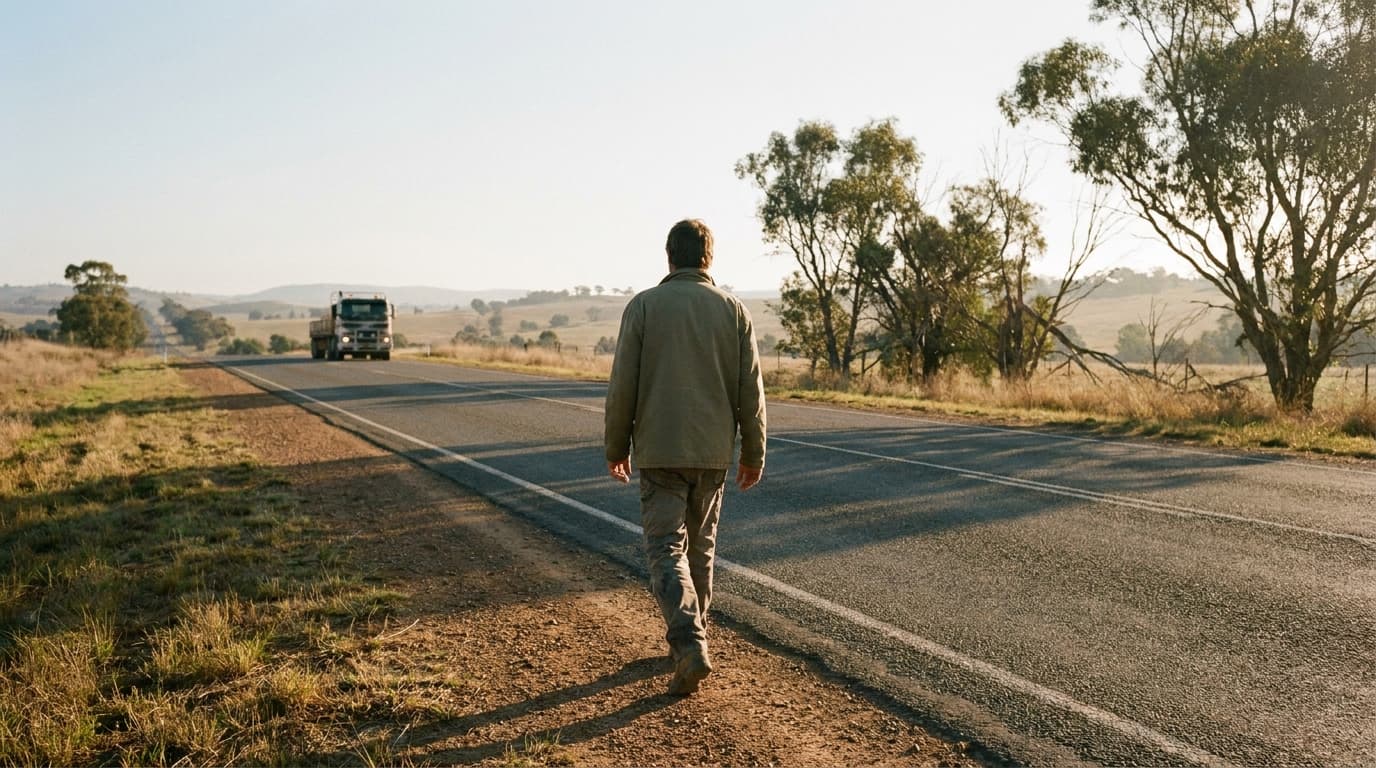
In Vermont, the crossing rules people call jaywalking are in 23 V.S.A. 1052, "Crossing except at crosswalks." A pedestrian crossing a roadway at any point other than within a marked crosswalk must yield the right of way to all vehicles, may not cross between adjacent intersections with operating traffic-control signals except in a marked crosswalk, and may not cross an intersection diagonally unless traffic control devices or an enforcement officer allow it. Under 23 V.S.A. 2302(b), "A traffic violation is not a crime and shall be treated as a civil action." The Vermont Judicial Bureau's waiver penalty schedule lists crossing except at crosswalks at $59.00 with 0 points. To compare other states, see our guide to jaywalking laws by state.
Information last verified on 2026-10-10. This article has not been reviewed by a licensed lawyer.
Jurisdiction scope: This article covers Vermont state law: the pedestrian subchapter of 23 V.S.A. chapter 13 (sections 1051 to 1059), the signal sections 1022 and 1023, the controlled-access highway sections 1004 and 1009, driver duties in 1033 and 1074, the crosswalk, pedestrian and vulnerable user definitions in 23 V.S.A. 4(7), 4(67) and 4(81), the civil traffic violation rules in 23 V.S.A. 2302, points under 23 V.S.A. 2502, the Judicial Bureau's jurisdiction under 4 V.S.A. 1102, identification rules in 4 V.S.A. 1111 and 24 V.S.A. 1983, municipal powers in 24 V.S.A. 2291, and the Judicial Bureau's waiver penalty schedule. It does not cover the text of any town or city ordinance, how to contest a ticket, the surcharge and court fee amounts, injury claims after a crash, or the law of other states.
Is jaywalking illegal in Vermont?
It depends on where and how you cross. Most of Vermont's crossing rules are a duty to yield: crossing away from a marked crosswalk is allowed under state law, but vehicles go first. Two are flat rules that apply even when the road is empty: no crossing between two adjacent signalized intersections except in a marked crosswalk, and no diagonal crossing unless a traffic control device or an enforcement officer allows it. Whatever the rule, a violation is a civil matter, not a crime.
| Situation | Vermont rule |
|---|---|
| Crossing at any point other than within a marked crosswalk | Allowed if the pedestrian yields the right of way to all vehicles (23 V.S.A. 1052(a)) |
| Crossing where a pedestrian tunnel or overhead pedestrian crossing has been provided | The pedestrian must yield the right of way to all vehicles (23 V.S.A. 1052(b)) |
| Crossing between adjacent intersections with traffic-control signals in operation | Only in a marked crosswalk (23 V.S.A. 1052(c)) |
| Crossing an intersection diagonally | Barred unless authorized by official traffic control devices or an enforcement officer, and then only as they direct (23 V.S.A. 1052(d)) |
| Suddenly leaving a curb into the path of a vehicle so close that it is impossible for a driver to yield | Barred (23 V.S.A. 1051(b)) |
| Starting to cross on Don't Walk | Barred (23 V.S.A. 1023(2)) |
| Starting to cross on a steady yellow, or entering the roadway on a steady red alone, with no pedestrian signal directing otherwise | Barred (23 V.S.A. 1022) |
| Walking along a highway | When practicable, only on the left side of the roadway or its shoulder, facing oncoming traffic (23 V.S.A. 1055(b)) |
| Moving within a crosswalk | Whenever practicable, use the right half of the crosswalk only (23 V.S.A. 1054) |
| Standing in the roadway to solicit a ride, contributions, employment, or business from a vehicle occupant | Barred, except approved not-for-profit and municipal solicitations (23 V.S.A. 1056(a) and (b)) |
Crossing outside a marked crosswalk
The basic rule is 23 V.S.A. 1052(a):
"(a) Every pedestrian crossing a roadway at any point other than within a marked crosswalk shall yield the right of way to all vehicles upon the roadway."
This is a duty to yield, not a ban. A pedestrian who crosses mid-block, waits for a gap and lets traffic pass complies with subsection (a), subject to the signalized-block and diagonal rules below and to any local ordinance. Subsection (b) applies the same yield duty to "Every pedestrian crossing a roadway at a point where a pedestrian tunnel or overhead pedestrian crossing has been provided."
Marked and unmarked crosswalks
Vermont's wording differs from many states. Section 1052(a) puts the yield duty on a pedestrian crossing anywhere "other than within a marked crosswalk," and it does not add the words "or within an unmarked crosswalk at an intersection." Yet Vermont's definition of crosswalk does include unmarked crossings at intersections. 23 V.S.A. 4(7) provides:
"'Crosswalk' means: (A) that part of a roadway at an intersection included within the connections of the lateral lines of the sidewalks on opposite sides of the highway measured from the curbs or, in the absence of curbs, from the edges of the traversable roadway; or (B) any portion of a roadway at an intersection or elsewhere distinctly indicated for pedestrian crossing by lines or other markings on the surface."
The same section defines "Pedestrian" as "any individual afoot or operating a wheelchair or other personal mobility device, whether motorized or not, and including an electric personal assistive mobility device" (23 V.S.A. 4(67)).
Part (A) of the crosswalk definition is built from "the lateral lines of the sidewalks on opposite sides of the highway," so its text is framed around sidewalks on both sides. Other sections use the full definition: the signal statute lets pedestrians facing a green signal "proceed across the roadway within any marked or unmarked crosswalk" (23 V.S.A. 1022), and the driver's duty to yield where signals are not in operation runs to "a pedestrian crossing the roadway within a crosswalk" (23 V.S.A. 1051(a)). Read on its face, section 1052(a)'s yield duty reaches a pedestrian at an unmarked intersection crossing, while section 1051(a)'s driver duty runs to a pedestrian "within a crosswalk." The two sections are worded differently, so at an unmarked intersection crossing the safe course is to wait for a gap and not assume traffic will stop.
Mid-block between signals, and diagonal crossing
Subsections (c) and (d) of 23 V.S.A. 1052 are flat rules rather than yield rules:
"(c) Between adjacent intersections at which traffic-control signals are in operation, pedestrians shall not cross at any place except in a marked crosswalk. (d) No pedestrian may cross a roadway intersection diagonally unless authorized by official traffic control devices or an enforcement officer. When authorized to cross diagonally, pedestrians may cross only in accordance with the official traffic control devices or signal of an enforcement officer."
Subsection (c) applies only on a stretch of road between two adjacent intersections where signals are operating. On that stretch, yielding is not enough: the crossing must be in a marked crosswalk. Vermont's diagonal rule also lets an enforcement officer, not only a device, authorize a diagonal crossing.
A separate rule applies everywhere, including in crosswalks. 23 V.S.A. 1051(b) provides: "No pedestrian may suddenly leave a curb or other place of safety and walk or run into the path of a vehicle that is so close that it is impossible for a driver to yield."
Walk signals and traffic lights
23 V.S.A. 1058 requires that "All pedestrians shall obey the instructions of all traffic control devices that are applicable to them and all instructions of enforcement officers relating to control of traffic."
Where Walk and Don't Walk signals are installed, 23 V.S.A. 1023 controls:
"(1) 'Walk': pedestrians facing the signal may proceed across the roadway in the direction of the signal and shall be given the right of way by all drivers. (2) 'Don't Walk': no pedestrian shall start to cross the roadway in the direction of the signal, but any pedestrian who has begun his or her crossing on the 'Walk' signal shall proceed to a sidewalk or a safety island while the 'Don't Walk' signal is showing."
Vermont's Don't Walk rule has no exception for an empty road. A pedestrian who began on Walk keeps going to a sidewalk or safety island.
Where there is no pedestrian signal, the ordinary traffic light in 23 V.S.A. 1022 governs pedestrians:
- On green: "Unless otherwise directed by a pedestrian-control signal, as provided in section 1023 of this title, pedestrians facing a green signal may proceed across the roadway within any marked or unmarked crosswalk, but not when the sole green signal is a turn arrow."
- On steady yellow: pedestrians, "unless otherwise directed by a pedestrian-control signal as provided in section 1023 of this title, are advised that there is insufficient time to cross the roadway before a red signal is shown, and no pedestrian shall then start to cross the roadway."
- On steady red: "Unless otherwise directed by a pedestrian-control signal as provided in section 1023 of this title, pedestrians facing a steady red signal alone shall not enter the roadway."
Walking along the road
23 V.S.A. 1055 covers walking along a highway. Its subsection (a) is repealed, and subsection (b) reads: "Any pedestrian walking along and upon a highway shall, when practicable, walk only on the left side of the roadway or its shoulder facing the direction of possible oncoming traffic." The section was last amended by 2023, No. 165 (Adj. Sess.), effective July 1, 2024.
Interstates and controlled-access highways
Separate rules govern interstates and other limited access and controlled access highways. Under 23 V.S.A. 1004(a), "The Traffic Committee has exclusive authority to make and publish, and from time to time may alter, amend, or repeal, rules pertaining to vehicular, pedestrian, and animal traffic, and the public safety" on the interstate system "and other limited access and controlled access highways within this State." Those rules "have the force of law, and violations shall be traffic violations under section 2302 of this title" (23 V.S.A. 1004(c)).
The Traffic Committee may also "regulate or prohibit the use of any controlled-access highway by any class or kind of traffic that is found to be incompatible with the normal and safe movement of traffic" (23 V.S.A. 1009(a)). Once official traffic-control devices are in place, "no person shall disobey the restrictions stated on such devices" (23 V.S.A. 1009(b)). Traffic Committee rules take precedence on these highways over laws and rules applicable to highways generally, which apply there only until the Committee's rules provide otherwise (23 V.S.A. 1004(b)).
What drivers owe pedestrians
A pedestrian's duty to yield outside a marked crosswalk sits alongside duties Vermont places on drivers in 23 V.S.A. 1051:
"(a) If traffic-control signals are not in operation, the driver of a vehicle shall yield the right of way, slowing down or stopping if necessary, to a pedestrian crossing the roadway within a crosswalk."
Other driver duties include:
- Passing a stopped car: "If any vehicle is stopped at a marked crosswalk or at any unmarked crosswalk at an intersection to permit a pedestrian to cross the roadway, the driver of any other vehicle approaching from the rear may not overtake and pass the stopped vehicle" (23 V.S.A. 1051(c)).
- Walk signal: pedestrians on Walk "shall be given the right of way by all drivers" (23 V.S.A. 1023(1)).
- Turning on green: "Vehicular traffic, including vehicles turning right or left, shall yield the right of way to other vehicles or to pedestrians lawfully within the intersection or on an adjacent crosswalk at the time the signal is exhibited" (23 V.S.A. 1022(a)(1)(A)). Traffic on a green arrow "shall yield the right of way to pedestrians lawfully within an adjacent crosswalk" (23 V.S.A. 1022(a)(1)(B)).
- Turning on red: traffic turning on a steady red after stopping "shall yield the right-of-way to pedestrians lawfully within an adjacent crosswalk" (23 V.S.A. 1022(a)(3)(B)).
- Guide dogs and white canes: when a pedestrian guided by a guide dog or carrying a raised or extended white cane is crossing or attempting to cross, the driver of every approaching vehicle "shall bring his or her vehicle to a full stop before arriving at the intersection or place of crossing" (23 V.S.A. 1057(a)).
- Driveways and alleys: a driver emerging from an alley, private road or driveway "shall stop immediately prior to driving onto a sidewalk" and "shall yield the right of way to any pedestrian as may be necessary to avoid contact" (23 V.S.A. 1074).
- Passing a pedestrian: a driver "approaching or passing a vulnerable user" must "exercise due care, which includes reducing speed and increasing clearance to a distance of at least four feet" (23 V.S.A. 1033(b)), and "vulnerable user" includes a pedestrian (23 V.S.A. 4(81)).
On the Judicial Bureau's waiver penalty schedule, a driver violation of 23 V.S.A. 1051 (pedestrian's right of way in crosswalks) carries 4 points and a $220.00 waiver penalty.
Jaywalking fine and penalty in Vermont
Vermont treats traffic violations as civil, not criminal. 23 V.S.A. 2302(b) provides: "A traffic violation is not a crime and shall be treated as a civil action." The pedestrian sections set no fine of their own, and 23 V.S.A. 2302(c) supplies the ceiling: "A violation of a traffic law in this title for which no penalty is otherwise provided shall be subject to a penalty of not more than $1,000.00."
Traffic violations go to the Judicial Bureau, which has jurisdiction of "Traffic violations alleged to have been committed on or after July 1, 1990" (4 V.S.A. 1102(b)(1)). Three hearing officers appointed by the Court Administrator "shall determine waiver penalties to be imposed for violations within the Judicial Bureau's jurisdiction" (4 V.S.A. 1102(d)). The resulting Waiver Penalty Schedule lists the pedestrian violations this way:
| Section | Violation | Points | Listed range | Waiver penalty |
|---|---|---|---|---|
| 23 V.S.A. 1052 | Crossing except at crosswalks | 0 | $47.00 to $1,197.00 | $59.00 |
| 23 V.S.A. 1055 | Pedestrians on roadway | 0 | $47.00 to $1,197.00 | $162.00 |
| 23 V.S.A. 1058 | Duties of pedestrians | 0 | $47.00 to $1,197.00 | $105.00 |
| 23 V.S.A. 1023 | Pedestrian control signals | 0 | $47.00 to $1,197.00 | $220.00 |
| 23 V.S.A. 1022 | Traffic control signals | 2 | $47.00 to $1,197.00 | $220.00 |
| 23 V.S.A. 1054 | Pedestrians to use right half of crosswalks | 0 | $47.00 to $1,197.00 | $105.00 |
| 23 V.S.A. 1056 | Prohibited acts (improper areas of hitchhiking, guarding vehicles) | 0 | $47.00 to $1,197.00 | $105.00 |
| 23 V.S.A. 1009 | Restrictions on controlled access highways | 2 | $47.00 to $1,197.00 | $220.00 |
| 23 V.S.A. 1051 | Pedestrian's right of way in crosswalks (driver violation) | 4 | $47.00 to $1,197.00 | $220.00 |
| 23 V.S.A. 1057 | Duty toward blind persons (driver violation) | 4 | $47.00 to $1,197.00 | $220.00 |
Points are assessed under 23 V.S.A. 2502(a), which provides that "a person operating a motor vehicle shall have points assessed against the person's driving record for convictions for moving violations" of the listed statutes.
The $1,197.00 top of the listed range is the maximum on the schedule, not the typical ticket; the waiver penalty is the usual figure. The Judicial Bureau states that "The waiver penalty amount is shown on the front of the civil violation complaint," and that if a person goes to a hearing, a judge will decide the amount of the fine, plus "a surcharge and a court fee."
Although a crossing violation is civil, an officer who has reasonable grounds to believe you committed a civil violation of Title 23 may detain you if you refuse to identify yourself satisfactorily, until you are identified; if you still refuse before a judge, you face civil contempt proceedings (4 V.S.A. 1111). The same rule applies to a municipal ordinance violation (24 V.S.A. 1983).
Town and city rules
Vermont law recognizes local pedestrian ordinances. Among the matters 23 V.S.A. 2302(a)(4) counts as traffic violations is "a violation of any municipal ordinance relating to the operation or use of motor vehicles or to the use of highways by pedestrians or by the operation of any other vehicle." For civil ordinance violations, municipalities "shall adopt full and waiver penalties" under 24 V.S.A. 1979 (4 V.S.A. 1102(d)). Vermont also gives a town, city or incorporated village the power "To establish rules for pedestrian traffic on public highways and to establish crosswalks" (24 V.S.A. 2291(5)). A town or city can therefore have its own crossing rules and amounts, so check your local ordinances and posted signs before crossing mid-block downtown.
If a pedestrian is hit by a car
Whether a pedestrian was crossing lawfully under 23 V.S.A. 1052 can come up after a collision, alongside the driver duties in 23 V.S.A. 1051. For how fault and insurance work after a crash, see Vermont car accident laws. Riders of electric scooters follow their own rules, covered in Vermont e-scooter laws.
Related pages
- Jaywalking laws by state
- Vermont car accident laws
- Vermont e-scooter laws
- New Hampshire jaywalking laws
- New York jaywalking laws
This article provides general legal information about Vermont law, not legal advice. For advice about a specific situation, contact a lawyer licensed in Vermont or the Vermont Judicial Bureau.
Last updated: 2026-10-10.
Frequently Asked Questions
Is jaywalking illegal in Vermont?
Crossing outside a marked crosswalk is allowed under state law if you yield the right of way to all vehicles (23 V.S.A. 1052(a)). Between adjacent signalized intersections you may cross only in a marked crosswalk, diagonal crossing is barred unless authorized (23 V.S.A. 1052(c) and (d)), and local ordinances can add rules.
What is the fine for jaywalking in Vermont?
The Judicial Bureau waiver penalty for crossing except at crosswalks (23 V.S.A. 1052) is $59.00 with 0 points, within a listed range of $47.00 to $1,197.00. The amount is shown on the front of the civil violation complaint, and a judge after a hearing can add a surcharge and a court fee. A pedestrian-control signal violation (23 V.S.A. 1023) is listed at $220.00.
Is jaywalking a crime in Vermont?
No. Under 23 V.S.A. 2302(b), a traffic violation is not a crime and is treated as a civil action, handled by the Judicial Bureau (4 V.S.A. 1102).
Does jaywalking add points to my license in Vermont?
The Judicial Bureau waiver penalty schedule lists 0 points for crossing except at crosswalks (23 V.S.A. 1052), pedestrian control signals (1023), pedestrians on roadway (1055) and duties of pedestrians (1058). Under 23 V.S.A. 2502(a), points are assessed against a person operating a motor vehicle for convictions for moving violations.
Can I cross on Don't Walk in Vermont?
No. On Don't Walk no pedestrian shall start to cross, and a pedestrian who began on Walk must proceed to a sidewalk or safety island (23 V.S.A. 1023(2)). The Judicial Bureau waiver penalty for a pedestrian-control signal violation (23 V.S.A. 1023) is $220.00 with 0 points.
Which side of the road should I walk on in Vermont?
When practicable, walk only on the left side of the roadway or its shoulder, facing the direction of possible oncoming traffic (23 V.S.A. 1055(b)).
Do drivers have to stop for pedestrians in Vermont?
If traffic-control signals are not in operation, a driver must yield, slowing down or stopping if necessary, to a pedestrian crossing within a crosswalk, and may not pass a vehicle stopped at a crosswalk for a pedestrian (23 V.S.A. 1051). The waiver penalty is $220.00 with 4 points.
Updates
Independently fact-checked against the cited primary sources
The Law Behind This Article
This article rests on the statutory provisions below, held in our own legal record and retrieved from the official source. Tap a section to read the operative text.
Vermont Statutes Annotated, Title 23: Motor Vehicles, Chapter 13: Operation of Vehicles, Subchapter: PEDESTRIANS' RIGHTS AND DUTIES
§ 1052Crossing except at crosswalksIn force
(a) Every pedestrian crossing a roadway at any point other than within a marked crosswalk shall yield the right of way to all vehicles upon the roadway. (b) Every pedestrian crossing a roadway at a point where a pedestrian tunnel or overhead pedestrian crossing has been provided shall yield the right of way to all vehicles upon the roadway. (c) Between adjacent intersections at which traffic-control signals are in operation, pedestrians shall not cross at any place except in a marked crosswalk. (d) No pedestrian may cross a roadway intersection diagonally unless authorized by official traffic control devices or an enforcement officer. When authorized to cross diagonally, pedestrians may cross only in accordance with the official traffic control devices or signal of an enforcement officer. (Added 1971, No. 258 (Adj. Sess.), § 3, eff. March 1, 1973; amended 2003, No. 151 (Adj. Sess.), § 6.)
Official text (excerpt) · last checked 2026-08-01 · Read the full text in our law library · Verify at legislature.vermont.gov
§ 1051Pedestrians’ right of way in crosswalksIn force
(a) If traffic-control signals are not in operation, the driver of a vehicle shall yield the right of way, slowing down or stopping if necessary, to a pedestrian crossing the roadway within a crosswalk. (b) No pedestrian may suddenly leave a curb or other place of safety and walk or run into the path of a vehicle that is so close that it is impossible for a driver to yield. (c) If any vehicle is stopped at a marked crosswalk or at any unmarked crosswalk at an intersection to permit a pedestrian to cross the roadway, the driver of any other vehicle approaching from the rear may not overtake and pass the stopped vehicle. (Added 1971, No. 258 (Adj. Sess.), § 3, eff. March 1, 1973; amended 1985, No. 138 (Adj. Sess.), § 6.)
Official text (excerpt) · last checked 2026-08-01 · Read the full text in our law library · Verify at legislature.vermont.gov
Vermont Statutes Annotated, Title 23: Motor Vehicles, Chapter 13: Operation of Vehicles, Subchapter: TRAFFIC SIGNS, SIGNALS, AND MARKINGS
§ 1022Traffic-control signalsIn force
(a) Whenever traffic is controlled by traffic-control signals exhibiting different colored lights, or colored lighted arrows, successively one at a time or in combination, only the colors green, red, and yellow may be used, except for special pedestrian signals carrying a word legend, and the signals shall indicate and apply to drivers and pedestrians as follows: (1) Green signal. (A) Vehicular traffic facing a circular green signal may proceed straight through or turn right or left unless a sign prohibits either turn. Vehicular traffic, including vehicles turning right or left, shall yield the right of way to other vehicles or to pedestrians lawfully within the intersection or on an adjacent crosswalk at the time the signal is exhibited. (B) Vehicular traffic facing a green arrow signal, shown alone or in combination with another signal, may cautiously enter the intersection only to make the movement indicated by the arrow, or such other movement as is permitted by other signals shown at the same time. Vehicular traffic shall yield the right of way to pedestrians lawfully within an adjacent crosswalk or to other traffic lawfully using the intersection.
Official text (excerpt) · last checked 2026-08-01 · Read the full text in our law library · Verify at legislature.vermont.gov
Search our full record of US law — 2.1 million sections, every state + federal →
Sources and References
- 23 V.S.A. chapter 13 (sections 1004, 1009, 1022, 1023, 1033, 1051 to 1058, 1074)(legislature.vermont.gov).gov
- 23 V.S.A. 2302, Traffic violations(legislature.vermont.gov).gov
- Vermont Judicial Bureau, Waiver Penalty Schedule(vtcourts.gov).gov
- 23 V.S.A. 4, Definitions (crosswalk, pedestrian, vulnerable user)(legislature.vermont.gov).gov
- 4 V.S.A. 1102, Judicial Bureau jurisdiction(legislature.vermont.gov).gov
- Vermont Judiciary, Judicial Bureau(vtcourts.gov).gov
- 23 V.S.A. 2502, Point assessment; schedule(legislature.vermont.gov).gov
- 4 V.S.A. 1111, Civil violation; failure to produce identification(legislature.vermont.gov).gov
- 24 V.S.A. 1983, Identification to law enforcement officers required(legislature.vermont.gov).gov
- 24 V.S.A. 2291, Enumeration of powers(legislature.vermont.gov).gov