
Vermont
Vermont Knife Laws (2026): 2025 Switchblade Repeal, Carry
Independently fact-checked against primary sources (last audited September 18, 2026). · 10 primary sources cited on this page. How we verify our legal content
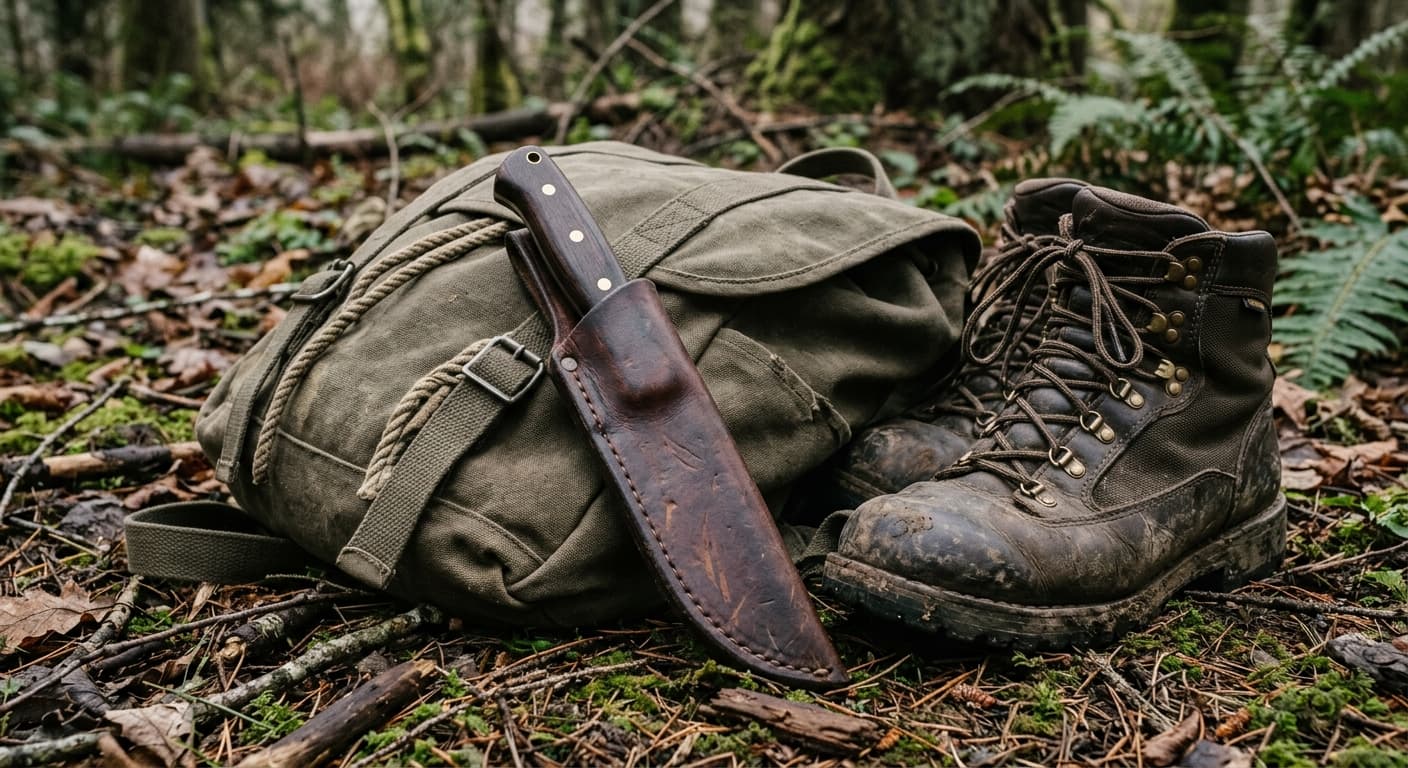
Vermont has no blade-length limit or knife-type ban for general carry. A 2025 law repealed the state's old switchblade-specific ban, and the state's main weapons-carry offense requires intent to injure another person as an element, so simply carrying a knife, open or concealed, is not itself a crime. A second, narrower carry offense reaches a knife carried while committing a felony, with no intent-to-injure element required.
Jurisdiction scope: This page covers Vermont state law only, principally 13 V.S.A. §§ 4003, 4004, 4005, 4007, 4008, 4013, and 4016, and 24 V.S.A. §§ 2291 and 2295. It does not cover Vermont's firearm-specific carry statutes beyond what overlaps with the general "dangerous or deadly weapon" definition used in these sections.
Can you carry a knife openly or concealed in Vermont?
Yes, for an ordinary knife carried for a lawful purpose, without a separate intent requirement, outside three narrower carve-outs described below: carrying while committing a felony, carrying in a school building or on a school bus, and carrying in a courthouse without authorization. Vermont has no general statute banning the mere carrying, open or concealed, of a knife. The state's core carrying-weapons offense, 13 V.S.A. § 4003, provides: "A person who carries a dangerous or deadly weapon with the intent to injure another shall be imprisoned for not more than two years or fined not more than $2,000.00, or both. It shall be a felony punishable by not more than 10 years of imprisonment or a fine of $25,000.00, or both, if the person intends to injure multiple persons." Intent to injure another person is an element of the offense, not an afterthought; a person carrying a knife for an ordinary lawful purpose, with no intent to injure anyone, does not violate this section regardless of the knife's type or blade length.
A second, separate offense in the same chapter, 13 V.S.A. § 4005(a), has no intent-to-injure element at all: "Except as otherwise provided in 18 V.S.A. § 4253, a person who carries a dangerous or deadly weapon, openly or concealed, while committing a felony shall be imprisoned not more than five years or fined not more than $500.00, or both." This section reaches open or concealed carry of a knife whenever the carrying accompanies a felony, with a higher maximum prison term than § 4003's base offense. Subsection (b)(1) limits one consequence, the bail-eligibility "violent act" designation, to a violation involving a firearm specifically; that designation does not attach to a knife carried under this section.
The 2025 switchblade repeal
Vermont's knife-specific carry law had a narrower history before 2025. 13 V.S.A. § 4013 had, since 1959, banned possessing, selling, or offering for sale a switchblade knife with a blade of three inches or more in length. Act 64 (enacted via S.109), effective June 12, 2025, removed that switchblade language from § 4013 entirely. The current text of § 4013 provides only: "A person who possesses, sells, or offers for sale a weapon commonly known as a 'zip' gun shall be imprisoned not more than 90 days or fined not more than $100.00, or both." No knife of any kind is mentioned. The section's own amendment history lists "2025, No. 64, § 8, eff. June 12, 2025" alongside its earlier 1959 and 1981 amendments. Since the repeal, no other Vermont statute replaces the former blade-length threshold with any general knife restriction; Vermont currently has no statewide blade-length limit or named-knife-type ban.
Act 64 did not stop at repealing the provision going forward. Section 9 of the act addresses everyone already convicted under the old law: "The court shall order the expungement of criminal history records of convictions of 13 V.S.A. § 4013 for possessing, selling, or offering for sale a switchblade knife that occurred prior to July 1, 2025. The process and effect for expungement of these records shall be as provided for in 13 V.S.A. § 7606 and shall be completed by the court and all entities subject to the order not later than July 1, 2026." For a person with an old Vermont switchblade conviction, this expungement, due to be complete by that date, is the most concrete consequence of the 2025 repeal.
Schools
13 V.S.A. § 4004 imposes two distinct rules. Subsection (a) bans knowingly possessing a firearm or a "dangerous or deadly weapon" while within a school building or on a school bus, with no intent requirement; a first offense carries up to one year's imprisonment or a $1,000 fine, and a second or subsequent offense up to three years or $5,000. Subsection (b) reaches further, to any school property, but only when the person possesses the firearm or dangerous or deadly weapon "with the intent to injure another person," carrying a heavier range: up to three years or $1,000 for a first offense, and up to five years or $5,000 for a second or subsequent offense. Section 4004(d)(3) defines "dangerous or deadly weapon" by cross-reference to § 4016, described below, which reaches an ordinary knife. Subsection (c) exempts a law enforcement officer engaged in duties and possession or use authorized by the school board, superintendent, or principal for specific occasions or instructional purposes.
Courthouses
13 V.S.A. § 4016 separately restricts weapons in a courthouse. Its own definitions section, 4016(a)(2), defines "dangerous or deadly weapon" broadly as "any firearm, or other weapon, device, instrument, material, or substance, whether animate or inanimate, that in the manner it is used or is intended to be used is known to be capable of producing death or serious bodily injury," a definition that reaches an ordinary knife depending on how it is used or intended to be used. Subsection (b) makes it an offense, punishable by up to one year's imprisonment or a $500 fine, for a person to carry or possess a firearm in a courthouse without court authorization, or to knowingly carry or possess another dangerous or deadly weapon there. Subsection (d) goes further for a courthouse the Court Administrator has certified as a "secured building" (one with controlled access points, metal screening, and locked storage for checked firearms): no dangerous or deadly weapon is allowed there at all, with no authorization exception stated in the text.
Minors
Vermont sets no minimum age for a minor to carry or possess a knife. Its child-specific possession statute, 13 V.S.A. § 4008, provides: "A child under the age of 16 years shall not, without the consent of his or her parents or guardian, have in his or her possession or control a pistol or revolver constructed or designed for the use of gunpowder or other explosive substance with leaden ball or shot." That text is scoped to a pistol or revolver and does not mention a knife or any other weapon, so it creates no age-based restriction on a minor's own carrying or possession of a knife. A separate statute, 13 V.S.A. § 4007, restricts a different act by a different person: it bars anyone other than a parent or guardian from selling or furnishing "a firearm or other dangerous weapon or ammunition for firearms" to a minor under 16, punishable by a fine of not less than $10 nor more than $50, with an exemption for an instructor or teacher furnishing firearms to pupils for instruction and drill. That "or other dangerous weapon" phrase is not limited to firearms on its face, so furnishing a knife to a minor under 16 may fall within it, but the statute regulates the furnishing adult's conduct, not the minor's own carrying.
No statewide preemption reaching knives
Vermont has a municipal weapons-preemption statute, but it does not reach knives. 24 V.S.A. § 2295, titled "Authority of municipal and county governments to regulate firearms, ammunition, hunting, fishing, and trapping," provides: "Except as otherwise provided by law, no town, city, or incorporated village, by ordinance, resolution, or other enactment, shall directly regulate hunting, fishing, and trapping or the possession, ownership, transportation, transfer, sale, purchase, carrying, licensing, or registration of traps, firearms, ammunition, or components of firearms or ammunition. This section shall not limit the powers conferred upon a town, city, or incorporated village under subdivision 2291(8) of this title." That preserved power, 24 V.S.A. § 2291(8), lets a municipality "regulate or prohibit the use or discharge, but not possession, of firearms" within its borders; it does not extend to knives either. Neither statute's list mentions a knife anywhere, so a Vermont town, city, or incorporated village is not preempted by either one from adopting its own knife-specific ordinance.
Federal law: what it does and does not reach
Federal law does not ban an individual from owning or carrying a switchblade. The Federal Switchblade Act, 15 U.S.C. §§ 1241 to 1245, restricts interstate commerce in switchblade knives and, in 15 U.S.C. § 1245, makes it a federal offense to knowingly possess, manufacture, sell, or import a ballistic knife in or affecting interstate commerce or within federal territorial jurisdiction; the operative offense sections, §§ 1242 and 1243, do not apply to certain knives and people, listed as exemptions in 15 U.S.C. § 1244. A 2009 amendment, § 1244(5), exempts a knife with a spring, detent, or other closure-bias mechanism that requires hand, wrist, or arm exertion on the blade itself to overcome the bias and assist opening, the carve-out that keeps modern assisted-opening folding knives legal in interstate commerce. A separate exemption, § 1244(4), covers a person with only one arm possessing or carrying a switchblade with a blade three inches or less.
Disclaimer: This article provides general legal information about Vermont knife law as of September 2026. It is not legal advice. Consult a lawyer licensed in Vermont for advice about a specific situation.
For a state-by-state comparison, see knife laws by state. Vermont's self-defense statutes are covered separately on the Vermont self-defense laws page.
Statutes cited reflect their in-force version as of 2026-09-18. Last updated: 2026-09-18.
Frequently Asked Questions
Is it legal to carry a switchblade in Vermont?
Yes. Act 64 (2025), effective June 12, 2025, repealed the switchblade-knife language that had been part of 13 V.S.A. § 4013 since 1959. The current statute covers only 'zip guns.' Ordinary carry of a switchblade, without intent to injure another person or a felony in progress, is not an offense under any current Vermont statute.
Does Vermont have a blade-length limit for knives?
No. The former three-inches-or-more threshold under 13 V.S.A. § 4013 was removed by the 2025 repeal, and no other Vermont statute sets a blade-length limit for general carry.
What happened to old Vermont switchblade convictions after the 2025 repeal?
Act 64 orders them expunged. Section 9 of the act requires the court to expunge any conviction under the old 13 V.S.A. § 4013 switchblade provision from before July 1, 2025, using the process in 13 V.S.A. § 7606, with completion required by all courts and entities subject to the order no later than July 1, 2026.
Can you carry a knife concealed in Vermont?
Yes, for an ordinary lawful purpose. Vermont's carrying-weapons statute, 13 V.S.A. § 4003, requires intent to injure another person as an element; carrying a knife, open or concealed, without that intent is not an offense. A separate statute, § 4005, does reach carrying a knife, openly or concealed, while committing a felony, with no intent-to-injure element.
Is there a minimum age to carry a knife in Vermont?
No age floor applies to a minor's own carrying or possession of a knife. Vermont's child-specific weapons-possession statute, 13 V.S.A. § 4008, is limited to a pistol or revolver and does not mention a knife. A different rule applies to someone else furnishing a knife to a minor: 13 V.S.A. § 4007 fines anyone other than a parent or guardian $10 to $50 for selling or furnishing 'a firearm or other dangerous weapon' to a minor under 16, wording not limited to firearms on its face.
Does Vermont preempt local knife ordinances?
No. Vermont's municipal weapons-preemption statute, 24 V.S.A. § 2295, and the related power-preserving statute, § 2291(8), are scoped to firearms, ammunition, hunting, fishing, and trapping; neither text mentions knives, so a town, city, or incorporated village is not barred by either statute from adopting its own knife ordinance.
Updates
Independently fact-checked against the cited primary sources
Sources and References
- 13 V.S.A. § 4003 - Carrying dangerous weapons(legislature.vermont.gov).gov
- 13 V.S.A. § 4004 - Possession of dangerous or deadly weapon in a school bus or school building or on school property(legislature.vermont.gov).gov
- 13 V.S.A. § 4005 - While committing a felony(legislature.vermont.gov).gov
- 13 V.S.A. § 4007 - Furnishing firearms to children(legislature.vermont.gov).gov
- 13 V.S.A. § 4008 - Possession of firearms by children(legislature.vermont.gov).gov
- 13 V.S.A. § 4013 - Zip guns (former switchblade-knife provision, repealed by 2025 Act 64)(legislature.vermont.gov).gov
- 13 V.S.A. § 4016 - Weapons in court(legislature.vermont.gov).gov
- Vermont Act 64 (2025) as enacted - Sec. 8 (switchblade repeal) and Sec. 9 (expungement of prior convictions)(legislature.vermont.gov).gov
- 24 V.S.A. § 2291 - Enumeration of powers (subdivision (8), firearm discharge)(legislature.vermont.gov).gov
- 24 V.S.A. § 2295 - Authority of municipal and county governments to regulate firearms, ammunition, hunting, fishing, and trapping(legislature.vermont.gov).gov
- 15 U.S.C. §§ 1241-1245 - Federal Switchblade Act, interstate commerce and ballistic-knife scope(law.cornell.edu)
- 15 U.S.C. § 1244 - exceptions, including the 2009 assisted-opening carve-out and the one-arm exception(law.cornell.edu)