
Alabama
Is Kratom Legal in Alabama? (2026 Law)
Independently fact-checked against primary sources (last audited October 12, 2026). · 29 primary sources cited on this page. How we verify our legal content
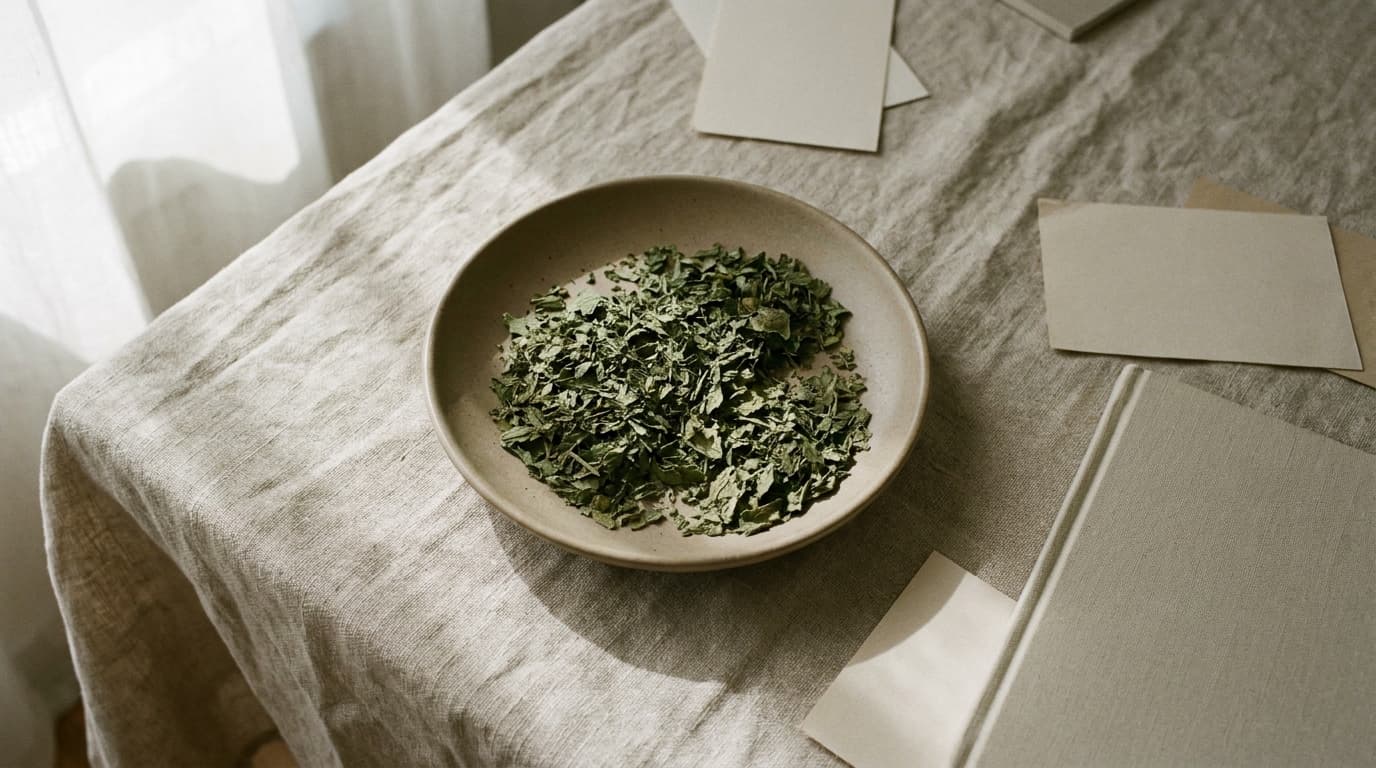
Kratom is not legal in Alabama. Alabama's statutory Schedule I (Ala. Code 20-2-23) lists mitragynine and hydroxymitragynine, the kratom alkaloids it names, with no weight threshold, and the Attorney General's office treats any product that contains either compound as illegal to possess or sell. Possessing them is a Class D felony and selling or distributing them is a Class B felony, at any age; Alabama has no kratom age limit or sales rules because sale is prohibited outright. For other states, see our guide to kratom laws by state.
Information last verified on 2026-10-11. This article has not been reviewed by a licensed lawyer.
Jurisdiction scope: This article covers Alabama state law on kratom: the Schedule I listing in Ala. Code 20-2-23 and Act 2016-279, the State Board of Health's Controlled Substances List (Ala. Admin. Code r. 420-7-2-A), the drug offenses and sentencing ranges in Title 13A, the federal-adoption rule in Ala. Code 20-2-20(c), and the 2026 enforcement statements of the Attorney General and the Governor, with one paragraph on federal law. It does not cover city or county rules, employer drug-testing policies, military rules or other states' laws.
Is kratom legal in Alabama?
No. Section 20-2-23 of the Code of Alabama sets out Schedule I, and the official text on the Legislature's ALISON site places kratom's alkaloids in its list of compounds that a synthetic controlled substance "also includes," at (b)(4)b.:
"(b) The controlled substances listed in this section are included in Schedule I: ... b. In addition to any material, mixture, or preparation that contains any quantity of the chemical compounds listed in paragraph a., a synthetic controlled substance also includes the following chemical compounds, their salts, isomers and salts of isomers, unless specifically excepted, whenever the existence of these salts, isomers and salts of isomers is possible within the specific chemical designation or compound: ... 322. Mitragynine. 323. Hydroxymitragynine."
The entry names compounds, not the plant, and sets no weight threshold or minimum concentration. The "any quantity" wording in paragraph b. refers to the compounds listed in paragraph a.; for mitragynine and hydroxymitragynine, the statute lists the compounds themselves. The Attorney General's office applies the listing to products: its March 24, 2026 cease-and-desist letter states that "if a product contains these controlled substances, they are illegal to possess or sell in the State of Alabama, regardless of whether you have knowledge of their illegality." The statute writes "Hydroxymitragynine" without a position number such as the 7- in 7-hydroxymitragynine (7-OH).
Section 20-2-2(4) defines a controlled substance as "A drug, substance, or immediate precursor in Schedules I through V of Article 2 of this chapter." That definition applies across the chapter, so the Schedule I entries bring both compounds under Alabama's drug offenses.
The Governor's office put it plainly in a September 30, 2026 release: "Kratom is a controlled substance in Alabama; however, products encountered by Special Agents are often not clearly labeled as containing kratom."
When Alabama scheduled kratom's alkaloids
The Legislature added both entries in 2016. Act 2016-279 (SB 226) inserted "322. Mitragynine." and "323. Hydroxymitragynine." into the Schedule I list, and Section 3 of the act provides: "This act shall become effective immediately following its passage and approval by the Governor, or its otherwise becoming law."

The State Board of Health keeps its own Controlled Substances List as Ala. Admin. Code r. 420-7-2-A. It repeats both entries and dates them: "Mitragynine ... (State Control May 12, 2016) Hydroxymitragynine ... (State Control May 12, 2016)." The current appendix was adopted by the Board on January 16, 2025, and its amendment history runs through changes effective September 17, 2026 (published September 30, 2026).
The section's history line ends with Act 2021-325 and lists no later amending act. No act of the 2025 or 2026 regular sessions changed the kratom entries, and Alabama has no Kratom Consumer Protection Act.
Age limits and sales rules
Alabama has no kratom age limit, labeling rule or retailer registration. Other states use those tools to regulate a legal kratom market; Alabama lists the alkaloids in Schedule I instead, so the possession and distribution offenses below apply to adults and minors alike.
One age term in the drug statutes cuts the other way. Under Ala. Code 13A-12-215, an offender over 18 who sells, furnishes or gives a Schedule I through V substance to a person under 18 "shall be guilty of a Class A felony," and "The imposition or execution of sentence shall not be suspended and probation shall not be granted."
Penalties for kratom in Alabama
Alabama grades drug crimes by conduct. Section 13A-12-212(a)(1) makes it a crime when a person, "Except as otherwise authorized, ... possesses a controlled substance enumerated in Schedules I through V," and 13A-12-212(b) provides: "Unlawful possession of a controlled substance is a Class D felony." Section 13A-12-211(a) covers a person who "sells, furnishes, gives away, delivers, or distributes" such a substance, and 13A-12-211(b) makes that a Class B felony. Manufacturing a Schedule I through V substance is also a Class B felony under Ala. Code 13A-12-217, and under Ala. Code 20-2-2(13) manufacture "includes any packaging or repackaging of the substance or labeling or relabeling of its container." If two or more of the conditions listed in Ala. Code 13A-12-218 occur with the violation (for example possession of a firearm, or a person under 17 present during the manufacturing process), it is manufacture in the first degree, a Class A felony.
The prison ranges come from Ala. Code 13A-5-6(a) and the fine caps from 13A-5-11(a), which also allows a fine of up to double the defendant's gain or the victim's loss.
| Conduct | Statute | Class | Prison range | Maximum fine |
|---|---|---|---|---|
| Possessing mitragynine or hydroxymitragynine | 13A-12-212 | Class D felony | 1 year and 1 day to 5 years | $7,500 |
| Selling, furnishing, giving away, delivering or distributing | 13A-12-211 | Class B felony | 2 to 20 years | $30,000 |
| Manufacturing | 13A-12-217 | Class B felony | 2 to 20 years | $30,000 |
| Sale or furnishing by a person over 18 to a person under 18 | 13A-12-215 | Class A felony, no suspension or probation | 10 to 99 years, or life | $60,000 |
Ala. Code 13A-12-281 adds a mandatory assessment of $1,000 for a first conviction under 13A-12-211, -212, -215 or -231 and $2,000 for a later one, on top of any fine.
Section 13A-12-211 also contains a possession-with-intent-to-distribute offense, but it is limited to listed substances and quantities (cocaine, opiates including fentanyl, MDA, MMDA, amphetamine and methamphetamine). Mitragynine and hydroxymitragynine are not on that list, so that provision does not reach them by its terms; the general possession and distribution offenses apply.
Sales near schools and public housing
Two add-on penalties apply to a sale, not to possession alone. Ala. Code 13A-12-250 imposes, "In addition to any penalties heretofore or hereafter provided by law for any person convicted of an unlawful sale of a controlled substance," a penalty of "five years incarceration in a state corrections facility with no provision for probation" when the sale took place "on the campus or within a three-mile radius of the campus boundaries of any public or private school, college, university or other educational institution in this state." Section 13A-12-270 adds the same five years for a sale within three miles of a public housing project.
Prior felony convictions
Alabama's habitual offender statute raises a Class D felony, such as drug possession, to Class C punishment for some repeat offenders. Under Ala. Code 13A-5-9(d) and (e), a defendant previously convicted of two or more Class A or Class B felonies, or of any three or more felonies, who then commits a Class D felony "must be punished for a Class C felony." For a Class B felony such as distribution or manufacture, one prior Class A, B or C felony conviction means Class A punishment, and two or more priors raise the minimum to 15 or 20 years (13A-5-9(a)-(c)). Act 2026-496 (HB 226), effective October 1, 2026, amended 13A-5-9 so that out-of-state convictions count and pleas of nolo contendere, no contest, best interest and Alford pleas are treated as guilty-plea convictions unless expunged.
Trafficking: an open question
Alabama's trafficking statute sets mandatory minimum sentences by weight or, in some cases, package count. Ala. Code 13A-12-231(12) applies to a person who knowingly sells, manufactures, delivers or brings into the state, or knowingly possesses, "56 or more grams of a synthetic controlled substance or a synthetic controlled substance analogue, as described in Section 20-2-23(a)(4) or (5)." Its first two tiers read: 56 grams or more but less than 500 grams, "a mandatory minimum term of imprisonment of three calendar years and to pay a fine of fifty thousand dollars ($50,000)"; 500 grams or more but less than 1 kilo, "a mandatory minimum term of imprisonment of 10 calendar years and to pay a fine of one hundred thousand dollars ($100,000)." Higher tiers run to a 15-year minimum and $250,000 (1 to 10 kilos) and mandatory life (10 kilos or more). Ala. Code 13A-12-231(14) allows a trafficking charge, sentenced at the first tier, against a person holding 50 or more individual packages of the same (12) substance, whatever their weight, and 13A-12-231(16) adds five years and a $25,000 fine for possessing a firearm during a trafficking offense.
Section 20-2-23(b)(4)b. provides that "a synthetic controlled substance also includes" mitragynine and hydroxymitragynine, and "synthetic controlled substance" is the term the trafficking statute uses, but subdivision (12) cross-references "Section 20-2-23(a)(4) or (5)," which in the current code are legislative findings rather than the list. No Alabama appellate decision cited here settles whether (12) reaches the two alkaloids.
Overdose immunity is limited
Alabama's Good Samaritan provision, Ala. Code 20-2-281(b), provides that, "Excluding Section 32-5A-191, an individual may not be prosecuted for a misdemeanor controlled substance offense if law enforcement became aware of the offense solely because the individual was seeking medical assistance for another individual under this article." The person must have acted in good faith, believing they were the first to call, used their own name, and stayed until help arrived (20-2-281(c)). By its terms the section covers misdemeanors; possession of a Schedule I substance is a Class D felony.
2026 kratom enforcement in Alabama
Alabama officials have enforced the existing Schedule I law against kratom sellers in 2025 and 2026; no new statute was involved. The Attorney General's June 15, 2026 release on Operation Southern Shield describes the sequence:
"In March 2026, the Office, after coordinating with local District Attorneys around the state, issued a new cease-and-desist order identifying additional kratom contaminated products and distributed the letter to every retail location holding an Alabama Beverage Control (ABC) license in the state. In May 2026, after identifying retail locations still selling illegal kratom products despite the cease-and-desist orders, ALEA commenced Operation Southern Shield to seize those products for additional investigation and potential criminal and civil action."
The Governor's September 30, 2026 release repeated that kratom is a controlled substance in Alabama and warned that products are often not clearly labeled as containing it. A cease-and-desist letter and a seizure operation are enforcement steps; the law they enforce is 20-2-23 and the Title 13A offenses above.
Federal kratom law and Alabama's adoption rule
Federal law does not list kratom leaf, mitragynine or 7-hydroxymitragynine in Schedule I. The October 6, 2026 version of 21 CFR 1308.11 carries only three kratom-related entries, mitragynine pseudoindoxyl, MGM-15 and MGM-16, placed there by a DEA temporary order effective August 26, 2026. A new DEA notice of intent (FR Doc. 2026-20943), filed for public inspection on October 9, 2026 and scheduled for publication on October 14, 2026, proposes temporary Schedule I control of 7-OH and mitragynine pseudoindoxyl above a threshold: more than 1 mg per gram for solids or 1 mg per milliliter for liquids, or where the amount of mitragynine divided by the amount of those substances is less than 100. That notice states that DEA's July 6, 2026 notice of intent to schedule 7-OH above a threshold is being withdrawn in a separate document. A second DEA notice of intent filed the same day (FR Doc. 2026-20942) proposes a new temporary order that would keep MGM-15 and MGM-16 in Schedule I "without change," to distinguish them from mitragynine pseudoindoxyl. Neither notice is an order, and the DEA says neither new temporary order will be issued before 30 days after publication, about November 13, 2026. The August 26, 2026 order stays in effect until it expires or is replaced by the new temporary orders, whichever comes first. The FDA says kratom is not lawfully marketed in the United States as a drug product, a dietary supplement or a food additive in conventional food, and it "has warned consumers not to use kratom because of the risk of serious adverse events, including liver toxicity, seizures, and substance use disorder (SUD)." Our kratom laws by state hub covers the federal layer in more detail.

Alabama also has a general rule for following federal scheduling. Ala. Code 20-2-20(c) provides that when a substance is designated, rescheduled or deleted under federal law and notice is given to the State Board of Health, the Board "shall similarly control the substance under this chapter after the expiration of 30 days from publication in the federal register of a final order," unless the Board objects within that 30-day period. The subsection speaks of a "final order" and does not expressly address temporary scheduling orders. The Board's Controlled Substances List, as amended through September 17, 2026 (published September 30, 2026), has no entry for mitragynine pseudoindoxyl, MGM-15 or MGM-16. Alabama's kratom prohibition does not depend on that question, because 20-2-23 already lists mitragynine and hydroxymitragynine.
Research with Schedule I substances
Alabama's code provides a research route for practitioners who hold a federal registration. Ala. Code 20-2-52(c) provides: "Practitioners registered under federal law to conduct research with Schedule I substances may conduct research with Schedule I substances within this state upon furnishing the State Board of Health evidence of that federal registration." Alabama has no kratom-specific research or program statute.
Driving and criminal records
Ala. Code 32-5A-191(a) makes it a crime to drive or be in actual physical control of a vehicle while "Under the influence of a controlled substance to a degree which renders him or her incapable of safely driving" (a)(3), or "Under the influence of any substance which impairs the mental or physical faculties of such person to a degree which renders him or her incapable of safely driving" (a)(5). Both clauses require impairment to that degree; subsection (a) has no per se clause that turns on a detectable amount of a drug. Our guide to Alabama DUI laws covers penalties. A kratom possession or sale conviction is a felony record; whether it can later be cleared is covered in our guide to Alabama expungement laws.
Related
This article provides general legal information about Alabama state law as of October 11, 2026. It is not legal advice. For advice about a specific situation, contact a lawyer licensed in Alabama.
Last updated: 2026-10-11.
Frequently Asked Questions
Is kratom legal in Alabama?
No. Ala. Code 20-2-23 lists mitragynine and hydroxymitragynine in Schedule I with no weight threshold, and the Attorney General's office treats any product that contains either compound as illegal to possess or sell. Possession is a Class D felony and sale or distribution is a Class B felony.
When did Alabama ban kratom?
Act 2016-279 (SB 226) added mitragynine and hydroxymitragynine to Schedule I and took effect on the Governor's approval. The State Board of Health's Controlled Substances List shows state control of both from May 12, 2016.
What is the penalty for kratom possession in Alabama?
Possessing a Schedule I substance is a Class D felony under Ala. Code 13A-12-212, punishable by 1 year and 1 day to 5 years in prison and a fine of up to $7,500.
What is the penalty for selling kratom in Alabama?
Selling, furnishing, giving away, delivering or distributing a Schedule I substance is a Class B felony under Ala. Code 13A-12-211 (2 to 20 years; fine up to $30,000). A sale by someone over 18 to a person under 18 is a Class A felony with no suspended sentence or probation.
Is 7-OH legal in Alabama?
Alabama's Schedule I lists hydroxymitragynine by name next to mitragynine (Ala. Code 20-2-23(b)(4)b., items 322 and 323). The entry names the compound with no concentration threshold, so it is not limited to concentrated products.
Is there a kratom age limit in Alabama?
No. Alabama has no kratom age rule because the alkaloids are Schedule I controlled substances; the possession and sale offenses apply to everyone, whatever their age.
Does Alabama's Good Samaritan overdose law cover kratom possession?
By its terms, Ala. Code 20-2-281 protects a person who seeks medical help for someone else only from prosecution for a misdemeanor controlled substance offense. Possession of a Schedule I substance is a Class D felony.
Updates
Independently fact-checked against the cited primary sources
The Law Behind This Article
This article rests on the statutory provisions below, held in our own legal record and retrieved from the official source. Tap a section to read the operative text.
Code of Alabama 1975, Title 20: Food, Drugs and Cosmetics.
§ 20-2-23Schedule I - Listing of Controlled Substances.In forcecited in 2 of our articles
(a) The Legislature finds the following: (1) New synthetic substances are being created which are not controlled under the provisions of existing state law but which have a potential for abuse similar to or greater than that for substances controlled under existing state law. These new synthetic substances are called “synthetic controlled substances or synthetic controlled substance analogues” and can be designed to produce a desired pharmacological effect and to evade the controlling statutory provisions. Synthetic controlled substances or synthetic controlled substance analogues are being manufactured, distributed, possessed, and used as substitutes for controlled substances. (2) The hazards attributable to the traffic in and use of a synthetic controlled substance or synthetic controlled substance analogues are increased because their unregulated manufacture produces variations in purity and concentration. (3) Many new synthetic substances are untested, and it cannot be immediately determined whether they have useful medical or chemical purposes.
Official text (excerpt) · last checked 2026-07-29 · Read the full text in our law library · Verify at alison.legislature.state.al.us
Also relied on in: Are Magic Mushrooms Legal in Alabama? Psilocybin Laws (2026)
Code of Alabama 1975, Title 13A: Criminal Code.
§ 13A-12-212Unlawful Possession or Receipt of Controlled Substances.In forcecited in 2 of our articles
(a) A person commits the crime of unlawful possession of controlled substance if: (1) Except as otherwise authorized, he or she possesses a controlled substance enumerated in Schedules I through V. (2) He or she obtains by fraud, deceit, misrepresentation, or subterfuge or by the alteration of a prescription or written order or by the concealment of a material fact or by the use of a false name or giving a false address, a controlled substance enumerated in Schedules I through V or a precursor chemical enumerated in Section 20-2-181. (b) Unlawful possession of a controlled substance is a Class D felony.
Official text (excerpt) · last checked 2026-07-29 · Read the full text in our law library · Verify at alison.legislature.state.al.us
§ 13A-12-211Unlawful Distribution of Controlled Substances; Possession with Intent to Distribute a Controlled Substance.In forcecited in 2 of our articles
(a) A person commits the crime of unlawful distribution of controlled substances if, except as otherwise authorized, he or she sells, furnishes, gives away, delivers, or distributes a controlled substance enumerated in Schedules I through V. (b) Unlawful distribution of controlled substances is a Class B felony. (c) A person commits the crime of unlawful possession with intent to distribute a controlled substance if, except as otherwise authorized by law, he or she knowingly possesses any of the following quantities of a controlled substance: (1) More than eight grams, but less than 28 grams, of cocaine or of any mixture containing cocaine. (2) More than two grams, but less than four grams, of any mixture of morphine, opium, or any salt, isomer, or salt of an isomer thereof, including heroin or any mixture containing Fentanyl or any synthetic controlled substance Fentanyl or any synthetic controlled substance Fentanyl analogue, as described in Sections 20-2-23 and 20-2-25. (3) More than eight grams, but less than 28 grams, of 3,4-methylenedioxy amphetamine, or of any mixture containing 3,4-methylenedioxy amphetamine.
Official text (excerpt) · last checked 2026-07-29 · Read the full text in our law library · Verify at alison.legislature.state.al.us
Search our full record of US law — 2.1 million sections, every state + federal →
Sources and References
- Code of Alabama 20-2-23, Schedule I listing of controlled substances(alison.legislature.state.al.us).gov
- Code of Alabama 20-2-2, definitions(alison.legislature.state.al.us).gov
- Governor Kay Ivey, release urging public awareness of potential dangers associated with kratom products (September 30, 2026)(governor.alabama.gov).gov
- Act 2016-279 (SB 226), enrolled act(alison.legislature.state.al.us).gov
- Ala. Admin. Code r. 420-7-2-A, Controlled Substances List (State Board of Health)(admincode.legislature.state.al.us).gov
- Code of Alabama 13A-12-215, sale or furnishing to persons under 18(alison.legislature.state.al.us).gov
- Code of Alabama 13A-12-212, unlawful possession of a controlled substance(alison.legislature.state.al.us).gov
- Code of Alabama 13A-12-211, unlawful distribution of controlled substances(alison.legislature.state.al.us).gov
- Code of Alabama 13A-12-217, unlawful manufacture of a controlled substance(alison.legislature.state.al.us).gov
- Code of Alabama 13A-12-218, unlawful manufacture of a controlled substance in the first degree(alison.legislature.state.al.us).gov
- Code of Alabama 13A-12-281, additional penalties (demand reduction assessment)(alison.legislature.state.al.us).gov
- Code of Alabama 13A-5-6, sentences of imprisonment for felonies(alison.legislature.state.al.us).gov
- Code of Alabama 13A-5-11, fines for felonies(alison.legislature.state.al.us).gov
- Code of Alabama 13A-12-250, additional penalty for sales near schools(alison.legislature.state.al.us).gov
- Code of Alabama 13A-12-270, additional penalty for sales near public housing projects(alison.legislature.state.al.us).gov
- Code of Alabama 13A-5-9, habitual felony offenders (as amended by Act 2026-496)(alison.legislature.state.al.us).gov
- Code of Alabama 13A-12-231, trafficking(alison.legislature.state.al.us).gov
- Code of Alabama 20-2-281, immunity when seeking medical assistance for an overdose(alison.legislature.state.al.us).gov
- Alabama Attorney General, release announcing Operation Southern Shield (June 15, 2026)(www.alabamaag.gov).gov
- Alabama Attorney General, cease-and-desist letter on products containing mitragynine or hydroxymitragynine (March 24, 2026)(www.alabamaag.gov).gov
- 21 CFR 1308.11, Schedule I (eCFR)(www.ecfr.gov).gov
- DEA temporary order: mitragynine pseudoindoxyl, MGM-15 and MGM-16 in Schedule I (Federal Register, August 26, 2026)(www.federalregister.gov).gov
- DEA notice of intent: 7-hydroxymitragynine above a specified threshold (Federal Register, July 6, 2026)(www.federalregister.gov).gov
- DEA notice of intent: 7-hydroxymitragynine and mitragynine pseudoindoxyl above a threshold, FR Doc. 2026-20943 (public inspection copy, filed October 9, 2026)(public-inspection.federalregister.gov).gov
- DEA notice of intent: new temporary order keeping MGM-15 and MGM-16 in Schedule I, FR Doc. 2026-20942 (public inspection)(public-inspection.federalregister.gov).gov
- FDA, FDA and Kratom(www.fda.gov).gov
- Code of Alabama 20-2-20, federal scheduling changes(alison.legislature.state.al.us).gov
- Code of Alabama 20-2-52, research registration(alison.legislature.state.al.us).gov
- Code of Alabama 32-5A-191, driving under the influence(alison.legislature.state.al.us).gov