
New Jersey
Is Jaywalking Illegal in New Jersey? Crossing Rules and Fines (2026)
Independently fact-checked against primary sources (last audited October 12, 2026). · 24 primary sources cited on this page. How we verify our legal content
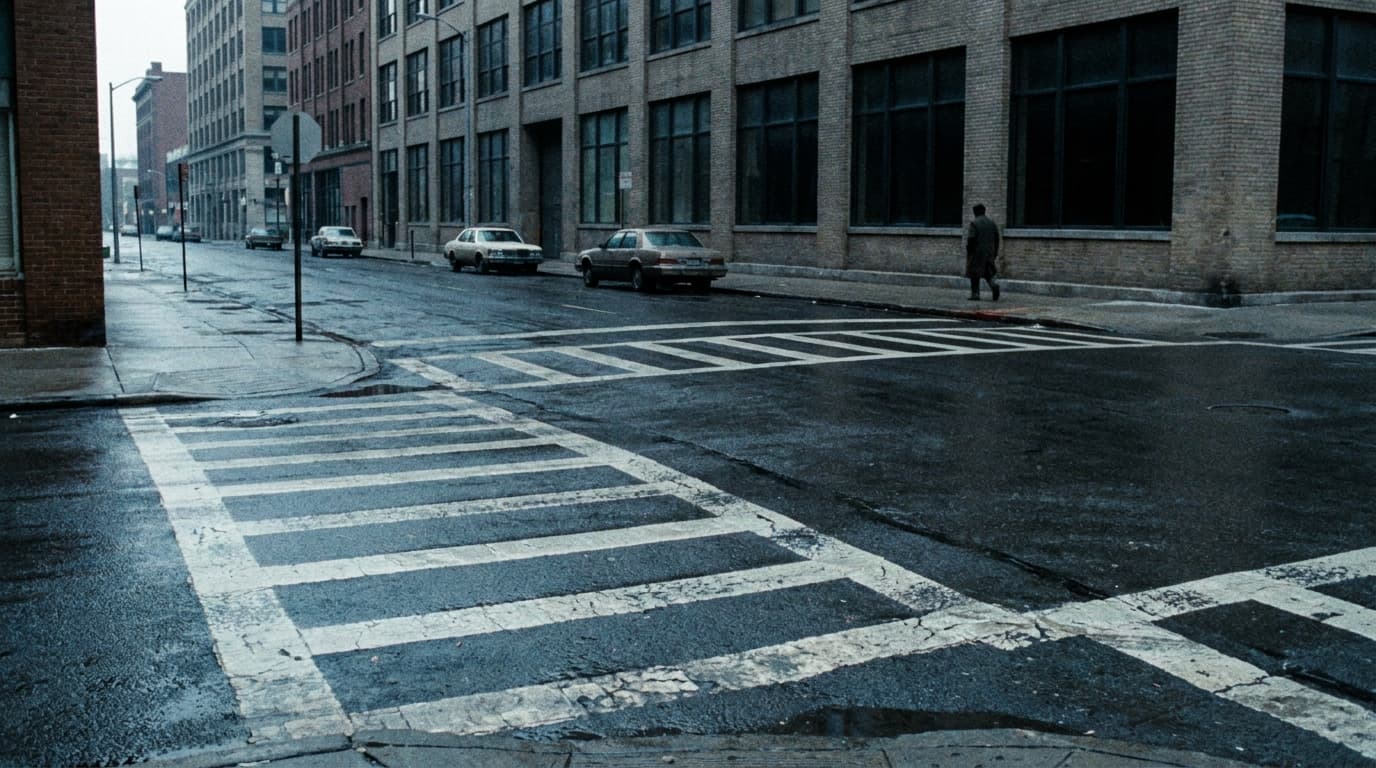
New Jersey law has no offense called jaywalking, but it does regulate where and how pedestrians cross. Under N.J.S.A. 39:4-32(f) and 39:4-36(a)(4), a pedestrian on the roadway anywhere other than a marked crosswalk or an unmarked crosswalk at an intersection must yield the right-of-way to all vehicles, and specific rules in 39:4-32 to 39:4-34 bar crossing against a red signal, crossing outside the crosswalk at signal-controlled intersections, and crossing a highway divided by a medial barrier except where a crossing is provided. The judiciary's Statewide Violations Bureau Schedule (updated July 29, 2021) lists $55 for pedestrian violations. For how other states handle the same question, see our guide to jaywalking laws by state.
Information last verified on 2026-10-12. This article has not been reviewed by a licensed lawyer.
Jurisdiction scope: This article covers New Jersey state law in Title 39 of the New Jersey Statutes: the pedestrian sections N.J.S.A. 39:4-32 to 39:4-37.1, the definitions in 39:1-1, the signal rules in 39:4-81, 39:4-105, 39:4-115, 39:4-117 and 39:4-120, the driver duties in 39:4-66, 39:4-66.1 and 39:4-92.4, the roadway solicitation rules in 39:4-59 and 39:4-60, the general penalty in 39:4-203 and the fine assessments in 39:5-41, plus the pedestrian rules for the Atlantic City Expressway and the New Jersey Turnpike in the New Jersey Administrative Code. It also covers the judiciary's Statewide Violations Bureau Schedule and the Motor Vehicle Commission (MVC) point schedule. It does not cover municipal ordinances, injury claims after a crash, or the law of other states.
Is jaywalking illegal in New Jersey?
It depends on where and how you cross. New Jersey's statutes mix a general duty to yield with a handful of specific prohibitions, and the two work differently. The general rule is that a pedestrian on the roadway outside a crosswalk must give way to traffic. On top of that, the statutes direct pedestrians to use the crosswalk at signal-controlled intersections and, at uncontrolled locations, wherever a crosswalk exists, and they bar crossing in a few specific situations.
| Situation | New Jersey rule |
|---|---|
| On the roadway outside a marked crosswalk or an unmarked crosswalk at an intersection | Pedestrian must yield the right-of-way to all vehicles (39:4-32(f), 39:4-36(a)(4)) |
| Crossing against the stop or red signal at a crosswalk, marked or unmarked | Barred unless an officer or official traffic control device directs the pedestrian to go (39:4-32(a)) |
| At an intersection controlled by a police officer or traffic signal | No entering or crossing the highway except at a crosswalk (39:4-33) |
| Where no officer or signal controls traffic | Cross within a crosswalk, or, where there is no crosswalk and crossing is not otherwise prohibited, at right angles to the roadway (39:4-34) |
| Highway with roadways separated by a medial barrier | Unlawful to cross except where provision is made for pedestrian crossing (39:4-34) |
| Where a pedestrian tunnel or overhead crossing is provided | Pedestrian crossing the roadway there must yield to all vehicles (39:4-36.1) |
| Stepping off the curb into the path of a vehicle too close to stop | Barred (39:4-32(d), 39:4-36(a)(2)) |
| Walking along the roadway where sidewalks are provided | Unlawful (39:4-34) |
| Standing in a highway to solicit a ride | Barred, except for an omnibus or street car (39:4-59) |
| Signal-controlled intersections, local rules | Local authorities may regulate pedestrian crossing there by ordinance first approved by the director (39:4-37) |
Crossing outside a crosswalk in New Jersey
The core rule appears twice in Chapter 4, in nearly identical words. N.J.S.A. 39:4-32(f) provides:
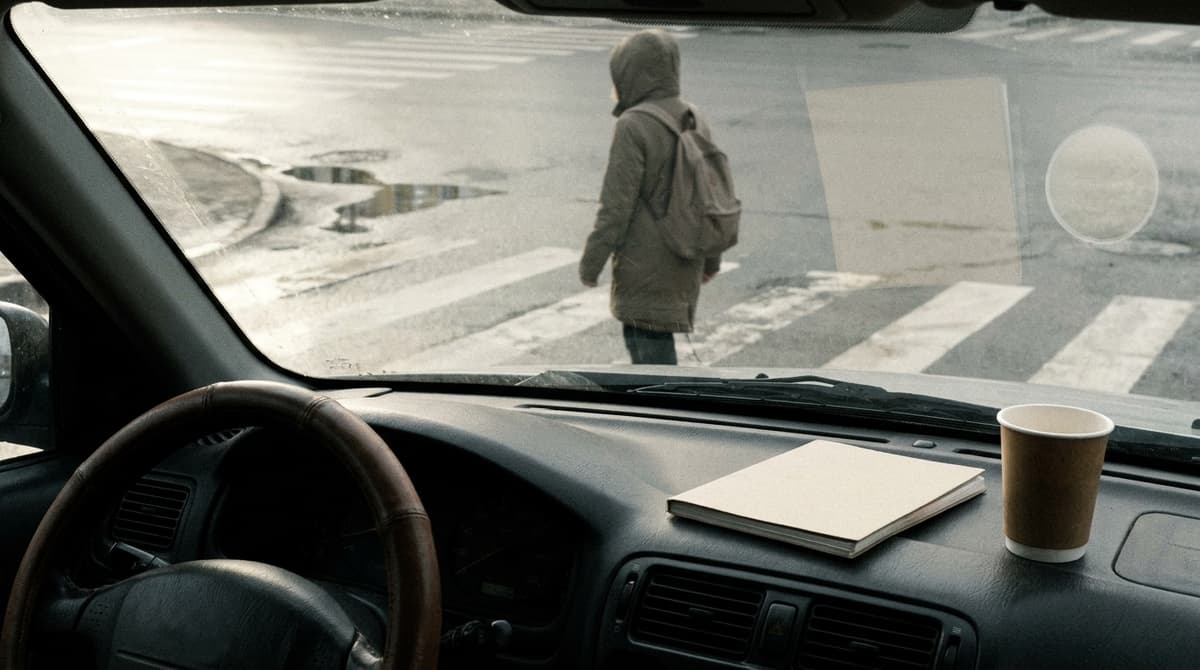
"Every pedestrian upon a roadway at any point other than within a marked crosswalk or within an unmarked crosswalk at an intersection shall yield the right-of-way to all vehicles upon the roadway."
Section 39:4-36(a)(4) repeats the same sentence. It is a duty to yield, not a ban on crossing.
Where traffic is uncontrolled, N.J.S.A. 39:4-34 adds a direction about how to cross:
"Where traffic is not controlled and directed either by a police officer or a traffic control signal, pedestrians shall cross the roadway within a crosswalk or, in the absence of a crosswalk, and where not otherwise prohibited, at right angles to the roadway. It shall be unlawful for a pedestrian to cross any highway having roadways separated by a medial barrier, except where provision is made for pedestrian crossing."
Read together, the text tells pedestrians at uncontrolled locations to use a crosswalk where there is one, to cross straight across (at right angles) where there is none, and to yield to vehicles whenever they are on the roadway outside a crosswalk. The medial-barrier sentence is a flat prohibition on crossing a divided highway except at a provided crossing.
Signal-controlled intersections
At intersections run by a signal or an officer, the rules are stricter. N.J.S.A. 39:4-33 provides: "At intersections where traffic is directed by a police officer or traffic signal, no pedestrian shall enter upon or cross the highway at a point other than a crosswalk. Pedestrians shall move, whenever practicable, upon the right half of crosswalks."
N.J.S.A. 39:4-32 governs highways where a signal or an officer controls traffic. Subsection (a) bars crossing "against the 'stop' or red signal at a crosswalk, whether marked or unmarked, unless otherwise specifically directed to go by a traffic or police officer, or official traffic control device." Subsection (c) protects a pedestrian caught mid-crossing: one who started "on a 'go' or green signal, but who is still within the crosswalk when the signal changes, shall have the right of way until the pedestrian has reached the opposite curb or place of safety."
Local authorities have a role at these intersections. N.J.S.A. 39:4-37 provides: "Local authorities in their respective jurisdictions may regulate by ordinance, which shall first be approved by the director, the crossing of pedestrians at intersections of roadways where traffic on the roadways is controlled by traffic control signals." An approved local ordinance can therefore add rules for crossing at a signalized intersection, so the municipal code is worth checking for the intersections you use.
Walk signals and traffic lights
New Jersey's general signal rule binds pedestrians directly. N.J.S.A. 39:4-81(a) provides that "every pedestrian shall obey the instructions of any official traffic control device applicable thereto, placed in accordance with the provisions of this chapter, unless otherwise directed by a traffic or police officer."
Where a signal has a separate pedestrian phase, N.J.S.A. 39:4-117 applies: "When a special pedestrian interval is incorporated in the operation of a traffic control signal and signified by means of an approved indication, pedestrians shall cross the roadway only when the indication is illuminated, and vehicles and street cars shall stop and remain standing until the green is shown alone."
The ordinary three-color system is set by N.J.S.A. 39:4-105, which speaks of "traffic" rather than pedestrians: green "means permission for traffic to go, subject to the safety of others," and red "means traffic to stop before entering the intersection or crosswalk and remain standing until green is shown alone." The signal article of Chapter 4, sections 39:4-105 through 39:4-118, does not describe WALK and DON'T WALK displays, flashing hands or countdown timers by name; the pedestrian-specific signal rule in that article is the special pedestrian interval in 39:4-117. The State Division of Highway Traffic Safety's 2010 bulletin on the crosswalk law states that a pedestrian "may not walk against a 'stop,' 'do not walk' or 'red' signal regardless of whether the crossing is marked or unmarked." Under N.J.S.A. 39:4-120, a uniform signal system the commissioner adopts must "so far as possible conform to" the federal Manual on Uniform Traffic Control Devices, and 39:4-81(a), quoted above, requires pedestrians to obey official traffic control devices.
What counts as a crosswalk in New Jersey
The definition decides whether the yield rule or the driver's stopping duty applies, so its exact words matter. N.J.S.A. 39:1-1 provides:
"'Crosswalk' means that part of a highway at an intersection, either marked or unmarked, existing at each approach of every roadway intersection, included within the connections of the lateral lines of the sidewalks on opposite sides of the highway measured from the curbs or, in the absence of curbs, from the edges of the shoulder, or, if none, from the edges of the roadway, and any portion of a highway at an intersection or elsewhere distinctly indicated for pedestrian crossing by lines or other marking on the surface."
The same section defines a "mid-block crosswalk" as "a crosswalk located away from an intersection, distinctly indicated by lines or markings on the surface," and a "pedestrian" as "a person afoot." Under that text, a crosswalk at an intersection can exist without paint, while a crossing point away from an intersection is a crosswalk only if it is marked.
Walking along the road
N.J.S.A. 39:4-34 also covers walking along a road: "On all highways where there are no sidewalks or paths provided for pedestrian use, pedestrians shall, when practicable, walk only on the extreme left side of the roadway or its shoulder facing approaching traffic." It continues: "Where sidewalks are provided it shall be unlawful for any pedestrian to walk along and upon an adjacent roadway."
Two sections deal with standing in the road. N.J.S.A. 39:4-59 provides: "No person shall stand in a highway for the purpose of or while soliciting a ride from the operator of any vehicle other than an omnibus or a street car." N.J.S.A. 39:4-60, subject to exceptions stated in the section, bars standing in the roadway "to stop, impede, hinder or delay the progress of a vehicle" to sell goods or tickets or to solicit contributions, and sets a penalty "not to exceed $100" on conviction.
Some toll roads have their own rules. On the Atlantic City Expressway, N.J.A.C. 19:2-4.1 provides that "Pedestrians are prohibited from using or entering upon the Expressway at any time, except on sidewalks, footpaths or other areas specifically designated by the Authority for that purpose." On the New Jersey Turnpike, N.J.A.C. 19:9-1.9(a)(1) prohibits use of the roadway by pedestrians "unless otherwise authorized by the Authority."
Jaywalking fine and penalty in New Jersey
Sections 39:4-32, 39:4-33 and 39:4-34 do not state a penalty of their own. For those sections, that brings in the general penalty in N.J.S.A. 39:4-203, which reads in full:
"For a violation of a provision of this chapter or any supplement thereto for which no specific penalty is provided, the offender shall be liable to a penalty of not more than $50.00 or imprisonment for a term not exceeding 15 days, or both; except that for a violation of a section of article 11, 13, 14 or 17 of this chapter or any supplement thereto for which no specific penalty is provided, the offender shall be liable to a penalty of not less than $50.00 or more than $200.00 or imprisonment for a term not exceeding 15 days, or both."
Which of those two ranges applies depends on the article of Chapter 4 that holds a given section, and the text of 39:4-32 to 39:4-34 does not name its article, so this page does not assign a range to them.
Section 39:4-36 is different because it carries a penalty of its own. Under 39:4-36(b), "A person violating any paragraph of subsection a. of this section shall, upon conviction thereof, pay a fine to be imposed by the court in the amount of $200," and the court may also impose up to 15 days of community service. Subsection (a) includes two pedestrian duties: (a)(2), which bars leaving a curb or other place of safety into the path of a vehicle so close that it is impossible for the driver to yield or stop, and (a)(4), the duty to yield to all vehicles outside a crosswalk.
The amount most people see is the court schedule figure. The judiciary's Statewide Violations Bureau Schedule (updated July 29, 2021) lists:
| Schedule entry | Amount listed |
|---|---|
| N.J.S.A. 39:4-32 to 4-34, pedestrian violations | $55.00 |
| N.J.S.A. 39:4-37.1, failure to yield right-of-way to a blind person | $55.00 |
| N.J.S.A. 39:4-117, special pedestrian signals, motorist or pedestrian violation | $86.00 |
| N.J.S.A. 39:4-36, failure to yield to pedestrians at crosswalk | $231.00 |
| N.J.S.A. 39:4-36a(5), failure to exercise due care for the safety of any pedestrian on a roadway | $231.00 |
These are the schedule's own figures as of its July 2021 edition, separate from the fines written into the statutes. The schedule has no separate pedestrian entry for 39:4-36. The schedule notes that a 39:4-36 violation "resulting in serious bodily injury to a pedestrian cannot be paid through Violations Bureau." By statute, N.J.S.A. 39:5-41 also adds fixed sums to each fine and penalty imposed and collected for a Title 39 violation: $1 each under subsections (d), (e), (f) and (h), and $3 under subsection (g).
On points, the MVC point schedule has no entry for the pedestrian sections 39:4-32, 39:4-33 or 39:4-34. Its entry for the driver offense in 39:4-36 (failure to yield to a pedestrian in a crosswalk, or passing a vehicle yielding to one) carries 2 points.
What drivers owe pedestrians in New Jersey
A pedestrian's duty to yield outside a crosswalk does not erase the driver's duties, which are heavier and carry their own penalty.
- Stop and stay stopped at marked crosswalks. Under N.J.S.A. 39:4-36(a)(1), "The driver of a vehicle shall stop and remain stopped to allow a pedestrian to cross the roadway within a marked crosswalk, when the pedestrian is upon, or within one lane of, the half of the roadway, upon which the vehicle is traveling or onto which it is turning." The section defines "half of the roadway" as all lanes carrying traffic in one direction, including the entire width of a one-way road.
- Unmarked crosswalks at intersections. The opening sentence of 39:4-36(a) requires a driver to "yield the right-of-way to a pedestrian crossing the roadway within any unmarked crosswalk at an intersection, except at crosswalks when the movement of traffic is being regulated by police officers or traffic control signals, or where otherwise regulated by municipal, county, or State regulation, and except where a pedestrian tunnel or overhead pedestrian crossing has been provided."
- On a green signal. Under 39:4-32(b), a driver may not "fail to stop and remain stopped for a pedestrian crossing a roadway at a crosswalk when the pedestrian is upon, or within one lane of, the half of the roadway upon which the vehicle is traveling or onto which it is turning during the 'go' or green signal."
- Turning right on red. Under 39:4-115(b), a driver turning right on a stop or caution signal, where no sign prohibits it, must come to a full stop and must be "stopping and remaining stopped for pedestrians crossing the roadway within a marked crosswalk, or at an unmarked crosswalk, into which the driver is turning." Under 39:4-36.4, the Commissioner of Transportation identifies signalized intersections where right turns on red present "demonstrated pedestrian safety problems," prohibits those turns at State intersections, and asks municipal or county authorities to do so at theirs.
- No passing a stopped car. When any vehicle stops to let a pedestrian cross, "the driver of any other vehicle approaching from the rear shall not overtake and pass such stopped vehicle" (39:4-32(e), 39:4-36(a)(3)).
- Passing a pedestrian on the road. Under N.J.S.A. 39:4-92.4(b), a driver approaching a pedestrian located in an area designated for pedestrians on the roadway must use due caution and, absent other direction by a law enforcement officer, change into a lane not adjacent to the pedestrian when possible; if a lane change cannot be made, leave at least four feet while approaching and passing; and if both are impossible, prohibited by law or unsafe, slow to 25 miles per hour or a lower posted speed and be prepared to stop. For this section, a pedestrian includes any other person upon the roadway and outside a motor vehicle for work, emergency response or recreation. The fine is $100 with no points, or $500 and two points if the violation results in bodily injury (39:4-92.4(c)).
- Driveways and alleys. A driver emerging from an alley, driveway, garage or private road must stop before driving onto the sidewalk and yield to a pedestrian on it who is so close as to be an immediate hazard (39:4-66(a)). A driver turning from the highway into an alley, driveway, garage or private road who must drive on the sidewalk must first yield to pedestrians on it who are that close (39:4-66.1). The MVC point schedule lists 2 points for each section.
- Due care runs both ways. Nothing in these sections relieves a driver of "the duty to exercise due care for the safety of any pedestrian upon a roadway," and nothing relieves a pedestrian "from using due care for his safety" (39:4-32(g), 39:4-36(a)(5)).
- Blind pedestrians. Under 39:4-37.1, a blind person using a predominantly white or metallic cane or a guide dog, and a guide dog instructor engaged in instructing a guide dog, has the right-of-way in crossing, and drivers must yield "although traffic on said highway or intersection thereof is controlled by traffic signals." The section does not apply "where traffic is specially directed by a traffic or police officer."
The penalty in 39:4-36(b), which applies to a violation of any paragraph of subsection (a), is a fine of $200 on conviction, and the court may impose community service of up to 15 days. If the violation results in serious bodily injury to a pedestrian, the fine is "not less than $100 or more than $500," and the driver "may additionally be subject to a sentence of imprisonment not to exceed 25 days, or a license suspension not to exceed six months, or both, in the discretion of the court." Under 39:4-36(c), $100 of each fine collected goes to the Pedestrian Safety Enforcement and Education Fund. The MVC point schedule lists 2 points for a 39:4-36 violation, and a 2010 Division of Highway Traffic Safety bulletin notes that a driver "may be assessed insurance surcharges."
If a pedestrian is hit by a car in New Jersey
Both 39:4-32(h) and 39:4-36(d) provide that "In the event of a collision between a vehicle and a pedestrian within a marked crosswalk, or at an unmarked crosswalk at an intersection, there shall be a permissive inference that the driver did not exercise due care for the safety of the pedestrian." That inference is limited to collisions within those crosswalks. Whether a pedestrian was crossing lawfully can also matter in a claim after the crash; for how fault, insurance and filing deadlines work, see New Jersey car accident laws. Electric scooter riders follow a separate set of rules, covered in New Jersey e-scooter laws.
Recent changes to New Jersey's pedestrian rules
The history lines on the official pages for N.J.S.A. 39:4-32 through 39:4-37.1 list no amendment later than 2009. The most recent entries are P.L.2009, c.319, which amended 39:4-32, 39:4-36 and 39:4-115, and P.L.2009, c.312, which amended 39:4-36. The rule for passing pedestrians in 39:4-92.4 is newer: it was enacted by P.L.2021, c.194 and amended by P.L.2024, c.11.
Related pages
- Jaywalking laws by state
- New Jersey car accident laws
- New Jersey e-scooter laws
- New York jaywalking laws
- Pennsylvania jaywalking laws
This article provides general legal information about New Jersey law, not legal advice. For advice about a specific situation, contact a lawyer licensed in New Jersey or your municipal court.
Last updated: 2026-10-12.
Frequently Asked Questions
Is jaywalking illegal in New Jersey?
New Jersey has no offense called jaywalking. A pedestrian outside a marked crosswalk or an unmarked crosswalk at an intersection must yield to all vehicles (N.J.S.A. 39:4-32(f)), pedestrians may not cross except at a crosswalk at signal- or officer-controlled intersections (39:4-33), and local authorities may regulate crossing at signalized intersections by approved ordinance (39:4-37).
What is the fine for jaywalking in New Jersey?
The Statewide Violations Bureau Schedule (updated July 29, 2021) lists $55.00 for pedestrian violations under N.J.S.A. 39:4-32 to 4-34. Those three sections set no penalty of their own, so the general penalty in 39:4-203 governs their statutory range. Section 39:4-36 is different: its $200 fine in 39:4-36(b) applies to a violation of any paragraph of 39:4-36(a), which includes the pedestrian duties in (a)(2) and (a)(4).
Do you get points for jaywalking in New Jersey?
The MVC point schedule has no entry for the pedestrian sections 39:4-32, 39:4-33 or 39:4-34. Its 2-point entry for 39:4-36 applies to drivers who fail to yield to a pedestrian in a crosswalk.
Can I cross in the middle of the block in New Jersey?
If you are on the roadway outside a marked crosswalk or an unmarked crosswalk at an intersection, you must yield to all vehicles (39:4-32(f)). Where traffic is uncontrolled, 39:4-34 directs pedestrians to cross within a crosswalk or, if none exists and crossing is not otherwise prohibited, at right angles, and bars crossing a highway with a medial barrier except at a provided crossing.
Can I cross against a red light in New Jersey?
No. N.J.S.A. 39:4-32(a) bars crossing a roadway against the stop or red signal at a crosswalk, marked or unmarked, unless a traffic or police officer or an official traffic control device directs you to go. A pedestrian already in the crosswalk when the signal changes keeps the right of way to the opposite curb or a place of safety (39:4-32(c)).
Do drivers have to stop for pedestrians in New Jersey?
Yes. Under N.J.S.A. 39:4-36(a)(1), a driver must stop and remain stopped for a pedestrian in a marked crosswalk who is on, or within one lane of, the driver's half of the roadway. The fine is $200 with up to 15 days of community service possible, and the MVC point schedule lists 2 points.
Which side of the road should I walk on in New Jersey?
Where there are no sidewalks or paths, walk when practicable on the extreme left side of the roadway or its shoulder, facing approaching traffic. Where sidewalks are provided, walking along the adjacent roadway is unlawful (N.J.S.A. 39:4-34).
Can pedestrians walk on the New Jersey Turnpike or Atlantic City Expressway?
N.J.A.C. 19:9-1.9(a)(1) prohibits pedestrians on the Turnpike roadway unless the Authority authorizes it, and N.J.A.C. 19:2-4.1 prohibits pedestrians on the Atlantic City Expressway except on sidewalks, footpaths or other areas the Authority designates.
Updates
Independently fact-checked against the cited primary sources
The Law Behind This Article
This article rests on the statutory provisions below, held in our own legal record and retrieved from the official source. Tap a section to read the operative text.
New Jersey Statutes (Unannotated)
§ 39:4-32Crossing roadway; signal.In force
39:4-32. On highways where traffic is controlled by a traffic control signal or by traffic or police officers: a. Pedestrians shall not cross a roadway against the "stop" or red signal at a crosswalk, whether marked or unmarked, unless otherwise specifically directed to go by a traffic or police officer, or official traffic control device. b. No driver of a vehicle shall fail to stop and remain stopped for a pedestrian crossing a roadway at a crosswalk when the pedestrian is upon, or within one lane of, the half of the roadway upon which the vehicle is traveling or onto which it is turning during the "go" or green signal. As used in this subsection, "half of the roadway" means all traffic lanes conveying traffic in one direction of travel, and includes the entire width of a one-way roadway. c. A pedestrian crossing or starting across the intersection on a "go" or green signal, but who is still within the crosswalk when the signal changes, shall have the right of way until the pedestrian has reached the opposite curb or place of safety.
Official text (excerpt) · last checked 2026-08-01 · Read the full text in our law library · Verify at lis.njleg.state.nj.us
§ 39:4-36Driver to yield to pedestrians, exceptions; violations, penalties.In force
39:4-36. a. The driver of a vehicle shall yield the right-of-way to a pedestrian crossing the roadway within any unmarked crosswalk at an intersection, except at crosswalks when the movement of traffic is being regulated by police officers or traffic control signals, or where otherwise regulated by municipal, county, or State regulation, and except where a pedestrian tunnel or overhead pedestrian crossing has been provided: (1) The driver of a vehicle shall stop and remain stopped to allow a pedestrian to cross the roadway within a marked crosswalk, when the pedestrian is upon, or within one lane of, the half of the roadway, upon which the vehicle is traveling or onto which it is turning. As used in this paragraph, "half of the roadway" means all traffic lanes conveying traffic in one direction of travel, and includes the entire width of a one-way roadway. (2) No pedestrian shall leave a curb or other place of safety and walk or run into the path of a vehicle which is so close that it is impossible for the driver to yield or stop.
Official text (excerpt) · last checked 2026-08-01 · Read the full text in our law library · Verify at lis.njleg.state.nj.us
§ 39:4-34Pedestrians to cross within crosswalk or at right angles; facing traffic; sidewalksIn force
Where traffic is not controlled and directed either by a police officer or a traffic control signal, pedestrians shall cross the roadway within a crosswalk or, in the absence of a crosswalk, and where not otherwise prohibited, at right angles to the roadway. It shall be unlawful for a pedestrian to cross any highway having roadways separated by a medial barrier, except where provision is made for pedestrian crossing. On all highways where there are no sidewalks or paths provided for pedestrian use, pedestrians shall, when practicable, walk only on the extreme left side of the roadway or its shoulder facing approaching traffic. Where sidewalks are provided it shall be unlawful for any pedestrian to walk along and upon an adjacent roadway.
Official text (excerpt) · last checked 2026-08-01 · Read the full text in our law library · Verify at lis.njleg.state.nj.us
Search our full record of US law — 2.1 million sections, every state + federal →
Sources and References
- N.J.S.A. 39:4-32, Crossing roadway; signal(lis.njleg.state.nj.us).gov
- N.J.S.A. 39:4-36, Driver to yield to pedestrians, exceptions; violations, penalties(lis.njleg.state.nj.us).gov
- N.J.S.A. 39:4-33, Pedestrians at intersections directed by officer or signal(lis.njleg.state.nj.us).gov
- N.J.S.A. 39:4-34, Crossing where traffic is not controlled; walking along highways(lis.njleg.state.nj.us).gov
- Statewide Violations Bureau Schedule (New Jersey Courts, updated July 29, 2021)(njcourts.gov).gov
- N.J.S.A. 39:4-36.1, Pedestrian tunnel or overhead crossing(lis.njleg.state.nj.us).gov
- N.J.S.A. 39:4-59, Soliciting rides(lis.njleg.state.nj.us).gov
- N.J.S.A. 39:4-37, Local regulation of pedestrian crossing(lis.njleg.state.nj.us).gov
- N.J.S.A. 39:4-81, Obedience to traffic control devices(lis.njleg.state.nj.us).gov
- N.J.S.A. 39:4-117, Special pedestrian interval(lis.njleg.state.nj.us).gov
- N.J.S.A. 39:4-105, Traffic signal colors(lis.njleg.state.nj.us).gov
- N.J.S.A. 39:1-1, Definitions(lis.njleg.state.nj.us).gov
- N.J.S.A. 39:4-60, Soliciting in the roadway(lis.njleg.state.nj.us).gov
- N.J.A.C. 19:2-4.1, Pedestrians (Atlantic City Expressway)(law.cornell.edu)
- N.J.A.C. 19:9-1.9, Limitations on use of Roadway (New Jersey Turnpike)(law.cornell.edu)
- N.J.S.A. 39:4-203, General penalty(lis.njleg.state.nj.us).gov
- N.J.S.A. 39:5-41, Disposition of fines and penalties(lis.njleg.state.nj.us).gov
- New Jersey MVC point schedule(nj.gov).gov
- N.J.S.A. 39:4-115, Turning at signal-controlled intersections(lis.njleg.state.nj.us).gov
- N.J.S.A. 39:4-36.4, Right turns on red at intersections with pedestrian safety problems(lis.njleg.state.nj.us).gov
- N.J.S.A. 39:4-37.1, Right-of-way of blind pedestrians(lis.njleg.state.nj.us).gov
- Division of Highway Traffic Safety, Traffic Safety Bulletin 10: Pedestrians in Crosswalk (2010)(nj.gov).gov
- N.J.S.A. 39:4-92.4, Motor vehicles overtaking certain pedestrians, persons operating bicycles, personal conveyances(lis.njleg.state.nj.us).gov
- N.J.S.A. 39:4-66, Emerging from alley, driveway, garage, or private road or driveway(lis.njleg.state.nj.us).gov
- N.J.S.A. 39:4-66.1, Right of way on entering or leaving alley, driveway, garage, or private road or driveway(lis.njleg.state.nj.us).gov
- N.J.S.A. 39:4-120, Traffic control signal devices(lis.njleg.state.nj.us).gov