
Pennsylvania
Pennsylvania Homestead Exemption: How It Works and March 1 Deadline
Independently fact-checked against primary sources (last audited October 8, 2026). · 11 primary sources cited on this page. How we verify our legal content
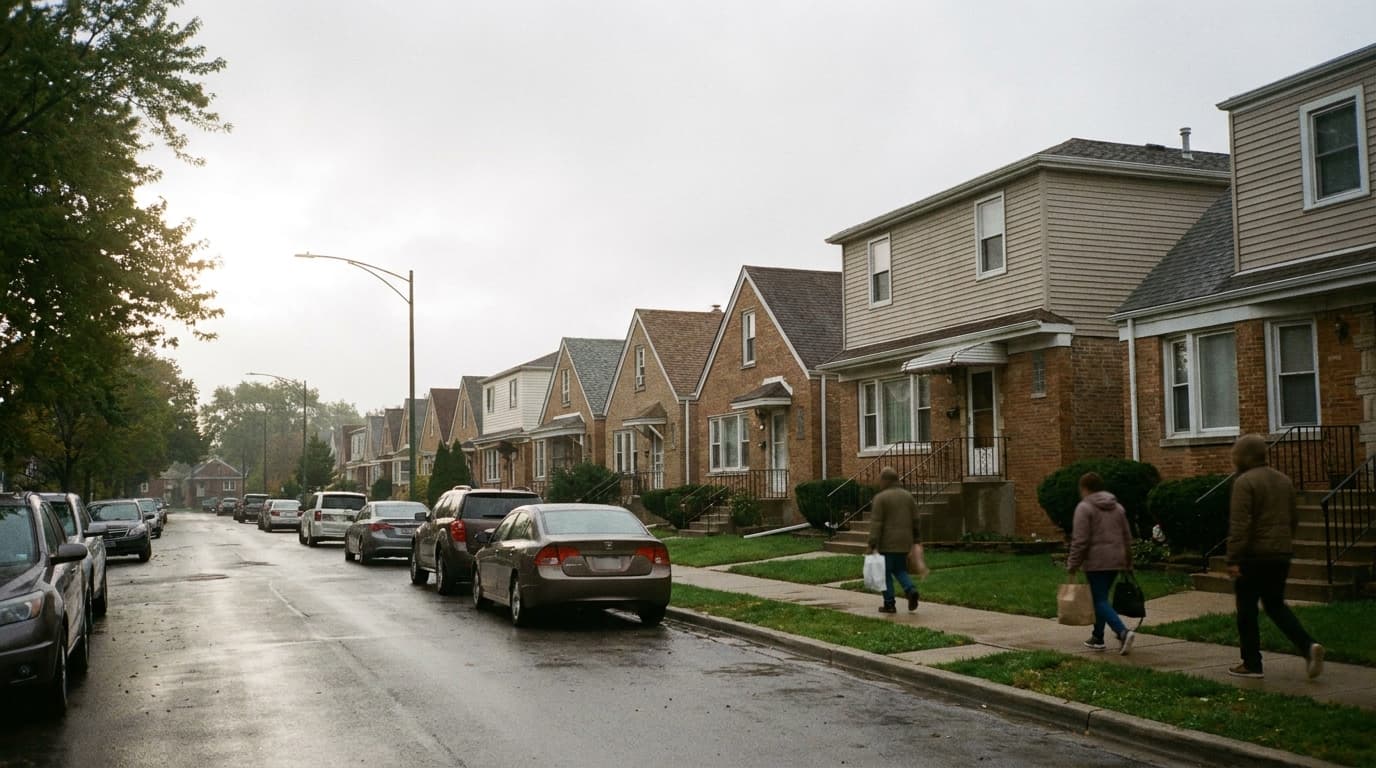
Pennsylvania's version of a homestead exemption is the school property tax homestead or farmstead exclusion. Under the Taxpayer Relief Act (Act 1 of Special Session 1 of 2006), the Commonwealth sends property tax reduction allocations to each school district, which reduces the assessed value of every approved owner-occupied primary residence by the same amount before school tax is computed. Each district sets the amount, so there is no statewide figure, and you apply to your county assessment office by March 1 (in Philadelphia, to the city by December 1). For other states, see our guide to homestead exemptions by state.
Information last verified on October 7, 2026. This article has not been reviewed by a licensed lawyer.
Jurisdiction scope: This article covers Pennsylvania's school district homestead and farmstead exclusion under the Taxpayer Relief Act (Act 1 of Special Session 1 of 2006), the state Property Tax/Rent Rebate Program, and, briefly, the creditor and bankruptcy side of homestead protection. It does not state any school district's or municipality's exclusion amount, county-specific renewal schedules, Philadelphia's local programs, business or rental property, or other states' laws.
How the Pennsylvania homestead exclusion works
The exclusion reduces assessed value, not your bill by a set dollar amount. The Department of Community and Economic Development (DCED) explains: "Under a homestead or farmstead property tax exclusion, the assessed value of each homestead or farmstead is reduced by the same amount before the property tax is computed."
The money comes from the state. DCED says: "The Taxpayer Relief Act provides for property tax reduction allocations to be distributed by the Commonwealth to each school district. Property tax reduction will be through a 'homestead or farmstead exclusion.'" The program reduces school district real estate taxes only; it does not lower county or municipal taxes.
The exclusion is a fixed dollar reduction of assessed value, the same for every approved home in a district, and the district sets it. It cannot exceed 50 percent of the median assessed value of homestead property in the district.
How much the exclusion saves in 2026-27
No single statewide amount exists. Pennsylvania allocated $1.025 billion in state-funded local tax relief for 2026-27, divided among school districts. The Pennsylvania Department of Education says: "Each school district will determine the actual amount of property tax relief for each homestead and farmstead after determining its 2026-27 real estate tax rate."
When this page was verified, the department listed its per-homestead estimates for 2026-27 as coming soon; district allocations appear in its 2026-27 State Property Tax Reduction Allocations spreadsheet. Your school district's tax bill or business office can tell you the exclusion that applies to your home.
Watch out: The exclusion is not guaranteed. DCED notes that "Homeowners are not guaranteed a homestead or farmstead exclusion unless and until an additional income tax for purposes of granting a homestead or farmstead exclusion is approved by voter referendum or sufficient funds have been collected to permit property tax reduction allocations to be made by the Commonwealth."
Who is eligible
DCED says: "Generally, most owner occupied homes and farms are eligible for property tax reduction. Only a primary residence is eligible for property tax relief." There is no age or income limit.

- Homestead. The dwelling and its parcel, if "The dwelling is primarily used as the domicile of an owner who is a natural person." Condominium and cooperative units can qualify, and when only part of a property is the owner's domicile, only that part is eligible.
- Farmstead. Farm buildings on at least 10 contiguous acres used for commercial agriculture, where the farm is also the owner's domicile.
- Not covered by our sources. The DCED guidance we reviewed does not address homes held in a trust or by a company. Ask your county assessment office before relying on the exclusion for one.
How and when to apply
You apply to the county, not the state or the school district. DCED tells homeowners to contact their county assessment office for a copy of the county's homestead and farmstead application form. DCED publishes the standard format of the Application for Homestead and Farmstead Exclusions, but there is no single statewide form number; each county issues its own.
- Deadline. "To receive school property tax relief for tax years beginning July 1 or January 1, an application for homestead or farmstead exclusions must be filed by the preceding March 1," according to DCED. Philadelphia is the exception: the city's homestead exemption deadline is December 1 of each year, and the City of Philadelphia, not a county assessment office, handles the application.
- Decision. The county assessor decides whether the property qualifies.
- Denial. If the assessor denies your application, you can appeal to the county board of assessment appeals. Ask the assessment office for the appeal deadline in your county.
To find your parcel and assessed value before you file, see our guide to Pennsylvania property records.
Do you have to reapply?
Not automatically every year, but approval does not necessarily last forever. DCED says: "School districts are required to notify homeowners by December 31 of each year if their property is not approved for the homestead or farmstead exclusion or if their approval is due to expire."
Counties can set their own review or reapplication schedules, but under the Taxpayer Relief Act an assessor may not require a previously approved owner to reapply more than once every three years, unless the property stops qualifying. Read any notice from your school district carefully, and if your approval is expiring, file a new application with the county by March 1 (in Philadelphia, with the city by December 1).
If your home stops being your primary residence, for example because you move or rent it out, contact the county assessment office. You must notify the assessor within 45 days after the property stops qualifying. Failing to notify is treated the same as filing a false application: you must pay the taxes the exclusion saved, plus interest, and a penalty of 10 percent of those taxes. Knowingly filing a fraudulent application is a third-degree misdemeanor with a fine of up to $2,500 (53 Pa.C.S. 8584(h) and (j), which the Taxpayer Relief Act applies to the school exclusion).
Local-option homestead exclusions
The same framework, the Homestead Property Exclusion Program Act (53 Pa.C.S. Chapter 85, Subchapter F, enacted by Act 50 of 1998), also lets counties and municipalities adopt their own homestead exclusions for their own taxes. Whether your county or municipality offers one, and how much it is, is a local question; ask your county assessment office.
The Property Tax/Rent Rebate for seniors and people with disabilities
Many Pennsylvanians searching for a homestead exemption are really looking for this program. The Property Tax/Rent Rebate is a cash rebate run by the Department of Revenue, not a reduction in your bill, and it is open to renters too. The department says: "Homeowners and renters in Pennsylvania may be eligible to receive up to $1,000 through a standard rebate."
Who can claim it. You must be 65 or older, a widow or widower 50 or older, or a person with a disability 18 or older. "In addition to age requirements, to qualify for the Property Tax/Rent Rebate, your household income must be $48,110 or less annually," the department says. The program was expanded by Act 7 of 2023.
How much. The standard rebate for the 2025 claim year (property taxes or rent paid in 2025) depends on income:
| Household income (2025 claim year) | Maximum standard rebate |
|---|---|
| $0 to $8,550 | $1,000 |
| $8,551 to $16,040 | $770 |
| $16,041 to $19,240 | $460 |
| $19,241 to $48,110 | $380 |
Supplemental rebates of $190 to $500 are available for the neediest claimants.
How to apply. File Form PA-1000, Property Tax/Rent Rebate Application, online through myPATH, by mail, or in person. The Department of Revenue's help line is 1-888-222-9190. You file a new application each year for that year's taxes or rent.
Deadline. For 2025 claims, the department says: "The deadline to submit your rebate application is December 31, 2026. Applications postmarked by that date will be accepted for processing." The deadline for the 2026 claim year had not been announced when this page was verified.
Disabled veterans
Pennsylvania exempts qualifying disabled veterans from all real estate taxes on the home they occupy as their principal dwelling (51 Pa.C.S. 8902). According to the Department of Military and Veterans Affairs, the veteran must be a Pennsylvania resident, have been discharged under honorable conditions, have served during a period of war, own the home alone, with a spouse or as tenants by the entirety, and be rated by the U.S. Department of Veterans Affairs as 100 percent permanently service-connected disabled, totally disabled based on individual unemployability, or blind, paraplegic or missing two or more limbs from service.
Applicants must also show financial need, which the State Veterans' Commission determines. Since January 1, 2025, an annual income of $114,637 or less is presumed to show need; applicants with higher income are considered to have need when their allowable monthly expenses exceed monthly household income. The exemption can continue for an unmarried surviving spouse whom the commission finds to be in need. Apply through the County Director of Veterans Affairs in the county where you live.
Creditor and bankruptcy protection (a different law)
The school tax homestead exclusion does not protect home equity from creditors. It only lowers school taxes. Protection from creditors comes from Pennsylvania's separate judgment exemption laws and, in bankruptcy, from the exemption choices in 11 U.S.C. 522.
Pennsylvania has not opted out of the federal bankruptcy exemptions, so a Pennsylvania debtor in bankruptcy can choose either the federal exemption set or the state set, but not a mix of the two, according to the U.S. Bankruptcy Court for the Eastern District of Pennsylvania. The federal homestead exemption in 11 U.S.C. 522(d)(1) is $31,575 for cases filed on or after April 1, 2025.
Pennsylvania's own judgment-exemption chapter (42 Pa.C.S. Chapter 81) has no homestead exemption for a residence. Its general monetary exemption is $300 of any property (42 Pa.C.S. 8123), and it does not apply to a judgment obtained in foreclosing a mortgage on that real property. A home a married couple owns as tenants by the entireties is handled under separate bankruptcy rules (11 U.S.C. 522(b)(3)(B)); ask a lawyer about it. See our guide to Pennsylvania bankruptcy for how exemptions work in a case.
What happens to a home when its owner dies is a probate question, separate from both the tax exclusion and creditor exemptions; see our guide to Pennsylvania probate.
Related
- Homestead exemptions by state
- Pennsylvania bankruptcy
- Pennsylvania property records
- Pennsylvania probate
- Ohio homestead exemption
This article is general legal information about Pennsylvania's school district homestead and farmstead exclusion under the Taxpayer Relief Act and the Property Tax/Rent Rebate Program, verified on October 7, 2026. It is not tax or legal advice. For your situation, contact your county assessment office, the Pennsylvania Department of Revenue, or a lawyer licensed in Pennsylvania.
Last updated: October 7, 2026.
Frequently Asked Questions
How much is the homestead exemption in Pennsylvania?
There is no statewide amount. Under the Taxpayer Relief Act, each school district sets a fixed reduction in assessed value for approved homesteads, and it decides the actual relief for 2026-27 after setting its 2026-27 tax rate, according to the Pennsylvania Department of Education. Your school district or county assessment office can tell you the current figure.
When is the deadline to file for homestead exemption in Pennsylvania?
March 1. For school property tax relief in tax years beginning July 1 or January 1, the homestead or farmstead application must be filed by the preceding March 1, according to the Department of Community and Economic Development. In Philadelphia, the city's deadline is December 1 of each year.
Do I have to reapply for homestead exemption every year in Pennsylvania?
Not necessarily every year, but approval can expire. School districts must notify homeowners by December 31 each year if their property is not approved or if approval is due to expire, so watch for that notice and ask your county assessment office about its review schedule.
Is the Pennsylvania homestead exclusion automatic?
No. You file your county's homestead and farmstead application with the county assessment office, which decides whether the property qualifies.
Is there an age or income limit for the Pennsylvania homestead exclusion?
No. The school tax homestead exclusion is for owner-occupied primary residences of natural persons, with no age or income test. The separate Property Tax/Rent Rebate does have age, disability and income limits ($48,110 or less in household income).
What is the difference between the homestead exclusion and the Property Tax/Rent Rebate?
The homestead exclusion lowers the assessed value used for school tax and is filed with your county. The Property Tax/Rent Rebate is a cash rebate of up to $1,000 on property tax or rent paid, for older adults, widows or widowers and people with disabilities who meet the income limit, filed with the Department of Revenue on Form PA-1000.
Does the Pennsylvania homestead exemption protect my house from creditors?
No. The school tax exclusion only lowers taxes. Protection of home equity from creditors falls under separate exemption laws, and in bankruptcy Pennsylvania debtors have been able to choose the federal exemption set, which includes a federal homestead exemption; see our Pennsylvania bankruptcy guide.
Updates
Independently fact-checked against the cited primary sources
The Law Behind This Article
This article rests on the statutory provisions below, held in our own legal record and retrieved from the official source. Tap a section to read the operative text.
Pennsylvania Consolidated Statutes Title 53 (Municipalities Generally)
§ 8583Exclusion for homestead propertyIn force
(a) General rule.--The governing body of a political subdivision may exclude from taxation a fixed dollar amount of the assessed value of each homestead property in the political subdivision consistent with section 8586 (relating to limitations). (b) Jurisdictions crossing county lines.--If a political subdivision is located in more than one county, the exclusion established under subsection (a) for each county portion of the political subdivision shall be uniform after adjustment for the common level ratios in the respective counties. (c) Split rate taxes.--In political subdivisions where different millage rates are applied to land and the improvements upon land, the exclusion established under subsection (a) shall be applied first to the value of the improvements, and the remainder of the exclusion, if any, shall be applied to the value of the land. (d) New construction.--The exclusion authorized under subsection (a) for a dwelling constructed during the taxable year and used as homestead property shall be prorated in a manner consistent with the assessment of real property taxes on that dwelling.
Official text (excerpt) · last checked 2026-07-29 · Read the full text in our law library · Verify at palegis.us
§ 8584Administration and procedureIn force
(a) Application; determinations.--The owner or owners of real property seeking to have property approved as homestead property or farmstead property shall file an application with the assessor on the form developed under section 8587 (relating to uniform application). Determinations with respect to the qualification of all or a part of a parcel of real property as homestead property or farmstead property shall be made by the assessor. (b) Filing deadlines; renewal of application.--Applications shall be filed with the assessor not later than March 1 of each year, provided that, in a city of the first class, the application shall be filed with the assessor not later than a date set by the governing body, which date shall be no later than December 1 of the year prior to the year in which the exclusion shall first apply. The governing body of a county may adopt a schedule for review or reapplication for real property previously approved as homestead property or farmstead property.
Official text (excerpt) · last checked 2026-07-29 · Read the full text in our law library · Verify at palegis.us
§ 8586LimitationsIn force
(a) Limit on exclusion.-- (1) In accordance with the limits established on the exclusion for homestead property in Article VIII of the Constitution of Pennsylvania, no governing body of a political subdivision shall authorize an exclusion for homestead property in excess of the amount which is one-half of the median assessed value of homestead property in the political subdivision. The median assessed value of homestead property shall be determined by the information provided to the governing body under section 8584(i) (relating to administration and procedure). (2) For the purposes of calculating the limit on the exclusion under paragraph (1), a political subdivision that is located in more than one county shall determine the median assessed value of homestead property for the entire political subdivision after dividing the assessed value of each homestead property by the common level ratio of the county in which the homestead property is located.
Official text (excerpt) · last checked 2026-07-29 · Read the full text in our law library · Verify at palegis.us
Pennsylvania Consolidated Statutes Title 42 (Judiciary and Judicial Procedure)
§ 8123General monetary exemptionIn forcecited in 5 of our articles
(a) General rule.--In addition to any other property specifically exempted by this subchapter, property of the judgment debtor (including bank notes, money, securities, real property, judgments or other indebtedness due the judgment debtor) to the value of $300 shall be exempt from attachment or execution on a judgment. Within such time as may be prescribed by general rules the judgment debtor may claim the exemption in kind and may designate the specific items of property to which the exemption provided by this section shall be applicable unless the designated property is not capable of appropriate division, or the judgment debtor may claim the exemption in cash out of the proceeds of the sale. (b) Exception.--Subsection (a) shall not apply to any judgment: (1) For support. (2) Debtor who is not an individual. (3) Obtained for board for four weeks or less. (4) For $100 or less obtained for wages for manual labor. (5) Obtained in foreclosing a mortgage secured upon real property whether the judgment is by an action in mortgage foreclosure or an action on a note, bond or other evidence of indebtedness accompanying a mortgage.
Official text (excerpt) · last checked 2026-09-06 · Read the full text in our law library · Verify at palegis.us
Cited in 22 court opinions in our collectionLatest citing opinion in our collection: 2025
Opinions citing this section in our collection:
- Sweeney v. Lotz (Commonwealth Court of Pennsylvania 2001, 787 A.2d 449)“…Section *451 8123(a) of the Judicial Code, 42 Pa.C.S. § 8123(a). By opinion and order dated February…”
- Russell v. Donnelly (Commonwealth Court of Pennsylvania 2003, 827 A.2d 535)“…tion 8123(a) of the Judicial Code, as amended, 42 Pa.C.S. § 8123(a). In rejecting the claim, the Court s…”
- Harvey v. Department of Corrections (Commonwealth Court of Pennsylvania 2003, 823 A.2d 1106)“…The inmate pointed to Section 8123(a) of the Judicial Code, 42 Pa.C.S. § 8123(a), which provides judgment debtors the…”
Identified automatically from the court opinions citing this section — not a ranking of which case controls.
Also relied on in: Bankruptcy in Pennsylvania (2026): Exemptions & Means Test, Pennsylvania Debt Collection Laws: The Wage Garnishment Ban and Its Exact Exceptions, Pennsylvania Small Claims Court: $12,000 Limit, Fees and How to File
Search our full record of US law — 2.1 million sections, every state + federal →
Sources and References
- Pennsylvania Department of Community and Economic Development, Property Tax Relief: Homestead Exclusion(dced.pa.gov).gov
- Pennsylvania Department of Education, Property Tax Reduction Allocations (2026-27)(pa.gov).gov
- Pennsylvania Department of Revenue, Property Tax/Rent Rebate Program(pa.gov).gov
- Pennsylvania General Assembly, 53 Pa.C.S. Chapter 85, Subchapter F, Homestead Property Exclusion (8581-8588; Act 50 of 1998)(palegis.us).gov
- Pennsylvania General Assembly, Taxpayer Relief Act, Act 1 of Special Session 1 of 2006 (sections 341-343)(legis.state.pa.us).gov
- City of Philadelphia, Get the Homestead Exemption(phila.gov).gov
- Pennsylvania Department of Military and Veterans Affairs, Disabled Veterans Real Estate Tax Exemption(pa.gov).gov
- Pennsylvania General Assembly, 51 Pa.C.S. Chapter 89, Disabled Veterans Real Estate Tax Exemption (8902)(palegis.us).gov
- U.S. Bankruptcy Court, Eastern District of Pennsylvania, In re Segen, No. 10-14574 (Pennsylvania has not opted out of the federal exemptions)(paeb.uscourts.gov).gov
- Judicial Conference of the United States, Revision of Certain Dollar Amounts in the Bankruptcy Code, 90 Fed. Reg. (Feb. 4, 2025)(govinfo.gov).gov
- Pennsylvania General Assembly, 42 Pa.C.S. Chapter 81 (8123, general monetary exemption)(palegis.us).gov