Homestead Exemption by State: Property Tax and Creditor Rules
Independently fact-checked against primary sources (last audited October 8, 2026). · 4 primary sources cited on this page. How we verify our legal content
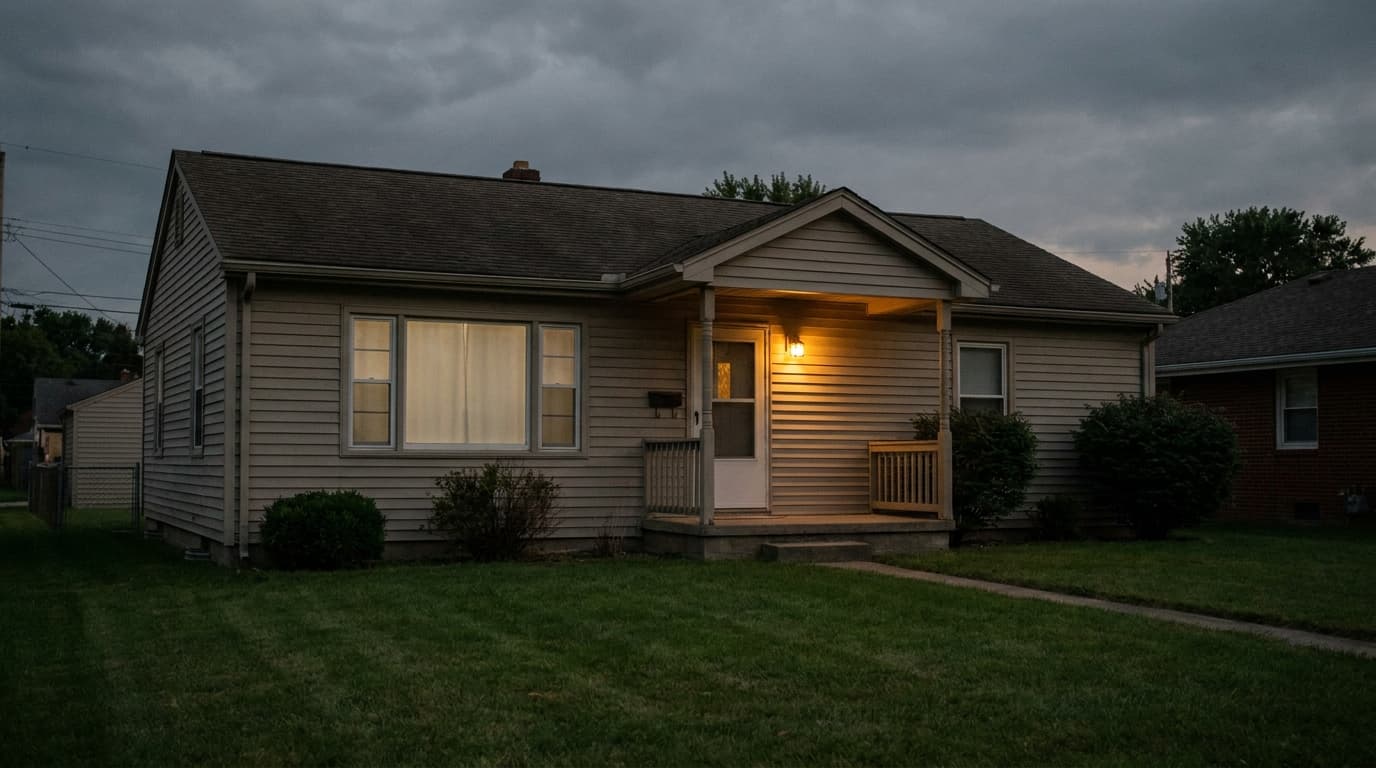
"Homestead exemption" is the name of two different laws, and most people searching for it want only one of them. The first is a property-tax break on the home you own and live in, run by a county assessor, appraisal district or state revenue department. The second is a creditor and bankruptcy protection that shields some or all of your home equity from a forced sale, set by each state's exemption statutes.
Both vary widely from state to state, and a dollar figure from one never applies to the other. Most property-tax homestead breaks are not automatic: you apply with the local office that values your home, by a deadline that differs by state, such as March 1 in Florida, generally April 30 in Texas and December 31 in Kentucky and Ohio. The table below sets out each state's tax break, where to apply and its creditor homestead side by side, with a full guide for every state and the District of Columbia.
Information last verified on October 8, 2026. This article has not been reviewed by a licensed lawyer.
Jurisdiction scope: This hub summarizes the property-tax homestead programs and the creditor homestead rules of the 50 states and the District of Columbia as stated in our audited state guides, plus the federal bankruptcy exemption rules in 11 U.S.C. 522. It does not cover local-option amounts beyond those the state guides verify, business or agricultural property rules, or probate homestead allowances. Each state guide carries the detail and its sources.
Two laws, one name
Property-tax homestead: a reduction in the taxable value of, or the tax on, a home the owner occupies as a primary residence, granted by state or local tax law.
Creditor homestead: a limit on how much of a home's value a judgment creditor, or a bankruptcy case, can reach, set by a state's exemption statutes.
The two share a word and little else. California's Homeowners' Exemption takes $7,000 off a home's taxable value, while its creditor homestead under Code of Civil Procedure 704.730 uses a separate formula with much larger amounts. Massachusetts has no statewide property-tax homestead exemption at all, yet its declared homestead under G.L. c. 188 protects up to $1,000,000 of equity once you record a declaration.
So read each column of the table on its own terms. A state with a generous tax break can have a small creditor homestead, and the reverse.
Homestead exemption by state: comparison table
Amounts carry the tax year or effective date the state guide gives, and county or city figures are labeled as local. "No general exemption" means the state has no property-tax homestead exemption for every owner-occupant; the cell names what it offers instead.
| State | Property-tax break | Apply with / deadline | Creditor homestead |
|---|---|---|---|
| Alabama | Exemption of assessed value: $4,000 off state tax and $2,000 off most county tax (H-1); more for owners 65+, disabled or blind | County tax assessor or revenue commissioner; filing windows differ, confirm with the county | Up to 160 acres worth no more than $15,000; $56,400 if 62+ or disabled, effective June 1, 2026 |
| Alaska | No statewide exemption for all owners; municipalities must exempt the first $150,000 of assessed value for owners 65+ and veterans rated 50%+ | Municipal assessor or clerk; local deadline (Anchorage: March 15) | $72,900 under 8 AAC 95.030; a 2026 adjustment was proposed |
| Arizona | No general exemption; exemptions for widows, widowers, disabled owners and disabled veterans; 5% yearly cap on value growth for all | County assessor, by affidavit, first Monday in January to March 1 | Up to $400,000 of equity, adjusted each January 1 since 2024 |
| Arkansas | Credit, not an exemption: $675 for assessment years from 2026 ($600 for 2025) | County assessor; October 15 of the year after the assessment | Up to 160 acres rural or 1 acre in a city; $2,500 value limit, with an 80-acre or quarter-acre floor |
| California | Homeowners' Exemption: $7,000 off taxable value | County assessor, Form BOE-266, filed once; February 15 for the full year | Greater of the county median single-family sale price (base ceiling $600,000) or $300,000, both indexed yearly since 2022 (Code Civ. Proc. 704.730) |
| Colorado | No general exemption; 50% of the first $200,000 of actual value for seniors 65+ (10-year owners) and 100% disabled veterans | County assessor; July 15 (seniors), July 1 (veterans, tax year 2026) | $250,000 of equity; $350,000 if elderly or disabled |
| Connecticut | No general exemption; circuit breaker credit for elderly or disabled owners up to $1,250 (married) or $1,000 (single); local options | Town assessor, Form M-35H, February 1 to May 15 | $250,000 of equity |
| Delaware | No general exemption; 65+ school tax credit of 50% up to $500 where the school board authorized it; county senior exemptions | County receiver of taxes or treasurer, by April 30 before the tax year | $200,000 of equity, only in bankruptcy or state insolvency |
| District of Columbia | Homestead Deduction: $91,950 off assessed value (tax year 2026) | Office of Tax and Revenue, Form ASD-100, filed once; October 1 to March 31 for the full year | Residence of a head of family or householder; no dollar figure in the code |
| Florida | $25,000 off assessed value for all taxes, plus up to $26,411 (2026) on value above $50,000 for non-school taxes | County property appraiser, Form DR-501, by March 1 | No dollar cap; 160 acres outside a city, half an acre inside |
| Georgia | $2,000 off the 40% assessed value for county and school taxes, plus the HB 581 floating exemption | County tax commissioner, by April 1 | $50,000 in bankruptcy, $100,000 in a listed spousal case, effective July 1, 2026 |
| Hawaii | No statewide exemption; county home exemptions (Honolulu: $120,000, or $160,000 at 65+, for 2026-27) | County real property office; Honolulu: September 30 | Up to $30,000 (head of family or 65+) or $20,000, one parcel up to one acre |
| Idaho | Homeowner's Exemption: lesser of $125,000 or 50% of value, home and up to one acre | County assessor, filed once; last business day of the year (HB 843, 2026) | $175,000 of equity |
| Illinois | General Homestead: up to $10,000 of EAV in Cook, $8,000 in adjoining counties, $6,000 elsewhere | County assessment office; automatic outside Cook; county deadlines | $50,000 per individual, effective January 1, 2026 |
| Indiana | Standard deduction of $40,000 (2026 assessment date, taxes payable 2027), phasing to zero by 2030, plus a supplemental deduction | County auditor, certified statement by January 15 of the year taxes are first due | $22,750 since March 1, 2022 |
| Iowa | 10% of taxable value, minimum $5,500 and maximum $20,000 (assessment year 2026) | City or county assessor, Form 54-028, by July 1 | No dollar cap; half an acre in a city plat, 40 acres otherwise |
| Kansas | No exemption; income-tested refunds after the tax is paid (Homestead Refund K-40H, up to $700; SAFESR; K-40SVR) | Kansas Department of Revenue, every year, by April 15 (2026 taxes: April 15, 2027) | No dollar limit; 160 acres of farmland or 1 acre in a city or town |
| Kentucky | Only for owners 65+ or totally disabled: up to $49,100 off assessed value (2025 and 2026 tax periods) | County property valuation administrator, Form 62A350, by December 31 | Up to $5,000; bankruptcy filers may choose federal exemptions |
| Louisiana | First $7,500 of assessed value (about $75,000 of market value), state, parish and special taxes | Parish assessor; no statewide deadline verified, ask the assessor | Up to $35,000 of value |
| Maine | Up to $25,000 of just value, scaled by the local assessment ratio; 12 months of ownership before April 1 | Town or city assessor, filed once, by April 1 | $80,000, or $160,000 for some debtors |
| Maryland | No exemption; Homestead Property Tax Credit caps yearly taxable assessment growth (10% for State tax, 0% to 10% locally) | State Department of Assessments and Taxation, filed once; May 1 before the first taxable year | None outside bankruptcy; in bankruptcy, up to $31,575 (cases filed on or after April 1, 2025) |
| Massachusetts | No statewide exemption; local-option residential exemption up to 35% of the local average residential value | Local board of assessors; April 1 or 3 months after the bill, where a form is required | Declared homestead up to $1,000,000 if recorded; $125,000 automatic |
| Michigan | Principal Residence Exemption: exempt from school operating tax up to 18 mills | City or township assessor, Form 2368, by June 1 (November 1 for the winter levy) | Outside bankruptcy, 40 acres or one lot up to $3,500 in value; in bankruptcy, base $30,000 ($45,000 at 65+ or disabled), adjusted every three years |
| Minnesota | Homestead classification: market value exclusion of up to 40% at $95,000 or less, phasing out at $517,200 | County assessor, by December 31 for taxes payable next year | $540,000, or $1,350,000 for an agricultural homestead, from July 1, 2026 |
| Mississippi | Tiered: credit up to $300 under 65; first $7,500 of assessed value exempt at 65+ or totally disabled; full exemption for qualifying veterans | County tax assessor, January 1 to April 1; no late filing | Up to 160 acres and $75,000 of value after liens |
| Missouri | No general exemption; Property Tax Credit refund for seniors, disabled people and some veterans, within income limits; county freeze option | Department of Revenue, every year; tax year 2025 claim due April 15, 2026 | $15,000 through December 31, 2026; $40,000 from January 1, 2027 |
| Montana | No dollar exemption; homestead reduced tax rate on a principal residence (tiered, from 0.76% for tax year 2026) | Department of Revenue; tax year 2027 window May 4, 2026 to March 1, 2027 | Recorded declaration required; $350,000 in 2021, rising 4% a year |
| Nebraska | Only for owners 65+, qualifying disabled people and veterans; income-scaled share of an exempt amount, or full value for 100% disabled veterans | County assessor, Form 458, February 1 to June 30, yearly for most groups | Up to $120,000 in value |
| Nevada | No general exemption; 3% cap on yearly tax increases for an owner-occupied home; personal exemptions for veterans, surviving spouses and blind persons | County assessor; personal exemption claims by June 15 (NRS 361.155) | Up to $605,000 of equity; recorded declaration required |
| New Hampshire | No statewide exemption; state education tax rebate for low and moderate incomes; local-option elderly, disabled and veterans' relief | Rebate: Department of Revenue Administration, May 1 to June 30; local relief: town by April 15 | $400,000 from January 1, 2026, after 12 months of use as a primary residence |
| New Jersey | No exemption; ANCHOR payment of $1,500 or $1,000 by income, plus Senior Freeze and Stay NJ | Division of Taxation, Form PAS-1; 2025 benefit year due November 2, 2026 | No general creditor homestead exemption; veterans, service members and military spouses can protect recorded homes |
| New Mexico | Head-of-family exemption: $2,000 off taxable value; residential value growth limited to the higher of 3% a year or 6.1% over two years | County assessor, within 30 days after the valuation notice is mailed | $150,000; $300,000 if a spouse died within two years |
| New York | STAR: school tax relief based on the first $30,000 of full value (Basic) or $88,500 for owners 65+ (Enhanced, 2026-2027 school year) | Tax Department, one-time online registration for the STAR credit | $204,825, $170,700 or $102,400 by county, effective April 1, 2024 |
| North Carolina | No general exemption; Elderly or Disabled Exclusion (greater of $25,000 or 50% of value), Disabled Veteran Exclusion, Circuit Breaker deferral | County tax assessor, Form AV-9, by June 1 | Up to $35,000 of net value; $60,000 for some unmarried debtors 65+ (G.S. 1C-1601) |
| North Dakota | No general exemption; Primary Residence Credit up to $1,600 a year; homestead credit for owners 65+ or disabled | Primary Residence Credit: State Tax Commissioner online, January 1 to April 1, every year | Up to $150,000 of value over liens; no filing required |
| Ohio | Credit for lower-income owners 65+ or disabled: taxes on up to $29,700 of market value (tax year 2026); $59,400 for 100% disabled veterans | County auditor, by December 31 | $182,625 for bankruptcy cases filed April 1, 2025 through March 31, 2028 |
| Oklahoma | $1,000 off assessed valuation; another $1,000 for household income of $30,000 or less | County assessor, Form 921, by March 15 or 30 days after a valuation-increase notice | No dollar cap; 1 acre in a city or town, 160 acres elsewhere |
| Oregon | No general exemption; disabled veteran exemption ($27,092 or $32,512 of assessed value, 2026); senior and disabled deferral | County assessor; veteran claim by April 1, deferral by April 15 | $158,300 for one debtor, $316,700 for two or more, July 1, 2026 to June 30, 2027 |
| Pennsylvania | School tax homestead exclusion; each school district sets the amount, no statewide figure | County assessment office by March 1 (Philadelphia: December 1) | No state homestead exemption (only a $300 general exemption); in bankruptcy, may choose the federal $31,575 (cases filed on or after April 1, 2025) |
| Rhode Island | No statewide exemption; local-option homestead exemptions; state RI-1040H credit up to $700 (tax year 2025) for 65+ or disabled | Local exemption: city or town assessor; RI-1040H: yearly, by April 15 | Up to $500,000, automatic |
| South Carolina | Only for owners 65+, disabled or blind: first $50,000 of market value ($75,000 for tax year 2026 if eligible in 2025); 4% legal residence ratio for all owner-occupants | County auditor, before July 16 (4% ratio: county assessor) | $80,125, or $160,250 for multiple exemptions in one unit, effective July 1, 2026 |
| South Dakota | No dollar exemption; owner-occupied classification by certificate; assessment freeze for elderly and disabled; $200,000 for totally disabled veterans | County director of equalization, by March 15 (freeze: county treasurer, April 1, yearly) | Acreage only: 1 acre in a town plat, 160 acres outside; sale proceeds up to $100,000 for one year |
| Tennessee | No exemption; Property Tax Relief reimburses taxes on the first $33,600 of value for low-income elderly and disabled owners (2026) | County trustee, 35 days after the delinquency date | Up to $35,000 per individual, $52,500 for joint owners |
| Texas | $140,000 off appraised value for school taxes (from tax year 2025); $60,000 more at 65+ or disabled | County appraisal district, Form 50-114, generally by April 30 | No dollar cap; up to 10 acres urban, or 200 acres rural for a family (100 for a single adult) |
| Utah | Primary residential exemption: 45% off fair market value | County board of equalization, by September 15 (Form TC-473A from 2027 after a change) | Statutory base $42,000, adjusted yearly; declaration needed at an execution sale |
| Vermont | No dollar exemption; yearly Homestead Declaration sets the homestead education tax rate; Property Tax Credit up to $8,000 (2026) | Department of Taxes, Form HS-122, every year; 2026 due April 15, 2026 | Up to $125,000; no declaration required |
| Virginia | No statewide exemption; local-option relief for owners 65+ or disabled; full exemption for 100% disabled veterans | Commissioner of the revenue, January 1 to April 1 unless the locality sets a later date | $5,000 ($10,000 at 65+) plus up to $50,000 for a principal residence; claimed by recorded homestead deed or, in bankruptcy, on the exemption schedule |
| Washington | No general exemption; income-tested exemption for seniors, disabled retirees and disabled veterans; deferrals | County assessor, Form 64 0002, any time during the year for next year's taxes | Greater of $125,000 or the county median single-family sale price |
| West Virginia | Only for owners 65+ or disabled: first $20,000 of assessed value | County assessor, by December 1 after the July 1 assessment day | $5,000 against most judgments; $35,000 in bankruptcy |
| Wisconsin | No exemption; lottery and gaming credit on the tax bill (up to $27,000 of value, 2025-2026 bills); income-tax Homestead Credit | County treasurer, Form LC-100, filed once | $75,000 |
| Wyoming | 25% of fair market value on the first $1,000,000 (from tax year 2025); 50% on the first $3,000,000 for long-term owners 65+ | Department of Revenue portal, county assessor reviews; March 1, 2027 for tax year 2027 | Up to $100,000 in value |
How the property-tax homestead works
Who runs it
In most states a county or local office grants the break: Florida's county property appraiser, a Texas county appraisal district, a Michigan city or township assessor, a Louisiana parish assessor. A few states run it centrally. Maryland's Homestead Property Tax Credit goes through the State Department of Assessments and Taxation, the District of Columbia's Homestead Deduction through the Office of Tax and Revenue, and Kansas's homestead refunds through the Kansas Department of Revenue.
What form the break takes
The word "exemption" covers several different mechanisms, and some states use none of them for every owner:
- A fixed amount off value. Florida exempts the first $25,000 of a homestead's assessed value from all property taxes, including school taxes. Louisiana exempts the first $7,500 of assessed value, and Texas school districts must exempt $140,000 of appraised value from school taxes starting with the 2025 tax year.
- A percentage of value. Utah's primary residential exemption takes 45% off fair market value. Wyoming's Homeowner Exemption covers 25% of fair market value on the first $1,000,000, and Iowa's covers 10% of taxable value, within a $5,500 minimum and $20,000 maximum for assessment year 2026.
- A credit or refund. Arkansas's homestead credit is $675 for assessment years beginning on or after January 1, 2026. Kansas and Tennessee pay refunds or reimbursements after the tax is paid, and New Jersey's ANCHOR program pays homeowners $1,500 or $1,000 depending on income.
- A lower rate or tax class. Since tax year 2026, Montana taxes a principal residence at a lower tiered rate. Vermont's yearly Homestead Declaration places a home in the homestead education tax rate rather than the nonhomestead rate.
- A cap on growth. Maryland's credit holds the yearly taxable assessment increase to 10% for the State property tax. Florida's Save Our Homes limits yearly assessment increases to the lower of 3 percent or the CPI change, and Texas limits a homestead's appraised value growth to 10 percent a year.
- A local option. In Massachusetts, Rhode Island and Virginia, whether a homestead-style break exists depends on the city, town or county. Hawaii's constitution gives real property taxation to the counties, so each county sets its own home exemption.
Read the unit of each figure. Alabama's amounts are stated in assessed value, not market value, and Louisiana's $7,500 of assessed value corresponds to about $75,000 of market value because homes there are assessed at 10 percent. Illinois reduces equalized assessed value. None of these is a dollar amount off your tax bill; what a break saves depends on local tax rates.
Applying once or every year
Most breaks must be applied for. Florida's application is due March 1 on Form DR-501, Georgia's by April 1 with the county tax commissioner, and Texas's generally by April 30 on Form 50-114. California's Homeowners' Exemption is claimed once on Form BOE-266, and Idaho's Homeowner's Exemption once with the county assessor; after approval, neither is refiled each year while the home stays your primary residence.
Other programs must be renewed. Vermont requires a Homestead Declaration on Form HS-122 every year, North Dakota's Primary Residence Credit must be applied for every year, and Kansas refund claims are filed every year by April 15. Florida's property appraiser mails a renewal application by February 1 each year, though some counties waive it.
A few breaks need no application. Outside Cook County, the Illinois statute grants the general homestead exemption automatically, though the assessor may require a new owner to apply for the year after a sale. Arizona's homeowner rate reduction of up to $600 per parcel applies to an owner-occupied primary residence without an application.
Deadlines are often strict. Mississippi cannot accept late applications, and missing Nebraska's June 30 deadline waives the exemption for that year except on narrow grounds such as a documented medical condition. Texas, by contrast, allows late applications up to two years after the delinquency date.
What counts as a primary residence
Each state sets its own occupancy test, and the date matters. California and Florida look at ownership and residence on January 1. Montana requires at least 7 months of ownership and occupancy in the year, and Wyoming's 25% exemption requires the owner to live in the home at least 8 months of the year beginning with tax year 2026.
Utah's exemption covers a home occupied as a primary domicile for at least 183 consecutive days in a calendar year, including a rental home that is a tenant's primary residence. Maine requires 12 months of ownership before April 1, and West Virginia generally requires West Virginia residency for the two consecutive calendar years before the tax year.
A household usually gets one homestead. Minnesota allows a married couple only one homestead in the state, Louisiana bars anyone from holding more than one homestead exemption in the state, and Michigan denies its Principal Residence Exemption in any year the owner claimed a substantially similar exemption on property in another state.
Seniors, disabled owners and veterans
Many states reserve their homestead break for these groups or add larger amounts for them. Kentucky and West Virginia limit the exemption to owners 65 or older or disabled, South Carolina to owners 65 or older, disabled or legally blind, and Ohio's credit goes to lower-income owners who are 65 or older, disabled or a qualifying surviving spouse. Texas adds a $60,000 school district exemption for owners 65 or older or disabled.
Disabled-veteran programs can be much larger. South Dakota exempts $200,000 of the full and true value of an owner-occupied home for a veteran rated permanently and totally disabled from a service-connected disability, and Minnesota excludes $150,000 or $300,000 of market value depending on the rating. Virginia, Oklahoma and Maryland fully exempt the home of a veteran who meets their disability tests. Ratings, income limits and forms differ in every state.
Some programs freeze value instead of reducing it. Arizona's senior valuation protection option freezes the limited property value of a primary residence, not the tax bill, for owners 65 and older who meet an income limit. New Mexico's freeze for low-income owners who are 65 or older or disabled also freezes the value, not the tax.
Moving, renting and wrongful claims
A homestead break follows the owner's primary residence. Michigan requires an owner to rescind the Principal Residence Exemption within 90 days after the home stops being a principal residence, with a penalty of $5 per day up to $200, and an improper exemption can be denied for the current year and the 3 preceding years. Minnesota and the District of Columbia require notice within 30 days of a change, and Colorado and Indiana within 60 days.
Renting the home out usually ends the break. California's exemption does not cover rentals or vacation homes, and Nevada's 3% tax cap covers only a primary residence that is not rented or made available for exclusive occupancy by anyone other than the owner and the owner's family.
Wrongful claims are expensive. Florida can impose a tax lien covering up to 10 years, a 50 percent penalty and 15 percent yearly interest. In the District of Columbia, an owner who fails to report that the home no longer qualifies has the deduction rescinded for each tax year without limitation, with penalty and interest, and Kentucky can fine an applicant up to $500 for willfully falsifying an application or failing to report a change.
A new home usually needs a new application. Maine requires you to reapply if you move, and a Maryland buyer does not inherit the seller's credit. Two programs carry part of a benefit to a new home in the same state: Florida's portability can move up to $500,000 of the Save Our Homes benefit to a new Florida homestead, and California's Proposition 19 lets owners 55 or older, or severely and permanently disabled, transfer a principal residence's taxable value to a replacement home in California up to three times.
How the creditor homestead works
The creditor homestead decides how much of your home a judgment creditor can reach and, in bankruptcy, how much equity you can keep. It does nothing to your tax bill. States set the limit in three main ways:

- Dollar caps. Many states protect a set amount of equity. Kentucky protects up to $5,000, Idaho up to $175,000 and Nevada up to $605,000, and Minnesota protects $540,000 from July 1, 2026, or $1,350,000 for a homestead used primarily for agriculture.
- Acreage limits with no dollar cap. Florida protects a homestead of up to 160 acres outside a municipality or one-half acre inside one, with no dollar cap. Iowa, Kansas and Oklahoma also limit the homestead by land area rather than dollars.
- Mixed or indexed limits. Alabama combines acreage and dollars: up to 160 acres worth no more than $15,000, or $56,400 for a resident 62 or older or an individual with a disability, effective June 1, 2026. Washington protects the greater of $125,000 or the county median sale price of a single-family home in the preceding calendar year, and Arizona and South Carolina adjust their caps for inflation on a set schedule.
Some states have little general creditor homestead protection. New Jersey has no general homestead exemption that protects a home from creditors, Maryland's and Pennsylvania's exemption statutes have no homestead exemption for the home outside bankruptcy, and Michigan's protects only $3,500 of value outside bankruptcy. Delaware's $200,000 applies only in a federal bankruptcy or state insolvency proceeding.
Declarations and automatic protection
Some creditor homesteads apply automatically and some must be claimed. Idaho's applies once you occupy the home as your principal residence, Washington's attaches automatically on occupancy, and Rhode Island's protects up to $500,000 with no declaration.
Nevada requires a written declaration of homestead that is signed, acknowledged and recorded, and Montana requires a recorded declaration. Virginia real estate must be claimed by a recorded homestead deed or, in bankruptcy, on the exemption schedule. In Massachusetts a recorded declaration protects up to $1,000,000, and without one an automatic homestead of $125,000 applies. Utah's homestead applies at an execution sale only if you file or serve a declaration of homestead in time.
What it does not protect against
A creditor homestead generally does not stop the debts secured by the home or owed to the government. In the District of Columbia, the residence exemption does not impair a deed of trust, mortgage, mechanic's lien or tax lien. New Hampshire's homestead does not protect against taxes, mortgages, mechanics' liens, condominium or homeowner association liens, or domestic support obligations.
Kansas's homestead does not protect against sales for taxes, purchase-money debts or improvements, and Tennessee's does not apply against public taxes or purchase-money debts. Timing can matter too: New Hampshire's $400,000 applies after 12 months of continuous use as a primary residence.
The federal bankruptcy layer
In bankruptcy, the homestead question becomes which list of exemptions applies and how much home equity it protects. In chapter 7, which the Bankruptcy Code calls liquidation, nonexempt property is sold and the proceeds go to creditors, so the exemption decides whether equity in a home can be kept. The federal rules in 11 U.S.C. 522 sit on top of every state's law.
State list or federal list
Under 11 U.S.C. 522(b)(1), an individual debtor exempts property under either the federal list in section 522(d) or the state list, not a mix of the two, and spouses in a joint case must elect the same system. The federal list is available unless the debtor's applicable state law specifically does not authorize it (522(b)(2)); a state that withholds it is called an opt-out state.
The state guides report, for example, that Alaska, Arizona, Colorado, Louisiana, Maine, Mississippi, Nebraska, North Dakota and Virginia have opted out and that Idaho debtors must use state exemptions, while Kentucky and Wisconsin debtors may choose the federal exemptions instead.
The federal homestead amount
The federal homestead exemption in 522(d)(1) covers the debtor's aggregate interest in real or personal property that the debtor or a dependent uses as a residence, in a cooperative that owns such a residence, or in a burial plot. For cases filed on or after April 1, 2025, the amount is $31,575, up from $27,900, according to the Judicial Conference adjustment notice; the adjustment does not apply to cases commenced before April 1, 2025. The federal wildcard in 522(d)(5) adds $1,675, plus part of any unused homestead amount, that can protect any property.
Which state's law applies: the 730-day rule
Moving shortly before filing does not simply switch you to a new state's exemptions. Under 522(b)(3)(A), the state exemptions available are those of the place where your domicile was located for the 730 days immediately before filing. If your domicile was not in a single state for that whole period, the place is where it was located for the 180 days immediately before the 730-day period, or for the longer part of those 180 days than anywhere else.
Caps on recently acquired or tainted equity
Three more limits apply to debtors who use state exemptions:
- The 1,215-day cap (522(p)). Equity acquired during the 1,215 days before filing is capped at $214,000 for cases filed on or after April 1, 2025, up from $189,050. Equity moved from a previous principal residence in the same state, acquired before that period, does not count, and the cap does not apply to a family farmer's principal residence.
- The misconduct cap (522(q)). The same $214,000 cap applies to a debtor convicted of a qualifying felony or owing certain securities-fraud, RICO, fiduciary-fraud or serious-injury debts, subject to an exception for what is reasonably necessary for support.
- Fraudulent conversion (522(o)). The homestead value is reduced by any part that came from property the debtor disposed of in the 10 years before filing with intent to hinder, delay or defraud a creditor.
These dollar amounts are adjusted every three years on April 1 under 11 U.S.C. 104, and the next adjustment is scheduled under 11 U.S.C. 104 for April 1, 2028.
Which list applies, whether the 1,215-day cap reaches your equity and how a state's homestead treats your property are questions that turn on your facts. The state guide and a bankruptcy lawyer licensed in your state decide a real case; our bankruptcy laws by state guides cover each state's exemptions.
Changes on the calendar
Several proposals on the November 3, 2026 ballot would change homestead relief, and none is law unless voters approve it:
- Florida Amendment 3 would raise the non-school exemption starting January 1, 2027, but only if at least 60 percent of voters approve it.
- Louisiana Amendment 9 would raise the special assessment level income limit to $150,000 for tax years beginning January 1, 2027.
- Oklahoma State Question 847 would lower the homestead cap to 1.75 percent and replace the senior freeze with an income-scaled limit starting tax year 2027.
- Wyoming Initiative Proposition Number One would create an exemption of 50% of assessed value for a primary residence.
- Tennessee Constitutional Amendment 2 would bar a state property tax; it does not address county or city property taxes.
Some changes are already scheduled in law. Missouri's creditor homestead rises from $15,000 to $40,000 on January 1, 2027. Honolulu's home exemption rises to $140,000, or $180,000 at 65 or older, for tax years beginning July 1, 2027. Indiana's standard deduction drops to $30,000 for the 2027 assessment date, and Virginia's creditor homestead limits are first adjusted for inflation on April 1, 2027.
Related
- Bankruptcy laws by state
- Probate laws by state
- Property records by state
- Small estate affidavits by state
This page is general legal information, not tax or legal advice. It summarizes state property-tax homestead programs, state creditor homestead laws and 11 U.S.C. 522 as described in our state guides, verified on October 8, 2026. Amounts and deadlines change by tax year. For your situation, contact your county assessor or state revenue department, or a lawyer licensed in your state.
Last updated: October 8, 2026.
Frequently Asked Questions
What is a homestead exemption?
It is the name of two different laws. One is a property-tax break that lowers the taxable value of, or the tax on, a home you own and occupy as your primary residence; the other protects some or all of your home equity from creditors and in bankruptcy.
How do I apply for a homestead exemption?
In most states you apply to the local office that values your home, such as the county assessor, property appraiser or appraisal district, by a set deadline, for example March 1 in Florida and generally April 30 in Texas. A few states run their programs centrally, such as the Kansas Department of Revenue for its homestead refunds, so check your state guide for the form and office.
Do I have to reapply every year?
It depends on the state. California's Homeowners' Exemption and Idaho's Homeowner's Exemption are filed once and continue while the home stays your primary residence, while Vermont's Homestead Declaration, North Dakota's Primary Residence Credit and Kansas's homestead refunds must be filed every year.
Does a homestead exemption protect my house from creditors?
The property-tax exemption does not. A separate creditor homestead law protects a set amount of equity, or a set land area, from many creditors, but the state guides show it generally does not stop a mortgage or a tax lien, and its limits differ by state.
Which states have no homestead exemption?
Many states have no general property-tax homestead exemption for every owner, including Kansas, Maryland, Massachusetts, Montana, New Jersey, Tennessee, Vermont and Wisconsin; they offer credits, refunds, rate classes or local options instead. On the creditor side, New Jersey has no general homestead exemption that protects a home, and Maryland and Pennsylvania have none outside bankruptcy.
What happens to my homestead exemption if I move or rent out my home?
A property-tax homestead break generally ends when the home stops being your primary residence, and many states require you to report the change, such as within 30 days in Minnesota or 90 days in Michigan. A new home usually needs a new application, though Florida's portability and California's Proposition 19 can carry part of the benefit to a new home in the same state.
Updates
Independently fact-checked against the cited primary sources
State-by-state comparison
Each state guide below is paired with the governing statute our editors adjudicated for it, held in our own legal record and verified against the official source.
Each statute shown is the same adjudicated anchor its state guide renders, independently verified against primary sources. A dash means not yet adjudicated in our record — never that no law exists.
Sources and References
- 11 U.S.C. 522, Exemptions (U.S. Code, 2023 edition, GovInfo)(govinfo.gov).gov
- Revision of Certain Dollar Amounts in the Bankruptcy Code Prescribed Under Section 104(a), 90 FR 8941 (Feb. 4, 2025)(govinfo.gov).gov
- 11 U.S.C. 104, Adjustment of dollar amounts (U.S. Code, 2023 edition, GovInfo)(govinfo.gov).gov
- Chapter 7 Bankruptcy Basics, United States Courts(uscourts.gov).gov