
Connecticut
Connecticut Homestead Exemption: Tax Relief and Creditor Rules
Independently fact-checked against primary sources (last audited October 8, 2026). · 13 primary sources cited on this page. How we verify our legal content
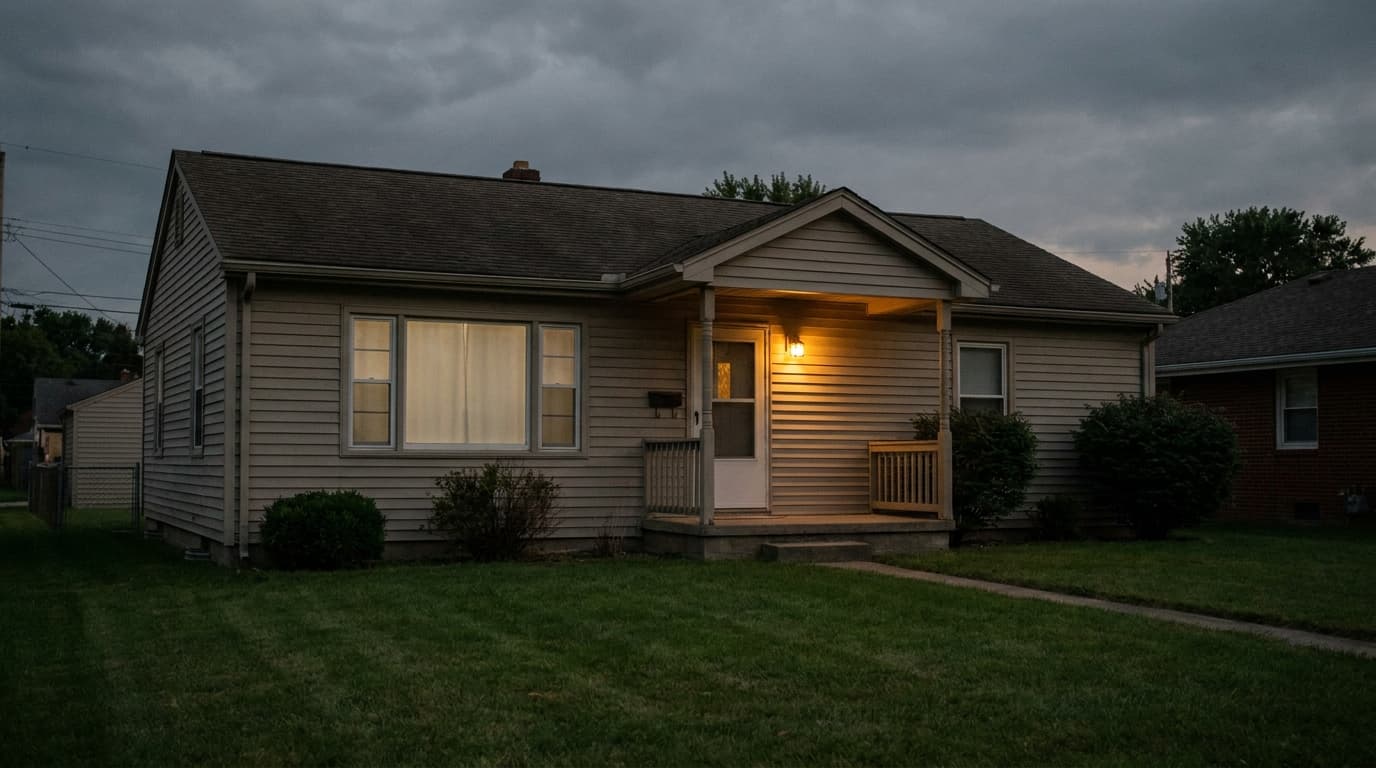
Connecticut does not have a general homestead exemption that lowers property taxes on every primary residence. The statewide relief tied to an owner-occupied home is targeted: the Homeowners' Elderly/Disabled Circuit Breaker credit under CGS 12-170aa (up to $1,250 for married couples and $1,000 for single persons), plus exemptions for veterans, blind residents and people with disabilities under CGS 12-81. Your town or city assessor handles every one of them, and circuit breaker applications are due between February 1 and May 15. Towns may also choose to offer a broader owner-occupied exemption. For other states, see our guide to homestead exemptions by state.
Information last verified on October 7, 2026. This article has not been reviewed by a licensed lawyer.
Jurisdiction scope: This article covers Connecticut property-tax relief for homeowners under the Connecticut General Statutes, chapters 203 and 204a (including CGS 12-81, 12-81oo and 12-170aa), the new municipal-option exemption in Public Act 26-68, sections 224 and 225, the income tax credit for property taxes in CGS 12-704c, and the creditor homestead in CGS 52-352a and 52-352b. It does not list which towns have adopted local-option exemptions or their local amounts, deadlines and forms, and it does not cover business or personal property or the law of other states.
Does Connecticut have a homestead exemption?
Not in the sense most states use the term. The research for this article read Connecticut's property-tax assessment and exemption chapter (chapter 203, including CGS 12-81 and 12-81a through 12-81oo), the levy and collection chapter (chapter 204) and the elderly homeowner relief chapter (chapter 204a) in full, and the word "homestead" appears in none of them. There is no statewide exemption that every owner-occupant receives.
What the state does is require towns to help particular groups. The legislature's Office of Legislative Research (OLR) puts it this way: "Connecticut laws require municipalities to provide property tax relief for specific groups of taxpayers, such as those who are seniors, veterans, or have a disability." The Office of Policy and Management (OPM) prescribes forms and income limits and reimburses towns for some programs, but you deal with your local assessor.
| Program | What it does | Who it is for | Statewide or local |
|---|---|---|---|
| Circuit breaker credit, CGS 12-170aa | Reduces the tax on your home by up to $1,250 (married) or $1,000 (single), by income | Owners 65 or older, or with a qualifying permanent total disability, within OPM income limits | Statewide |
| Disabled persons exemption, CGS 12-81(55) | $1,000 exemption | People receiving or eligible for qualifying permanent total disability benefits | Statewide (towns may add more) |
| Blind persons exemption, CGS 12-81(17) | $3,000 of property exempt | Blind residents | Statewide (towns may add more) |
| Veterans exemptions, CGS 12-81(19), (20), (21), (83) | Basic exemption plus an income-based amount; full exemption for a 100% permanent and total VA rating, which a town may cap at its median home assessment | Wartime veterans, 30-year retirees and disabled veterans | Statewide |
| Owner-occupied dwelling exemption, CGS 12-81oo | 5% to 35% of assessed value | Owner-occupants of homes with up to two units | Local option |
| $50,000 primary residence exemption, Public Act 26-68, sec. 224 | $50,000 off assessed value | Owners of a declared primary residence | Local option, from the assessment year beginning October 1, 2027 |
| Income tax credit, CGS 12-704c | Up to $300 against Connecticut income tax | Residents who pay property tax on a primary residence or motor vehicle | Statewide (phases down at higher incomes) |
The circuit breaker credit for seniors and people with disabilities
The Homeowners' Elderly/Disabled Circuit Breaker Tax Relief Program is the closest thing Connecticut has to a statewide homestead benefit. OPM states: "The amount of the credit that may be granted is up to $1,250 for married couples and $1,000 for single persons." The credit is graduated by income, so lower-income households receive a larger share of their tax back.

The credit applies only to real property tax on the home you live in. Under CGS 12-170aa, the relief "shall be allowed only with respect to a residential dwelling owned by such qualified homeowner and used as such homeowner's primary place of residence." It cannot be applied to personal property taxes such as the tax on a car.
Who is eligible
You must meet an age or disability test, a residency test and an income test:
- Age or disability. You (or your spouse) were 65 or older at the close of the preceding calendar year, or you are a surviving spouse age 50 or older of a homeowner who qualified. If you are under 65, this test is met by being eligible for permanent total disability benefits under Social Security or a comparable government plan.
- Residency. You have lived in Connecticut for at least one year.
- Income. OPM's 2026 program booklet states: "Claimant's 2025 total income must not exceed $46,300 if unmarried, or $56,500 if married."
The statute itself still prints much lower base figures because OPM adjusts the limits every year for the Social Security cost-of-living increase. When this article was verified, it could not confirm that OPM had published the limits for applications filed in 2027 (based on 2026 income); check the OPM program page before you apply.
How and when to apply
You file with the assessor of the town where you live, on OPM Form M-35H, with a copy of your federal income tax return or other proof of income. OPM's program page says: "Application may be made with the Assessor's Office between February 1 and May 15th." When you refile, a mailed or emailed application must reach the assessor by April 15; after that, the statute requires you to file by May 15 in person or by email in the manner your assessor prescribes, or, for reasonable cause, through a representative the assessor approves. OPM may grant an extension, requested by August 15, for illness, incapacity or other good cause.
You do not apply every year. CGS 12-170aa says the application "shall be submitted for approval, on the application form prepared for such purpose by the Secretary of the Office of Policy and Management, in the first year claim for such tax relief is filed and biennially thereafter." In the year between filings, the credit continues at the same percentage without a new application. In the year you must refile, the assessor mails you a notice and form by February 1.
For questions, OPM's Homeowner Info Line is 860-418-6290, and the program page and the Homeowners Tax Relief Program Q&A booklet explain the details.
If your income rises or a claim is wrong
The circuit breaker carries penalties. A homeowner who willfully fails to disclose information or makes a false statement must refund all credits improperly taken and can be fined up to $500. If your income later goes over the limit, you must tell the assessor by the next filing date. CGS 12-170aa provides: "Any such person who fails to so notify the tax assessor of his disqualification shall refund all amounts of tax reduction improperly taken and be fined not more than five hundred dollars."
Exemptions for veterans, blind residents and people with disabilities
These exemptions come from CGS 12-81, and every town must grant them to people who qualify. Veterans establish eligibility by recording their discharge with the town clerk; under CGS 12-95 an exemption proved this way takes effect on the next assessment day (October 1), although disabled veterans claiming under 12-81(20) or (83) may prove their rating until the board of assessment appeals finishes its work. Applications for the optional town add-ons for blind and disabled residents (CGS 12-81i and 12-81j) are due by the assessment date. Ask your assessor for the town's forms.

- Disabled persons, CGS 12-81(55). OLR states: "Qualifying taxpayers with disabilities are entitled by law to a $1,000 property tax exemption." The exemption covers people eligible for permanent total disability benefits under Social Security or a comparable government plan, and people 65 or older who are no longer eligible for Social Security disability benefits. A town may add up to $1,000 more under CGS 12-81i.
- Blind persons, CGS 12-81(17). OLR states: "Municipalities must exempt $3,000 of property belonging to individuals who provide satisfactory proof to the board of assessors that they are blind." A town may add up to $2,000 more, subject to an income limit, under CGS 12-81j.
- Wartime veterans, CGS 12-81(19) and 12-81g. Towns must give a basic exemption plus an income-based exemption to qualified wartime veterans and to veterans who retired after 30 years of service. OLR states: "The basic exemption is $1,000 (CGS 12-81(19))." The income-based exemption is twice the basic amount ($2,000) for veterans with income at or below OPM's annual threshold, or 50% of it ($500) otherwise. Proof of service is recorded with the town clerk.
- Disabled veterans, CGS 12-81(20), (21) and (83). Veterans with a VA disability rating of 10% or more receive a basic exemption that runs from $2,000 (10% rating) to $3,500 (75% or more, or age 65 or older), plus an income-based amount. These are the statutory amounts; after a revaluation that raises the grand list, towns must generally increase them (CGS 12-62g), so your town's figure may be higher. Under the law as summarized by OLR, "municipalities must fully exempt from property tax a primary dwelling or motor vehicle for each veteran who has a permanent and total (P&T) disability rating of 100%." Since the 2025 assessment year, a town may cap this exemption at the median assessed value of homes in the town, so in some towns part of a higher-value home stays taxable; ask your assessor.
If you move during an assessment year, most veterans' exemptions go with you for that year. Under CGS 12-81cc, a veteran who holds the assessor's certificate is entitled to the exemption "in any municipality in this state for such assessment year provided a copy of such certificate is provided to the tax assessor of any municipality in which such exemption is claimed." The certificate covers only that assessment year, and the 100% P&T exemption under 12-81(83) is not on its list; ask the new town's assessor what proof it needs. OLR also reports that Public Act 26-114, generally effective October 1, 2026, widens the proof of service veterans may show: "A new law expands what proof they may show, aligning requirements with existing law's other eligibility criteria."
Town-option exemptions for owner-occupied homes
Two homestead-style exemptions exist in state law, but only a town can turn them on. Neither applies where your town has not adopted it, and this article does not list which towns have.
The 5% to 35% owner-occupied exemption (CGS 12-81oo)
A town may "provide an exemption from property tax of not less than five per cent and not more than thirty-five per cent of the assessed value, for owner-occupied dwellings ... that are the primary residences of such owners and consist of not more than two units." Condominiums and common interest community units are included. The legislature's Office of Legislative Research calls this town option the "homestead exemption," so if your town says it offers a homestead exemption, this is usually what it means. Public Act 25-168, section 393, added that a town "may also require a term of residency for owners to be eligible for an exemption under this section or an assessed value maximum for dwellings ..."
The state has no published application form, deadline or renewal rule for this exemption. If your town offers it, your assessor will tell you how to apply.
The new $50,000 exemption (Public Act 26-68, starting with the October 1, 2027 assessment year)
Public Act 26-68, section 224, lets a town, with the approval of its legislative body (or, where the legislative body is a town meeting, by vote of the board of selectmen), "provide an exemption from property tax applicable to the assessed value of any dwelling declared to be the primary residence of (1) the owner or owners of such dwelling, or (2) any person or persons for whom such dwelling is held in trust, in accordance with the provisions of subsection (b) of this section, in the amount of fifty thousand dollars of the assessed value of such dwelling." It covers a single-family home, condominium or common interest community unit, and it applies only to assessment years beginning on or after October 1, 2027.
It is a local option, not a statewide exemption. A town also cannot combine it with the percentage exemption: "No municipality shall provide an exemption from property tax pursuant to this section and an exemption from property tax pursuant to section 12-81oo of the general statutes for the same assessment year."
If your town adopts it, you must file with the assessor every year, "on or before the first day of November in such assessment year," on a form prepared by OPM. You must have no other primary residence, you cannot claim it for more than one dwelling in the same year, and a town may require a term of residency. Missing the deadline costs you that year: "Failure to file such application in the manner and form provided by the secretary within the time limit prescribed shall constitute a waiver of the right to such exemption for such assessment year." OPM had not published the form when this article was verified.
Senior tax freezes and deferrals (local options)
State law also lets towns offer more help to older or lower-income owners, but only where the town adopts it. OLR describes a local tax freeze for homes whose owner-occupant, or a spouse, is at least 65 and has been a Connecticut resident for at least one year, within OPM income limits (CGS 12-170v). OLR also notes: "Municipalities may defer property taxes for any owner-occupied residence if the tax exceeds 8% of the owner's income for a given year." Towns may also adopt broader relief for older or disabled owner-occupants under CGS 12-129n and extra local veterans' exemptions (for example under CGS 12-81f and 12-81kk); OLR Report 2026-R-0001 lists them. Ask your assessor which programs your town offers.
Income tax credit for property taxes paid
Connecticut residents can also take a credit against their state income tax for property tax paid on a primary residence or motor vehicle. Under CGS 12-704c, the credit covers property tax "first becoming due and actually paid during such taxable year by such person on such person's primary residence or motor vehicle." The maximum is $300 per return for taxable years beginning on or after January 1, 2022, and the credit shrinks as Connecticut adjusted gross income rises. This is an income tax credit, not a property tax exemption; the Department of Revenue Services explains how to claim it.
Assessment increases after a revaluation
Connecticut has no statewide homestead assessment cap or freeze. A town may choose to phase in revaluation increases gradually under CGS 12-62c, over no more than five assessment years. That option is set by the town for everyone and is not tied to your residence.
Creditor protection: the Connecticut homestead under CGS 52-352b
Connecticut uses the word "homestead" in one place that matters to homeowners: the list of property protected from judgment creditors in chapter 906. It is a different law from every tax program above and does not lower your property tax.
CGS 52-352b(21) protects "The homestead of the exemptioner to the value of two hundred fifty thousand dollars, provided value shall be determined as the fair market value of the real property less the amount of any statutory or consensual lien which encumbers it ... except that, in the case of a money judgment arising out of a claim of sexual abuse or exploitation of a minor, sexual assault or other wilful, wanton, or reckless misconduct committed by a natural person, to the value of seventy-five thousand dollars." Because value is measured after liens, your mortgage and any tax liens reduce the equity the exemption covers.
CGS 52-352a(5) defines the protected property: "'Homestead' means owner-occupied real property, co-op or mobile manufactured home, as defined in subdivision (1) of section 21-64, used as a primary residence." CGS 52-352b states a fixed $250,000 figure with no inflation adjustment, and neither section sets an acreage limit. The exemption sections of chapter 906 (CGS 52-352a through 52-352d) do not require you to record a declaration of homestead.
The research for this article did not verify other exceptions, such as for child support, taxes or mechanics' liens, and it did not confirm from a statute whether a Connecticut debtor may choose the federal bankruptcy exemptions instead. For how the homestead works in a bankruptcy case, see Connecticut bankruptcy laws. The exemption limits what a creditor can reach; it does not make a home safe from every debt.
When a homeowner dies
Connecticut probate law has no fixed homestead allowance. Under CGS 45a-320, the Probate Court may allow a support allowance for the surviving spouse or family while the estate is settled, and under CGS 45a-321(b), "The family of the decedent shall be allowed to remain in the dwelling house occupied by him at the time of his death ..." until the house is sold or distributed. See Connecticut probate laws for the details, and Connecticut property records to find your parcel's assessment.
Related
- Homestead exemptions by state
- Connecticut bankruptcy laws
- Connecticut probate laws
- Connecticut property records
- Massachusetts homestead exemption
This article is general legal information about Connecticut law (CGS 12-81, 12-81oo, 12-170aa, 12-704c, 45a-320, 45a-321 and 52-352b, and Public Act 26-68), verified as of October 7, 2026. It is not tax or legal advice. For your situation, contact your town assessor, the Office of Policy and Management, or a lawyer licensed in Connecticut.
Last updated: October 7, 2026.
Frequently Asked Questions
Does Connecticut have a homestead exemption?
Not statewide. Connecticut law requires towns to give property tax relief to specific groups such as seniors, veterans, blind residents and people with disabilities, and it lets towns choose to offer owner-occupied exemptions under CGS 12-81oo or, from the October 1, 2027 assessment year, Public Act 26-68.
How much is the circuit breaker credit in Connecticut?
Up to $1,250 for married couples and $1,000 for single persons, graduated by income (CGS 12-170aa). For applications filed in 2026, 2025 income could not exceed $46,300 unmarried or $56,500 married.
When is the deadline to apply for property tax relief in Connecticut?
Circuit breaker applications go to your town assessor between February 1 and May 15; when you refile, a mailed or emailed application must arrive by April 15. If your town adopts the new $50,000 exemption, that application is due each year by November 1 of the assessment year, starting with the assessment year that begins October 1, 2027.
Do I have to reapply for the circuit breaker every year in Connecticut?
No. CGS 12-170aa requires an application in the first year and every second year after that. In the year between, the credit continues at the same percentage without a new application, and you must tell the assessor if your income goes over the limit.
Does my town offer the owner-occupied exemption?
Only if it adopted one. CGS 12-81oo lets a town exempt 5% to 35% of the assessed value of owner-occupied homes of up to two units, and no statewide list of adopting towns was found, so ask your assessor.
Are disabled veterans exempt from property tax in Connecticut?
Veterans with a permanent and total 100% VA disability rating are exempt on a primary dwelling or motor vehicle, though a town may cap the exemption at its median home assessment. Veterans rated 10% or more receive a basic exemption of $2,000 to $3,500 plus an income-based amount under CGS 12-81(20).
Does the Connecticut homestead exemption protect my house from creditors?
CGS 52-352b(21) protects up to $250,000 of home equity, measured as fair market value less liens, or $75,000 against judgments for sexual abuse of a minor, sexual assault or other wilful, wanton or reckless misconduct. It does not lower your property tax.
Updates
Independently fact-checked against the cited primary sources
The Law Behind This Article
This article rests on the statutory provisions below, held in our own legal record and retrieved from the official source. Tap a section to read the operative text.
Connecticut General Statutes, Title 12 (Taxation), Chapter 204a
§ 12-170aaTax relief for certain elderly or totally disabled homeowners. Reductions in real property taxes.In force
(a) Revision effective for assessment year commencing October 1, 1985, and thereafter. There is established, for the assessment year commencing October 1, 1985, and each assessment year thereafter, a revised state program of property tax relief for certain elderly homeowners as determined in accordance with subsection (b) of this section, and additionally for the assessment year commencing October 1, 1986, and each assessment year thereafter, the property tax relief benefits of such program are made available to certain homeowners who are permanently and totally disabled as determined in accordance with subsection (b) of this section. (b) Eligibility for benefits. Age and income requirements. Determination of income.
Official text (excerpt) · last checked 2026-07-29 · Read the full text in our law library · Verify at cga.ct.gov
Connecticut General Statutes, Title 12 (Taxation), Chapter 203
§ 12-81*(See end of section for amended version of subdivision (33) and effective date.) Exemptions.Repealed
The following-described property shall be exempt from taxation: (1) Property of the United States. Property belonging to, or held in trust for, the United States, the taxation of which has not been authorized by Congress; (2) State property and reservation land. Property belonging to, or held in trust for, this state and reservation land held in trust by the state for an Indian tribe; (3) County property. Repealed; (4) Municipal property. (A) Except as otherwise provided by law, personal property belonging to, held in trust for, or leased to, a municipal corporation of this state and used for a public purpose, including personal property used for cemetery purposes, and (B) real property belonging to, held in trust for, or leased to, a municipal corporation of this state and used for a public purpose, including real property used for cemetery purposes, provided any such leased personal property, including, but not limited to, motor vehicles subject to the provisions of section 12-71 and any such leased real property is located within the boundaries of such municipal corporation; (5) Property held by trustees for public purposes.
Official text (excerpt) · last checked 2026-07-29 · Read the full text in our law library · Verify at cga.ct.gov
Connecticut General Statutes, Title 52 (Civil Actions), Chapter 906
§ 52-352bExempt property.In forcecited in 3 of our articles
The following property of any natural person shall be exempt: (1) Necessary apparel, bedding, foodstuffs, household furniture and appliances; (2) Tools, books, instruments, farm animals and livestock feed, which are necessary to the exemptioner in the course of his or her occupation, profession or farming operation; (3) Burial plot for the exemptioner and his or her immediate family; (4) Public assistance payments and any wages earned by a public assistance recipient under an incentive earnings or similar program; (5) Health and disability insurance payments; (6) Health aids necessary to enable the exemptioner to work or to sustain health; (7) Workers' compensation, Social Security, veterans and unemployment benefits; (8) Court-approved payments for child support; (9) Arms and military equipment, uniforms or musical instruments owned by any member of the militia or armed forces of the United States; (10) Up to two motor vehicles to the value of seven thousand dollars in the aggregate, provided value shall be determined as the fair market value of the motor vehicles less the amount of all liens and security interests which encumber them; (11) Wedding and engagement…
Official text (excerpt) · last checked 2026-09-06 · Read the full text in our law library · Verify at cga.ct.gov
Cited in 97 court opinions in our collectionLatest citing opinion in our collection: 2025
Opinions citing this section in our collection:
- Shawmut Bank, N.A. v. Valley Farms (Supreme Court of Connecticut 1992, 222 Conn. 361)“…r in the course of his or her occupation or profession.” 5 General Statutes § 52-352b (b). 6 We agree with the trial *366 c…”
- People's Bank v. Perkins (Connecticut Appellate Court 1990, 22 Conn. App. 260)“…he funds in ques *261 tion were exempt from execution under General Statutes § 52-352b. 1 We reverse the judgment of the tria…”
- Rockstone Capital, LLC v. Sanzo (Supreme Court of Connecticut 2019, 332 Conn. 306)“…and not a de facto waiver of the homestead exemption; see General Statutes § 52-352b (t); that would be void as a matter of…”
Identified automatically from the court opinions citing this section — not a ranking of which case controls.
Also relied on in: Bankruptcy in Connecticut (2026): Exemptions & Means Test, Connecticut Debt Collection Laws: Wage Garnishment, Statute of Limitations, and Repossession
Connecticut General Statutes, Title 45a (Probate Courts and Procedure), Chapter 802b
§ 45a-320(Formerly Sec. 45-250). Allowance for support of surviving spouse and family. Family car.In forcecited in 2 of our articles
(a) The Court of Probate may allow out of any real or personal estate of a deceased person in settlement before such court, including a small estate being settled under the provisions of section 45a-273, such amount as it may judge necessary for the support of the surviving spouse or family of the deceased during the settlement of the estate. (b) In making such allowance the court may in its discretion include in its decree ordering such allowance any one or more of the following provisions, to the extent they are not mutually inconsistent: (1) A provision that such allowance shall run (A) for the entire period the estate is in settlement, or (B) for a fixed period of time not to exceed the period of settlement, in which case such allowance shall be subject to renewal by the court in its discretion; (2) a provision that such allowance is to be paid in a lump sum; (3) a provision that such an allowance made for a surviving spouse shall vest in such spouse retroactively as of the moment of death of his spouse so that it will be a fixed sum certain as of said date of death and shall not terminate with the subsequent death or remarriage of the surviving spouse, such allowance to be…
Official text (excerpt) · last checked 2026-07-29 · Read the full text in our law library · Verify at cga.ct.gov
Also relied on in: Connecticut Small Estate Affidavit: $40,000 Limit, Wait and Form
Search our full record of US law — 2.1 million sections, every state + federal →
Sources and References
- Office of Legislative Research, 2026-R-0027: Property tax relief for specific groups(cga.ct.gov).gov
- OPM: Homeowners' Elderly/Disabled Circuit Breaker Tax Relief Program(portal.ct.gov).gov
- CGS Chapter 204a, including CGS 12-170aa (elderly and disabled homeowner relief)(cga.ct.gov).gov
- OPM: Homeowners Tax Relief Program Q&A booklet(portal.ct.gov).gov
- OPM Form M-35H, Homeowners' Application(portal.ct.gov).gov
- CGS Chapter 203, assessment and exemptions (CGS 12-62c, 12-62g, 12-81, 12-81cc veterans certificate portability, 12-81i, 12-81j, 12-95)(cga.ct.gov).gov
- Public Act 25-168, sections 233 and 393 (amending CGS 12-81(83) and 12-81oo)(cga.ct.gov).gov
- Public Act 26-68, sections 224 and 225 (municipal-option $50,000 primary residence exemption)(cga.ct.gov).gov
- Office of Legislative Research, 2026-R-0076: 2026 acts affecting property taxes(cga.ct.gov).gov
- Office of Legislative Research, 2026-R-0001: Municipal-option property tax relief(cga.ct.gov).gov
- CGS Chapter 229, including CGS 12-704c (income tax credit for property taxes)(cga.ct.gov).gov
- CGS Chapter 906, CGS 52-352a and 52-352b (exempt property; homestead)(cga.ct.gov).gov
- CGS Chapter 802b, CGS 45a-320 and 45a-321 (family allowance; right to remain in dwelling)(cga.ct.gov).gov