
Arkansas
Arkansas Homestead Exemption: $675 Credit, Freeze and How to Apply
Independently fact-checked against primary sources (last audited October 8, 2026). · 14 primary sources cited on this page. How we verify our legal content
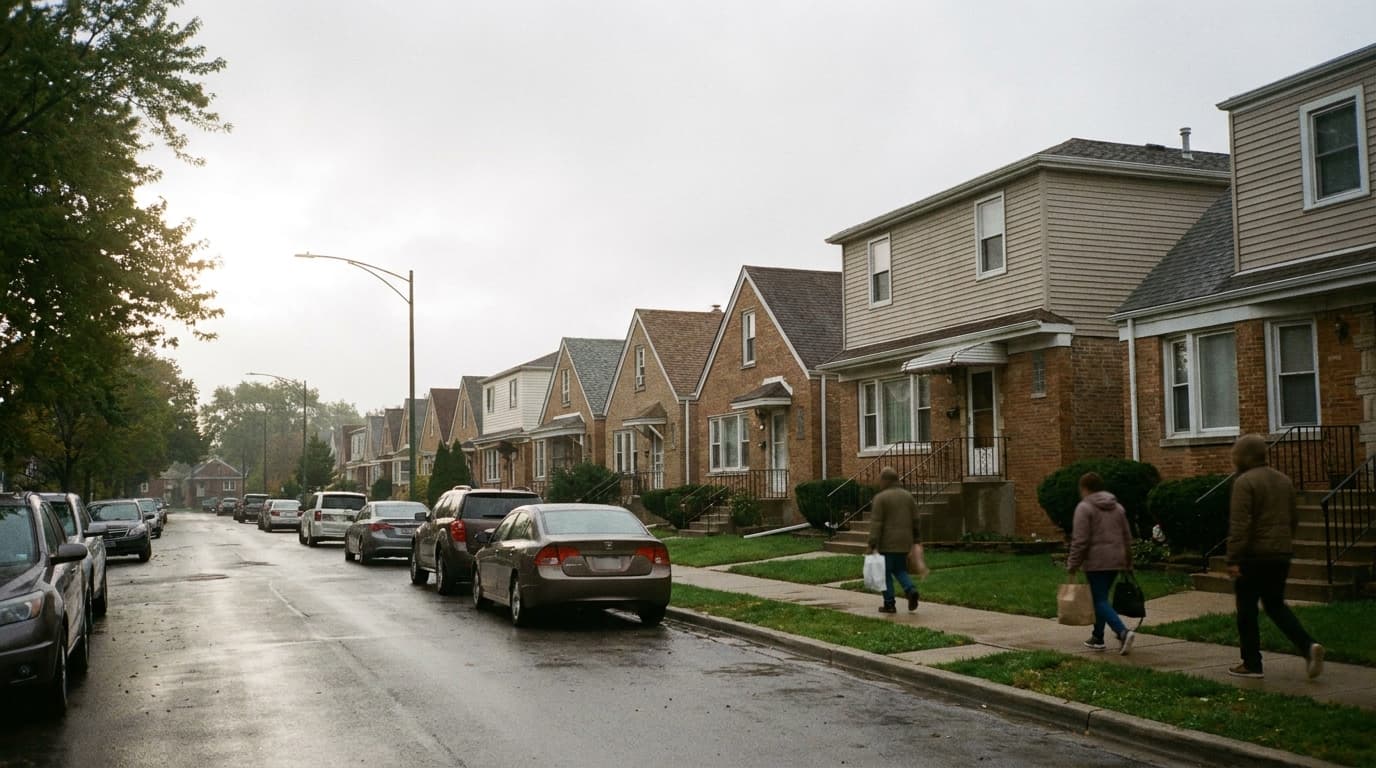
Arkansas does not exempt part of a home's value from property tax. It gives a homestead property tax credit: a flat dollar amount that reduces the real property taxes on the owner's principal residence, under Amendment 79 to the Arkansas Constitution and Ark. Code 26-26-1118. Act 174 of the 2026 Fiscal Session set the credit at $675 for assessment years beginning on or after January 1, 2026, up from $600 for the 2025 assessment year. DFA places the $600 credit on the 2026 tax bills, so the $675 credit should first appear on bills paid in 2027. Homeowners apply with the county assessor's office. For other states, see our guide to homestead exemptions by state.
Information last verified on October 8, 2026. This article has not been reviewed by a licensed lawyer.
Jurisdiction scope: This article covers Arkansas's homestead property tax credit (Ark. Const. Amend. 79; Ark. Code 26-26-1118, as amended by Act 330 of 2025 and Act 174 of the 2026 Fiscal Session), the Amendment 79 assessment limits and the freeze for owners 65 or older or disabled, the disabled veteran exemption, and the creditor homestead in Article 9 of the Arkansas Constitution. It does not cover county-specific procedures beyond what is stated here, business or agricultural property, or the law of other states.
Does Arkansas have a homestead exemption?
Yes, but Arkansas calls it a credit, and it works differently from most states' exemptions. It does not lower your home's assessed value. It takes a fixed dollar amount off the real property taxes on your homestead.
Act 174 amends Ark. Code 26-26-1118(a)(1)(A) to read: "There is established a homestead property tax credit for each assessment year that reduces the amount of real property taxes assessed on the homestead of each property owner by six hundred seventy-five dollars ($675)." Section 2 of the act states: "Section 1 of this act is effective for assessment years beginning on or after January 1, 2026."
The other statewide programs sit alongside the credit: a limit on how fast a homestead's taxable value can rise, an assessed-value freeze for owners 65 or older or disabled, and an exemption from all state taxes for certain disabled veterans.
| Program | What it does | Who is eligible | Source |
|---|---|---|---|
| Homestead property tax credit | $675 off the real property taxes on the homestead for assessment years beginning on or after January 1, 2026 ($600 for the 2025 assessment year) | Owners of a principal residence who apply with the county assessor | Ark. Code 26-26-1118; Act 174 of 2026; Act 330 of 2025 |
| Homestead assessment limit | After a county-wide reappraisal, taxable value can rise only 5% per year until it reaches full assessed value | Homestead property | Ark. Const. Amend. 79 |
| Age 65 or disabled freeze | Freezes the taxable assessed value of the homestead | Owners who qualify for the credit and are 65 or older or disabled, on application | Ark. Const. Amend. 79 |
| Disabled veteran exemption | Exempt from all state taxes on the homestead and personal property | Veterans with qualifying VA special monthly compensation or 100% total and permanent service-connected disability | Arkansas Department of Veterans Affairs; Act 407 of 2025 |
How much is the Arkansas homestead credit in 2025 and 2026?
The amount depends on the assessment year. The General Assembly raised it twice in two years.

| Assessment year | Credit | Authority |
|---|---|---|
| Assessment years beginning on or after January 1, 2025 | $600 | Act 330 of 2025 (SB 263), approved March 18, 2025 |
| Assessment years beginning on or after January 1, 2026 | $675 | Act 174 of the 2026 Fiscal Session (HB 1103), approved May 1, 2026 |
Expect to see older figures in circulation. The DFA Assessment Coordination Division's property tax relief page still reads: "Homeowners in Arkansas may receive a homestead property tax credit of up to $500 per year. Beginning with the 2026 tax bills the general assembly has authorized an increase up to $600." That wording reflects Act 330 of 2025; it had not been updated for Act 174 when this page was verified.
Arkansas property is assessed in one year and taxed on a bill paid the next. DFA describes the $600 credit for 2025 assessments as starting "with the 2026 tax bills," so the $675 credit for 2026 assessments should first appear on bills paid in 2027. Your county collector can confirm the amount on a particular bill.
Who is eligible for the homestead credit
The credit is for the dwelling you use as your principal place of residence. Arkansas law defines the homestead as "the dwelling of a person that is used as his or her principal place of residence with the contiguous land, excluding all land valued as agricultural land, pasture land, or timberland."

DFA's relief page adds two points that come up often:
- Trust ownership. "The homestead property may be owned by a revocable or irrevocable trust."
- One credit per year. "Property owners may claim only one homestead tax credit each year."
DFA's guidance also treats owners who live in a nursing home but still own the home, and owners who deeded the home away but kept a recorded life estate, as able to claim the credit. Ask your county assessor what documents your county needs in those situations.
How to apply for the Arkansas homestead credit
The credit is not automatic. DFA states: "Homeowners must apply for the credit with the county assessor's office." Under Ark. Code 26-26-1118, as carried in our statute library, a property owner who intends to claim the credit registers proof of eligibility with the county assessor and "may submit a registration for the property tax credit directly to the county assessor."
DFA does not publish a statewide application form; counties supply their own. DFA's page closes with this instruction: "If you have any questions about the homestead tax credit or believe you may be eligible to receive the credit, please contact your county assessor's office."
Two practical questions come up often:
- Filing deadline. County assessors give October 15. Faulkner County states: "The deadline to apply for the Homestead Credit on your current tax bill is OCTOBER 15th," and Greene County's assessor ties the date to Ark. Code 26-26-1118, answering that proof of eligibility is due "on or before October 15th of the year after the assessment." The 2020 text of 26-26-1118 in our statute library says the credit "is not allowed after October 15 of the year after the assessment," moving to the next business day when October 15 falls on a weekend or a Postal Service holiday. Some counties ask for applications earlier (Cross County's assessor gives October 10), so check with your assessor.
- Renewal. County assessors say the credit carries forward once granted: Cross County states that the homeowner "does not have to reapply, unless the person has purchased a new home or has moved." Tell the assessor if the home stops being your principal residence; Fulton County states: "It is your responsibility to notify our office if you are no longer eligible for the Homestead Credit."
If you need your parcel number or the assessor's record for your property, our guide to Arkansas property records explains where those records are kept.
Arkansas assessment limits on homestead property
Amendment 79 also limits how fast taxable value can climb after a county-wide reappraisal. DFA summarizes the rule: "The taxable value of a homestead property can only increase 5% per year until the property reaches full assessed value. The taxable value of all other real property parcels, commercial, agricultural, and vacant can only increase 10% per year until the property reaches full assessed value."
DFA's guidance states that these limits do not apply to newly discovered property, new construction or substantial improvements. A large addition to your home can therefore raise its taxable value by more than 5% in a year.
The limit does not pass to a buyer. DFA states: "The owner of real property to whom title is transferred by sale is not entitled to claim any previous limitation on the assessed value of the real property."
The freeze for homeowners 65 or older or disabled
An owner who qualifies for the homestead credit and is 65 or older or disabled can ask to have the home's taxable assessed value frozen. DFA explains: "Homeowners who qualify for the homestead tax credit and who are either age 65 or older or disabled may be eligible for additional property tax relief."
The freeze locks the value, not the bill. Per DFA: "The taxable assessed value of currently owned homestead properties can be 'frozen' at the value of the homestead at the next assessment date after the owner turns 65 or becomes disabled." DFA adds that "the amount of property taxes on homestead properties may still increase or decrease in the event of millage rate changes in the local taxing districts."
A qualifying owner who buys a home can start a new freeze: "If a person who is age 65 or older or who is disabled purchases a homestead property, the taxable assessed value of the residence can be frozen at the next assessment date after purchasing the homestead." The freeze starts from the new home's value; it does not carry over an earlier home's frozen value.
The freeze must be applied for. DFA states: "Eligible homeowners must apply for the 'freeze' with the county assessor's office." Counties set their own proof requirements. The White County collector, for example, says: "Those who are 65 or older or disabled will need to provide a copy of their proof of age (driver's license or state ID) or their proof of disability to claim their special benefits." The research did not confirm a statewide filing deadline for the freeze, so ask your county assessor.
Disabled veteran property tax exemption in Arkansas
Arkansas's broadest break goes to certain disabled veterans. The Arkansas Department of Veterans Affairs property tax guide states: "A disabled veteran who has been awarded special monthly compensation by the Department of Veterans Affairs for the loss of, or the loss of use of, one (1) or more limbs, for total blindness in one (1) or both eyes, or for service-connected one hundred percent (100%) total and permanent disability shall be exempt from payment of all state taxes on the homestead and personal property owed by the disabled veteran."
The exemption also extends to the unmarried surviving spouse and minor dependents of a qualifying veteran.
Act 407 of 2025 (HB 1129, approved March 25, 2025) enlarged the land that counts as the veteran's homestead. It now covers up to "one hundred sixty (160) acres of real property contiguous to the dwelling" if "the contiguous property is not being used for a commercial purpose," up from 40 acres, for assessment years beginning on or after January 1, 2025.
The Arkansas Department of Veterans Affairs says to "Apply at your local county collector's office." Ask the collector what proof your county requires, such as the VA letter confirming the qualifying award.
The exemption and the homestead credit do not combine. Ark. Code 26-3-306, as carried in our statute library (2020 text), provides that a person claiming this exemption "shall not be entitled to claim the property tax credit authorized in § 26-26-1118."
Moving, selling or changing how you use the home
The credit is tied to the home you use as your principal residence, and property owners may claim only one per year. If you move, register the new home with the assessor of the county where it sits; Cross County's assessor, for example, says a homeowner must reapply after buying a new home or moving.
Assessment limits do not pass to a buyer, as DFA states in the sale rule quoted above. A buyer who is 65 or older or disabled can apply for a new freeze, which takes effect at the next assessment date after the purchase.
Arkansas homestead protection from creditors
Arkansas has a second, unrelated homestead law that protects a home from creditors. It comes from Article 9 of the Arkansas Constitution, not from the property tax statutes, and none of the tax credit figures above apply to it. It is available to a resident who is married or the head of a family.
The constitution sets the size of the protected homestead by location. As quoted by the U.S. Bankruptcy Court for the Eastern District of Arkansas in In re Torres, Article 9 provides:
"[t]he homestead outside any city, town or village, owned and occupied as a residence, shall consist of not exceeding one hundred and sixty acres of land, with the improvements thereon, to be selected by the owner, provided the same shall not exceed in value the sum of twenty-five hundred dollars, and in no event shall the homestead be reduced to less than eighty acres, without regard to value."
"[t]he homestead in any city, town or village, owned and occupied as a residence, shall consist of not exceeding one acre of land, with the improvements thereon, to be selected by the owner, provided the same shall not exceed in value the sum of two thousand five hundred dollars, and in no event shall such homestead be reduced to less than one-quarter of an acre of land, without regard to value."
The $2,500 figure is easy to misread. It never reduces a homestead outside a city below 80 acres, or a homestead inside a city below one-quarter acre, whatever the house is worth.
The protection has exceptions. Article 9, section 3, as quoted by the same court in In re Shefte, leaves the homestead subject to judgments or decrees rendered for the purchase money, for specific liens, for laborers' or mechanics' liens for improving the homestead, and for taxes, as well as certain judgments against executors, administrators, guardians and others named in that section. This page does not address other possible exceptions, such as child support.
In bankruptcy, Arkansas lets debtors choose. As the bankruptcy court explained in In re Shefte, under Ark. Code 16-66-217 Arkansas residents can "claim exemptions under 11 U.S.C § 522 of the Bankruptcy Code or the exemptions provided by the constitution and the laws of the State of Arkansas." For how that choice works in a case, see our guide to Arkansas bankruptcy.
The research did not confirm against a current official source whether any filing or recorded declaration is needed to claim the creditor homestead. Talk to a lawyer licensed in Arkansas before relying on it in a collection case or bankruptcy.
Homestead rights after the owner dies
Arkansas law also addresses the rights of a surviving spouse and children in the homestead after the owner's death. That is a probate question separate from the tax credit; see our guide to Arkansas probate.
Is homestead relief on the November 2026 Arkansas ballot?
No measure on the November 3, 2026 ballot changes the homestead credit. The Secretary of State lists four referred measures: Issue 1 (HJR 1018, citizen-only voting), Issue 2 (SJR 11, the right to keep and bear arms), Issue 3 (SJR 15, economic development districts) and Issue 4 (Act 578 of 2025, $500 million in water bonds).
Issue 3 is the one that deals with property tax. Its text provides: "Property located within an economic development district created by the General Assembly shall be exempt from taxation except for taxes, assessments, or other charges levied by the economic development district of which the property is a part." It does not mention the homestead credit or Amendment 79, and it is not law unless voters approve it.
Related
Disclaimer: This article provides general legal information about Arkansas's homestead property tax credit under Amendment 79 and Ark. Code 26-26-1118 and the creditor homestead under Article 9 of the Arkansas Constitution, as verified on October 8, 2026. It is not tax or legal advice. For your specific situation, contact your county assessor, the Arkansas Department of Finance and Administration, or a lawyer licensed in Arkansas.
Last updated: October 8, 2026.
Frequently Asked Questions
How much is the homestead credit in Arkansas?
Under Act 174 of the 2026 Fiscal Session, the credit is $675 for assessment years beginning on or after January 1, 2026. For assessment years beginning on or after January 1, 2025, Act 330 of 2025 set it at $600. It reduces the real property taxes on your principal residence; it does not reduce the home's value.
Is the Arkansas homestead credit $500 or $600?
For assessment years beginning on or after January 1, 2026, it is $675 under Act 174. The DFA relief page still says up to $500, and $600 beginning with the 2026 tax bills, which reflects Act 330 of 2025 and not the newer act. Because DFA puts the $600 credit on the 2026 tax bills, the $675 credit should first appear on bills paid in 2027.
How do I apply for the homestead credit in Arkansas?
DFA states that homeowners must apply for the credit with the county assessor's office. There is no statewide form on the DFA site, so get the application from your county assessor.
When is the deadline to file for the homestead credit in Arkansas?
County assessors give October 15 of the year after the assessment as the last day to claim the credit on that tax bill (Ark. Code 26-26-1118). Some counties set an earlier office date, so confirm with your county assessor.
Do I have to reapply for the homestead credit every year in Arkansas?
County assessors say no: once the credit is granted it carries forward, and Cross County states the homeowner does not have to reapply unless the person has bought a new home or moved. Tell the assessor if you are no longer eligible, for example if the home stops being your principal residence.
Does Arkansas freeze property taxes for seniors?
Arkansas freezes the taxable assessed value, not the tax bill. Owners who qualify for the homestead credit and are 65 or older or disabled can apply to the county assessor; DFA notes that millage changes can still raise or lower the taxes.
Do disabled veterans pay property tax in Arkansas?
According to the Arkansas Department of Veterans Affairs, a disabled veteran awarded VA special monthly compensation for the loss or loss of use of one or more limbs, for total blindness in one or both eyes, or for a 100% total and permanent service-connected disability is exempt from all state taxes on the homestead and personal property. The department says to apply at your county collector's office.
Does the Arkansas homestead exemption protect my house from creditors?
A separate law does. Article 9 of the Arkansas Constitution protects a homestead of up to 160 acres outside a city or 1 acre inside one, never less than 80 acres or one-quarter acre regardless of value, with exceptions such as purchase-money judgments, specific liens and taxes. The property tax credit itself is not creditor protection.
Updates
Independently fact-checked against the cited primary sources
The Law Behind This Article
This article rests on the statutory provisions below, held in our own legal record and retrieved from the official source. Tap a section to read the operative text.
Arkansas Code of 1987 Annotated
§ 26-26-1119Prohibited conduct — Penalties — Time limitation.In force
(a)(1) No property owner shall claim more than one (1) homestead property tax credit for each year. (2)(A) If the county assessor determines that a property owner has claimed more than one (1) homestead property tax credit in a year, in addition to repayment of the homestead property tax credit,…
Official text (excerpt) · last checked 2020-11-06 · Read the full text in our law library
§ 26-26-1122Definitions.In force
(a) As used in this subchapter and in Arkansas Constitution, Amendment 79: (1) “Assessed value” means twenty percent (20%) of the appraised value of the real property; (2)(A) “Homestead” means the dwelling of a person that is used as his or her principal place of residence with the contiguous…
Official text (excerpt) · last checked 2020-11-06 · Read the full text in our law library
§ 26-26-1120Disabled persons — Definition.In force
(a) As used in Arkansas Constitution, Amendment 79, “disabled person” means a person who: (1) Is disabled for purposes of Title XIX of the Social Security Act, 42 U.S.C.…
Official text (excerpt) · last checked 2020-11-06 · Read the full text in our law library
§ 26-3-306Disabled veterans, surviving spouses, and minor dependent children — Definition.In force
(a)(1)(A)(i) A disabled veteran who has been awarded special monthly compensation by the Department of Veterans Affairs for the loss of, or the loss of use of, one (1) or more limbs, for total blindness in one (1) or both eyes, or for service-connected one hundred percent (100%) total and permanent…
Official text (excerpt) · last checked 2020-11-06 · Read the full text in our law library
§ 16-66-210Homestead Exemption Act.In force
(a) This section shall be known and may be cited as the “Homestead Exemption Act of 1981”. (b) The homestead of any resident of this state who is married or the head of a family shall not be subject to the lien of any judgment, or decree of any court, or to sale under execution or other process…
Official text (excerpt) · last checked 2020-11-06 · Read the full text in our law library
§ 16-66-217Election of bankruptcy exemptions.In forcecited in 2 of our articles
Residents of this state having the right to claim exemptions in a bankruptcy proceeding pursuant to 11 U.S.C. § 522 shall have the right to elect either: (i) The property exemptions provided by the Constitution and the laws of the State of Arkansas;…
Official text (excerpt) · last checked 2020-11-06 · Read the full text in our law library
Also relied on in: Bankruptcy in Arkansas (2026): Exemptions & Means Test
Search our full record of US law — 2.1 million sections, every state + federal →
Sources and References
- Arkansas Act 174 of the 2026 Fiscal Session (HB 1103): homestead property tax credit increase(arkleg.state.ar.us).gov
- Arkansas Act 330 of 2025 (SB 263): homestead property tax credit increase(arkleg.state.ar.us).gov
- Arkansas DFA Assessment Coordination Division: Property Tax Relief(dfa.arkansas.gov).gov
- White County Collector: homestead and 65 or disabled benefits(whitecountycollectorar.gov).gov
- Arkansas Department of Veterans Affairs: Guide to Arkansas Property Taxes(veterans.arkansas.gov).gov
- Arkansas Act 407 of 2025 (HB 1129): disabled veteran homestead acreage(arkleg.state.ar.us).gov
- U.S. Bankruptcy Court, E.D. Ark.: In re Torres opinion (December 6, 2022) quoting Ark. Const. art. 9, secs. 4 and 5(arb.uscourts.gov).gov
- U.S. Bankruptcy Court, E.D. Ark.: In re Shefte opinion (October 7, 2021) quoting Ark. Const. art. 9, sec. 3 and describing Ark. Code 16-66-217(arb.uscourts.gov).gov
- Arkansas Secretary of State: Initiatives and Referenda (2026 ballot issues)(sos.arkansas.gov).gov
- Arkansas Secretary of State: Issue No. 3 (SJR 15 of 2026) text(sos.arkansas.gov).gov
- Faulkner County Assessor: homestead credit deadline (October 15)(faulknercountyar.gov).gov
- Greene County Assessor: FAQ on homestead credit registration (Ark. Code 26-26-1118)(greenecounty.arkansas.gov).gov
- Cross County Assessor: homestead credit application and reapplication(crosscountyar.org).gov
- Fulton County Assessor: homestead credit deadline and eligibility notice(fultoncountyar.gov).gov