
Georgia
Georgia Homestead Exemption: Amount, Deadline and How to Apply
Independently fact-checked against primary sources (last audited October 8, 2026). · 11 primary sources cited on this page. How we verify our legal content
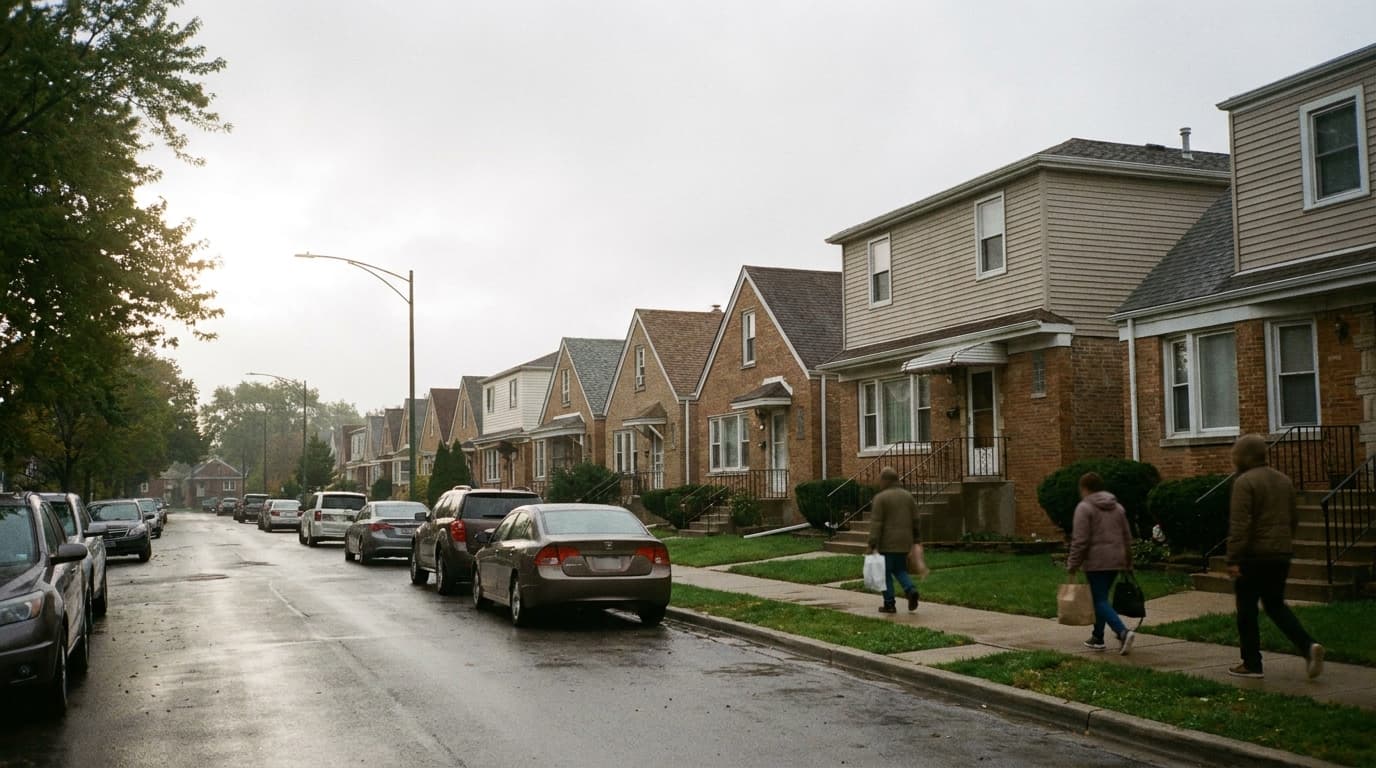
Georgia's statewide homestead exemption takes $2,000 off the 40% assessed value of an owner-occupied home for county and school taxes (O.C.G.A. 48-5-44). A second statewide exemption, created by HB 581 in 2024 and codified at O.C.G.A. 48-5-44.2, limits how fast a homestead's taxable value can grow. You apply with your county tax commissioner, and the deadline is April 1 for the current tax year. Other states' rules are in our guide to homestead exemptions by state.
Information last verified on October 7, 2026. This article has not been reviewed by a licensed lawyer.
Jurisdiction scope: This article covers Georgia's statewide property-tax homestead exemptions (O.C.G.A. 48-5-44 and 48-5-44.2, as amended by HB 581, HB 92 and SB 33), the 2026 Property Tax Relief Grant (HB 439), the statewide senior, disabled-veteran and surviving-spouse exemptions listed by the Georgia Department of Revenue, and, briefly, the bankruptcy homestead in O.C.G.A. 44-13-100(a)(1). It does not state county or city local exemption amounts, business or rental property rules, or other states' laws.
How much is the Georgia homestead exemption?
Georgia has two statewide homestead exemptions for owner-occupied homes, plus a one-year grant for 2026. The $2,000 standard exemption comes off the home's 40% assessed value, not its market value. The base-year exemption works differently: it removes the part of your assessed value that rises faster than inflation.

| Program | What it does | Taxes it reduces | Authority |
|---|---|---|---|
| Standard homestead exemption | $2,000 deducted from the 40% assessed value | County and school taxes, except school taxes levied by cities and taxes to pay bonded debt | O.C.G.A. 48-5-44 |
| Statewide base-year (floating) exemption, tax years 2025 and later | Exempts the increase in assessed value above the adjusted base-year value; the base can grow by no more than the prior year's inflation rate | State, county, city and school district taxes, except taxes to pay bonded debt | O.C.G.A. 48-5-44.2 (HB 581, 2024) |
| 2026 Property Tax Relief Grant, tax year 2026 | $18,000 reduction in the assessed value of qualifying homesteads | All millage rates except bond, certain special service district, and tax allocation district millage | HB 439 (2026) |
The state amounts are only the floor. The Georgia Department of Revenue explains that "in some counties they have increased the amounts of their homestead exemptions by local legislation above the amounts offered by the State," and that "as a general rule the exemptions offered by the county are more beneficial to the homeowner." Ask your county tax commissioner or tax assessor for every exemption available where you live.
The HB 581 floating homestead exemption
HB 581 (2024) created a statewide base-year homestead exemption in O.C.G.A. 48-5-44.2, effective for tax years beginning in 2025. The statute grants an exemption "in an amount equal to the amount by which the current year assessed value of that homestead, including any final determination of value on appeal pursuant to Code Section 48-5-311, exceeds its previous adjusted base year assessed value" (O.C.G.A. 48-5-44.2(b)(1)). The adjusted base can rise each year by no more than the prior year's inflation rate, plus the value of any substantial property change (O.C.G.A. 48-5-44.2(a)(2), as amended by SB 33).
In plain terms, the exemption limits growth in the taxable value of your homestead. It is not a freeze on your tax bill. For homes that first received the exemption in 2025, the base year is the 2024 assessed value; for later homes, it is the assessed value of the year before the exemption is first granted.
The exemption covers ad valorem taxes levied by or for the state, any county, consolidated government, city or local school district, "except for any ad valorem taxes levied to pay interest on and to retire bonded indebtedness" (HB 581). HB 92 (2025) limited the homestead for this exemption to "only the primary residence and not more than five contiguous acres of land immediately surrounding such residence."
If your county, city or school district already has its own base-year (valuation freeze) exemption, the two are not added together; the tax official applies whichever is "larger or more beneficial for the taxpayer" for that jurisdiction (O.C.G.A. 48-5-44.2(f)(2)).
Renewal and the base year
The base-year exemption renews on its own. The statute, as amended by SB 33 (2026), says it "shall be automatically renewed from year to year so long as the owner occupies the residence as a homestead." Owners who already had a homestead exemption when the program began were allowed the new exemption without a further application.
If you lose eligibility and later apply again, SB 33 recalculates your base year as if you were a new applicant. Tell the tax official if you no longer qualify.
Local opt-outs and SB 33
HB 581 let a county, city or school district opt out of the base-year exemption "through the adoption of a resolution to do the same by March 1, 2025." HB 92 (2025) then required jurisdictions that opted out, and had no other base-year exemption, to print a notice on tax bills saying they "chose to opt out of property tax relief for homeowners related to HB 581 (2024)."
SB 33, the 2026 act, amends O.C.G.A. 48-5-44.2 "by repealing subsections (h) and (i)," the provisions that allowed local opt-outs. The act says it takes effect upon the Governor's approval, but it does not name the first tax year the repeal reaches, and our research did not confirm that point. If your county, city or school district opted out, ask your tax commissioner whether the exemption applies on your 2026 bill or starts later.
Who is eligible for the Georgia homestead exemption?
You must own the home on January 1 of the tax year. The Department of Revenue states: "To receive the homestead exemption for the current tax year, the homeowner must have owned the property on January 1." The home must also be your legal residence and the place you actually live.

For the base-year exemption, the homestead is limited to your primary residence and up to five contiguous acres around it (HB 92). If you bought your home after January 1, the owner on that date is the one who could claim the exemption for that year, so plan to file for the following year.
How and when to apply
Apply with your county tax commissioner's office. The Department of Revenue notes that "in some counties the tax assessor's office has been delegated to receive applications for homestead exemption." The state application is Form LGS-Homestead, Application for Homestead Exemption, and many counties use their own version.
The deadline is April 1 for the current tax year. In the Department of Revenue's words, "Georgia law requires individuals to make an application for homestead between January 1 and April 1 to receive a homestead exemption for the current tax year." The base-year exemption is claimed and returned on the same timeline (O.C.G.A. 48-5-50.1, as referenced in SB 33).
There is limited room after April 1. Under O.C.G.A. 48-5-45(a)(1), as amended by HB 92 (2025), if the board of tax assessors reassesses your property, you may file the homestead application "in conjunction with or in lieu of an appeal of the reassessment." The Department of Revenue describes this as applying "up to the end of their 45-day window to appeal their notice of assessment." If your property was not reassessed, missing the deadline waives the exemption for that year (O.C.G.A. 48-5-45(a)(2)). The 2026 Property Tax Relief Grant, covered below, applies only to homesteads filed before the April 1 deadline.
The 2026 Property Tax Relief Grant ($18,000)
For 2026, Georgia is funding a Property Tax Relief Grant with $950 million appropriated to the Department of Revenue in the Amended Fiscal Year 2026 budget. The department says that money lets it "reduce the assessed value of Georgia homesteads by $18,000." The grant became law when the Governor signed HB 439 on May 12, 2026.
You do not apply for the grant separately. It "only applies to properties claimed as a homestead by a Georgia taxpayer filed prior to the April 1 deadline." It is shown as a reduction on your bill: "you will not receive a check in the mail or a payment via direct deposit."
The grant is not a homestead exemption, and it is tied to the 2026 budget. The Department of Revenue notes that an earlier grant program was created in the late 1990s and discontinued after the 2008 recession, so do not count on it repeating.
Senior homestead exemptions in Georgia
Georgia's statewide senior exemptions add to, or in one case replace, the standard exemption. Each has an income limit, so check your figures with the tax commissioner before you file.
| Exemption | Age | Amount | Income limit | Authority |
|---|---|---|---|---|
| Senior county-tax exemption | 65 or older | $4,000 off all county ad valorem taxes | Owner and spouse, $10,000 or less for the prior year | O.C.G.A. 48-5-47 |
| Senior school-tax exemption | 62 or older | Additional exemption from school taxes, up to $10,000 of assessed value | Owner and spouse, $10,000 or less for the prior year | O.C.G.A. 48-5-52 |
| Floating inflation-proof exemption | 62 or older | County exemption (except taxes for bonded debt) based on natural increases in value; benefits the owner if the appraised value has risen by more than $10,000 | Household income, $30,000 or less | O.C.G.A. 48-5-47.1 |
When counting income for the $10,000 limits, the Department of Revenue describes an exclusion for retirement, pension and disability income up to the maximum Social Security amount, which it lists as $96,432 for 2025. For 2026, the DeKalb County Tax Commissioner lists up to $49,824 for an individual or $99,648 for joint applicants. Ask your tax commissioner for the current figure.
The age-62 floating exemption counts the income of your spouse and anyone else living in the house. The Department of Revenue says it "does not affect any municipal or educational taxes and is meant to be used in the place of any other county homestead exemption."
For the age-65 exemption, "the owner must notify the county tax commissioner if for any reason they no longer meet the requirements for this exemption."
Owners 62 or older may also be able to defer, rather than be exempted from, homestead property taxes by filing an annual application by April 1 under O.C.G.A. 48-5-72. Deferred taxes remain owed, so ask your tax commissioner about the income limit and the terms before you apply.
Disabled veteran and surviving spouse exemptions
A qualifying disabled veteran who is a citizen and resident of Georgia is granted an exemption of "the greater of $32,500.00 or the maximum amount which may be granted to a disabled veteran under Section 2102 of Title 38" of the U.S. Code (O.C.G.A. 48-5-48). The Department of Revenue states that "the amount for 2025 is $121,812" and that value above the exemption "remains taxable." For 2026, the DeKalb County Tax Commissioner lists $126,526 for levies other than school taxes, which reflects the 3.87 percent federal increase for fiscal year 2026; confirm the figure with your county.
The Department of Revenue describes the veteran exemption as extending to an unremarried surviving spouse or minor children, and as covering state, county, city and school taxes. Ask your tax commissioner what proof of your disability rating to bring.
The unremarried surviving spouse of a peace officer or firefighter killed in the line of duty "will be granted a homestead exemption for the full value of the homestead for as long as the applicant occupies the residence as a homestead" (O.C.G.A. 48-5-48.4). The spouse stays eligible "as long as they do not remarry." The unremarried surviving spouse of a service member killed in, or who died as a result of, a war or armed conflict receives a homestead exemption from county, city and school taxes; the Department of Revenue lists the amount for 2025 as $121,812 (O.C.G.A. 48-5-52.1).
Moving, selling and mistaken exemptions
The base-year exemption does not follow you. HB 581 provides that "no exemption provided for in this subsection shall transfer to any subsequent owner of the property," and a new home starts with its own base year. File a new application for a new homestead.
If a homestead exemption was applied by mistake, SB 33 protects good-faith taxpayers. Where the board of assessors finds an exemption was improperly or mistakenly applied, and the taxpayer did not cause it through intentional misrepresentation or fraud, the tax official is "prohibited from retroactively assessing the taxpayer the difference" in taxes. That protection does not cover intentional misrepresentation or fraud. Our research did not locate the statute that sets penalties for a knowingly false claim, so this page does not state one.
Georgia's creditor and bankruptcy homestead (a separate law)
The property-tax exemption does not protect your home from creditors. A different statute, O.C.G.A. 44-13-100(a)(1), sets the homestead amount a debtor can keep in bankruptcy. HB 1024 (2026) raised it from $21,500 to $50,000, and from $43,000 to $100,000 where title is in one of two spouses who is a debtor and the home is the primary residence of both, effective July 1, 2026, as the U.S. Bankruptcy Court for the Middle District of Georgia reported. Starting July 1, 2031, both amounts adjust annually for inflation.
The exemption covers "the debtor's aggregate interest" in real or personal property that the debtor or a dependent "uses as a residence," in a cooperative that owns such property, or in a burial plot. It is a dollar cap with no acreage test. Georgia also has a separate exemption from levy outside bankruptcy (O.C.G.A. 44-13-1); our research could not confirm its current amount, so it is not stated here.
These caps are not a promise that any home is safe from a particular creditor. For how the homestead fits into a Chapter 7 or Chapter 13 case, see our Georgia bankruptcy guide.
After a homeowner dies
The base-year exemption continues for a surviving spouse who keeps occupying the home. Year's support and other protections for a surviving spouse and minor children are probate matters; see our Georgia probate guide.
Is anything on the November 2026 ballot?
No statewide homestead exemption measure is among Georgia's three proposed constitutional amendments for the November 3, 2026 general election. The Secretary of State's summaries list amendments on conservation-use acreage, nonpartisan election of probate judges, and a Next Generation 9-1-1 fund.
SB 33 also allows a Local Homestead Option Sales Tax (LHOST), levied no earlier than January 1, 2028, to fund an additional local homestead exemption; each requires approval in a local referendum, and the exemption takes effect January 1 of the year after that approval. Our research did not confirm which counties, if any, put an LHOST question on their November 2026 ballots.
Finding your county office and parcel record
Your county tax commissioner handles applications, and the county board of tax assessors decides eligibility and value. The Georgia Department of Revenue's Local Government Services division publishes the state form and guidance. To check how your property is recorded, see our Georgia property records guide.
Related
- Homestead exemptions by state
- Georgia bankruptcy guide
- Georgia probate guide
- Georgia property records
This article provides general legal information about Georgia property-tax homestead exemptions under O.C.G.A. Title 48, Chapter 5, and the bankruptcy homestead under O.C.G.A. 44-13-100, as verified on October 7, 2026. It is not tax or legal advice. For your situation, contact your county tax commissioner or tax assessor, the Georgia Department of Revenue, or a lawyer licensed in Georgia.
Last updated: October 7, 2026.
Frequently Asked Questions
How much is the homestead exemption in Georgia?
The statewide standard exemption is $2,000, deducted from the home's 40% assessed value, for county and school taxes (O.C.G.A. 48-5-44). The statewide base-year exemption under O.C.G.A. 48-5-44.2 also exempts assessed-value growth above the prior year's inflation rate, and many counties add larger local exemptions.
When is the deadline to file for homestead exemption in Georgia?
Apply between January 1 and April 1 to receive the exemption for the current tax year. If the board of tax assessors reassesses your property, you may file with, or instead of, an appeal of the reassessment, up to the end of the 45-day appeal window (O.C.G.A. 48-5-45(a)(1)). Otherwise, missing April 1 waives the exemption for that year.
Do I have to reapply for homestead exemption every year in Georgia?
The statewide base-year exemption under O.C.G.A. 48-5-44.2 renews automatically each year while you occupy the home. For the $2,000 exemption and any local exemption, confirm with your county tax commissioner, and tell the office if you stop qualifying.
What is the HB 581 homestead exemption in Georgia?
HB 581 (2024) created O.C.G.A. 48-5-44.2, a statewide exemption equal to the increase in a homestead's assessed value above its adjusted base-year value, which can grow each year by no more than the prior year's inflation rate. It covers state, county, city and school taxes except taxes for bonded debt.
What if my county opted out of the HB 581 exemption?
HB 581 let local governments opt out by resolution by March 1, 2025, and SB 33 (2026) repealed the opt-out provisions, subsections (h) and (i) of O.C.G.A. 48-5-44.2. Which tax year the repeal first reaches was not confirmed in our research, so ask your tax commissioner.
Is the 2026 Georgia property tax relief grant a check?
No. The grant reduces the assessed value of qualifying homesteads by $18,000 for 2026 and appears as a reduction on your property tax bill; the Department of Revenue says you will not receive a check or direct deposit. It applies only to homesteads filed before the April 1 deadline.
What homestead exemptions do seniors get in Georgia?
At 65, owners with prior-year income of $10,000 or less (with spouse) may claim $4,000 off county taxes (O.C.G.A. 48-5-47). From 62, there is a school-tax exemption of up to $10,000 of assessed value with the same income limit (48-5-52) and a county floating exemption for household income up to $30,000 (48-5-47.1).
Does the Georgia homestead exemption protect my house from creditors?
No, the property-tax exemption does not. A separate law, O.C.G.A. 44-13-100(a)(1), exempts up to $50,000 of a debtor's interest in a residence in bankruptcy, effective July 1, 2026, or $100,000 where title is in one of two spouses who is a debtor and the home is the primary residence of both.
Updates
Independently fact-checked against the cited primary sources
The Law Behind This Article
This article rests on the statutory provisions below, held in our own legal record and retrieved from the official source. Tap a section to read the operative text.
Official Code of Georgia Annotated
§ 48-5-44Exemption of homestead occupied by owner; effect of participation in rural housing program on homestead exemption; limits.In force
The homestead of each resident of this state actually occupied by the owner as a residence and homestead shall be exempted from all ad valorem taxation for state, county, and school purposes, except taxes levied by municipalities for school purposes and except to pay interest on and to retire…
Official text (excerpt) · last checked 2021-08-17 · Read the full text in our law library
§ 48-5-47Applications for homestead exemptions of individuals 65 or older.In force
(a) Article VII, Section II, Paragraph IV of the Constitution of the State of Georgia ratified in 1982 continued in effect as statutory law, until otherwise provided for by law, those types of exemptions from ad valorem taxation in effect on June 30, 1983.…
Official text (excerpt) · last checked 2021-08-17 · Read the full text in our law library
§ 48-5-47.1Homestead exemptions for individuals 62 or older with annual incomes not exceeding $30,000.00In force
(a) For purposes of this Code section, the term: (1) "Ad valorem taxes" means all state ad valorem taxes and all county ad valorem taxes for county purposes levied by, for, or on behalf of a county, except for taxes to pay interest on and to retire bonded indebtedness. (2) "Base year" means the…
Official text (excerpt) · last checked 2021-08-17 · Read the full text in our law library
§ 48-5-52Exemption from ad valorem taxation for educational purposes of homesteads of qualified individuals 62 or older; application; replacement of revenue.In force
(a) The homestead of each resident of each independent school district and of each county school district within this state who is 62 years of age or older and,for the purposes of all tax years beginning on or after January 1, 2003, whose net income together with the net income of the spouse who…
Official text (excerpt) · last checked 2021-08-17 · Read the full text in our law library
§ 48-5-48Homestead exemption by qualified disabled veteran; filing requirements; periodic substantiation of eligibility; persons eligible without application; retroactive award.In force
(a) As used in this Code section, the term "disabled veteran" means: (1) Any veteran who is a citizen and a resident of this state, who was discharged under honorable conditions, and who has been adjudicated by the United States Department of Veterans Affairs as having a service related disability…
Official text (excerpt) · last checked 2021-08-17 · Read the full text in our law library
Search our full record of US law — 2.1 million sections, every state + federal →
Sources and References
- Georgia Department of Revenue, Property Tax Homestead Exemptions(dor.georgia.gov).gov
- HB 581 (2024), signed legislation, Office of the Governor of Georgia(gov.georgia.gov).gov
- HB 92 (2025), signed legislation, Office of the Governor of Georgia(gov.georgia.gov).gov
- SB 33 (2026), signed legislation, Office of the Governor of Georgia(gov.georgia.gov).gov
- Georgia Department of Revenue, 2026 Property Tax Relief Grant(dor.georgia.gov).gov
- U.S. Bankruptcy Court, Middle District of Georgia, notice on the O.C.G.A. 44-13-100(a)(1) amendment(gamb.uscourts.gov).gov
- HB 1024 (2026), signed legislation, Office of the Governor of Georgia(gov.georgia.gov).gov
- Georgia Secretary of State, 2026 Proposed Constitutional Amendments summaries(sos.ga.gov).gov
- DeKalb County Tax Commissioner, 2026 Homestead Exemption Information(dekalbtaxga.gov).gov
- U.S. Department of Veterans Affairs, Specially Adapted Housing aggregate amounts for fiscal year 2026, Federal Register (Nov. 18, 2025)(govinfo.gov).gov
- Franklin County, Georgia, Exemptions (property tax deferral program)(franklincountyga.gov).gov