
New York
Common Law Marriage in New York: Is It Recognized? (2026)
Independently fact-checked against primary sources (last audited August 18, 2026). · Reviewed by the RecordingLaw editorial team. · Law checked current as of August 18, 2026. · 2 primary sources cited on this page. How we verify our legal content
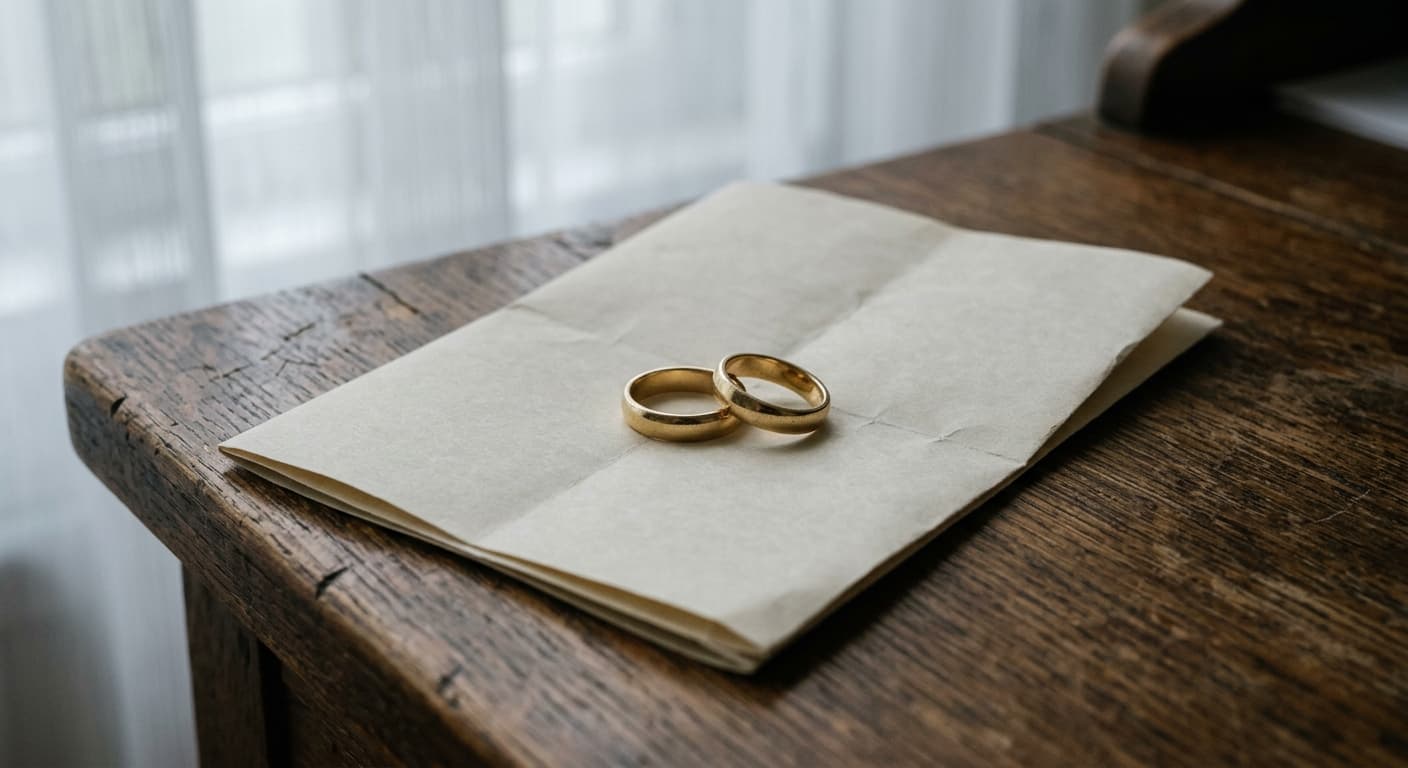
New York does not allow new common law marriages to be formed. New York abolished common law marriage formation effective April 29, 1933, under N.Y. Dom. Rel. Law Section 11, which requires every marriage formed in the state on or after that date to be solemnized in one of the formal ways the statute lists. However, New York courts have repeatedly recognized valid common law marriages formed in other states.
Information last verified on June 2, 2026.
Jurisdiction scope: This article addresses New York law on common law marriage under N.Y. Dom. Rel. Law Section 11 and related case law. It does not constitute legal advice. For a 50-state comparison, see Common Law Marriage by State.
Does New York Recognize Common Law Marriage?
New York does not permit couples to form a common law marriage within the state. N.Y. Dom. Rel. Law Section 11 provides that no marriage is valid unless it is solemnized in one of the ways the statute lists. Those routes include solemnization by a member of the clergy or a magistrate, and, under Section 11(4), a written contract of marriage signed by both parties and at least two witnesses and acknowledged before a judge of a New York court of record. Dom. Rel. Law Section 12 separately preserves the modes of solemnization traditionally used by Quakers and other denominations. Every one of those routes is a formal marriage created by a document or a ceremony; the statute makes no provision for an informal or common law alternative. A purported marriage formed in New York on or after April 29, 1933, without any of the forms of solemnization Section 11 requires is void from the outset.
The marriage license is a separate requirement from a separate statute, and it carries a different consequence. Dom. Rel. Law Section 13 requires all persons intending to marry in New York to obtain a marriage license from a town or city clerk. But Dom. Rel. Law Section 25 provides that "nothing in this article contained shall be construed to render void by reason of a failure to procure a marriage license any marriage solemnized between persons of full age." A marriage that was properly solemnized but never licensed is therefore not void in New York, even though the parties failed to meet the licensing requirement.
The 1933 abolition date means New York ended common law marriage formation more than 90 years ago. The change reflected the legislature's judgment that formal solemnization was necessary to create clear public records of marital status for inheritance, tax, and benefits administration. Before that date, New York courts recognized common law marriages formed within the state under the traditional requirements: legal capacity, a present mutual agreement to be married, cohabitation, and public acknowledgment of the marital relationship.
Despite the prohibition on formation, New York remains highly relevant to common law marriage disputes because its courts regularly evaluate whether a couple formed a valid common law marriage in another state before moving to New York. New York's choice-of-law rule is that a marriage valid where contracted is generally valid everywhere, a principle the New York Court of Appeals has applied since at least Van Voorhis v. Brintnall, 86 N.Y. 18 (1881).
The Abolition of Common Law Marriage in New York
Prior to April 29, 1933, New York courts recognized common law marriages formed within the state. A couple who had legal capacity, entered a present mutual agreement to be married (not merely to live together or to marry in the future), cohabited as husband and wife, and publicly represented themselves as married could acquire a valid marriage without a license or ceremony.

The New York Legislature enacted the current version of Dom. Rel. Law Section 11 to close this avenue. The statute has remained in effect without change in this respect since 1933. In Mott v. Duncan Petroleum Trans., 51 N.Y.2d 289 (1980), the New York Court of Appeals described it as long settled that New York does not itself recognize common law marriages, citing the 1933 statute and Dom. Rel. Law Section 11, and that a common law marriage contracted in another state will be recognized in New York if it is valid where contracted. The court sent a claimed Georgia common law marriage back for a fresh determination under Georgia law.
Individuals who believe they may have inherited rights traceable to a pre-1933 New York common law marriage face a practical difficulty: the passage of time means documentary evidence is scarce, and courts require clear proof of the required elements. The same four elements that governed pre-1933 recognition remain the standard of proof in any such proceeding.
Does New York Recognize a Common Law Marriage From Another State?
Yes. New York recognizes a valid common law marriage formed in another state, provided the couple met that state's formation requirements at the time the marriage was created. This recognition follows from New York's longstanding choice-of-law rule, rooted in comity and constitutional principles, that a marriage valid where contracted is valid in New York.
The New York courts have applied this rule across a wide variety of factual settings, including workers' compensation claims, estate disputes, divorce proceedings, and insurance coverage matters. A related but distinct New York rule also favors marriage validity: in Matter of Farraj, 72 A.D.3d 1082 (2d Dept. 2010), the Appellate Division held that a couple's religious wedding ceremony, performed without a marriage license, was valid because the couple's matrimonial domicile was New York and Dom. Rel. Law Section 25 does not void a solemnized marriage for failure to procure a license. That case addressed a solemnized ceremony lacking a license, not a common law marriage formed without any ceremony, but it reflects the same underlying policy of upholding marriages the parties reasonably believed were valid.
States where new common law marriages can currently be formed as of 2026 include Colorado, Iowa, Kansas, Montana, Oklahoma (contested but not repealed by statute), Rhode Island, Texas (which calls the relationship an informal marriage under Tex. Fam. Code Section 2.401), Utah (by judicial declaration under Utah Code Section 30-1-4.5), and the District of Columbia. A couple that established a valid common law marriage in any of those jurisdictions and later moved to New York carries a recognized legal marriage into the state.
This recognition has substantial practical consequences. New York's equitable distribution statute, Domestic Relations Law Section 236(B), governs the division of marital property upon divorce for all recognized marriages, including valid common law marriages from other states. Inheritance rights under New York's intestacy statutes (EPTL Article 4) and rights to workers' compensation survivor benefits also flow from recognized marital status.
How to Prove an Out-of-State Common Law Marriage in New York
Because a common law marriage is formed without a license or ceremony, proving one in New York requires evidence that the couple satisfied the formation requirements of the state where the marriage was created. New York courts apply the law of the state of formation to the threshold question of whether the marriage was valid, then apply New York law to the rights and obligations that flow from that marriage.
Evidence commonly considered in such proceedings includes:
- Joint federal and state income tax returns filed with the couple listed as married
- Joint bank accounts, investment accounts, or credit accounts in both names
- Deeds, leases, or mortgage documents identifying both parties as spouses
- Health insurance or life insurance policies naming the other person as a spouse or beneficiary in a spousal capacity
- Affidavits from family members, friends, coworkers, or clergy who knew the couple as husband and wife
- Correspondence, social media profiles, or public announcements in which the parties referred to each other as husband and wife
- A recorded declaration of informal marriage filed with a Texas county clerk under Tex. Fam. Code Section 2.401, if the marriage was formed in Texas
New York courts have emphasized that the central element of an out-of-state common law marriage is a mutual present agreement to be married, not merely an agreement to live together or to marry in the future. Proof of cohabitation and shared finances supports but does not independently satisfy that requirement. Cohabitation alone will not carry it, so ask a New York family lawyer in a free case evaluation which evidence can show a present agreement under the formation state's law (attorney advertising).
How a Common Law Marriage Ends in New York
A valid common law marriage, whether formed in New York before April 29, 1933, or formed in another state and recognized in New York, ends only through formal divorce or the death of a spouse. Separation, moving apart, or announcing that the relationship is over does not dissolve the marriage.

If a couple with a recognized common law marriage wishes to end their relationship in New York, they must commence a divorce action in a New York Supreme Court under Domestic Relations Law Article 10, just as any formally married couple would. New York adopted no-fault divorce in 2010, and a spouse may obtain a divorce on the ground that the marriage has been irretrievably broken for a period of at least six months under Dom. Rel. Law Section 170(7).
The seven-year myth: No state in the United States has ever required seven years of cohabitation to form a common law marriage, and no state dissolves a marriage automatically after seven years of separation. This figure circulates persistently but has no basis in the law of any jurisdiction, including New York. A recognized common law marriage is not automatically dissolved by any passage of time. It requires a divorce decree or the death of a spouse to terminate.
Property and Inheritance Rights From a Recognized Common Law Marriage in New York
Recognition of a valid out-of-state common law marriage in New York produces the same property and inheritance rights as any other valid marriage. New York's Domestic Relations Law Section 236(B) requires equitable distribution of marital property upon divorce, meaning that property acquired during the marriage is subject to division between the spouses regardless of which spouse holds title.
Under New York's Estates, Powers and Trusts Law (EPTL) Section 4-1.1, a surviving spouse is entitled to take an intestate share of the deceased spouse's estate when the deceased died without a valid will. A surviving spouse of a recognized common law marriage stands in the same position as the surviving spouse of a licensed marriage for purposes of this right. EPTL Section 5-1.1-A also grants a surviving spouse the right to elect against the deceased spouse's will and receive a minimum share of the estate, regardless of what the will provides.
Workers' compensation survivor benefits under New York Workers' Compensation Law Section 16 also flow to a surviving spouse, and New York courts have applied the out-of-state common law marriage recognition rule in workers' compensation proceedings to determine spousal status.
Legal disclaimer: This page provides general legal information about New York common law marriage law. It is not legal advice and does not create an attorney-client relationship. Common law marriage issues are fact-specific and can affect significant rights, including property, inheritance, divorce, and benefits. Consult a licensed New York family law attorney for advice on your particular situation. Information verified as of June 2, 2026.
Related New York Laws

Last updated: June 2, 2026.
More New York Laws
Frequently Asked Questions
Does New York recognize common law marriage?
New York does not allow new common law marriages to be formed within the state. N.Y. Dom. Rel. Law Section 11 abolished formation of new common law marriages effective April 29, 1933, requiring that any marriage formed in New York after that date be solemnized in one of the formal ways the statute lists. However, New York does recognize valid common law marriages formed in other states, applying the rule that a marriage valid where contracted is generally valid in New York.
When did New York abolish common law marriage?
New York abolished the formation of new common law marriages effective April 29, 1933, under N.Y. Dom. Rel. Law Section 11. That statute requires any marriage formed in New York on or after that date to be formally solemnized, either by a member of the clergy or a magistrate or by a written contract of marriage signed by the parties and at least two witnesses and acknowledged before a judge. A marriage license is required by a separate statute, Dom. Rel. Law Section 13, but Section 25 provides that a marriage solemnized between adults is not void merely because no license was obtained. Common law marriages formed in New York before April 29, 1933, remain valid.
Is a common law marriage from another state valid in New York?
Yes. New York recognizes a valid common law marriage formed in another state, provided the couple met that state's formation requirements at the time. New York courts have applied this rule in estate, divorce, workers' compensation, and insurance disputes. The New York Court of Appeals established this principle in Van Voorhis v. Brintnall, 86 N.Y. 18 (1881), and subsequent courts have applied it consistently.
How do you prove a common law marriage in New York?
You must show that the couple met the formation requirements of the state where the marriage was created. Evidence includes joint tax returns filed as married, joint bank or property accounts, insurance documents listing the other person as a spouse, affidavits from people who knew the couple as husband and wife, and any formal declaration filed in a state like Texas. New York courts focus especially on whether the parties entered a mutual present agreement to be married.
How long do you have to live together to be common law married in New York?
No set period of cohabitation creates a common law marriage in New York or in any state. New York has not allowed new common law marriages to form since April 29, 1933. In states that still allow common law marriage, such as Colorado or Texas, cohabitation is a required element but no minimum number of years is specified. The belief that seven years of living together creates a marriage is a myth with no basis in any state's law.
Is a New York marriage void if the couple never got a marriage license?
No, not for that reason alone. Dom. Rel. Law Section 13 requires a marriage license from a town or city clerk, but Dom. Rel. Law Section 25 states that nothing in the article renders void, by reason of a failure to procure a marriage license, any marriage solemnized between persons of full age. The New York Appellate Division applied that principle in Matter of Farraj, 72 A.D.3d 1082 (2d Dept. 2010), upholding a religious ceremony performed without a license. What makes a purported New York marriage void from the outset is the absence of solemnization in one of the forms Section 11 requires, which is why no common law marriage can be formed in the state.
How does a common law marriage end in New York?
A common law marriage that New York recognizes ends only through formal divorce or the death of a spouse. There is no common law divorce. The couple must commence a divorce action in New York Supreme Court under Domestic Relations Law Article 10. Since 2010, New York has allowed no-fault divorce on the ground that the marriage has been irretrievably broken for at least six months under Dom. Rel. Law Section 170(7). Simply separating or ceasing to live together does not end the marriage.
What property rights does a recognized common law marriage create in New York?
A recognized common law marriage creates the same property rights as a licensed marriage under New York law. Upon divorce, marital property is subject to equitable distribution under Dom. Rel. Law Section 236(B). Upon a spouse's death, the surviving spouse has intestate inheritance rights under EPTL Section 4-1.1 and the right to elect against the will under EPTL Section 5-1.1-A. Workers' compensation survivor benefits under Workers' Compensation Law Section 16 also flow to a recognized surviving spouse.
Updates
Corrected the description of Mott v. Duncan Petroleum Trans. to what the Court of Appeals actually said: New York does not itself recognize common law marriages, but recognizes one validly contracted in another state.
Corrected the statutory basis for New York marriage validity: Dom. Rel. Law Section 11 governs solemnization (including the written-contract route), the marriage license comes from Section 13, and Section 25 provides that a marriage solemnized between adults is not void merely because no license was obtained.
Corrected a mischaracterized case citation: Matter of Farraj concerns a solemnized wedding ceremony performed without a marriage license, not the recognition of an out-of-state common-law marriage, and its pinpoint citation was fixed. Also added Oklahoma and Utah to the list of states that currently allow new common-law marriages to form.
Independently fact-checked against the cited primary sources; governing law re-checked for recent changes
Governing law re-checked for recent changes
Reviewed and approved by an editor
The Law Behind This Article
This article rests on the statutory provisions below, held in our own legal record and retrieved from the official source. Tap a section to read the operative text.
New York Domestic Relations Law
§ 11By whom a marriage must be solemnizedIn forcecited in 2 of our articles
By whom a marriage must be solemnized. No marriage shall be valid unless solemnized by either: 1. A clergyman or minister of any religion, or by the senior leader, or any of the other leaders, of The Society for Ethical Culture in the city of New York, having its principal office in the borough of Manhattan, or by the leader of The Brooklyn Society for Ethical Culture, having its principal office in the borough of Brooklyn of the city of New York, or of the Westchester Ethical Society, having its principal office in Westchester county, or of the Ethical Culture Society of Long Island, having its principal office in Nassau county, or of the Riverdale-Yonkers Ethical Society having its principal office in Bronx county, or by the leader of any other Ethical Culture Society affiliated with the American Ethical Union; provided that no clergyman or minister as defined in section two of the religious corporations law, or Society for Ethical Culture leader shall be required to solemnize any marriage when acting in his or her capacity under this subdivision. 1-a.
Official text (excerpt) · last checked 2026-09-07 · Read the full text in our law library · Verify at legislation.nysenate.gov
Cited in 21 court opinions in our collectionLatest citing opinion in our collection: 2026
Opinions citing this section in our collection:
- Matter of Jacob (New York Court of Appeals 1995, 86 N.Y.2d 651)“…has long refused to recognize common-law marriages (see, Domestic Relations Law § 11). It also does not recognize or authori…”
- Persad v. Balram (New York Supreme Court 2001, 187 Misc. 2d 711)“…ange vows, they are married in the eyes of the law. (See, Domestic Relations Law §§ 11, 12, 25; Religious Corporations Law § 2…”
- Ponorovskaya v. Stecklow (New York Supreme Court 2014, 45 Misc. 3d 597)“…the requirements for how a marriage is to be solemnized. Domestic Relations Law § 11, entitled “By whom a marriage must be s…”
Identified automatically from the court opinions citing this section — not a ranking of which case controls.
Also relied on in: New York Marriage License Requirements 2026: Fee, Wait, Officiants
§ 236Special controlling provisions; prior actions or proceedings; new actions or proceedingsIn forcecited in 4 of our articles
Special controlling provisions; prior actions or proceedings; new actions or proceedings. Except as otherwise expressly provided in this section, the provisions of part A shall be controlling with respect to any action or proceeding commenced prior to the date on which the provisions of this section as amended become effective and the provisions of part B shall be controlling with respect to any action or proceeding commenced on or after such effective date. Any reference to this section or the provisions hereof in any action, proceeding, judgment, order, rule or agreement shall be deemed and construed to refer to either the provisions of part A or part B respectively and exclusively, determined as provided in this paragraph any inconsistent provision of law notwithstanding. PART A PRIOR ACTIONS OR PROCEEDINGS Alimony, temporary and permanent. 1. Alimony.
Official text (excerpt) · last checked 2026-09-07 · Read the full text in our law library · Verify at legislation.nysenate.gov
Cited in 2,889 court opinions in our collectionLatest citing opinion in our collection: 2026
Opinions citing this section in our collection:
- Matisoff v. Dobi (New York Court of Appeals 1997, 90 N.Y.2d 127)“…OPINION OF THE COURT Chief Judge Kaye. Domestic Relations Law § 236 (B) (3) states that a nuptial agreement…”
- Galetta v. Galetta (New York Court of Appeals 2013, 21 N.Y.3d 186)“…judgment declaring the agreement to be unenforceable under Domestic Relations Law § 236 (B) (3), we reverse the order of the Ap…”
- O'Brien v. O'Brien (New York Court of Appeals 1985, 66 N.Y.2d 576)“…is marital property subject to equitable distribution under Domestic Relations Law § 236 (B) (5). Supreme Court held that it was…”
Identified automatically from the court opinions citing this section — not a ranking of which case controls.
Also relied on in: Alimony by State: How Spousal Support Works (2026), New York Maintenance (Alimony) Laws: The Formula and Duration (2026), New York Prenuptial Agreement Laws: Requirements and Limits (2026)
§ 170Action for divorceIn forcecited in 2 of our articles
Action for divorce. An action for divorce may be maintained by a husband or wife to procure a judgment divorcing the parties and dissolving the marriage on any of the following grounds: (1) The cruel and inhuman treatment of the plaintiff by the defendant such that the conduct of the defendant so endangers the physical or mental well being of the plaintiff as renders it unsafe or improper for the plaintiff to cohabit with the defendant. (2) The abandonment of the plaintiff by the defendant for a period of one or more years. (3) The confinement of the defendant in prison for a period of three or more consecutive years after the marriage of plaintiff and defendant. (4) The commission of an act of adultery, provided that adultery for the purposes of articles ten, eleven, and eleven-A of this chapter, is hereby defined as the commission of an act of vaginal sexual contact, oral sexual contact or anal sexual contact, voluntarily performed by the defendant, with a person other than the plaintiff after the marriage of plaintiff and defendant.
Official text (excerpt) · last checked 2026-09-05 · Read the full text in our law library · Verify at legislation.nysenate.gov
Cited in 428 court opinions in our collectionLatest citing opinion in our collection: 2026
Opinions citing this section in our collection:
- Anglin v. Anglin (New York Court of Appeals 1992, 80 N.Y.2d 553)“…1989, the wife commenced an action for divorce, pursuant to Domestic Relations Law § 170 (5). The husband sought an order declar…”
- Hoffer-Adou v. Adou (Appellate Division of the Supreme Court of the State of New York 2014, 121 A.D.3d 618)“…ed to a judgment of divorce under the no-fault provision of Domestic Relations Law § 170 (7), since her statement under oath tha…”
- Rinzler v. Rinzler (Appellate Division of the Supreme Court of the State of New York 2012, 97 A.D.3d 215)“…ounds of cruel and inhuman treatment and abandonment (see Domestic Relations Law § 170 [1], [2]). Defendant answered and count…”
Identified automatically from the court opinions citing this section — not a ranking of which case controls.
Also relied on in: New York Divorce Laws (2026): Grounds, Residency, and Process
New York Estates, Powers and Trusts Law
§ 4-1.1Descent and distribution of a decedent's estateIn forcecited in 2 of our articles
Descent and distribution of a decedent's estate The property of a decedent not disposed of by will shall be distributed as provided in this section. In computing said distribution, debts, administration expenses and reasonable funeral expenses shall be deducted but all estate taxes shall be disregarded, except that nothing contained herein relieves a distributee from contributing to all such taxes the amounts apportioned against him or her under 2-1.8. Distribution shall then be as follows: (a) If a decedent is survived by: (1) A spouse and issue, fifty thousand dollars and one-half of the residue to the spouse, and the balance thereof to the issue by representation. (2) A spouse and no issue, the whole to the spouse. (3) Issue and no spouse, the whole to the issue, by representation. (4) One or both parents, and no spouse and no issue, the whole to the surviving parent or parents. (5) Issue of parents, and no spouse, issue or parent, the whole to the issue of the parents, by representation.
Official text (excerpt) · last checked 2026-09-06 · Read the full text in our law library · Verify at legislation.nysenate.gov
Also relied on in: New York Probate and Intestate Succession: What Happens Without a Will (2026)
New York Workers' Compensation Law
§ 16Death benefitsIn force
Death benefits. If the injury causes death, the compensation shall be known as a death benefit and shall be payable in the amount and to or for the benefit of the persons following: 1. Funeral expenses. The chair shall prepare and establish a schedule for the state or schedules limited to defined localities of maximum charges and fees for such funeral expenses, to be determined in accordance with, and to be subject to change pursuant to, rules promulgated by the chair. Before preparing such schedule for the state or schedules for limited localities, the chair shall request the president of the New York state funeral directors' association to submit to the chair a report on the amount of remuneration deemed by such association to be fair and adequate for the types of funeral services rendered under this chapter, but consideration shall also be given to the views of other interested parties. The amounts payable by the employer for such services shall be the actual fees and charges up to the maximum established by such schedule.
Official text (excerpt) · last checked 2026-07-29 · Read the full text in our law library · Verify at legislation.nysenate.gov
Cited in 6 court opinions in our collectionLatest citing opinion in our collection: 2025
Opinions citing this section in our collection:
- Matter of Ramirez v. Echevarria (Appellate Division of the Supreme Court of the State of New York 2023, 213 A.D.3d 1098)“…rm Fire & Cas. , 48 AD3d 76, 78 [3d Dept 2007], quoting Workers' Compensation Law § 16 [1-a] [2]). Excluded from the definitio…”
- Matter of Fierro-Switzer v. World Trade Ctr. Volunteer Fund (Appellate Division of the Supreme Court of the State of New York 2022, 172 N.Y.S.3d 174)“…ld not preclude her separate claim for death benefits under Workers' Compensation Law § 16. The Workers' Compensation Board affirm…”
- Matter of DiPaola v. McWane, Inc. (Appellate Division of the Supreme Court of the State of New York 2019, 2019 NY Slip Op 4257)“…period and therefore entitled to death benefits pursuant to Workers' Compensation Law § 16 (3-a). In 2012, decedent sustained f…”
Identified automatically from the court opinions citing this section — not a ranking of which case controls.
Search our full record of US law — 2.1 million sections, every state + federal →
Sources and References
- N.Y. Dom. Rel. Law Section 11 - Manner of solemnizing marriage(nysenate.gov)
- N.Y. Dom. Rel. Law Section 170 - Grounds for divorce(nysenate.gov)
- N.Y. Dom. Rel. Law Section 236(B) - Equitable distribution(nysenate.gov)
- EPTL Section 4-1.1 - Intestate succession(nysenate.gov)
- Common Law Marriage(law.cornell.edu)
- New York Estates, Powers and Trusts Law Section 5-1.1-A: Right of election by surviving spouse. New York State Legislature(nysenate.gov).gov
- New York Workers' Compensation Law Section 16: Death benefits. New York State Legislature(nysenate.gov).gov
- N.Y. Dom. Rel. Law Section 25 - License, when to be obtained (unlicensed marriage between persons of full age not void)(nysenate.gov)
- N.Y. Dom. Rel. Law Section 13 - Marriage licenses(nysenate.gov)
- N.Y. Dom. Rel. Law Section 12 - Marriage, how solemnized(nysenate.gov)
Paid attorney referral. RecordingLaw may receive compensation when you use an attorney-help link. RecordingLaw is not a law firm. Submitting a request does not guarantee that an attorney will accept your case and does not create an attorney-client relationship.