
Montana
Montana At-Will Employment Laws: The WDEA Good-Cause Standard
Independently fact-checked against primary sources (last audited August 20, 2026). · Reviewed by the RecordingLaw editorial team. · Law checked current as of August 20, 2026. · 10 primary sources cited on this page. How we verify our legal content
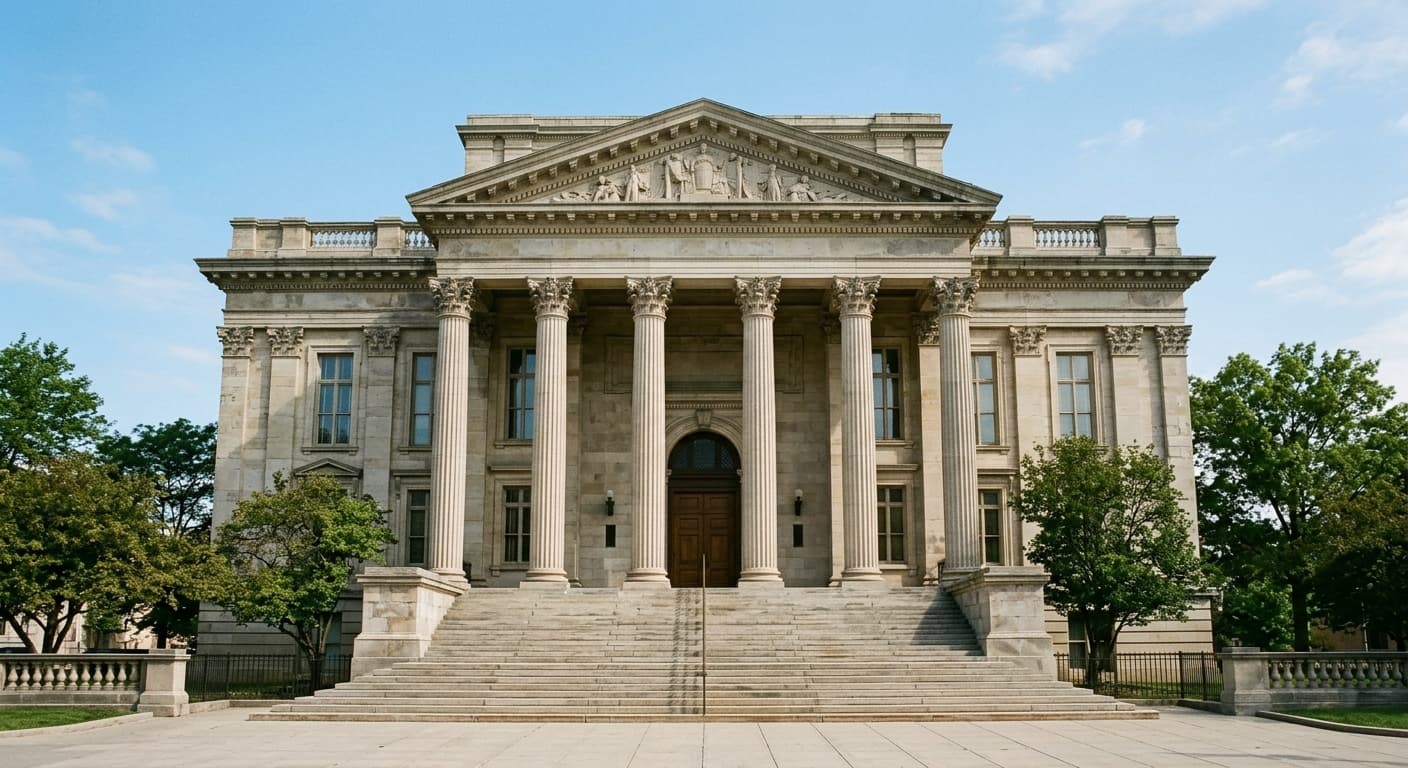
Montana is the only US state that is NOT an at-will employment state. Since 1987, the Wrongful Discharge from Employment Act (WDEA), Mont. Code Ann. sections 39-2-901 through 39-2-915, has replaced the at-will default with a good-cause standard for employees who have completed their probationary period.
Is Montana an at-will employment state?
No. Montana is the only US state that is not an at-will employment state. In 1987, the Montana Legislature enacted the Wrongful Discharge from Employment Act (WDEA), Mont. Code Ann. sections 39-2-901 through 39-2-915, fundamentally replacing the at-will doctrine for most private-sector employees. Under the WDEA, once an employee has completed the applicable probationary period, the employer may discharge that employee only for good cause. A discharge is wrongful if: (a) it was in retaliation for the employee's refusal to violate public policy or for reporting a violation of public policy; (b) it was not for good cause and the employee had completed the probationary period; (c) the employer materially violated an express provision of its own written personnel policy prior to the discharge and that violation deprived the employee of a fair and reasonable opportunity to remain in a position of employment; or (d) the employer terminated the employee solely based on the employee's legal expression of free speech, including statements made on social media (Mont. Code Ann. 39-2-904(1)).
The probationary period is critical. During probation, Montana employment is effectively at-will: the employer may discharge for any reason or no reason at all. The default probationary period is 12 months from hire, but employers may set a different period in writing. The statutory ceiling is 18 months (Mont. Code Ann. 39-2-910). Once that period ends, the good-cause protection kicks in automatically, without any further action by the employee.
"Good cause" under the WDEA is not merely any reason an employer might prefer. Section 39-2-903(5) defines it as reasonable job-related grounds based on the employee's failure to satisfactorily perform job duties, disruption of the employer's operations, the employee's material or repeated violation of an express provision of the employer's written policies, or other legitimate business reasons. The statute also carves out an important employee protection: an employee's lawful use of a legal product off the employer's premises during nonworking hours is not, by itself, a legitimate business reason for discharge, unless a specific statutory exception applies. Courts apply an objective test: was there a rational, job-related basis for the decision? A pretextual or arbitrary reason does not satisfy the standard.
The WDEA also has limits that decide whether you have a WDEA claim at all. Section 39-2-912 exempts two categories of worker outright: an employee covered by a written collective bargaining agreement, and an employee working under a written contract of employment for a specific term. It also exempts any discharge that is subject to any other state or federal statute providing a procedure or remedy for contesting the dispute, which the statute illustrates with discrimination statutes and statutes protecting complaints to a governmental agency. Where an exemption applies, the WDEA is not the route, and the contract, grievance procedure, or other statute that does apply is (Mont. Code Ann. 39-2-912).
How the WDEA Handles the Three Common-Law Exceptions
Most states recognize up to three common-law exceptions to at-will employment: the public-policy tort, the implied-contract doctrine, and the covenant of good faith and fair dealing. Montana is unique because the WDEA does not simply supplement those theories, it replaces them entirely.

Public-policy exception: subsumed by the WDEA. In most at-will states, courts recognize a tort claim when a discharge violates a clear public policy. Montana's WDEA codifies this protection directly: a discharge is wrongful if it is in retaliation for the employee's refusal to violate public policy or for reporting a violation of public policy (Mont. Code Ann. 39-2-904(1)(a)). Because the WDEA is the exclusive remedy, an employee cannot bypass it to bring a separate common-law public-policy tort. The protection exists, but it lives inside the statute, not alongside it.
Implied-contract exception: subsumed by the WDEA. In at-will states, a handbook termination procedure can create an implied contract. Montana's WDEA addresses this directly: a discharge is wrongful if the employer materially violated an express provision of its own written personnel policy prior to the discharge and that violation deprived the employee of a fair and reasonable opportunity to remain in a position of employment (Mont. Code Ann. 39-2-904(1)(c)). This is a statutory cause of action, not a contract theory. It means that a Montana employer who publishes a progressive-discipline policy and then ignores it has committed a wrongful discharge under the WDEA, regardless of whether a common-law contract would have been formed. As with the public-policy ground, the exclusive-remedy provision bars any parallel implied-contract claim.
Covenant of good faith and fair dealing: subsumed by the WDEA. A minority of US states recognize a covenant of good faith and fair dealing as a separate wrongful-discharge theory. The WDEA displaces this as well. After the WDEA's enactment, Montana courts held that the statute is the sole vehicle for wrongful-discharge claims, closing off the good-faith covenant as a standalone cause of action.
The 2023 legislature added a fourth ground: a discharge based solely on an employee's lawful expression of free speech, including statements made on personal social media, is now expressly wrongful under the WDEA. This is a notable expansion, reflecting Montana's ongoing statutory development of employee protections within the WDEA framework.
Is Montana a right-to-work state?
Montana is NOT a right-to-work state. In a right-to-work state, employees cannot be required to join a union or pay union dues as a condition of employment. Montana has not enacted such a law, meaning union-security agreements requiring dues or fee payments are not prohibited by state statute.
It is worth clarifying the distinction, because the two concepts are often confused. Right-to-work law is exclusively about union membership and dues: can your employer (or your collective-bargaining agreement) require you to financially support a union? At-will employment law is about the employment relationship itself: under what conditions can you be terminated? The two doctrines are entirely independent. As of 2026, there are 26 right-to-work states nationally, a count that dropped from 27 following Michigan's repeal of its right-to-work law, which took effect February 13, 2024 (2023 PA 8). Montana is not among the 26.
Union status does change which body of law protects a Montana worker. The WDEA does not apply to the discharge of an employee covered by a written collective bargaining agreement (Mont. Code Ann. 39-2-912(1)(b)). A union-represented employee's job-security protection comes from the just-cause language and the grievance-and-arbitration procedure in the CBA, not from the WDEA. The WDEA's statutory good-cause standard is what protects post-probationary employees who are not covered by a CBA or by a written contract for a specific term.
What the WDEA Does Not Allow
The WDEA's good-cause standard already provides significant protection, but federal law adds a separate floor that applies to every employer in Montana regardless of the WDEA.

Under Title VII of the Civil Rights Act of 1964, an employer may not discharge an employee because of race, color, religion, sex, or national origin. The Age Discrimination in Employment Act (ADEA) prohibits termination based on age for workers 40 and older. The Americans with Disabilities Act (ADA) protects qualified individuals with disabilities. The Genetic Information Nondiscrimination Act (GINA) bars termination based on genetic information. The Pregnant Workers Fairness Act (PWFA), effective 2023, protects employees who need reasonable accommodations related to pregnancy, childbirth, or related conditions. The Equal Pay Act prohibits wage-based sex discrimination.
Federal law also bars retaliation for protected activity. An employer cannot legally discharge an employee for taking leave under the Family and Medical Leave Act (FMLA), for reporting wage-and-hour violations under the Fair Labor Standards Act (FLSA), for engaging in concerted activity protected by the National Labor Relations Act (NLRA), for reporting workplace safety hazards under OSHA, or for military service or deployment under USERRA.
Montana's Human Rights Act (Mont. Code Ann. sections 49-2-101 et seq.) independently prohibits discrimination in employment based on race, color, national origin, creed, religion, age, physical or mental disability, sex, and marital status. It applies to employers with one or more employees in some circumstances and operates alongside, not inside, the WDEA.
Which of these tracks applies matters, because they do not simply run in parallel. The WDEA is the exclusive remedy for wrongful discharge except as provided in 39-2-912 (Mont. Code Ann. 39-2-902), and 39-2-912(1)(a) exempts from the WDEA any discharge that is subject to another state or federal statute providing a procedure or remedy for contesting the dispute, naming discrimination statutes as an example. In practice, a discharge contested as discrimination runs through the Montana Human Rights Bureau or the EEOC rather than as a WDEA claim alongside it. Which statute governs a particular termination is fact-specific and worth putting to an employment attorney before filing.
If You Were Fired in Montana
If you are a post-probationary employee who has been discharged in Montana, the relevant question is not whether your employer gave a reason, but whether the reason was sufficient to satisfy the good-cause standard or whether one of the WDEA's four wrongful-discharge grounds applies.

Start by reviewing any written personnel policy your employer maintains. If the employer had a progressive-discipline policy, a termination procedure, or any other written policy that was not followed, that is a potential WDEA claim under section 39-2-904(1)(c). Gather all documentation of your performance reviews, any written warnings, and communications around the time of your termination. If you raised a concern about illegal activity or refused to participate in it before you were fired, timing and context are critical.
The WDEA provides remedies of up to 4 years of lost wages and benefits, and punitive damages are available only for retaliation claims under section 39-2-904(1)(a), where the employer acted with actual fraud or actual malice (Mont. Code Ann. 39-2-905). The WDEA also provides an arbitration option, but it is voluntary and reciprocal rather than something an employer can impose through a handbook. Either party may make a written offer to arbitrate a dispute that could otherwise be litigated under the WDEA; once a complaint is filed, the offer must be made within 60 days after service of the complaint and accepted in writing within 30 days. Only when a valid offer is made and accepted does arbitration become the exclusive remedy, and a discharged employee who makes the accepted offer and prevails has the arbitrator's fee and the costs of arbitration paid by the employer (Mont. Code Ann. 39-2-914).
The WDEA has a one-year statute of limitations for filing a claim, and a step can come before the courthouse. If the employer maintains written internal appeal procedures, the employee must exhaust them first, and a failure to initiate or exhaust them is a defense the employer can raise against the action. The employer must notify a discharged employee of those procedures within 14 days; if it does not, the employee is not required to exhaust them. The one-year period is tolled while the internal procedures run, but they cannot extend it by more than 120 days, and if the employer has not completed them within 90 days of the date the employee initiated them, the employee may file suit (Mont. Code Ann. 39-2-911). Parallel federal discrimination claims have their own deadlines: a charge with the Equal Employment Opportunity Commission (EEOC) or the Montana Human Rights Bureau must typically be filed within 300 days of the adverse action. These deadlines are firm, so get a free case evaluation from a Montana employment lawyer on sequencing the appeal and the lawsuit (attorney advertising).
This article is general legal information, not legal advice. Employment law varies by state and changes frequently, and it is not a substitute for advice about a specific termination. For guidance on your situation, consult a licensed employment attorney in Montana.
Related: At-Will Employment by State | Whistleblower Protections
More Montana Laws
- Montana Employee Monitoring Laws
- Montana Final Paycheck Laws
- Montana Whistleblower Laws
- Montana Workers Compensation Laws
Frequently Asked Questions
Is Montana an at-will state?
No. Montana is the only US state that is not an at-will employment state. After the probationary period, an employer may only discharge an employee for good cause under the Wrongful Discharge from Employment Act (WDEA), Mont. Code Ann. 39-2-901 to 39-2-915.
Can I be fired for no reason in Montana?
Only during your probationary period, which defaults to 12 months but can be set differently by your employer (maximum 18 months under Mont. Code Ann. 39-2-910). Once probation ends, your employer must have good cause to discharge you. Good cause means reasonable job-related grounds, not an arbitrary or pretextual reason.
Is Montana a right-to-work state?
No. Montana has not enacted a right-to-work statute. Union-security agreements requiring employees to pay dues are not prohibited by Montana state law. As of 2026, there are 26 right-to-work states nationally; Montana is not among them.
Can my employer fire me for reporting illegal activity in Montana?
No. A discharge in retaliation for the employee's refusal to violate public policy or for reporting a violation of public policy is expressly wrongful under the WDEA (Mont. Code Ann. 39-2-904(1)(a)). Montana employees have statutory whistleblower protection built directly into the WDEA. See our guide to whistleblower protections for more detail.
Can my employer fire me for a social media post in Montana?
Not if the post was lawful expression of free speech. A 2023 amendment to the WDEA added that a discharge based solely on an employee's lawful expression of free speech, including on social media, is wrongful discharge. The key word is 'solely': if there is also a legitimate, good-cause reason for the termination, the claim is more complex.
Does my employee handbook protect me from being fired in Montana?
Yes, directly under the WDEA. A discharge that materially violates an express provision of the employer's written personnel policy, and deprives the employee of a fair and reasonable opportunity to remain in a position of employment, is a wrongful discharge under Mont. Code Ann. 39-2-904(1)(c). Unlike at-will states where this is a contract theory, in Montana it is a statutory right that does not require proving a binding contract was formed.
What remedies are available for wrongful discharge under Montana's WDEA?
The WDEA allows recovery of up to 4 years of lost wages and benefits. Punitive damages are available only for retaliation claims under Mont. Code Ann. 39-2-904(1)(a), where the employer acted with actual fraud or actual malice (Mont. Code Ann. 39-2-905); they are not available for good-cause-only or personnel-policy discharge claims. Arbitration is available only where one party makes a written offer to arbitrate under section 39-2-914 and the other accepts it; an employer cannot impose arbitration through a handbook policy. The claim must be filed within one year of the discharge, and where the employer maintains written internal appeal procedures the employee must exhaust them first (Mont. Code Ann. 39-2-911).
Updates
Corrected the statutory subsection cited for the public-policy retaliation ground, fixed the treatment of union-covered and contract employees under the WDEA exemptions in Mont. Code Ann. 39-2-912, corrected how WDEA arbitration and discrimination claims actually work, and added the mandatory internal-appeal exhaustion step that applies before a WDEA lawsuit.
Added the WDEA's full two-part test for the personnel-policy wrongful-discharge ground (a policy violation must also have deprived the employee of a fair and reasonable opportunity to remain employed) and the statute's fourth good-cause ground plus its off-duty lawful-product-use protection, both previously omitted; replaced a dead citation link for 2023 SB 270.
Independently fact-checked against the cited primary sources; governing law re-checked for recent changes
Governing law re-checked for recent changes
Reviewed and approved by an editor
The Law Behind This Article
This article rests on the statutory provisions below, held in our own legal record and retrieved from the official source. Tap a section to read the operative text.
Montana Code Annotated, Title 39
§ 39-2-904Elements Of Wrongful DischargeIn forcecited in 7 of our articles
39-2-904. Elements of wrongful discharge. (1) A discharge is wrongful only if: (a) it was in retaliation for the employee's refusal to violate public policy or for reporting a violation of public policy; (b) the discharge was not for good cause and the employee had completed the employer's probationary period of employment; (c) the employer materially violated an express provision of its own written personnel policy prior to the discharge, and the violation deprived the employee of a fair and reasonable opportunity to remain in a position of employment with the employer; or (d) the employer terminated the employee solely based on the employee's legal expression of free speech, including but not limited to statements made on social media. (2) During a probationary period of employment, the employment may be terminated at the will of either the employer or the employee on notice to the other for any reason or for no reason. (3) The employer has the broadest discretion when making a decision to discharge any managerial or supervisory employee.
Official text (excerpt) · last checked 2026-09-14 · Read the full text in our law library · Verify at mca.legmt.gov
Cited in 64 court opinions in our collectionLatest citing opinion in our collection: 2026
Opinions citing this section in our collection:
- Meech v. Hillhaven West, Inc. (Montana Supreme Court 1989, 238 Mont. 21)“…s may sue for discharges defined as wrongful under the Act. Section 39-2-904, MCA. Three causes of action for "wrongful"…”
- Clark v. Eagle Systems, Inc. (Montana Supreme Court 1996, 279 Mont. 279)“…able to perform his duties. Section 39-2-904, MCA, requires that…”
- Wadsworth v. State (Montana Supreme Court 1996, 275 Mont. 287)“…ng three elements of wrongful discharge. See 5 39-2-904, MCA. Section 39-2-904, MCA, states that…”
Identified automatically from the court opinions citing this section — not a ranking of which case controls.
Also relied on in: Montana Whistleblower Laws: Protections and How to Report, At-Will Employment by State: Exceptions and Your Rights (2026), Indiana At-Will Employment Laws: Exceptions and Your Rights
§ 39-2-903DefinitionsIn forcecited in 4 of our articles
39-2-903. Definitions. In this part, the following definitions apply: (1) "Constructive discharge" means the voluntary termination of employment by an employee because of a situation created by an act or omission of the employer which an objective, reasonable person would find so intolerable that voluntary termination is the only reasonable alternative. Constructive discharge does not mean voluntary termination because of an employer's refusal to promote the employee or improve wages, responsibilities, or other terms and conditions of employment. (2) "Discharge" includes a constructive discharge as defined in subsection (1) and any other termination of employment, including resignation, elimination of the job, layoff for lack of work, failure to recall or rehire, and any other cutback in the number of employees for a legitimate business reason. (3) "Employee" means a person who works for another for hire. The term does not include a person who is an independent contractor.
Official text (excerpt) · last checked 2026-07-29 · Read the full text in our law library · Verify at mca.legmt.gov
Cited in 18 court opinions in our collectionLatest citing opinion in our collection: 2024
Opinions citing this section in our collection:
- Clark v. Eagle Systems, Inc. (Montana Supreme Court 1996, 279 Mont. 279)“…onstructive discharge." Section 39-2-903, MCA,…”
- Meech v. Hillhaven West, Inc. (Montana Supreme Court 1989, 238 Mont. 21)“…ines "discharge" to include constructive discharge. Section 39-2-903, MCA. Covered employees may sue for disc…”
- Howard v. Conlin Furniture No. 2, Inc. (Montana Supreme Court 1995, 272 Mont. 433)“…was not for good cause. Good cause is defined as follows in § 39-2-903, MCA: (5) “Good cause” means reasonable jo…”
Identified automatically from the court opinions citing this section — not a ranking of which case controls.
Also relied on in: Montana Jury Duty Laws: Pay, Age 75 Excuse and Employer Rules, Montana Workplace Recording Laws: Employee Rights, Employer Monitoring, and the WDEA (2026)
§ 39-2-905RemediesIn forcecited in 7 of our articles
39-2-905. Remedies. (1) If an employer has committed a wrongful discharge, the employee may be awarded lost wages and fringe benefits for a period not to exceed 4 years from the date of discharge, together with interest on the lost wages and fringe benefits. The employee's interim earnings, derived from any new kind, nature, or type of work, hire, contractor status, or employment that did not exist at the time of discharge, including amounts the employee could have earned with reasonable diligence from the work, hire, contractor status, or employment, must be deducted from the amount awarded for lost wages. Before interim earnings are deducted from lost wages, there must be deducted from the interim earnings any reasonable amounts expended by the employee in searching for, obtaining, or relocating to new employment.
Official text (excerpt) · last checked 2026-07-29 · Read the full text in our law library · Verify at mca.legmt.gov
Cited in 19 court opinions in our collectionLatest citing opinion in our collection: 2020
Opinions citing this section in our collection:
- Meech v. Hillhaven West, Inc. (Montana Supreme Court 1989, 238 Mont. 21)“…ges, except as provided for in subsections (1) and (2) [of 8 39-2-905, MCA] ." Subsections (1) and (2) of S 3…”
- Nelson v. Livingston Rebuild Center, Inc. (Montana Supreme Court 1999, 294 Mont. 408)“…e in and commute from Chicago, were recoverable pursuant to § 39-2-905, MCA, as amounts necessary to obtain and rel…”
- Weber v. State (Montana Supreme Court 1992, 253 Mont. 148)“…trict Court regarding damages. The instruction was based on § 39-2-905, MCA, which provides in part that: (1) If…”
Identified automatically from the court opinions citing this section — not a ranking of which case controls.
Also relied on in: Jury Duty Laws by State (2026): Exemptions, Pay, Job Protection, Wrongful Termination in Montana (2026): Laws, Deadlines, How to File
§ 39-2-910Probationary PeriodIn forcecited in 2 of our articles
39-2-910. Probationary period. (1) If an employer does not establish a specific probationary period or provide that there is no probationary period prior to or at the time the employee begins work, there is a probationary period of 12 months commencing on the date the employee begins work. (2) An employer may extend a probationary period prior to the expiration of a probationary period, but the original probationary period together with any periods of extension may not exceed 18 months. (3) If an employee has one or more leaves of absence during the original probationary period or any extension of the probationary period, the time of each leave of absence may not be a part of the probationary period unless the employer affirmatively elects to include each leave of absence as part of the probationary period.
Official text (excerpt) · last checked 2026-07-29 · Read the full text in our law library · Verify at mca.legmt.gov
Cited in 1 court opinions in our collectionLatest citing opinion in our collection: 2026
Opinions citing this section in our collection:
- Pope v. DOC (Montana Supreme Court 2026, 2026 MT 94)“…389 Mont. 223, 410 P.3d 177 (citing § 39-2-904(2), MCA). Section 39-2-910, MCA, allows employers to define the length…”
Identified automatically from the court opinions citing this section — not a ranking of which case controls.
§ 39-2-911Limitation Of ActionsIn forcecited in 3 of our articles
39-2-911. Limitation of actions. (1) An action under this part must be filed within 1 year after the date of discharge. (2) If an employer maintains written internal procedures, other than those specified in 39-2-912, under which an employee may appeal a discharge within the organizational structure of the employer, the employee shall first exhaust those procedures prior to filing an action under this part. The employee's failure to initiate or exhaust available internal procedures is a defense to an action brought under this part. If the employer's internal procedures are not completed within 90 days from the date the employee initiates the internal procedures, the employee may file an action under this part and for purposes of this subsection the employer's internal procedures are considered exhausted. The limitation period in subsection (1) is tolled until the procedures are exhausted. In no case may the provisions of the employer's internal procedures extend the limitation period in subsection (1) more than 120 days.
Official text (excerpt) · last checked 2026-07-29 · Read the full text in our law library · Verify at mca.legmt.gov
Cited in 12 court opinions in our collectionLatest citing opinion in our collection: 2022
Opinions citing this section in our collection:
- Shepherd v. State (Montana Supreme Court 2021, 403 Mont. 425)“…Discharge from Employment Act (WDEA) was time-barred under § 39-2-911, MCA. The District Court granted DOC’s summ…”
- Eadus v. Wheatland Memorial Hospital & Nursing Home (Montana Supreme Court 1996, 279 Mont. 216)“…d raised the issue of whether Eadus' action was barred by § 39-2-911 , MCA, because Eadus failed to…”
- Meech v. Hillhaven West, Inc. (Montana Supreme Court 1989, 238 Mont. 21)“…diligence during that period. Since Section 6 of the Act [ S 39-2-911, MCA] limits suits to one year from the date…”
Identified automatically from the court opinions citing this section — not a ranking of which case controls.
§ 39-2-914ArbitrationIn forcecited in 2 of our articles
39-2-914. Arbitration. (1) A party may make a written offer to arbitrate a dispute that otherwise could be adjudicated under this part. (2) An offer to arbitrate must be in writing and contain the following provisions: (a) A neutral arbitrator must be selected by mutual agreement or, in the absence of agreement, as provided in 27-5-211. (b) The arbitration must be governed by the Uniform Arbitration Act, Title 27, chapter 5. If there is a conflict between the Uniform Arbitration Act and this part, this part applies. (c) The arbitrator is bound by this part. (3) If a complaint is filed under this part, the offer to arbitrate must be made within 60 days after service of the complaint and must be accepted in writing within 30 days after the date the offer is made. (4) A discharged employee who makes a valid offer to arbitrate that is accepted by the employer and who prevails in such arbitration is entitled to have the arbitrator's fee and all costs of arbitration paid by the employer.
Official text (excerpt) · last checked 2026-07-29 · Read the full text in our law library · Verify at mca.legmt.gov
Cited in 8 court opinions in our collectionLatest citing opinion in our collection: 2013
Opinions citing this section in our collection:
- May v. First National Pawn Brokers, Ltd. (Montana Supreme Court 1994, 269 Mont. 19)“…very. The Mays offered to arbitrate the dispute pursuant to § 39-2-914, MCA. FNP accepted. The parties stipulated t…”
- Burkhart v. Semitool, Inc. (Montana Supreme Court 2000, 300 Mont. 480)“…its answer and a demand for arbitration pursuant to § 39-2-914, MCA. Burkhart accepted Semitool's offer to…”
- Nelson v. Livingston Rebuild Center, Inc. (Montana Supreme Court 1999, 294 Mont. 408)“…n and agreement, then, and pursuant to the express terms of § 39-2-914, MCA, the provisions of the WDFEA are incorp…”
Identified automatically from the court opinions citing this section — not a ranking of which case controls.
§ 39-2-901Short TitleIn forcecited in 15 of our articles
39-2-901. Short title. This part may be cited as the "Wrongful Discharge From Employment Act".
Official text (excerpt) · last checked 2026-07-29 · Read the full text in our law library · Verify at mca.legmt.gov
Cited in 27 court opinions in our collectionLatest citing opinion in our collection: 2026
Opinions citing this section in our collection:
- Minnie v. City of Roundup (Montana Supreme Court 1993, 257 Mont. 429)“…s were liable for Joan Minnie's wrongful termination under 5 39-2-901, MCA, et. seq. Additionally, the complaint…”
- Boreen v. Christensen (Montana Supreme Court 1994, 267 Mont. 405)“…good faith and fair dealing and wrongful discharge under 1 5 39-2-901, MCA, et. seq. The district court…”
- Buck v. Billings Montana Chevrolet, Inc. (Montana Supreme Court 1991, 248 Mont. 276)“…under Montana’s Wrongful Discharge from Employment Act. See §§ 39-2-901, MCA, et seq. According to pertinent parts o…”
Identified automatically from the court opinions citing this section — not a ranking of which case controls.
Also relied on in: Montana Landlord-Tenant Recording Laws: Camera Rules, Privacy Rights, and Disputes (2026), Montana Phone Call Recording Laws: Warning Rules, Interstate Calls, and Penalties (2026), Montana Video Recording Laws: Consent Rules, Surveillance, and Penalties (2026)
§ 39-2-902PurposeIn force
39-2-902. Purpose. This part sets forth certain rights and remedies with respect to wrongful discharge. Except as provided in 39-2-912, this part provides the exclusive remedy for a wrongful discharge from employment.
Official text (excerpt) · last checked 2026-07-29 · Read the full text in our law library · Verify at mca.legmt.gov
Cited in 45 court opinions in our collectionLatest citing opinion in our collection: 2026
Opinions citing this section in our collection:
- Whidden v. John S. Nerison, Inc. (Montana Supreme Court 1999, 294 Mont. 346)“…but rather makes an exception for at-will employment under § 39-2-902, MCA. Section 39-2-902, MCA, provides in per…”
- Haynes v. Shodair Children's Hospital (Montana Supreme Court 2006, 332 Mont. 286)“…omprise the Wrongful Discharge from Employment Act (WDEA). Section 39-2-902, MCA, clearly states that the WDEA sets fort…”
- Meech v. Hillhaven West, Inc. (Montana Supreme Court 1989, 238 Mont. 21)“…ration of § 39-2-503, MCA, Montana’s “at-will” statute. See § 39-2-902, MCA. In place of the prior governing statut…”
Identified automatically from the court opinions citing this section — not a ranking of which case controls.
§ 39-2-912ExemptionsIn forcecited in 3 of our articles
39-2-912. Exemptions. (1) This part does not apply to a discharge: (a) that is subject to any other state or federal statute that provides a procedure or remedy for contesting the dispute. The statutes include those that prohibit discharge for filing complaints, charges, or claims with administrative bodies or that prohibit unlawful discrimination based on race, national origin, sex, as defined in 1-1-201, age, disability, creed, religion, political belief, color, marital status, and other similar grounds. (b) of an employee covered by a written collective bargaining agreement or a written contract of employment for a specific term. (2) For the purposes of this section, a contract for a specific term may contain a probationary period as provided for in 39-2-910 and may contain an automatic renewal clause that automatically renews the contract of employment for one or more successive terms.
Official text (excerpt) · last checked 2026-07-29 · Read the full text in our law library · Verify at mca.legmt.gov
Cited in 30 court opinions in our collectionLatest citing opinion in our collection: 2025
Opinions citing this section in our collection:
- Tonack v. Montana Bank of Billings (Montana Supreme Court 1993, 258 Mont. 247)“…usive remedy for a wrongful discharge from employment. Section 39-2-912, MCA, states: This part does not apply…”
- Basta v. Crago, Inc. (Montana Supreme Court 1996, 280 Mont. 408)“…empted from the requirements of the Wrongful Discharge Act. Section 39-2-912, MCA (1991). I disagree. When Basta actual…”
- Brown v. YELLOWSTONE CLUB OPERATIONS, LLC (Montana Supreme Court 2011, 361 Mont. 124)“…ves solely the application of Montana law and particularly § 39-2-912, MCA, decisions from other jurisdictions hav…”
Identified automatically from the court opinions citing this section — not a ranking of which case controls.
Search our full record of US law — 2.1 million sections, every state + federal →
Sources and References
- Wrongful Discharge from Employment Act, Mont. Code Ann. sections 39-2-901 to 39-2-915 (enacted 1987, amended 2023) — MCA Part 9 index(mca.legmt.gov).gov
- Mont. Code Ann. 39-2-903(5) — definition of good cause(mca.legmt.gov).gov
- Mont. Code Ann. 39-2-904 — elements of wrongful discharge (public policy, personnel policy, good cause, free speech/social media)(mca.legmt.gov).gov
- Mont. Code Ann. 39-2-905 — remedies (lost wages up to 4 years; punitive damages limited to 39-2-904(1)(a) retaliation claims with actual fraud or malice)(mca.legmt.gov).gov
- Mont. Code Ann. 39-2-910 — probationary period (12-month default, 18-month maximum)(mca.legmt.gov).gov
- Mont. Code Ann. 39-2-914 — arbitration option under the WDEA(mca.legmt.gov).gov
- 2023 Montana SB 270 (Ch. 361, L. 2023) — amended 39-2-904 to add the free speech/social media wrongful discharge ground, effective October 1, 2023; see the amendment history note on Mont. Code Ann. 39-2-904(mca.legmt.gov).gov
- Montana Human Rights Act, Mont. Code Ann. sections 49-2-101 et seq.(leg.mt.gov).gov
- EEOC — Laws Enforced by EEOC (Title VII, ADA, ADEA, GINA, PWFA, Equal Pay Act)(eeoc.gov).gov
- Montana Human Rights Bureau — filing a charge(erd.dli.mt.gov).gov
- Mont. Code Ann. 39-2-912 - WDEA exemptions (collective bargaining agreements, written contracts for a specific term, discharges covered by another state or federal statute)(mca.legmt.gov)
- Mont. Code Ann. 39-2-911 - one-year limitation period, mandatory exhaustion of the employer’s written internal appeal procedures, tolling and the 90/120-day rules(mca.legmt.gov)
- Mont. Code Ann. 39-2-902 - the WDEA is the exclusive remedy for wrongful discharge except as provided in 39-2-912(mca.legmt.gov)
Paid attorney referral. RecordingLaw may receive compensation when you use an attorney-help link. RecordingLaw is not a law firm. Submitting a request does not guarantee that an attorney will accept your case and does not create an attorney-client relationship.