
Delaware
Delaware AI Meeting Recording Laws (2026)
Independently fact-checked against primary sources (last audited August 28, 2026). · Reviewed by the RecordingLaw editorial team. · Law checked current as of August 16, 2026. · 8 primary sources cited on this page. How we verify our legal content
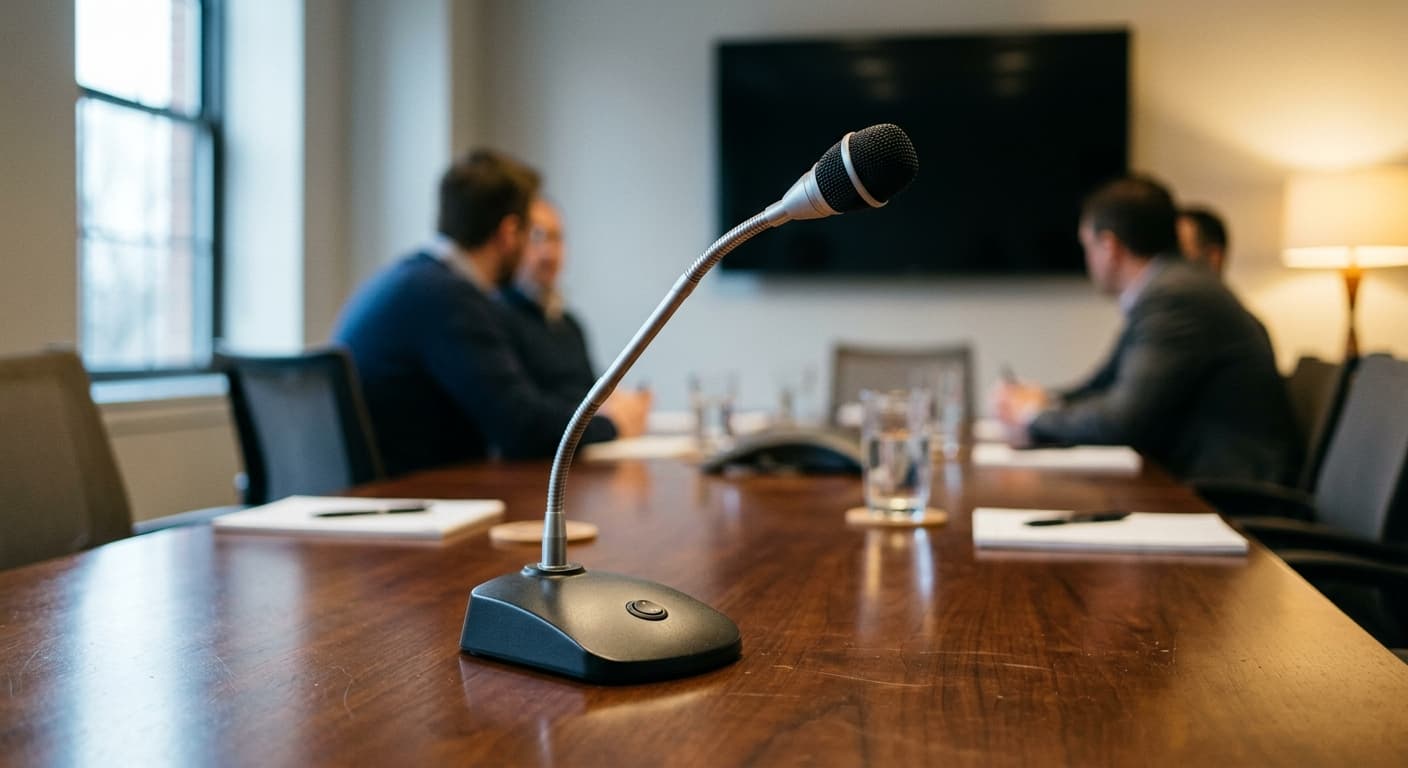
Delaware law requires treating AI meeting recordings as subject to all-party consent. The privacy statute, 11 Del. C. § 1335, prohibits recording a private communication without every participant's consent, and because no Delaware appellate court has resolved the conflict with the one-party consent wiretapping statute, obtaining consent from all participants before an AI recorder joins is the safest approach.
Delaware presents one of the most confusing recording law landscapes in the country. Two separate criminal statutes set contradictory consent standards, and no Delaware appellate court has definitively resolved the conflict. The wiretapping statute permits recording with one party's consent. The privacy statute demands consent from all parties. For anyone deploying AI meeting recorders like Otter.ai or Fireflies.ai, this ambiguity creates real legal exposure, and the only safe path is to treat Delaware as an all-party consent state.
The stakes are not trivial. Depending on which statute a prosecutor or plaintiff invokes, penalties range from a misdemeanor with up to one year in jail to a felony carrying five years of imprisonment and $10,000 in fines.
Delaware's Conflicting Consent Statutes
Delaware's recording laws are governed by two statutes that do not agree with each other.
The Wiretapping Statute: One-Party Consent (11 Del. C. § 2402)
Delaware Code Title 11, § 2402 prohibits the intentional interception of any wire, oral, or electronic communication. However, the statute carves out a critical exception: interception is lawful when "a person is a party to the communication or where one of the parties to the communication has given prior consent to the interception," provided the interception is not carried out for criminal or tortious purposes.
Under this statute alone, a person who records their own conversation (or has one participant's agreement) is acting lawfully. This is the standard one-party consent framework found in most states.
The Privacy Statute: All-Party Consent (11 Del. C. § 1335)
Delaware Code Title 11, § 1335 takes a different approach. This statute makes it a crime to intercept "without the consent of all parties thereto, a message by telephone, telegraph, letter or other means of communicating privately." The statute also prohibits installing any device in a private place for the purpose of overhearing or recording conversations without consent.
Under § 1335, recording a private conversation requires every participant's agreement. There is no one-party exception.
The Unresolved Conflict
No Delaware state appellate court has issued a definitive ruling on which statute controls when the two conflict. In United States v. Vespe (389 F. Supp. 1359, D. Del. 1975), a federal district court rejected a defendant's argument, based on a Pennsylvania decision, that § 1335 barred recording a call without the consent of both parties, observing that the drafters' commentary suggests they were attempting to emulate federal law, which does not prohibit recording with one party's consent; the court added that even if Delaware law had been violated, federal law governs admissibility in a federal trial. However, federal district court opinions are not binding on Delaware state courts, and the plain text of § 1335 clearly requires all-party consent.
Legal practitioners and compliance officers overwhelmingly recommend treating Delaware as an all-party consent jurisdiction. The risk of relying on a non-binding federal interpretation when the state statute's plain language says otherwise is significant.

How Delaware Law Applies to AI Meeting Recorders
The statutory conflict directly affects how AI meeting recording tools operate when Delaware participants are involved.
Virtual Meetings and the Privacy Statute
AI meeting recorders capture audio from virtual meetings conducted over internet-based platforms. These communications fall within the scope of both Delaware statutes. Under § 1335, intercepting a private message "by telephone... or other means of communicating privately" without all-party consent is prohibited. Video conferencing tools transmit audio through electronic means, making them subject to § 1335's all-party consent requirement.
The Account Holder Is Not "All Parties"
When a user enables an AI notetaker like Otter.ai on a Zoom call, the account holder has consented to the recording. Under § 2402's one-party framework, that might be sufficient. Under § 1335's all-party framework, every other participant must also consent. Since the legal landscape is unresolved, failing to obtain universal consent risks a § 1335 prosecution or civil claim.
Automated Recording Creates Higher Risk
AI tools that join meetings automatically based on calendar integration pose additional concerns. The Otter.ai class action (Brewer v. Otter.ai, Inc., N.D. Cal., No. 5:25-cv-06911) alleges the tool records conversations without meaningful consent from non-subscriber participants. In Delaware, where even the scope of required consent is disputed, automated recording without affirmative authorization from each participant amplifies the legal risk.
Data Transmission and AI Training
Several AI recording tools transmit meeting audio to external servers for transcription and, in some cases, use that data to train machine learning models. Under Delaware law, the interception occurs when the audio is captured, but the subsequent transmission and use of that data raises additional privacy concerns under the Delaware Personal Data Privacy Act.
Popular AI Meeting Tools and Delaware Compliance
Each major AI meeting recorder handles consent differently, and none provides a perfect solution for Delaware's ambiguous legal environment.
Otter.ai / OtterPilot
Otter's AI assistant can auto-join meetings and begin recording without per-meeting authorization from participants. Under Delaware's all-party consent reading, this practice likely violates § 1335. Users in Delaware should disable automatic joining and obtain explicit consent from every participant before activating Otter.
Zoom Native Recording
Zoom displays a notification that "this meeting is being recorded" and requires participants to acknowledge it before joining. This notification provides stronger consent documentation than tools that record silently, but whether a click-through acknowledgment constitutes "consent" under Delaware law remains untested.
Microsoft Teams / Copilot
Teams displays a recording indicator and announces when AI features like Copilot are active. These notifications offer transparency, but Delaware's privacy statute may require affirmative consent rather than passive awareness.
Fireflies.ai
Fireflies joins as a visible meeting participant but does not independently obtain consent from each attendee. Delaware users should supplement Fireflies' built-in notifications with their own verbal or written consent process.
Compliance Recommendations
For any AI meeting tool used with Delaware participants:
- Announce recording verbally at the start of each meeting and ask for explicit agreement from every participant
- Send a pre-meeting notice via email or calendar invitation stating the meeting will be recorded by an AI tool
- Document all consent through written records, verbal acknowledgments captured in the recording, or consent forms
- Disable auto-recording features to ensure consent is obtained before each individual meeting
- Provide a genuine opt-out so participants who object can attend without being recorded

Penalties for Violating Delaware Recording Laws
Delaware imposes a range of criminal and civil penalties depending on which statute is violated.
Criminal Penalties
| Statute | Classification | Imprisonment | Fine |
|---|---|---|---|
| § 1335 (Privacy) | Class A Misdemeanor | Up to 1 year | Up to $2,300 |
| § 1335(a)(6) (Hidden imaging) | Class G Felony | Up to 2 years | No fixed statutory cap |
| § 2402 (Wiretapping) | Class E Felony | Up to 5 years | Up to $10,000 |
The classification depends on which statute applies. A recording that violates the all-party consent requirement of § 1335 but complies with the one-party consent provision of § 2402 would face the misdemeanor penalty. A recording that violates both statutes (recording without any party's consent) faces the felony penalty.
Delaware's general felony sentencing statute (11 Del. C. § 4205) does not set a fixed maximum fine for felonies; the court "may impose such fines and penalties as it deems appropriate," so a § 1335(a)(6) Class G felony carries no statutory dollar cap. The $2,300 maximum applies only to the Class A misdemeanor under 11 Del. C. § 4206. The wiretapping statute (§ 2402) is the exception: it writes its own $10,000 cap directly into the text of subsection (b), rather than relying on the general felony provision.
Civil Penalties (§ 2409)
Delaware Code Title 11, § 2409 provides a private right of action for anyone whose communications are intercepted in violation of the wiretapping chapter. Victims may recover:
- Actual damages, but not less than liquidated damages of $100 per day of violation or $1,000, whichever is higher
- Punitive damages
- Attorney's fees and litigation costs
- Equitable relief including injunctions
The $1,000 statutory minimum applies to actual/liquidated damages, so even cases with minimal actual harm carry meaningful financial exposure. In a meeting with multiple unconsenting participants, each could bring a separate claim.
Evidence Suppression
Communications obtained in violation of Delaware's wiretapping laws are subject to suppression in legal proceedings. Under 11 Del. C. § 2407, any aggrieved person may move to suppress the contents of intercepted communications and evidence derived from them.
Employer and Workplace Considerations
Delaware employers face layered compliance requirements when deploying AI meeting recorders.
Employee Monitoring Notice (19 Del. C. § 705)
Delaware Code Title 19, § 705 requires employers to provide notice before monitoring employee telephone transmissions, electronic mail, or internet usage. Employers must either give written or electronic notice acknowledged by the employee, or provide an electronic notice at least once each day the employee accesses employer-provided email or internet services.
Violations carry a civil penalty of $100 per occurrence. This statute applies in addition to the recording consent requirements, meaning employers must provide monitoring notice and obtain recording consent as separate compliance steps.
Remote Workers
Delaware's recording laws apply based on where the participants are located. An employer headquartered outside Delaware cannot bypass these requirements when recording a meeting that includes Delaware-based employees. The all-party consent standard (under the safer § 1335 interpretation) applies to any recording involving a Delaware participant.

Delaware Personal Data Privacy Act (DPDPA)
The Delaware Personal Data Privacy Act, effective January 1, 2025, adds data privacy requirements for businesses that process the personal data of Delaware consumers. Key provisions affecting AI meeting recorders include:
- Opt-out right for profiling: Consumers can opt out of AI profiling and automated decision-making that produces legal or similarly significant effects
- Data protection assessments: Controllers processing data of 100,000 or more consumers must conduct regular data protection assessments for high-risk activities, including AI profiling
- Universal opt-out mechanisms: As of January 1, 2026, businesses must honor Global Privacy Control (GPC) signals as valid opt-out requests
- Full enforcement discretion: The mandatory 60-day cure period expired December 31, 2025; the Attorney General now has full enforcement discretion
AI meeting recording tools that collect, transcribe, and potentially use Delaware residents' voice data for model training must comply with these provisions. The right to opt out of profiling is particularly relevant for tools that analyze meeting participants' speech patterns or generate behavioral insights.
Federal Law Intersection
Federal One-Party Consent Standard
18 U.S.C. § 2511 establishes the federal baseline of one-party consent. Delaware's wiretapping statute (§ 2402) mirrors this standard. The privacy statute (§ 1335) exceeds it. When state law provides greater protection than federal law, the state standard applies. Because § 1335's all-party requirement is the safer interpretation, federal one-party consent does not shield AI meeting tool users from potential Delaware state liability.
Interstate Recordings
Multi-state meetings require compliance with the most restrictive jurisdiction involved. If one participant is in Delaware and another is in a one-party consent state, the all-party consent standard from § 1335 applies to protect the Delaware participant. AI meeting tools recording across state lines should default to all-party consent whenever a Delaware participant is present.
Evolving AI Case Law
The Otter.ai class action and the Ambriz v. Google "capability test" case represent the leading edge of applying traditional wiretapping laws to AI recording technology. While neither case arose in Delaware, their outcomes will likely influence how Delaware courts interpret §§ 1335 and 2402 in the AI context. The core question these cases address, whether AI tools that continuously listen to communications constitute "interception" under wiretapping statutes, has direct relevance to Delaware's conflicting statutory framework.
This article provides general legal information about Delaware recording laws as they apply to AI meeting tools. Delaware's recording statutes contain unresolved conflicts, and their application to AI technology is untested in state courts. Consult a Delaware-licensed attorney for advice specific to your situation.
More Delaware Laws
- Delaware Data Privacy Laws
- Delaware Deepfake Laws
- Delaware Employee Monitoring Laws
- Delaware Recording Laws
Frequently Asked Questions
Is Delaware a one-party or all-party consent state for recording?
Delaware has conflicting statutes. The wiretapping law (11 Del. C. § 2402) allows one-party consent, while the privacy law (11 Del. C. § 1335) requires all-party consent. No Delaware appellate court has resolved this conflict. Legal practitioners recommend treating Delaware as an all-party consent state to avoid liability under § 1335.
Can I legally use AI meeting recorders like Otter.ai in Delaware?
You can use AI meeting recorders, but you should obtain consent from all participants before recording. Under the safer interpretation of Delaware law (§ 1335), all-party consent is required. Relying on one-party consent under § 2402 carries legal risk because the statutory conflict remains unresolved.
What happens if I record a meeting without consent in Delaware?
Depending on the statute violated, you could face a Class A misdemeanor under § 1335 (up to 1 year jail, $2,300 fine) or a Class E felony under § 2402 (up to 5 years, $10,000 fine). Civil liability under § 2409 allows victims to recover actual damages of at least $1,000 per violation (or $100 per day of violation, whichever is higher), plus punitive damages and attorney's fees.
Does the Delaware Personal Data Privacy Act affect AI meeting recorders?
Yes. The DPDPA, effective January 1, 2025, gives Delaware consumers the right to opt out of AI profiling and automated decision-making. AI meeting tools that process voice data, generate transcriptions, or train models on meeting content must comply with the DPDPA's consumer rights provisions, data protection assessment requirements, and universal opt-out mechanisms.
Do Delaware recording laws apply if I am in another state but a participant is in Delaware?
Yes. Recording laws apply based on the location of the participants. If any meeting participant is in Delaware, the all-party consent standard under § 1335 applies to protect that participant. AI meeting tools should obtain consent from all participants whenever a Delaware-based person is on the call.
Updates
Corrected the description of United States v. Vespe to what the federal court actually said about Delaware's wiretap statute and the ground on which it admitted the recordings.
Independently fact-checked against the cited primary sources
Independently fact-checked against the cited primary sources; governing law re-checked for recent changes
Corrected which damages category 11 Del. C. § 2409's $1,000 statutory minimum applies to: it is a floor on actual/liquidated damages ($100/day or $1,000, whichever is higher), not on punitive damages as the article previously stated.
Governing law re-checked for recent changes
Corrected a factual error in the criminal-penalties table: the Class G felony under 11 Del. C. § 1335(a)(6) (hidden imaging) was incorrectly listed with a "$2,300" maximum fine, which is actually the Class A misdemeanor cap under 11 Del. C. § 4206. Delaware's general felony sentencing statute (11 Del. C. § 4205) sets no fixed maximum fine for felonies (the court may impose "such fines and penalties as it deems appropriate"), so the table and surrounding text now correctly note there is no statutory dollar cap. Confirmed the Class A misdemeanor ($2,300) and Class E wiretapping felony ($10,000, set directly by 11 Del. C. § 2402(b) itself) figures were already accurate and left them unchanged.
Reviewed and approved by an editor
The Law Behind This Article
This article rests on the statutory provisions below, held in our own legal record and retrieved from the official source. Tap a section to read the operative text.
Delaware Code, Title 11 (Crimes and Criminal Procedure), Chapter 024 (WIRETAPPING, ELECTRONIC SURVEILLANCE AND INTERCEPTION OF COMMUNICATIONS)
§ 2402Interception of communications generally; divulging contents of communications, violations of chapter.In forcecited in 20 of our articles
(a) Prohibited acts. — Except as specifically provided in this chapter or elsewhere in this Code no person shall: (1) Intentionally intercept, endeavor to intercept, or procure any other person to intercept or endeavor to intercept any wire, oral or electronic communication; (2) Intentionally disclose or endeavor to disclose to any other person the contents of any wire, oral or electronic communication, knowing or having reason to know that the information was obtained through the interception of a wire, oral or electronic communication in violation of this chapter; or (3) Intentionally use or endeavor to use the contents of any wire, oral or electronic communication, knowing or having reason to know that the information was obtained through the interception of a wire, oral or electronic communication in violation of this chapter. (b) Penalties for violation of subsection (a) of this section. — Any person who violates subsection (a) of this section shall be guilty of a class E felony and be fined not more than $10,000. (c) Lawful acts.
Official text (excerpt) · last checked 2026-08-28 · Read the full text in our law library · Verify at delcode.delaware.gov
Cited in 4 court opinions in our collectionLatest citing opinion in our collection: 2023
In the courts (editorial summary, independently checked):Dayton v. Collison (2020) applied 11 Del. C. 2402(a)(1), finding neighbors intercepted a homeowner's backyard conversations with a motion-activated video camera, an intrusion upon seclusion. State v. Hunt (2023) said in the alternative that police access to a consenting owner's phone, if an interception, was lawful under 2402(c)(3).
Opinions citing this section in our collection:
- Dayton v. Collison (Superior Court of Delaware 2020)✓Neighbors aimed a motion-activated audio and video camera at a man's backyard and recorded his conversations there; after trial the court found they intentionally intercepted oral communications in violation of section 2402(a), and that this was an intrusion on his seclusion.
- Everett v. State (Supreme Court of Delaware 2018, 186 A.3d 1224)“…d or a location was bugged, and a host of other details.”); 11 Del. C. § 2402(c)(3) (authorizing government wiretappi…”
- State v. Hunt (Superior Court of Delaware 2023)✓Police read and answered texts on a cooperating witness's phone with his permission; rejecting a postconviction claim, the court found no interception occurred and reasoned in the alternative that any interception in the drug investigation was lawful under section 2402(c)(3).
Identified automatically from the court opinions citing this section — not a ranking of which case controls.
Also relied on in: Delaware Recording Laws (2026): Two-Statute Consent Conflict, Delaware Landlord-Tenant Recording Laws: Surveillance, Privacy Rights, and Legal Limits (2026), Federal Wiretap Act and ECPA: The Complete Guide (2026)
§ 2409Civil liability; defense to civil or criminal action.In forcecited in 6 of our articles
(a) Civil liability. — Any person whose wire, oral or electronic communication is intercepted, disclosed or used in violation of this chapter shall have a civil cause of action against any person who intercepts, discloses, uses, or procures any other person to intercept, disclose or use the communications and be entitled to recover from any person: (1) Actual damages, but not less than liquidated damages computed at the rate of $100 a day for each day of violation or $1,000, whichever is higher; (2) Punitive damages; and, (3) A reasonable attorneys’ fee and other litigation costs reasonably incurred. (b) Defense. — A good faith reliance on a court order or legislative authorization shall constitute a complete defense to any civil or criminal action brought under this chapter or under any other law.
Official text (excerpt) · last checked 2026-07-29 · Read the full text in our law library · Verify at delcode.delaware.gov
Also relied on in: Delaware Security Camera Laws: Residential, Business, and HOA Rules (2026), Delaware Smart Glasses Recording Laws (2026)
Delaware Code, Title 11 (Crimes and Criminal Procedure), Chapter 005 (SPECIFIC OFFENSES)
§ 1335Violation of privacy; class A misdemeanor; class G felony.In forcecited in 21 of our articles
(a) A person is guilty of violation of privacy when, except as authorized by law, the person: (1) Trespasses on property intending to subject anyone to eavesdropping or other surveillance in a private place; or (2) Installs in any private place, without consent of the person or persons entitled to privacy there, any device for observing, photographing, recording, amplifying or broadcasting sounds or events in that place; or (3) Installs or uses outside a private place any device for hearing, recording, amplifying or broadcasting sounds originating in that place which would not ordinarily be audible or comprehensible outside, without the consent of the person or persons entitled to privacy there; or (4) Intercepts without the consent of all parties thereto a message by telephone, telegraph, letter or other means of communicating privately, including private conversation; or (5) Divulges without the consent of the sender and the receiver the existence or contents of any message by telephone, telegraph, letter or other means of communicating privately if the accused knows that the message was unlawfully intercepted or if the accused learned of the message in the course of…
Official text (excerpt) · last checked 2026-09-23 · Read the full text in our law library · Verify at delcode.delaware.gov
Cited in 15 court opinions in our collectionLatest citing opinion in our collection: 2026
In the courts (editorial summary, independently checked):State v. Pulgini (1976) held 11 Del. C. 1335 does not reach police acts covered by sections 1336 and 1431, so a police interception made with one party's consent was lawful. State of Delaware v. Steven Wu (2026) construed 1335(a)(9)(b) as protecting confidentiality from third parties regardless of whether the relationship has ended.
Opinions citing this section in our collection:
- State v. Pulgini (Superior Court of Delaware 1976, 366 A.2d 1198)✓Police recorded a call between the defendant and an informant with the informant's consent but no court order. The court held section 1335 does not apply to police acts covered by sections 1336 and 1431, and one-party consent made the interception lawful.
- State of Delaware v. Steven Wu (Delaware Court of Common Pleas 2026)✓Charged after leaving printed intimate photos from a past affair in the woman's shared mailbox, a man sought a pretrial ruling on section 1335(a)(9)(b). On uncontested facts, the court read beyond that relationship as disclosure outside the private relationship, ended or not.
- Duffy v. State (Supreme Court of Delaware 2019)“…er 2017, Duffy was indicted for Violation of Privacy under 11 Del. C. § 1335(a)(7). The charges arose from Duffy tak…”
Identified automatically from the court opinions citing this section — not a ranking of which case controls.
Also relied on in: Delaware GPS Tracking Laws: Is It Legal to Put a Tracker on a Car? (2026), Delaware Video Recording Laws: Consent Rules, Surveillance, and Penalties (2026), Delaware Phone Call Recording Laws: Consent Rules, Interstate Calls, and Penalties (2026)
Delaware Code, Title 11 (Crimes and Criminal Procedure), Chapter 042 (CLASSIFICATION OF OFFENSES; SENTENCES)
§ 4205Sentence for felonies.In forcecited in 6 of our articles
(a) A sentence of incarceration for a felony shall be a definite sentence. (b) The term of incarceration which the court may impose for a felony is fixed as follows: (1) For a class A felony not less than 15 years up to life imprisonment to be served at Level V except for conviction of first degree murder in which event § 4209 of this title shall apply. (2) For a class B felony not less than 2 years up to 25 years to be served at Level V. (3) For a class C felony up to 15 years to be served at Level V. (4) For a class D felony up to 8 years to be served at Level V. (5) For a class E felony up to 5 years to be served at Level V. (6) For a class F felony up to 3 years to be served at Level V. (7) For a class G felony up to 2 years to be served at Level V. (c) In the case of the conviction of any felony, the court shall impose a sentence of Level V incarceration where a minimum sentence is required by subsection (b) of this section and may impose a sentence of Level V incarceration up to the maximum stated in subsection (b) of this section for each class of felony.
Official text (excerpt) · last checked 2026-07-29 · Read the full text in our law library · Verify at delcode.delaware.gov
Cited in 188 court opinions in our collectionLatest citing opinion in our collection: 2026
Opinions citing this section in our collection:
- State v. Barnes (Supreme Court of Delaware 2015, 116 A.3d 883)“…isions.4 Most relevant to this appeal, the TIS Act amended 11 Del. C. § 4205 to state, “[n]o sentence to Level V inc…”
- Broomer v. State (Supreme Court of Delaware 2026)“…(providing that second-degree murder is a class A felony); 11 Del. C. § 4205(b)(1) (defining the sentencing range fo…”
- Wheeler v. State (Supreme Court of Delaware 2025)“…ear Level V sentence if the victim was sixty-two or older); 11 Del. C. § 4205(b)(2) (2018) (providing that the senten…”
Identified automatically from the court opinions citing this section — not a ranking of which case controls.
Also relied on in: Delaware Sexting Laws: Legal Consequences and Penalties, Delaware Hit and Run Laws, Delaware Age of Consent Laws: Statutes, Penalties and Reporting
Delaware Code, Title 19 (Labor), Chapter 007 (EMPLOYMENT PRACTICES)
§ 705Notice of monitoring of telephone transmissions, electronic mail and Internet usage.In forcecited in 12 of our articles
(a) As used in this section, “employer” includes any individual, corporation, partnership, firm or association with a place of business in Delaware and the State of Delaware or any agency or political subdivision thereof. (b) No employer, nor any agent or any representative of any employer, shall monitor or otherwise intercept any telephone conversation or transmission, electronic mail or transmission, or Internet access or usage of or by a Delaware employee unless the employer either: (1) Provides an electronic notice of such monitoring or intercepting policies or activities to the employee at least once during each day the employee accesses the employer-provided e-mail or Internet access services; or (2) Has first given a 1-time notice to the employee of such monitoring or intercepting activity or policies. The notice required by this paragraph shall be in writing, in an electronic record, or in another electronic form and acknowledged by the employee either in writing or electronically. The notice required by this subsection shall not apply to activities of any law-enforcement officer acting under the order of a court issued pursuant to Chapter 24 of Title 11.
Official text (excerpt) · last checked 2026-08-31 · Read the full text in our law library · Verify at delcode.delaware.gov
Cited in 1 court opinions in our collectionLatest citing opinion in our collection: 2013
Opinions citing this section in our collection:
- In re Information Management Services, Inc. Derivative Litigation (Court of Chancery of Delaware 2013, 81 A.3d 278)“…r (ii) obtain written consent from the monitored employees. 19 Del. C. § 705(b). Although the court need not reach t…”
Identified automatically from the court opinions citing this section — not a ranking of which case controls.
Also relied on in: Workplace Surveillance Camera Laws: Employee Guide, Security Camera Sign Laws by State: Notice Rules, Delaware Employee Monitoring Laws: Notice, GPS, and Privacy Rules (2026)
United States Code Title 18
§ 2511Interception and disclosure of wire, oral, or electronic communications prohibitedIn forcecited in 441 of our articles
Except as otherwise specifically provided in this chapter any person who— intentionally intercepts, endeavors to intercept, or procures any other person to intercept or endeavor to intercept, any wire, oral, or electronic communication; intentionally uses, endeavors to use, or procures any other person to use or endeavor to use any electronic, mechanical, or other device to intercept any oral communication when— such device is affixed to, or otherwise transmits a signal through, a wire, cable, or other like connection used in wire communication; or such device transmits communications by radio, or interferes with the transmission of such communication; or such person knows, or has reason to know, that such device or any component thereof has been sent through the mail or transported in interstate or foreign commerce; or such use or endeavor to use (A) takes place on the premises of any business or other commercial establishment the operations of which affect interstate or foreign commerce; or (B) obtains or is for the purpose of obtaining information relating to the operations of any business or other commercial establishment the operations of which affect interstate or foreign…
Official text (excerpt) · last checked 2026-09-17 · Read the full text in our law library · Verify at uscode.house.gov
Cited in 2,045 court opinions in our collectionLatest citing opinion in our collection: 2026
In the courts (editorial summary, independently checked):Griggs-Ryan v. Smith (1990) applied the Section 2511(2)(d) prior-consent exception, treating a tenant repeatedly told that all incoming calls were taped as having impliedly consented. United States v. United States District Court (1972) read the then-current Section 2511(3) as conferring no presidential surveillance power.
Opinions citing this section in our collection:
- Mitchell v. Forsyth (Supreme Court of the United States 1985, 472 U.S. 511)✓The Attorney General authorized a warrantless 1970 national security wiretap that caught the plaintiff's calls; the Court held the since-repealed Section 2511(3) disclaimer left the tap lawful under Title III, and that Mitchell had qualified immunity.
- United States v. United States District Court for the Eastern District of Michigan (Supreme Court of the United States 1972, 407 U.S. 297)✓The Attorney General approved warrantless wiretaps on members of a domestic group accused of bombing a CIA office; the Court read Section 2511(3) as a congressional disclaimer conferring no surveillance power, then held the Fourth Amendment required prior judicial approval.
- Forsyth v. Barr (Court of Appeals for the Fifth Circuit 1994, 19 F.3d 1527)✓Dallas police used, in an internal affairs probe of an officer, calls private parties allegedly intercepted illegally; assuming that was unlawful, the Fifth Circuit held Section 2517(1) and (2) allowed the disclosure and use, defeating the Section 2511(1)(c) and (d) claims.
Identified automatically from the court opinions citing this section — not a ranking of which case controls.
Also relied on in: Connecticut Recording Laws (2026): Hybrid Consent Rules Explained, Oregon Recording Laws (2026): Hybrid One-Party and All-Party Rules, US Recording Laws by State (2026): All 50 States Explained
Search our full record of US law — 2.1 million sections, every state + federal →
Sources and References
- 11 Del. C. § 2402 - Interception of communications generally(delcode.delaware.gov).gov
- 11 Del. C. § 1335 - Violation of privacy; class A misdemeanor; class G felony(delcode.delaware.gov).gov
- 11 Del. C. § 2409 - Civil liability for interception violations(delcode.delaware.gov).gov
- 19 Del. C. § 705 - Notice of monitoring of telephone transmissions(delcode.delaware.gov).gov
- Delaware Personal Data Privacy Act (Title 6, Chapter 12D)(delcode.delaware.gov).gov
- Delaware Attorney General - Personal Data Privacy Portal FAQ(attorneygeneral.delaware.gov).gov
- 18 U.S.C. § 2511 - Federal Wiretap Act(uscode.house.gov).gov
- Reporters Committee - Delaware Recording Guide(rcfp.org)
- Brewer v. Otter.ai - Class Action Complaint (N.D. Cal., No. 5:25-cv-06911)(npr.org)
- 11 Del. C. §§ 4205-4206 - Sentence for felonies; sentence for misdemeanors(delcode.delaware.gov).gov