
West Virginia
West Virginia Video Recording Laws: Privacy Rules and Consent
Independently fact-checked against primary sources (last audited August 15, 2026). · Reviewed by the RecordingLaw editorial team. · Law checked current as of August 15, 2026. · 5 primary sources cited on this page. How we verify our legal content
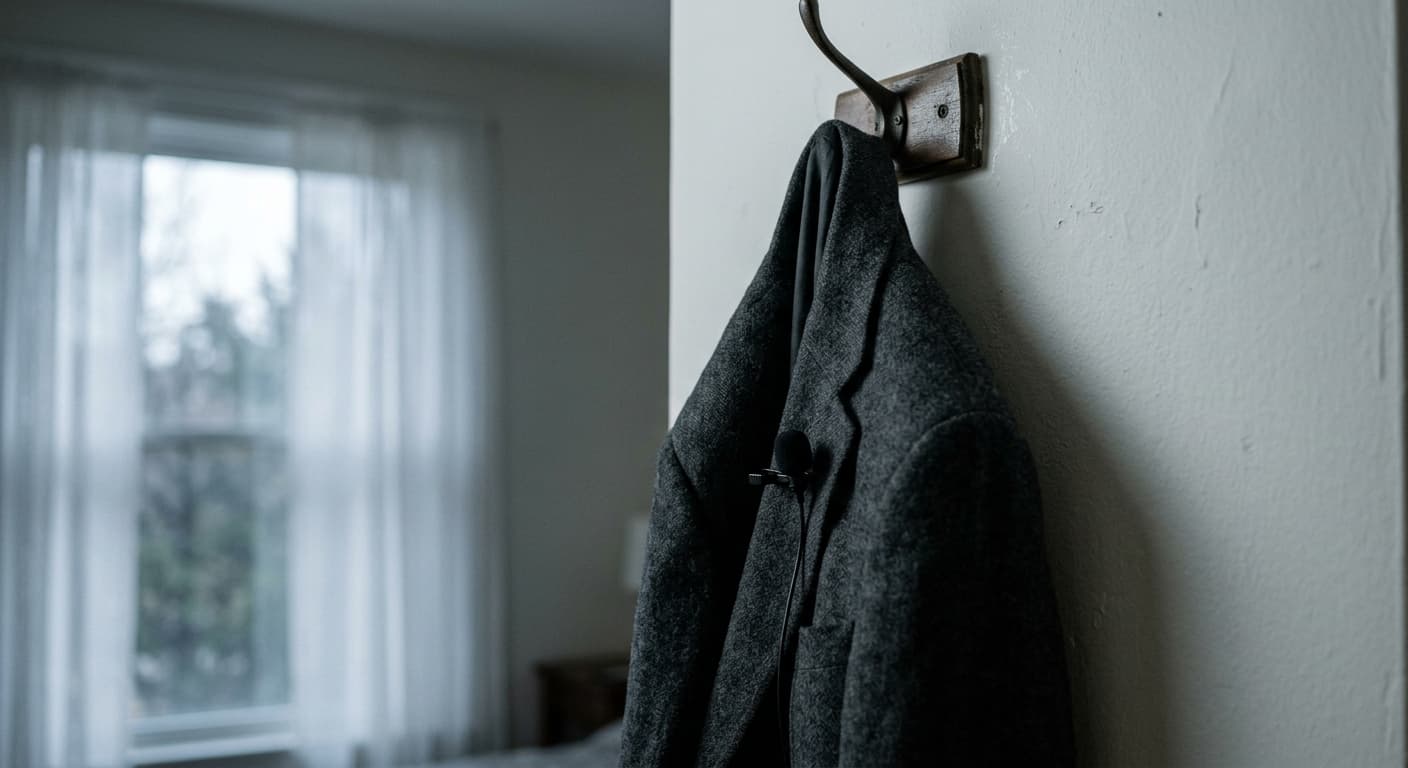
In West Virginia, video recording is legal wherever no reasonable expectation of privacy exists. Adding audio triggers the one-party consent rule under W. Va. Code 62-1D-3, meaning a participant in the conversation may record without notifying others. Recording someone who is fully or partially nude without consent in a place where they have a reasonable expectation of privacy violates W. Va. Code 61-8-28 and can result in criminal charges.
West Virginia's video recording laws involve a combination of the state's wiretapping statute, criminal privacy laws, and constitutional principles. Unlike audio recording, which is comprehensively addressed by W. Va. Code 62-1D-3, video recording occupies a more nuanced legal space. Pure video recording without audio does not fall under the wiretapping statute at all, since that law specifically addresses the interception of communications. However, video recording with audio triggers the one-party consent requirement, and recording in private settings can violate West Virginia's criminal invasion of privacy statute.
This guide covers every aspect of video recording law in West Virginia, including public vs. private recording, the role of audio in video, criminal privacy protections, recording on private property, drone and surveillance footage, and how video evidence is treated in court.
Video Recording in Public Spaces
The General Rule
West Virginia does not have a statute that broadly prohibits video recording in public spaces. You can generally record video in any location where you have a legal right to be and where there is no reasonable expectation of privacy. This includes:
- Public streets, sidewalks, and roadways
- Parks, plazas, and outdoor public areas
- Government buildings open to the public
- Retail stores and shopping areas (from public vantage points)
- Public transportation
- Public events, rallies, and demonstrations
- Tourist attractions and landmarks
The legal foundation for public video recording rests on the principle that people in public spaces have a diminished expectation of privacy. The First Amendment also provides broad protection for recording activities that serve as a form of documentation or expression.
Video Recording vs. Audio Recording in Public
An important distinction exists between video-only recording and video with audio:
| Recording Type | Legal Framework | Consent Required? |
|---|---|---|
| Video only (no audio) in public | No specific statute; generally permitted | No |
| Video with audio in public where no privacy expectation exists | Wiretapping statute applies to audio, but no privacy expectation means no "oral communication" | Generally no |
| Video with audio of a private conversation in public | Wiretapping statute applies to the audio component | Yes (one-party consent for audio) |
When your video camera captures audio of a private conversation, the audio portion is governed by W. Va. Code 62-1D-3. If you are a participant in that conversation, you have one-party consent. If you are not a participant and are capturing audio of someone else's private conversation, the recording may violate the wiretapping statute.
Recording Public Meetings and Government Proceedings
West Virginia's Open Governmental Proceedings Act, W. Va. Code 6-9A, explicitly protects the right to record public government meetings. Under W. Va. Code 6-9A-9, the public may bring video recording equipment into open meetings, and the governing body must accommodate its use. The governing body cannot declare that ordinary use of recording equipment constitutes undue interference with the meeting.
This right extends to:
- County commission meetings
- City and town council meetings
- School board meetings
- State legislative sessions
- Public hearings and comment periods
- Meetings of boards, commissions, and agencies
Video Recording on Private Property
Property Owner Rights
Private property owners in West Virginia have broad authority to control video recording on their premises. A property owner can:
- Prohibit all video recording on their property
- Allow recording in some areas but not others
- Require consent or permits before recording
- Post signs indicating recording policies
- Ask people who violate recording policies to leave
If you are asked to stop recording on private property and refuse, you may be subject to trespassing charges under West Virginia law.
Tenant Rights and Video Recording
Tenants have different rights than property visitors. As a tenant, you generally can:
- Install video cameras inside your own rental unit
- Record video in areas you exclusively control
- Use a doorbell camera at the entrance to your unit
However, tenants should review their lease agreements for any clauses restricting security cameras or recording devices. Landlords may have legitimate restrictions on exterior modifications or cameras that capture common areas used by other tenants.
Recording in Business Establishments
Businesses open to the public can record video of their customers and visitors in common areas. Virtually every retail store, bank, restaurant, and commercial building in West Virginia uses some form of video surveillance. These recordings are legal because:
- Customers in public-facing business areas have a reduced expectation of privacy
- The business has a legitimate interest in security and loss prevention
- Video-only surveillance does not trigger the wiretapping statute
However, businesses cannot record video in areas where customers have a reasonable expectation of privacy, such as restrooms, fitting rooms, or private consultation areas.
Criminal Invasion of Privacy (W. Va. Code 61-8-28)
What the Statute Prohibits
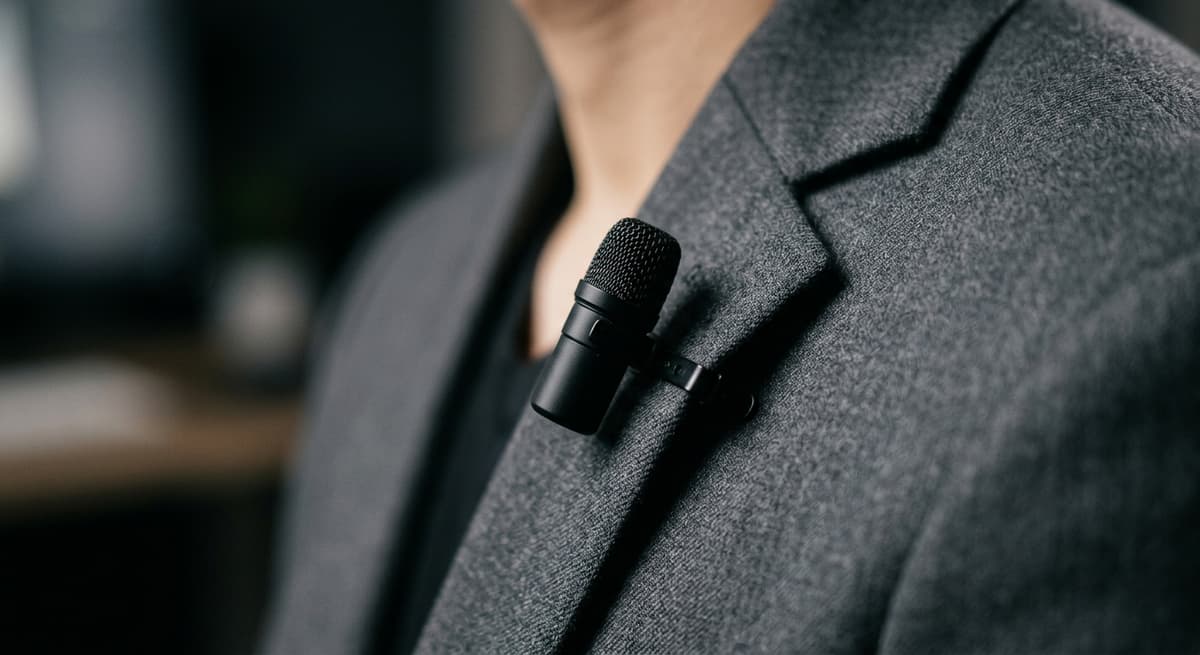
W. Va. Code 61-8-28 is West Virginia's primary statute addressing video recording privacy violations. It prohibits a person from knowingly visually portraying another person without that person's knowledge while that person is fully or partially nude and is in a place where they have a reasonable expectation of privacy.
The statute specifically targets:
- Recording someone who is fully or partially nude in a private setting
- Using a camera or recording device to view through someone's clothing
- Capturing images of someone fully or partially nude in bathrooms, locker rooms, changing rooms, or bedrooms
- Any visual recording of a fully or partially nude person in a location where they have a reasonable expectation of bodily privacy
Penalties
Criminal invasion of privacy under W. Va. Code 61-8-28 carries significant penalties:
| Offense | Classification | Penalty |
|---|---|---|
| First offense | Misdemeanor | Up to 1 year in jail, up to $5,000 fine |
| Second or subsequent offense | Felony | 1 to 5 years in prison, up to $10,000 fine |
Reasonable Expectation of Privacy
The concept of "reasonable expectation of privacy" is central to W. Va. Code 61-8-28. Courts evaluate this on a case-by-case basis, considering:
- The location where the recording occurred
- Whether the area was enclosed or open
- Whether the subject took steps to ensure privacy (closing a door, drawing curtains)
- Whether a reasonable person in the same situation would expect to be observed
- The social norms associated with the location
Areas that almost always carry a reasonable expectation of privacy include bathrooms, changing rooms, locker rooms, bedrooms, and medical examination rooms. Areas that typically do not include public sidewalks, retail floors, and open office spaces.
Nonconsensual Disclosure of Intimate Images (W. Va. Code 61-8-28a)

The Revenge Porn Law
W. Va. Code 61-8-28a addresses the nonconsensual disclosure of intimate images, commonly known as "revenge porn." This statute makes it illegal to knowingly and intentionally distribute intimate images of another person without their consent when:
- The person depicted had a reasonable expectation that the images would remain private
- The distribution was done with the intent to harass, intimidate, or embarrass
Penalties for Nonconsensual Disclosure
| Offense | Classification | Penalty |
|---|---|---|
| First offense | Misdemeanor | Up to 1 year in jail, fine of $1,000 to $5,000 |
| Second or subsequent offense | Felony | Up to 3 years state correctional facility, fine of $2,500 to $10,000 |
| Distribution of images of a minor | Felony | Subject to child pornography statutes |
Is There a Civil Remedy?
W. Va. Code § 61-8-28a is a criminal statute only. It does not create a civil cause of action, and it does not itself provide for damages, injunctive relief, or attorney fees. A victim of nonconsensual intimate image disclosure may still have a separate civil claim under West Virginia common-law privacy torts, such as intrusion upon seclusion or public disclosure of private facts, but any such claim exists apart from section 61-8-28a and should be evaluated with an attorney.
Drone Video Recording in West Virginia
Current Regulations
West Virginia does not have comprehensive state-level drone regulations, but drone operators must comply with Federal Aviation Administration (FAA) rules for unmanned aircraft systems. Key federal requirements include:
- Registration with the FAA for drones weighing more than 0.55 pounds
- Remote pilot certification for commercial drone operations
- Compliance with airspace restrictions and altitude limits
- Visual line-of-sight operation requirements
Privacy Implications of Drone Video
While West Virginia lacks drone-specific privacy laws, existing privacy statutes apply to drone-captured video:
- Recording video with a drone in a public space from a legal altitude is generally permitted
- Using a drone to capture video of someone who is fully or partially nude in a location with a reasonable expectation of privacy (such as a fenced backyard or through a window) could violate W. Va. Code 61-8-28
- Drone-captured audio of private conversations could violate the wiretapping statute if you are not a participant
- Persistent drone surveillance of a specific individual could support stalking or harassment charges
Local Ordinances
Some West Virginia municipalities may have local ordinances addressing drone operations. Always check local regulations before flying a drone in a new area.
Video Surveillance Systems
Home Security Cameras
West Virginia residents can install home security cameras on their own property. Best practices include:
- Pointing cameras at your own property, entrances, and driveways
- Avoiding cameras that capture excessive footage of a neighbor's private areas
- Ensuring audio recording features comply with one-party consent rules (if you are not present, audio should be disabled or you should post notice)
- Complying with any homeowners association (HOA) rules about exterior cameras
Doorbell Cameras
Doorbell cameras (such as Ring, Nest, or similar products) are legal in West Virginia. These devices typically record video and audio of the area immediately outside your door. Because you are the property owner and the camera captures public-facing areas, these recordings are generally lawful.
However, if the audio component captures private conversations between visitors who do not know they are being recorded, the wiretapping statute could come into play. Most doorbell cameras address this by displaying a visible indicator or sign that recording is in progress.
Workplace Video Surveillance
Employers in West Virginia can use video surveillance in common work areas where employees do not have a reasonable expectation of privacy. Appropriate locations include:
- Sales floors and customer-facing areas
- Warehouses and production areas
- Lobbies and reception areas
- Parking lots and building exteriors
Employers cannot install video cameras in:
- Bathrooms and restrooms
- Changing rooms and locker rooms
- Break rooms with closed doors (context-dependent)
- Private offices without notice
Video Evidence in West Virginia Courts
Admissibility Standards
Video recordings are generally admissible as evidence in West Virginia courts if they meet standard evidentiary requirements:
- Authentication: The proponent must demonstrate the video is what it claims to be
- Accuracy: The video must fairly and accurately depict the scene or events
- Relevance: The video must relate to a disputed issue in the case
- Integrity: The video must not have been altered, edited, or tampered with
Surveillance Footage
Security camera footage and surveillance video are commonly admitted in West Virginia courts for:
- Criminal prosecutions (robbery, assault, trespassing)
- Personal injury and slip-and-fall cases
- Workers' compensation claims
- Domestic relations cases
- Insurance fraud investigations
Authenticity Challenges
Opposing parties may challenge video evidence on several grounds:
- The video has been edited, cropped, or selectively presented
- The video quality is too poor to reliably identify individuals or events
- The timestamp or metadata has been altered
- The chain of custody is incomplete
- The video's prejudicial impact outweighs its probative value
Consent Forms for Video Recording
When You Need a Consent Form
If you are recording someone's likeness for commercial, educational, or publication purposes, you should obtain written consent through a photo or video consent form. Consent forms are recommended for:
- Commercial video productions
- Marketing and advertising materials
- Documentary filmmaking on private property
- Educational recordings
- Social media content featuring identifiable individuals
What a Consent Form Should Include
A proper video recording consent form should address:
- The scope and purpose of the recording
- How the footage will be used and distributed
- The duration of the consent
- Whether the subject can revoke consent
- Any compensation involved
- Rights to the recorded material
More West Virginia Recording Laws
Audio Recording | Video Recording | Voyeurism and Hidden Cameras | Workplace Recording | Recording Police | Phone Call Recording | Security Cameras | Recording in Public | Landlord-Tenant Recording | Dashcam Laws | School Recording | Medical Recording
Back to West Virginia Recording Laws
More West Virginia Recording Topics
More West Virginia Laws
Frequently Asked Questions
Is it legal to video record someone in public in West Virginia?
Yes. West Virginia has no general prohibition on video recording in public spaces. You can record video on public streets, in parks, at public events, and in other public areas. If your video captures audio of private conversations, the one-party consent rule under W. Va. Code 62-1D-3 applies to the audio portion.
Can I install security cameras on my property in West Virginia?
Yes. You can install security cameras on your own property. Point cameras at your own property and entrances, and avoid capturing excessive footage of neighbors' private areas. If cameras record audio, ensure compliance with one-party consent rules or post notice of audio recording.
What is criminal invasion of privacy in West Virginia?
Under W. Va. Code 61-8-28, it is illegal to knowingly visually portray someone without their knowledge while they are fully or partially nude and in a place where they have a reasonable expectation of privacy. First offense is a misdemeanor (up to 1 year jail, $5,000 fine). A second or subsequent offense is a felony (1 to 5 years in prison, up to $10,000 fine).
Can I fly a drone and record video in West Virginia?
Yes, subject to FAA regulations. You must register your drone, follow airspace rules, and comply with altitude restrictions. You cannot use a drone to record someone who is fully or partially nude in a location where they have a reasonable expectation of privacy, as this could violate W. Va. Code 61-8-28.
Can video recordings be used as evidence in West Virginia court?
Yes. Video recordings are admissible in West Virginia courts if they are authenticated, accurate, relevant, and have not been tampered with. Both security camera footage and personal video recordings are commonly admitted in criminal and civil cases.
Updates
Removed a fabricated civil-remedies list (damages, injunctive relief, attorney fees) that had been attributed to West Virginia's nonconsensual intimate image statute, which is criminal-only, and replaced it with an accurate statement.
Independently fact-checked against the cited primary sources; governing law re-checked for recent changes
Governing law re-checked for recent changes
Corrected three errors: W. Va. Code 61-8-28's nudity element was dropped in three places (making it sound like any private-area recording, not just recording a nude person, was criminal); a fabricated 'victim is a minor' felony enhancement (2-10 years, $25,000 fine) with no basis in the statute's text was removed from the penalty table and FAQ; and the public-meeting recording-equipment right was re-cited from W. Va. Code 6-9A-7 (a criminal-penalty provision) to the correct section, 6-9A-9.
Corrected the Drone Video Recording section, an FAQ answer, and the 'What the Statute Prohibits' bullet list to include W. Va. Code 61-8-28's required nudity element, which earlier restatements had dropped.
Governing law re-checked for recent changes
Reviewed and approved by an editor
The Law Behind This Article
This article rests on the statutory provisions below, held in our own legal record and retrieved from the official source. Tap a section to read the operative text.
West Virginia Code
§ 61-8-28Criminal invasion of privacy; penalties.In forcecited in 27 of our articles
(a) For the purposes of this section, the words or terms defined in this subsection have the meanings ascribed to them. These definitions are applicable unless a different meaning clearly appears from the context: (1) “A person fully or partially nude” means a male or female who is either clothed or unclothed so that: (A) All or any part of his or her genitals, pubic area or buttocks is visible; or (B) in the case of a female only, a part of a nipple of her breast is visible and is without a fully opaque covering; (2) “To visually portray” a person means to create a reproducible image of that person by means of: (A) A photograph; (B) A motion picture; (C) A video tape; (D) A digital recording; or (E) Any other mechanical or electronic recording process or device that can preserve, for later viewing, a visual image of a person; and (3) “Place where a reasonable person would have an expectation of privacy” means a place where a reasonable person would believe that he or she could, in privacy, be fully or partially nude without expecting that the act of exposing his or her body was being visually portrayed by another person.
Official text (excerpt) · last checked 2026-08-31 · Read the full text in our law library · Verify at code.wvlegislature.gov
Cited in 2 court opinions in our collectionLatest citing opinion in our collection: 2014
Opinions citing this section in our collection:
- Imaginary Images, Inc. v. Evans (Court of Appeals for the Fourth Circuit 2010, 612 F.3d 736)“…8 Pa. Cons. Stat. § 7507.1(e); Utah Code Ann. § 76-5a-2(6); W. Va. Code § 61-8-28(a)(1); Wis. Stat. § 942.08(1)(a). The m…”
- United States v. Thoms (U S Coast Guard Court of Criminal Appeals 2014)“…9-702.7 (West 2013); Vt. Stat. Ann. Tit. 13, § 2605 (2010); W. Va. Code § 61-8-28 (2000). 4 Ariz. Rev. Stat. Ann. § 13-…”
Identified automatically from the court opinions citing this section — not a ranking of which case controls.
Also relied on in: West Virginia Smart Glasses Recording Laws, West Virginia Audio Recording Laws: One-Party Consent Guide, West Virginia Landlord-Tenant Recording Laws: Rights and Rules
§ 6-9A-9Broadcasting or recording meetings.In forcecited in 5 of our articles
(a) Except as otherwise provided in this section, any radio or television station is entitled to broadcast all or any part of a meeting required to be open. (b) A public agency may regulate the placement and use of equipment necessary for broadcasting, photographing, filming or recording a meeting, so as to prevent undue interference with the meeting. The public agency shall allow the equipment to be placed within the meeting room in such a way as to permit its intended use, and the ordinary use of the equipment may not be declared to constitute undue interference: Provided, That if the public agency, in good faith, determines that the size of the meeting room is such that all the members of the public present and the equipment and personnel necessary for broadcasting, photographing, filming and tape-recording the meeting cannot be accommodated in the meeting room without unduly interfering with the meeting and an adequate alternative meeting room is not readily available, then the public agency, acting in good faith and consistent with the purposes of this article, may require the pooling of the equipment and the personnel operating it.
Official text (excerpt) · last checked 2026-07-30 · Read the full text in our law library · Verify at code.wvlegislature.gov
Also relied on in: West Virginia Laws on Recording in Public: What You Can and Cannot Do
§ 61-8-28ANonconsensual disclosure of private intimate images; definitions; and penalties.In forcecited in 15 of our articles
(a) As used in this section: (1) “Disclose” means to publish, publicly display, distribute, deliver, circulate or disseminate by any means, including, but not limited to, electronic transmission. (2) “Image” means a photograph, videotape, motion picture film, digital recording or any product of any mechanical or electronic recording process or device that can preserve, for later viewing, a visual image. (3) “Intimate parts” means a person’s genitalia, pubic area, anus, or female post-pubescent breasts. (4) To “publicly disclose” means to disclose an image to one or more persons other than those persons whom the person depicted understood would view the image at the time it was captured. (5) “Fabricated intimate image” means an image of an identifiable depicted individual that was created by the use of artificial intelligence or other computer technology capable of processing and interpreting specific data inputs and depicts computer-generated intimate parts or the intimate parts of another human being as the intimate parts of the depicted individual.
Official text (excerpt) · last checked 2026-08-30 · Read the full text in our law library · Verify at code.wvlegislature.gov
Also relied on in: West Virginia Voyeurism Laws: Hidden Cameras and Privacy Violations, West Virginia Recording Laws (2026): One-Party Consent Rules, West Virginia Deepfake Laws: AI Images, Voice Cloning & Penalties (2026)
§ 62-1D-3Interception of communications generally.In forcecited in 36 of our articles
(a) Except as otherwise specifically provided in this article it is unlawful for any person to: (1) Intentionally intercept, attempt to intercept or procure any other person to intercept or attempt to intercept, any wire, oral or electronic communication; or (2) Intentionally disclose or intentionally attempt to disclose to any other person the contents of any wire, oral or electronic communication, knowing or having reason to know that the information was obtained through the interception of a wire, oral or electronic communication in violation of this article; and (3) Intentionally use or disclose or intentionally attempt to use or disclose the contents of any wire, oral or electronic communication or the identity of any party thereto, knowing or having reason to know that such information was obtained through the interception of a wire, oral or electronic communication in violation of this article. (b) Any person who violates subsection (a) of this section is guilty of a felony and, upon conviction thereof, shall be imprisoned in the penitentiary for not more than five years or fined not more than $10,000 or both fined and imprisoned.
Official text (excerpt) · last checked 2026-08-31 · Read the full text in our law library · Verify at code.wvlegislature.gov
Cited in 1 court opinions in our collectionLatest citing opinion in our collection: 1999
Opinions citing this section in our collection:
- Bartnicki v. Vopper (Court of Appeals for the Third Circuit 1999, 200 F.3d 109)“…77 -23a-4, 77-23a-11; Va. Code Ann. §§ 19.2-62 , 19.2-69; W. Va.Code §§ 62-1D-3, 62-1D-12; Wis. Stat. § 968.31 ; Wyo.…”
Identified automatically from the court opinions citing this section — not a ranking of which case controls.
Also relied on in: West Virginia Security Camera Laws: Rules for Homes and Businesses, West Virginia Dashcam Laws: Legality, Mounting, and Evidence Rules, West Virginia Medical Recording Laws: Patient Rights and HIPAA Guide
Search our full record of US law — 2.1 million sections, every state + federal →
Sources and References
- W. Va. Code 62-1D-3 - Interception of Communications(code.wvlegislature.gov).gov
- W. Va. Code 61-8-28 - Criminal Invasion of Privacy(code.wvlegislature.gov).gov
- W. Va. Code 61-8-28a - Nonconsensual Disclosure of Intimate Images(code.wvlegislature.gov).gov
- W. Va. Code 6-9A-9 - Recording of Open Meetings(code.wvlegislature.gov).gov
- FAA - Unmanned Aircraft Systems(faa.gov).gov