California Court: 'Could Have Been Raised' Arbitration Clause Unconscionable
Independently fact-checked against primary sources (last audited November 23, 2026). · 3 primary sources cited on this page. How we verify our legal content
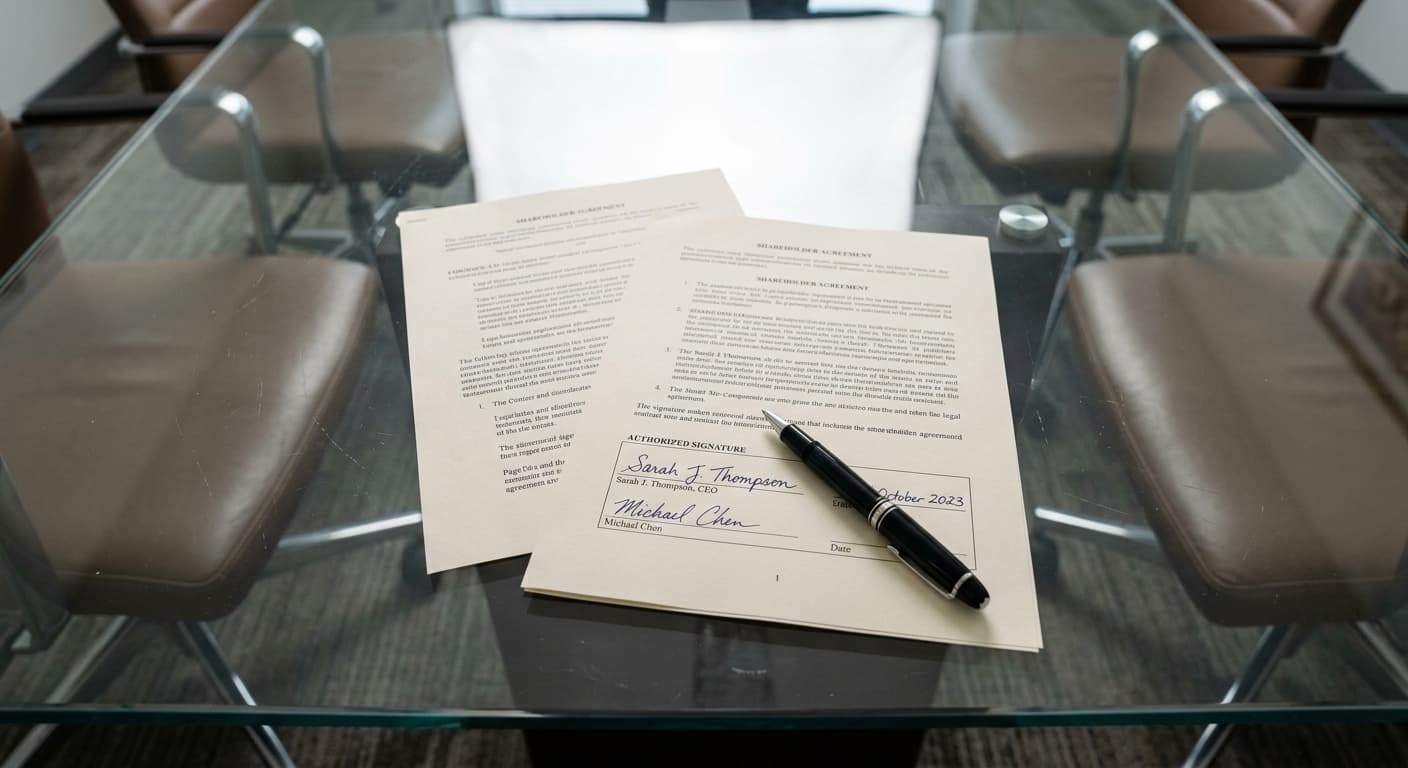
A California appeals court has refused to enforce a staffing agency's employment arbitration agreement, and the holding it published turns on four words. A clause making the arbitrator's award binding as to claims that "could have been raised" is unconscionable, the Second District held, because it reaches distinct legal injuries.
Information last verified on November 23, 2026. This is a developing story; we update it as the record changes.
Status: Castillo Zamora v. Art's Labor Service, No. B345212, was filed November 19, 2026. The first page carries both "Filed 11/19/26" and "CERTIFIED FOR PUBLICATION," the form used when an opinion is published on filing, and we found no separate later certification order. The Court of Appeal affirmed the Ventura County Superior Court's order denying the employers' motion to compel arbitration and awarded the employee her costs on appeal. California's online appellate docket was not reachable from our research environment on November 23, 2026, so the posture stated here is the posture shown in the opinion itself.
Jurisdiction scope: California only. This is a decision of the California Court of Appeal, Second Appellate District, Division Six, applying California contract law alongside the California and Federal Arbitration Acts. It says nothing about agreements governed by another state's law, and as a Court of Appeal decision it binds California trial courts while remaining one district's published view rather than a statewide high-court holding.
What Happened
Art's Labor Service is a staffing agency. Glass House Camarillo Cultivation, LLC is one of its clients, described in the opinion as operating a cannabis business and owning several cannabis farms in Southern California. Yunuen S. Castillo Zamora was hired by Art's and staffed at the Glass House Camarillo location as a nonexempt employee from about April 2024 to September 2024 (opinion p. 2).
Art's requires all new hires to sign an arbitration agreement as a condition of employment. It covered "[a]ny and all disputes, controversies or claims . . . arising out of or relating to this employment handbook, [the employee's] employment or the termination of . . . employment," to be settled by binding arbitration unless otherwise prohibited by applicable law. At orientation Castillo received a packet containing English and Spanish versions of the onboarding documents, the human resources manager discussed some of them in Spanish, and she was allowed to take the packet home to review (opinion p. 2).
In October 2024 Castillo sued on behalf of herself and others similarly situated, alleging wage and hour claims. She also sent the Labor and Workforce Development Agency a notice about potential claims under the Labor Code Private Attorneys General Act of 2004, but her complaint did not plead a PAGA cause of action (opinion p. 2).
The employers moved to compel arbitration. Castillo did not dispute signing, but argued the agreement was procedurally and substantively unconscionable. Judge Ronda J. McKaig found the Federal Arbitration Act controls and still denied the motion, holding the agreement unenforceable and "permeated with unconscionability" because of its provisions on the arbitrator's award, prevailing-party attorney fees, and the PAGA waiver (opinion p. 3).
Justice Baltodano wrote the opinion affirming. Presiding Justice Cody and Justice Yegan concurred.

What the Law Actually Says
California does not treat arbitration agreements as a category of contract immune from ordinary defenses. Quoting the California Supreme Court in Ramirez v. Charter Communications, Inc. (2024) 16 Cal.5th 478, 492, the opinion reproduces the statutory rule: an agreement to arbitrate is valid, enforceable and irrevocable "save upon such grounds as exist for the revocation of any contract," citing Code of Civil Procedure section 1281, and "[u]nconscionability provides such grounds" (opinion p. 3). That is the source of the statutory language quoted in this article; the official California legislative site was not reachable from our research environment, so we quote only what the opinion itself reproduces.
Two elements are required. As the opinion describes Ramirez, procedural unconscionability looks at the circumstances of formation and at oppression or surprise from unequal bargaining power, and is generally shown by a contract of adhesion; substantive unconscionability looks instead at the fairness of the actual terms, targeting terms unreasonably favorable to the more powerful party rather than a simple bad bargain. Both must be present but not to the same degree, on a sliding scale: the more substantively oppressive the term, the less procedural unconscionability is needed, and the reverse (opinion pp. 3-4). Review was de novo because the underlying evidence was undisputed.
Here the procedural showing was thin and the court said so. Adhesion was undisputed, because Art's required signature as a condition of employment, but the opinion agreed with the trial court that adhesion alone establishes only a low degree of procedural unconscionability (opinion pp. 4-5). The court did not rest anything on the bilingual packet or language access. The weight of the ruling falls on the terms.
The provision that produced the published holding reads: "Any decision and award or order of the arbitrator shall be in writing and shall be final and binding between the parties as to all claims, which were or could have been raised in connection with the dispute to the fullest extent permitted by law. The arbitrator's decision shall be final and subject to judicial review only as provided by the California Arbitration Act" (opinion p. 5).
The employers argued this merely restated res judicata, which the opinion, quoting Mycogen Corp. v. Monsanto Co. (2002) 28 Cal.4th 888, 896, describes as preventing relitigation of the same cause of action in a second suit between the same parties or their privies. The court disagreed, and the reason is California's primary rights theory. In the opinion's usage, invasion of a primary right gives rise to a single cause of action even where several legal theories or remedies exist, because a cause of action rests on the harm suffered rather than on a legal theory; the opinion quotes Crowley v. Katleman (1994) 8 Cal.4th 666, 681, that "the primary right is simply the plaintiff's right to be free from the particular injury suffered" (opinion pp. 6-7).
Two claims arising from the same operative facts, including the same employment relationship, therefore need not share a primary right. The opinion's own illustration, drawn from its description of Agarwal v. Johnson (1979) 25 Cal.3d 932, 954, is that a discrimination claim under the Fair Employment and Housing Act does not implicate the same primary right as a claim for unpaid wages, because the harm suffered differs (opinion p. 8). A clause binding the employee as to everything that "could have been raised in connection with the dispute" thus reaches further than preclusion law does. The court also noted how broadly "all claims" language operates in a release, citing Villacres v. ABM Industries Inc. (2010) 189 Cal.App.4th 562, 587-589, and how broad "in connection with" is as a scope phrase, citing Rice v. Downs (2016) 248 Cal.App.4th 175, 186 (opinion p. 7). The savings language "to the fullest extent permitted by law" did not rescue it: agreeing with the Third District in Hasty v. American Automobile Assn. etc. (2023) 98 Cal.App.5th 1041, 1062, the court said such a phrase does not negate unconscionability where there is no evidence the employee would know what it permits (opinion p. 8).
Two further provisions failed. The fee clause gave the prevailing party attorney fees in any litigation to enforce the arbitration agreement or any legal action regarding the handbook. Following Ramirez at pages 507 to 512 and Armendariz v. Foundation Health Psychcare Services, Inc. (2000) 24 Cal.4th 83, 110-111, the opinion reasoned that a mandatory employment arbitration agreement generally cannot make an employee bear an expense she would not bear in court, and that this clause could conflict with FEHA's asymmetric fee rule and with Labor Code provisions such as section 218.5 (opinion pp. 9-10). The waiver provision barred joint, class, representative and collective claims about wages, hours or other terms or conditions of employment in any forum, whether arbitral or judicial, and said the waiver included PAGA claims to the extent permitted by law. Citing Adolph v. Uber Technologies, Inc. (2023) 14 Cal.5th 1104, 1117 and appellate decisions including Alberto v. Cambrian Homecare (2023) 91 Cal.App.5th 482, 494, the court treated that as an unenforceable blanket PAGA waiver and substantively unconscionable (opinion pp. 11-12).
Severance was squarely considered and refused. The agreement had a severance clause, and the refusal to use it was reviewed for abuse of discretion, citing Ramirez at page 513. As the opinion describes Armendariz, a court may decline to enforce a contract permeated by unconscionability, and our high court there found two factors weighed against severance: more than one unlawful provision, and no single provision a court could strike or restrict to remove the taint. If reform would require augmenting the contract with additional terms, severance cannot cure it. The trial court had found the award-finality provision central to the agreement's purpose and found multiple unconscionable terms, so there was no abuse of discretion (opinion pp. 12-13). The class action waiver was not severed and enforced separately either, because it appeared in the same sentences as the infirm representative and PAGA waiver (opinion p. 14).
On federal law, the employers argued the trial court ignored the FAA. The Court of Appeal noted the trial court expressly said the FAA controls and that nothing in its unconscionability ruling contravenes it, quoting Ramirez at page 518 that the FAA seeks to treat arbitration agreements equally with other contracts and that Congress did not intend to make them more enforceable than other contracts (opinion pp. 13-14). The federal savings clause behind that principle is 9 U.S.C. section 2, which makes a written arbitration provision in a contract involving commerce "valid, irrevocable, and enforceable, save upon such grounds as exist at law or in equity for the revocation of any contract or as otherwise provided in chapter 4." The opinion cites the FAA only as 9 U.S.C. section 1 et seq. and does not analyze section 2 by number; that text is quoted here from the United States Code, not from the opinion.
Disposition: the order denying the motion to compel arbitration is affirmed, and the employee recovers costs on appeal. Because unconscionability resolved the appeal, the court declined to reach the other grounds Castillo raised.
What This Does and Does Not Change
What follows describes the decision in general terms. It is not an assessment of any particular agreement, and nothing here is a conclusion about whether a specific reader's arbitration agreement is enforceable. Only a court can decide that, on that contract and that record.
What it does. It puts a published California appellate holding behind a narrow drafting point: an award-finality clause extending preclusion to claims that "could have been raised in connection with the dispute" goes beyond res judicata and reaches distinct primary rights, and that breadth can be substantively unconscionable. It also reinforces, for the Second District, that "to the extent permitted by law" is not automatically a cure, and that a court finding several unconscionable terms may refuse to sever rather than rewrite.
What it does not do. It does not hold that employment arbitration agreements are unenforceable in California; the opinion's first sentence says the opposite. It does not make adhesion alone enough, since the court called the procedural showing low. It does not hold the FAA irrelevant, and it does not pass on any other employer's clause.
What factors courts consider. Across the authorities this opinion cites, the recurring questions are whether the agreement was imposed as a condition of employment, whether a term shifts fees or costs onto the employee that she would not bear in court, whether a term waives a statutory or representative right that public policy makes non-waivable, whether the terms are one-sided rather than merely a bad bargain, and whether the defects are collateral enough to sever or central enough to void the agreement. Those are the inputs. How they come out depends entirely on the specific contract and evidence.
California workers meet arbitration provisions long before any of this gets litigated, which is why the underlying claims are worth understanding separately from the forum they are heard in. Our guides cover California wrongful termination claims, how the at-will default actually works, harassment protections under state law, and when a final paycheck is due.
Analysis: Why This Matters
The following is analysis from the Recording Law Editorial Team.
What makes this opinion worth reading is how ordinary the disputed words are. "Could have been raised" is boilerplate. It shows up in settlement releases, consent judgments and arbitration rules, and read against a single arbitrated dispute it sounds like a restatement of something every litigator accepts: bring your claims together or lose them.
The court's move was to ask what "the dispute" meant in this particular agreement, and the answer was everything arising out of or relating to the employment relationship. Once that is the frame, the clause stops reading like preclusion and starts reading like a release. An employee who arbitrated a meal-break claim would, on the clause's plain terms, leave with an award binding as to a harassment claim she never pleaded, because she could have raised it in connection with her employment. California preclusion law does not reach that far, because the two claims are not the same primary right. The clause did.
That gap between what a clause says and what preclusion law would independently supply is the practical lesson, and it cuts against the drafting instinct to make finality language as broad as possible. The court even noted that parties intending to adopt res judicata principles could have used limiting language confined to claims arising from the same cause of action or injury. We will not suggest clause language and no reader should treat that observation as a template, but the direction is unmistakable: breadth bought a finding of unconscionability instead of protection.
The severance ruling has the broader reach. Three unconscionable provisions, a savings clause that saved nothing, and a severance clause the trial court was permitted to leave unused. The opinion quotes Mills v. Facility Solutions Group, Inc. (2022) 84 Cal.App.5th 1035, 1045 on the incentive problem: enforcing a heavily one-sided agreement after judicial editing would reward drafting it that way. The asymmetry that creates is stark. A narrow, bilateral agreement stands a far better chance of being enforced; an aggressive one risks losing the arbitral forum entirely, which is what happened here.
It is also worth noticing what the court did not use. Castillo received her documents in Spanish as well as English and could take them home, and the procedural prong was satisfied only at a low level by adhesion. The agreement failed on its text. That is a reminder that the sliding scale runs both ways, and that a careful onboarding process does not insulate terms that are themselves unreasonably one-sided.
This article is information, not legal advice. It summarizes one published California appellate decision and the authorities that decision cites. It is not an opinion about your arbitration agreement, your employer or your claims, and reading it does not create an attorney-client relationship. Arbitration and unconscionability outcomes turn on specific contract language, the evidence and the jurisdiction. If an arbitration provision affects a dispute you are in, talk to a licensed California employment attorney about your own documents before acting or declining to act.
Related articles
- Wrongful termination law across the states
- California wrongful termination: claims, deadlines and remedies
- At-will employment and its exceptions
- California workplace harassment protections
- California final paycheck rules
Last updated: 2026-11-23. This is a developing story; details verified as of 2026-11-23.
Frequently Asked Questions
Can my employer force me into arbitration in California?
California employers may generally require employees to arbitrate employment claims, and the opinion in this case opens by saying exactly that. What the Court of Appeal added is that the agreement must still survive ordinary contract defenses, including unconscionability, so a particular agreement can be unenforceable even though arbitration itself is lawful. Whether any specific agreement is enforceable is a question for a court on that contract and that record.
What makes an arbitration agreement unconscionable?
Under the California framework this opinion applies, both procedural and substantive unconscionability must be present, on a sliding scale. Procedural unconscionability looks at how the contract was formed, including oppression or surprise from unequal bargaining power, and is often shown by an adhesive contract imposed as a condition of employment. Substantive unconscionability asks whether the actual terms are unreasonably favorable to the stronger party rather than just a bad bargain. Factors courts have considered include fee-shifting that would not apply in court, waivers of rights the Legislature made non-waivable, and one-sided finality or release language.
Do I have to sign an arbitration agreement to get a job?
Many California employers present an arbitration agreement as a condition of hire, and that is what happened here. Courts treat that as making the contract adhesive, which supplies procedural unconscionability, although this opinion agreed that adhesion alone establishes only a low degree of it. We cannot tell any reader whether to sign or refuse a particular document. That is a decision to discuss with a California employment lawyer who can read the actual agreement.
What does ‘could have been raised’ mean in an arbitration clause?
In the clause at issue here it made the arbitrator's award final and binding as to all claims that were or could have been raised in connection with the dispute. The employers argued that simply restated res judicata. The Court of Appeal disagreed, because California preclusion follows the primary rights theory: a cause of action is defined by the particular injury suffered, so two claims from the same employment relationship, such as a discrimination claim and an unpaid wage claim, can involve different primary rights. A clause reaching everything that could have been raised therefore sweeps in claims preclusion law would not bar.
Can I still sue after arbitration?
That depends on the claim, the agreement and what the arbitration actually decided, and it is a question for a lawyer rather than a general answer. What this opinion addresses is narrower. California preclusion law bars relitigating the same cause of action, measured by the primary right or injury involved, and the court held that a contract term extending an arbitrator's award to distinct primary rights that were merely available to be raised went beyond that and was unconscionable in this agreement.
Updates
Independently fact-checked against the cited primary sources
Sources and References
- Castillo Zamora v. Art's Labor Service, No. B345212 (Cal. Ct. App., 2d Dist., Div. 6, filed Nov. 19, 2026) (certified for publication), slip op. Cited for every fact about this case: the court, division, panel (Baltodano, J., author; Cody, P. J., and Yegan, J., concurring), filing date and publication designation (p. 1); the parties, employment dates and bilingual onboarding (p. 2); the trial court's denial and 'permeated with unconscionability' finding (p. 3); the Ramirez unconscionability framework and sliding scale (pp. 3-4); the low-degree adhesion finding (pp. 4-5); the verbatim award-finality clause (p. 5); the res judicata and primary rights analysis, including Mycogen, Villacres, Rice, Crowley and Agarwal as the opinion describes them (pp. 6-8); the Hasty savings-clause point (p. 8); the attorney fee analysis under Ramirez and Armendariz (pp. 9-10); the PAGA waiver analysis under Adolph and Alberto (pp. 11-12); the Armendariz severance factors and refusal to sever, citing Mills (pp. 12-13); the rejection of the FAA argument quoting Ramirez (pp. 13-14); the class waiver point citing Silva (p. 14); and the disposition affirming the order and awarding costs (p. 14). Also the source of the Code of Civil Procedure section 1281 language quoted in the article (p. 3).(courts.ca.gov).gov
- 9 U.S.C. section 2, Validity, irrevocability, and enforcement of agreements to arbitrate, United States Code (GPO/govinfo). Cited for the verbatim text of the Federal Arbitration Act savings clause quoted in the article, which the opinion itself does not reproduce or analyze by section number (the opinion cites the FAA only as 9 U.S.C. section 1 et seq.).(govinfo.gov).gov
- California Rules of Court, rule 8.1115 (Citation of opinions), Judicial Branch of California. Opened and read for this audit (HTTP 200). Subdivision (d): "A published California opinion may be cited or relied on as soon as it is certified for publication or ordered published." Subdivision (e)(1) describes the loss of binding or precedential effect only while Supreme Court review is pending. This is the citation the article is missing: it is the primary authority behind the Status callout's publication point, the jurisdiction callout and KeyTakeaway 6 ("Published California Court of Appeal decisions bind California superior courts"), which currently rest on nothing but the slip opinion's own CERTIFIED FOR PUBLICATION stamp.(courts.ca.gov).gov