
District of Columbia
DC Car Seat Laws (2026): Ages, Fines & Points
Independently fact-checked against primary sources (last audited September 17, 2026). · 5 primary sources cited on this page. How we verify our legal content
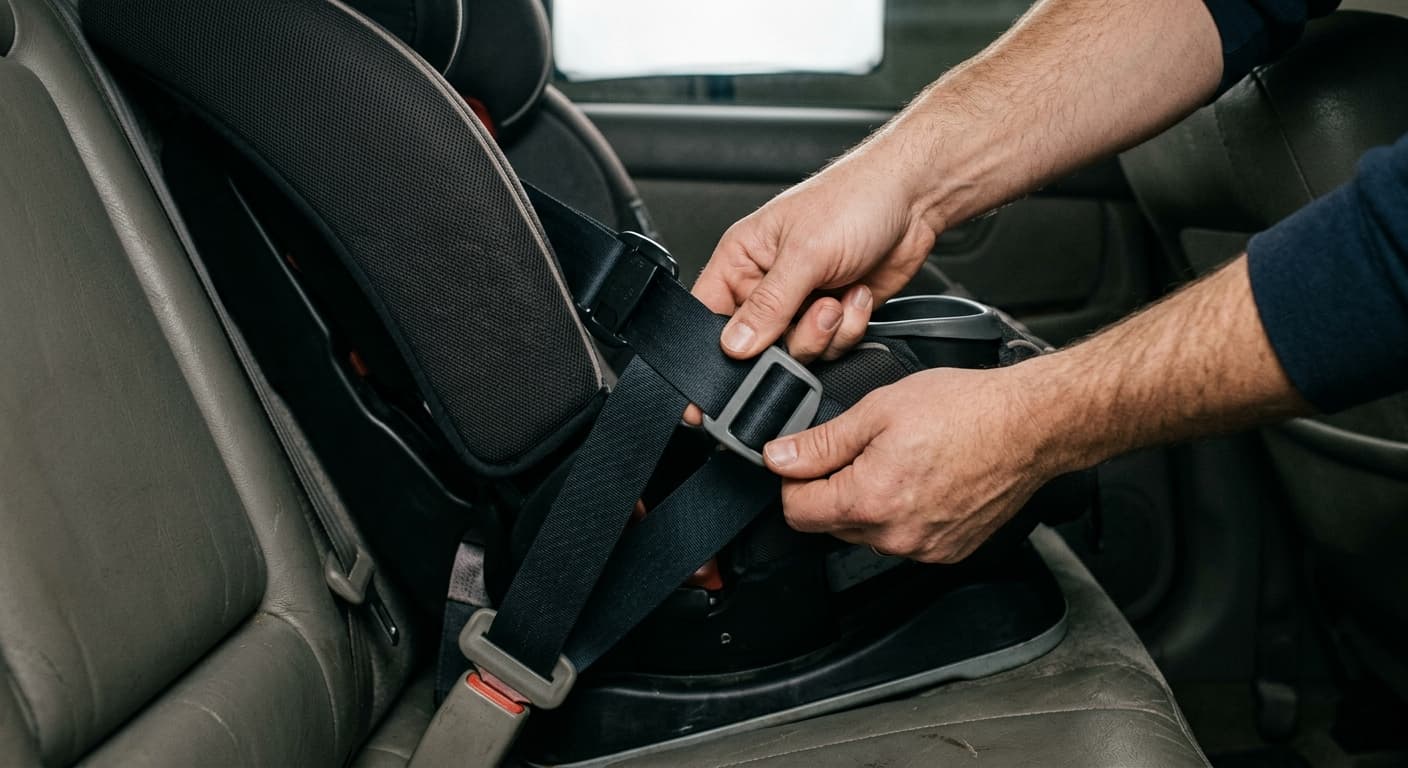
The District of Columbia requires a rear-facing seat until age 2, a child restraint seat until age 3, a restraint or booster seat until age 8, and a restraint or seat belt until age 16, under D.C. Code § 50-1703. This page reflects the statute's text as of September 2026.
Jurisdiction scope: This article covers car seat and child-restraint law in the District of Columbia only. It does not address any other jurisdiction. For other jurisdictions, see the car seat laws hub.
| Stage | Who | Rule | Statute |
|---|---|---|---|
| Rear-facing | Under 2 AND (under 40 lb OR under 40 in) | Rear-facing child restraint seat | D.C. Code § 50-1703(a) |
| Child restraint seat (general) | Under 3 | Child restraint seat | D.C. Code § 50-1703(a) |
| Restraint or booster | Under 8 | Infant, convertible, or booster child safety seat per manufacturer instructions; booster requires lap and shoulder belt | D.C. Code § 50-1703(b) |
| Restraint or seat belt | Under 16 | Approved child safety restraint system or seat belt | D.C. Code § 50-1703(b) |
Birth through age 1: the rear-facing sub-rule
D.C. Code section 50-1703(a) states that "if the child weighs less than 40 pounds or measures less than 40 inches in length, and is under 2 years of age, the child shall be properly restrained in a rear-facing child restraint seat." Both the age condition and one of the two size conditions (weight or height) have to be true for this specific sub-rule to apply. This rear-facing requirement sits inside a broader rule described next, not as a separate, standalone mandate.
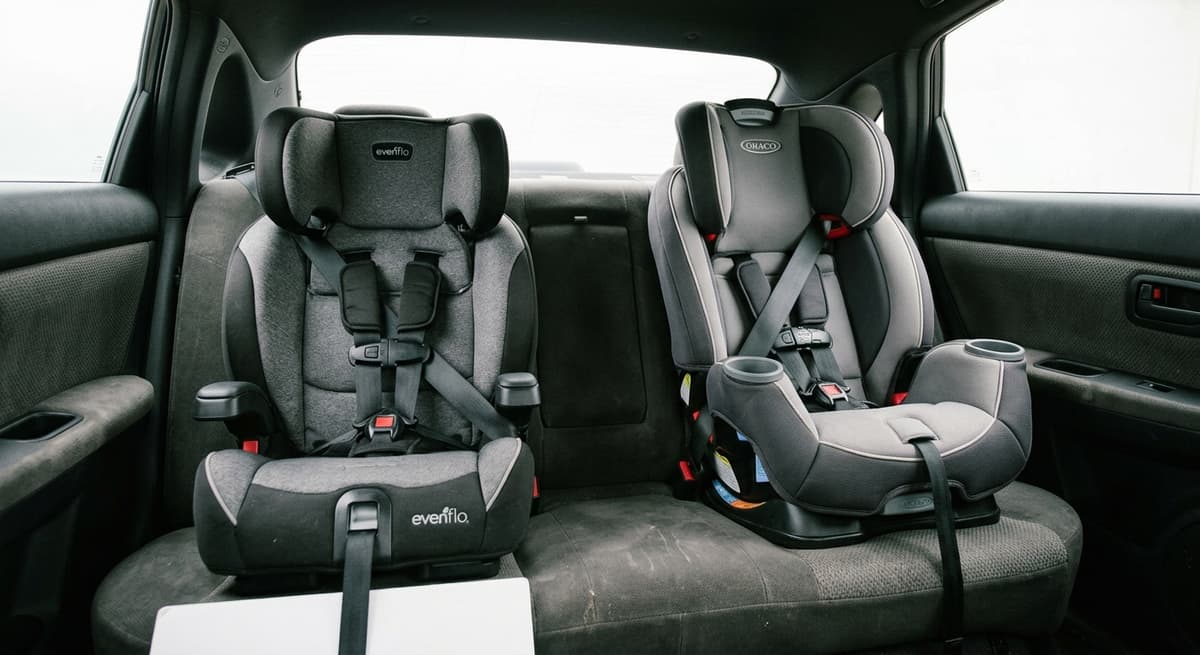
Birth through age 2: the general child restraint seat requirement
The same subsection separately requires that no one transport "a child of less than 3 years of age unless the child is properly restrained in a child restraint seat." This is the broader rule: every child under 3 needs a child restraint seat, with the rear-facing sub-rule above applying specifically to children under 2 who also fall under the weight or height thresholds.
Ages 3 through 7: restraint seat or booster
Section 50-1703(b) requires that "children under 8 years of age shall be properly seated in an installed infant, convertible (toddler) or booster child safety seat, according to the manufacturer's instructions." The same subsection adds one specific condition for the booster option: "a booster seat shall only be used with both a lap and shoulder belt," not a lap belt alone.
Ages 8 through 15: restraint or seat belt
The same subsection extends coverage further: "child under 16 years of age unless the child is properly restrained in an approved child safety restraint system or restrained in a seat belt." In practice, once a child is 8 or older and has moved beyond the restraint-or-booster stage, a seat belt satisfies this requirement through age 15.
Exemptions from D.C.'s car seat law
D.C. Code § 50-1703(c) provides a real, narrow exemption: "A parent or legal guardian may transport his or her own child without restraint herein if that person is transporting a number of his or her own children of less than 16 years of age which exceeds the number of passenger positions equipped with safety belts in the motor vehicle. However, an unrestrained child may not be transported in the front seat of a motor vehicle." In practice, this covers a parent who has more of their own under-16 children in the vehicle than there are belted seating positions: the extra child or children may ride unrestrained, but never in the front seat.
D.C. Code § 50-1705, governing the application of this chapter, contains two other subsections that do two different things: subsection (a) says the chapter "shall apply to any person operating a motor vehicle in the District of Columbia," and subsection (b) separately says the chapter "shall apply to any motor vehicle that is used for personal use." No taxi or physician-certification exemption is written into Chapter 17 of Title 50 (sections 50-1701 through 50-1708). D.C. Code § 50-1703(d) is not an exemption either; it separately requires automobile rental companies to inform each customer of the chapter's provisions and provide educational materials.
Front-seat placement
The front-seat bar above is not a freestanding rule that reaches every child. It is the proviso on the section 50-1703(c) excess-children exemption described above: a parent invoking that exemption may leave an extra child unrestrained, but that child still may not ride in the front seat. D.C. law does not separately impose a general requirement that every properly restrained child ride in the back seat.
Penalty for a car seat violation
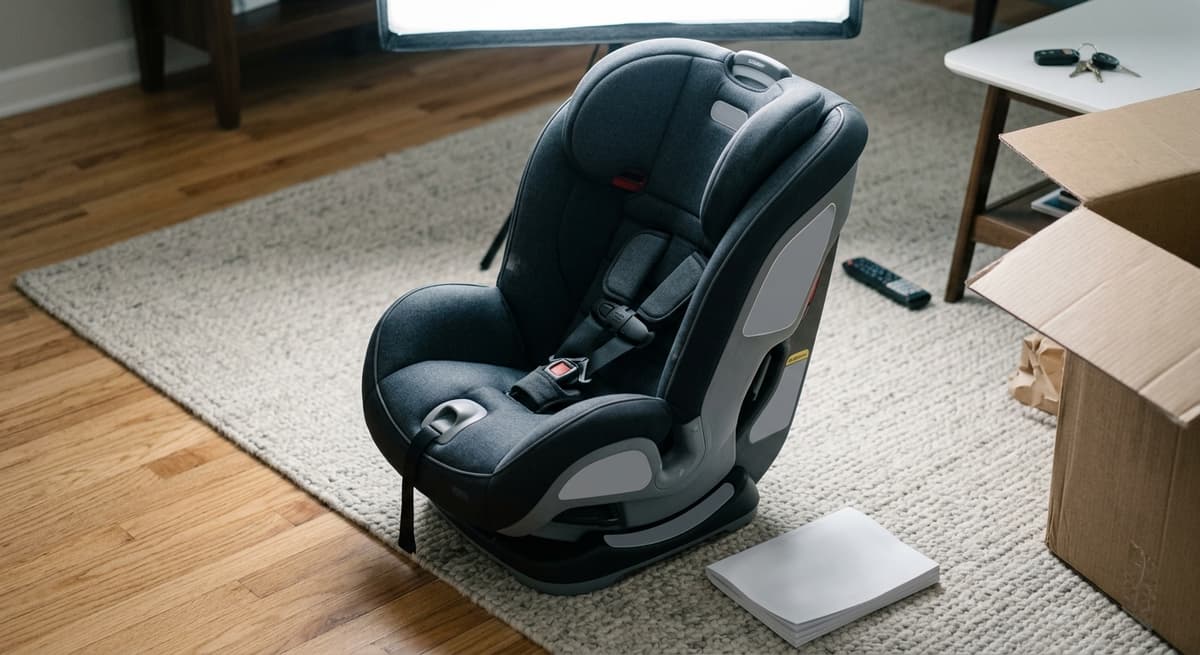
Under D.C. Code § 50-1706, a first violation gives the driver a choice between paying a $75 fine or attending a child restraint safety class, which carries a $25 fee. The fine for a first violation of subsection (a) is waived if the driver presents proof of having acquired an approved child restraint seat. A second offense requires attending the safety class ($25) and paying a $75 fine. A third offense carries a $125 fine, and a fourth or subsequent offense carries a $150 fine each time. Two points are assessed to the driver's record on conviction, and violations are processed and adjudicated as moving violations.
Leaving a child alone in a vehicle
The District of Columbia has no dedicated, vehicle-specific statute addressing a child left unattended in a car. D.C.'s general cruelty-to-children statute, D.C. Code § 22-1101, could theoretically apply in an abandonment-type scenario, but it is a general-purpose statute rather than one written for the vehicle context, and whether it applies to a specific situation depends on the facts.
Smoking with a minor in the vehicle
D.C.'s general smoking-restrictions statute, D.C. Code § 7-1703, addresses smoking in vehicles, but its motor-vehicle provision covers only a passenger vehicle owned or operated by the D.C. government, or a passenger vehicle for hire, during passenger transport. It does not mention private vehicles or the presence of a minor at all. No D.C. statute prohibits smoking in a private vehicle with a minor present.
Federal guidance vs. D.C. law
The federal standard that governs car seats as products, FMVSS 213 (49 CFR 571.213), regulates what a manufacturer may sell, not how a parent must use the seat; D.C.'s own statute, described above, already sets a staged, conjunctive age-and-weight-or-height structure across four tiers. NHTSA and the American Academy of Pediatrics separately recommend keeping a child rear-facing as long as the seat's own height and weight limits allow, which can extend past D.C.'s own statutory floor of age 2 and 40 pounds or 40 inches. That's safety guidance exceeding the statutory minimum, not a separate legal requirement.
Related District of Columbia traffic law pages
Disclaimer: This article provides general legal information about car seat law in the District of Columbia as of September 2026. It is not legal advice. Statutes, exemptions, and penalties change; verify the current text of the law before relying on it, and talk to a lawyer licensed in the District of Columbia about a specific situation.
Statutes cited reflect their in-force version as of 2026-09-16. Last updated: 2026-09-16.
Frequently Asked Questions
Until what age does D.C. require a rear-facing car seat?
A child under 2 who weighs less than 40 pounds or measures less than 40 inches must be rear-facing, under D.C. Code section 50-1703(a). More broadly, every child under 3 must be in a child restraint seat of some kind.
What is the fine for a car seat violation in D.C.?
A first violation is $75 or a $25 safety class, with the fine waived on proof of acquiring an approved seat. A second offense is the class plus $75; a third is $125; a fourth or later offense is $150. Two points are assessed to the driver's record on any conviction under the chapter, not just repeat offenses.
Are taxis exempt from D.C.'s car seat law?
Chapter 17 names no taxi exemption, but the answer is not a flat no either. Section 50-1705(a) applies the chapter to any person operating a motor vehicle in the District; section 50-1705(b) separately limits the chapter to a motor vehicle used for personal use, which cuts toward a for-hire taxi falling outside Chapter 17's coverage, unsettled on the statute's own text. The one exemption Chapter 17 does contain, in section 50-1703(c), is narrower: it lets a parent transport more of their own under-16 children unrestrained than the vehicle has belted positions, and even then not in the front seat.
Until what age does a child need a booster seat in D.C.?
Children under 8 must be in an infant, convertible, or booster seat per the manufacturer's instructions, under D.C. Code section 50-1703(b). A booster seat requires both a lap and shoulder belt.
Is it illegal to leave a child alone in a car in D.C.?
There is no dedicated vehicle-specific statute. D.C.'s general cruelty-to-children statute, D.C. Code section 22-1101, could theoretically apply in an abandonment scenario, depending on the facts.
Updates
Independently fact-checked against the cited primary sources
Sources and References
- D.C. Code § 50-1703: Requirements(code.dccouncil.gov).gov
- D.C. Code § 50-1705: Application of chapter(code.dccouncil.gov).gov
- D.C. Code § 50-1706: Penalties(code.dccouncil.gov).gov
- D.C. Code § 22-1101: Cruelty to children(code.dccouncil.gov).gov
- D.C. Code § 7-1703: Smoking restrictions(code.dccouncil.gov).gov
- American Academy of Pediatrics, Car Safety Seats: Information for Families(healthychildren.org)