South Dakota Traffic Camera Tickets: The Vendor-Contract Ban and Anti-Reciprocity Shield
Independently fact-checked against primary sources (last audited August 12, 2026). · 6 primary sources cited on this page. How we verify our legal content
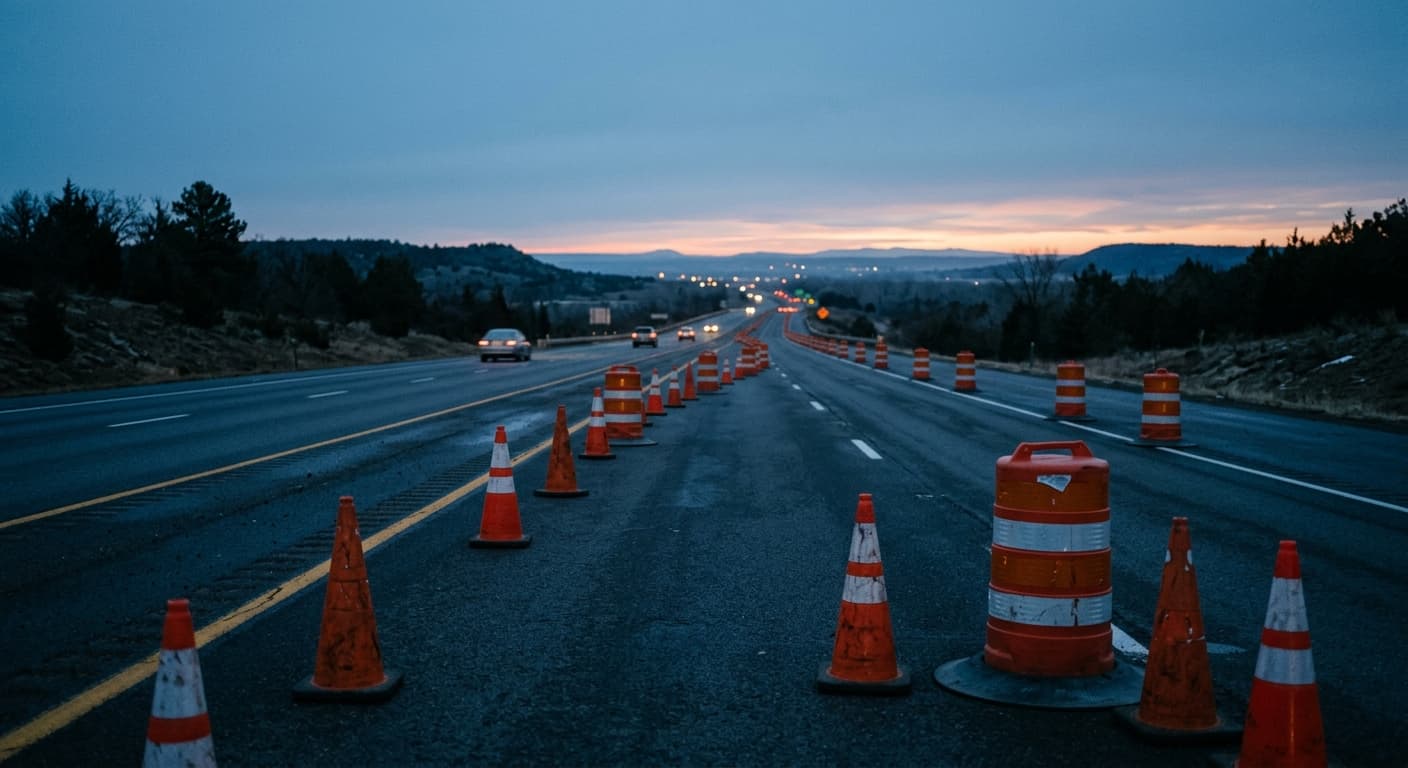
South Dakota's camera-ticket law does two things most states' laws don't. It bans cities and counties from contracting with a private company to run a red light camera program, and separately, it blocks South Dakota's own Department of Public Safety from handing over driver data to help another state collect a camera fine against a South Dakota driver. No red light or speed camera program currently operates anywhere in the state.
The Ban Is About Vendor Contracts, Not Just Cameras
Read literally, South Dakota's ban is narrower than "cameras are illegal here." SDCL 32-28-17 bars a state, county, municipal, or township authority from contracting with a private corporation to use a photo monitoring device for red light enforcement. SDCL 32-28-18 defines that banned device specifically: a stationary, unmanned device combined with a lighted traffic control device, used to detect a red light violation, that results in a citation against the vehicle's registrant rather than its driver.
That wording leaves a real gap. A camera system that cites the actual driver instead of the registered owner, or a program a government agency ran itself without contracting the work out to a private vendor, is not squarely covered by the statute's text. No such program exists in South Dakota today, so this is a legal nuance rather than a live loophole anyone is using, but it explains why the accurate description of South Dakota's law is a vendor-contract ban, not a blanket device ban.
SDCL 32-28-19 closes off one obvious workaround: it declares sections 17 and 18 «a general law of the state within the meaning of S.D. Const., Article IX, sec. 2.» That designation means a home-rule charter city, such as Sioux Falls, cannot pass its own ordinance to bring back camera enforcement; state law preempts the field.
No South Dakota statute authorizes or bans speed-camera enforcement inside the state. The vendor-contract ban at SDCL 32-28-17 and 32-28-18 reaches red light devices only. The one place speed cameras do appear in South Dakota law is the interstate data-sharing provisions at SDCL 32-28-20 to 32-28-22, which define a speed camera as an automated camera used to measure and record vehicle speed, and then restrict what the state may do with driver data tied to such a violation.
The Anti-Reciprocity Shield: South Dakota's Real Distinctive Feature
South Dakota's most unusual provision has nothing to do with cameras operating inside the state. It's about protecting South Dakota drivers from other states' camera programs.
SDCL 32-28-21 bars the state Department of Public Safety and its Division of Motor Vehicles from entering into any compact to provide another state with driver information used to impose or collect a civil fine arising from a red light or speed camera violation. SDCL 32-28-22 goes further, barring the state from providing that same information through any existing compact that doesn't specifically authorize sharing it for that purpose. SDCL 32-28-20 defines the terms, including «civil fine,» as a penalty imposed «without proving the violation, beyond a reasonable doubt,» capturing exactly the kind of administrative penalty most owner-liability camera programs issue.
This puts South Dakota on the opposite end of the spectrum from a state like Mississippi, which affirmatively recognizes other states' camera fines through the Driver License Compact for license-suspension purposes. South Dakota instead builds a wall around its own DMV data channels specifically to keep that kind of interstate camera-fine enforcement from reaching its residents.
That shield has a real limit worth stating honestly. It only binds South Dakota's own DPS and DMV compact-sharing decisions. It does nothing to stop an out-of-state camera program that already obtained your plate information, whether through its own database lookup or another route, from mailing you a notice or referring an unpaid fine to a private collections agency. The shield blocks one specific channel, the DMV compact-data path, not every possible enforcement route.
Where This Law Came From
Both halves of South Dakota's camera law date to 2014, enacted in the same legislative session (SL 2014 ch. 154 for the vendor-contract ban, SL 2014 ch. 155 for the anti-reciprocity provisions). Neither has been amended since. The backdrop was Sioux Falls's earlier red light camera program, the state's one attempt at automated enforcement, which ended amid legal controversy before the legislature acted to bar the practice statewide. No South Dakota jurisdiction has operated a red light or speed camera program since.
No Current Program, No Toll or School-Bus Camera Exception Noted
Unlike some ban states, South Dakota's statute does not carve out a toll-camera or school-bus stop-arm exception; the 32-28 chapter is narrowly focused on red light vendor contracts and the interstate data-sharing shield, and no separate camera-ticketing authority for those uses was found in this research. If you have questions about a specific camera-related notice in South Dakota, confirm what statute it's issued under before assuming it falls inside or outside this ban.
Information last verified on 2026-08-12. This article has not yet been reviewed by a licensed lawyer.

Related Resources
- Traffic Camera Ticket Laws by State
- How to Fight a Camera Ticket
- Do You Have to Pay a Camera Ticket?
- Automated License Plate Reader Laws
- South Dakota Police Bodycam Laws
Last updated: 2026-08-12.
More South Dakota Laws
Frequently Asked Questions
Are red light cameras illegal in South Dakota?
No state, county, municipal, or township authority may contract with a private company to run one, and no jurisdiction in South Dakota currently operates a red light camera program. The ban is written specifically around private vendor contracts rather than the technology outright.
Does South Dakota ban speed cameras too?
No South Dakota statute authorizes or bans speed cameras operating inside the state. The vendor-contract ban at SDCL 32-28-17 covers red light devices only. Speed cameras do appear in SDCL 32-28-20 to 32-28-22, but only in the interstate context: those sections define the term and bar South Dakota from sharing driver data to help another state impose or collect a speed-camera fine.
Could a South Dakota city like Sioux Falls bring back red light cameras with its own ordinance?
No. SDCL 32-28-19 designates the ban a general law of the state, which under the South Dakota Constitution preempts even a home-rule charter city from reviving camera enforcement through local ordinance.
Can another state suspend my South Dakota license over an unpaid camera ticket?
South Dakota law bars its own Department of Public Safety and DMV from sharing driver data through a compact to help another state collect a red light or speed camera fine. That specifically blocks the DMV data-sharing path; it does not guarantee an out-of-state program can't reach you through other means, such as mailing a notice directly or private debt collection.
How is South Dakota's law different from Mississippi's?
Mississippi bans cameras at home but affirmatively recognizes other states' camera fines through the Driver License Compact for license-suspension purposes. South Dakota does the opposite: it bars its own DMV from sharing data through any compact channel specifically to help enforce another state's camera fine.
What happens if I ignore an out-of-state camera ticket while South Dakota's shield is in place?
South Dakota's law does not make the out-of-state ticket invalid. It only limits how South Dakota's own DMV can share your information for compact-based collection. The issuing state can still pursue its own enforcement tools, such as mailed notices or collections.
Has South Dakota ever had a red light camera program?
Sioux Falls operated the state's one red light camera program, and it ended amid legal controversy well before the legislature acted in 2014. No South Dakota jurisdiction currently runs a camera-enforcement program.
When did South Dakota pass its camera ban?
Both the vendor-contract ban and the anti-reciprocity data-sharing provisions were enacted in 2014 and have not been amended since.
Updates
Corrected how the page describes South Dakota's treatment of speed cameras: no state statute authorizes or bans in-state speed-camera enforcement, but speed cameras are defined and addressed in the interstate data-sharing sections at SDCL 32-28-20 to 32-28-22, and clarified when the Sioux Falls red light camera program ended relative to the 2014 laws.
Independently fact-checked against the cited primary sources
The Law Behind This Article
This article rests on the statutory provisions below, held in our own legal record and retrieved from the official source. Tap a section to read the operative text.
South Dakota Codified Laws, Chapter 32-28: TRAFFIC CONTROL DEVICES
§ 32-28-17Photo monitoring devices to detect red light violations prohibited.In force
No state, county, municipal, or township authority may contract with any private corporation to provide for the use of any photo monitoring device to detect any red light violation.
Official text (excerpt) · last checked 2026-09-16 · Read the full text in our law library · Verify at sdlegislature.gov
§ 32-28-18Photo monitoring device defined.In force
For the purposes of § 32-28-17, the term, photo monitoring device, means a stationary, unmanned device used with a lighted traffic control device to detect a red light violation combined with a photographic identification of the vehicle which results in the issuance of a citation against the registrant, rather than the driver, of the vehicle.
Official text (excerpt) · last checked 2026-07-30 · Read the full text in our law library · Verify at sdlegislature.gov
§ 32-28-19General law of state.In force
Sections 32-28-17 and 32-28-18 constitute a general law of the state within the meaning of S.D. Const., Article IX, § 2.
Official text (excerpt) · last checked 2026-07-30 · Read the full text in our law library · Verify at sdlegislature.gov
§ 32-28-21Prohibition on interstate compacts to provide information to impose or collect civil fine for violation captured by red light or speed camera.In forcecited in 2 of our articles
The Department of Public Safety and the Division of Motor Vehicles shall not enter into any compact to provide to another state, or governmental entity located in another state, information used to impose or collect a civil fine that results from an alleged violation captured by a red light camera or speed camera.
Official text (excerpt) · last checked 2026-07-30 · Read the full text in our law library · Verify at sdlegislature.gov
Also relied on in: Do You Have to Pay a Camera Ticket? What Happens If You Don't
§ 32-28-22Restriction on providing information to impose or collect civil fine for violation captured by red light or speed camera pursuant to interstate compact.In force
The Department of Public Safety and the Division of Motor Vehicles shall not provide information used to impose or collect a civil fine that results from a violation captured by a red light camera or speed camera through any existing interstate compact that does not specifically allow, or require, information to be shared for that explicit purpose.
Official text (excerpt) · last checked 2026-07-30 · Read the full text in our law library · Verify at sdlegislature.gov
§ 32-28-20Definitions regarding limitations on interstate compacts relating to red light and speed cameras.In force
Terms used in §§ 32-28-21 and 32-28-22 mean: (1) "Interstate compact," a voluntary arrangement between two or more states that becomes the law of each state; (2) "Red light camera," an automated camera used to capture an image of a vehicle entering an intersection when the traffic light is signaling red; (3) "Speed camera," an automated camera used to measure and record the speed of vehicles for the purpose of capturing an image of a vehicle that is traveling in excess of the posted speed limit; (4) "Civil fine," a financial penalty imposed by a governmental entity that is imposed without proving the violation, beyond a reasonable doubt, to a court of law or duly impaneled jury.
Official text (excerpt) · last checked 2026-07-30 · Read the full text in our law library · Verify at sdlegislature.gov
Search our full record of US law — 2.1 million sections, every state + federal →
Sources and References
- SDCL 32-28-17, Ban on contracting with a private corporation for a red light photo monitoring device(sdlegislature.gov).gov
- SDCL 32-28-18, Definition of the banned photo monitoring device(sdlegislature.gov).gov
- SDCL 32-28-19, General-law designation preempting home-rule revival(sdlegislature.gov).gov
- SDCL 32-28-20, Definitions (red light camera, speed camera, civil fine)(sdlegislature.gov).gov
- SDCL 32-28-21, Bar on DPS/DMV compacts sharing data to collect another state's camera fine(sdlegislature.gov).gov
- SDCL 32-28-22, Bar on sharing camera-fine data through an existing compact absent explicit authorization(sdlegislature.gov).gov