
New Mexico
New Mexico Slip and Fall Laws: Proving Premises Liability Under Pure Comparative Negligence
Independently fact-checked against primary sources (last audited August 17, 2026). · Reviewed by the RecordingLaw editorial team. · Law checked current as of August 17, 2026. · 1 primary source cited on this page. How we verify our legal content
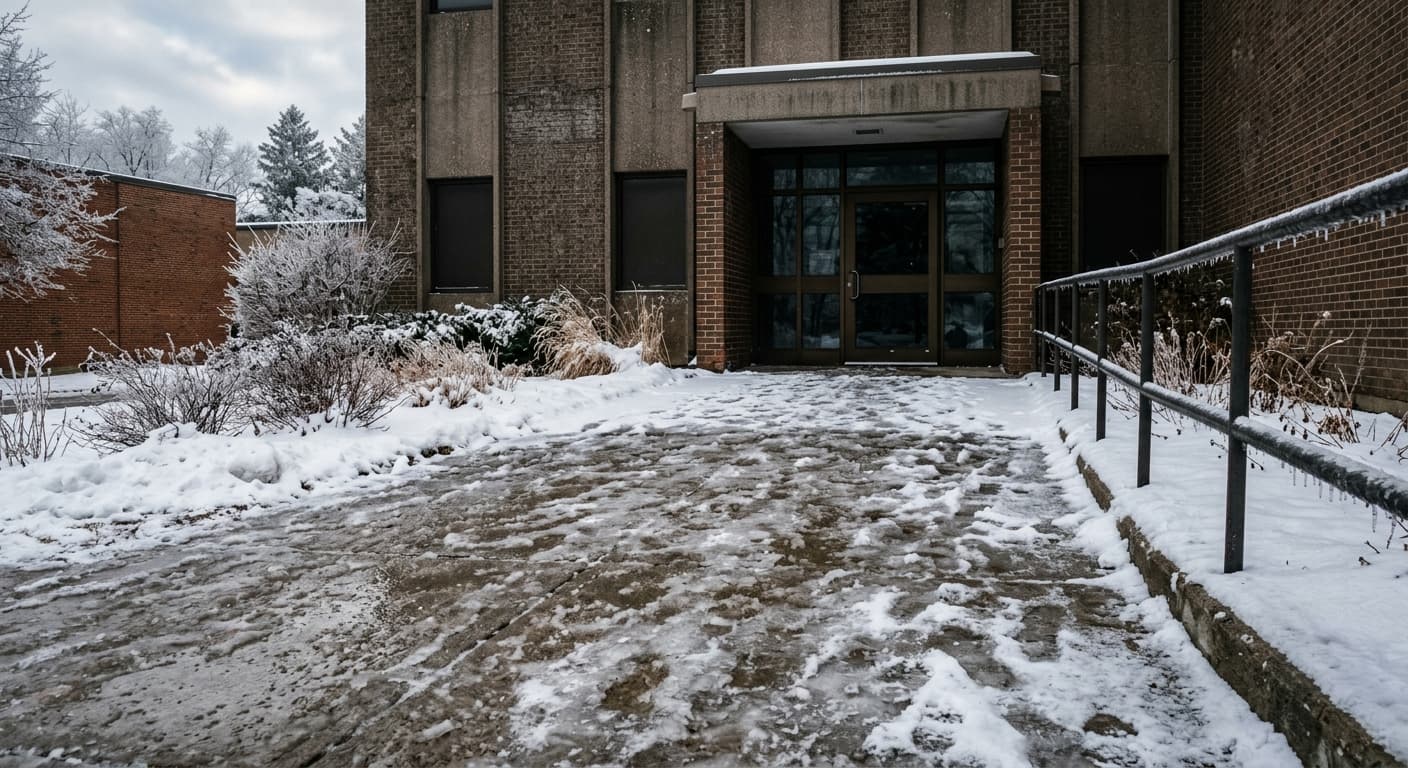
To win a slip and fall claim in New Mexico, you must prove that the property owner failed to use ordinary reasonable care to keep the premises safe and that this failure caused your injury. New Mexico applies pure comparative negligence, so partial fault reduces but does not bar your recovery.
Proving a slip and fall claim in New Mexico
New Mexico slip and fall claims are governed by the ordinary premises-liability standard of reasonable care. Unlike some states that have enacted a statutory premises-liability act, New Mexico applies a unified common-law framework rooted in the duty of reasonable care owed to entrants on the property, with the standard of care shaped by decades of case law including Klopp v. Wackenhut Corp., 113 N.M. 153, 824 P.2d 293 (1992).
A property owner or occupier must use ordinary care to keep the premises reasonably safe and to warn of or remedy dangerous conditions that pose an unreasonable risk of harm. The duty generally runs to invitees and licensees; trespassers receive a narrower duty. As an invitee (a customer, tenant, or visitor invited onto the property), the owner must exercise reasonable care both to discover dangerous conditions and to repair or warn about them.
Notice is the key battleground in most slip and fall cases. You must prove the owner had actual notice (an employee created the hazard or was told about it) or constructive notice (the condition existed long enough that a reasonable inspection would have found it). Courts look to evidence like store inspection logs, surveillance video, how long the hazard had been present, and whether prior complaints were made. The New Mexico Uniform Jury Instructions (NM UJI 13-1309 et seq.) guide juries through these questions. The leading case on the duty framework is Klopp v. Wackenhut Corp., which held that simply by making a hazard obvious, an occupier cannot avoid liability to a business visitor for dangers that could otherwise be made safe through reasonable means.
The open-and-obvious doctrine in New Mexico
New Mexico generally does not allow the open-and-obvious nature of a hazard to serve as a complete bar to recovery. In Klopp v. Wackenhut Corp., 113 N.M. 153, 824 P.2d 293 (1992), the New Mexico Supreme Court disapproved the open-and-obvious danger jury instruction (UJI 13-1310) as inappropriate under comparative fault and held that whether an obvious condition posed an unreasonable risk to a business visitor is for the jury to decide in virtually every case. The court kept a narrow no-duty exception where the visitor's encounter with the known danger was so extraordinary as to be unforeseeable.

The court held that an occupier cannot avoid liability to a business visitor simply by making a hazard obvious when the danger could otherwise be made safe through reasonable means. A risk is not made reasonable just because it is open and obvious. The key questions, whether a condition posed an unreasonable risk and whether the owner should have anticipated harm despite the obvious nature of the hazard, are jury questions.
In practice, the comparative treatment works like this: if you were aware of an obvious hazard and chose to proceed anyway, the jury may assign you a share of the fault for the accident. That share reduces your recovery proportionally. The owner can also argue to the jury that the obvious nature of the condition meant it did not involve an unreasonable risk of danger, which goes to whether the owner was negligent at all. But in most cases the obviousness of a hazard does not end your claim before a jury weighs it, the way it would in states that treat open-and-obvious as a complete bar.
Ice, snow, and natural accumulation in New Mexico
New Mexico does not follow the "natural accumulation" rule that grants landowners immunity for ice or snow that fell naturally. In states with such a rule, an owner can argue the hazard was simply weather and bears no responsibility. New Mexico rejected that approach.
Because New Mexico applies its ordinary premises-liability standard of reasonable care to all entrants (other than trespassers), that duty extends to weather-related hazards including icy walkways, snow-covered steps, and slick entryways. There is no New Mexico statute or appellate decision that carves out an immunity for naturally accumulated ice or snow. Klopp v. Wackenhut Corp. (1992), which held that an obvious hazard usually does not by itself eliminate an occupier's duty of ordinary care to a business visitor, is consistent with applying the ordinary reasonable-care duty to weather-related hazards, though Klopp involved a tripping hazard at an airport security station and does not address ice or snow.
What this means in practice: if a commercial parking lot has a known ice patch that has persisted for several days, if a landlord's exterior stairs regularly freeze after storms and tenants have reported the issue, or if a building entryway collects water that freezes overnight, the owner cannot simply assert "the ice fell naturally" as a defense. Liability turns on what the owner knew or should have known and whether the response was reasonably prompt. The plaintiff's own awareness and care are handled through New Mexico's pure comparative-negligence apportionment rather than a categorical no-duty rule.
How fault is shared: New Mexico's negligence rule
New Mexico applies pure comparative negligence, adopted judicially in Scott v. Rizzo, 96 N.M. 682, 634 P.2d 1234 (1981), which abolished the old all-or-nothing contributory-negligence rule. Under pure comparative negligence, a plaintiff's damages are reduced by their own percentage of fault, with no bar threshold whatsoever.
A plaintiff who is 50% at fault recovers 50% of their damages. A plaintiff who is 90% at fault still recovers 10% of their damages. There is no cutoff point at which the plaintiff is barred from recovery entirely, unlike the modified comparative-negligence rules (50% or 51% bars) used by many neighboring states.
New Mexico also applies several liability (NMSA 1978, § 41-3A-1) rather than joint-and-several liability in most cases. This means that each defendant generally pays only its own proportionate share of the total fault, not the shares of co-defendants who cannot pay. In a slip and fall involving a building owner and a property-management company, for instance, each would pay only the percentage of fault the jury assigns to them.
The practical takeaway: do not assume that being partly responsible for your fall ends your case in New Mexico. An insurer's argument that "you should have watched where you were going" does not bar your recovery; it only affects the final damages percentage.
Deadlines: statute of limitations and government claims
New Mexico imposes two distinct deadlines that slip and fall victims must track, and missing either one can permanently end a valid claim.
Personal-injury statute of limitations: Under NMSA 1978, § 37-1-8, you have 3 years from the date of injury to file a personal-injury lawsuit in New Mexico court. The clock generally starts on the date of the fall. Minors receive tolling under NMSA 1978, § 37-1-10: any minor has until 1 year after reaching the age of majority (18) or 3 years from the date of injury, whichever is longer. (A separate, narrower rule applies only to claims against government defendants under the Tort Claims Act, NMSA 1978, § 41-4-15(A) -- a minor under the full age of 7 has until their ninth birthday to file -- discussed in the government-notice section below.) For more on New Mexico's civil filing deadlines, see the New Mexico statute of limitations page.
Government notice of claim (90 days): If your fall occurred on government property, a much shorter and more unforgiving deadline applies. The provision that makes such a claim possible at all is NMSA 1978, § 41-4-6, which waives governmental immunity for bodily injury, wrongful death, or property damage caused by the negligence of public employees acting within the scope of their duties in the operation or maintenance of any building, public park, machinery, equipment, or furnishings. Under the New Mexico Tort Claims Act, NMSA 1978, § 41-4-16(A), you must present a written notice of claim within 90 days of the occurrence to the appropriate official. For state entities the notice goes to the Risk Management Division; for municipalities, to the mayor; for counties, to the county clerk; for school districts, to the superintendent; for other local bodies, to the administrative head. The 90 days count from the day of the fall, so get a free consultation with a New Mexico premises liability lawyer on getting that written notice to the right official in time (attorney advertising).
The stakes are severe: NMSA 1978, § 41-4-16(B) provides that no suit may be maintained and no court has jurisdiction unless written notice was given OR the governmental entity had actual notice. Missing the 90-day deadline can result in dismissal for lack of jurisdiction, not merely a procedural misstep. Two limited extensions exist: wrongful-death claims have a 6-month notice window rather than 90 days, and the 90-day period is tolled (up to 90 additional days) while the injured person is incapacitated by the injury. The Tort Claims Act itself also sets a separate 2-year period under NMSA 1978, § 41-4-15(A) to actually file suit against a government defendant, shorter than the general 3-year personal-injury period.
What a New Mexico slip and fall claim is worth
The value of a slip and fall settlement or verdict in New Mexico depends on the severity of your injuries, the strength of your liability evidence, and any fault assigned to you.

Economic damages cover your actual, measurable financial losses: emergency room and hospital bills, surgery and rehabilitation costs, projected future medical expenses, lost wages while you recovered, and any reduction in future earning capacity. Economic damages are not capped in New Mexico premises-liability cases against private property owners.
Non-economic damages compensate for pain and suffering, emotional distress, disfigurement, loss of enjoyment of life, and similar intangible harms. New Mexico does not impose a statutory cap on non-economic damages in slip and fall cases against private property owners, which means that for serious injuries, juries can award amounts that reflect the true impact of the harm.
Claims against government defendants are capped. If you fell on state, city, county, or school-district property, the uncapped rule above does not apply to your claim. NMSA 1978, § 41-4-19 limits Tort Claims Act recovery to $300,000 for all past and future medical and medically related expenses arising out of a single occurrence, $400,000 to any person for any number of claims arising out of a single occurrence for all damages other than real-property damage and medical expenses, and $750,000 in total for all property-damage and non-medical claims arising out of that single occurrence. The same section also bars punitive damages and prejudgment interest against a government defendant. These limits apply no matter how severe the injury, so an identical fall can be worth far less on public property than in a private store.
Comparative-fault reduction: Whatever total damages a jury finds, they are reduced by your percentage of fault. At 20% fault, you receive 80% of the verdict. At 60% fault, you still receive 40%. New Mexico's no-cutoff pure comparative rule means that even a plaintiff bearing the majority of the fault can recover something, though the reduction can be significant.
Use the New Mexico Slip and Fall Settlement Calculator to get a rough sense of how these factors interact for your situation.
This article is general legal information, not legal advice. Premises liability law varies by state and changes, and case values depend on the specific facts. For advice about a specific fall, consult a licensed attorney in New Mexico.
Related:
- Slip and Fall Laws by State (full 50-state hub)
- New Mexico Slip and Fall Settlement Calculator
More New Mexico Laws
Frequently Asked Questions
How do I prove a slip and fall in New Mexico?
You must show that the property owner owed you a duty of reasonable care, that a dangerous condition existed on the premises, that the owner had actual or constructive notice of the hazard, that the owner failed to remedy or warn about it, and that the failure caused your injuries. Constructive notice is established by showing the condition existed long enough that a reasonable inspection would have found it. Evidence includes surveillance video, inspection logs, prior complaints, and witness testimony.
Is New Mexico an open-and-obvious state?
Not usually. In Klopp v. Wackenhut Corp., 113 N.M. 153 (1992), the New Mexico Supreme Court disapproved the open-and-obvious jury instruction, so the visibility of a hazard typically does not eliminate an occupier's duty of ordinary care to a business visitor. The jury weighs it in deciding whether the risk was unreasonable, whether the owner was negligent, and how to apportion fault, though a court can still find no duty where the visitor's encounter with the known danger was so extraordinary as to be unforeseeable.
Can I sue for falling on ice in New Mexico?
Yes. New Mexico does not follow the natural-accumulation rule, so property owners are not automatically immune when someone falls on naturally occurring ice or snow. Landowners owe ordinary reasonable care to address all dangerous conditions on their property, including weather-related ones. Whether the owner acted reasonably given what they knew or should have known is a jury question, not a threshold bar.
How long do I have to file a slip and fall lawsuit in New Mexico?
Three years from the date of injury under NMSA 1978, § 37-1-8. If your fall occurred on government property (a public sidewalk, city park, state building, or school), you must also file a written notice of claim with the relevant government entity within 90 days of the incident under the New Mexico Tort Claims Act (NMSA 1978, § 41-4-16), and the Tort Claims Act gives you only 2 years to file the suit itself (NMSA 1978, § 41-4-15(A)). Missing the 90-day notice deadline can result in dismissal for lack of jurisdiction, even if the 3-year general deadline has not expired.
Can I recover damages if I was partly at fault for my fall?
Yes, under any level of fault. New Mexico uses pure comparative negligence (Scott v. Rizzo, 96 N.M. 682 (1981)), which means there is no percentage cutoff. Your damages are simply reduced by your share of the fault. Even if a jury finds you 80% at fault, you can still recover 20% of your total damages. This is more plaintiff-friendly than states that bar recovery at 50% or 51% fault.
How much is a New Mexico slip and fall claim worth?
Value depends on your economic losses (medical bills, lost wages, future care costs), your non-economic losses (pain and suffering, loss of enjoyment of life), and your share of fault. New Mexico caps neither economic nor non-economic damages in claims against private property owners. Claims against government entities are capped: NMSA 1978, § 41-4-19 limits Tort Claims Act recovery to $300,000 for all past and future medical and medically related expenses arising out of a single occurrence, $400,000 to any person for all other damages from that occurrence, and $750,000 in total for all property-damage and non-medical claims arising out of that occurrence, and it bars punitive damages entirely. Your total recovery is then reduced by your percentage of comparative fault.
What is the government notice-of-claim deadline for a fall on public property in New Mexico?
Under NMSA 1978, § 41-4-16, you must submit written notice of your claim within 90 days of the incident to the appropriate government official (state Risk Management Division, city mayor, county clerk, school superintendent, or other administrative head). Wrongful-death claims have a 6-month window. Missing this deadline can result in dismissal for lack of jurisdiction, and the Tort Claims Act imposes a separate 2-year period under NMSA 1978, § 41-4-15(A) to file the actual lawsuit against a government defendant.
Updates
Corrected the description of Klopp v. Wackenhut Corp. to the holding the New Mexico Supreme Court actually reached: it disapproved the open-and-obvious jury instruction and left the question to the jury in virtually every case, but kept a narrow no-duty exception, and it did not address ice or snow.
Corrected the damages section, key takeaways, and FAQ to explain that New Mexico's uncapped-damages rule applies only to private property owners, since claims for falls on state, city, county, or school-district property are capped by the Tort Claims Act, and added citations to the statutes that create the government claim and set its filing deadline.
Corrected a misstatement of New Mexico's minor-tolling rule for private slip-and-fall claims (it was wrongly using the Tort Claims Act's government-only under-7/age-9 exception instead of the general rule giving all minors until age 19 or 3 years, whichever is longer), and repointed four citations that had been misdirected to unrelated statute/form pages.
Independently fact-checked against the cited primary sources; governing law re-checked for recent changes
Governing law re-checked for recent changes
Reviewed and approved by an editor
The Law Behind This Article
This article rests on the statutory provisions below, held in our own legal record and retrieved from the official source. Tap a section to read the operative text.
New Mexico Statutes Annotated 1978, Chapter 37
§ 37-1-8Actions against sureties on fiduciary bonds; injuries to person or reputation.In forcecited in 17 of our articles
Actions must be brought against sureties on official bonds and on bonds of guardians, conservators, personal representatives and persons acting in a fiduciary capacity, within two years after the liability of the principal or the person for whom they are sureties is finally established or determined by a judgment or decree of the court, and for an injury to the person or reputation of any person, within three years.
Official text (excerpt) · last checked 2026-07-30 · Read the full text in our law library · Verify at nmonesource.com
Cited in 172 court opinions in our collectionLatest citing opinion in our collection: 2026
In the courts (editorial summary, independently checked):Roberts v. Southwest Community Health Services (1992) applied Section 37-1-8's three-year period to a malpractice claim against a nonqualified health care provider and held such a claim accrues when the plaintiff knows or should know of the injury and its cause. Williams v. Stewart (2005) applied that period to distress claims.
Opinions citing this section in our collection:
- Maestas v. Zager (New Mexico Court of Appeals 2005, 136 N.M. 764)“…tes are the general personal injury statute of limitations, NMSA 1978, § 37-1-8 (1976); the Medical Malpractice Act sta…”
- Garcia on Behalf of Garcia v. La Farge (New Mexico Supreme Court 1995, 119 N.M. 532)✓A cardiologist twice told a boy's parents he was fine; after cardiac arrest left him brain damaged, the court held the Malpractice Act limit unconstitutional as applied and used Section 37-1-8's three year accrual period instead, making the suit timely.
- Williams v. Stewart (New Mexico Court of Appeals 2005, 137 N.M. 420)✓Relatives sued over a Los Alamos program that took organs during autopsies without consent; the court applied Section 37-1-8's three year personal injury period to their claims and held news publicity did not, as a matter of law, trigger a duty to inquire that started it running.
Identified automatically from the court opinions citing this section — not a ranking of which case controls.
Also relied on in: New Mexico Dog Bite Laws: Liability and Victim Rights, New Mexico Recording Laws (2026): One-Party Consent Rules, New Mexico Car Accident Laws: Fault, Insurance, and Your Claim
§ 37-1-10Minors; incapacitated personsIn forcecited in 2 of our articles
The times limited for the bringing of actions by the preceding provisions of this chapter shall, in favor of minors and incapacitated persons, be extended so that they shall have one year from and after the termination of such incapacity within which to commence said actions.
Official text (excerpt) · last checked 2026-07-30 · Read the full text in our law library · Verify at nmonesource.com
Cited in 19 court opinions in our collectionLatest citing opinion in our collection: 2024
Opinions citing this section in our collection:
- Tafoya Ex Rel. Tafoya v. Doe (New Mexico Court of Appeals 1983, 100 N.M. 328)“…rs from the 2-year limitation applying to other plaintiffs. NMSA 1978, § 37-1-10, provides for tolling of certain genera…”
- Padilla v. Montano (New Mexico Court of Appeals 1993, 116 N.M. 398)“…hed age of majority). The trial court concluded that NMSA 1978, Section 37-1-10 (Repl.Pamp.1990), provided that the tim…”
- Grygorwicz v. Trujillo (New Mexico Court of Appeals 2006, 140 N.M. 129)“…dline for filing causes of action for personal injury), and NMSA 1978, § 37-1-10 (1975) (allowing an injured minor until…”
Identified automatically from the court opinions citing this section — not a ranking of which case controls.
New Mexico Statutes Annotated 1978, Chapter 41
§ 41-4-16Notice of claimsIn forcecited in 6 of our articles
A. Every person who claims damages from the state or any local public body under the Tort Claims Act shall cause to be presented to the risk management division for claims against the state, the mayor of the municipality for claims against the municipality, the superintendent of the school district for claims against the school district, the county clerk of a county for claims against the county, or to the administrative head of any other local public body for claims against such local public body, within ninety days after an occurrence giving rise to a claim for which immunity has been waived under the Tort Claims Act, a written notice stating the time, place and circumstances of the loss or injury. B. No suit or action for which immunity has been waived under the Tort Claims Act shall be maintained and no court shall have jurisdiction to consider any suit or action against the state or any local public body unless notice has been given as required by this section, or unless the governmental entity had actual notice of the occurrence.
Official text (excerpt) · last checked 2026-07-30 · Read the full text in our law library · Verify at nmonesource.com
Cited in 53 court opinions in our collectionLatest citing opinion in our collection: 2026
Opinions citing this section in our collection:
- Erwin v. City of Santa Fe (New Mexico Court of Appeals 1993, 115 N.M. 596)“…ental entity involved within ninety days of the occurrence. NMSA 1978, § 41-4-16 (Repl.Pamp.1989). The City received not…”
- Marrujo v. New Mexico State Highway Transportation Department (New Mexico Supreme Court 1994, 118 N.M. 753)“…nstitutionality of the New Mexico Notice of Claims Statute, NMSA 1978, Section 41-4-16 (Repl.Pamp.1989), which requires those…”
- Tafoya Ex Rel. Tafoya v. Doe (New Mexico Court of Appeals 1983, 100 N.M. 328)“…tal eight years earlier; (4) The notice provision of NMSA 1978, § 41-4-16 of the Tort Claims Act is unconstitutio…”
Identified automatically from the court opinions citing this section — not a ranking of which case controls.
Also relied on in: New Mexico Statute of Limitations: Filing Deadlines by Case Type
§ 41-3A-1Several liabilityIn forcecited in 8 of our articles
A. In any cause of action to which the doctrine of comparative fault applies, the doctrine imposing joint and several liability upon two or more wrongdoers whose conduct proximately caused an injury to any plaintiff is abolished except as otherwise provided hereafter. The liability of any such defendants shall be several. B. In causes of action to which several liability applies, any defendant who establishes that the fault of another is a proximate cause of a plaintiff's injury shall be liable only for that portion of the total dollar amount awarded as damages to the plaintiff that is equal to the ratio of such defendant's fault to the total fault attributed to all persons, including plaintiffs, defendants and persons not party to the action. C.
Official text (excerpt) · last checked 2026-07-30 · Read the full text in our law library · Verify at nmonesource.com
Cited in 51 court opinions in our collectionLatest citing opinion in our collection: 2025
Opinions citing this section in our collection:
- Saiz Ex Rel. Estate of Saiz v. Belen School District (New Mexico Supreme Court 1992, 113 N.M. 387)“…under two theories: (1) for vicarious liability pursuant to NMSA 1978, Section 41-3A-1(C)(2) (Repl.Pamp.1989), for the acts of…”
- Lewis v. Samson (New Mexico Court of Appeals 1999, 128 N.M. 269)“…M. at 426-27 , 902 P.2d at 1029-30 . {47} Similarly, NMSA 1978, § 41-3A-1(A) (1987), enacted after Bartlett…”
- Herrera Ex Rel. Estate of Ruiz v. Quality Pontiac (New Mexico Supreme Court 2003, 134 N.M. 43)“…intiffs, defendants, and persons not party to the action. NMSA 1978, § 41-3A-1(B) (1987). We hold that New Mexico's ad…”
Identified automatically from the court opinions citing this section — not a ranking of which case controls.
Also relied on in: New Mexico Wrongful Death Laws (2026): Deadlines, Truck Accident Laws in New Mexico (2026): Deadlines & Liability
§ 41-4-15Statute of limitationsIn forcecited in 8 of our articles
A. Actions against a governmental entity or a public employee for torts shall be forever barred, unless such action is commenced within two years after the date of occurrence resulting in loss, injury or death, except that a minor under the full age of seven years shall have until his ninth birthday in which to file. This subsection applies to all persons regardless of minority or other legal disability. B. The provisions of Subsection A of this section shall not apply to any occurrence giving rise to a claim which occurred before July 1, 1976.
Official text (excerpt) · last checked 2026-07-30 · Read the full text in our law library · Verify at nmonesource.com
Cited in 59 court opinions in our collectionLatest citing opinion in our collection: 2026
Opinions citing this section in our collection:
- Marrujo v. New Mexico State Highway Transportation Department (New Mexico Supreme Court 1994, 118 N.M. 753)“…stitutional challenge to the Tort Claims Act notice statute NMSA 1978, Section 41-4-15(A) (Repl.Pamp.1989), which allowed two…”
- Celaya v. Hall (New Mexico Supreme Court 2004, 135 N.M. 115)“…ilure to comply with the two-year statute of limitations in NMSA 1978, Section 41-4-15 (1977) of the Tort Claims Act (“TCA”).…”
- Blea v. Fields (New Mexico Supreme Court 2005, 138 N.M. 348)“…r statute of limitations in the New Mexico Tort Claims Act. NMSA 1978, § 41-4-15 (1977). In response, Plaintiff disputed…”
Identified automatically from the court opinions citing this section — not a ranking of which case controls.
§ 41-4-19Maximum liabilityIn forcecited in 4 of our articles
A. Unless limited by Subsection B of this section, in any action for damages against a governmental entity or a public employee while acting within the scope of the employee's duties as provided in the Tort Claims Act, the liability shall not exceed: (1) the sum of two hundred thousand dollars ($200,000) for each legally described real property for damage to or destruction of that legally described real property arising out of a single occurrence; (2) the sum of three hundred thousand dollars ($300,000) for all past and future medical and medically related expenses arising out of a single occurrence; and (3) the sum of four hundred thousand dollars ($400,000) to any person for any number of claims arising out of a single occurrence for all damages other than real property damage and medical and medically related expenses as permitted under the Tort Claims Act. B. The total liability for all claims pursuant to Paragraphs (1) and (3) of Subsection A of this section that arise out of a single occurrence shall not exceed seven hundred fifty thousand dollars ($750,000). C.
Official text (excerpt) · last checked 2026-07-30 · Read the full text in our law library · Verify at nmonesource.com
Cited in 25 court opinions in our collectionLatest citing opinion in our collection: 2023
Opinions citing this section in our collection:
- Trujillo v. City of Albuquerque (New Mexico Supreme Court 1998, 125 N.M. 721)“…and 1985, limited recovery to $300,000 per occurrence. See NMSA 1978, § 41-4-19(A)(2) (1983). This appeal arises from t…”
- Cummings v. X-Ray Associates of New Mexico, P. C. (New Mexico Supreme Court 1996, 121 N.M. 821)“…797 P.2d at 249-50 . The question was whether, under NMSA 1978, § 41-4-19(A)(3) (Repl.Pamp.1989), amended by 1991…”
- State Ex Rel. New Mexico State Highway & Transportation Department v. Baca (New Mexico Supreme Court 1995, 120 N.M. 1)“…ubject. 113 N.M. at 597-98 , 830 P.2d at 149-50 . See NMSA 1978, § 41-4-19(B) (Repl.Pamp.1989); NMSA 1978, § 37-1-…”
Identified automatically from the court opinions citing this section — not a ranking of which case controls.
§ 41-4-6Liability; buildings, public parks, machinery, equipment and furnishings.In forcecited in 2 of our articles
A. The immunity granted pursuant to Subsection A of Section 41-4-4 NMSA 1978 does not apply to liability for damages resulting from bodily injury, wrongful death or property damage caused by the negligence of public employees while acting within the scope of their duties in the operation or maintenance of any building, public park, machinery, equipment or furnishings. B. Nothing in this section shall be construed as granting waiver of immunity for any damages arising out of the operation or maintenance of works used for diversion or storage of water. C.
Official text (excerpt) · last checked 2026-07-30 · Read the full text in our law library · Verify at nmonesource.com
Cited in 67 court opinions in our collectionLatest citing opinion in our collection: 2026
Opinions citing this section in our collection:
- Cobos v. Doña Ana County Housing Authority (New Mexico Supreme Court 1998, 126 N.M. 418)“…he “building waiver” of the New Mexico Tort Claims Act. See NMSA 1978, § 41-4-6 (1977) (waiver of governmental immunity…”
- Archibeque v. Moya (New Mexico Supreme Court 1993, 116 N.M. 616)“…state law from the Tenth Circuit Court of Appeals: Does [NMSA 1978, Section 41-4-6 (Repl. Pamp.1989) ] of the New Mexico T…”
- Callaway v. New Mexico Department of Corrections (New Mexico Court of Appeals 1994, 117 N.M. 637)“…and (3) Plaintiff had failed to state a claim pursuant to NMSA 1978, Section 41-4-6 (Repl. Pamp.1989) permitting claims ari…”
Identified automatically from the court opinions citing this section — not a ranking of which case controls.
Search our full record of US law — 2.1 million sections, every state + federal →
Sources and References
- NMSA 1978, § 41-4-16 — New Mexico Tort Claims Act, Notice of Claim(generalservices.state.nm.us).gov
- NMSA 1978, § 37-1-8 — 3-Year Personal-Injury Statute of Limitations(law.justia.com)
- NMSA 1978, § 41-3A-1 — Several Liability(law.justia.com)
- Klopp v. Wackenhut Corp., 113 N.M. 153, 824 P.2d 293 (1992)(courtlistener.com)
- Scott v. Rizzo, 96 N.M. 682, 634 P.2d 1234 (1981)(courtlistener.com)
- NMSA 1978, § 41-4-19 — Tort Claims Act, Maximum Liability ($300,000 medical / $400,000 other / $750,000 aggregate)(nmonesource.com)
Paid attorney referral. RecordingLaw may receive compensation when you use an attorney-help link. RecordingLaw is not a law firm. Submitting a request does not guarantee that an attorney will accept your case and does not create an attorney-client relationship.